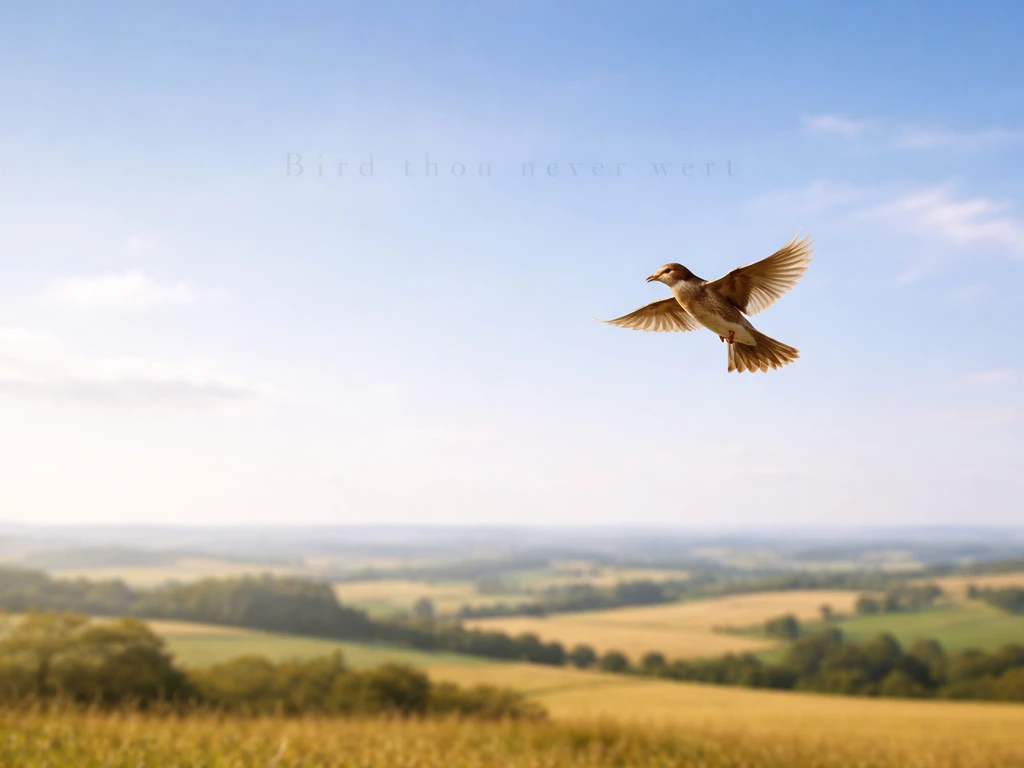
The poem called 'Bird Understander' is 'Bird-Understander' by Craig Arnold, published in 2009. Craig Arnold’s Poetry Foundation biography provides the author background for this poem and situates “Bird-Understander” among his works. It is a love poem set around a simple scene: someone writes to the speaker from an airport gate to describe a bird trapped in the terminal, surrounded by people who ignore it because they don't know what to do. The poem's meaning turns on the idea that noticing hurt and not turning away from it, even when you feel helpless, is its own form of love and care. The 'bird-understander' of the title is the person the speaker loves: someone with the rare ability to feel for a creature in distress and reach out rather than walk past.
Bird Understander Poem Meaning: Themes, Symbols, and Tips

Which poem is this, exactly?

There is only one well-known poem with this title. Craig Arnold's 'Bird-Understander' is hosted in full on the Poetry Foundation website, credited with a 2009 copyright and sourced from a manuscript. A U.S. government-hosted PDF through the VA Whole Health Library also reproduces the full text for use in narrative medicine reading groups. If you searched for 'Bird Understander poem' without the hyphen, you are almost certainly looking for this piece. The hyphenated compound 'bird-understander' is a coinage Arnold creates within the poem itself, which is why it reads a little like a made-up word: it is one.
One thing worth flagging: because the title is an unusual compound noun, readers sometimes mishear or misread it. Reddit threads discussing the poem show at least one person who initially read it as 'bird-undertaker,' and others who searched variations without the hyphen. If you landed here after searching a slightly different phrase, this is almost certainly the poem you are thinking of. There is no other widely circulated poem with a similar name.
The poem's core message, quickly
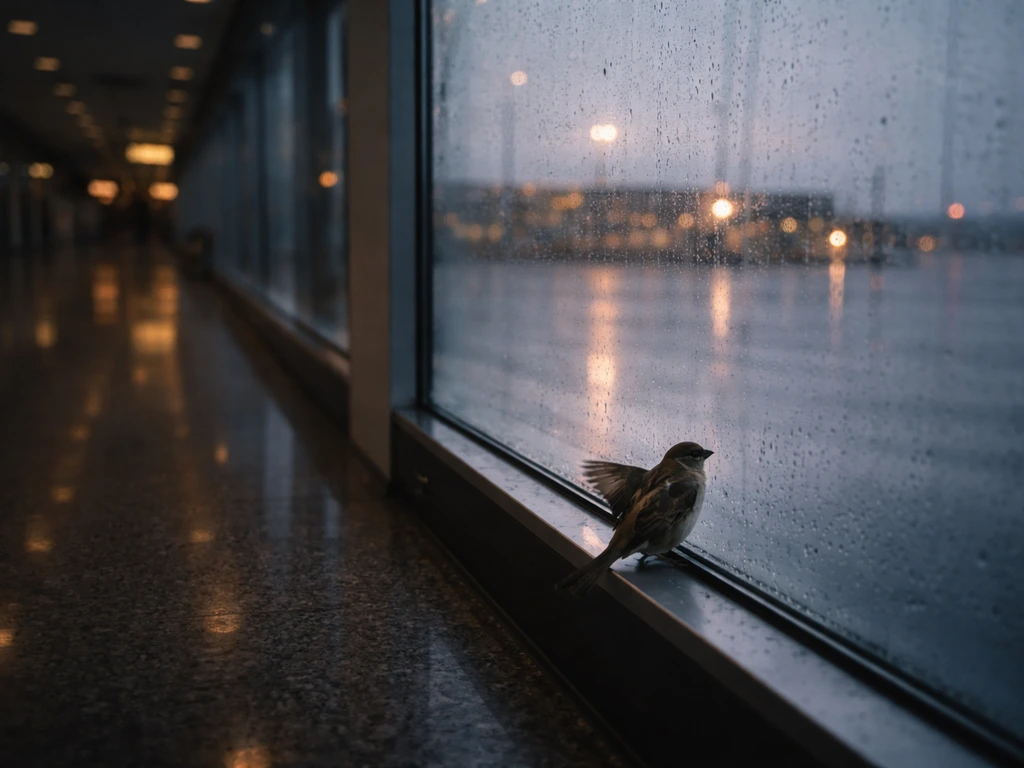
The UCSF Narrative Medicine gallery tags this poem under three themes: Bearing witness, Love, and Presence. That three-word list is actually a pretty clean summary. The speaker's partner sees a bird trapped in an airport terminal, surrounded by indifferent crowds, and instead of ignoring it like everyone else, they notice it, feel for it, and write to tell the speaker about it. The VA Whole Health Library describes it as 'a powerful poem about the expectations and limitations of caregiving,' and that framing holds up. The poem is not really about birds in the naturalist's sense. If you came across the term "bird" in other contexts, the bird number meaning you see there depends on the specific system or culture being referenced birds. It's about what makes someone capable of care: the willingness to pay attention to helplessness, to sit with the feeling of not being able to fix it, and to communicate that feeling rather than suppress it.
The most quoted tension in the poem is around language. The addressee feels that language is 'impossibly useless' in the face of the bird's distress. The speaker pushes back: 'but you are wrong' and 'How very useless / they are not. The phrase “bird thou never wert meaning” points to how the poem questions what language can or cannot do in the face of suffering How very useless. ' The poem argues that giving voice to suffering, even imperfectly, is not pointless. Naming the bird's situation, reaching out to someone, asking for a 'bird-understander' to come help: those acts matter. Song, the poem implies, is not some elevated thing. It is just noises made in the direction of something that needs witnessing.
What the bird symbolizes, culturally and spiritually
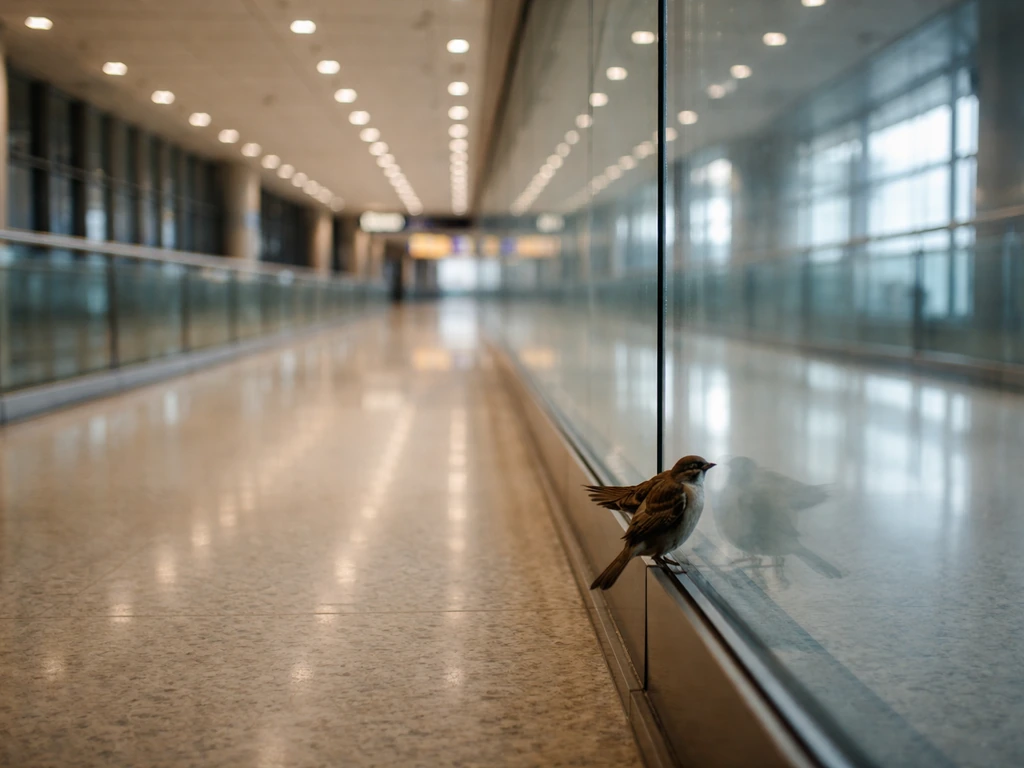
Arnold deliberately keeps the bird generic. No species is named anywhere in the published text. It is just 'a bird trapped in the terminal.' That vagueness is doing real work. In cultural and spiritual traditions across the world, a trapped or caged bird is one of the most consistent symbols of constrained freedom, a soul in distress, or life force caught in a hostile environment. Think of the long history of birds as psychopomps in Egyptian mythology, or the widespread folk belief across European and American cultures that a bird trapped indoors signals misfortune or even death. The poem leans into that ambient dread: without intervention, the bird 'scares itself to death.' That is not just a behaviorally plausible outcome for a panicked bird in an enclosed space. It is also a spiritual image: a living thing destroyed by its own fear in an environment that was never meant for it.
The airport terminal as a setting amplifies this symbolism. Airports are transitional, liminal spaces: places of departure, waiting, and in-between states. Birds have historically been read as messengers, omens, and threshold creatures in dozens of cultural traditions. For more on what a bird can signify, see how “bird animal meaning” is used to interpret messages, symbolism, and omens across cultures. A bird stuck in a liminal space, unable to pass through, can carry the weight of a soul that cannot move on, a message undelivered, or a relationship strained by distance. The poem is, after all, about someone writing from an airport gate, separated from the person they love. The bird and the speaker are both, in a way, waiting to be let through.
On a spiritual level, some readers and commentators have drawn on the poem's framing to describe the 'bird-understander' as an empathetic rather than merely observational figure. A critical commentary from the Seamus Heaney Centre used the phrase 'bird-understander (to borrow from the poet Craig Arnold)' explicitly to describe empathy as distinct from passive watching. That secondary reading is consistent with traditions in which birds are not just symbols of the soul but also of divine or intuitive knowledge: the person who truly understands the bird is someone with access to a different register of perception.
Real bird behavior in the poem: what checks out
The poem's behavioral details are sparse but accurate. A bird trapped in a large indoor terminal will often panic. Glass windows, high ceilings, artificial light, and human foot traffic create disorienting sensory overload for most small birds. The phrase 'scares itself to death' is not pure metaphor: birds can die from acute stress responses, including exertion collapse after repeated flight attempts against glass or walls. This is documented in real-world bird rescue contexts and is one reason why organizations that handle birds trapped in buildings are so specific about minimizing noise and movement when approaching them. If you are also curious about word details like bird plus letter meaning, you can apply the same careful checking approach to how symbols and language carry meaning in other contexts.
The poem also captures how most bystanders respond: they ignore the bird 'because they do not know / what to do with it, except to leave it alone.' That behavioral observation rings true. Most people confronted with a trapped bird in a public space feel helpless and walk past. The poem does not judge them harshly; it just notes the gap between their inaction and the response of someone who actually cares enough to notice and seek help. Readers who are curious about the behavioral side of bird distress in enclosed environments will find that the poem tracks quite closely to what actually happens to birds in airports and transit hubs, even though it never gets technically specific.
Reddit discussions about the poem show readers adding species details that are not in the text, most commonly imagining the bird as a sparrow. A related Reddit thread about Craig Arnold's “Bird-Understander” discusses readers imagining a “sparrows” scenario in the airport context, which illustrates how audiences may add species details that are not present in the poem’s published wording. That is a reader inference, not something Arnold states. House sparrows and European starlings are among the most common birds to end up trapped in large buildings in North America, so the inference is reasonable, but the poem's meaning does not depend on it. Keeping the species unspecified keeps the symbol open.
Misconceptions worth checking before you run with an interpretation

- The poem is not about an actual bird rescue story or a specific reported incident. It is a love poem. The airport scene is the occasion for the poem, not the subject of it.
- No bird species is named in the published text. Readings that identify it as a sparrow or any other specific bird are reader additions, not textual evidence.
- The 'bird-understander' is not a real professional job title or a wildlife term. It is a word the poem invents to describe a quality of empathy. Some readers have searched for it as if it were an ornithological designation.
- The poem does not argue that language is useless. It argues the opposite: the addressee thinks language is useless, and the speaker corrects that belief. Misreading the poem as nihilistic about communication gets the theme exactly backwards.
- Reading it as 'bird-undertaker' (a variant noted in online discussion) changes the meaning entirely and is a typographic misread of a compound that looks unfamiliar at first glance.
- The poem is not about grief for a dead bird. The bird is in danger but the poem does not confirm it dies. The dread is present, but the call for a 'bird-understander' is a call to action, not an elegy.
How to decode the poem step by step
If you want to move beyond 'what does it mean generally' and actually work through the poem with confidence, here is a practical method that works whether you are writing about it, teaching it, or just trying to satisfy your own curiosity. “Bird haven meaning” is a helpful way to think about the poem's implied message of what it means to offer safety and care when someone feels trapped or helpless.
- Pull up the full text from the Poetry Foundation website (search 'Bird-Understander Craig Arnold Poetry Foundation'). The VA Whole Health PDF is also a clean, free version. Read it all the way through once without stopping.
- Identify the speaker and addressee. The speaker is the 'I' who loves the person they are writing to. The addressee, the 'you,' is at the airport gate writing a message. The relationship between them is the emotional anchor of the poem.
- Mark every use of the word 'bird.' There are three main instances: 'a bird trapped in the terminal,' 'take the bird outside,' and 'notice the bird.' Track what action or attitude is paired with the bird in each case: entrapment, the wish to help, and attentive noticing.
- Find the pivot on language. Locate the lines about language feeling 'impossibly useless' and the speaker's response ('but you are wrong'). This is the poem's argumentative core. Ask yourself: what does the speaker say words actually accomplish, even when they feel insufficient?
- Look at the 'bird-understander' coinage itself. The poem defines this term through context rather than dictionary definition: a bird-understander is someone who notices, feels for, and does not turn away from a creature in distress. Apply that definition to the person being addressed.
- Connect the bird's situation to the relationship. The bird is trapped, surrounded by indifferent people, in a space it was never meant for. The speaker and addressee are separated by distance. Consider how the bird's situation mirrors or contrasts with the emotional situation in the poem.
- Apply a cultural or spiritual lens if relevant to your purpose. Ask what a trapped bird has traditionally signified in the traditions most relevant to your reading context: soul in transit, bad omen, or message undelivered. None of these readings contradict the poem; they deepen it.
- Write or state your interpretation in one sentence before expanding. A good test: 'This poem means...' If you cannot complete that sentence clearly, go back to step four and reread the language pivot.
A quick reference for the poem's key lines and what they carry
| Line or phrase | What it does in the poem | Symbolic / thematic layer |
|---|---|---|
| 'the way you write me from the gate at the airport' | Establishes the setting and the loving act of communication across distance | Love expressed through attention; liminal space of departure |
| 'there is a bird / trapped in the terminal' | Introduces the central image | Trapped soul, constrained freedom, creature out of place |
| 'all the people / ignoring it' | Distinguishes the addressee's response from the crowd's indifference | Ethical attention vs. passive avoidance |
| 'do not know / what to do with it, except to leave it alone / until it scares itself to death' | Stakes the consequence of inaction | Panic in an unsuitable environment; death by abandonment |
| 'call a bird-understander / to come help the bird' | Names the poem's title concept and frames it as an appeal to competent empathy | Empathy as active skill, not passive sentiment |
| 'language feels / impossibly useless' | States the addressee's fear about communication | Doubt about the value of words in the face of helplessness |
| 'but you are wrong' / 'How very useless / they are not' | The speaker's counter-argument | Language and witnessing have real value even when imperfect |
| 'not turning away / from hurt' | Defines what the bird-understander actually does | Bearing witness; compassionate presence |
Confirm your reading: practical next steps
The best way to verify your interpretation is to go straight to the full poem text and test your reading against every line, not just the most quoted ones. The Poetry Foundation page for 'Bird-Understander' by Craig Arnold is the most authoritative free source. Read the opening lines carefully: 'Of many reasons I love you here is one' sets up the entire poem as an itemized declaration of love, which means the airport scene is not a crisis narrative but an example of what the speaker values in their partner. That framing changes how every subsequent line reads.
If you are using this poem in a classroom or care context, the VA Whole Health Library PDF includes it in a narrative medicine reading guide explicitly framed around caregiving expectations and limitations. That context will help you facilitate discussion around the 'bird-understander' concept without reducing it to either pure sentiment or pure literary analysis. The UCSF Narrative Medicine listing, which tags the poem under Bearing witness, Love, and Presence, is also useful for grounding a group discussion in credible thematic language.
For the cultural and spiritual symbolism layers, especially if you want to explore what birds trapped indoors have meant across different traditions or how this poem connects to broader ideas about birds as omens or messengers, it helps to have a grounding in how bird symbolism varies by cultural context. The meaning of a bird stuck in a liminal space like an airport looks quite different through a folk-tradition lens than through a clinical narrative medicine lens, and both are valid. Similarly, if you are drawn to the poem because of its bird imagery specifically, exploring how birds carry symbolic weight in poetry more broadly (as creatures associated with the soul, with song, with freedom) will give you more interpretive tools. Other angles on what birds mean across contexts, from their names to their numbers to their behaviors, sit alongside this poem as part of a much larger conversation about why humans have always paid this kind of close attention to birds.
One final check: if you are still uncertain you have the right poem, search the opening line, 'Of many reasons I love you here is one,' alongside Craig Arnold's name. That will confirm the text immediately. The poem is short enough to read in under three minutes, and it rewards rereading: the meaning tends to sharpen significantly on a second pass once you know where the argument is headed.
FAQ
Is “bird understander poem meaning” referring to the same poem, even if I search without the hyphen?
Most likely, yes. People commonly drop the hyphen when searching, and the hyphenated “bird-understander” is the coinage that matters for the title’s meaning. A fast confirmation is to check whether the opening line says, “Of many reasons I love you here is one,” and whether the author is Craig Arnold (2009).
What does the phrase “bird thou never wert meaning” add to the interpretation?
It’s the poem testing the limits of language and care, not just making a pretty line. The addressee feels speech cannot help a trapped creature, and the speaker answers that naming and voicing the situation is still a meaningful act, especially because it creates connection and prompts action rather than denial.
Does the poem encourage you to “fix” suffering, or is it more about witnessing?
It leans toward witnessing and reaching out when fixing is impossible. The caring partner is not presented as someone who can rescue the bird, but as someone who stays present to the helplessness and communicates it to another person, which is why the airport scene functions like an ethics lesson about attention.
If the bird is never identified, should I pick a species anyway (like a sparrow)?
No. Readers often supply a species from their own experience, but the poem’s symbolism is designed to stay open by keeping the bird generic. The meaning depends more on the bird’s vulnerability in a public indoor space than on any one species’ typical behavior.
Why does the airport setting matter beyond “just a place the bird is trapped”?
It changes what the scene symbolizes. Airports are liminal spaces (waiting, departures, thresholds), so the bird becomes a figure for what is stuck, delayed, or unable to pass through. That mirrors the relationship distance implied by someone writing from a gate rather than being together in real time.
What should I do if my understanding relies only on the most quoted lines?
Read every line at least once with a two-column check: mark where the poem states the lover’s intentions, and mark where it challenges the idea that language is useless. The argument builds cumulatively, and later lines reframe earlier “impotence” feelings into an ethics of bearing witness.
How can I use the poem in a classroom or narrative medicine discussion without turning it into sentimentality?
Try focusing on the decision points: what does the bystander do, what does the “bird-understander” do instead, and what barriers stop people (fear, uncertainty, social momentum). Keeping the attention on behavior and communication helps the conversation stay analytical while still honoring the emotional core.
Are people sometimes misreading “bird-understander” as something like “undertaker”?
Yes, mishearing happens because the title is an unusual compound noun. Treat it as a functional role created by the poem, someone who understands and responds to distress through empathy and action. If you see “undertaker” in discussions, it usually signals they started from the wrong phonetic interpretation.
Is “scares itself to death” meant literally, or only metaphorically?
It carries both. The poem uses it as metaphor for fear consuming the trapped life, but the image also aligns with real stress risks for birds that repeatedly collide with indoor barriers or exhaust themselves in panic. That blend keeps the poem grounded rather than purely symbolic.
If I want to connect the poem to caregiving, what’s a good framework to use?
Use a caregiving expectations versus limitations lens: what care can do (notice, name, contact another person, stay with the situation) versus what care cannot always do (guarantee a rescue). This prevents overreading the poem as a “hero saves the day” story and keeps it aligned with its theme of bounded, compassionate action.
Bird Thou Never Wert Meaning: Source, Variants, Symbolism
Bird thou never wert meaning explained: source, variants, and symbolism for birds in dreams and daily life.