
"Bird number meaning" can refer to at least six completely different things depending on your situation: a leg band ID printed on a captured bird, a birdwatcher's count of individuals seen, a citizen-science code used for data entry, a folklore omen based on how many birds you spotted, a dream in which a specific number of birds appeared, or a numerology-style synchronicity where a number and a bird showed up together. The fastest way to get a useful answer is to figure out which of those buckets you're actually in, then follow the right interpretation path for that one.
Bird Number Meaning: Codes, Omens, Synchronicity and Dreams

Marcus Holloway
3 Jul 2026
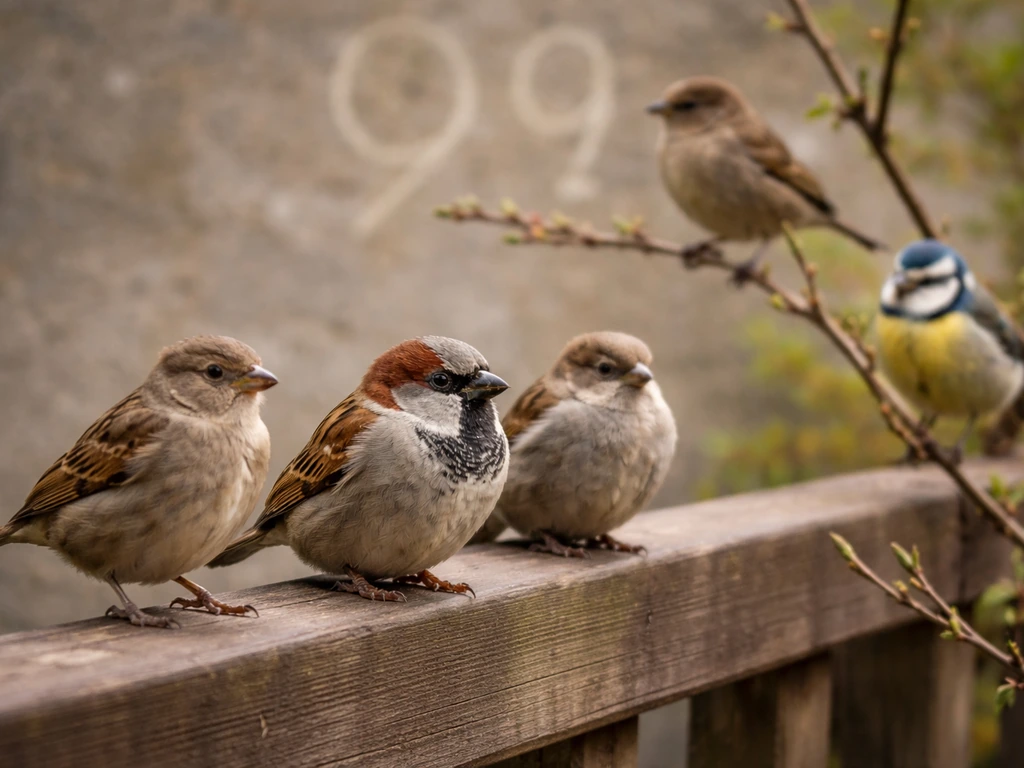
What people mean by "bird number"
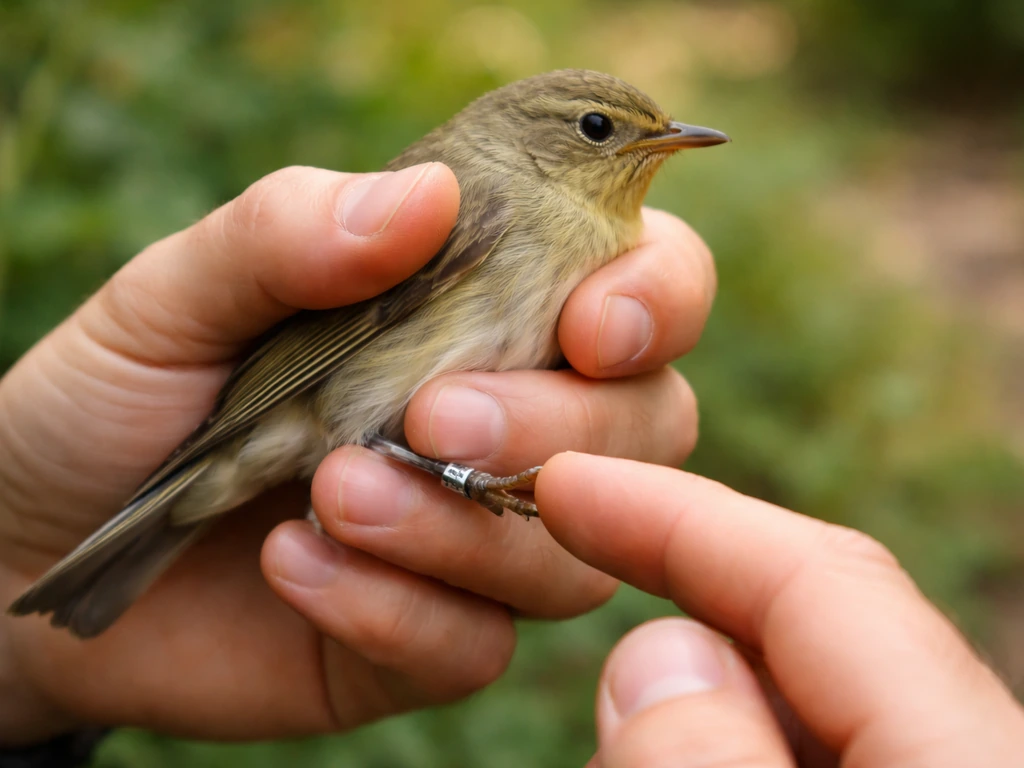
The phrase "bird number" gets used loosely in very different communities, and that's what makes it confusing. A banding researcher means something completely different by it than a birder on eBird, who means something different than someone who just saw three crows outside their window and felt a chill. Here's a quick breakdown of the most common uses in practice.
- Band or ring number: A unique identifier stamped onto a metal or plastic band attached to a bird's leg, used by scientists and wildlife agencies to track individual birds over time.
- Count or tally: The number of individual birds of a given species a birder observes and records during a single outing, logged on platforms like eBird.
- Citizen-science code or project ID: A numeric or alphanumeric shorthand used in bird data entry systems to label species, checklists, or survey groups.
- Folklore omen count: The traditional belief in some cultures that the number of a particular bird species seen at one time carries a specific omen or message.
- Dream number: When a specific quantity of birds appears in a dream and the dreamer wants to know what that number means symbolically.
- Numerology or synchronicity: A perceived meaningful coincidence where a number and a bird appear together in waking life, often interpreted through a spiritual or numerological lens.
Knowing which of these you're dealing with completely changes the answer. A band number has one correct interpretation: it's an administrative identifier that you can look up through official channels. A folklore omen has cultural and regional roots that matter. A dream number is deeply personal and subjective. Let's go through each context in enough detail to actually be useful.
Common interpretations of bird number systems
Bird banding and leg band IDs
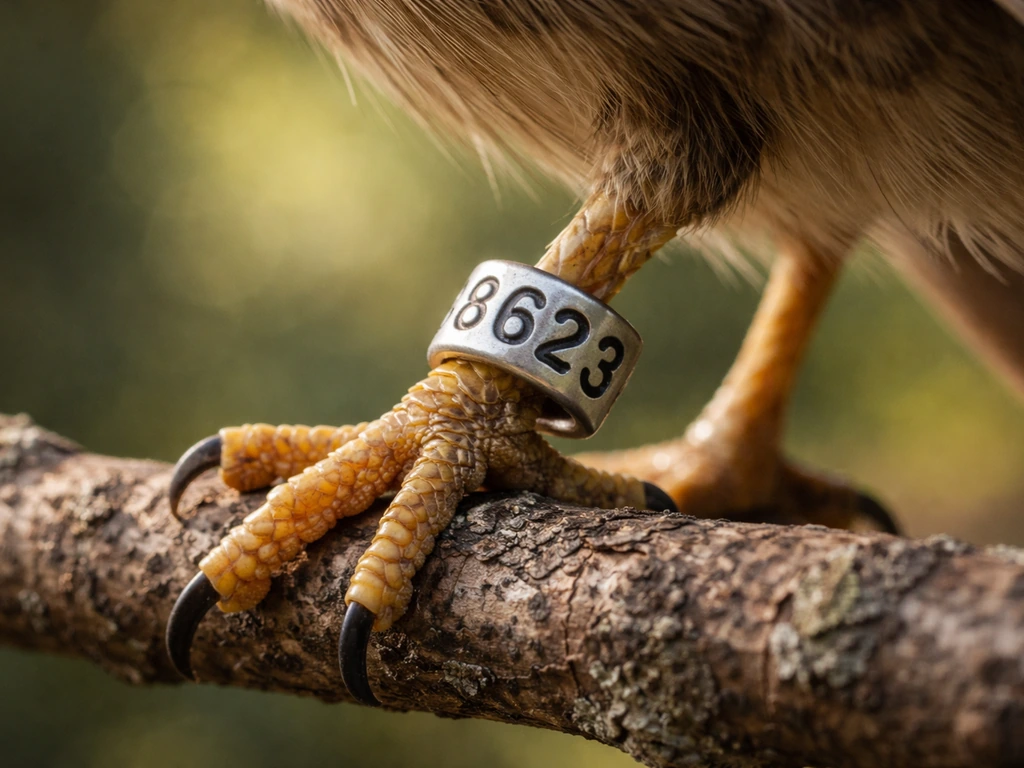
If you've found a bird with a small metal band on its leg, the number on that band is a federal tracking ID, not a spiritual message. In the United States, federal band numbers are managed by the USGS Bird Banding Laboratory (BBL) and are typically formatted as a 9-digit code: a 4-digit prefix followed by a 5-digit suffix. That structure is worth knowing because bands can wear down over time and the number can become partially unreadable.
If you're trying to decipher a worn band, knowing that format helps you fill in gaps carefully. To report a banded bird you've found or photographed, the official process goes through reportband. gov, the BBL's public reporting portal. The number gets cross-referenced against encounter and band-status codes in the blank" rel="noopener noreferrer">BBL database, which are purely administrative classifications, not omens.
Bird counts in citizen science
On eBird, the world's largest citizen-science bird database, a "bird number" means how many individual birds of one species you observed during a single checklist. eBird's own guidance is practical and specific: you report the highest number of individuals you saw at one time during your observation period, not a running total. So if you saw 12 sparrows together at one point, but only 4 later, you enter 12. It's a conservative count, not an accumulation.
eBird also tracks relative abundance through its Status and Trends tools, which represent an estimated average count by an eBirder during a standardized 1-hour, 2-kilometer traveling checklist at the optimal detection time of day for a given species.
In eBird Status and Trends, relative abundance is represented as an estimated count using a standardized checklist protocol, which is the same idea described in the article relative abundance is represented as an estimated average count by an eBirder during a standardized checklist protocol. These numbers are statistical outputs of modeling, not omens or personal messages.
Bird codes in data systems

Bird codes are shorthand identifiers used in ornithological data entry. If you also mean letter-number combinations like those used in databases, the bird plus letter meaning can help you interpret what that code refers to Bird codes. They're typically 4- or 6-letter alpha codes (like AMRO for American Robin), but in some systems they can include or be accompanied by numeric identifiers. People sometimes see these codes next to bird entries in databases or apps and wonder what they mean symbolically. They don't mean anything symbolic. They're data management tools, the bird-world equivalent of a SKU number.
Bird numbers in everyday bird behavior vs superstition
Here's where things get genuinely interesting: the same number of birds can be explained entirely by ecology OR by folklore, depending on which lens you're using. Both can be valid in their own domains, but they're answering different questions.
From a behavioral standpoint, the number of birds you see at any given moment is driven by season, time of day, weather, habitat, and what the birds are doing. blank" rel="noopener noreferrer">Migration pushes massive numbers of birds through locations they wouldn't normally occupy. Flocking behavior during winter means you might see 200 starlings one day and none the next.
USGS research confirms that bird activity levels shift significantly with weather conditions, and temperature during a previous nesting season can affect how many songbirds you observe the following year. BTO feeding station research shows that even within a single day, bird numbers at a feeder fluctuate based on dominance hierarchies and when birds need to top up their fat reserves before dark.
In short: birds are moving around constantly for completely non-supernatural reasons, and the number you see is genuinely variable.
From a superstition standpoint, some folk traditions assign specific meanings to the count of birds seen, particularly with species like magpies. If you're trying to understand a specific bird's meaning, start by looking up the bird name meaning for the species involved. The English magpie-counting tradition is one of the best-documented examples: seeing one magpie was considered unlucky, while seeing two was seen as favorable. These weren't vague vibes. They were codified rules, passed down in rhymes and regional customs, tied to a specific species in a specific cultural geography. That's worth knowing because it shows how "bird + number" omen systems work: they're usually species-specific, region-specific, and rooted in a distinct cultural tradition rather than being universal.
Cultural and symbolic meanings tied to bird "numbers"

The idea that birds carry omens is genuinely ancient. Roman augury, the formal practice of reading bird behavior to receive divine signs, was a state religious institution. Augurs observed the species, direction of flight, calls, and yes, number of birds, to interpret messages. The practice was codified enough that specific bird behaviors had assigned meanings within that system. Even older, Babylonian bird omen collections from ancient Mesopotamia show that organized systems for bird-sign interpretation existed across cultures long before modern numerology.
What's important to understand about these historical systems is that the "number" of birds wasn't a standalone meaning. It was always one variable in a multi-factor reading: species + number + behavior + direction + context. A single crow flying left meant something different than three crows sitting still. Modern internet interpretations often strip out that context and assign flat numeric values to bird sightings, which isn't how the traditional systems actually worked. If you're interested in cultural bird symbolism, the animal meaning of the specific bird species is a better starting point than the number alone, because the species tends to carry more traditional symbolic weight.
Some traditions also tie specific birds to specific numbers in a more direct way. In Chinese culture, pairs of mandarin ducks symbolize romantic partnership, so the number two is meaningful there because of the species, not in spite of it. The connection is cultural and narrative, not a generic numerological formula.
Spiritual and dream interpretations when birds appear as numbers
Dreams involving birds and specific numbers are a real category of experience that people genuinely want help interpreting, and that's completely valid. If you want to go deeper into how to interpret a bird-and-number dream, it helps to start from the broader bird understanding of poem-style meaning and symbolism bird understander poem meaning.
Dream dictionary sources consistently point out that the number of birds in a dream matters, and that interpretation should factor in the species, behavior, emotional tone of the dream, and the count together. Seeing one bird feels different from seeing a flock, and different dream traditions treat those differently. That said, it's worth being honest: dream interpretation is highly subjective and inconsistent across sources.
One dream dictionary may say three birds represent a creative breakthrough; another will say something entirely different.
The Sleep Foundation's summary of dream research is a useful reality check here: there is currently no scientific evidence that dreams reliably predict the future, and people tend to remember dreams that seemed to come true while forgetting the many that didn't. That's not a reason to dismiss the experience of a vivid bird dream as meaningless.
In particular, if you are trying to interpret what a “bird thou never wert meaning” implies, it helps to separate cultural symbolism from any claim of certainty bird dream. But it is a reason to treat any specific "bird number = definite outcome" formula with healthy skepticism. Dreams are better understood as a personal symbolic language than as a code with a fixed universal key.
For synchronicity-style experiences (you kept seeing, say, the number 7 alongside birds for a week), the honest answer is that pattern-finding is something human brains do automatically and constantly. Sometimes these patterns feel genuinely significant, and many spiritual traditions have frameworks for understanding them. The key is to use those frameworks as reflective tools rather than deterministic predictions. In many contexts, people also use the term "bird haven meaning" to describe what a place, sign, or repeated sighting is believed to symbolize.
How to interpret your specific bird-number situation
Here's the practical step-by-step process I'd walk through if someone brought me a "bird number" and asked what it meant.
- Identify which bucket you're in first. Was the number on a physical band attached to a bird's leg? Was it a count of birds you observed? Was it in a dream or vision? Did it show up in a database or app? Was it a folk omen you heard about? Answering this one question correctly gets you 80% of the way there.
- If it's a band number: Check the format. A legitimate US federal band number follows a 4-digit prefix + 5-digit suffix format. If your number matches that structure, head to reportband.gov to report it and get information back. If the number is worn or partial, try to reconstruct it using that format as a guide before reporting.
- If it's a count or tally: Record the species, the number you observed at one time (not a running total), the time of day, weather conditions, and your location. This is exactly what eBird's counting protocol recommends. Then consider ecological context: is this migration season? Is this a species known for flocking? Those questions will often explain "unusual" numbers naturally.
- If it's a folklore omen: Identify the specific species and your cultural background. Omen traditions are species-specific and regionally specific. A two-magpie sighting in English folk tradition means something different than two crows in a different tradition. Don't apply a magpie rhyme to a raven sighting.
- If it's a dream: Note the species, what the birds were doing, the number, and how you felt. Cross-reference multiple dream sources but treat none of them as definitive. Personal associations with the bird matter as much as any symbolic dictionary.
- If it's a synchronicity: Journal it. Track when and where the bird-number combination appeared. Look for what was happening in your life at the time. Use it as a reflective prompt rather than a prophecy. If a spiritual framework resonates with you, use that lens, but stay grounded in what's verifiable.
Comparing the main "bird number" contexts
| Context | What the number actually is | How to interpret it | Where to go next |
|---|---|---|---|
| Band/leg ring ID | Administrative identifier for individual bird tracking | Not symbolic; look it up officially | reportband.gov (BBL) |
| Birdwatcher count | Highest number of individuals seen at one time on a checklist | Ecological, not spiritual; compare to seasonal norms | eBird checklist tools |
| Citizen-science code | Data entry shorthand for species or survey labeling | Administrative; ignore for symbolic purposes | eBird or BBL documentation |
| Folklore omen count | Species-specific, culturally rooted numeric omen rule | Apply the tradition it comes from; don't generalize | Regional folklore sources |
| Dream number | Symbolic, personal, and highly context-dependent | Factor in species, behavior, emotion, and number together | Dream dictionaries as one lens, not a fixed key |
| Synchronicity/numerology | Perceived pattern connecting a number and bird sighting | Reflective tool, not prediction; journal and contextualize | Personal reflection or spiritual frameworks you trust |
Common misconceptions and how to fact-check them

The biggest misconception in this whole space is treating bird counts as deterministic omens without any cultural context. Seeing four crows is not universally meaningful because crows are just birds that happen to flock, roost, and move around for completely ecological reasons. If you see an unusual number of a specific species, check eBird's recent reports for your region before assigning spiritual weight to it. You might find out that there's a known migration movement or a local feeding site drawing birds. That context matters.
A second common mistake is conflating band numbers with omen numbers. If you find a banded bird and see a number on it, that number is not a sign from the universe. An aviary's meaning often depends on whether you're discussing a literal bird enclosure or a symbolic “bird home.” aviary meaning. blank" rel="noopener noreferrer">It's a USGS administrative identifier. The BBL uses a whole system of codes specifically for data management. Reporting the band is genuinely useful for science, but interpreting the digits as a numerological message isn't what they're for.
Third: not all omen traditions are interchangeable. The English magpie-counting rhyme ("one for sorrow, two for joy") doesn't apply to other corvids, other cultures, or other continents. When you come across a "bird number" omen online, check what tradition it comes from and whether it was ever actually tied to the specific bird and context you're dealing with. Babylonian bird omen systems, Roman augury, and Celtic bird lore are all distinct frameworks, not one unified system with consistent rules.
Finally, be careful with dream interpretation sites that present bird-number meanings as definitive. As the cognitive neuroscience of dreams literature consistently shows, dream science relies on self-reports and has significant methodological limitations. No dream dictionary has been validated as reliably predictive. That doesn't mean bird dreams aren't worth exploring, but it does mean "this site says five birds in a dream means financial gain" is an opinion, not a fact. Cross-check multiple sources, notice where they agree, and treat the interpretation as a starting point for self-reflection rather than an answer.
FAQ
How can I tell which “bird number meaning” category I’m in? (band, eBird count, omen, dream, or synchronicity)
Look for the source context first. If you saw a bird with a leg band or you have a photo of a band number, treat it as an ID, not an omen. If you counted birds during a checklist or from your window, it is observational data or folklore, not an official code. If you encountered a “7 birds” as a repeated theme in your life, that fits synchronicity-style reflection rather than the band or eBird meaning.
What should I do if the number on a bird leg band is blurry or partially unreadable?
For leg bands, don’t guess missing digits or partially worn characters. Instead, try to capture multiple angles and photos, then report what you can read. The BBL-style ID format is structured, but inaccurate transcription can route your report to the wrong record or delay verification.
If I’m entering bird counts into eBird, do I report a total for the day or what I saw at each moment?
When you’re reporting observations to eBird-like systems, use the maximum count you observed at one time for that checklist, not the total across multiple moments. Also avoid counting birds that were present but not clearly identifiable as the same species, since mixed species can inflate numbers and create misleading patterns in your dataset.
Do bird-number omens work the same everywhere, or do they depend on the bird species and location?
For folklore, don’t assume “one rule fits all.” Many number-omen traditions are species-specific and region-specific, so the same number can mean different things for different birds or different cultures. A practical approach is to identify the species, then match the tradition to where you were when you first learned the rhyme or belief.
In a bird-and-number dream, is the number alone enough to interpret, or do I need other details?
If you’re trying to interpret a dream involving a count of birds, focus on the combination of species, behavior (flying, pecking, calling, sitting), and your emotions during the dream. A count alone is usually too vague because the “message” in most personal symbolism systems comes from how the birds behaved and how you felt, not just the quantity.
How should I handle dream dictionary sites that say a specific bird number predicts something definite?
Be cautious with “fixed outcomes” claims. A safer method is to treat the interpretation as a prompt for reflection, then check whether your real-world actions and circumstances align with what the dream makes you notice. If a site presents certainty like “this number guarantees X,” treat it as entertainment or opinion rather than guidance.
If I’m having a synchronicity experience (like seeing 7 with birds), how do I avoid over-interpreting coincidences?
Human brains are good at noticing patterns, but you can reduce false significance by setting a time window and verifying it objectively. For example, if you keep seeing a number, note it on a calendar alongside any actual bird sightings you can confirm, then compare to baseline frequency over previous weeks.
What does a letter-number “bird code” mean if I’m seeing it in an app or dataset?
Bird codes in apps and databases are usually shorthand for data management, not symbolic meanings. If you want to interpret the code, look it up in the app’s glossary or database documentation to translate it to the full species name and status fields, then interpret the biology or conservation context rather than the letters/numbers themselves.
Can an unusual bird count be both ecologically explainable and personally meaningful?
If you’re comparing ecological explanations to omen explanations, you can do both without conflict. First confirm whether there was a known local driver, like migration timing or a nearby feeding location. Then, if you still want meaning, frame it as personal reflection informed by the symbolic tradition, not as a causal prediction of events.
What details should I write down before I look up the meaning of a specific bird-number omen online?
If you want to research an omen, start by writing down the species you saw, your location or region, and the exact number. Then find the tradition associated with that species in that cultural context. If a source mixes species rules or uses generic “bird sightings” without specifying the species, it’s probably not reliable for your exact situation.
Next Article
Bird Haven Meaning: Literal, Symbolic, Dream and Practical Uses
Understand bird haven meaning: safe bird refuge, symbolism, dream ideas, and practical steps to create or interpret one.