
When you search 'bird plus letter meaning,' you're almost certainly trying to decode something specific: a code, a label, an initial, a dream image, or a symbolic pairing that combines a bird with a letter of the alphabet. If you’re also trying to pin down what a bird haven meaning might be in your own context, start by identifying the system behind the clue first bird plus letter. The honest answer is that there is no single universal system where every bird-letter combo carries one fixed meaning. What the letter actually means depends entirely on what system generated it, and getting that part right first is the whole game. Here's how to work through it.
Bird Plus Letter Meaning: Decode the Symbol, Code or Dream

Marcus Holloway
19 Apr 2026
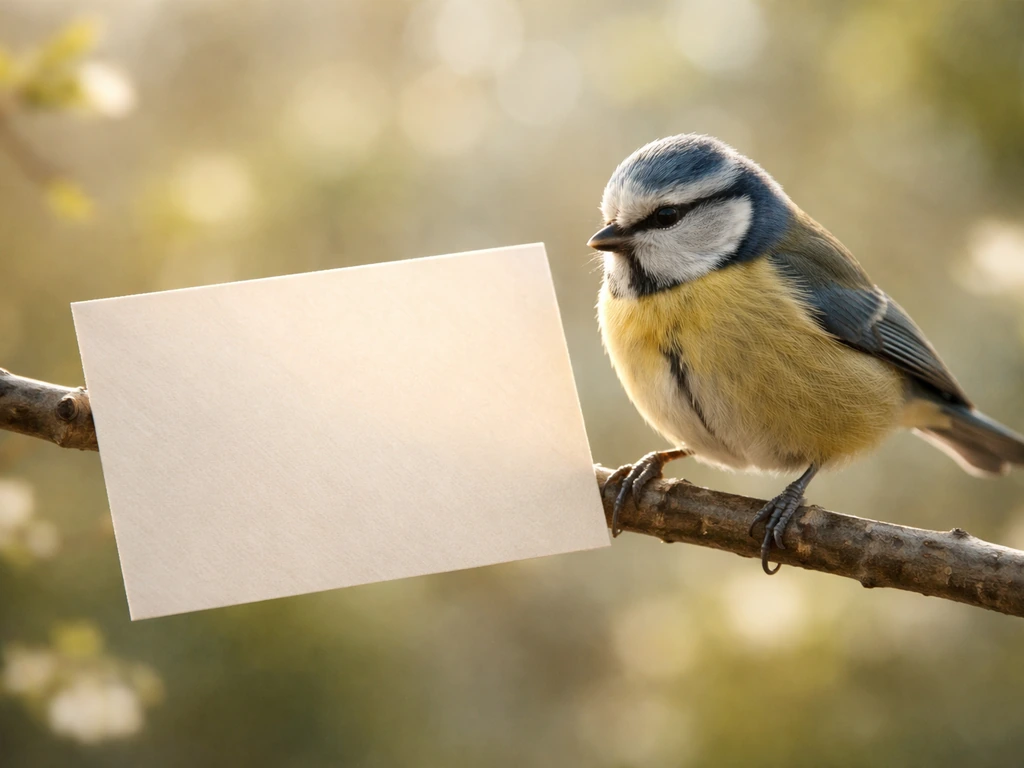
What 'bird + letter' usually means: codes vs. symbolism vs. dreams
The phrase 'bird plus letter' can come from at least four completely different worlds, and they don't overlap the way people assume. The most common sources are: official classification or identification codes (aviation, weather, sports, route systems), academic or grading systems, cultural or spiritual symbolism where a letter acts as an initial or modifier, and dream imagery where a letter appears alongside a bird. Before you interpret anything, you need to figure out which world you're in.
In coding systems, the letter is almost never spiritual. Aviation uses IATA and ICAO alphanumeric codes to identify airports, airlines, and aircraft types. A bird name paired with a letter in that context (say, 'Eagle Airport' carrying a specific IATA code) is a geographic or administrative identifier, full stop. Similarly, weather station identifiers issued under WMO's WIGOS system are structured alphanumeric codes tied to registered observing stations, and NOAA/NWS uses five-digit WMO Station Identifiers that have been standardized since 1976. NWS’s Telecommunications Gateway lets you search by station identifier, and it notes the identifier must be four or five characters. None of these carry symbolic weight.
In sports, team names built around birds (Eagles, Falcons, Robins, Hawks) are routinely paired with letters or initials in league standings, team sigils, or jersey codes. That 'Eagles A' you saw on a bracket is almost certainly a division or tier label, not a spiritual designation. U.S. academic grading works the same way: letter grades from A through F, including plus and minus variants, show up as suffixes constantly. 'Songbird A' in a biology course is probably a classification or grade band, not a mystical pairing.
Symbolic and spiritual pairing is the context most people on this site are actually curious about. In this world, the letter is usually an initial (a person's name initial, a place initial, or an astrological designation), and the bird carries the symbolic weight while the letter narrows or personalizes the message. Dreams are a related but distinct category: here, both the bird and the letter are images generated by your unconscious, and interpreting them requires understanding your own associations rather than a symbol dictionary.
How to identify the exact bird and the exact letter context
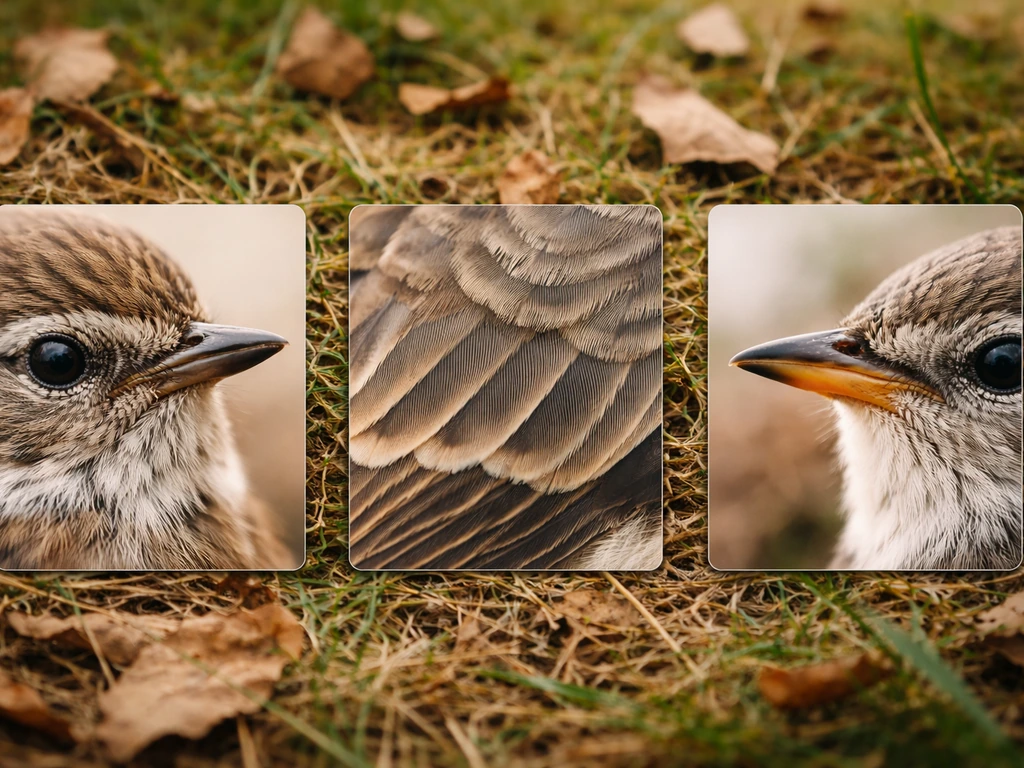
The single biggest mistake people make is working with vague inputs. 'A bird and a letter' is not enough to interpret anything accurately. You need species-level identification of the bird and system-level identification of the letter before any meaning is reachable.
Nailing down the bird
Generic 'bird' carries almost no reliable symbolic, spiritual, or behavioral meaning on its own. An owl (order Strigiformes) carries completely different cultural and spiritual associations than a crow, a hummingbird, or a robin. If you saw a real bird, use a field guide or an app like Merlin Bird ID to confirm the species before you interpret anything. If the bird appeared in a dream or vision, note every detail you remember: size, color, behavior, whether it was flying or perched, whether it made a sound. Those details determine which tradition's symbolism even applies.
Nailing down the letter

Ask yourself where this letter came from. Run through these possibilities in order:
- Is it part of an official code? Check against IATA's public airline and airport code search, FAA N-number formats (U.S. aircraft registrations start with 'N'), ICAO aircraft type codes, or WMO/NOAA station identifiers. If it matches a known format, it's administrative, not symbolic.
- Is it a grade, tier, or classification label? Academic grading (A through F with plus/minus variants), California's A-G subject requirement codes, and similar systems use single letters as category labels all the time.
- Is it a sports or league initial? Check the team, division, conference, or league for that letter as a standard abbreviation.
- Is it a personal initial? If the letter appears to represent a person's name, a place, or a personal association, treat it as a personalizing modifier to the bird's symbolism.
- Did it appear in a dream with no obvious real-world source? If so, treat it as a personal symbol requiring introspective interpretation rather than a lookup.
Symbolic and spiritual meanings: what the bird carries, and how the letter shifts it
Bird symbolism varies enormously by species, culture, and tradition. Owls have meant wisdom in Greek tradition (the owl of Athena) and desolation or warning in some older Jewish storytelling interpretations. Ravens signal transformation and mystery in Norse and Celtic traditions but can mean something entirely different in Indigenous North American traditions. Doves almost universally carry peace and purity across Western and Middle Eastern traditions, but even that isn't absolute. The bird's species, the cultural tradition you're working within, and the behavior you observed all have to align before any symbolic meaning is credible.
When a letter is added to a bird in a spiritual or symbolic context, it most often functions as one of three things: a personal initial connecting the bird's energy to a specific person or place, an astrological or numerological modifier that narrows the bird's meaning to a life-area or time period, or a tradition-specific code where the letter has an assigned meaning within that system (certain angelic or Kabbalistic traditions, for instance, use letter-based designation systems). In any of these cases, the letter doesn't replace the bird's meaning. It focuses it.
A practical example: if you believe you received a sign involving an eagle and the letter 'M,' the eagle might carry its widespread symbolism of vision, strength, and divine messenger across Native American, Roman, and Christian traditions. The 'M' might represent a person in your life whose name starts with M, prompting you to consider how that person relates to the qualities the eagle represents. Or 'M' might be a personal shorthand in a spiritual practice you already use. The combination is interpretive, not fixed.
When the letter shows up in notes, events, or real-world signs
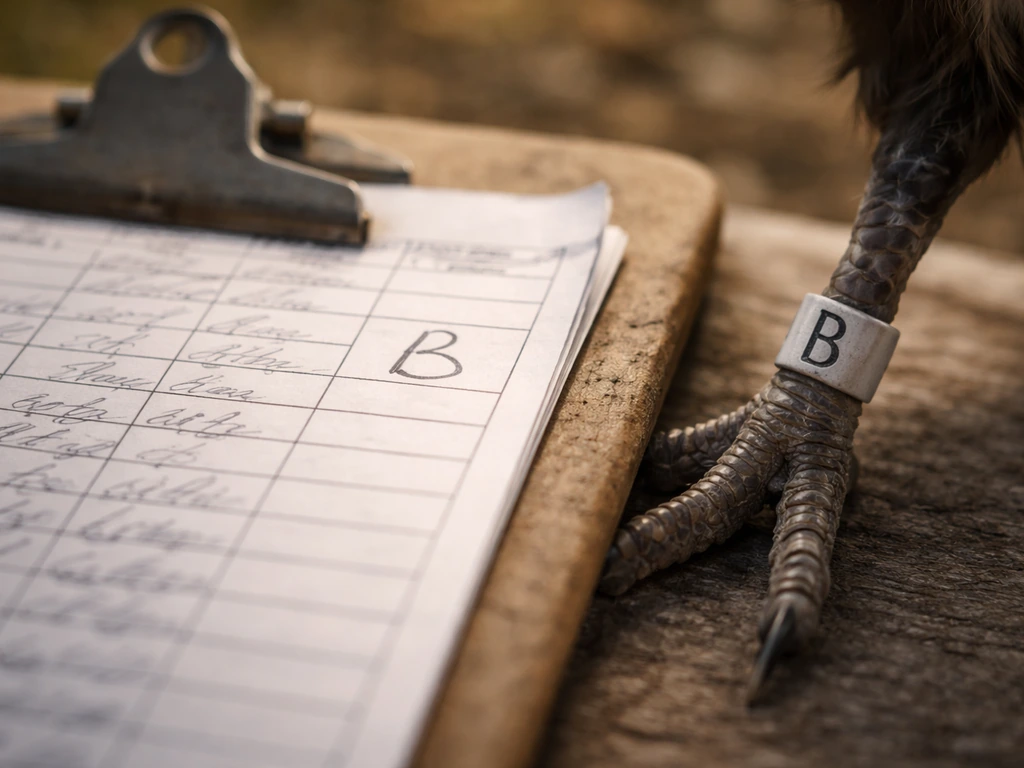
Sometimes the bird-plus-letter pairing isn't a grand symbol at all. It shows up in a handwritten note, on a sign, in a field observation log, in a license plate, or as part of a naming convention. In behavioral and real-world contexts, the letter almost always belongs to one of the official or semi-official systems described above, and the fastest path to meaning is verification rather than interpretation.
If you're looking at a wildlife monitoring tag on a bird (leg band, wing tag, GPS transmitter), those alpha-numeric codes are assigned by banding programs like the USGS Bird Banding Laboratory. The letter is a program or station identifier, not a symbol. If you're reading a weather report and see a station code that includes a bird name or abbreviation, check it against NOAA's NWS glossary or the WMO WIGOS database. If it's a route or road sign, check geographic naming databases.
The behavioral meaning of an actual bird you observe in the wild is separate from whatever letter context prompted your search. Behavioral interpretation focuses on what the bird is doing: is it alarm-calling, displaying, foraging, or engaging in territorial behavior? Those actions have real-world meanings rooted in ornithology and, separately, in folklore. The letter attached to a species name in a field notebook is a band code or population identifier, not a behavioral modifier.
Dream interpretation: bird imagery alongside a letter or initial
Dreams that combine a bird with a letter are genuinely interesting to interpret, but they require a specific approach. Freud's foundational work on dream interpretation emphasized that dream symbols are not universal keys: the same image means different things to different dreamers depending on their memories, associations, and current life material. Contemporary cognitive and psychotherapeutic approaches go further, warning explicitly against generic symbol dictionaries and emphasizing that dreams should be understood in terms of the dreamer's own life and experiences, not mapped onto fixed meanings.
The International Association for the Study of Dreams (IASD, founded 1983) represents the mainstream scientific community on dream research, and its orientation aligns with this personalized approach. So if a hawk and the letter 'R' appear in your dream, the question isn't 'what does hawk-plus-R universally mean?' The question is: what does a hawk mean to you, and what or who does R represent in your life right now?
That said, some interpretive frameworks are useful as starting points. Birds in dreams broadly tend to relate to freedom, aspiration, perspective, or communication, but the species matters: a crow dream carries different personal and cultural resonance than a dove dream. A letter in a dream is often an initial for a person, place, or concept that your unconscious is processing. The interaction between the two images (is the bird carrying the letter? flying away from it? perching on it?) shapes the interpretation more than either symbol alone.
Common myths about bird-letter meanings (and why fixed answers are usually wrong)
The biggest myth is that every bird-letter combination has one correct spiritual meaning waiting to be looked up. It doesn't. Bird symbolism is culturally specific: an owl means very different things in Greek mythology, Lakota tradition, and West African folklore. A letter carries meaning only within the system that generated it. Stacking a bird symbol from one tradition on top of a letter from a completely different system and declaring a unified meaning is interpretive overreach.
Another common myth is that the letter always functions as a spiritual modifier. Most of the time, when people encounter a bird paired with a letter in the real world, the letter is administrative: a grade, a code, an initial, a band ID. For example, FAA aircraft registration N-numbers use the letter “N” as a prefix and follow specific format rules, including that an N-number may not begin with zero and that certain numbers are reserved for FAA internal use a grade, a code, an initial, a band ID.. Treating a banding code as a cosmic sign, or a sports team initial as a spiritual message, leads you away from accuracy rather than toward it.
A third myth is that recognizing the bird species doesn't matter, that 'a bird is a bird.' Species identification is actually the foundation of any reliable interpretation, whether you're working in ornithology, cultural symbolism, or dream analysis. Popular dream-dictionary sites that offer generic 'bird' meanings acknowledge that behavior and context drive interpretation, which is a tacit admission that species and specifics matter. If you can't identify the bird, your interpretation has a large unresolved variable in it.
| Letter source | What the letter means | How to verify | Symbolic role? |
|---|---|---|---|
| Aviation code (IATA/ICAO/FAA) | Airport, airline, or aircraft identifier | IATA code search, FAA N-number database | No |
| Weather/WMO station ID | Geographic observing station code | NOAA NWS glossary, WMO WIGOS database | No |
| Academic grade | Performance level (A=excellent, F=fail) | School grading rubric or policy | No |
| Sports team initial/division | League, tier, or conference abbreviation | League standings or team documentation | No |
| Personal initial (name/place) | Personalizes or directs the bird's symbolism | Your own associations and context | Yes, as modifier |
| Tradition-specific code | Assigned meaning within a spiritual system | Primary sources for that specific tradition | Yes, within system |
| Dream image | Personal symbol tied to your associations | Introspective journaling, therapy, dream work | Context-dependent |
Practical next steps: how to actually figure out what it means

Here's a straightforward workflow you can follow regardless of where you encountered your bird-plus-letter pairing.
- Document the exact details: Write down the bird species (or your best description), the letter(s), the context (real world, dream, written note, sign), the location, the time of day, what the bird was doing, and anything emotionally or situationally significant about the moment.
- Identify the letter system first: Before assigning spiritual meaning, rule out administrative sources. Check IATA, ICAO, FAA, WMO/NOAA, or relevant sports and academic databases depending on where the pairing appeared. If it matches a known code format, that's your answer.
- Identify the bird species: Use a field guide, Merlin Bird ID, or eBird for real birds. For dream or vision birds, note every recalled detail. Species-level identification is non-negotiable for reliable interpretation.
- Match to the correct cultural tradition: If you're in symbolic territory, choose the tradition that is relevant to your background, practice, or the cultural context of the symbol's origin. Don't mix traditions arbitrarily. An owl in Greek symbolism and an owl in Ojibwe tradition are not the same symbol.
- Cross-check behavior with meaning: In both real-world and spiritual contexts, what the bird was doing matters as much as what species it is. Alarm call versus gentle song, flying toward versus flying away, perching calmly versus erratic movement, all of these shift interpretation.
- For dreams, use personal association before external dictionaries: Journal about what the bird and the letter each mean to you specifically. Only after exhausting personal associations should you consult external cultural or symbolic references, and even then, treat them as prompts rather than answers.
- Avoid over-claiming: If you can't confidently identify the bird species and the letter system, say so. A tentative, well-reasoned interpretation is more honest and more useful than a confident wrong one.
This kind of layered, system-first approach works whether you're exploring the spiritual significance of a bird encounter, trying to decode a behavioral signal, interpreting a dream, or just puzzling out what a strange notation means. If you want the bird understander poem meaning, look for the same context-first logic and then map the letter to the specific system or person it refers to practical next steps. If you are trying to understand bird aviary meaning in a spiritual or symbolic way, focus on the context that produced the pairing. The letter is almost always a clue about origin, and getting the origin right unlocks the right interpretive framework. If you're interested in how bird names carry their own embedded meanings independent of paired letters, or how the number of birds in a sighting shifts interpretation, those are separate threads worth following once you've nailed down the basic system here. If your question is really about the bird number meaning, map the count to the same system you identified for the letter number of birds.
FAQ
I saw “bird + a letter” online, but I do not know where it came from. How can I interpret it safely?
If you only have “bird plus letter” from a screenshot or someone’s description, your best first move is to identify the source type. Ask, is it a map or weather station format, a league standings label, a handwritten note, or a dream scene? Without that origin, the same letter can mean entirely different things (code, initial, grade tier), so interpretation will be unreliable.
How can I tell whether the letter is a real code (administrative) versus a symbolic initial?
Check whether the letter matches a known coding style in your context. Aviation and weather codes tend to follow strict formatting (specific length, uppercase/lowercase rules, and consistent placement with numbers). If the letter behaves like part of a structured identifier, treat it as administrative, not symbolic, and verify the system rather than guessing meaning.
In a dream, what does it change if the letter is printed on the bird versus shown separately?
For dreams, focus on the letter’s role in the scene. Was it written on the bird, taped to its leg, seen as a sign, or just something you “knew” upon waking? If the letter appears as a printed label, it often points to something your mind is referencing by initial, abbreviation, or concept, not a universal spiritual grade.
What should I do if I cannot identify the bird species in my encounter or dream?
Species matters a lot. If you cannot confidently identify the bird, use uncertainty in your interpretation instead of forcing a meaning onto an incorrect species. For example, “crow” and “owl” are often treated as wisdom versus warning in some traditions, but those contrasts can completely flip if your bird is actually another species.
If I see a wild bird with a letter tag, how do I interpret the bird’s behavior without misreading the tag?
If you are interpreting a real-world encounter, separate behavior from labeling. A letter on a tag or log usually refers to a program, station, population, or band, while the bird’s behavior (alarm calling, displaying, foraging) is interpreted through ecology and folklore separately. Mixing the two is a common reason people reach overconfident conclusions.
Could a bird-plus-letter meaning just be a school or grading notation, and how do I check?
If the pairing came from a school or course context, treat letter plus bird as a grade or classification suffix unless there is clear evidence it is someone’s personal shorthand. “A” and “A+” style markers often map to performance tiers, not spirituality. Confirm whether it appears in grading rubrics, transcripts, or lab notes.
When the letter feels like a personal initial, how do I decide which person or place it refers to?
If the letter might be an initial, define what it could stand for in your actual life: a person, place, organization, or concept you have been thinking about recently. Then test the fit against the bird’s qualities you noticed (sound, posture, where it appeared, and your emotional reaction). If multiple candidates fit equally well, record details and wait for a clarifying repetition.
I saw something like “Eagle + M” as a sign. How do I avoid assuming it is automatically spiritual?
When you see “Eagle M” or similar, do not assume the letter is universally “your” letter. Instead, evaluate whether the letter is likely part of the sender’s system (a label, abbreviation, ranking, or family shorthand). If you have no evidence of a personal practice tied to that letter, start with the simplest explanation that matches the origin context.
If there were multiple birds plus a letter, should I interpret the count as symbolic or as part of a reporting system?
Count-related meanings are system-dependent. If the number of birds is included with the letter, first verify whether the system uses counts (for example, a survey log, migration snapshot, or a documentation code). Only then consider symbolic interpretations, because generic dream or folklore number meanings are often applied inconsistently across traditions.
What is the most reliable step-by-step method when I want to interpret bird plus letter without making it up?
If you want to use a practical workflow, keep a short “fact capture” list: exact bird appearance, behavior, where you saw it, exact letter formatting, and the source (tag, note, report, dream). Then choose one interpretation lane based on origin, coding versus personal symbolism versus dream. If you later learn the origin system, re-run the interpretation using that new information.
Next Article
Bird Name Meaning: Origins, Symbols, and How to Verify
Decode bird name meanings: etymology, symbolism, cultural use, and how to verify facts vs folklore.