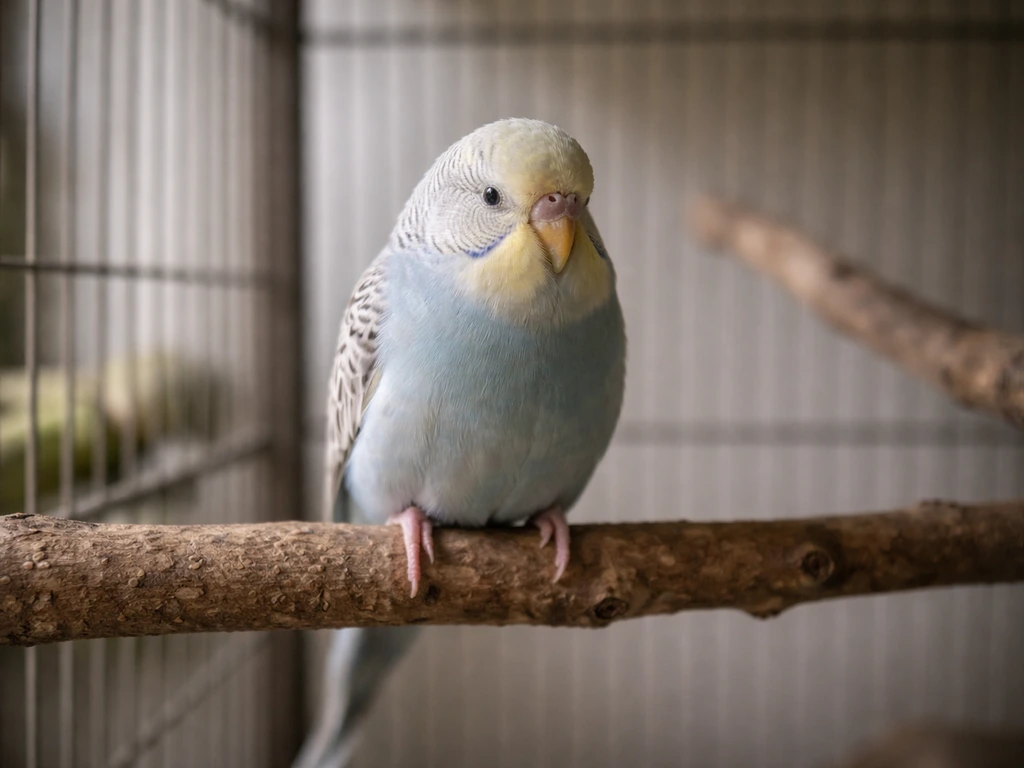
A bird name can mean two completely different things depending on what you're actually asking. You might want to know why a robin is called a robin (linguistic etymology), or you might want to know what a robin symbolizes in dreams, folklore, or spiritual traditions (cultural meaning). Those are separate questions, and mixing them up is the single biggest source of confusion when people search for "bird name meaning." This guide will show you exactly how to separate the two, where to look each one up, and how to fact-check the answers you find.
Bird Name Meaning: Origins, Symbols, and How to Verify

Marcus Holloway
4 Apr 2026
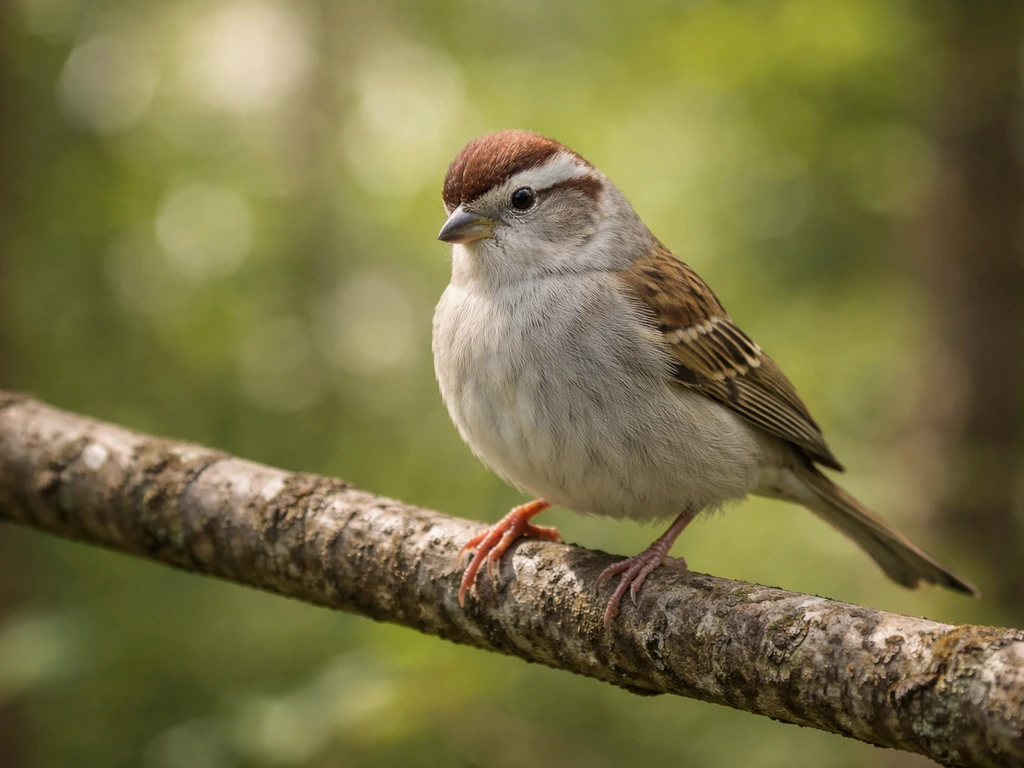
Etymology vs. Symbolism: Two Very Different Questions

Etymology is the linguistic history of a word. Merriam-Webster traces the word "etymology" itself back to the Greek "etymon," meaning the literal meaning of a word according to its origin. When you look up a bird's etymological meaning, you're doing historical linguistics: you want to know what language a name came from, what it meant in that language, and how spelling or pronunciation shifted over centuries. That's evidence-based reconstruction, not interpretation.
Symbolism is a completely different layer. It's the cultural, spiritual, or psychological meaning people project onto a bird or its name. When someone tells you an owl means death or wisdom, that's symbolism rooted in folklore, religion, or tradition, and it has nothing to do with the linguistic origin of the word "owl." The Online Etymology Dictionary traces "owl" from Old English "ule" through Proto-Germanic roots to a likely imitative origin connected to the bird's hooting sound. That's the etymological story. The symbolic story of owls as omens of death in some Native American traditions, or as symbols of wisdom in Greek mythology, developed entirely separately.
Understanding what birds represent as animals is a huge part of why people search for bird name meanings in the first place, but it's worth being clear from the start: etymology tells you where a name came from, and symbolism tells you what a culture decided to attach to that name or creature afterward. Both are valid. They just need different sources.
How to Look Up a Bird's Name Meaning Fast and Reliably
The fastest reliable method has two parallel tracks: one for scientific names and one for common names. Use both together for the most complete picture.
For Scientific Names

Start with the "Key to Scientific Names" on Birds of the World. You can search a genus or species name and it will show you the preferred etymology, flag alternate spellings or synonyms, and explicitly signal uncertainty with phrases like "Etymology undiscovered," "Perhaps," or "Probably." That honesty is actually a feature: it tells you when an answer isn't settled. Cross-reference any result with the Helm Dictionary of Scientific Bird Names by James A. Jobling, which covers almost every bird species in the world and gives each name's derivation and meaning. If those two sources agree, you can be confident in the etymology.
One practical example: the genus name Columba comes from Latin "columba" (a dove), which is itself linked to Greek "kolumbos" (diver). The species epithet in the Merlin's scientific name, Falco columbarius, means "of doves" in Latin, a reference to its prey. That's the kind of concrete, language-rooted meaning you get from scientific-name sources. It's descriptive biology encoded in Latin or Greek, not spiritual symbolism.
Before you start interpreting any scientific name, confirm you're looking at the accepted, current name rather than an outdated synonym. The International Code of Zoological Nomenclature (ICZN) requires that the original spelling of a name be preserved unless it's demonstrably incorrect under the Code's rules, and it carefully distinguishes between valid emendations and incorrect subsequent spellings. ITIS (the Integrated Taxonomic Information System) also defines these spelling concepts clearly. This matters because low-quality "meaning" websites sometimes base their etymology claims on misspellings or deprecated synonyms, which gives you a false derivation entirely.
For Common Names
For common English bird names, Etymonline (the Online Etymology Dictionary) is your first stop. It reconstructs word histories with Proto-Germanic and Proto-Indo-European roots where known, and it's transparent about the evidence. blank" rel="noopener noreferrer">eBird's help documentation notes that English bird name conventions align with the IOC World Bird List standards, which is useful because the IOC archives its English name changes with reasons in linked footnotes. The blank" rel="noopener noreferrer">IOC World Bird List archives include previous English name versions and the reasons for changes, which helps you verify historical usage. If you're not sure whether the common name you're looking at is current or has recently changed, check the IOC archive before building any interpretation on it.
Where Symbolic and Spiritual Meanings Actually Come From

Once you've nailed down the linguistic origin, the cultural layer is a whole separate research project. Symbolic meanings come from several distinct traditions, and they often contradict each other across cultures.
- Ornithomancy and augury: Ancient Greek and Roman cultures read omens from bird behavior, including flight patterns and calls. This practice is historically documented and gives us one of the oldest systematic frameworks for attaching meaning to birds.
- Religious and mythological traditions: Many bird names carry associations from specific religious texts or mythologies. These are culturally bounded meanings, not universal ones.
- Folklore and superstition: Regional folk beliefs about specific birds vary enormously. The Common Raven is considered an ill omen of death or evil in some Western traditions, but interpreted as a positive or protective figure in others. Neither is the "correct" symbolic meaning.
- Dream interpretation: Compiled dream dictionaries use psychological frameworks (sometimes Jungian, sometimes religious or cultural) to assign meaning to birds in dreams. These are interpretive narratives, not verified linguistic or taxonomic facts.
- Slang and colloquial usage: Bird names appear in everyday language as idioms and slang. These meanings evolved independently of both etymology and spiritual symbolism.
The American Crow, for instance, is treated as a symbol of bad luck and death in many European-influenced traditions, but in some Native American cultural contexts it's considered a sign of good luck because of the crow's recognized intelligence. A related example of how crow omen meanings can vary is discussed in a r/IndicKnowledgeSystems thread on “Three Versions of Crow Omens”. The owl gets labeled a death-bearer in some traditions and a wisdom figure in others. Compiled sacred-bird pages and dream-meaning websites often present one cultural reading as if it's the universal truth, which is exactly the kind of overclaiming you want to avoid.
If you're researching a name that appears in poetry or literature, the context shifts again. A poem like Shelley's "To a Skylark" with its famous line addressed to a bird that "thou never wert" is using a bird name as a literary device, and the meaning operates on a completely different plane from either etymology or folklore.
Bird Name Meanings in Everyday Life: Behavior, Slang, Superstition, and Dreams
When you see a bird in real life, notice specific behavior, hear a bird name used as slang, encounter one in a dream, or read about a bird in a cultural context, the type of "meaning" you're looking for changes. Here's how to think about each one.
Behavior-Based Meaning
A bird's behavior sometimes explains its name directly. If a bird's call sounds like its name (like the chickadee or the cuckoo), that's an onomatopoeic origin, and the "meaning" is biological description. If a bird's name reflects what it eats, where it nests, or how it moves, that's naturalistic naming. When you encounter a bird behaving in a striking way, understanding what different numbers of birds together can signal in folk traditions adds another interpretive layer, though always one that needs to be contextualized culturally.
Slang and Colloquial Usage
Bird names slip into everyday language as slang constantly. Calling someone a "birdbrain" or a "lark" has nothing to do with ornithological taxonomy. In British English, "bird" alone is slang for a young woman. These colloquial uses evolve from cultural associations and often outlive their original context. Sometimes a single letter added to a bird's name or a common bird term changes the meaning entirely in a regional slang context, which is something worth knowing if you're researching how a bird name changes meaning with the addition of a letter in wordplay or language traditions.
Superstition and Omens
Superstitions tied to bird names are culturally specific and historically layered. The practice of ornithomancy, reading omens from bird behavior, appears in early Greek sources and is comparable to Roman augury. When a specific bird's name appears in a superstition ("a raven at the window means death"), the name is functioning as a cultural shorthand for a whole set of associated beliefs. These beliefs are real anthropological data worth understanding, but they're not universal truths.
Dream Interpretation
Dream dictionaries and bird-in-dream interpretations typically frame bird symbolism around psychological themes like transformation, freedom, stress, or spiritual message. Some use religious framing (Islamic dream interpretation, for example), while others use Jungian or post-Jungian psychological frameworks. These are all interpretive narratives, not empirical claims. A compiled dream-meaning site might tell you that birds in dreams represent distance or longing, while another frames the same image as a spiritual messenger. Neither source is "wrong" in a cultural sense, but neither is providing you with a verifiable fact about the bird's name. Knowing the difference keeps you from overclaiming when you share or apply an interpretation.
If you're exploring what it means to see birds congregating in a specific place, like wondering about the significance of a bird aviary in a dream or symbolic context, the same rule applies: separate the cultural interpretation from any claim about the word's linguistic origin.
Debunking Common Misconceptions About Bird Name Meanings
The most common mistakes people make when researching bird name meanings fall into predictable patterns. Here's how to catch and correct them.
| Misconception | What's Actually True | How to Fact-Check It |
|---|---|---|
| A bird's spiritual meaning IS its name's meaning | Spiritual symbolism and linguistic etymology are separate. Symbolism was attached culturally, not encoded in the name. | Look up the name on Etymonline or Birds of the World's Key to Scientific Names; compare to any spiritual claim. |
| One culture's symbolic meaning applies universally | Ravens, owls, and crows have contradictory meanings across traditions. No single cultural reading is universal. | Search multiple cultural traditions for the same bird and compare the symbolism directly. |
| Dream dictionary meanings are factual bird name meanings | Dream dictionaries offer psychological/cultural interpretations, not verified etymology or taxonomy. | Check whether the source cites linguistic or taxonomic evidence, not just tradition or psychology. |
| A misspelled bird name has the same meaning as the correct one | Incorrect spellings can produce false etymologies entirely. The ICZN preserves original correct spellings for exactly this reason. | Verify the correct current name via eBird, IOC World Bird List, or ITIS before researching meaning. |
| Scientific names carry spiritual meanings | Scientific names under ICZN rules are formed from Latin, Greek, or other languages for descriptive purposes. They encode biology, not spirituality. | Use the Helm Jobling dictionary or Birds of the World to get the actual Latin/Greek derivation. |
One specific misconception worth calling out: when a compiled symbolism page says a bird name "means" wisdom or death or transformation, it's using "means" in a loose cultural sense. That's fine as long as everyone understands that's what's happening. The problem arises when readers treat that as the definitive, single meaning of the name. A bird's name might linguistically mean something entirely mundane (like "diver" or "of doves") while culturally carrying an enormous weight of symbolic association. Both facts can coexist without one canceling the other.
Similarly, if you've ever looked up a term like what "bird haven" means in a symbolic or cultural context and found wildly different answers depending on the source, that's because you're pulling from different interpretive traditions, not because one source is lying. Cross-referencing is the only way to build a reliable picture.
The same critical eye applies to poetry and literary bird references. When a poem or cultural text uses a bird's name in a non-literal way, exploring what the bird understander poem does with bird imagery, for example, the "meaning" is literary and contextual, not etymological or spiritual.
Your Quick Checklist to Decode Any Bird Name Today
Use this as your practical workflow any time you're looking up a bird name's meaning and want to be confident in what you find.
- Confirm the correct name first. Check eBird or the IOC World Bird List for the current accepted common name. For scientific names, use ITIS or Birds of the World to confirm you're working with the accepted taxon, not an outdated synonym or misspelling.
- Look up the linguistic etymology. For common names, use Etymonline. For scientific names, use the Birds of the World Key to Scientific Names and cross-reference with the Helm Jobling dictionary. Note any uncertainty flags like "Perhaps" or "Etymology undiscovered."
- Identify what type of meaning you're actually after. Are you researching linguistic origin, cultural symbolism, spiritual/religious tradition, slang usage, or dream interpretation? Decide this before you start reading sources, so you can evaluate them correctly.
- Research cultural/symbolic meanings with cultural specificity. Instead of asking "what does a raven mean?", ask "what does a raven mean in Norse mythology?" or "what does a raven symbolize in Pacific Northwest Indigenous traditions?" Specific cultural framing gives you verifiable, sourceable answers.
- Cross-check any claim that presents one meaning as universal. If a source says a bird "means" something without specifying a tradition or cultural context, treat it as a starting point, not a conclusion.
- Separate the layers in your final interpretation. You can say: "The word 'owl' comes from Old English 'ule,' an imitative word for the bird's call. In Greek mythology, owls were associated with Athena and came to symbolize wisdom. In some Native American traditions, they're associated with death. In Jungian dream interpretation, they often represent the unconscious." Each layer is accurate; none cancels the others.
- Apply the meaning responsibly. If you're sharing an interpretation, name the tradition or context you're drawing from. Don't present a cultural symbolic meaning as the "real" meaning of a bird's name, and don't present a linguistic etymology as a spiritual message.
If you're working through a bird's meaning and find yourself navigating a forest of conflicting claims, you're not alone. That's genuinely what bird name research looks like when you do it carefully. The goal isn't to find one definitive answer but to understand which answer belongs to which question. Etymology, symbolism, slang, and dream interpretation all ask something different of the same word, and they all deserve their own honest answer.
FAQ
How can I tell quickly whether a “bird name meaning” claim is etymology, symbolism, or something else?
Look for linguistic signals (language, root words, spelling changes, dates) to identify etymology. Look for cultural framing (tradition, omen, religious or dream interpretation) to identify symbolism. If the claim discusses slang, personality, or idioms, it is not about the bird’s name history. A good practice is to ask, “Does this source show evidence about word history, or is it telling me what people felt about the bird?”
What should I do if two etymology sources disagree on the bird’s origin?
Check whether the sources are talking about different name levels (common name vs scientific genus, or species epithet vs overall binomial). Then verify the accepted current scientific name first. For scientific names, prioritize sources that explicitly flag uncertainty and list alternate spellings, because that often explains the disagreement (for example, earlier synonyms or misspellings).
Do I need the scientific name to research a bird’s name meaning, or can I use only the common English name?
Common names are often enough for slang and some folkloric references, but they are risky for etymology because common names vary by region and change over time. If you want a reliable linguistic origin, use the accepted scientific name or at least confirm which species the common name refers to, since the same common name can apply to multiple species in some contexts.
Are “meaning” websites ever correct about etymology even if they seem sensational about symbolism?
Yes, but treat them as separate claims. A site may give a plausible linguistic origin while still overclaiming symbolic universality. If you see confident statements like “this bird means X in all cultures,” that is a red flag, but you can still salvage the etymology by cross-checking against a specialist scientific-name etymology reference.
What’s the most common reason etymology results turn out to be wrong for birds?
Using an outdated or incorrect spelling, or basing the etymology on a deprecated synonym rather than the accepted current name. Another frequent issue is mixing up the genus part of the name with the species epithet, which can swap the “meaning” you think you found.
How do I handle “probably” or “perhaps” wording in scientific-name etymology?
Treat it as provisional reconstruction, not a confirmed fact. If you want higher confidence, look for agreement across two independent references, and check whether uncertainty is tied to missing records, debated roots, or unclear imitation origins. When uncertainty is high, it is better to report the most likely root and the reason it is uncertain.
Can a bird’s behavior legitimately explain the name, and how is that different from symbolism?
Yes. Onomatopoeic and naturalistic naming can connect a name to sound, nesting, diet, or movement (biological description). That differs from symbolism, which is about what people assign culturally, psychologically, or spiritually to the bird or its name. If the source discusses human meanings like luck or omens, it is symbolism, not behavior-based naming.
Why do dream interpretations for the same bird differ so much?
Dream dictionaries often reflect different interpretive frameworks (religious, Jungian, or purely psychological) and different cultural traditions about birds. The same image can be mapped to different themes depending on the framework, so the “meaning” is not a verifiable property of the word itself. A helpful step is to note the specific system the author uses and treat it as an interpretation model, not evidence about etymology.
When a bird is used in literature or poetry, should I look up symbolism or etymology?
Usually symbolism and literary function. Poetry often treats the bird as an image or device, and the “meaning” depends on context and the author’s themes, not on the word’s original linguistic roots. You can still use etymology as background, but it rarely explains the poem’s effect by itself.
How do regional slang meanings affect bird name meaning research?
Regional slang can shift rapidly and sometimes changes with one letter or phrase variant. That means the “meaning” might be about colloquial usage rather than the bird itself. To avoid confusion, identify the specific country or time period the slang comes from and check whether the term refers to a person, behavior, or emotion rather than to the species.
Is ornithomancy (reading omens from birds) the same kind of meaning as etymology?
No. Ornithomancy is a cultural practice, a method of interpreting events using birds as signals, it is not derived from word history. If your goal is etymology, do not use omen interpretations as evidence about origins. Keep them in separate buckets and ask which question each source is answering.
Next Article
Bird Blindness Meaning: Causes, Signs, and What to Do Now
Bird blindness meaning: spot signs, tell vision loss from other issues, and take safe action or get urgent vet care.