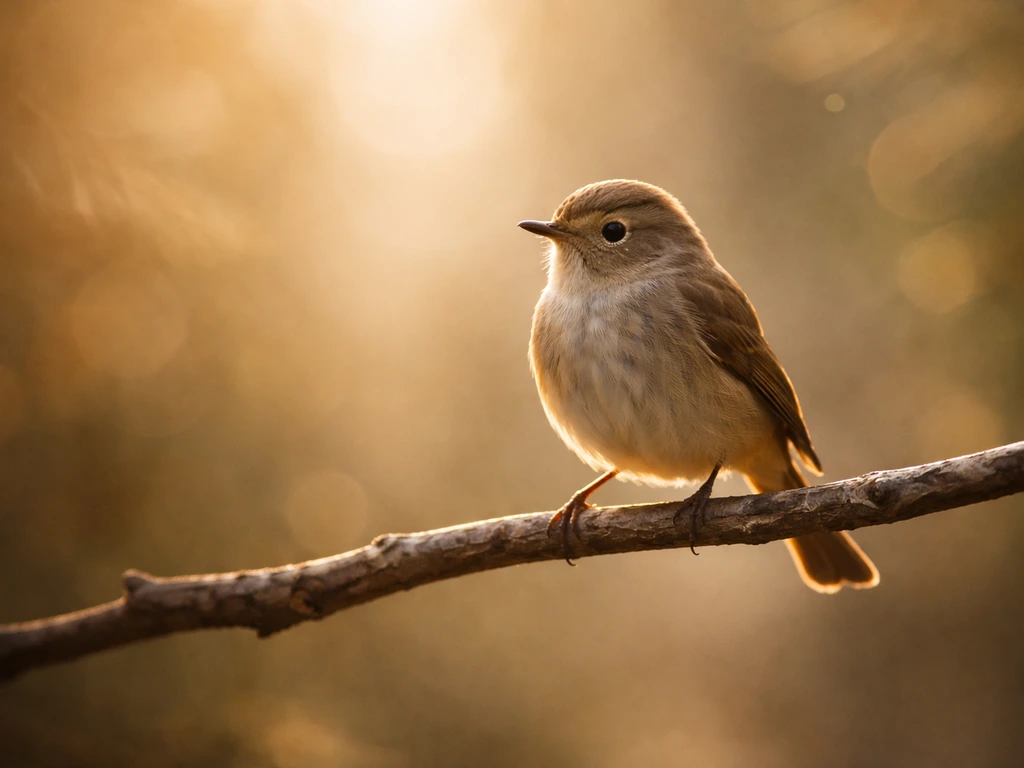
A "bird haven" is a safe, welcoming refuge for birds, whether that's a backyard garden stocked with feeders and a birdbath, a protected wetland, a wildlife sanctuary, or even a named nonprofit organization. The phrase combines two simple ideas: birds and a place of safety. "Haven" means shelter or refuge (think: a harbor in a storm), so a bird haven is literally a place where birds can find food, water, cover, and safety from threats. That's the most common meaning you'll encounter, and it's the one you're probably looking for.
Bird Haven Meaning: Literal, Symbolic, Dream and Practical Uses

Marcus Holloway
20 Jun 2026
What "bird haven" actually means in plain language
The word "haven" comes from an old word for harbor, and Merriam-Webster defines it as "a place of safety" or "refuge." Dictionary.com adds shelter and asylum to that list. So at its most direct, a bird haven is a place that offers birds protection from harm and access to what they need to survive. That could be your garden, a local park, a river delta, or a dedicated wildlife center.
You'll see this phrase used in a few different ways. Portland Nursery uses "Bird Haven" as a concept for designing a bird-focused yard. Backyard Bird Haven is an actual organization built around helping people turn their outdoor spaces into bird refuges. Avian Haven calls itself "a sanctuary for wild birds" and operates as a rehabilitation center. Wing Haven is a named garden and bird sanctuary in Charlotte, North Carolina. UC Davis researchers even named a formal program the "Bird Haven Ranch Nestbox Highway," established in September 2018, with 31 artificial nest boxes installed to support local cavity-nesting birds. So the phrase shows up across gardening, conservation, branding, and research, but the core meaning is always the same: a safe place where birds can thrive.
One important distinction worth making early: a bird haven is not the same as bird heaven, though people mix these up surprisingly often. If you came here because you meant the other phrase, bird heaven is a related concept with different meaning from bird animal meaning. "Haven" is a physical or metaphorical place of safety in the living world. "Heaven" is a spiritual afterlife concept. The confusion is understandable, but if you're researching habitats or symbolism, keeping that difference clear will help you get to the right answer faster.
Spiritual and cultural readings of a bird haven
Birds carry enormous symbolic weight across cultures, and when you add the concept of "haven" (sanctuary, refuge, safety during hardship), you get a layered spiritual idea that resonates across many traditions. A bird haven in symbolic terms is often read as a space of peace, spiritual restoration, or divine protection.
In Christian symbolism, birds and the idea of refuge are deeply intertwined. The dove returning to Noah's ark with an olive branch is one of the oldest examples of a bird signaling the existence of safe haven after chaos. Birds in Christian art are frequently tied to paradise and immortality, and the dove specifically is associated with the Holy Spirit, peace, and divine care. A place that draws birds, in this framework, can be read as a blessed or protected space.
More broadly, birds are near-universal symbols of freedom, spiritual elevation, and the connection between earthly life and something higher. Astrology and spiritual traditions commonly frame birds as messengers, souls in transit, or signs of the divine moving through the material world. When a place becomes a haven for birds, some traditions interpret this as a sign that the space carries protective or spiritually favorable energy. A garden that attracts many birds might be read in folk tradition as a home that is "blessed" or in harmony with nature.
The word "refuge" itself carries deep spiritual resonance. In faith contexts across traditions, a refuge is not just a physical shelter but a spiritual condition: a place or state of being where you are safe, held, and cared for. When these two ideas meet, a bird haven becomes more than a feeder setup. It becomes a symbol of sanctuary in the fullest sense.
What actually makes a place a bird haven (the real-world, behavioral side)
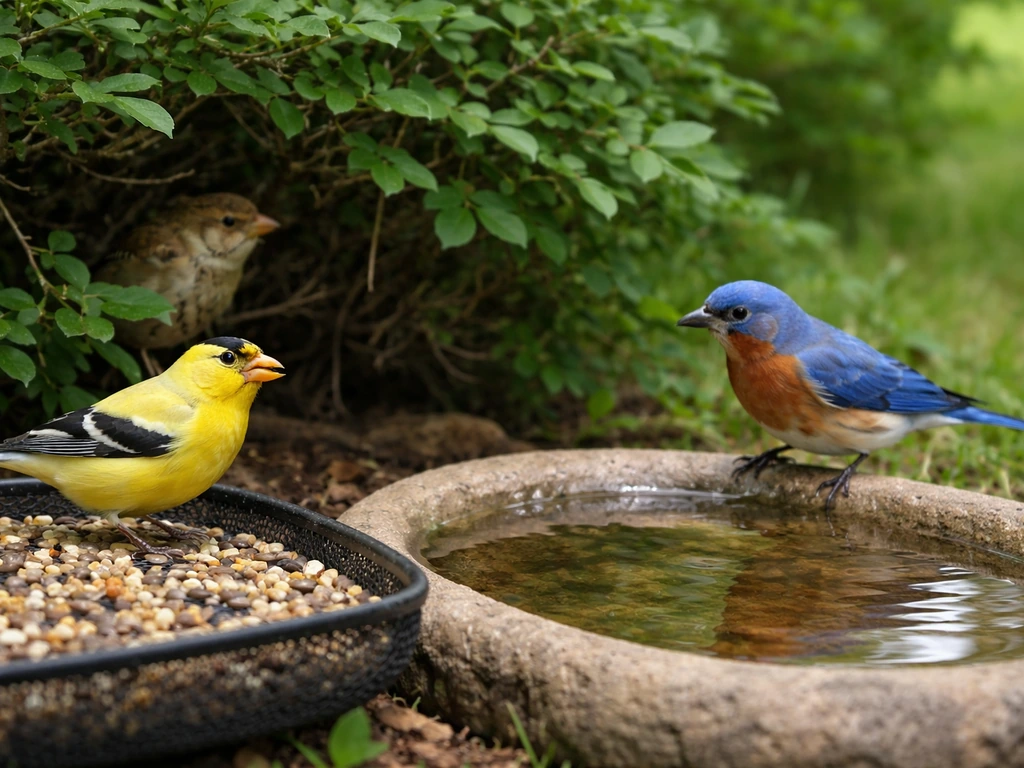
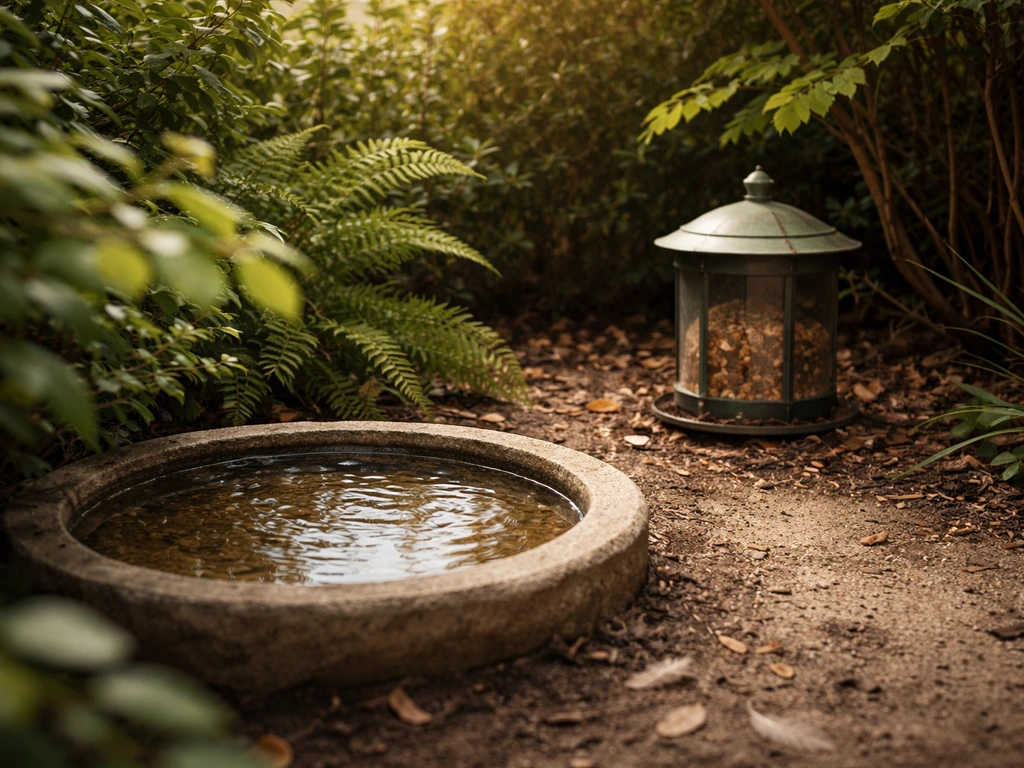
Birds don't visit a space because it feels spiritually welcoming. They visit because it reliably provides what they need: food, clean water, shelter from predators and weather, and safe places to raise young. Audubon’s bird-friendly communities framework spells out what that means in practice, emphasizing “food, shelter, safe passage, and places for birds to raise their young.” food, clean water, shelter from predators and weather, and safe places to raise young. Audubon Pennsylvania describes this as a four-ingredient recipe, and it maps almost perfectly to what the National Wildlife Federation calls the essentials for a certified wildlife habitat.
| Element | What birds need | Practical example |
|---|---|---|
| Food | Seeds, insects, berries, nectar depending on species | Native plants, quality seed feeders, avoiding pesticides |
| Water | Drinking and bathing water, changed daily | Birdbath with daily water changes, drip fountain or moving water feature |
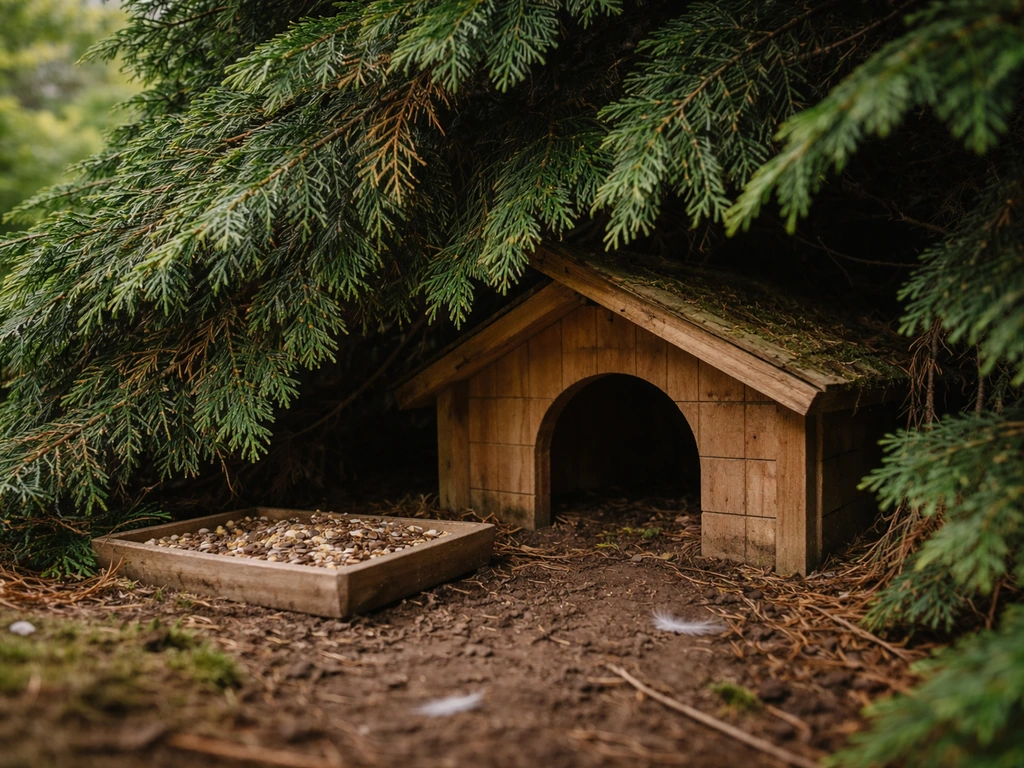
| Shelter/Cover | Protection from predators and harsh weather | Dense shrubs, evergreens, brush piles, nest boxes |
| Nesting sites | Safe places to raise young | Native trees with cavities, nest boxes, layered plantings |
A few things people commonly get wrong about building a bird haven: putting up lots of feeders is not enough on its own. If your yard has no cover, birds will eat quickly and leave because they feel exposed. Feeders near escape cover (dense shrubs within a few feet) dramatically improve how safe birds feel and how long they stay. The RSPB recommends washing your birdbath weekly and replacing the water daily, because standing water becomes a disease vector fast. Audubon notes that moving water, like a drip or fountain, is especially attractive during migration because birds can hear it.
Pesticides are one of the biggest overlooked threats. Cornell Lab and the NWF both flag pesticides (especially neonicotinoids) as significant dangers to birds, both through direct poisoning and by eliminating the insects that most birds, even seed-eaters, need to feed their nestlings. A true bird haven minimizes or eliminates pesticide use and relies on native plants, which support the insect communities birds depend on. The NWF targets 70% native plants as a benchmark for meaningful habitat value.
Window collisions are another hidden threat that undermines an otherwise welcoming space. Cornell Lab’s guidance on preventing bird-window collisions recommends making glass more visible to birds, such as by adding exterior markers or using specialized window films Window collisions are another hidden threat that undermines an otherwise welcoming space.. Cornell Lab estimates that hundreds of millions of birds die from window strikes in North America annually. Birds can't perceive glass as a solid barrier, so even a beautiful garden can become a hazard if windows are untreated. The Cornell Lab recommends placing exterior markers no more than 2 inches apart on windows, or using specialized window films, to make glass visible to birds.
Cats are the single largest human-related threat to birds. The NPS and U.S. Fish and Wildlife Service are both direct about this: cats kill billions of birds and small animals each year, and keeping cats indoors is the most effective single action you can take to protect birds in your yard. A yard with outdoor cats is the opposite of a haven, no matter how many feeders you have.
What to do if a specific place is called "Bird Haven"
If you searched "bird haven meaning" because you encountered a specific place or organization with that name, it's worth knowing that there are multiple distinct entities using the term. For a quick definition of bird aviary meaning, think of it as an enclosed space designed to keep birds safe while allowing them to move, feed, and behave naturally. Wikipedia has a disambiguation-style page for "Bird Haven" covering several of them. These include: the UC Davis Bird Haven Ranch (a research and nestbox site in California), Wings of Love Bird Haven (a parrot rescue nonprofit), TLC Bird Haven (a sanctuary for exotic birds with special needs), and BirdHaven.com (a backyard birding brand). If you're trying to find a specific one, your best starting point is checking which state or context you're in, since most of these are regionally based.
Slang and colloquial uses: when "bird haven" goes beyond the literal
"Bird haven" doesn't have a widely established slang meaning the way some bird-related phrases do. It's not street slang, it doesn't carry coded meaning in any major subculture, and it isn't a recognized idiom in the way that, say, "a little bird told me" is. What you do see is its use as casual shorthand in gardening and birding communities, where people say things like "I want to turn my yard into a bird haven" to mean: I want to make my outdoor space genuinely welcoming to birds. If you also mean the letters in a bird name, that "bird plus letter" idea can refer to how specific symbols or abbreviations are interpreted bird plus letter meaning. Reddit's birding communities use the phrase this way regularly, framing it as an aspirational goal for yard improvements.
Commercially, "bird haven" is used as brand positioning, with companies framing their products (birdfeeders, nest boxes, garden designs) as tools for creating your own haven. BirdHaven.com, for instance, markets itself around the idea of backyard space as a place of "peace, beauty, and connection with nature." That's a metaphorical extension of the literal meaning: a bird haven becomes a haven for the person too, a way of bringing stillness and nature into everyday life.
Superstitions and dream meanings around a bird haven
If you're here because you dreamed about a bird haven or a place full of birds, you're stepping into territory where cultural tradition and personal symbolism do a lot of the work. Dream interpretation isn't a science, but there are common threads across interpretive traditions that are worth knowing.
Birds in dreams are widely interpreted as symbols of freedom, aspiration, and spiritual connection. If you're wondering about “bird thou never wert meaning,” it fits into this same symbolic idea of hope and protection tied to birds. This shows up in classical dream-interpretation literature and is echoed in modern interpretive frameworks. A dream involving a place that feels like a safe haven for birds (a garden full of them, a sanctuary space, an enclosed yard where birds gather peacefully) is commonly read as a symbol of peace, protection, and restoration. The combination of "bird" (freedom, spirit, elevation) and "haven" (safety, shelter, rest) gives this type of dream a layered positive reading in most traditions: a space where your spirit or inner life can rest safely.
In folk superstition, many birds arriving at or around your home is often taken as a good omen, interpreted as a sign of blessings, abundance, or protection. Some European folk traditions specifically associate a garden that attracts many birds with a "lucky" or spiritually protected household. Whether you find that meaningful depends entirely on your own relationship to folklore, but it's a common layer of interpretation that readers often bring to a search like this.
It's worth being honest about the limits here: there's no scientific basis for interpreting bird visitation as a spiritual message, and dream symbolism is genuinely personal. What a bird haven means in a dream will vary depending on how you felt in the dream, what species appeared, and your own cultural background. The broader point is that the symbolism consistently leans positive: safety, peace, freedom, and connection. If you had a distressing dream, the bird haven element itself is unlikely to be the source of unease.
If you're interested in how individual bird names or species carry their own symbolic layers, that's a thread worth pulling separately. Different birds bring very different associations to these readings, whether you're exploring symbolism in a dream, a cultural tradition, or a poem. Some people also use “bird haven” as a poetry image, so “bird understander poem meaning” typically comes down to how the speaker reads safety and refuge into the birds’ presence.
What to actually do next, based on your situation
The right next step depends on why you searched this phrase. Here are the most common situations and what to do in each one. In that context, people often ask about bird number meaning, which refers to how specific numbers are interpreted alongside birds in various belief systems.
- You want to create a bird haven in your yard: Start with the four basics (food, clean water, shelter, nesting sites) before buying anything fancy. Plant at least some native species, remove or reduce pesticide use, treat windows with exterior deterrents spaced 2 inches apart, and keep cats indoors. That combination does more than a dozen feeders with no habitat support behind them.
- You encountered a specific place called "Bird Haven": Check whether it's a local park, a wildlife sanctuary, a research program, or a nonprofit. Wikipedia's Bird Haven disambiguation page and a quick regional search will usually clarify which one you're dealing with.
- You're looking for the spiritual meaning: A bird haven in symbolic terms is a place of peace, protection, and spiritual shelter. In Christian and many folk traditions, a space that draws and keeps birds is seen as blessed or harmonious. Take that as a cultural lens rather than a fixed rule.
- You dreamed about a bird haven: In most interpretive traditions, this kind of dream points to a need or desire for safety, rest, or a place where you feel free. Reflect on what the space in the dream felt like emotionally. That's usually more useful than any generic symbol list.
- You're researching the phrase for writing or symbolism: The phrase works on multiple levels simultaneously, literal refuge, spiritual sanctuary, and aspirational lifestyle concept. That layering is what makes it useful for poetry, branding, and cultural writing alike.
- You want to go deeper on bird symbolism more broadly: Explore how individual bird species carry their own specific meanings across cultures, or look into how birds function as symbols in particular literary or religious contexts, since species-level symbolism often gets more specific and surprising than the general "birds mean freedom" shorthand.
The honest bottom line: "bird haven" most often means a safe, welcoming place for birds, whether that's a backyard, a sanctuary, or a dream image of peaceful space. The spiritual and cultural readings layer on top of that literal meaning, consistently pointing toward protection, peace, and restoration. Bird name meaning can also help you understand the stories and symbolism people attach to different species. Wherever you encountered the phrase, those two layers (practical refuge and symbolic sanctuary) are almost always both in play.
FAQ
How do I tell if a “bird haven” is just marketing language or a real habitat effort?
Look for concrete habitat features, not slogans. A trustworthy bird haven typically mentions nesting support (cover and nesting sites), water quality or moving water, predator protection, and pesticide limits, or it shows a track record like approved sanctuary work or measured nest-box use.
If I want my yard to become a bird haven, what should I prioritize first: food, water, or shelter?
Prioritize shelter first, then water, then food. Birds feel safe enough to linger when they have nearby escape cover, even if feeders are available. Clean or moving water determines how reliably birds return, and food helps after birds trust the space.
What kinds of “cover” actually count as shelter for birds?
Cover means more than a single tree. Dense shrubs, layered native plantings, and small thickets within a few feet of feeders help birds escape quickly. If you only place feeders in open lawns, birds may feed briefly then avoid the area.
How can I make water safer and more attractive year-round?
Use a birdbath depth that lets small birds stand safely, and keep water moving during migration seasons if possible. In freezing weather, switch to a heated or de-iced option rather than letting birds rely on unsafe ice or contaminated thaw water.
Do nest boxes fit the definition of a bird haven, or are they a separate thing?
Nest boxes can be part of a bird haven because they provide a survival-critical need, breeding sites. For best results, match box size and entrance hole to local cavity-nesting species, place boxes at appropriate heights and orientations, and avoid opening or cleaning at the wrong time.
What plants are most helpful if I want to avoid harmful pesticide exposure?
Choose regionally native plants that naturally support local insects, since many birds depend on insects to feed nestlings. Avoid treating plants for pest control unless you can confirm bird-safe methods, and aim for a mix that offers year-round cover and seeds.
What’s the safest way to address window collisions in a bird haven yard?
Treat windows as a hazard even if your yard is otherwise perfect. Add exterior visibility markers close together (for example, a pattern that birds can see at typical approach distance) or use bird-safe window films, then re-check seasonally because reflection changes with light and weather.
How do I protect birds from cats without compromising my pet’s well-being?
The most effective option is keeping cats indoors, especially during peak bird activity times (dawn to late morning). If outdoor time is necessary, use supervised interaction or a secure cat enclosure, and remove attractants like accessible hiding spots near bird feeders.
Can I have a “bird haven” if I don’t live near wetlands or forests?
Yes. A bird haven can be a small urban yard, as long as it provides the needed essentials: nearby cover, reliable clean water, and food that is offered in a way that doesn’t concentrate risk. Even apartment balconies can work with careful placement away from windows and predator access.
What if birds keep coming, but they look unwell or dead on the ground?
Treat this as a red flag for unsafe water, contaminated food, or pesticide exposure. Stop using chemical treatments immediately, clean feeders and baths thoroughly, and check for hazards like stagnant water, moldy seed, or recent lawn spraying that could affect insect prey.
Is there a difference between a “bird haven” and a “bird aviary” in practice?
Yes. A bird aviary is usually an enclosed facility where birds are contained for safety while they can still move and behave naturally. A bird haven is typically an open or semi-open refuge that supports wild birds living freely, like a yard or sanctuary habitat.
In dreams, what details matter most for interpreting a “bird haven”?
Your emotions and the bird behavior matter most. Feeling calm and protected suggests restoration and peace, while fear or distress can point to pressure around safety or freedom. Species, whether birds are nesting, and whether the space feels inviting all change the interpretation.
Could “bird haven” in a dream mean something negative even if the overall symbolism is positive?
It can, especially if the dream context is stressful. For example, a “haven” that traps birds, limits movement, or feels unsafe can symbolize control, avoidance, or worry under the surface, even if birds themselves typically symbolize hope.
Next Article
Bird Animal Meaning: Symbolism, Dreams, Behavior Explained
Decode bird animal meaning in culture, spirituality, real behavior, and dreams with practical steps and accurate biology