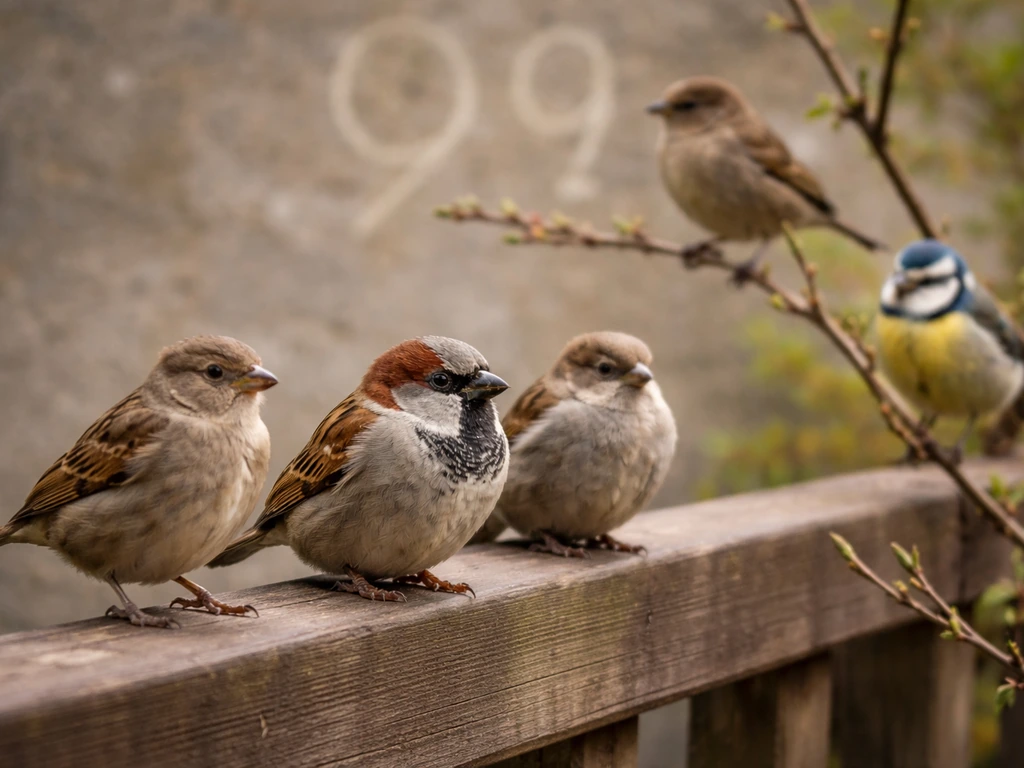
"Bird thou never wert" comes from Percy Bysshe Shelley's 1820 poem "To a Skylark." The full opening reads: "Hail to thee, blithe Spirit! / Bird thou never wert." Shelley's point is direct: the skylark he is addressing is not really a bird at all. It is a pure, disembodied spirit of joy, a voice from somewhere near heaven. The physical creature is almost beside the point. That one short line carries the entire emotional weight of the poem, and it is the reason people are still quoting it two centuries later.
Bird Thou Never Wert Meaning: Source, Variants, Symbolism

Marcus Holloway
8 Jul 2026
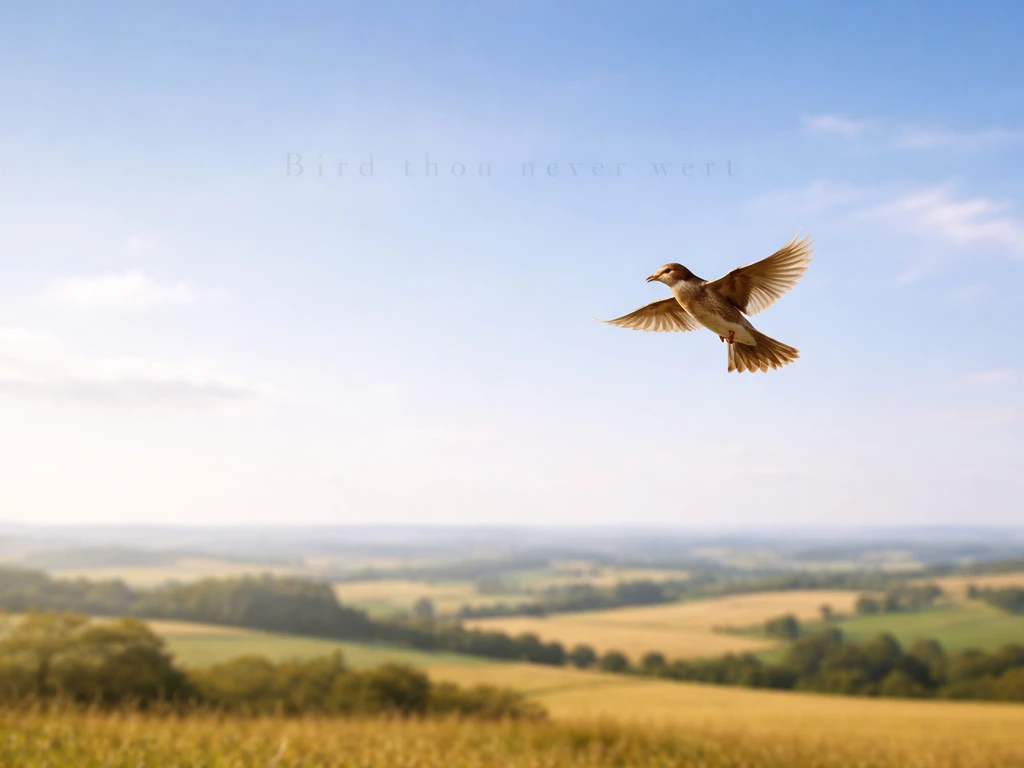
Where the phrase comes from and what Shelley meant by it

Shelley completed "To a Skylark" in late June 1820, reportedly after watching a skylark sing while walking near Livorno, Italy with his wife Mary. It was published the same year alongside his lyrical drama Prometheus Unbound. To a Skylark was completed in late June 1820 and published in 1820 alongside Shelley’s lyrical drama Prometheus Unbound (London) published the same year alongside his lyrical drama Prometheus Unbound. The poem runs 21 stanzas and is essentially one long question: what are you, and how do you make something so joyful? But the whole argument starts with that second line. By saying "Bird thou never wert," Shelley is stripping the skylark of its animal body. He refuses to let it be a literal bird. It becomes something higher: a spirit, a voice, an ideal.
The British Library describes the skylark in the poem as an "unseen presence" that is "not so much a physical form as a joyous, disembodied voice." This is exactly what the phrase means in context. Skylarks famously sing at extraordinary height, often out of sight while flying. You hear the song before you see the bird, and sometimes you never see it at all. Shelley turns that ornithological fact into a philosophical statement: something so pure it exceeds its own physical existence.
Shakespeare or Shelley? Sorting out the confusion
A lot of people who search for this phrase assume it is Shakespearean. It is not. Shakespeare did write about skylarks and other birds in works like Cymbeline and The Merchant of Venice, but "Bird thou never wert" is entirely Shelley. The confusion is understandable: the archaic "thou" and "wert" sound like Elizabethan English, and people often encounter the line secondhand, detached from its source. If you have seen it misattributed to Shakespeare, Keats, or Wordsworth, you are not alone. All three were contemporaries or near-contemporaries of Shelley, and Romantic-era poetry gets lumped together frequently.
There is also a punctuation variant worth knowing. Some anthology printings, including versions in the Oxford Book of English Verse, render the line as "Bird thou never wert, " with an em dash, and adjust the following line slightly ("That from heaven or near it" versus "That from Heaven, or near it"). These are editorial differences, not different poems or different authors. The core phrase and its meaning stay identical across all printed versions. If you are trying to verify a quote you read somewhere, these small punctuation shifts are normal and do not indicate a separate source.
The spiritual and symbolic read on the line
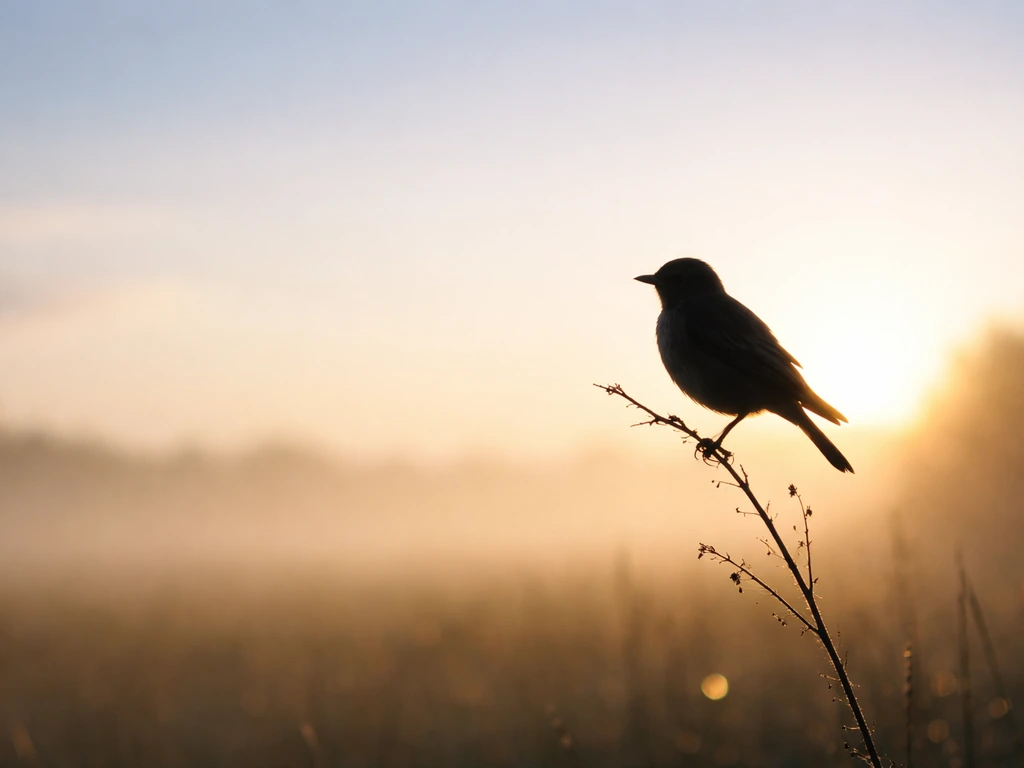
Birds carry enormous symbolic weight across cultures, and the skylark in particular maps onto themes of transcendence and spiritual elevation. If you also want to know what a specific bird plus letter meaning might suggest, it helps to look at the symbolism and the context you are working with Birds carry enormous symbolic weight. When people connect this line to spiritual meaning, they are usually responding to something real in the imagery. Shelley himself is doing what spiritual traditions have done with birds for millennia: treating them as messengers between the earthly and the divine, creatures that exist at the threshold between worlds.
"Bird thou never wert" takes that symbolism further than most. It does not just say the bird carries a spiritual message. It says the bird is the spirit, not the messenger but the thing itself. In terms of bird symbolism, this resonates with traditions that see birds as embodied souls or as forms taken by divine presences. This is where the idea of a bird haven meaning can come from, with birds read as uplifting, soul-like presences bird symbolism. The skylark in Shelley's poem is pure creative joy, unencumbered by a physical body. If you are drawn to this line for spiritual reasons, that is the core of it: the idea that true inspiration or joy has no earthly anchor.
The bird also symbolizes freedom here in its most radical form: not just freedom of movement, but freedom from material existence entirely. That connects to how many traditions interpret bird encounters as signs of the soul's liberation, or as reminders that what we perceive with our senses is not the whole story. Understanding the deeper layers of bird symbolism, the way birds thread through meanings of names, nature, and spiritual life, helps place Shelley's imagery in a richer context. Bird name meaning can be a useful way to connect symbolic ideas to language and tradition before you apply them to the skylark imagery.
If you dreamed this line or encountered a skylark in a dream
Dream encounters with birds often cluster around themes of longing, aspiration, and messages from beyond ordinary waking life. If a bird appeared in your dream alongside feelings of joy you could not quite hold onto, or if you heard singing without being able to find the source, the connection to "Bird thou never wert" is worth sitting with. The skylark's invisibility while singing is exactly the quality Shelley was responding to, and dreams that echo this, something beautiful and real but just out of reach, tend to signal a desire for something transcendent or a grief over something lost.
In dream interpretation frameworks, a bird that is heard but not seen is often read as a message that has not fully arrived yet. It can represent a truth you sense but cannot articulate, or a spiritual presence that is with you but not yet fully visible. This overlaps with the poem's central image in an almost uncanny way. If you came to this phrase through a dream rather than a literature class, your intuition about its meaning is probably tracking something real.
A skylark specifically, when it appears in dreams or omens, tends to be associated with pure-hearted optimism and the possibility of transcendence. It is not an ominous bird by any tradition I am aware of. The combination of height, invisibility, and sustained song makes it a symbol of sustained hope, the kind that does not require proof. If you are reading it as an omen, lean toward the positive: something of great beauty or significance is present, even if you cannot yet see its full form.
How people use the phrase today
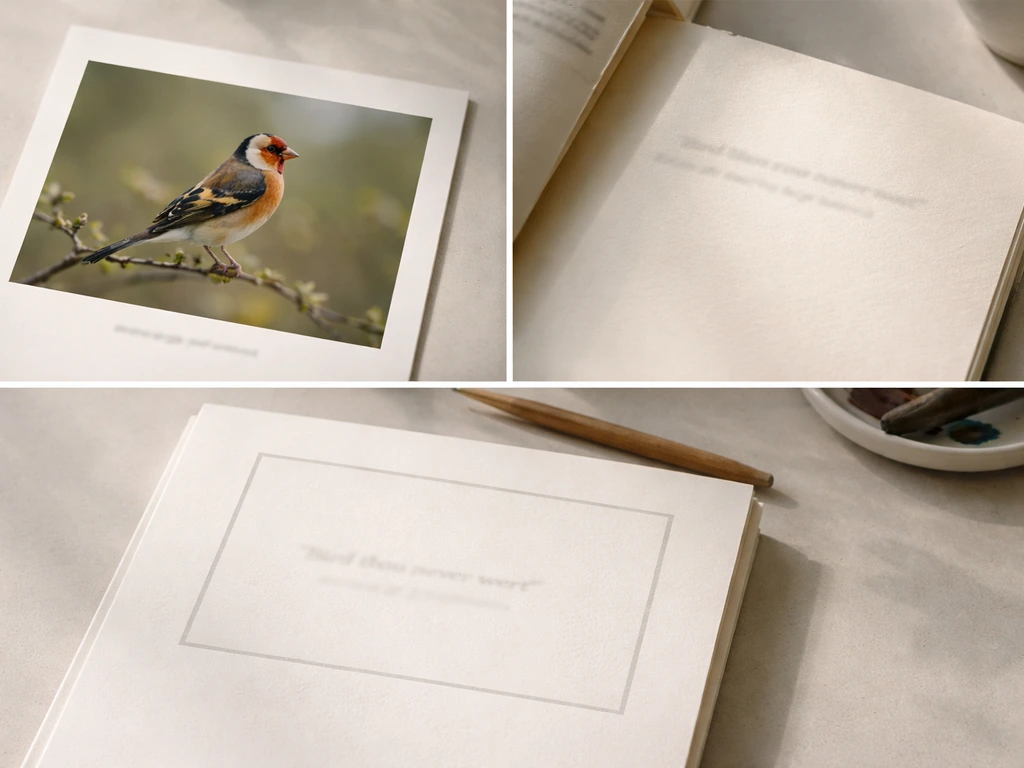
"Bird thou never wert" has migrated well beyond its original literary context. You will find it used as a caption for bird photography, as an epigraph for pieces about creativity, and in spiritual writing about the soul's nature. Musicians and poets quote it to frame work about idealized beauty or unattainable joy. It shows up in grief writing, particularly when someone is trying to articulate a presence that is felt rather than seen.
The interesting cultural shift is that people often lift the line without the rest of the poem, which changes its meaning subtly. Taken alone, "Bird thou never wert" can sound like a negation, almost a denial that the bird exists. But in the poem's context, it is an elevation. Shelley is not dismissing the skylark; he is promoting it. If you encounter the phrase used in a way that feels melancholy or strange, that decontextualization is probably why. The line was written as a compliment, not a doubt.
The phrase also connects interestingly to how other bird-related expressions work in culture. The way we use bird imagery in poems, sayings, and everyday speech often carries layered meanings that have drifted from their origins. If you have also been searching for a bird number meaning, that is a separate system of interpretation rather than a direct part of Shelley's line. Tracking those layers is worth doing, whether you are reading Shelley or exploring the broader world of what birds mean to us culturally and spiritually.
Common misunderstandings and how to check what you have
The biggest misunderstanding is treating the line as a standalone proverb or superstition with a fixed meaning outside its source. It is a literary line, not a folk saying, and its meaning is inseparable from the poem's argument. If someone has told you it means a bird sighting is a message from the dead, or that hearing a skylark is a specific omen, that is a folkloric addition layered on top of Shelley, not the original meaning.
The second most common mistake is the Shakespeare misattribution mentioned earlier. A quick search of any reliable poetry archive or the Oxford Book of English Verse will confirm the author in seconds. If a source attributes this line to Shakespeare, Keats, Byron, or anyone other than Shelley, that source is wrong.
Third, watch out for paraphrases being passed off as quotes. The exact wording is "Bird thou never wert," and it appears as line 2 of "To a Skylark." Versions like "Thou wert never a bird" or "Bird, you never were" are modern paraphrases that flatten the archaic register Shelley was working in deliberately. If you are quoting it, use the original.
Quick checklist for verifying the quote
- Confirm the author is Percy Bysshe Shelley, not Shakespeare or another Romantic poet.
- Confirm the poem is "To a Skylark," published in 1820 with Prometheus Unbound.
- Confirm the exact wording: "Bird thou never wert" appears as line 2 of the first stanza.
- Check that any source you are citing is not paraphrasing or using a modern rewrite.
- Note that punctuation variants (dash versus comma) are editorial, not textual differences.
How to actually use this meaning in your situation
If you are here because you encountered the phrase in a poem or quote and wanted to understand it: the answer is that Shelley is saying the skylark transcends its physical form. In bird-keeping terms, an aviary is a controlled space for birds, and knowing the bird aviary meaning can help distinguish practical definitions from symbolic uses like Shelley's line. It is pure spirit, pure joy, pure creative energy. That is the intended meaning, and it is a beautiful one.
If you are here because of a dream or a bird encounter and you are looking for meaning: the phrase maps well onto experiences of sensing a presence without seeing it clearly, hearing something true without being able to name it, or feeling inspired by something that seems to come from beyond ordinary experience. Use it as a frame for reflection rather than a fixed omen. It can also help you pin down the bird understander poem meaning by grounding the line in Shelley’s idea of joy beyond literal form. Ask yourself what felt transcendent or just-out-of-reach in what you experienced, and let the image of the unseen singing skylark guide that inquiry.
If you are using the phrase creatively or spiritually: be intentional about whether you want the full Shelleyan meaning (elevation, transcendence, joy exceeding physical form) or whether you are building on it with your own cultural or spiritual layer. Both are valid. Just knowing the distinction keeps your interpretation honest and grounded. Reading the full poem, which takes about five minutes, will give you more than enough to work with for any context you want to apply it to.
| Context | What the phrase means | How to apply it |
|---|---|---|
| Literary reference | The skylark is a disembodied spirit of joy, not a literal bird | Quote correctly with Shelley as author; read the full poem for full context |
| Spiritual symbolism | A presence that transcends its physical form; pure creative energy | Reflect on what in your life feels transcendent or beyond ordinary perception |
| Dream interpretation | A heard-but-unseen bird signals a truth or presence not yet fully visible | Journal about what you sense but cannot yet articulate; lean toward optimism |
| Omen or encounter | Skylarks are associated with sustained hope and elevation, not warning | Treat a skylark sighting or sound as a positive, aspirational sign |
| Cultural or creative use | An elevated compliment, not a negation; the bird is more than a bird | Preserve the original intent when quoting; note if you are adding new layers |
FAQ
Does “Bird thou never wert” mean the skylark is imaginary or doesn’t exist?
Yes, the line can feel like it is denying reality, but it is actually a rhetorical move. Shelley is praising the skylark by denying that its value is limited to its body, so read it as, “your essence is more than what you appear to be,” not as a literal factual claim.
What is the closest modern-English translation of “Bird thou never wert”?
In modern English, the “thou” and “wert” structure is basically “you were not.” That “not” targets the physical, literal “bird” framing, while the poem immediately replaces it with a spirit-like presence, so the emphasis lands on elevation rather than correction or insult.
Why does the line sometimes feel melancholy when people use it alone?
The most meaningful way to quote it is with context, either by including the immediate next line or by making clear in your use that you are drawing on the poem’s idea of unseen joy. If you use only the two words, “bird” plus the negation can mistakenly read as bleak or accusatory.
Is “Bird thou never wert” a proverb with a fixed meaning?
Not exactly. It is Shelley’s own phrasing within a Romantic literary tradition that treats birds as spiritual metaphors, but it is not a generic proverb. If you want a “fixed meaning,” you will get it only by returning to the poem’s sustained argument.
Do punctuation variants like an em dash change the meaning?
Editorial punctuation changes do not create a different poem, but they can affect how the line flows when someone reads it aloud. If you are trying to verify a quote, focus on the core wording “Bird thou never wert,” then treat comma or em dash differences as formatting choices.
How should I connect the line to dream interpretation if I heard a bird but couldn’t find it?
Yes, but only as an interpretation of the symbolism, not as part of Shelley’s original claim. If you have a dream about hearing a bird but not seeing it, you can treat it as a “message that is sensed but not yet fully visible,” which matches the poem’s invisibility theme.
What if my bird encounter or dream felt unsettling, not joyful?
If your dream or encounter came with anxiety, you can still use the skylark frame, but apply it to “uncertainty about something beautiful” rather than assuming it is ominous. The skylark image in this poem is consistently tied to joy and aspiration, not threat.
If I’m using the line spiritually, should the bird be a messenger or the message?
A safe approach is to decide what role the bird is playing in your use: messenger, symbol, or the thing itself. Shelley collapses messenger and message into one “spirit” presence, so if you want his meaning, avoid treating it as a simple coded sign with a single destination.
How can I tell when I am over-interpreting the line beyond Shelley?
Your interpretation may be drifting if you start adding specific predictions, like “it means a death” or “you will receive a letter soon.” The article’s core point is that it is not a folklore omen system, so keep it reflective and theme-based rather than event-specific.
What exact wording should I use when citing it in writing?
Yes. If you want to quote it precisely, keep the archaic phrasing and spacing around “Bird thou never wert.” Common modern paraphrases flatten the tone and can shift the line from elevated to oddly literal, so prefer the original if your goal is faithfulness.
What should I read alongside the line to get the full intended meaning?
Many readers miss that the entire poem builds from that opening into a long, questioning praise of how the skylark produces joy. If you only remember the first line, you may end up with the wrong emotional takeaway, so skim or read the poem to lock in the intended direction.
How can I use “Bird thou never wert” in a poem or caption without distorting it?
The line can also be used in creative work as a title or epigraph for “unseen inspiration,” especially when the subject is artistic drive or ideas that feel larger than their source. If you do this, pair it with a sentence that clarifies whether you mean transcendence, creative flow, or both.
Next Article
Bird Number Meaning: Codes, Omens, Synchronicity and Dreams
Decode bird number meanings: codes, bird counts, synchronicities, dreams, plus real-world tips and next steps.