Birds mean different things depending on whether you're asking about cultural symbolism, a dream you had last night, a strange behavior you noticed in your yard, or a slang phrase you heard. The phrase 'bird animal meaning' covers a lot of ground, so the most useful thing you can do right away is narrow down your context: What species did you see? If you are trying to decode a “bird + letter” clue, the letter meaning will depend on the specific letter code or system being used, so it helps to identify the context first bird animal meaning. Where were you? What was it doing? Once you have those details, the interpretation becomes much more specific and much more useful than any generic answer.
Bird Animal Meaning: Symbolism, Dreams, Behavior Explained

Marcus Holloway
18 Jun 2026
What people actually mean when they search 'bird animal meaning'
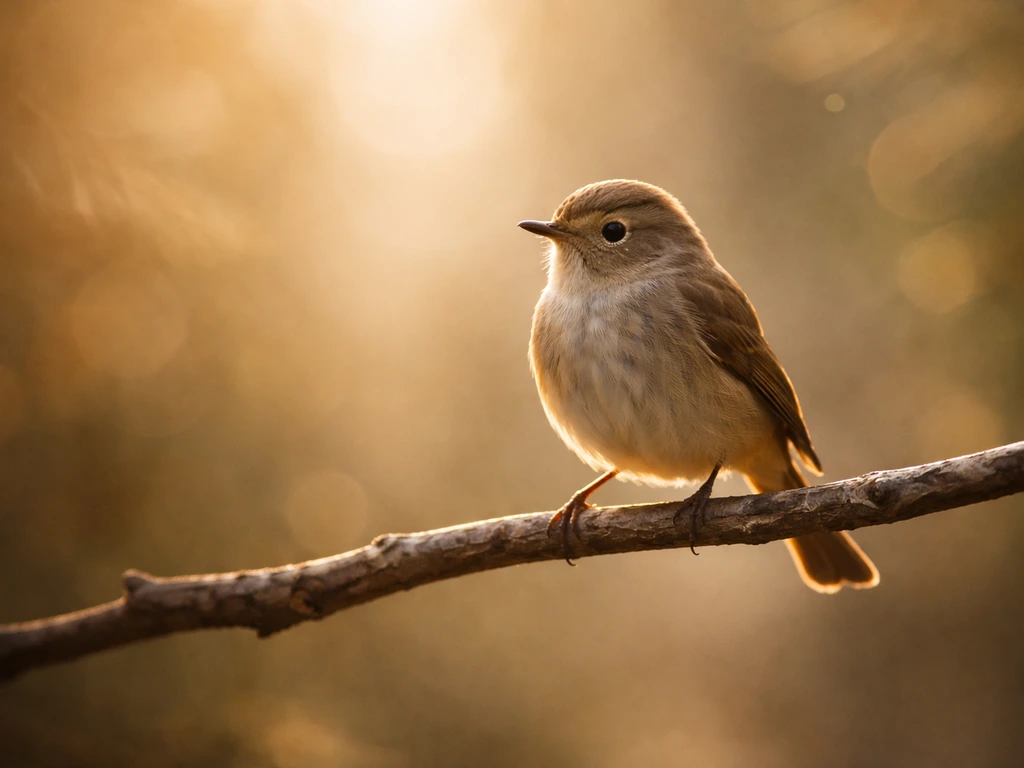
Most people searching this phrase are asking one of three very different questions. Some want to know what birds generally symbolize across cultures and spiritual traditions. Others are looking for the meaning of a specific bird they encountered, whether in real life, a dream, or a piece of art. And a smaller group is curious about idioms and slang, things like 'a bird in the hand' or 'flip the bird. Some people use the phrase "bird haven meaning" the same way, treating it as a symbolic clue rather than a literal description. ' Each of these has its own answer, and mixing them up leads to frustrating, vague results.
To get a useful answer, start by identifying four things: the species (or at least a description), the context (dream, real-life sighting, a story you read), the location and timing (backyard at dawn vs. You can apply the same approach to figuring out a bird-themed poem’s meaning, by checking which bird is involved and what context surrounds it bird animal meaning. urban rooftop at night matters a lot), and your emotional response to the encounter. With those four anchors in place, you can move through the sections below and land on something genuinely meaningful rather than a horoscope-style generalization.
How birds are symbolized across cultures
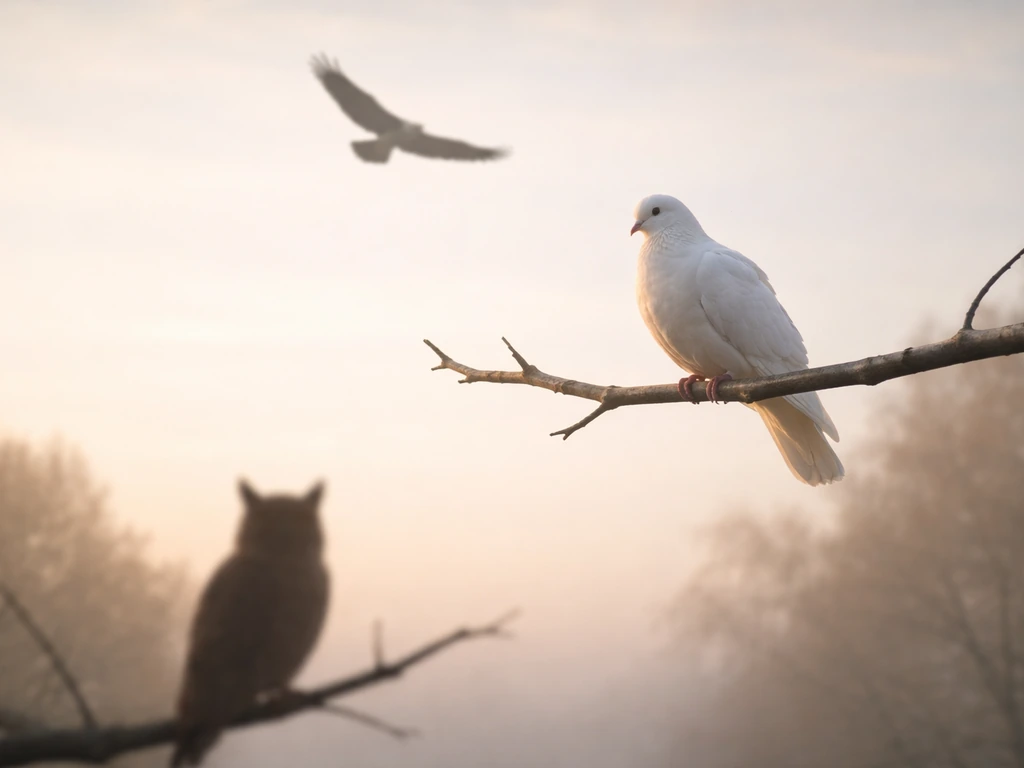
Across most of human history, birds have represented the same broad cluster of ideas: freedom, the soul, divine messages, and the bridge between the earthly and the spiritual. That consistency isn't a coincidence. Birds fly, which humans can't do naturally, and they appear and disappear in ways that feel mysterious. Ancient cultures built elaborate symbolic systems around these observations.
In Christian tradition, the dove became one of the most enduring symbols in religious art. Its association with the Holy Spirit comes from accounts of Jesus' baptism, and the dove-and-olive-branch image is now universally recognized as a symbol of peace. The dove's whiteness and gentle behavior reinforced those meanings over centuries of repetition in art and scripture.
Ravens carry a more complex cultural load. In Norse mythology, Odin's two ravens, Huginn and Muninn (Thought and Memory), flew across the world each day and returned to whisper what they had seen into his ears. Ravens were intelligence and information, not death. In some Western and medieval European traditions, however, the raven's black color and scavenging behavior flipped that meaning toward omen and ill fortune. The same bird, radically different symbolism depending on where and when you look.
The owl's association with Athena, the Greek goddess of wisdom, made it a symbol of knowledge and learning throughout Western academic culture. You still see the owl on university crests today. But in medieval Europe, an owl hooting near a house was considered a death omen. Many indigenous traditions across North America, Africa, and Asia hold owl symbolism of their own, which may have nothing to do with either of those Western frameworks. Cultural symbolism is always local before it becomes global.
| Bird | Common Cultural Associations | Tradition/Region |
|---|---|---|
| Dove | Peace, the Holy Spirit, purity, new beginnings | Christian, broadly Western |
| Raven | Intelligence, prophecy, ill omen | Norse, medieval European, various indigenous |
| Owl | Wisdom, knowledge, death omen | Greek/Roman, medieval European, various |
| Eagle | Power, sovereignty, national pride | Roman, Native American, broadly global |
| Crane | Longevity, good fortune, fidelity | East Asian (Japanese, Chinese, Korean) |
| Peacock | Immortality, beauty, vanity | Hindu, early Christian, broadly Eastern |
Spiritual meanings: what specific birds tend to signal
Spiritual bird symbolism operates differently from cultural symbolism. It's more personal and more tied to the moment of encounter. Many spiritual frameworks treat a bird's appearance as a message directed at you specifically, shaped by species, behavior, and timing. Whether you subscribe to that view or not, understanding the framework helps you work within it or evaluate it honestly.
Cardinals are probably the most commonly cited 'messenger' bird in North American spiritual circles, especially in the context of grief. The belief that a red cardinal appearing after a loved one's death is a visitation from that person is widespread and deeply felt. There is no scientific basis for it, but the symbolism provides genuine comfort, and dismissing it outright misses the point of what it does for people.
Hummingbirds are often associated with joy, resilience, and the present moment, partly because of their remarkable physical abilities (hovering, flying backward, traveling thousands of miles in migration despite their tiny size) and partly because encountering one up close tends to feel like a gift. Crows are linked to transformation and adaptability in many spiritual frameworks, which tracks well with their actual biology: crows are extraordinarily intelligent, use tools, hold grudges, and adapt to almost any environment.
A useful rule of thumb in spiritual interpretation: when a bird's symbolic meaning aligns with its real biological behavior, the symbolism tends to stick across cultures and feel more grounded. When it contradicts the biology entirely (owls as death omens, for instance, when owls are actually doing nothing more than hunting mice), it's worth holding the meaning a little more loosely.
Reading bird behavior you actually see
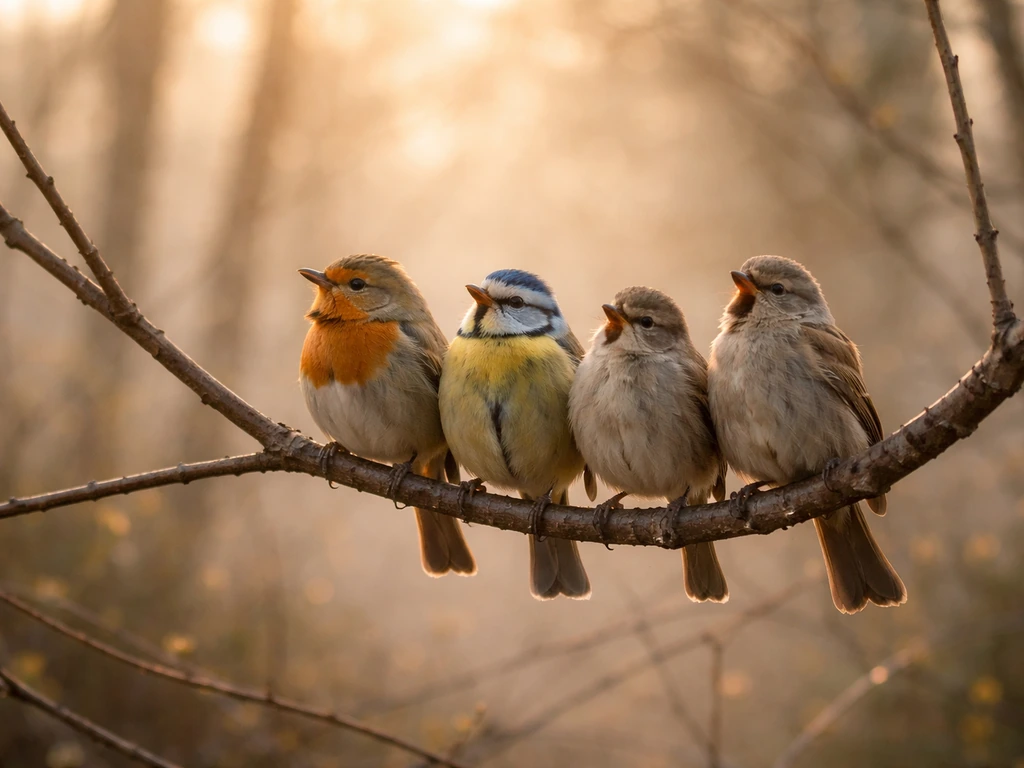
This is where biology and symbolism diverge most sharply, and where having real information saves you from misreading a situation entirely. If birds are gathering in large numbers in your yard or on a nearby structure, the most likely explanation is food, roost sites, or migration staging, not a portent of anything. Cornell Lab's BirdCast project tracks migration using weather radar and machine learning, and it can tell you on any given night whether tens of millions of birds are moving through your region. When you know migration is peaking, a sudden explosion of birds in your yard has a completely mundane and fascinating explanation.
The dawn chorus is another behavior people often find meaningful. That wave of loud birdsong starting before sunrise, especially in spring, is primarily about territorial defense and mate attraction. Research confirms that song timing and function differ between dawn and daytime: dawn singing is more intense and more socially loaded. It peaks between March and May in the U.S. and Canada. It's stunning to experience, and it does feel significant, but it's rooted in breeding biology, not mystical signaling.
A bird hitting your window repeatedly deserves a practical response more than a symbolic one. The USGS explains that repetitive window strikes usually happen because a bird sees its own reflection and interprets it as a territorial rival. It's not a message. It's a territorial dispute with a mirror. Cornell Lab and the Smithsonian both recommend breaking up reflections using window film or patterns spaced no more than 2 by 4 inches apart on the outer surface of the glass. This is one of those cases where a biological explanation is both more accurate and more actionable than any symbolic reading.
- Large gatherings: check BirdCast for migration activity and local eBird reports before assigning symbolic weight
- Dawn singing: normal breeding-season behavior, peaks March through May
- Window strikes: territorial reflection response or migration disorientation at night; apply physical deterrents
- Following behavior: many birds follow large animals (including humans) to catch disturbed insects
- Unusual species appearing: check whether it's migration season for that species in your region
What birds in dreams usually mean
Dream interpretation is genuinely complicated, and anyone who gives you a flat answer like 'a bird in a dream means freedom' is shortcutting in ways that lose most of the actual signal. The International Association for the Study of Dreams (IASD), the main scientific body for dream research, takes a multidisciplinary approach precisely because dreams are too context-dependent for universal symbol dictionaries to work reliably.
Dream researcher Kelly Bulkeley's work emphasizes that a dreamer's own emotional associations with an image matter more than any fixed cultural meaning. Traditional Catholic also discusses common bird symbolism and meanings, including how different birds are interpreted emotional associations with an image matter more than any fixed cultural meaning. If you grew up fearing birds, a bird dream carries a very different weight than it does for someone who keeps backyard feeders and feels peace around them. This doesn't mean cultural frameworks are useless in dream interpretation, but they work best as a starting point, not a final answer.
That said, some recurring themes do show up across dream traditions. Birds in flight commonly map to feelings of freedom, ambition, or escape from constraint. A caged bird tends to surface in dreams when someone feels trapped or controlled. A bird entering your home (a surprisingly common dream image based on online discussions) often gets interpreted as an unexpected visitor or a message arriving in your personal life. Dead birds in dreams are frequently read as the end of a phase or the loss of something once valued. The emotion you felt during the dream is usually the most reliable compass for interpretation.
Slang, idioms, and superstitions involving birds
English is full of bird-based phrases, and they mean very specific things that have nothing to do with ornithology. If you have heard the saying "bird thou never wert meaning," it works the same way as other bird idioms: the phrase carries an idea rather than describing real bird behavior. 'A bird in the hand is worth two in the bush' is about certainty versus risk. 'Kill two birds with one stone' means accomplishing two things with one effort. 'Flip the bird' is a rude gesture with origins traced back at least to ancient Greece. 'For the birds' means worthless or pointless. These are culturally loaded phrases that happen to use birds as metaphors, not statements about bird behavior or symbolism.
Superstitions are a different layer again. The belief that an owl hooting means someone will die is persistent enough that it generates genuine anxiety in people who hear one at night. Reddit discussions show this vividly: people connect owl calls to deaths in their community with the same pattern-matching that links any two events that happen close together in time. But owls hoot because it's breeding season and they're territorial, not because death is nearby. The owl's timing is about biology, and the nearby death is usually unrelated correlation. If you hear people claim a specific pattern or bird number meaning, treat it the same way as other folk superstitions and look for the real biology behind the behavior.
Other common superstitions: a bird flying into your house means bad luck or death coming; a robin seen on New Year's Day brings good luck; seeing a single magpie is bad luck (hence the British habit of saluting magpies). These beliefs are deeply embedded in folk culture and worth knowing, but none of them have any causal mechanism. They're cultural anxiety-management systems, not predictive tools.
Separating bird mythology from what biology actually says
The most reliable way to fact-check a bird belief is to ask whether the behavior described has a known biological explanation. If it does, that explanation should take precedence over the symbolic one when you're making real-world decisions. If it doesn't contradict the symbolism, both can coexist without problem.
| Common Belief | What Biology Says | Verdict |
|---|---|---|
| Owls hooting = death nearby | Owls hoot for territorial and mating reasons, especially at night in breeding season | No causal link; pure correlation |
| Bird hitting window = bad omen | Reflection-based territorial behavior or migration disorientation; leading cause of human-related bird mortality | Biological explanation; take practical action |
| Cardinal appearing = deceased loved one visiting | Cardinals are year-round residents attracted to feeders; appearance is predictable | No evidence; emotionally meaningful belief for many people |
| Dawn chorus = spiritual awakening | Breeding-season territorial/mate-attraction behavior peaking at dawn | Biological explanation; spiritual interpretation is optional overlay |
| Large flocks gathering = warning sign | Usually migration staging, roost aggregation, or food source response | Check BirdCast first; almost always biological |
| Bird entering house = bad luck | Accidental entry through open doors/windows, especially in spring | No predictive validity; coincidence-based belief |
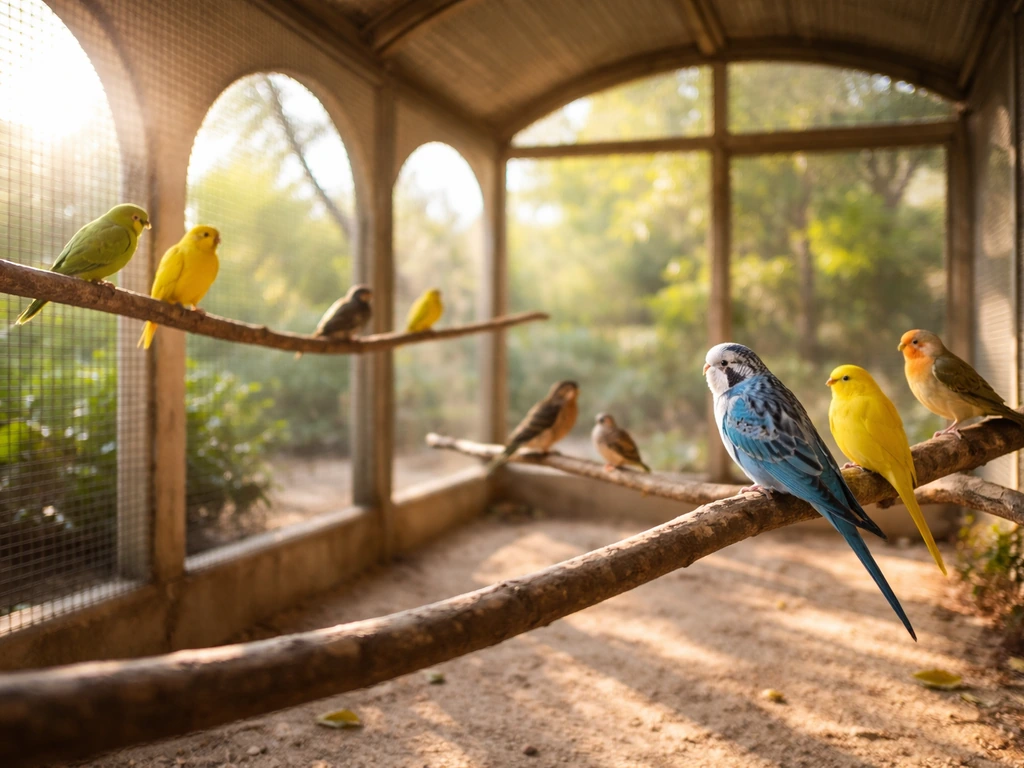
For verifying a specific sighting or behavior, eBird (run by Cornell Lab) is one of the best tools available. When you log a sighting, the platform asks for species, location, date, time, and behavior, exactly the same details that make any interpretation more reliable. If you're seeing a species that feels unusual for your area, eBird's regional data can tell you within minutes whether it's genuinely rare or just peak migration season. That's the kind of grounding that turns a vague symbolic question into something you can actually work with. If you are wondering about a bird aviary meaning, it usually points to how people connect enclosed birdkeeping with ideas like freedom, care, and observation vague symbolic question.
The bottom line is this: bird symbolism is rich, genuinely useful in emotional and spiritual contexts, and worth exploring deeply across cultural and dream frameworks. But it works best when you bring real information to it: the species, the behavior, the time of year, and the geographic context. The symbolism of a raven landing near you in January in coastal Alaska is different from one appearing in a dream the night after a loss. Specificity is what turns 'bird animal meaning' from a generic search into an answer that actually fits your life.
Your next steps for a clearer interpretation
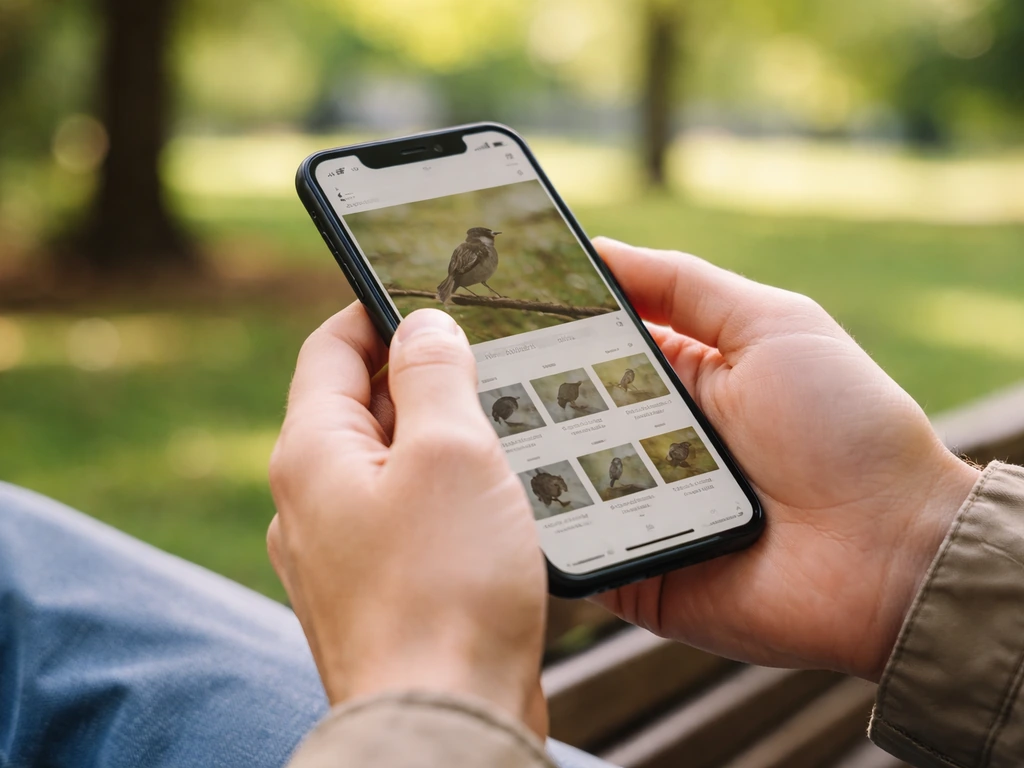
- Identify the species as precisely as you can using a field guide app like Merlin (Cornell Lab) or a regional field guide
- Note the date, time of day, location, and what the bird was doing when you noticed it
- Check BirdCast or eBird for migration activity in your region on that date before assuming the sighting is unusual
- Cross-reference the species against the cultural tradition most relevant to your background or the context you're interpreting
- If it was a dream, write down your emotional state during the dream and your first instinctive associations with the bird before looking up any symbol dictionary
- If a bird is striking your window, address the physical cause first using window film or patterned deterrents before reading it as symbolic
- Use this site's species-specific and context-specific content to dig deeper into the particular type of meaning you're after, whether that's a bird's name, a specific number of birds, or the meaning of birds in a particular literary or poetic context
FAQ
If I only know “bird animal meaning” and not the species, how can I still get a useful interpretation?
Use a best-fit description instead of guessing a species. Note size (small like a sparrow vs large like a hawk), color pattern (solid, spotted, striped, mostly black), beak shape (short and thick for seed-eaters, hooked for predators), and behavior (hovering, flocking, scavenging). Those clues narrow symbolism and, most importantly, help you check the biology behind the scene.
What should I do if the bird in my yard shows unusual behavior, like repeated circling or screaming?
Treat it as information about the local situation. Repeated circling often matches predator inspection, territory defense, or mating activity, and loud calls can be breeding-season signaling. If you can, compare what time it happens (morning vs evening), and whether it’s near a nest, feeder, or potential threat.
How do I tell the difference between a meaningful “spiritual message” and ordinary migration or breeding activity?
Cross-check timing and context. If the behavior clusters around predictable windows (spring breeding, fall movement, dawn song), ordinary biology is usually the dominant driver. If the “message” consistently involves a specific species and arrives during a personal milestone, you can keep the spiritual meaning as an added layer while still staying grounded in what the bird is likely doing.
Are dream meanings for birds reliable if I have recurring dreams about birds?
Recurrence matters, but emotion matters more. Track the feeling you wake up with and what the bird is doing in each version (chasing, trapped, landing, attacking). A repeated dream that always carries anxiety may point to a consistent stressor, while a repeated dream with calm curiosity may reflect resolution or growing confidence.
What if I dream about a bird that I’m afraid of in real life?
Expect the emotional association to dominate the interpretation. Fear in waking life can flip the same “bird theme” into a symbol of threat, avoidance, or loss of control. If possible, note what the dream environment is doing (cage, open sky, home interior) because that setting often explains the fear without needing a universal symbol dictionary.
Is it ever appropriate to treat a bird superstition as a real warning?
Use it only as a prompt to check practical risks, not as a prediction. For example, if you hear claims that certain birds foretell harm, you can still take sensible steps like securing wildlife-proofing, reducing window reflections, or reviewing health and safety routines, while recognizing the superstition itself has no causal mechanism.
How do I interpret window strikes beyond the “mirror” explanation?
Check for contributing design factors. If the glass is highly reflective, the risk increases. Also consider adjacent trees, bright interior lights at night, and patterned surfaces that may still create a clear “rival” image. If strikes continue after adding window film or spacing patterns, it may be worth adjusting lighting or covering the most reflective windows during peak movement.
What does it mean if many different bird species appear at once in my area?
Most often, it means the local conditions are good for feeding or movement. Consider whether there was a recent weather change, a new food source (fruiting plants, open garbage, feeders), or seasonal migration staging. If it’s nighttime movement, it may be a broader regional migration rather than a personal sign tied to one meaning.
How should I use eBird or similar apps when I want “bird animal meaning” for my sighting?
Use them to confirm rarity and likely seasonality, then update your interpretation. If the species is common locally, symbolism may be more general and emotion-driven. If it’s genuinely rare for your area, you can pay extra attention to timing (migration, weather fronts, unusual dispersal) because that biological explanation can change how “special” the sighting feels.
What’s the safest way to interpret “bird number meaning” or patterns people claim to see?
Treat number claims as pattern-matching and verify the underlying bird behavior first. Before assigning meaning, ask what could naturally change counts, such as a feeder schedule, nesting nearby, time of day, or migration waves. If the pattern disappears when conditions change, it was probably driven by reality rather than destiny.
Next Article
Bird Aviary Meaning: Definition, Symbolism, and Interpretations
Bird aviary meaning explained: definition, symbolism, dream and spiritual interpretations, and how it differs from a cag