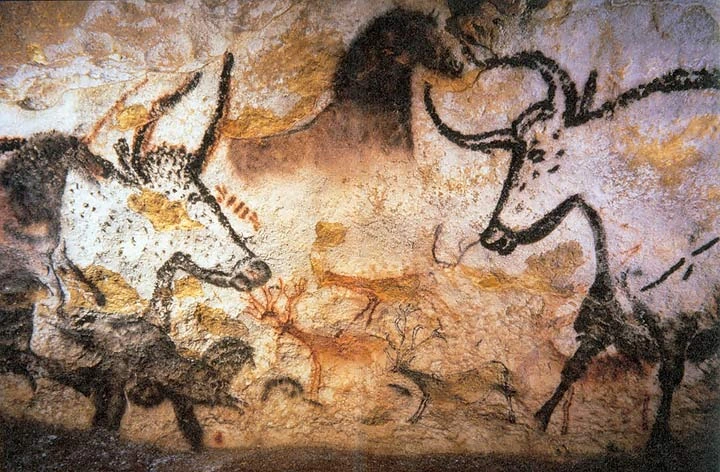
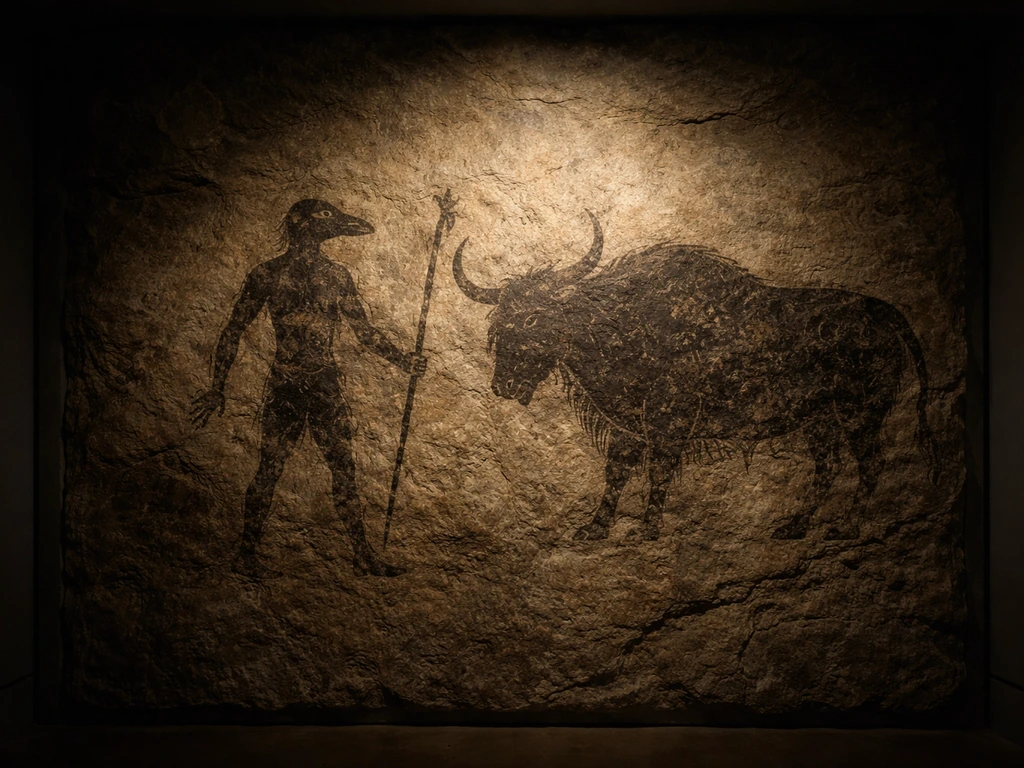
The bird-headed man with bison is most likely a reference to one of the oldest and most debated images in human history: the Shaft Scene at Lascaux Cave in France, painted roughly 15,000 to 17,000 years ago. In that painting, a figure with a bird-like head (possibly a bird mask) lies near a wounded, disemboweled bison. No one knows exactly what it meant to the people who made it, but the best-supported interpretation is that it depicts a shaman in a trance state, with the bird symbolizing spirit flight and the bison representing the raw, earthly power the shaman was interacting with. If you saw this image in a dream, an art piece, or a social media post and you're trying to figure out what it means, here's how to work through it.
Bird Headed Man with Bison Meaning: Symbols, Dreams, Interpretations

Marcus Holloway
4 Jun 2026
Where you've probably seen this image
The phrase 'bird-headed man with bison' shows up in several places. The most common is a direct reference to the Lascaux cave painting, which circulates widely on Reddit, history blogs, and museum digital collections (the University at Buffalo Libraries has it catalogued in their digital archive, for example). It's sometimes called the 'Dead Man,' the 'Bird Man,' or just 'the Shaft Painting,' and it's routinely described as the only human figure in the entire Lascaux cave system, which makes it stand out.
Beyond Lascaux, the 'bird-headed human' motif appears across many art traditions. Wikimedia Commons has a whole category tagged 'bird headed man' pulling together images from various cultures and time periods. So when you encounter this phrase, it could mean the specific prehistoric painting, a general mythological archetype, a dream image, or a modern artistic riff on the theme. Context matters a lot here, and we'll come back to that.
Breaking down what each part of the symbol means
The bird
Across nearly every symbolic tradition that has recorded meanings for birds, a few themes keep coming up: the soul, transformation, freedom, and the ability to travel between worlds. In shamanic cosmologies specifically, birds are the go-to symbol for what researchers call 'soul flight' or 'spirit travel,' the idea that a shaman's consciousness leaves the body and moves through spiritual realms.
The Quest Magazine (Theosophical Society in America) frames it directly: in the Lascaux context, the bird features on the figure signal 'avian transformation and spirit flight. ' Outside of shamanic traditions, birds function as psychopomps (soul guides), omens, divine messengers, and as the soul itself. In Chinese mythology, specific birds like the Qingniao serve as messengers between humans and divine figures. In Mesopotamian iconography, birds were associated with goddesses like Inanna-Ishtar.
The common thread is movement between realms: earth to sky, human to divine, living to dead.
The bird-headed human (the hybrid figure)
A human body with an animal head is called a therianthrope, and this isn't just a Lascaux thing. San rock art in South Africa, Egyptian iconography (think Horus or Thoth), and Mesoamerican imagery all include figures that blend human and animal traits. The specific reading of 'human + bird head' is that the person retains human intellect, will, and social identity while the bird part signals a transformed or elevated state of consciousness. In the Lascaux figure specifically, the bird head might be a mask worn during ritual, not a literal anatomy claim. Either way, the message is: this is a human who has taken on bird qualities, someone in transition, not fully in either world.
The bison
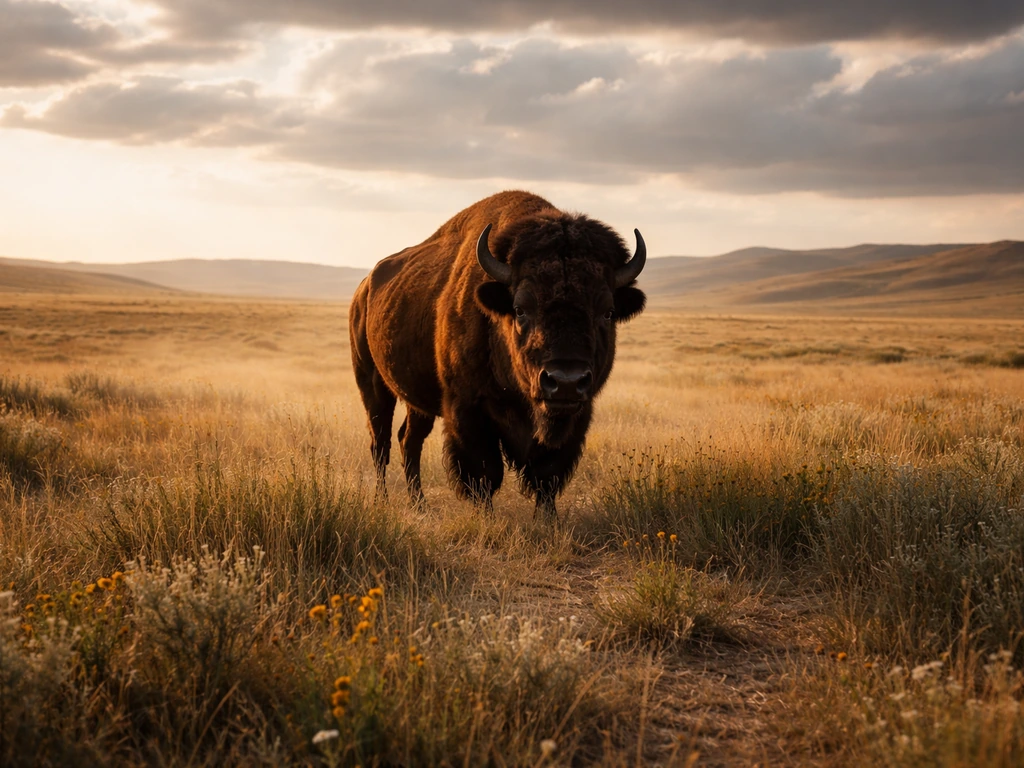
Bison carry heavy symbolic weight, especially in Plains Indigenous traditions. The American bison was central to identity, survival, spirituality, and traditional teaching across many Indigenous nations. Plains peoples considered bison sacred animals and spiritual relatives, not just a food source. The Lakota tradition includes the White Buffalo Calf Woman narrative, which connects bison directly to sacred knowledge and ceremony. In more general symbolic terms, bison represent grounding, raw strength, community sustenance, seasonal cycles, and endurance. In the Lascaux painting specifically, the bison is wounded, which shifts the reading: this isn't just 'power' in the abstract, it's power at the moment of transformation, at the boundary between life and death.
The combined symbol
Put the three elements together and you get a picture of a liminal encounter: a being who has taken on bird qualities (spirit, transcendence, transformation) in close proximity to the ultimate grounded force (bison, earth, survival, community). The tension in the image is exactly what makes it powerful. It's not one winning over the other. In the Lascaux version, both figures appear to be in a moment of crisis or transition. The combined meaning most scholars lean toward, cautiously, is a depiction of shamanic ritual: the human practitioner using trance (bird mind) to engage with earthly forces (the bison) in a space between worlds.
Spiritual and mythological takes, culture by culture
There's no single culture that 'owns' this image, so interpretation depends on which framework you're working within. Here are the most plausible readings based on established traditions:
| Cultural Framework | Bird-Headed Figure Reading | Bison Reading | Combined Interpretation |
|---|---|---|---|
| Paleolithic/Shamanic (Lascaux context) | Shaman in trance or spirit flight | Earthly power, hunted animal, life force | Ritual mediation between human and animal worlds |
| Plains Indigenous traditions | Bird as spiritual messenger or guide | Sacred relative, community sustenance, sacred cycles | The spiritual dimension of the human-bison relationship |
| Jungian / depth psychology | The animus elevated, ego in transformation | Shadow or instinctual self, raw unconscious force | Confrontation between higher self and primal nature |
| General shamanic cosmology | Soul in flight, practitioner mid-journey | Grounding force, anchor to material world | Balance of transcendence and earthly responsibility |
| Mesoamerican bird symbolism | Transformation, sorcery, prognostication | Strength, herd/collective | Individual transformation in service of the community |
One important caveat: the Lascaux painting predates all of these named traditions by thousands of years. Researchers at History.com and Lapham's Quarterly both note that the exact meaning remains genuinely debated. So while these frameworks offer useful lenses, none of them is the 'correct' historical reading. What they can do is help you figure out which meaning resonates most given your own context.
If this showed up in a dream or vision
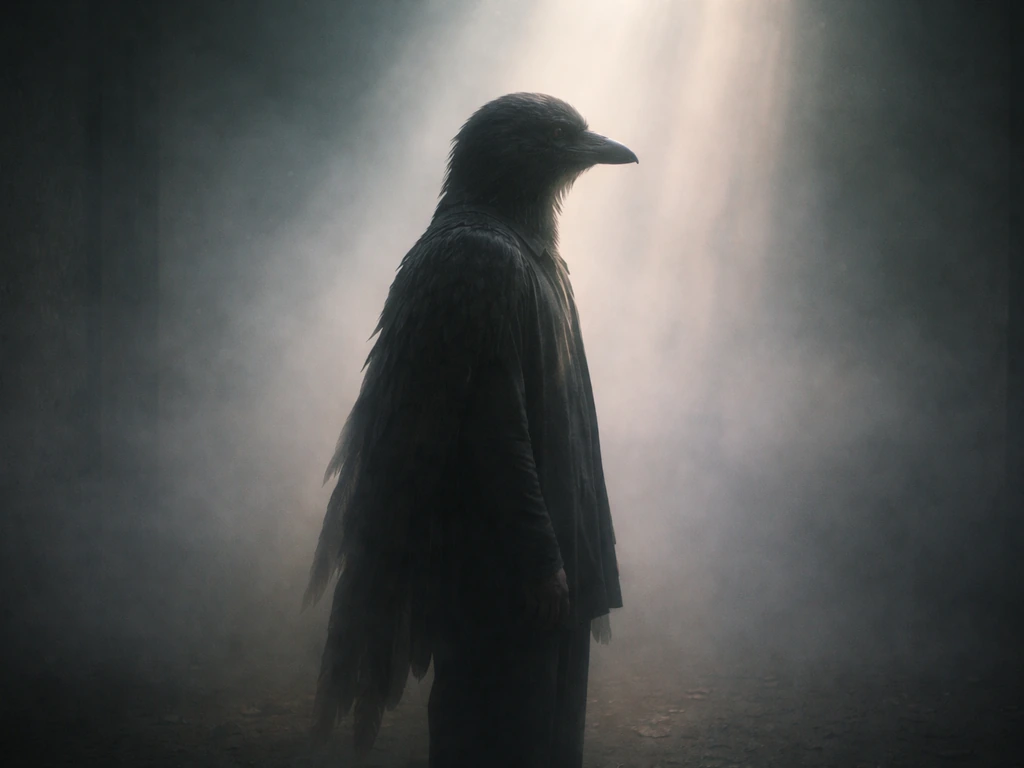
Dreams involving animal-human hybrid figures tend to carry strong psychological weight. In Jungian analytical psychology, dreams express the overall psychic situation and act as a kind of compensation for what's happening in waking life. So if a bird-headed figure appeared in your dream, especially alongside a massive, powerful animal like a bison, that's worth slowing down for.
The bird-headed figure in dream terms often points to a part of yourself that is trying to rise above a situation, gain perspective, or access intuition. The fact that it has a human body means the dreaming mind is keeping it relatable, someone like you, but elevated or transformed. Bird dreams commonly cluster around themes of freedom, transformation, and spiritual connection. If you meant the bird emoji instead of the bird-headed figure, the same general themes can help you interpret bird emoji meaning like spirit, freedom, and transformation.
The bison in a dream context is read by many practitioners as representing survival, community support, and the challenge of confronting something big head-on. Dream symbol guides like Judith Dreyer's work on bison frame it as the part of you (or your situation) that requires endurance and collective strength, not just individual effort.
Together in a dream: you may be in a moment where you're trying to rise spiritually or intellectually while something massive and earthly is demanding your full attention. The wounded bison detail from Lascaux, if it appears in your dream, might signal that this powerful force in your life is changing or vulnerable, which could be frightening or could be an opening.
Real-world and situational readings
Sometimes people encounter this image not in a dream but in a tattoo, a piece of art someone shared, or a pop-culture reference. In those cases, the situational reading matters more than the mythological one. If someone uses this image as a personal emblem, they're often drawing on the 'shaman archetype' idea: a mediator between worlds, someone who navigates both the spiritual and the intensely physical. It's a common image in communities that value spiritual practice alongside embodied, grounded living.
In a broader behavioral sense, if you keep being drawn to this particular image or symbol, that's a signal worth paying attention to. Contemporary shamanic practitioners, as documented in academic research on Western-based shamanism, often interpret bird imagery as a 'heads up' for incoming messages or a call to heightened awareness. An MDPI paper on contemporary Western-based shamanism reports that many respondents interpret birds of prey as omens or messages, often as “heads up” for incoming messages a 'heads up' for incoming messages or a call to heightened awareness. The bison element anchors that: whatever message is coming, it has weight. It's not a light or trivial nudge.
If you encountered this in a specific cultural context, like a museum exhibit, an Indigenous ceremony, or a spiritual community, treat the meaning as belonging to that community first. The Smithsonian's researchers are explicit that bison meaning is embedded in specific communities' stories and protocols. Observe and ask rather than assume a universal reading.
Slang, folk superstitions, and claims you should be skeptical of
Because this image circulates on social media and Reddit, it picks up folk explanations that range from credible to completely invented. If you keep seeing the bird mouth open meaning in the same conversations, treat it like another claim to verify rather than a settled interpretation. Here are the ones to watch for and how to think about them:
- "It's proof of ancient aliens or interdimensional beings": This is a very common internet claim attached to any unusual prehistoric image. There is no credible evidence for this. The Lascaux figure is best explained by the well-documented human practice of wearing bird masks in ritual contexts, as supported by anthropological and archaeological research.
- "Bird-headed figures always mean death": Not accurate. Bird-headed figures in Egyptian iconography (like Thoth) are associated with wisdom and knowledge. In shamanic traditions, they signal spirit travel and healing, not death. The Lascaux bison is wounded, and the figure may be fallen or in trance, but 'death omen' is an oversimplification.
- "The bison is always a symbol of American Indigenous cultures specifically": While bison carry profound significance in many Indigenous North American traditions, bison-like animals appear in European cave art from tens of thousands of years before any of those specific nations existed. The symbol draws meaning from multiple, distinct sources.
- "This image predicts something about your future": Dream interpretation and symbolic reading are reflective tools, not predictive ones. Using a prehistoric cave image as a literal prophecy isn't how any serious interpretive tradition uses it.
- "The Lascaux painting definitely shows a dead shaman": Scholarly debate on this is ongoing and real. Researchers at History.com, Lapham's Quarterly, TheArtStory, and Kenney Mencher's academic blog all note the meaning is genuinely uncertain. Anyone who tells you they know exactly what it means is overstating the evidence.
How to actually use this meaning going forward
Before you settle on a single interpretation, it's worth pinning down how and where you encountered this image. That context narrows the meaning considerably. Ask yourself:
- Where did I see this? (Prehistoric art reference, dream, tattoo, social media, a spiritual community, a friend's artwork?)
- What was happening in my life at the moment I noticed it or started being drawn to it?
- Which part of the image caught my attention most: the bird head, the human body, or the bison? That dominant element is usually the most relevant one for personal interpretation.
- Am I in a period of transition, grounding, or both? Bird energy points to transformation and perspective. Bison energy points to endurance, community, and sustained effort.
- If this was a dream: what was the emotional tone? Were you afraid, awed, calm? The feeling in the dream often matters more than the visual content.
If this image came up in a dream or a personal spiritual context, it's worth sitting with in a journal. Try writing about what the bird-headed figure might represent as a version of you, and what the bison might stand for in your current life. Are you trying to transcend something that still has real, grounded weight? Are you navigating between a spiritual calling and practical responsibilities? That tension is the heart of this symbol.
If your interest is more scholarly or artistic, the Lascaux Shaft Scene is well-documented and genuinely fascinating. It sits at roughly 15,000 to 17,000 years old and is framed as the only human figure in the cave. Reading multiple perspectives on it, including the cautious scholarly ones that acknowledge uncertainty, will give you a much richer picture than any single 'definitive' interpretation.
It's also worth noting that bird symbolism runs deep across many separate but related topics: the meaning of a bird mask in ritual contexts, the significance of a bird head as a symbol of elevated consciousness, and what a bird-suited figure might mean in ceremonial or cultural performance all connect to the same underlying theme of the bird as a marker of transformation.
If you're wondering about the bird lips meaning, this kind of bird-linked symbolism can be a helpful place to start, but context is key bird-headed man with bison. If you’re asking about the bird emoji meaning instead, the symbol can shift depending on platform, context, and whether it’s meant as a general “freedom and transformation” sign or a more specific reference. The bird-headed man with bison just gives that theme an unusually ancient and concrete anchor.
It can also be helpful to look at the bird suit meaning angle, since costume and body-coverings often signal the same transformation themes. If you are wondering about bird suit meaning, it usually points to transformation themes signaled by costume and body coverings.
Whatever brought you to this image, the most useful move is to resist locking it into one fixed meaning too quickly. This is a symbol that has survived for 17,000 years partly because it holds multiple truths at once: the desire to transcend, the weight of the physical world, and the ritual space where the two meet. Let it work on you a little before you decide what it means.
FAQ
Is the bird-headed man with bison always meant as a shaman, or could it be something else?
It often gets read as shamanic trance because of how the figure and bison are staged, but the image is debated, and some interpretations focus more on hunting, death, or ritual boundary-crossing than on shamanism specifically. If you are using it personally, match the “mediator” aspect to what you are currently doing, like making decisions that require both intuition and practical grounding.
How can I tell whether I’m looking at the exact Lascaux “shaft scene” versus a modern art reference?
Check whether the image shows the distinctive composition: a human figure with a bird-like head positioned near a wounded or disemboweled bison, often in a cave-panel style. Many tattoos and social media posts borrow the theme but change details, which can shift the meaning from “liminal ritual scene” toward “personal emblem” or “freedom and power” only.
What does it mean if the bison is not wounded in the version I saw?
A wounded bison tends to point to a moment of vulnerability, crisis, or transformation at the boundary between life and death. If your version shows the bison healthy or triumphant, the emphasis often shifts from “power during transition” toward steadiness, community support, and endurance rather than an emergency or rite-of-passage feel.
If I dream about a bird-headed human figure, should I interpret it as spiritual growth immediately?
Not necessarily. Dream interpretation is more helpful when you connect it to current stressors and responsibilities, because bird symbolism can reflect perspective or intuition, while “human” elements can reflect how you need to stay socially grounded. Ask what situation feels like it needs both clarity (bird) and stamina (bison), then let that guide your reading.
Does the meaning change if I am the one who has the bird head in the dream?
Yes. If you are the bird-headed figure, the dream may be indicating you are becoming more intuitive, detached from a previous identity, or ready to “travel between worlds” mentally (problem-solving, creativity, or spiritual practice). If you are watching the figure, it can point to an external influence, a mentor-like process, or a part of yourself acting through someone else.
What if the dream includes fear, urgency, or panic around the bison?
Fear in this kind of dream often highlights that “earthly power” feels overwhelming or changing, especially if the animal appears injured or out of control. A practical next step is to identify one real-life constraint that is demanding endurance (workload, finances, family needs) and one place where you want higher perspective, then decide what action reduces both at once.
Are bird-headed and animal-human hybrid figures always about transformation?
Transformation is common, but the specific direction matters. Birds can signal freedom and soul-flight, while the animal element can specify the kind of force involved, like grounding strength for bison. If the animal is absent in your version, or replaced with a different creature, the “type” of transformation often changes too.
Is it appropriate to apply Plains bison meanings if I do not belong to that culture?
Be careful. Indigenous meanings, rituals, and stories are community-specific, and using them as a universal symbol can flatten important context. A respectful approach is to treat bison symbolism as “grounded community and endurance” in a general sense, and avoid claiming a direct connection to specific narratives unless you know the source and intended use.
What’s a good way to journal this symbol without forcing a single answer?
Write two columns: “bird qualities” (for example, intuition, message, perspective, elevated consciousness) and “bison qualities” (for example, stamina, community support, pressure, seasonal cycles). Then add one line each for “what I want to rise above” and “what must be handled on the ground right now.” This helps you see the symbol as a relationship, not a fixed label.
Could this symbol be connected to “bird emoji meaning” or internet interpretations, not just ancient art?
Yes, but the internet often turns it into a generic vibe like freedom, transformation, or being “in your spiritual era.” If you are trying to use the symbol, consider whether the post you saw was making a specific reference to the Lascaux image or just using the aesthetic theme, because the personal meaning will differ.
Next Article
Bird Head Meaning: Bird on Head vs Headless Symbolism
Learn bird on head vs headless bird meaning, symbolism, practical behavior reasons, and what to do next.