A bird with its mouth open is almost always doing one of four things: cooling down, calling, begging for food, or warning you to back off. That covers probably 95% of open-beak sightings. The symbolic and spiritual meanings people attach to an open-beaked bird are real in the sense that they come from long traditions of bird divination, but they're layered on top of those very ordinary biological explanations.
Bird Mouth Open Meaning: What It Really Indicates

Marcus Holloway
13 Jun 2026
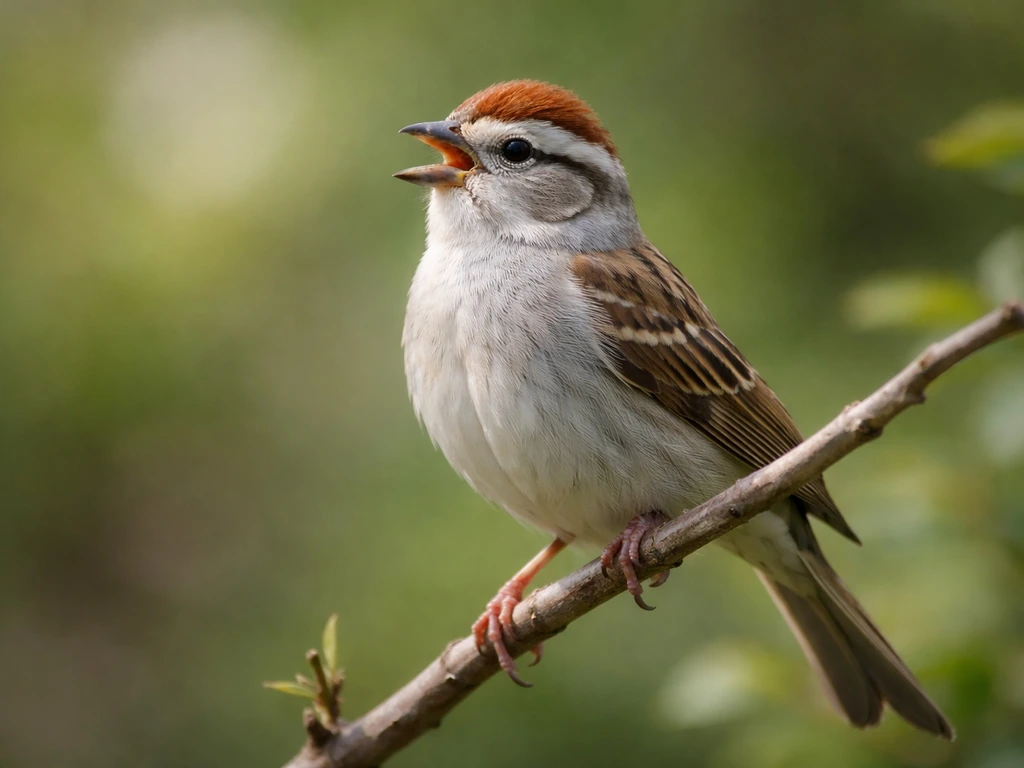
If you are comparing symbolism to something more modern, the same instinct shows up in how people interpret a bird emoji, including bird emoji meaning. So if you just spotted a bird with its bill hanging open and you want to know what's actually going on, start with behavior and environment first, then decide how much symbolic weight you want to give it.
What "bird mouth open" actually means in real behavior
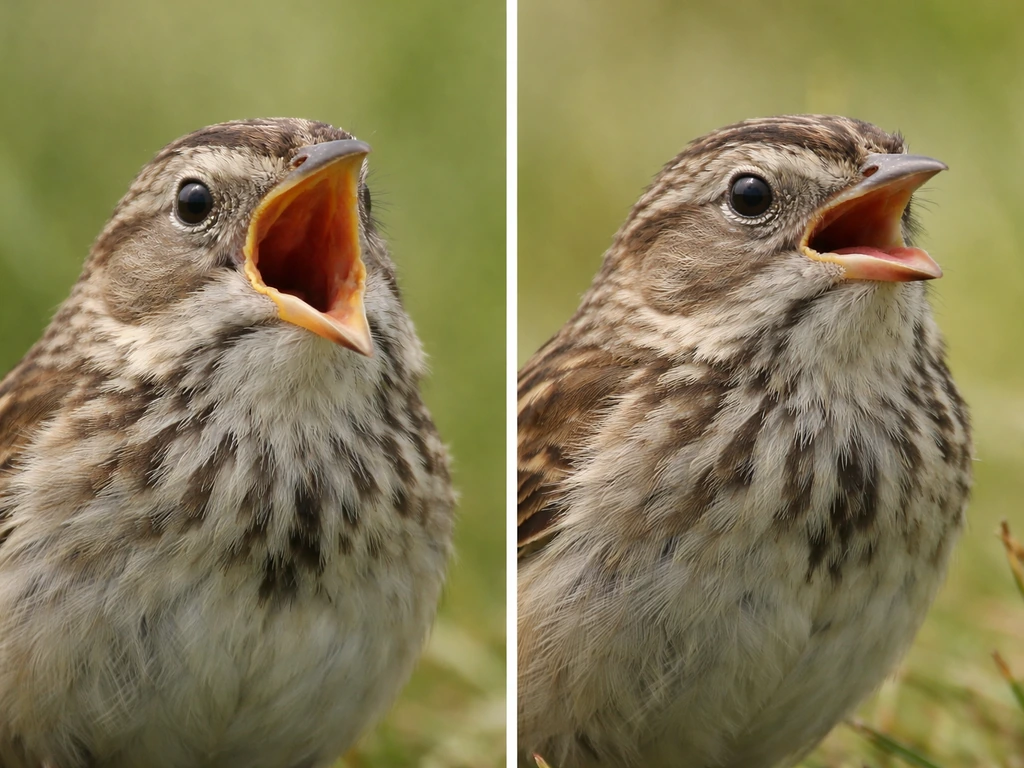
When ornithologists and birders talk about an open beak, they're usually talking about one of two things: gaping or panting. Gaping is the wide, exaggerated open-mouth posture you see in nestlings begging for food or in adult birds making a threat display. Panting, sometimes called gular flutter, is the rapid open-mouth breathing birds use to cool themselves down, and it looks almost exactly like a dog panting. Both produce the same visual: a bird sitting there with its bill open. The difference is in the context, the age of the bird, and what the rest of its body is doing.
The word "gular" refers to the throat region. During gular flutter, a bird holds its bill open while rapidly vibrating the moist membranes in its throat, causing evaporation that pulls heat away from the body. Birds can't sweat like mammals, so this is one of their primary cooling mechanisms. You'll often see this paired with drooping wings or a bird sitting very still in the shade, which are additional heat-shedding behaviors.
Context clues to figure out what's going on
The single most useful thing you can do when you see a bird with its mouth open is slow down and read the full scene. Five factors will almost always give you the answer.
| Context Clue | What to Look For | Most Likely Explanation |
|---|---|---|
| Species/age | Nestling or fledgling vs. adult | Fledgling = begging; adult = cooling, calling, or threat |
| Time of day | Midday or early afternoon in hot weather | Heat stress/gular flutter |
| Weather/temperature | Above 85°F (30°C), direct sun | Cooling/panting behavior |
| Posture | Upright, wings spread or drooping, puffed feathers near nest | Threat display or brooding protection |
| Sound | Audible call, song, or hissing | Vocalization or defensive warning |
Bill shape and overall size can also help narrow your identification quickly, which matters because the same open-mouth posture means different things in different species. A wide, bright-colored gape in a nestling bluebird is a feeding signal. A wide-open bill on a brooding owlet-nightjar with puffed feathers and an audible hiss is a defensive threat. Audubon's field identification guidance emphasizes using size, shape, bill structure, and the bird's actions together, and that applies directly here: the open beak is just one data point. Audubon’s field identification guidance emphasizes using size, shape, bill structure, and the bird's actions together to narrow down a species from real-world sightings field identification guidance emphasizes size, shape, bill structure, and the bird's actions together.
The four main reasons birds open their beaks
Heat regulation (gular flutter)
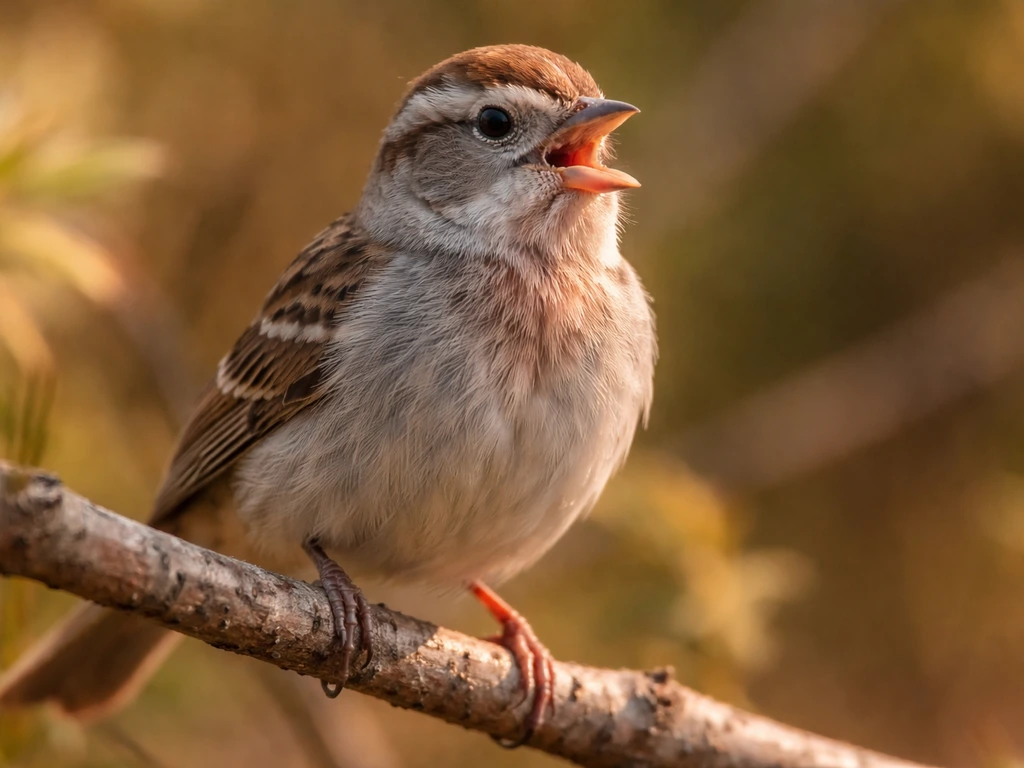
This is the most common explanation during warm months. Birds hold their bills open and rapidly flutter the throat, using evaporation to cool down. It looks almost alarming if you've never seen it, but it's completely normal behavior. You'll see it in hot weather, especially mid-afternoon, in birds that can't easily find shade. If the bird is an adult, it's hot outside, and the bird isn't making noise or interacting with other birds, cooling is your first guess.
Vocalization and calling
Birds open their bills to sing, call, alarm-call, and communicate. This one is usually obvious because you can hear it, but sometimes a bird will open and close its bill without a sound you can perceive at human hearing ranges. Mating displays, territorial calls, and contact calls between mates or parent-and-chick pairs all require an open bill. If you're watching a bird that's actively moving or interacting with other birds while its bill is open, vocalization is almost certainly involved.
Begging and feeding (nestling gaping)
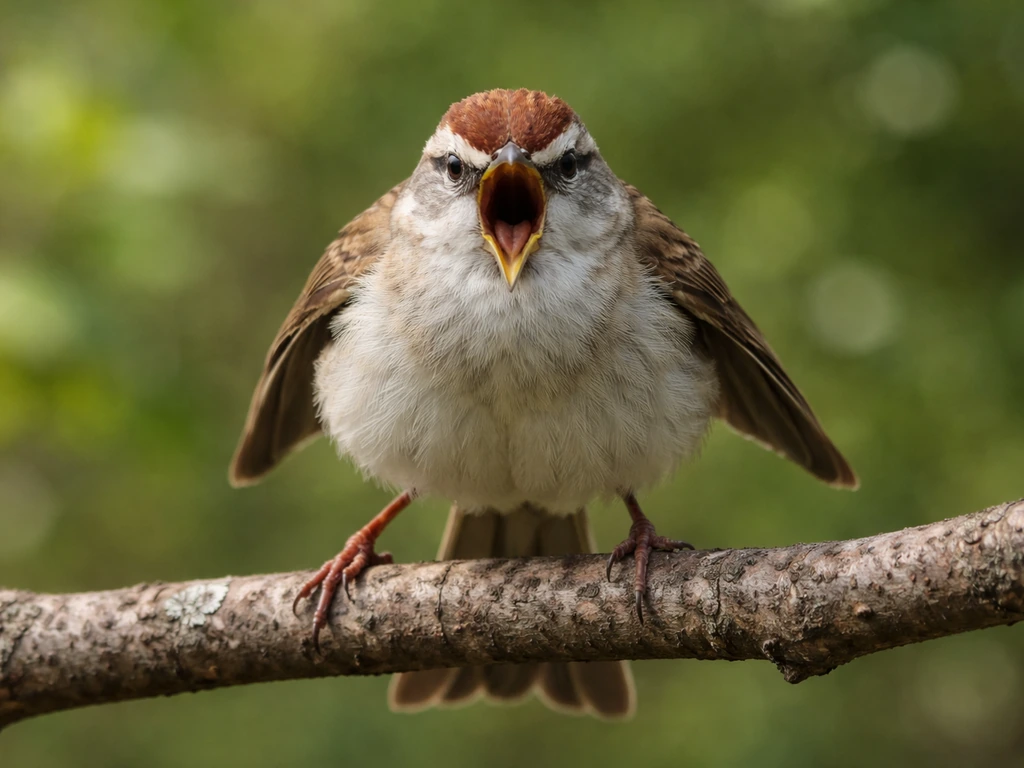
Nestlings and recently fledged birds gape wide, showing a brightly colored interior mouth lining that acts as a visual signal to parents. Research on black-capped chickadees shows that parent vocalizations actively trigger the gaping response in nestlings, which means gaping and feeding are tightly linked communication behaviors, not just passive mouth-opening. If you're seeing a bird that looks young, fluffy, or is bobbing its head and making high-pitched calls, it's almost certainly begging. Don't intervene unless the bird is in immediate danger.
Threat displays
Adult birds guarding nests, protecting territory, or feeling cornered will sometimes gape as part of a threat display. This is often accompanied by puffed feathers, spread wings, hissing, heavy breathing, or beak clapping. An Australian owlet-nightjar disturbed at the nest, for example, will sit tight with feathers puffed, open its bill wide showing a pink mouth interior, and hiss at the intruder. This is a defensive signal, not an aggressive one, and the bird is telling you to leave. Respect it and move back.
What people say an open bird beak means symbolically
People have been reading meaning into bird behavior for thousands of years. The ancient Greeks practiced ornithomancy, the formal interpretation of bird behavior and flight as omens. Roman augury built entire religious and political decision-making systems around it. That tradition didn't disappear; it just became folklore and personal spiritual practice. Today, you'll find a lot of content online attributing specific meanings to a bird opening its beak near you, and while none of it is empirically provable, it reflects a genuine and culturally widespread human impulse to find meaning in the natural world.
The most common symbolic interpretations people associate with an open-beaked bird include communication (a message being sent, often tied to the specific species), a warning or call to attention, an expression of desire or need, and in some traditions, a sign that something is being revealed or spoken that needs to be heard. An open beak is associated with voice, which in many spiritual frameworks connects to truth, transparency, or an unsuppressed message. Some traditions also tie it to abundance, particularly when the image involves a bird about to be fed or actively singing.
It's worth noting that symbolism around bird body parts appears across many traditions. The beak or bill specifically tends to carry meaning related to communication, precision, and ability to break through obstacles. If you're drawn to exploring bird symbolism beyond open-beak behavior, topics like bird head meaning, bird mask meaning, and bird lips meaning touch on overlapping traditions around what different parts of a bird represent in cultural and spiritual contexts.
Many people also look for a bird mask meaning in that same spiritual and cultural context of what bird parts are supposed to represent. People also connect bird head symbolism to specific figures, including the bird-headed man with bison meaning found in some historical and cultural interpretations bird head meaning. If you keep seeing the same themes in different parts, looking up bird head meaning can help you compare what people believe each feature represents.
If you're curious about bird lips meaning in particular, remember that it comes from symbolic traditions rather than a single scientific explanation.
Open beak in dreams: what it might mean and how much to trust it
Dream interpretation involving a bird with its mouth open tends to cluster around a few themes: communication being blocked or released, something that needs to be expressed but hasn't been, or a message you're supposed to receive. Some dream dictionaries frame an open beak as a symbol of someone speaking bluntly or of a situation that's about to be cracked open. These interpretations feel coherent because they map onto the real behavior of birds (an open beak is literally the mechanism of vocalization), but there's no clinical psychology research that validates any specific dream dictionary entry for this symbol.
If you're using dreams as a reflective tool, the open-beaked bird is a reasonable prompt to ask yourself: Is there something I need to say? Is someone close to me trying to communicate something important? Those questions are useful regardless of whether the symbol is "real." What I'd push back on is treating any single dream dictionary entry as a definitive prediction. The variation between sites is enormous, which itself tells you that these interpretations are culturally constructed rather than universal.
Dreams featuring birds more broadly, including bird suits, bird heads, or bird masks, often carry their own layered meanings in both Jungian and folk traditions. An open beak specifically just sharpens the focus toward voice and expression.
Common misconceptions, and when you actually need to do something
Misconceptions worth correcting
- "A bird with its mouth open near your house is a death omen." This is a superstition, not a behavioral fact. An open-beaked bird near your house is almost certainly hot, calling, or begging. The death-omen framework comes from a long history of bird superstition (window-pecking, white birds, etc.) that gets broadly applied to all unusual bird behavior online.
- "If a bird opens its beak at you, it's trying to send you a spiritual message." It might be threatening you, calling for its mate, or simply panting. Spiritual meaning is something you layer on; it doesn't change what the bird is actually doing.
- "Baby birds with their mouths open have been abandoned." Not usually. Parent birds leave nests regularly to forage. A gaping nestling on the ground may genuinely need help, but a nestling in a nest with an open mouth is almost certainly just waiting to be fed.
- "You can tell a bird is sick just because its mouth is open." Heat panting and normal calling are not signs of illness. Illness-related open-beak behaviors are usually accompanied by other symptoms: fluffed feathers for extended periods, inability to stand, discharge, or complete unresponsiveness.
When to actually take action
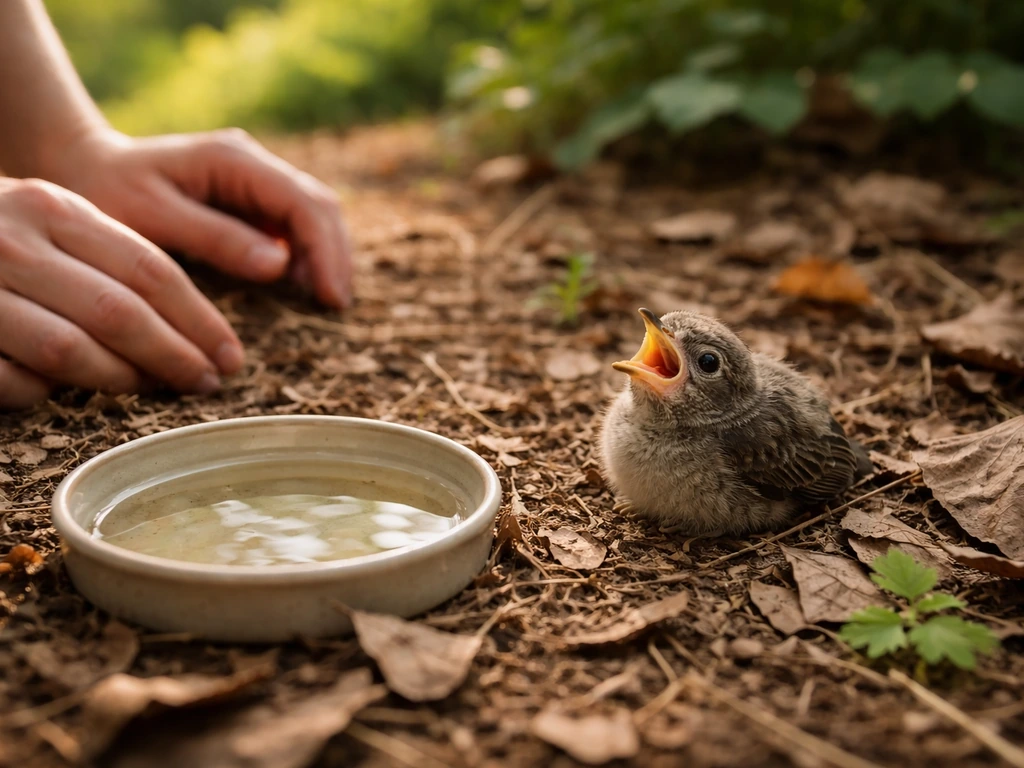
If you see an adult bird panting on a hot day, the most helpful thing you can do is provide shade and a shallow dish of clean water nearby, then leave it alone. Audubon recommends shade and water as the most effective interventions for heat-stressed birds. Don't pick the bird up unless it's clearly injured (can't stand, asymmetrical wing position, bleeding). The National Park Service recommends staying at least 50 feet (about 15 meters) from smaller wildlife like birds, both for your safety and theirs. Approaching a bird that's displaying a threat posture (open beak, puffed feathers, hissing) can cause it to abandon a nest, injure itself trying to flee, or redirect energy it needs for raising chicks.
If you've found a nestling on the ground with its mouth open and it's clearly been there a while (no parent activity nearby, bird is cold or wet), contact a licensed wildlife rehabilitator in your area. Attempting to feed a nestling without proper knowledge does more harm than good. Your local wildlife agency or a quick search for "wildlife rehabilitator" plus your city will get you to the right resource fast.
How to confirm what you're actually seeing
- Note the temperature and time of day. Midday heat above 85°F (30°C) strongly suggests cooling behavior.
- Look at the whole bird, not just the beak. Posture, feather state, and whether it's moving all matter.
- Listen. If there's sound, it's calling. If there's hissing or clapping, it's threatening.
- Check the bird's age. Young, fluffy, or speckled birds are almost certainly begging.
- Use a birding app (Merlin from Cornell Lab is free) to identify the species in real time. Species identity often resolves the behavior immediately.
- Watch for 2 to 3 minutes before concluding anything. Bird behavior cycles quickly and context often reveals itself.
FAQ
How can I tell if a bird’s mouth open means panting (cooling) or gaping (begging or threat)?
Look at the rest of the body, not just the bill. Panting is usually paired with very still posture in heat and no obvious “request” behavior from chicks, while gaping often comes with head bobbing, noisier behavior, puffed feathers, or a nest context. If the bird is an adult and it is hot, motionless, and silent, panting is the most likely; if it looks young and bright inside the mouth, gaping from begging is more likely.
Is it safe to approach a bird that has its beak open at me?
Treat an open beak with threat cues as a boundary, not an invitation. If you also see puffed feathers, hissing, beak clapping, spread wings, or heavy breathing, step back and give it space. Approaching can trigger nest abandonment or force the bird to expend energy it needs for chicks.
What should I do if the open-beaked bird is a nestling on the ground?
First, check from a distance for parents returning (watch quietly for a short period). If no parent activity is present and the bird seems cold, wet, or left exposed, contact a licensed wildlife rehabilitator. Avoid trying to feed it, because the wrong food, temperature, or feeding method can harm or kill nestlings.
Can an open beak be a sign of illness rather than normal cooling or communication?
Yes, but context matters. If the bird’s breathing looks labored, it cannot stay upright, it appears lethargic, or it shows persistent distress plus abnormal drooling or injuries, that can indicate injury or illness. In that case, do not attempt home treatment, contact wildlife help, and keep viewing distance to reduce stress.
Why do some birds open their bills without making a sound I can hear?
Vocalizations can be outside human hearing range, too soft, or partially masked by wind and distance. Also, some threat displays or contact behaviors rely on visual signals like gape, beak position, or beak clapping even when you do not perceive calls. If the bird is actively moving with other birds, assume communication even if you cannot hear it.
Does “bird mouth open meaning near me” change depending on the species?
Yes. The same posture can mean very different things depending on bill shape, size, and the bird’s life stage. A wide gape with a brightly colored mouth lining in a small nestling species often points to begging, while an adult with a specific threat posture in a nest area points to defense. Use species ID cues plus behavior together.
When should I intervene to help a heat-stressed bird?
Intervene only when it is likely heat-stressed and not behaving normally, such as panting in full sun with no shade available. Offer shade and a shallow dish of clean water nearby, then back away. If it is clearly injured (cannot stand, bleeding, twisted body posture), call a wildlife professional instead of trying to “cool it off” directly by handling.
What’s a good distance to keep from birds, especially if it’s nesting?
Use distance as your default safety tool. If you see a threat display, give it more room than you think you need. As a practical guideline, staying well beyond typical “approach” ranges helps prevent nest abandonment and reduces the chance the bird injures itself trying to escape.
What does it mean if I see a bird with its bill open repeatedly at the same spot?
Repeated sightings usually mean repeated context, such as a nesting area, a nearby food source, or frequent heat. If the behavior clusters around a specific location and you see other cues like parent activity, chicks, or territorial displays, it is more likely a consistent biological behavior than a random “sign.” Symbolic meanings can be treated as reflection prompts rather than explanations.
Next Article
Bird Headed Man with Bison Meaning: Symbols, Dreams, Interpretations
Decode bird headed man with bison meaning through bird, intellect, strength and dream omen symbolism plus practical next