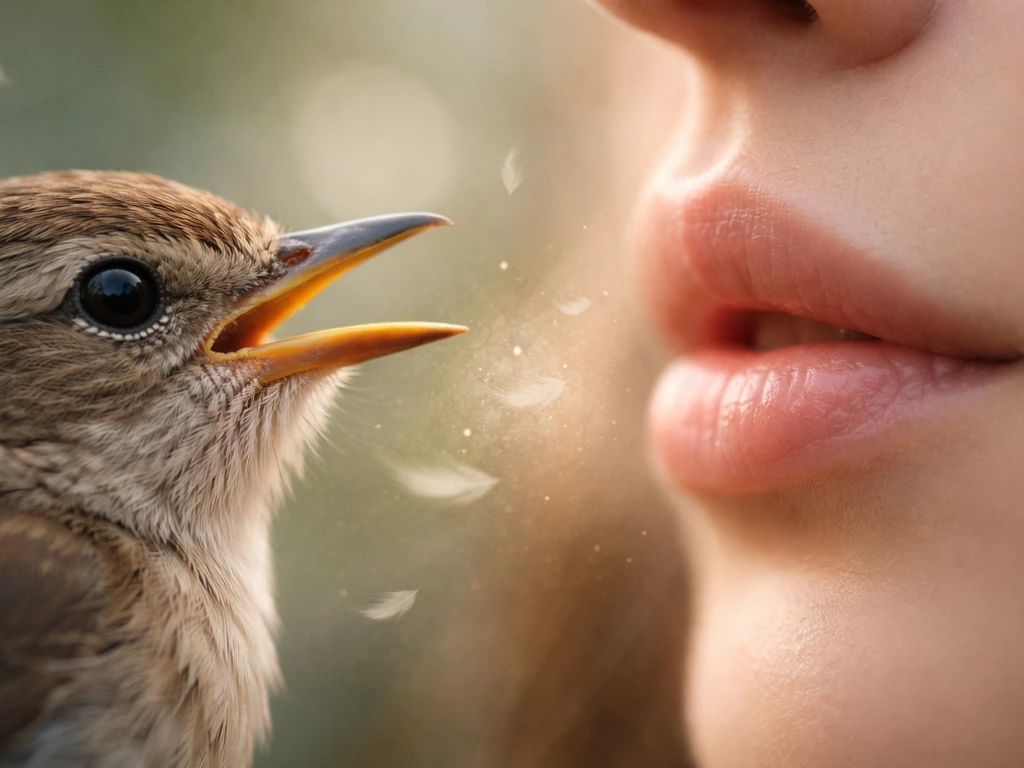
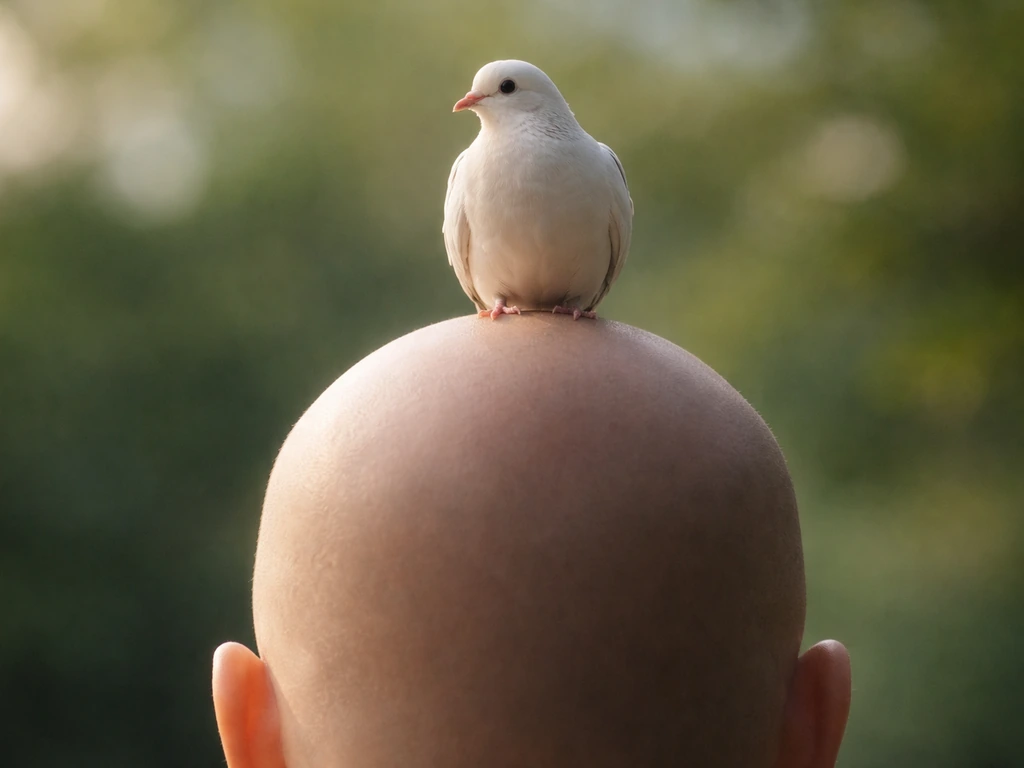
When people search 'bird head meaning,' they're almost always asking one of two very different questions: what does it mean when a bird lands on your head, or what does it mean when a bird appears headless (in a dream, vision, or image). These are not the same question, and they point toward very different interpretations. The short version: a bird landing on your head is most often a combination of opportunistic bird behavior plus a rich tradition of 'messenger' symbolism, while a headless bird in a dream or vision tends to be read as a symbol of lost direction, disrupted communication, or a warning about someone close to you. Here's how to figure out which one applies to you, and what to actually do with that information.
Bird Head Meaning: Bird on Head vs Headless Symbolism

Marcus Holloway
17 May 2026
What people usually mean by 'bird head'
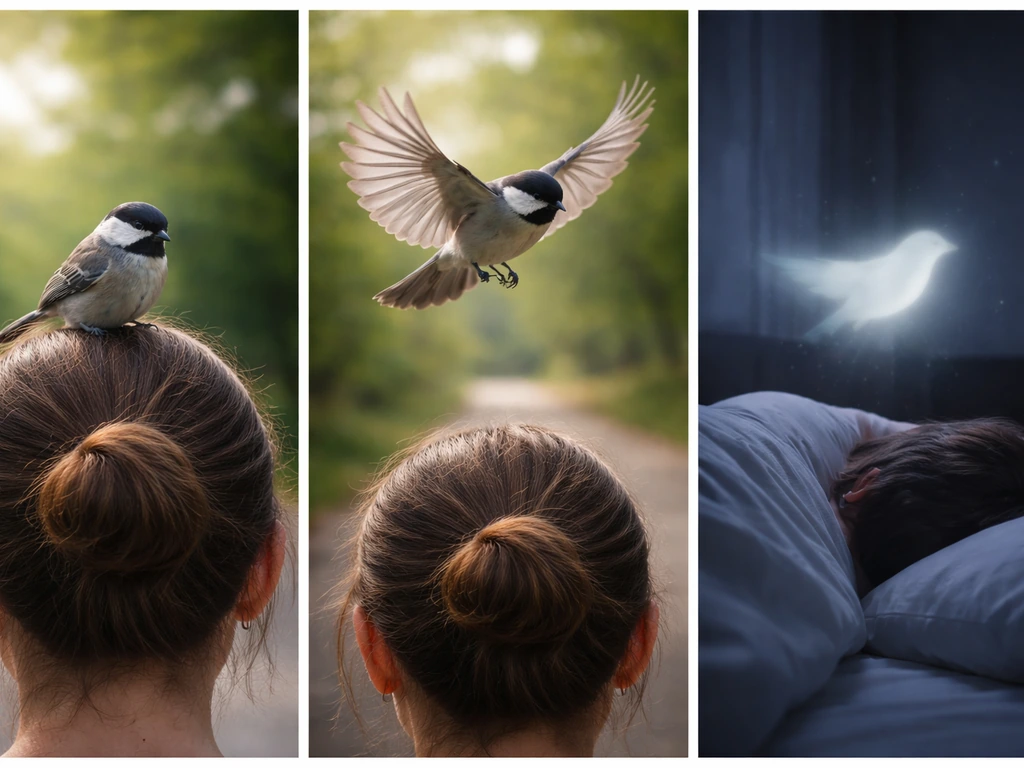
The phrase 'bird head' lands people in a few very different scenarios, and knowing which one you're in shapes everything about the interpretation. The three most common situations I see come up are:
- A bird physically landed on your head (or swooped at it) in real life, and you're wondering if it means something.
- You had a dream or vision where a bird appeared without a head, or a bird was somehow associated with your head.
- You encountered an image, artwork, or story featuring a bird head as a symbol (think ancient Egyptian iconography, tattoo art, or something like the famous bird-headed man in the Lascaux cave paintings).
The third scenario, imagery like the famous bird-headed man from Lascaux, has its own deep archaeological and symbolic rabbit hole worth exploring separately. This bird-headed man with bison meaning is a great example of how prehistoric imagery blends animal symbolism with ideas about identity and power bird-headed man from Lascaux. For this article, the focus is on the first two because those are the searches that send people looking for real answers in a hurry. If you're interested in that prehistoric imagery specifically, the bird-headed man with bison is a fascinating standalone topic with its own symbolic weight.
Bird on head: what it means symbolically, spiritually, and in folklore
Across a wide range of cultural and spiritual traditions, birds are treated as messengers. They occupy the space between earth and sky, which has made them stand-ins for divine communication, intuition, and guidance in cultures from ancient Egypt to Indigenous North American traditions to European folklore. When a bird specifically lands on your head, the symbolic weight gets amplified because the head is the seat of thought, direction, and awareness. Many spiritual and dream interpretation frameworks treat a bird landing on your head as a message aimed directly at your consciousness, something you're meant to pay attention to rather than brush off.
In contemporary Western folklore and dream interpretation, a bird landing on your head commonly carries themes of incoming news, guidance, or a nudge toward a decision you've been putting off. Dream sites that focus on birds as omens often describe 'bird on head' imagery as especially communication-focused, suggesting you're about to receive information that matters. A parrot landing on your head in a dream, for example, is frequently interpreted as a signal about something you need to say or hear.
Then there's the specific superstition most people already know: if a bird defecates on your head, it's considered a sign of good luck and incoming wealth in many English-speaking and European folk traditions. Audubon has noted this belief exists as popular folklore, and variations of it appear in Russian, Turkish, and Italian superstition as well. The logic, to the extent there is any, seems to be that something unpleasant happening to you must be compensated by the universe in some way. It's a comfort mechanism dressed up as prophecy, and it's worth being honest about that. That said, it's one of the most persistent bird superstitions out there, and culturally it has real staying power.
Species and color also matter in folklore. A white bird landing near you tends to be read as a positive omen (purity, peace, spiritual presence), while darker birds like crows or ravens carry more ambiguous associations depending on the tradition. A dead bird near your head in a dream is treated very differently than a living, active one. If you're trying to interpret the symbolism for your specific situation, the species and condition of the bird are worth noting.
Bird with no head: what the headless image means
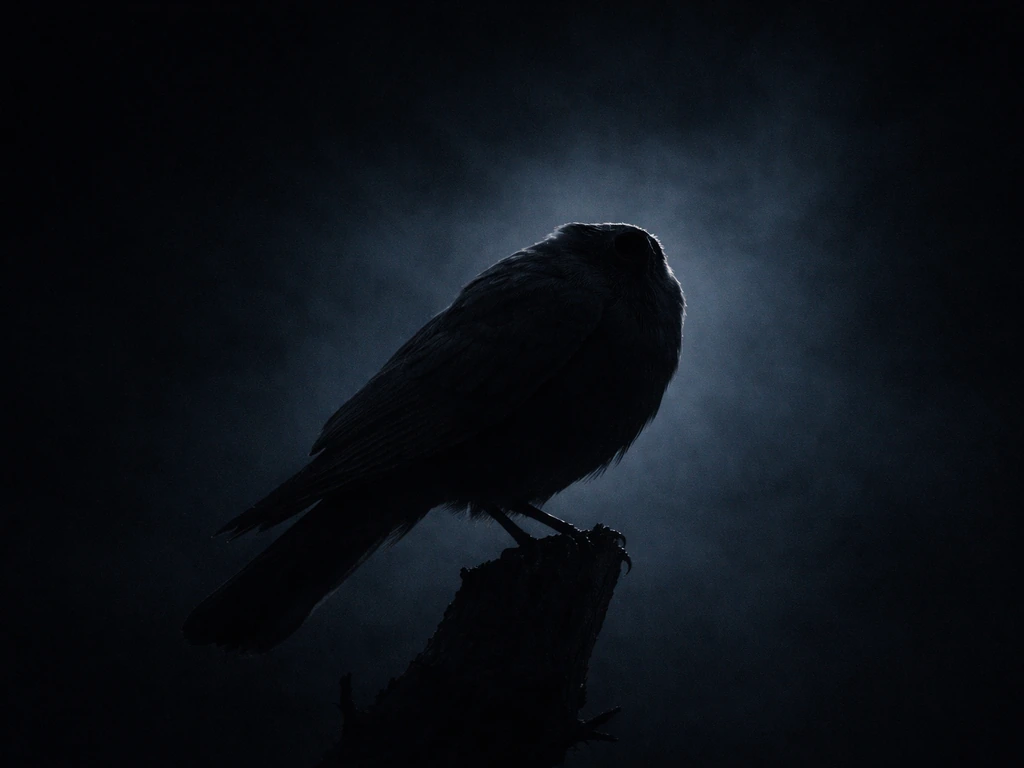
A headless bird is genuinely unsettling imagery, and that's not an accident. Whether you encountered it in a dream, a piece of art, or a piece of found symbolism, the headless form carries a consistent thread across multiple interpretive traditions: something essential is missing. The head represents direction, leadership, communication, and guidance. Remove it, and you get a symbol of disruption to all of those things at once.
In dream dictionaries and spirituality-adjacent interpretive frameworks, a headless bird tends to be read as a sign of setback, illness in someone close to you, or a disruption to your current path. Some sources frame it as 'loss of direction,' specifically the idea that the bird (a natural symbol of freedom and forward movement) can no longer navigate because its guidance center is gone. That's actually a fairly coherent symbolic logic, even if the imagery is disturbing.
In broader headless symbolism, the missing head often represents lost authority or reason. Applied to a bird specifically, it can suggest a message that can't be delivered, a direction you can't find, or a transition that feels chaotic. Some interpretations frame this more hopefully as transformation, the old form breaking down before something new emerges. Folklore around death and rebirth (think the phoenix, or the symbolism of molting) sometimes gets applied here when the dreamer is going through a major life change.
Culturally, headless imagery has a long history of being associated with bad omens, particularly when combined with bird symbolism. A dead or deformed bird in many traditions signals that something is 'off' in the natural order. That said, context matters enormously. A headless bird in a chaotic, frightening dream reads very differently from a stylized headless bird in a piece of art you found beautiful. Your emotional response to the image is actually one of the most useful interpretive clues you have.
What's actually happening when a bird lands on (or charges at) your head
Before you assign spiritual significance to a bird landing on your head, it's worth understanding what the bird is actually doing. Birds land on human heads for a handful of very practical reasons, and none of them require a supernatural explanation.
The most common reason is opportunistic perching. From a bird's perspective, the top of a human head is just an elevated surface. Birds are constantly scanning for predators and looking for the best vantage point, and your head, especially if you have voluminous or textured hair, can look like a perfectly reasonable perch. The bird isn't delivering a message; it's being a bird. This is especially true for habituated birds in parks or urban areas that have lost their wariness around humans.
The second, more urgent reason is nest defense. During nesting season, many bird species become aggressively territorial, and they will swoop at, dive-bomb, or even strike the heads of people who pass too close to a nest. Magpies, mockingbirds, red-winged blackbirds, and terns are well-known for this behavior. Wildlife guidance from organizations like Wildlife Victoria suggests staying at least 50 metres from known aggressive nesting birds if possible, and wearing a hat or helmet to protect your head and face if avoidance isn't an option. Raising your arms above your head can also help deter repeated passes. This is not a spiritual warning; it is a bird protecting its young.
As for actual droppings on your head: yes, there's a real health consideration here beyond the folklore. Bird droppings and other bird-related symbolism sometimes get discussed alongside bird lips meaning as a separate, adjacent “body-part” interpretation topic. Bird droppings can carry pathogens including the bacteria that cause psittacosis, and dried droppings from accumulated roosts can pose an inhalation risk for conditions like histoplasmosis. The CDC recommends proper hygiene after contact with bird droppings. In a one-off outdoor encounter the risk is low, but it's worth washing up rather than just accepting the 'good luck' and moving on.
How to figure out what it means for your specific situation

Here's the practical interpretive framework I'd walk through if someone came to me with either of these experiences. The goal is to gather the details that actually shift the meaning, rather than reaching for a one-size-fits-all answer.
- Was this real life or a dream/vision? Real-life bird encounters have behavioral explanations that should be ruled out first. Dreams operate on symbolic logic and don't need a literal explanation.
- What species was the bird, or what did it look like? Color, size, and species all carry different symbolic weight across traditions. A small sparrow lands differently in folklore than a crow or an owl.
- What was the bird doing? Landing gently and sitting quietly reads very differently from swooping aggressively, pecking, or appearing injured or dead.
- What was your emotional response? Did you feel comforted, frightened, amused, or unsettled? Your gut reaction is meaningful data, especially in dream interpretation.
- What's going on in your life right now? Symbolism tends to be most resonant when it maps onto something you're already processing. A 'lost direction' interpretation from a headless bird dream hits differently if you're actually at a crossroads.
- Was the bird headless, or could it have been partially obscured? In dreams especially, the brain reconstructs images from incomplete inputs. What felt like a headless bird might have been a bird seen from an angle, or a fragmented dream image your waking mind is interpreting as headless.
- Where did the encounter happen? Location (near your home, a place of significance, in nature vs. an urban setting) can add interpretive layers if you're working within a spiritual or folkloric framework.
Debunking the myths and knowing when to take practical steps instead
The 'bird on head equals good luck' belief is folklore, not prophecy. It has no documented causal mechanism and no reliable predictive track record. Snopes has applied similar skepticism to related bird superstitions (like birds flying into houses predicting death), framing them as unverified folk beliefs rather than reliable omens. That doesn't make them meaningless culturally, but it does mean you shouldn't make major life decisions based on a pigeon choosing your head as a resting spot.
Similarly, a headless bird in a dream is not a reliable prediction of illness or disaster. Dream content is generated by your brain during sleep from incomplete, emotionally weighted inputs. Research in cognitive neuroscience consistently shows that dream images are reconstructed memories and associations, not literal transmissions from the future or from a spiritual realm. Bizarre imagery like a headless bird often emerges from fragmented perception during the dream state. That said, the emotional content of the dream, what it felt like and what it brought up for you, can still be worth sitting with.
Here's a quick checklist for what to actually do depending on your situation:
| Situation | Practical next step | Symbolic take (if you want one) |
|---|---|---|
| Bird landed gently on your head in real life | Enjoy it, stay still, let it leave on its own; wear a hat if it keeps happening | Messenger symbolism: pay attention to what you were thinking about at the time |
| Bird swooped at or struck your head | Identify nesting season activity nearby, change your route, wear head protection | Territorial/protective energy in your environment; not a personal omen |
| Bird droppings landed on your head | Wash up promptly, low health risk in a single outdoor encounter but don't skip hygiene | Culturally framed as good luck; treat it as a funny story and move on |
| Headless bird in a dream | Note your emotional response, journal what the dream brought up, connect it to current life stressors | Lost direction or blocked communication; useful prompt to check in on relationships or plans |
| Headless bird in art or imagery | Research the cultural/artistic context; the symbol means different things in different traditions | Transformation, disruption, or missing guidance depending on the tradition |
One more thing worth saying directly: if a bird is behaving aggressively near your home repeatedly, the answer is practical wildlife management, not interpretation. Contact your local wildlife authority for guidance on deterrence methods that don't harm the birds. And if you're genuinely unsettled by a recurring dream involving bird imagery, whether a bird landing on your head or a headless bird appearing repeatedly, that pattern is worth discussing with someone you trust, whether that's a therapist, a spiritual advisor, or just a friend who'll help you think it through. Symbolism is a useful lens, but it works best when it opens up thinking rather than closing it down into anxiety.
If your interest in bird symbolism is pulling you into related territory, the meaning of a bird with an open mouth, the significance of a bird mask, or the layered symbolism of bird-related imagery in dreams and folk traditions all connect to the same broad current of human meaning-making around birds. In this context, understanding bird mask meaning can help you interpret the symbolism behind the image more accurately.
If you are really asking “bird lips meaning,” you may be pointing to how body features in the image are being interpreted as symbols, not just the bird itself. If you're wondering about a bird suit too, the phrase bird suit meaning usually points to how a specific bird-related image or disguise is being interpreted in context.
If you’re also wondering about how bird emojis fit into that same symbolism, you’ll want to look up the bird emoji meaning for the specific context you saw. The core question is always the same: what detail are you noticing, and what does it reflect about where you are right now?
FAQ
What should I do right after a bird lands on my head if it also left droppings?
Treat it as hygiene first. Wipe gently, then wash exposed skin with soap and water, and if it got in your hair, rinse thoroughly rather than rubbing. If you wear glasses or contact lenses, rinse them too. If you were in a crowded area with other birds roosting nearby, consider a mask when cleaning to reduce inhalation of dried droppings.
Does the bird on my head need to be alive for the symbolism, or does a dead bird change the meaning a lot?
In folklore and dream interpretation, condition matters. A living bird is usually read as active communication or incoming news, while a dead or clearly sick bird is more often read as something “blocked,” “ending,” or “off” in the natural order. Practically, in real life a dead bird also has health and handling implications, so avoid touching and report it if you can.
If it happened during nesting season, can I still interpret it spiritually?
You can, but separate the layers. If you were near a nest, the most likely explanation is territorial defense, and your “meaning” should be framed as guidance toward caution (back off, change your route, protect your face) rather than a prediction about your future. Spiritual interpretation works better when it supports practical choices instead of overriding them.
How do I interpret it differently if the bird was white versus black or was a crow or raven?
Many traditions treat color and species as tone setters. White birds are often associated with calm and supportive messages, while crows and ravens are more likely to be read as complex, ambiguous, or cautionary. If you want a reliable personal read, focus less on the label and more on the emotion you felt (comfort versus dread) and whether the moment prompted a practical decision.
In a dream, what’s the difference between a headless bird and a bird with its head missing but not “headless” in a stylized way?
Dream images vary, and interpretation shifts with clarity. A headless bird often reads as a missing center (direction, communication, leadership), while a stylized “missing head” image can feel more symbolic or artistic, leaning toward transformation themes. Ask yourself whether the dream felt like a warning, a disruption, or a change in identity.
Can a headless bird dream mean something is wrong with me personally, or is it more about someone else?
Many interpretive traditions lean toward “someone close” or “your path” rather than a direct diagnosis. A safer approach is to treat it as a prompt to check patterns, such as feeling unable to speak up, feeling confused about priorities, or noticing communication breakdowns with a specific person.
I saw a bird on my head in real life, but it was unprovoked. What are other non-supernatural explanations?
Besides perching and nest defense, birds may land briefly when they mistake your head for a stable vantage point (especially if you are still, wearing bright colors, or have high-contrast hair/hat). If you were carrying food, the bird may be investigating. Also consider recent habitat changes, like construction or seasonal migration, which can make birds less cautious.
How can I tell whether my bird dream is “meaningful” versus just random stress imagery?
Look at patterns and triggers. If the dream repeats, intensifies, or reliably follows real-world stress around communication, decisions, or conflict, it’s more likely to reflect ongoing concerns you can act on. If it’s a one-off image with no emotional carryover, it may be more like brain noise generated from recent inputs.
Is it a mistake to rely on the “bird on head equals good luck” idea to make decisions?
Yes, if it becomes the deciding factor. The folklore has no proven causal link to outcomes, so use it only as a cultural comfort, not as evidence. A practical alternative is to treat the moment as a cue to review your actual options (deadlines, conversations you’ve been avoiding, safety steps) and then choose based on evidence.
What if the bird was aggressive and kept diving near my head, does that affect interpretation?
In that case, interpretation should give way to safety. Aggressive nesting behavior is a clear behavioral signal that you are too close to a nest or territory. The best “meaning” is actionable, create distance, protect your face, and change your route. If it persists, contact local wildlife or park staff for deterrence guidance.
Next Article
Bird Lips Meaning: Human and Cultural Interpretations
Decode bird lips meaning: metaphor, cultural symbolism, folk omens, and how to tell human-applied vs literal bird clues