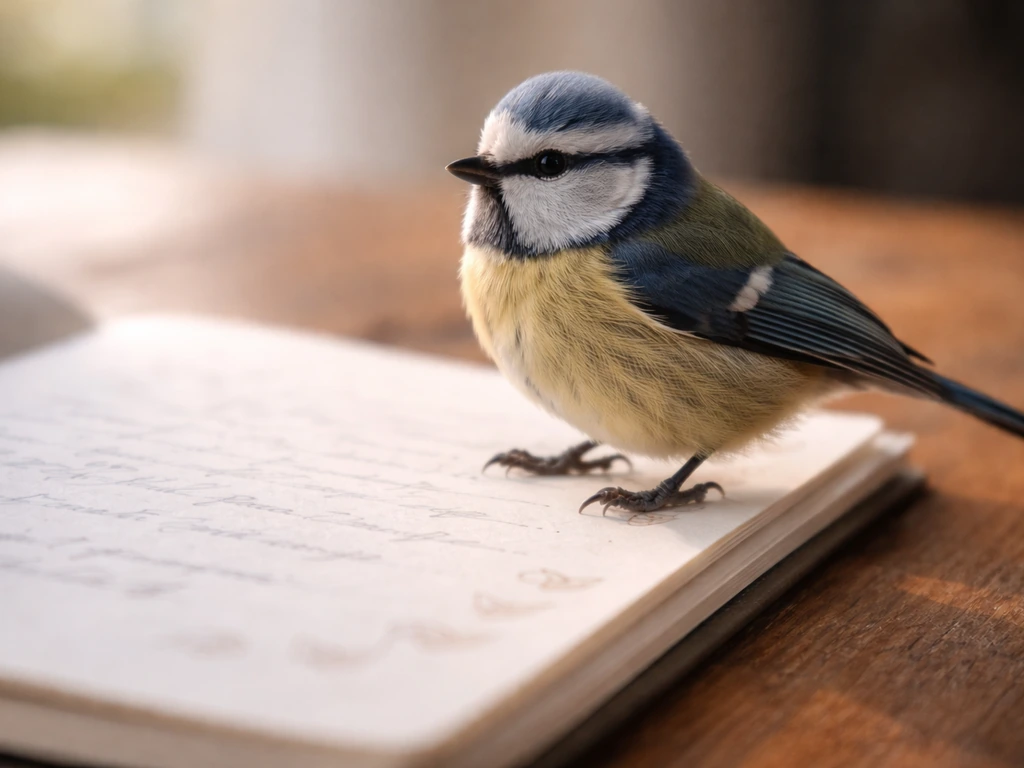
Most people searching 'bird test meaning' right now are looking for one of two things: the viral TikTok relationship trend (where you casually mention a bird to see if your partner pays attention), or a broader question about what it means when birds seem to 'test' you in real life, dreams, or cultural lore. Both are legitimate searches, and this guide covers all of them so you can figure out exactly which one applies to your situation.
Bird Test Meaning: Literal, Symbolic, Dream and Slang Uses

Marcus Holloway
28 May 2026

What 'Bird Test' Actually Means

The phrase 'bird test' carries at least three distinct meanings depending on where you encounter it. The most common right now is the social media relationship trend. The second is a literal behavioral or ornithological test, meaning an observation or assessment of a bird's health, species, or behavior. The third is a cultural or spiritual lens, where certain traditions frame an encounter with a bird as a kind of 'test' from the universe, an ancestor, or a spiritual force. Knowing which one you're dealing with changes everything about how you interpret it.
blank" rel="noopener noreferrer">The TikTok 'bird test' (also called 'bird theory') exploded in 2023 and resurfaced repeatedly since then. The premise is simple: you say something like 'I saw a bird today' to your partner or someone you're dating, then watch how they respond. Do they engage with your observation? Ask follow-up questions? Or do they ignore it and redirect to themselves? The response is treated as a window into how attentive and emotionally connected that person really is. If you arrived here because you want the bird theory meaning behind the TikTok “bird test,” the next section breaks down how the idea is used.
Outside of social media, a 'bird test' can literally mean any assessment involving a bird. Birdwatchers use behavioral cues to identify species or gauge health. Falconers run tests on a bird's flight, response, and obedience. Researchers track behavioral responses in controlled settings. The word 'test' in these contexts is straightforward and scientific.
Bird Test vs. Bird Theory vs. Other Similar Phrases
The terminology gets messy fast. 'Bird test' and 'bird theory' are used almost interchangeably in most TikTok and online relationship discussions, so if you've seen one, you've essentially seen the other. Some sources, including The Independent and Know Your Meme, explicitly treat them as variant names for the same trend. The confusion is understandable because 'theory' sounds more conceptual and 'test' sounds more active, but the underlying idea is identical.
There's also a subtle mix-up with 'Bid Theory,' which comes from the work of Dr. John Gottman and Dr. Julie Gottman on relationship communication. In Gottman's research, a 'bid for connection' is any small attempt one partner makes to get the other's attention or emotional engagement. The TikTok trend borrowed heavily from this concept, swapping in 'bird' for 'bid,' either as a creative reframe or, in some tellings, a genuine misreading of the original term. Either way, Forbes and Cosmopolitan have both noted the Gottman connection.
You might also stumble across related searches like 'bird personality test meaning' (a personality typing quiz that assigns bird archetypes like dove, owl, hawk, or eagle) or 'bird theory relationship meaning,' which is the same TikTok trend with a slight rephrasing. These are sibling topics rather than the same concept, so be clear about which one you're actually chasing before diving in.
What the 'Test' Is Actually Observing in Real Birds

If you're coming at this from a literal ornithological angle, what a 'bird test' tries to observe depends entirely on the context. Here are the most common behavioral cues and assessments people use when evaluating birds in real life.
- Species identification: field observers 'test' their ID by checking plumage, size, wing shape, and call against known references. A tentative identification becomes confirmed through accumulated behavioral and visual cues.
- Health assessment: a bird that sits unusually still, puffs its feathers, or refuses to fly when approached is likely unwell. These behavioral tests help rescuers and vets triage wild birds quickly.
- Tameness and socialization: falconers and bird handlers test a bird's response to humans through gradual desensitization steps, measuring fear response, aggression, and willingness to perch or eat from a hand.
- Territorial and mating behavior: researchers observe whether a bird responds to a recorded call (a 'playback test') to determine presence, territory size, and breeding activity.
- Flight and navigation: released or tagged birds are monitored for directional accuracy and return speed in homing and migration studies.
In everyday birdwatching, most people are running informal versions of these tests without labeling them as such. You note where a bird is, what it's doing, whether it's alarmed or calm, and what that tells you about the environment. That behavioral reading is a legitimate interpretive skill, and it sits entirely in the realm of observation rather than superstition.
Cultural, Spiritual, and Superstition Angles
Across many traditions, birds are treated as messengers and omens. The idea that a bird might be 'testing' you, or that an encounter with one is itself a test of your awareness, shows up in a surprising range of cultural contexts.
In several Indigenous North American traditions, birds appear as spirit guides or trickster figures who show up specifically at moments of personal transition to see how a person responds. How you react to the bird, whether you notice it, fear it, welcome it, or ignore it, is itself meaningful. The encounter is the test.
Celtic and Northern European folk traditions often treated the appearance of specific birds as a form of divine examination. A raven appearing before a journey was not simply an omen of luck or doom; it was also a test of the traveler's courage and resolve. Would they turn back or press on? The bird's presence forced a choice.
In Chinese and Japanese cultural symbolism, cranes and magpies in particular are associated with discernment and patience. A person who pauses to observe a crane rather than rushing past is, in that tradition, demonstrating a kind of spiritual attentiveness that the moment 'tests' for. The bird doesn't act; it simply appears, and your response reveals your character.
Western superstition also has layers here. The old practice of augury (reading bird flight patterns and behavior to predict outcomes) was fundamentally a testing framework: you posed a question, watched the birds, and interpreted the answer. The 'test' was between the human's question and the bird's response.
Dream and Omen Interpretations

When a 'bird test' appears in a dream, the interpretive approach shifts from observation to symbolism. Dreams involving birds being tested, or the dreamer being tested through a bird, tend to cluster around a few recurring themes.
If you dream of testing a bird (holding it, evaluating it, or watching to see if it flies), common interpretations frame this as a reflection of scrutiny in your waking life. You may be assessing a relationship, a decision, or your own readiness for something. The condition of the bird in the dream matters: a healthy, responsive bird usually signals confidence in your assessment; a sick or unresponsive bird suggests doubt or fear of what the truth might reveal.
If the dream involves a bird testing you, perhaps a bird watching you closely, following you, or behaving in an unusual evaluative way, traditional dream interpretation reads this as external judgment or an inner awareness of being observed and measured. Some spiritual frameworks would call this a message from a guide or ancestor, checking in on your progress.
The species involved sharpens the meaning considerably. An owl 'testing' you in a dream often connects to wisdom and truth-seeking. A crow or raven tends to signal transformation or hidden knowledge being assessed. A dove suggests emotional or relational scrutiny. And if the bird in your dream relates to the TikTok bird test concept (someone casually mentioning a bird to you, even in a dream), Jungian-style interpreters would read that as your subconscious processing relationship attentiveness. Some people also describe this idea with the therian meaning of bird tests, where the symbolism is tied to heightened intuition and sensing social energy TikTok bird test concept.
Slang and Colloquial Uses
Outside of the TikTok trend and ornithology, 'bird test' occasionally pops up in informal speech in ways worth knowing. In British slang, 'bird' is informal for a woman, so 'bird test' in that context might be used colloquially to mean sizing someone up, though this usage is informal and context-dependent rather than a fixed phrase. You may also hear people use 'bird test' loosely to mean any casual, low-stakes social experiment, borrowing the logic of the relationship trend and applying it to friendships, work dynamics, or family interactions.
Some people also use 'bird test' in pet care communities to mean any home check on a pet bird's health or behavior, such as watching whether a parrot steps up, eats normally, or engages with toys. This isn't a formal term in avian veterinary science, but it's common enough in hobbyist circles that you'll see it on forums and in bird-keeping groups.
How to Figure Out Which Meaning Applies to You
The fastest way to nail down your specific 'bird test' situation is to work through a short set of questions. Here's how I'd approach it.
- Where did you encounter the phrase? If it came up on TikTok, in a conversation about dating, or in a text from a friend discussing relationships, you're almost certainly looking at the viral relationship trend. Go straight to the bird theory/Gottman bid-for-connection explanation.
- Was it a real, physical bird encounter? If a bird showed up in an unusual way in your life and someone said it was 'testing' you, or you felt that way yourself, check the cultural and spiritual section. Note the species, the time of day, what you were going through at the time, and what the bird did. Those details matter for symbolic interpretation.
- Was it a dream? If so, recall the species, the bird's condition (healthy, hurt, calm, aggressive), and what role you played (observer, tested person, tester). That combination will point you toward the most relevant dream interpretation.
- Is it about a real pet or wild bird you're observing? Then the behavioral and ornithological angle is your lane. Focus on the behavioral cues listed above and consult a vet or wildlife rehabilitator if health is the concern.
- Are you choosing between scientific and symbolic lenses? You don't have to pick just one. A bird encounter can be both a real behavioral observation and personally meaningful at the same time. Separate the two tracks, engage with each on its own terms, and take from both what feels useful.
- What are you actually trying to decide? If you're using the bird test on a partner, the practical question is: did they engage with your observation? Not perfectly, not enthusiastically, but at all? One flat response isn't a verdict; a consistent pattern of ignoring your small bids for connection is. That's the Gottman insight worth keeping.
A Quick Comparison of the Main Meanings
| Type of Bird Test | What It Tests | Who Uses It | How to Apply It |
|---|---|---|---|
| TikTok relationship trend (Bird Theory) | Partner's attentiveness and emotional engagement | People in relationships or dating | Say something small and casual about a bird; observe the response pattern over time |
| Ornithological/behavioral test | Species ID, health, tameness, or behavioral response | Birdwatchers, researchers, falconers, pet owners | Observe specific cues: posture, flight, response to stimulus, feeding behavior |
| Cultural/spiritual test | Readiness, awareness, or character during a symbolic encounter | People in spiritual or folk traditions | Note the species, timing, and your emotional state; compare to traditional symbolism |
| Dream interpretation | Subconscious processing of scrutiny, judgment, or self-assessment | Anyone who had a vivid bird-related dream | Recall species and bird condition; apply symbolic meaning to current life circumstances |
| Slang/colloquial use | Informal sizing-up of a person or situation | Casual conversation, British slang contexts, pet communities | Read context carefully; ask what the speaker was trying to assess |
Whatever brought you to the phrase 'bird test meaning,' the core skill is the same: slow down, gather the details of your specific situation, and match them to the right interpretive frame. If you want the bird personality test meaning, focus on how the “test” reveals a person’s attention and emotional connection. The viral relationship version, the spiritual omen version, and the literal behavioral version are all coherent and useful on their own terms. You just need to know which one you're actually working with.
FAQ
If someone says “bird test” to me, how can I tell which meaning they intend?
Ask a single clarifying question that anchors to context, for example, “Is this the TikTok relationship thing, or are you talking about birdwatching or a dream?” The phrase often signals the TikTok trend in dating talk, but in pet or outdoors circles it usually means literal observation.
What if my partner passed the “bird test” but our communication still feels off?
The TikTok version is only a proxy for attentiveness, not a diagnosis of compatibility. If you still feel disconnected, use it as a conversation opener, like “When I mention small things, I notice you do or don’t expand on them. What does that mean for you?”
Can the TikTok “bird test” backfire or be unfair?
Yes, especially if you phrase it like an exam, because some people respond to avoid pressure rather than disengagement. A better approach is to mention the bird naturally, then later ask about their typical style, like whether they follow up immediately or prefer to talk when they have time.
Is “bird theory” the same thing as “bird test,” or are there different trends?
In most online relationship discussions, they refer to the same idea, but language can drift by region or reposts. If you see a separate rule set (like specific wording, timing, or a scoring method), treat it as a variant and confirm the exact premise before using it.
How does the “bird test” relate to Gottman’s “bid for connection,” and what if I think it is misused?
The intended overlap is the idea of small attention requests. If you suspect the “bird” framing is a misunderstanding, you can reframe it in Gottman terms without the meme, for example, “Was that a bid for connection, and did you respond in your usual way?”
What should I do if I think I’m being “tested” by a bird in real life but I’m anxious?
Ground it in observation rather than omens. Note what you actually saw, where the bird was, and whether there was an environmental trigger (noise, pets, nesting area). If the fear is intense or persistent, treat it as stress, not a message.
In dream interpretations, does a “testing bird” always mean external judgment?
Not always. Some dream frameworks emphasize internal standards too, for example, you may be measuring your readiness or questioning your own choices. Species can shift the flavor, but your waking situation usually decides whether it is “being judged” or “judging yourself.”
Do species details matter if I cannot identify the bird in my dream?
They do less than the role and behavior. If you cannot name the species, focus on what the bird did (watching, approaching, blocking, flying away) and how you felt. Those elements often carry more interpretive weight than the specific animal label.
What are common mistakes people make when searching “bird test meaning”?
They mix frames, like applying TikTok “attention tests” to an omen tradition, or interpreting a dream without considering waking context. Another frequent mistake is searching “bird personality test meaning” expecting the same concept, even though it is usually an unrelated archetype quiz.
How should I interpret “bird test” in British slang?
Because “bird” can mean a woman informally, “bird test” can mean sizing someone up or casual evaluation, and it is not a fixed universal phrase. If you are unsure, look for surrounding wording, especially dating or flirtation cues, before assuming the TikTok trend.
If “bird test” comes from a pet bird community, what should I check for?
Treat it as behavior monitoring rather than a formal medical term. Common practical checks include appetite, posture, droppings consistency, activity level, and whether the bird steps up reliably or ignores toys, but if you see breathing trouble or sudden lethargy, contact an avian vet.
Next Article
Bird Personality Test Meaning: Symbolism and Results
Interpret bird personality test results: what the bird symbolizes, meanings by context, and how to avoid overreading.