"Bird theory relationship meaning" is most likely pointing you toward one of two very different things: either the viral TikTok "bird test" trend (where you casually mention a bird to your partner and gauge their reaction as a measure of attentiveness), or the older, richer tradition of reading bird symbolism as spiritual or cultural signals in your love life. Both are real, both have genuine value, and both have real limits. Which one applies to you depends entirely on where you heard the phrase.
Bird Theory Relationship Meaning: What It Likely Refers To

Marcus Holloway
2 May 2026
What people mean by "bird theory" (and how to identify the right one)
The phrase "bird theory" is doing a lot of work right now because it's been adopted by completely different communities for completely different purposes. Before you can apply it to your relationship, you need to know which version you're working with.
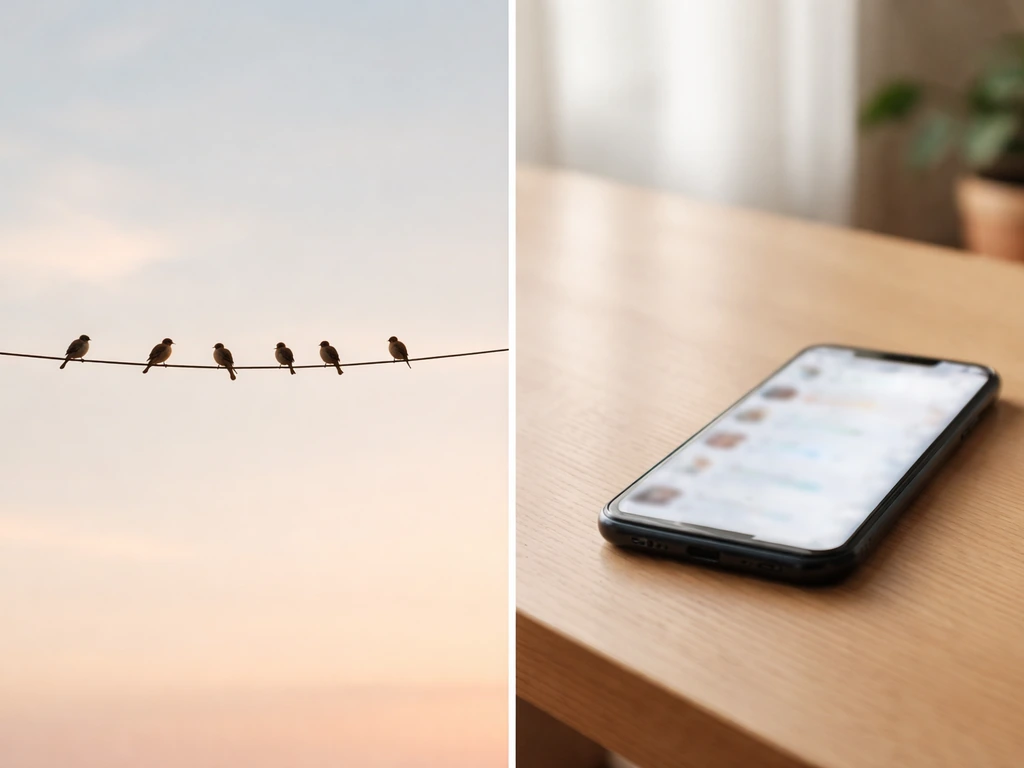
Version one is the viral social media version. It became widely known through TikTok and was documented on Know Your Meme as the "bird test" or "bird theory." The premise: you casually say something like "I saw a bird today" to your partner or date, and you pay close attention to how they respond. Do they lean in, ask a follow-up question, seem genuinely interested? Or do they dismiss it, ignore it, or redirect immediately back to themselves? Proponents treat this response as a revealing litmus test for emotional investment and attentiveness in the relationship.
Version two is the cultural and spiritual lens, which is what most of this site is about. This is the idea that specific birds, behaviors, and encounters carry meaning, and that paying attention to them can offer insight into your emotional life, your relationships, and major life transitions. This tradition is ancient and cuts across dozens of cultures, from Celtic folklore to Indigenous American traditions to Chinese symbolism and Hindu mythology.
There's also a third, smaller category worth mentioning: people sometimes use "bird theory" loosely to describe personality frameworks that use birds as archetypes (dove, owl, eagle, peacock) to categorize communication styles or relationship compatibility. That overlaps with what's covered in bird personality test meaning and is worth checking if neither of the first two versions fits what you encountered.
The fastest way to identify your version: where did you see it? If it came from a TikTok, a dating advice thread, or a short viral post, you're almost certainly dealing with the social media bird test. If it came from a spiritual, dream, or cultural context, you're dealing with symbolic bird meaning applied to love and relationships.
How "bird meaning" connects to relationships in spirituality and culture
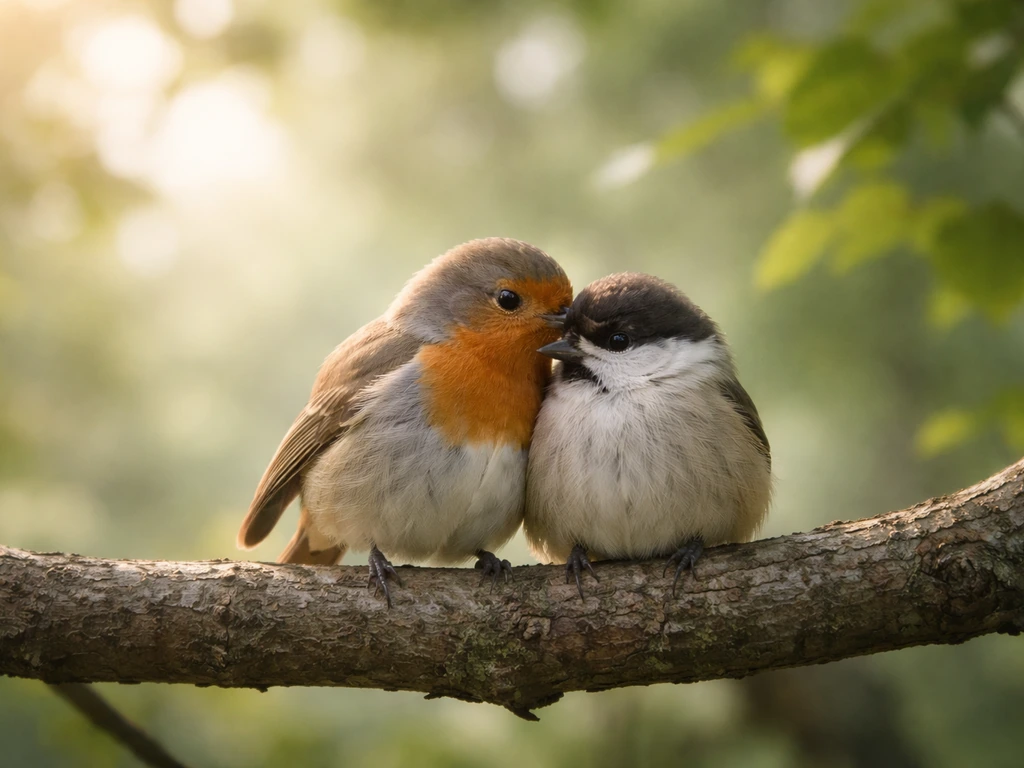
Across cultures and centuries, birds have been consistently used as messengers, omens, and symbols tied to love, loyalty, and partnership. This isn't random. Birds pair, nest, migrate, mourn, and protect their young in ways that humans have always found emotionally resonant and easy to project meaning onto.
Here's a quick look at how major traditions connect bird symbolism to relationships and love: In Western folklore, blank" rel="noopener noreferrer">common ravens are often associated with death, evil, or ill omen.
| Bird | Cultural Tradition | Relationship Meaning |
|---|---|---|
| Dove | Christianity, Greek (Aphrodite), Roman (Venus) | Peace, fidelity, new love, reconciliation |
| Swan | Celtic, Norse, Greek mythology | Lifelong partnership, devotion, soul connections |
| Robin | British and Celtic folklore | New beginnings, the return of love after loss |
| Crane | Japanese, Chinese, Korean tradition | Longevity, faithfulness, marital happiness |
| Raven | Norse, Native American (various nations) | Deep transformation, shadow work in relationships, fate |
| Cardinal | Contemporary American folk belief | A message from a deceased loved one, spiritual presence |
| Lovebird | African origin, global popular culture | Romantic affection, companionship, inseparable bonds |
| Owl | Greek (Athena), many Indigenous traditions | Wisdom in relationships, seeing what is hidden |
In many spiritual frameworks, the bird itself is less important than the context: when it appeared, how it behaved, whether the encounter felt significant or startling. A dove sitting quietly in your yard is very different symbolically from a dove flying directly at your window. The behavior and timing amplify or soften the meaning.
Bird sightings and behaviors: what to look for vs what to ignore
Not every bird you see is a sign. That might sound like I'm deflating the whole concept, but it's actually the most useful thing I can tell you. If you treat every pigeon on the subway platform as a cosmic message about your relationship, you'll exhaust yourself and start reading meaning into pure noise. The goal is discernment, not hypervigilance.
Here's a practical framework for deciding whether a bird encounter is worth paying attention to:
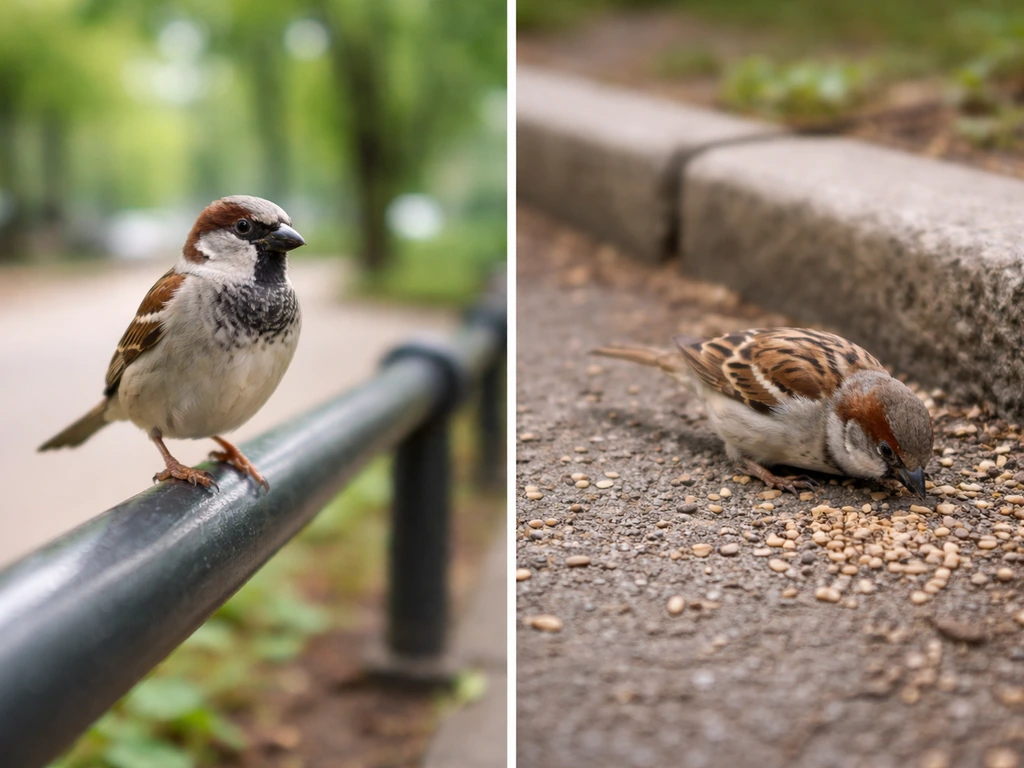
- Unexpectedness: Did the bird appear somewhere unusual, out of season, or in a way that broke from normal behavior? An owl in the middle of the day, a tropical bird far outside its range, or a bird landing directly on you is more noteworthy than a sparrow in the park.
- Repetition: Did you see the same species multiple times in a short period, especially during an emotionally charged time in your relationship? Repeated encounters, particularly across different locations, are what many traditions classify as genuine signs.
- Timing: Did the encounter happen during a moment of active emotional processing, a decision point, a conversation, or a dream transition? Timing adds weight to an otherwise ordinary sighting.
- Your gut response: Did you feel something shift when it happened? A visceral sense of significance, however brief, is worth noting even if you can't explain it rationally.
- Ordinary context: A bird near a feeder, near food, or migrating through your area in season is doing what birds do. Behavioral normalcy strips most of the symbolic weight.
From an ornithological standpoint, it's worth knowing that many bird behaviors people interpret as signs have perfectly mundane explanations. Cardinals don't seek out grieving humans specifically; they're attracted to feeders and shelter. Owls call at night because they're nocturnal hunters. Swallows return in spring because of migration patterns. Knowing the science doesn't cancel the symbolism, but it helps you stay grounded when you're assigning meaning.
Dreams, omens, and synchronicities involving birds in love and relationships
Bird dreams connected to relationships are among the most commonly reported dream experiences people bring to symbolic interpretation, and there are some consistent patterns worth knowing about. Dreams bypass the rational filter, so the emotional intensity of bird imagery in dreams often reflects something the conscious mind is avoiding or hasn't fully processed yet.
A few of the most common bird dream scenarios in relationship contexts, and what they tend to signal:
- Two birds together (especially paired species like doves or swans): Often interpreted as a reflection of a current or desired partnership. If the birds are harmonious, the dream may be affirming the relationship. If they're separated or one is injured, it may be processing anxiety about disconnection.
- A bird flying into or breaking a window: One of the most emotionally loaded bird omens in folk tradition, often associated with disruption or an abrupt change in a close relationship. In dreams, it frequently signals that something in your love life is demanding your attention, often something you've been ignoring.
- A caged bird: Almost universally interpreted as a symbol of restriction. In a relationship dream, it often points to feeling trapped, controlled, or emotionally constrained, whether by the relationship itself or by your own fears.
- A bird singing directly to you: Generally positive. Across many traditions, this signals incoming communication, emotional connection, or the presence of someone (living or passed) who loves you.
- A flock of birds (especially in murmuration or sudden flight): Often associated with collective emotional energy, a major shift approaching, or the influence of a community or family on your love life.
Synchronicities are different from dreams: they're waking-life coincidences that feel meaningfully timed. Carl Jung coined the term for exactly this kind of experience, and many people report bird synchronicities during pivotal relationship moments: a robin appearing the morning after a breakup, a pair of swans on the day of a first date, a sudden hawk circling overhead during a difficult conversation. Whether you interpret these as genuinely meaningful or as pattern recognition your brain is running in a heightened emotional state, paying attention to them can still offer useful emotional data about where you are.
Applying bird symbolism responsibly: practical steps for dating and communication

Bird symbolism is a lens, not a verdict. Used well, it can help you access intuition, slow down decision-making, and connect to traditions that have helped humans navigate love and loss for thousands of years. Used badly, it becomes a replacement for actual conversation and leads to magical thinking in situations that require honest, grounded action.
If you encountered the viral TikTok bird test version of "bird theory," here's how to apply it usefully without over-reading it. Try the experiment once, low-stakes, with someone you're dating. Say something casual about a bird you noticed. What you're really testing isn't their bird knowledge; it's their baseline attentiveness and interest in your day.
If you're trying to understand the bird test meaning, it helps to separate the viral relationship challenge from traditional symbolic bird interpretations. A partner who asks a follow-up question or shows curiosity is demonstrating active listening, which is a genuine relationship green flag. A partner who dismisses it or turns the conversation immediately back to themselves may be showing you something real about their emotional availability. That's useful data.
It's just not conclusive data, and experts who've weighed in on the bird test (including relationship therapists cited in mainstream coverage like The Guardian) are consistent on this point: one micro-interaction can't reliably predict relationship quality on its own.
- Use bird symbolism as a prompt for reflection, not a conclusion. If a certain bird keeps appearing during a stressful relationship moment, let it be an invitation to journal, meditate, or simply sit with the feeling rather than a directive to act.
- Cross-check with direct communication. If a raven sighting makes you think something dark is coming in your relationship, talk to your partner. A bird doesn't replace that conversation.
- Anchor the meaning in your own cultural tradition. Don't import symbolism wholesale from a tradition that isn't yours without understanding its full context. A crow means something very different in Japanese tradition (wisdom, loyalty) than in some Western superstitions (bad omen).
- Set a "sign" before you look for it. This is a classic way to avoid confirmation bias: decide in advance what would constitute a meaningful sign for your specific question, rather than finding a sign and retrofitting a question to it.
- Keep timelines realistic. Bird omens in most traditions signal a window of possibility or attention, not a guaranteed outcome. Treat them as weather forecasts, not contracts.
Common misconceptions and myth-busting
There are a few persistent myths in this space that genuinely mislead people, and it's worth naming them directly.
Myth: The bird test proves whether your partner loves you. It doesn't. The TikTok bird test measures one thing in one moment: how your partner responded to a low-stakes casual comment. Attentiveness varies with stress, distraction, mood, and context. A partner who fails the "bird test" on a hard Tuesday isn't necessarily emotionally unavailable; they might just be overwhelmed. Conversely, someone who passes the test with flying colors can still be a poor communicator in more serious moments. Use it as one data point, not a verdict.
Myth: Birds flying into windows are always bad omens for relationships. The most well-documented cause of birds striking windows is that they see a reflection of sky or vegetation and can't distinguish it from open space. It's an architectural and environmental problem, not a cosmic message. The folk belief around window strikes is real and widespread, but the ornithological reality is mundane. If a bird hits your window, help it recover if it's stunned, then decide separately whether the timing feels meaningful to you.
Myth: All cultures agree on bird meanings. They absolutely do not. An owl is a messenger of Athena (wisdom) in Greek tradition, a bad omen in some South Asian folk belief, a protector in many Indigenous American traditions, and a symbol of death in parts of West Africa. If you look up "what does an owl mean" without specifying the tradition, you'll get wildly contradictory answers. Always anchor your interpretation to a specific cultural context that makes sense for your background or question.
Myth: If you see a "love bird" species, it means romance is coming. Lovebirds (the parrot species) are called that because of how they sit together and preen each other, not because they carry any cross-cultural romantic symbolism. Seeing a lovebird in the wild outside of Africa or an aviary context is more of a curiosity than an omen. Dove symbolism for love has genuine cultural depth.
A Wikipedia entry on “Doves as symbols” describes how dove symbolism is associated with peace, freedom, or love, and how dove imagery in Christianity is tied to Noah’s Ark, where the dove returns with an olive leaf Dove symbolism for love has genuine cultural depth. .
"Lovebird" as romantic symbolism is mostly a projection of the name.
Myth: Bird theory is one unified system. It isn't. As this article has laid out, "bird theory" right now refers to at least three distinct frameworks: the viral social media relationship test, the ancient symbolic tradition, and personality-based bird archetypes. If you are trying to understand bird therian meaning, it helps to look at how symbolic bird meaning is used and interpreted in your specific community bird symbolism. Treating them as interchangeable will just confuse you.
Quick cheat-sheet: next steps based on the specific bird or sign you encountered
Here's a practical starting point depending on what brought you here. This isn't a definitive guide to every bird, but it gives you a direction for the most common scenarios.
| What you encountered | Most likely meaning | Practical next step |
|---|---|---|
| You tried the TikTok bird test and your partner failed it | Your partner may have been distracted or checked out in that moment | Don't conclude anything yet. Try it again in a different setting or pay attention to their general listening habits over a week. |
| You saw a dove during or after a relationship moment | Peace, possible reconciliation, or the start of something gentle | Reflect on whether you're holding onto conflict unnecessarily. Consider reaching out if you've been hesitating. |
| You saw a cardinal and thought of someone you lost | In contemporary folk belief, cardinals are widely associated with deceased loved ones | Let yourself feel it. Write down what you'd say to that person. The meaning is in the emotional processing. |
| You dreamed of two birds flying together | Harmony in a current or hoped-for partnership | Take it as an emotional affirmation. Pair it with a real conversation about where the relationship is going. |
| A bird flew into your window | Folk tradition reads this as disruption; ornithologically it's a physics problem | Check if the bird is okay first. Then ask yourself honestly: is there something in your relationship you've been refusing to look at? |
| You keep seeing the same bird species repeatedly | Repetition is the clearest traditional signal of a genuine sign | Research that specific bird's symbolism in two or three different cultural traditions and notice which resonates. Then journal on what relationship question is most alive for you right now. |
| Someone mentioned 'bird theory' and you're not sure which version they meant | Could be the TikTok test, symbolic tradition, or personality archetypes | Ask them directly: 'Are you talking about the TikTok bird test thing, or something more spiritual?' You'll know immediately which conversation you're in. |
| You're using bird personality types to assess compatibility | This overlaps with bird personality test frameworks | Look into the specific system being used (dove/owl/eagle/peacock is one common version) and treat it as a communication style guide, not a compatibility verdict. |
Whatever version of "bird theory" brought you here, the most useful thing you can do is stay curious without becoming dependent. Bird symbolism, whether ancient or viral, works best as a mirror that helps you see what you already sense, not a substitute for the harder, more rewarding work of actually talking to the people you love.
FAQ
How can I tell if the “bird test” is being used to manipulate me in a relationship?
If the test is framed as proof you must “pass” to earn care, or if failures are used to punish you, that is a red flag. A healthier approach uses one casual check as a conversation starter, then returns to consistent behaviors like responsiveness, honesty, and follow-through. If you feel pressured to perform, stop the experiment and talk about what you need.
What should I do if my partner responds well to the bird test but still avoids deeper conversations?
Treat the bird test as a limited signal of momentary attentiveness only. If meaningful topics are dismissed, delayed repeatedly, or handled with defensiveness, evaluate communication patterns over time. Look for behaviors that show up outside “cute” prompts, like how they handle conflict, whether they ask questions when it is not convenient, and whether they follow up later.
How many times should I run the bird test before I draw a conclusion?
One or two low-stakes tries are enough to learn how the interaction typically goes. More repetitions can turn it into an anxiety loop or a game that replaces real dialogue. Use the outcome to decide what to observe next, not to “score” the relationship.
Is it okay to tell my partner I’m doing the bird test?
Usually better to keep it low-key, then discuss the result afterward if it came up naturally. If you announce it upfront, you change their behavior because they will monitor themselves. If you do mention it, frame it as curiosity about listening, not as an evaluation of their character.
What are safer alternatives if I do not want to use the bird test at all?
Use direct but gentle listening checks. For example, say something personal about your day, then ask how it landed for them or if they want details. You are still measuring attentiveness, but without gamifying it or introducing an arbitrary “bird” prompt.
If I see birds repeatedly after a breakup, does that mean I should get back together?
Repeated sightings can be meaningful as emotional timing, but they do not replace compatibility and trust signals. Use it as a prompt to examine your feelings, then focus on concrete questions: Did the issues get addressed? Is communication improving? Are both people choosing change consistently? Decide based on actions, not coincidence.
How do I avoid reading “signs” into every bird encounter when I tend toward anxiety?
Set a rule for yourself, like only considering bird symbolism when it occurs alongside a clear emotional theme you are already noticing (grief, hope, decision stress). If you catch yourself scanning for omens, redirect to one grounding action, such as writing down what you actually feel and what decision you are avoiding.
What if I cannot identify the species of bird I saw, can I still interpret symbolism?
Yes, but keep it broad. When species is unclear, focus on the behavior (quiet, flying fast, flocking, calling) and the context (time of day, location, your emotional state). Avoid relying on a specific “this bird means X” tradition unless you are confident about the species and the cultural lens.
How should I handle conflicting bird meanings from different traditions?
Choose one anchor that matches your background or the context that brought you to the idea. If you do not have a specific tradition in mind, treat the meaning as reflective themes (love, partnership, change) rather than literal predictions. You can also compare interpretations to see which one helps you take healthier action.
Do bird dreams always point to relationship problems?
Not always. Bird dreams often reflect emotions you are carrying, like longing, freedom needs, fear of separation, or unresolved conversations. Ask what the dream felt like (comforting, threatening, urgent) and what was happening in your waking life right before the dream, instead of assuming an omen.
What is a practical way to use bird symbolism without it turning into magical thinking?
Convert the “sign” into a decision and a conversation. For example, if you feel a pull toward closure, send the message or schedule the talk. If you feel anxious about commitment, identify the specific worry and address it directly. Symbolism should point you to action you can verify, not to conclusions you cannot test.
If a bird hits my window and seems “bad omen,” what should I do first?
First, prioritize the practical response. Check if the bird is stunned, keep distance for your safety, and contact local wildlife help if needed. Once you have handled the immediate care, then decide whether you want to interpret it symbolically. The symbolism becomes optional after you address the real-world situation.
Where do bird archetype personality frameworks fit, and what is the biggest risk?
They fit as a self-reflection or communication-style lens, not as a fixed compatibility verdict. The biggest risk is using labels to avoid talking, like assuming an “owl” person cannot be attentive. Use archetypes to ask better questions about needs and patterns, then verify with actual behavior.
Next Article
Bird Theory Meaning Explained: What It Is and How to Interpret It
Plain-English bird theory meaning with practical ways to interpret bird signals across symbolism, spirit, and behavior.