When people say "bird theory," they're almost always talking about a viral relationship trend that started on TikTok in 2023. The short version: you casually mention a bird to your partner (something like "I saw a bird today") and then watch how they respond. Whether they engage, ask a follow-up question, or completely ignore you is treated as a signal about how emotionally invested they are in the relationship. That's the core of bird theory. But depending on where you're searching from, the phrase can also pull in spiritual symbolism, folk superstition, or behavioral ornithology, so it's worth unpacking all of it.
Bird Theory Meaning Explained: What It Is and How to Interpret It

Marcus Holloway
5 Apr 2026

What bird theory actually means (in plain English)

Bird theory is, at its heart, a relationship litmus test. You make a low-stakes, completely mundane comment about seeing a bird, and then you pay attention to whether the other person turns toward you or away from you. Psychologist John Gottman developed the concept of "bids for emotional connection," the idea that small conversational gestures are really invitations to connect, and that how your partner responds to those invitations says a lot about the health of the relationship. Bird theory is essentially Gottman's research repackaged for TikTok. The bird itself doesn't matter. What matters is whether your partner notices that you're trying to share something with them, no matter how trivial.
If your partner responds ("Oh really, what kind?"), they're turning toward your bid. If they grunt and scroll their phone, they're turning away. Commenters on TikTok and relationship forums quickly adopted silence or low engagement as evidence that a partner doesn't care, though that interpretation oversimplifies things a bit, which we'll get into below. There's also an app called "Bird Theory: Couple Test" that frames the same idea as a tool for identifying emotional patterns in a relationship by measuring how partners respond to small, low-effort moments of sharing.
Where the term shows up: symbolism, spirituality, behavior, slang, and superstition
The TikTok trend is the dominant modern meaning, but bird theory brushes up against a much older tradition of reading meaning into bird behavior. Here's how the phrase and its ideas show up across different contexts.
- Relationship slang (TikTok/dating): Bird theory is the test described above, where "the bird" is a conversational prompt used to gauge a partner's attentiveness and emotional investment.
- Spiritual symbolism: Across many traditions, birds are messengers or omens. A specific bird arriving at a particular moment is interpreted as a sign, comfort, or warning. The meaning usually depends on the species, behavior, and cultural framework.
- Folk superstition: A bird hitting your window, flying into your house, or perching unusually close has historically been treated as a portent. Interpretations vary widely by culture and region.
- Behavioral ornithology: This is the scientific side. Birds behave the way they do because of biology, ecology, and instinct, not because they're sending messages. Understanding bird behavior through this lens is a way of fact-checking the spiritual and folk interpretations.
- Ornithomancy: Historically, humans have read omens from birds' flight patterns, songs, and behaviors. Ancient Roman augury is the most well-known example. Wikipedia defines ornithomancy as the practice of interpreting such signals across ancient cultures. It's the original "bird theory."
Common interpretations and what they usually imply
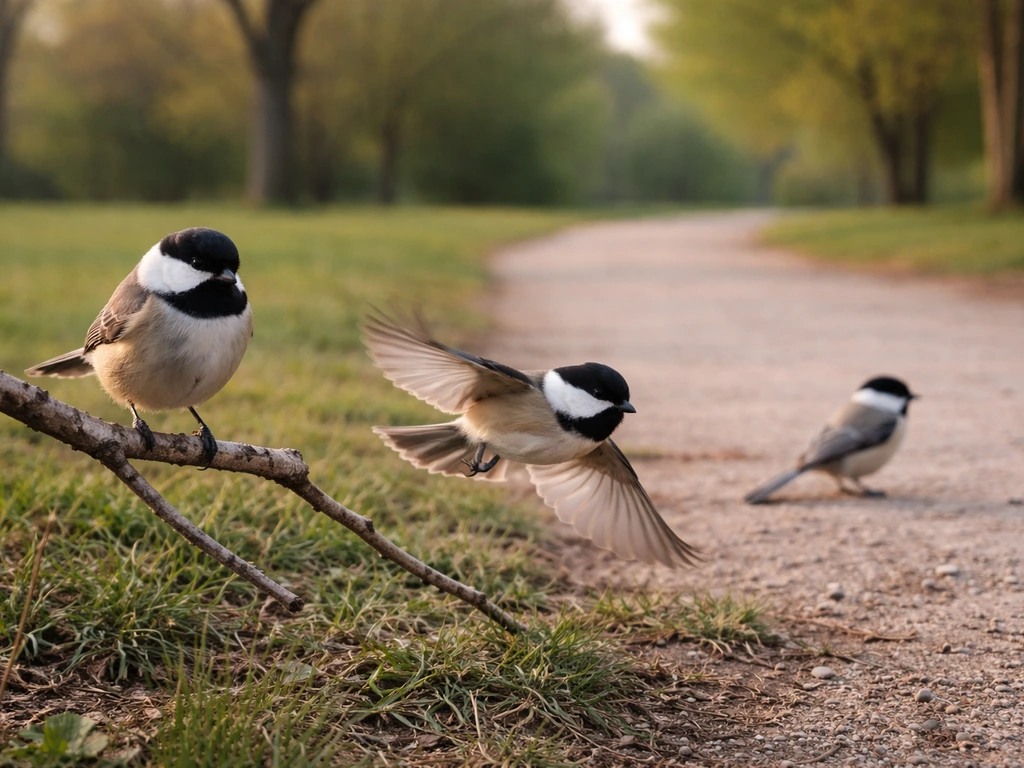
In the relationship context, the interpretation is fairly direct: engagement equals care, and disengagement equals distance. But that's a spectrum, not a binary. Someone who's tired, distracted, or neurodivergent might not respond to your bird comment the way you'd hope, and that doesn't automatically mean they don't care. The more useful read is: does your partner consistently notice when you're making small connection attempts? One non-response isn't a verdict. A pattern of non-responses might be.
In the symbolic and spiritual context, interpretations are much more varied. A cardinal appearing after a loved one's death is widely understood as a visitation sign in North American folk belief. An owl hooting near a home is considered an omen of death in some Indigenous and European traditions. A swallow returning to nest is associated with good luck and home in many cultures. These aren't random: they're accumulated cultural shorthand developed over centuries. Bird theory in the relationship context is actually a modern echo of that same human impulse to read meaning into bird behavior, just applied to dating instead of fate.
In behavioral ornithology, common bird behaviors that people often interpret as "signs" have clear scientific explanations. A bird repeatedly hitting a window during spring is almost certainly seeing its own reflection and treating it as a rival, a documented breeding-season response. A large flock moving together is murmuration, a collective defense behavior, not a portent. Knowing both the cultural and scientific interpretations helps you hold the two in balance without dismissing either.
How to apply bird theory to real life: sightings, actions, and context
If you're using bird theory in the relationship sense, the practical guidance is simple: pay attention to bids for connection in your daily interactions. You don't have to use the literal "bird" prompt. Any small, low-stakes comment works. The point is to notice whether your partner (or friend, or family member) is habitually turning toward you or away from you in casual conversation. One clean way to track this is to notice how conversations flow after you offer something mundane. Are they curious about your day? Do they ask follow-ups? That's the test.
If you're applying bird theory in the symbolic or spiritual sense, context matters enormously. Four things to pay attention to: the species (different birds carry different cultural meanings), the behavior (is it flying, perching, vocalizing, or colliding with something?), the timing (breeding season changes behavior significantly), and the location (a bird in an urban window vs. a rural forest changes the baseline). The bird test meaning in the TikTok sense is literally about context clues, which is the same discipline you need when reading bird symbolism more broadly.
For bird sightings specifically, ask yourself: Is this behavior normal for the species and season? Is there an environmental explanation (reflections, food source, migration route)? What does the cultural tradition most relevant to you say about this bird? Use all three lenses together rather than defaulting to whichever one confirms what you were already feeling.
Fact-checking vs myth: how to interpret responsibly
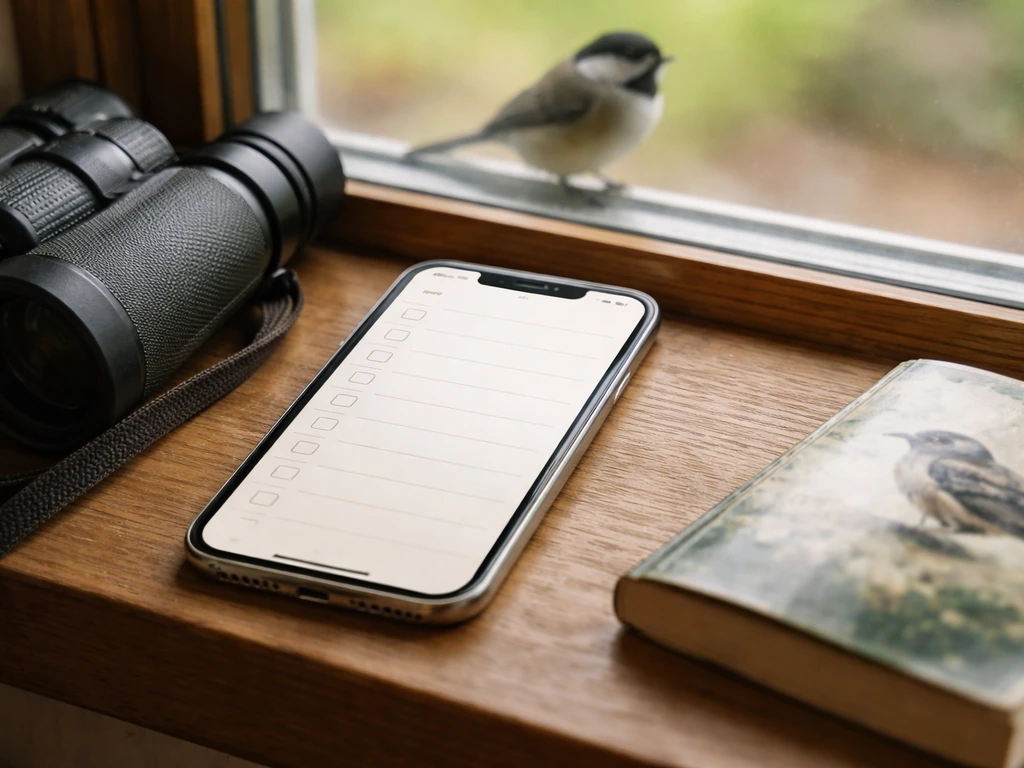
The biggest mistake people make when applying any "bird theory" is confirmation bias. You're already feeling unsettled, a bird taps the window, and suddenly it feels like a message. Britannica describes this as apophenia: the human tendency to perceive meaningful patterns in random information. It's especially common in superstitions and sign-reading. Knowing this doesn't mean bird symbolism is worthless, but it does mean you should require some evidence before treating a sighting as a confirmation of something you were already anxious about.
The science is pretty clear on window strikes. Audubon and Cornell Lab of Ornithology both explain that birds collide with glass because they're fooled by reflections of sky and trees, or because glass appears to be a passable space. Cornell specifically notes that BirdSavers with strands spaced a few inches apart are an effective mitigation. Artificial lighting during night migration also disorients birds and increases collision risk. None of that is an omen. It's a fixable environmental problem. If you're seeing unusual bird behavior around your home, rule out the scientific explanation first.
In the relationship version of bird theory, responsible interpretation means not treating one data point as a verdict. A single failed bid for connection tells you less than a week's worth of interactions. The trend got popular partly because it's satisfying to have a simple test, but Gottman's actual research is about patterns, not single moments. If you're noticing a consistent lack of engagement, that's worth a conversation. If your partner missed one bird comment during a stressful week, that's not data.
Mini case studies: bird theory in everyday scenarios
Here are a few real-world situations where "bird theory" thinking applies, and how to interpret them responsibly.
| Scenario | Instinctive Interpretation | Responsible Read |
|---|---|---|
| You mention a bird to your partner and they don't respond | They don't care about you | Note it, but look for a pattern over multiple interactions before drawing conclusions |
| A bird keeps hitting your window every morning | It's an omen or message | It's almost certainly seeing its own reflection during breeding season; consider window treatments |
| A cardinal appears the day after a loved one's funeral | It's a visitation from the deceased | Culturally meaningful for many people; hold it as comfort without treating it as proof |
| A large flock of birds lands in your yard unexpectedly | Something bad is about to happen | Likely a stopover during migration; check whether migration season aligns with the date |
| Your partner enthusiastically asks about the bird you mentioned | They're emotionally invested in you | Strong positive signal; consistent engagement across other small moments confirms it |
The through-line in all of these is the same: your first interpretation is worth noting, but it needs to be checked against context and pattern before you act on it. That applies whether you're evaluating a relationship or deciding whether a woodpecker on your roof means anything beyond "there's food in your siding."
How to investigate, confirm, and avoid getting it wrong
If you're new to reading bird signals of any kind, the most useful habit you can build is layering your lenses. Don't just use one framework. Start with the ornithological explanation (what's the species doing and why, biologically?), then check the cultural tradition most relevant to your background, then consider what your own intuition or emotional response is telling you. Each layer adds something; none of them alone is complete.
- Identify the species. Different birds carry different meanings across cultures. A crow and a dove mean very different things in almost every tradition.
- Note the behavior. Is the bird flying, singing, perching, colliding, or dying? Behavior changes the interpretation significantly.
- Check the time and season. Breeding season (roughly spring and early summer) explains a lot of "unusual" bird behavior that might otherwise seem mysterious.
- Consider the location. A bird in a city acts differently from one in a forest. Context changes baseline expectations.
- Cross-reference at least two sources: one scientific, one cultural. If both point in the same direction, that's more meaningful than either alone.
- Look for patterns, not single events. One bird at one moment rarely tells you much. Repeated encounters or behaviors are more interpretively meaningful.
If the relationship version of bird theory is what you're exploring, the same logic applies. You might also find it useful to look at bird personality test meaning for a different angle on how bird-based frameworks get used to understand people, not just partnerships. And if you're curious about how some people identify with birds on a deeper personal level, the concept explored in bird therian meaning takes that identification further than most relationship tests do.
The most important thing is to treat both the emotional read and the rational check as necessary. Bird theory, in any of its forms, is most useful when you use it as a prompt to pay closer attention, not as a shortcut to a conclusion. Whether you're watching how your partner responds to a throwaway comment or deciding what it means that a hawk landed on your fence, the practice of noticing, questioning, and contextualizing is the real skill being developed. That's where the insight actually comes from.
FAQ
How many “missed bids” count as a real signal in bird theory meaning?
In the TikTok-style usage, a bird comment is only meaningful if it is a genuine, low-effort attempt at connection and you compare it to how your partner responds to other, similar small moments. If they are regularly engaged in other ways, missing one response usually points to distraction, mood, or circumstance rather than lack of care.
What if my partner never answers right away, does that still mean they are turning away?
Don’t assume the person needs to reply instantly. Someone can “turn toward” you nonverbally, for example, by making eye contact, putting their phone away, asking a follow-up later, or referencing your comment in the next conversation. If you only track words, you may misread attention or affection.
Can neurodivergence or stress make bird theory meaning misleading?
Yes, but only as a starting hypothesis. Stress, depression, ADHD, autism, hearing issues, or social anxiety can change responsiveness without changing feelings. A better test is whether they notice and engage with you overall across multiple contexts, not whether they react the same way to one prompt.
Does bird theory meaning apply outside romantic relationships, like with friends or family?
A “bird theory” approach can work for friends and family if the same logic is used: observe whether your small sharing attempts are consistently met with curiosity, follow-ups, or acknowledgment. If your comments are often ignored in the relationship broadly, it can indicate a communication gap, but it should be addressed directly and kindly.
How should I bring up the results without starting a fight?
Use it to prompt an accurate conversation, not to label them. For example, instead of “You didn’t respond, so you don’t care,” try “I like when we share small things during the day. Are you okay when I mention stuff like that?” This turns the pattern into information you can clarify.
What are common mistakes that make the bird comment test unfair?
Don’t treat the bird comment as the only variable. Check whether your timing, topic load, setting, or delivery made it harder to respond (for example, interrupting them mid-task). When you control for those factors, the pattern becomes more informative.
How do I balance spiritual or symbolic bird interpretations with not catastrophizing?
If you’re using it as a symbolic sign, you’ll get better results by separating “symbolic meaning” from “prediction.” You can respect the cultural framing while still requiring a plausible, non-fatal explanation for the event, especially if the behavior has known natural causes like window strikes or migration-related disorientation.
If I keep seeing birds hitting my windows, what should I check first?
For window hits, the most useful next step is to identify your home’s likely causes, such as reflections from trees or sky, bird feeders nearby, or interior lights during migration. Then mitigate, for example, by adjusting lighting at night or using appropriate window-safe solutions, before concluding anything about “messages.”
How does timing affect interpreting bird theory meaning in either context?
Timing matters a lot. In bird behavior, species and seasons change what is normal, and in relationships, seasonal stressors (work crunch, caregiving, travel) can affect attentiveness. A practical rule is to look at a two to four week span, not a single day.
Is there a better way to “test” engagement than only using the bird prompt?
The reliability improves when you track patterns of engagement over multiple kinds of bids (sharing a story, asking a question, offering help). If the pattern is consistent across bids, it’s more likely to reflect relationship dynamics. If it only happens with one type, it may point to topic preferences or communication style differences.
Next Article
Bird Blindness Meaning: Causes, Signs, and What to Do Now
Bird blindness meaning: spot signs, tell vision loss from other issues, and take safe action or get urgent vet care.