A bird personality test result tells you which of a handful of bird archetypes best matches your self-reported communication style and behavioral tendencies. The most common format assigns you one of four birds: Dove, Owl, Peacock, or Eagle. Each label comes with a short list of traits (calm and gentle for the Dove, wise and perceptive for the Owl, enthusiastic and adventurous for the Peacock, confident and driven for the Eagle). It is a useful starting point for self-reflection, not a clinical diagnosis, and treating it as anything more than that is where most people run into trouble.
Bird Personality Test Meaning: Symbolism and Results

Marcus Holloway
23 May 2026

What a bird personality test actually is
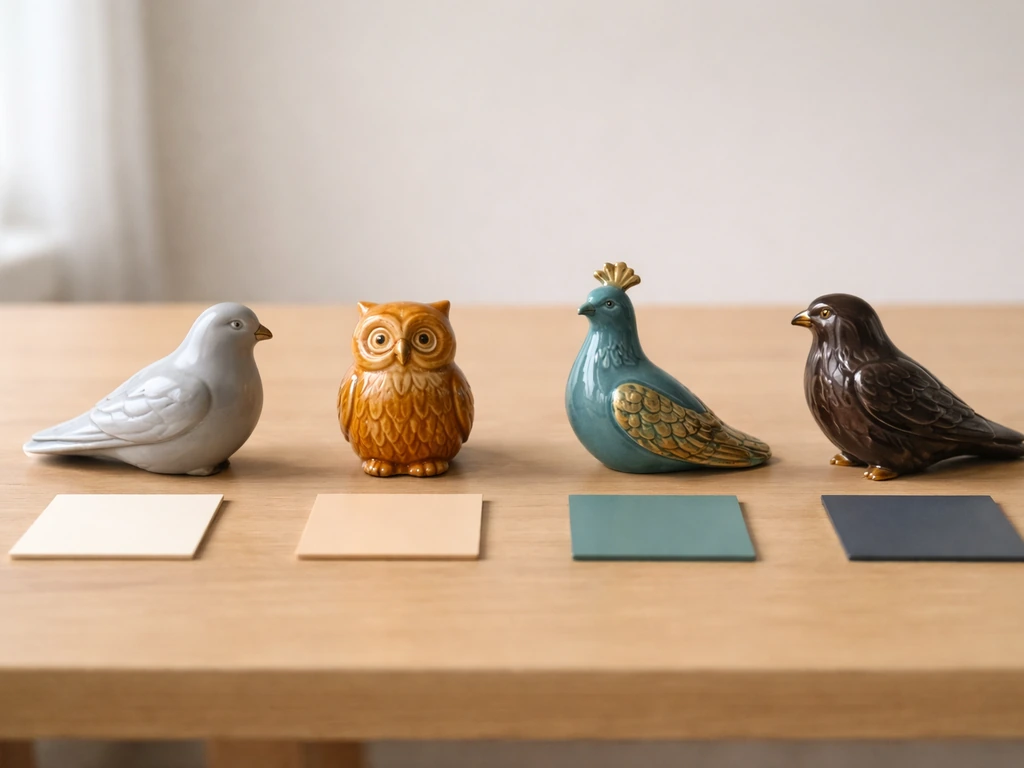
The most widely circulated bird personality quiz format is known as the DOPE test, which stands for Dove, Owl, Peacock, Eagle. It was designed as a shorthand typology for behavioral tendencies, decision-making patterns, and communication preferences. The DOPE format (Dove, Owl, Peacock, Eagle) is presented as a shorthand personality labeling system with four fixed outcomes tied to behavioral tendencies, communication styles, and decision-making patterns DOPE format (Dove/Owl/Peacock/Eagle). Think of it as a simplified four-bucket system rather than a spectrum. You answer a series of questions about how you respond in social situations, how you prefer to process information, or how you make decisions, and the quiz assigns you the bird that fits your pattern best.
Some versions of the quiz map directly onto established behavioral frameworks. For example, Eagle often corresponds to the Dominance dimension in DISC assessments, Owl to Conscientiousness, Dove to Steadiness, and Peacock (or Parrot in some versions) to Influence. In that sense, the bird label is a friendlier surface layer placed over a behavioral model that already existed. The birds make the categories feel more relatable and memorable, which is exactly why this format spread so widely.
People take these quizzes for all sorts of reasons: curiosity about how others perceive them, a team-building exercise at work, a prompt for journaling, or just a fun few minutes online. The appeal is the combination of self-recognition and novelty. You answer questions about yourself and get handed a vivid symbol with a whole story attached. That story, though, is where cultural symbolism enters the picture, and where some care is worth applying.
How to interpret your result: traits, archetypes, and practical takeaways
Here is what each of the four primary archetypes typically means in the context of these quizzes:
| Bird | Core Traits | Communication Style | Typical Strength |
|---|---|---|---|
| Dove | Calm, gentle, empathetic, cooperative | Warm, patient, avoids conflict | Team harmony and emotional support |
| Owl | Wise, observant, analytical, detail-oriented | Deliberate, question-asking, evidence-seeking | Deep thinking and accuracy |
| Peacock | Enthusiastic, expressive, adventurous, social | Energetic, persuasive, story-driven | Inspiring others and creative momentum |
| Eagle | Confident, decisive, goal-focused, direct | Assertive, concise, results-oriented | Leading and executing under pressure |
The practical takeaway from your result is not 'this is who I am forever.' It is closer to 'this is the mode I default to when I am not thinking about it.' If you land on Owl, that might mean you prefer to gather information before deciding, which is useful to know in a negotiation or when you are trying to understand why you feel frustrated by fast-paced group decisions. If you land on Eagle, it might flag a tendency toward impatience or taking over, worth watching in collaborative environments.
The genuinely useful move is to treat the result as a starting question rather than an ending answer. Ask yourself: does this trait description feel accurate in my professional life? In my close relationships? Those answers often differ, and that gap is where real self-knowledge lives. Most thoughtful quiz platforms explicitly say the results are a starting point for reflection, not a replacement for clinical assessment, and that framing is exactly right.
Context matters: symbolism vs real behavior
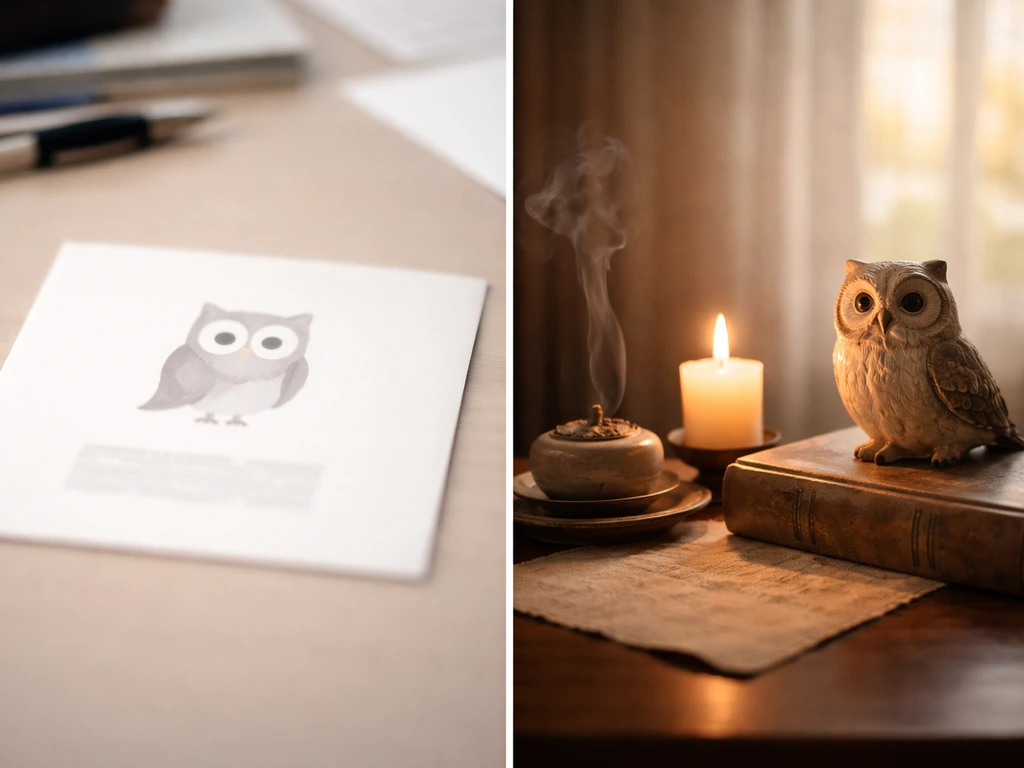
One thing that can trip people up is mixing two very different things: the quiz archetype (a behavioral label) and the cultural or spiritual symbolism of the bird itself. These are not the same system, and they do not always agree.
In a personality quiz, an Owl result means you tend to be analytical and conscientious. Bird test meaning typically depends on which lens you use, whether you are reading it as a personality profile, dream symbol, or cultural sign. In folk tradition and spiritual symbolism, the owl is often associated with hidden knowledge, transformation, and in some cultural frameworks, omens of change or death. In dreams, an owl can represent a message from the subconscious about something you are not yet seeing clearly. In everyday slang, calling someone 'a wise old owl' is a casual compliment with no clinical weight whatsoever. These are four completely separate uses of the same symbol.
The same layering applies to every bird. Swan symbolism, for instance, shifts dramatically depending on the tradition: elegance and transformation in Western European folklore, but very different connotations in some other cultural mythologies. A raven means one thing in Norse mythology (wisdom, Odin's messengers) and something else again in certain Indigenous North American traditions or in Western superstition, where its black plumage and carrion diet historically linked it to ill omen. The point is that bird meanings are not fixed universals. If you are also trying to understand bird theory meaning, it helps to separate these cultural bird meanings from the quiz’s personality labels. They are context-dependent, culturally situated, and often contradictory across traditions.
So when you get a quiz result, it is worth deciding which lens you are actually using. Are you treating this as a behavioral self-profile? A symbolic meditation? A spiritual prompt? Each of those is a valid use, but they work very differently. Blending them together without noticing is where people end up over-interpreting.
Common misconceptions and how to sanity-check your reading
The biggest misconception is that a bird personality test result is scientifically validated in the same way as a clinical personality assessment. It is not. Rigorous research comparing personality measurement tools consistently finds that type-based systems, including well-known ones like MBTI, are significantly less predictive of real-life outcomes than dimensional models like the Big Five. One major comparison found Big Five-style measures to be roughly twice as accurate as MBTI-style results for predicting life outcomes, and adding type-based outputs on top of Big Five scores didn't improve predictions at all.
Bird personality quizzes sit further down the validity ladder than even those established (and debated) instruments. They are engaging and often feel surprisingly accurate, but that feeling of accuracy is partly a cognitive trap. Personality quizzes tend to reflect your self-concept back to you in flattering terms, which creates a sense of recognition that can feel like insight but is really confirmation of what you already believed. This is sometimes called the Barnum effect: descriptions that are positive and broad enough to feel personally true even when they apply to almost everyone.
Here is a practical sanity-check you can run on any result:
- Ask whether the result would still feel accurate if the traits listed were slightly negative. If an Owl result described you as 'prone to over-analysis and paralysis by perfectionism,' would you still nod along? If not, the positive framing may be doing most of the persuasive work.
- Check whether the quiz maps onto an established framework. If it is a version of DISC or a Big Five adjacent model wearing bird costumes, the underlying structure has more to stand on than a purely invented quiz.
- Give it the 'other bird' test. Read the full description of the bird you were NOT assigned. Does it also sound plausible for you? If yes, treat the result as one useful prompt among many, not as a precise match.
- Notice whether you are using the result to make a consequential decision. Career changes, relationship calls, major life shifts deserve more than a quiz result. Use the bird result for reflection, then go deeper with other tools.
How bird personality meanings show up in dreams, superstition, and slang
If your quiz result sends you down a rabbit hole of what 'your bird' means more broadly, you will quickly run into three other contexts: dream interpretation, superstition and folklore, and everyday slang. Each one operates by its own logic.
Dream interpretation

Dreaming of an eagle or a dove does not automatically confirm your quiz result, and your quiz result does not predict what birds will visit your dreams. Dream symbolism is highly personal and contextual. A good rule of thumb, borrowed from practical dream-work guidance, is to treat any symbolic interpretation as a hypothesis rather than a verdict. The bird that appears in your dream carries meaning shaped by your personal history with that bird, the emotional tone of the dream, and what was happening in your waking life around the time of the dream. Generic symbol dictionaries are a starting point, not a final answer.
Superstition and folk omens
Folk traditions around the world have used birds as omens for millennia, and the meanings are fascinatingly inconsistent across cultures. An owl appearing outside your window is an omen of death in some European traditions and a sign of wisdom or protection in others. Ravens were messengers of war in some Norse contexts and trickster-creators in certain North American traditions.
Even within a single omen system, combinations mattered: historically, a raven on the right and a crow on the left could be read as favorable, while the opposite arrangement carried a warning. The takeaway here is that bird symbolism in superstition is not a unified language. It is a patchwork of regionally specific belief systems, and reading one tradition's meaning onto another's symbol often produces nonsense.
Slang and casual usage
In everyday language, bird-related expressions carry their own meanings that are entirely separate from both quiz archetypes and spiritual symbolism. 'Wise old owl' is a compliment. 'Bird-brained' is an insult (and a factually wrong one, given how cognitively sophisticated many birds actually are). 'Eagle-eyed' means sharp attention to detail. These expressions draw loosely from the same cultural archetypes that personality quizzes use, but they are colloquial shorthand, not diagnostic tools. If someone calls you an 'eagle' in a meeting, they are paying you a professional compliment, not assigning you a personality type.
This cross-context layering is also why related ideas like the bird theory (the idea that how a potential partner treats birds or small animals signals how they will treat you) or bird therian identity (identifying spiritually or psychologically as a bird) operate in completely different territory from a personality quiz result, even though they all involve birds and identity. Bird therian meaning is about identifying spiritually or psychologically as a bird, which is separate from quiz archetypes.
If you are exploring the bird theory relationship meaning, it helps to treat it as a lens for observing kindness and consistency over time. If you are curious about the bird theory meaning, it is typically discussed as a relationship-signal idea rather than a personality-test result. They are asking different questions and using different frameworks.
Use your result wisely: next steps for self-reflection and decision-making
The most productive way to use a bird personality test result is as a conversation starter with yourself, not a conclusion. Here is how to do that well:
- Write down the three traits from your result that feel most accurate and the one that feels least accurate. The gap between 'yes, that's me' and 'no, not really' often points to something worth examining.
- Think about a specific recent situation: a conflict, a decision, a moment of stress. Would the bird archetype explain how you showed up in that moment? If yes, is that a pattern you want to keep or adjust?
- Share the result with someone who knows you well and ask whether they agree. Other people's reactions to your self-assessment are often more revealing than the assessment itself.
- Use the result as a journaling prompt rather than a fixed identity. Track whether your 'bird mode' shifts in different contexts over time. Most people discover they lead with different tendencies in personal versus professional settings.
- If you want more rigorous self-knowledge, look into Big Five personality assessments, which have stronger scientific backing and give you a dimensional profile rather than a single category.
- When it comes to spiritual or symbolic meanings attached to your bird, treat them as invitations for reflection rather than prescriptions. Ask what the symbolism resonates with in your current life, not whether it is 'true.'
The bottom line is that a bird personality test result is a low-stakes, high-engagement tool that works best when you hold it lightly. It can surface genuine self-awareness, spark useful conversations, and introduce you to a set of behavioral frameworks worth knowing. What it cannot do is predict your future, define your limits, or substitute for deeper psychological work. Use it the way you would use any good metaphor: as a lens that reveals something, not a map that tells you exactly where you are.
FAQ
What does “bird personality test meaning” refer to when someone says it about a quiz result?
Usually it means the quiz’s behavioral archetype label (for example, Dove, Owl, Peacock, or Eagle). Some people use the phrase to mean cultural or spiritual symbolism of the actual bird species, but those are different systems and the meaning can change depending on which lens you choose.
Can I take a bird personality test and expect it to stay consistent over time?
Often you will get a similar default label, but not always. If your self-reported answers shift because of stress, a new job role, or relationship changes, your assigned bird can change too, because the quiz is measuring your current tendencies rather than a fixed trait.
Why do two quizzes give me different bird results?
Different platforms use different question wording, scoring rules, and sometimes slightly different trait descriptions (for example, Peacock versus Parrot). Even small differences in how they force choices can push you into another bucket, so compare the specific behaviors they claim rather than the name of the bird.
Is the DOPE test the same thing as DISC or the Big Five?
Not exactly. Some quizzes map Dove, Owl, Peacock, and Eagle onto DISC dimensions (or other frameworks) as a convenient shortcut, but the test itself is still a typology. DISC and Big Five are measurement approaches with different assumptions, and a bird label is not a direct replacement for either.
How do I tell if a bird description is accurate for me or just “sounds true”?
Run a situational check. Ask whether the description predicts what you actually do in a specific context (planning under time pressure, how you handle disagreement, how you process feedback). If the label only fits when you read it broadly, it may be operating through the Barnum effect rather than reflecting a real pattern.
What if my quiz results feel negative or too harsh, especially if I land on Eagle or Peacock?
Treat the label as a tendency, not a judgment. If the “confident and driven” traits are showing up as impatience, try translating it into a behavior you can test (for example, waiting before taking over in group tasks, or asking one clarifying question before deciding).
Do bird personality tests have any clinical value for anxiety, depression, or personality disorders?
No. These quizzes are best treated as reflective tools, not assessments. If you are looking for help with mental health concerns, use validated screening or a clinician, because quiz archetypes cannot diagnose or measure severity.
Can I use my quiz result to improve communication at work or in teams?
Yes, if you convert the label into actionable norms. For example, if your result points toward decision speed, you can build in a small “pause” rule (collect input for a set number of minutes, then decide). The key is to test whether the strategy improves outcomes rather than to rely on the label alone.
Do dream meanings of birds confirm my quiz result?
They do not automatically. A dream’s bird symbolism is shaped by your personal history, the emotional tone, and what was happening in your life. If you want to connect the two, frame it as a hypothesis, then ask whether the dream theme matches your current stressors or communication challenges.
What’s the most common mistake people make with bird meanings?
Mixing contexts. People may treat quiz archetypes as spiritual omens, or they may apply a superstition from one culture to a completely different symbol system. Decide whether you are doing behavioral reflection or symbolic interpretation before drawing conclusions.
Are there any “edge cases” where the bird label might mislead me?
If your answers were influenced by a temporary role or mood (for instance, you were performing in a leadership setting for the quiz), the result may reflect that context more than your usual default. Re-take the quiz after a couple of weeks of normal routine if you need a more stable read.
How should I approach journal prompts after getting a bird result?
Focus on behavior examples, not just trait statements. Write two real moments from this month where the description fits, and two moments where it did not. The gaps often reveal the most useful self-knowledge.
Next Article
Bird Theory Relationship Meaning: What It Likely Refers To
Decode bird theory in relationships with meanings, signs, and practical steps to avoid superstition and stay grounded.