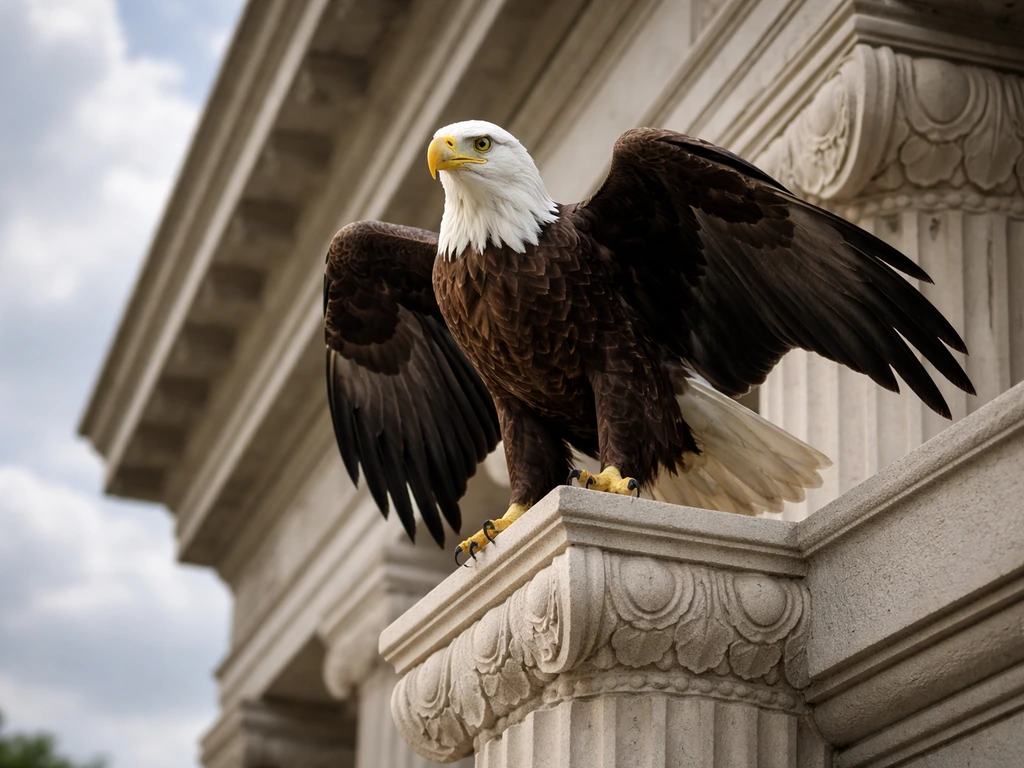
If you searched 'bird law reddit' and you need help with an actual legal situation involving birds, here is the fastest path forward: use Reddit to find threads that describe your scenario, extract the referenced laws and agencies, then verify everything directly with the USFWS, your state wildlife agency, or a wildlife attorney before acting. These same principles apply when you are dealing with bird law and order issues that involve federal and state enforcement bird-law Reddit. Reddit is a great starting point for framing your question and understanding what laws might apply, but it is not a substitute for authoritative guidance, especially when you are dealing with federal statutes that carry strict liability criminal penalties.
Bird Law Reddit: Find Answers Fast Without Legal Risks

Marcus Holloway
26 Jun 2026
Wait, are you looking for bird law or bird meaning?
This site is primarily about decoding what birds mean, covering symbolism, spiritual significance, behavioral interpretation, dream analysis, cultural folklore, and slang. So it is worth a quick check: are you searching for the legal rules that govern birds and wildlife, or are you actually trying to understand what a bird sighting or behavior means?
If you are trying to decode “bird law” using an urban-dictionary style definition, you still need to anchor your understanding in the real legal rules and agency guidance. If you are curious about bird symbolism, omens, or what it means when a bird lands near you, that is a completely different rabbit hole and this guide is not the right one.
But if you typed 'bird law reddit' because you found a nest on your property, witnessed someone harming a bird, or want to know what you can legally do during construction season, you are in the right place. Keep reading.
It is also worth noting that 'bird law' has a separate life as a pop-culture reference, stemming from a running joke in the TV show 'It's Always Sunny in Philadelphia,' where a character claims to be an expert in bird law while spouting nonsense. That phrase has generated its own Reddit threads, memes, and even merchandise like the bird law hat. That comedic tradition is fun, but it has zero practical application when you are staring at a hawk nest on your roof. The legal side of bird law is very real, very federal, and carries consequences that are not funny at all.
What bird laws actually cover
Most people are surprised by how broad and strict federal bird protections are in the United States. The two major federal laws you will encounter in almost every bird-law Reddit thread are the Migratory Bird Treaty Act (MBTA) and the Bald and Golden Eagle Protection Act (BGEPA). Together they cover the vast majority of common bird species you might encounter.
The Migratory Bird Treaty Act
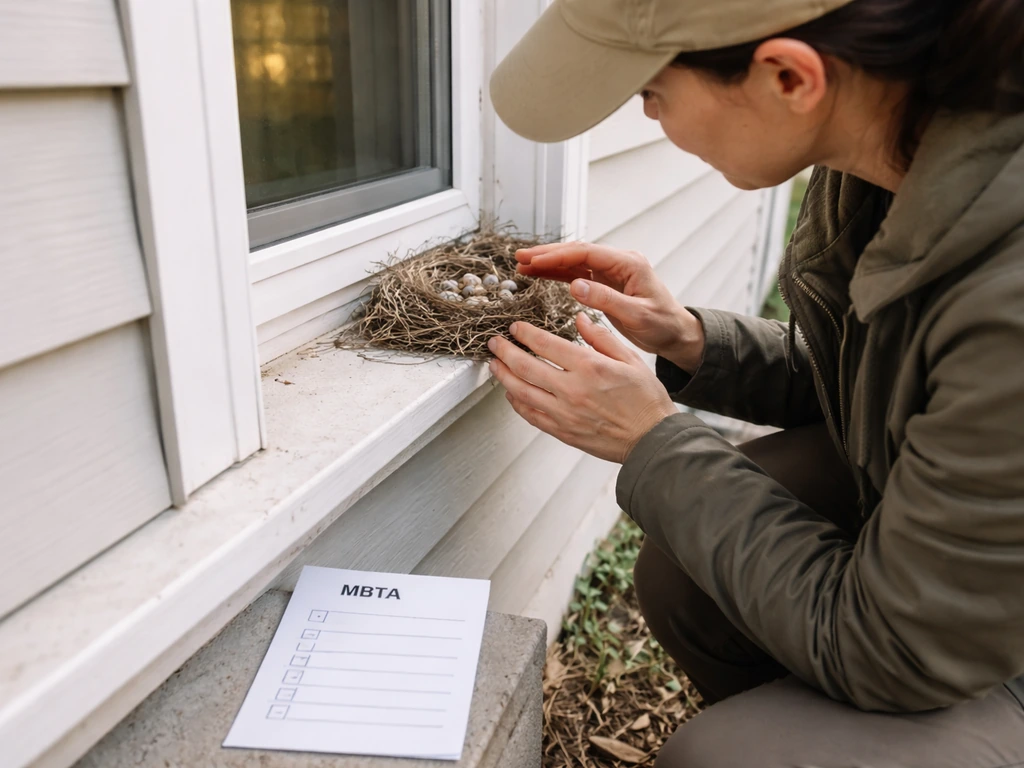
The MBTA prohibits the take, possession, import, export, transport, sale, purchase, barter, or offer of migratory birds, including their parts, nests, and eggs. The USFWS Office of Law Enforcement describes the Migratory Bird Program’s enforcement administration responsibilities under the Migratory Bird Treaty Act, including habitat protection and permit policy Migratory Bird Program enforcement administration responsibilities under the Migratory Bird Treaty Act.
The critical word is 'take,' which includes harassment, hunting, killing, and nest destruction. If you are trying to understand bird rights meaning in practice, start by looking at what the MBTA actually prohibits, such as “take” and nest destruction. One thing that trips people up: under USFWS interpretation, blank" rel="noopener noreferrer">you cannot legally destroy a nest that contains eggs or chicks, or one where young birds are still dependent on it for survival.
And the enforcement standard is brutal: MBTA violations are strict liability criminal offenses, meaning the government does not need to prove you knew what you were doing. Accidentally destroying a nest during a tree trim can technically be a federal offense.
The Bald and Golden Eagle Protection Act
If your situation involves bald or golden eagles, the stakes are even higher. The BGEPA (16 U.S.C. §§ 668 to 668d) prohibits anyone from taking bald or golden eagles, their parts, nests, or eggs without a permit issued by the Secretary of the Interior. Disturbance alone counts as a form of 'take' under this act. The USFWS revised its eagle incidental disturbance and nest take permit regulations in 2024, so if you find older Reddit threads citing specific permit procedures, double-check the current USFWS eagle permit page because the rules may have changed.
State-level protections
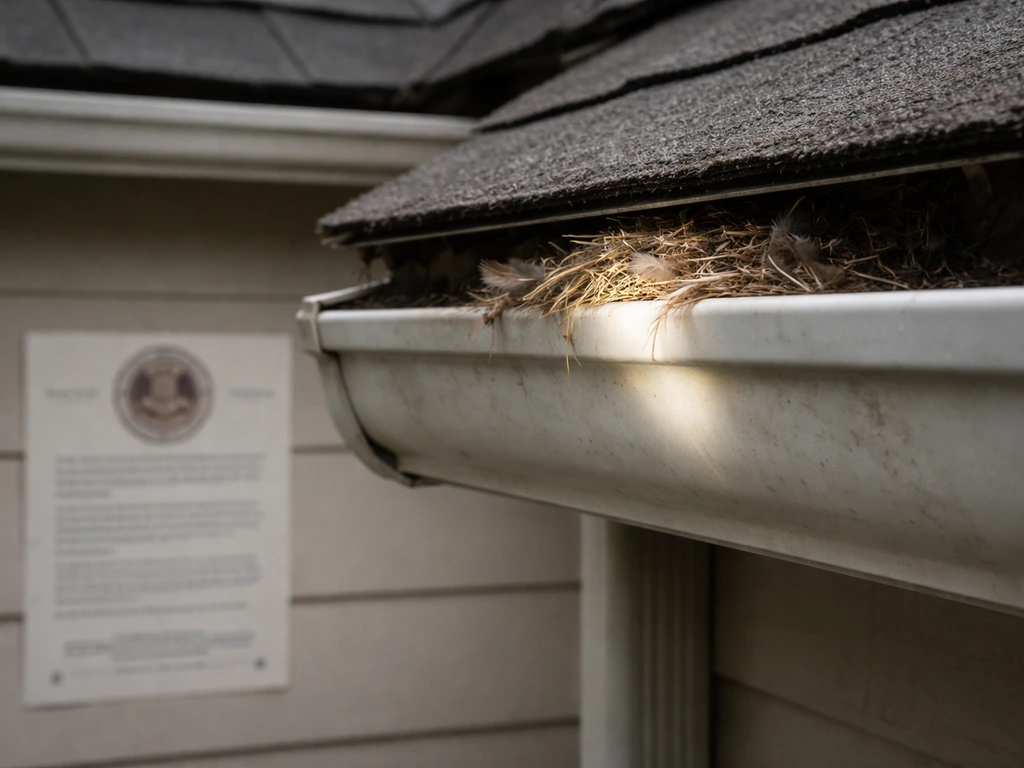
Federal law is the floor, not the ceiling. States can and do add their own protections on top. California is a strong example: California Fish and Game Code Section 3503.5 makes it unlawful to take, possess, or destroy birds of prey (including hawks, owls, and falcons) and their nests or eggs except as otherwise provided. Many other states have similar statutes. This matters because a Reddit poster in Texas may be working under completely different rules than someone in Oregon, even though both are subject to the MBTA.
Common scenarios covered by bird law
- Nesting birds on private property, including in gutters, HVAC units, and building ledges
- Construction or landscaping work that might disturb active nests
- Harassment of nesting or roosting birds by individuals, pets, or machinery
- Possession of feathers, eggs, or other bird parts (even if found on the ground)
- Feeding, rehabilitating, or keeping wild birds without the appropriate permits
- Relocation or removal of bird nests before or after eggs are laid
- Permits for incidental take during development or agricultural activity
How to actually use Reddit to find good answers
Reddit is genuinely useful for bird law questions if you know how to search it. The trick is to treat Reddit like a research database, not a legal hotline. Here is how to get the most out of it without wasting time in low-quality threads.
The best subreddits to search
- r/legaladvice: The largest general legal advice subreddit. Search it with specific terms like 'bird nest MBTA' or 'migratory bird permit construction.' Many threads include references to actual statutes.
- r/birding and r/whatsthisbird: Great for identifying the species, which directly affects which laws apply. Knowing you have a Cooper's Hawk versus a House Sparrow changes the legal picture significantly.
- r/wildliferehab: Useful for injured bird situations. Experienced rehabilitators often explain what you can and cannot legally do while waiting for a licensed rehabber.
- r/construction and r/landscaping: Have surprisingly detailed threads from contractors who have faced nest-related work stoppages and permit questions.
- r/ecology and r/conservation: For broader regulatory context and permit discussions.
Search techniques that save time
Use Reddit's native search with the subreddit filter, but also try Google with 'site:reddit.com' followed by your specific scenario. For example: 'site:reddit.com robin nest construction delay MBTA' will surface threads that go straight to the point. Within threads, sort comments by 'Top' first, then read the top three comments before scrolling. The most upvoted response is usually the most accurate, though not always. Look for comments that cite specific law names or federal agencies. Generic advice like 'just call animal control' is less useful than a comment that explains MBTA protections and recommends contacting USFWS.
How to judge comment quality
Not all Reddit comments are equal, and in a legal context the difference between a good and bad comment can matter a lot. A useful heuristic: comments that name specific statutes (MBTA, BGEPA, state fish and game codes), reference actual agencies (USFWS, state wildlife agency), or describe the poster's direct professional experience (wildlife biologist, environmental attorney, licensed rehabber) are worth more weight. Comments that say 'I think it's illegal but not sure' or that confuse state and federal jurisdiction are common and should be treated as anecdote, not guidance.
How to verify what Reddit tells you
This is the most important step and the one most people skip. Reddit gives you a starting point. These sources give you the actual answer.
| Source | What it covers | Best for |
|---|---|---|
| USFWS Migratory Bird Program (fws.gov) | MBTA rules, permit types, species lists, enforcement policy | Confirming whether your bird species is protected and what the nest rules are |
| USFWS Eagle Permit Office | BGEPA rules, incidental disturbance permits, 2024 regulatory revisions | Any situation involving bald or golden eagles |
| Your state fish and wildlife agency | State-level protections, additional permit requirements, local enforcement contacts | Understanding rules that go beyond federal minimums |
| USFWS Office of Law Enforcement | Reporting violations, understanding enforcement process | If you witnessed illegal take or want to report a situation |
| National Wildlife Rehabilitators Association (NWRA) | Finding licensed rehabilitators, what to do with injured birds | Injured or orphaned bird scenarios |
When you find a relevant statute mentioned in a Reddit thread, look it up directly. For federal law, Cornell's Legal Information Institute (law.cornell.edu) has clean, readable versions of the MBTA and BGEPA. For state codes, most state legislatures publish their fish and game codes online. Cross-referencing a Reddit post against the actual statutory text takes about five minutes and will tell you immediately whether the Redditor got it right.
What to do in the most common situations
You found an active nest on your property
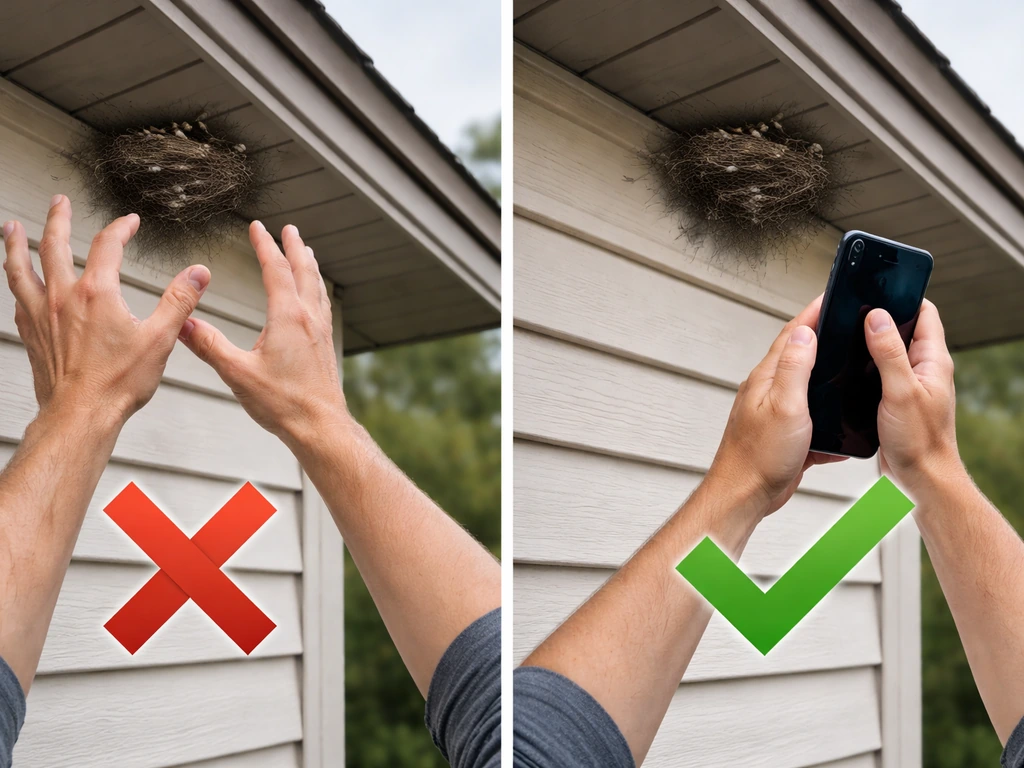
- Identify the species. Take a clear photo and use r/whatsthisbird or a bird ID app to confirm. Species identification determines which laws apply.
- Check whether the nest is active. An active nest has eggs or live chicks. An empty, abandoned nest after young have fledged has different legal status.
- Do not disturb the nest while it is active. Under the MBTA, destroying a nest with eggs or dependent young is prohibited without a permit.
- If the nest is creating a genuine safety hazard (blocking a gas flue, inside electrical equipment), contact your regional USFWS office before taking any action. Explain the safety situation. They can advise on whether an emergency exception or permit applies.
- Once birds have fledged and the nest is fully abandoned, most states allow removal. Confirm this with your state wildlife agency before removing.
You found an injured or orphaned bird
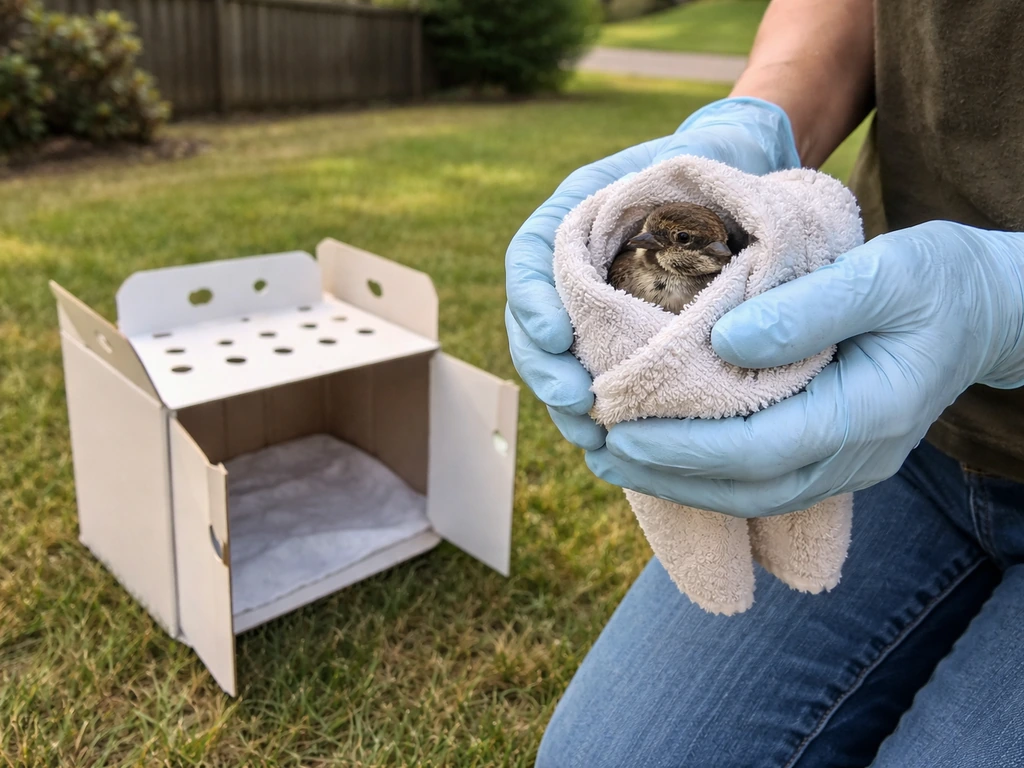
- Do not attempt to keep or rehabilitate the bird yourself. Possessing a migratory bird, even temporarily, without a federal permit is a federal offense under the MBTA.
- Keep the bird calm and contained in a ventilated box in a quiet, warm place. Do not offer food or water unless directed by a professional.
- Find a licensed wildlife rehabilitator immediately. Use the NWRA directory or your state wildlife agency's website. Many areas have 24-hour hotlines.
- If you cannot reach a rehabber, contact your state wildlife agency's emergency line. They can authorize emergency holding or dispatch help.
- Document what you observed (when, where, what the bird looks like, any obvious injury). This information helps the rehabber and may matter for enforcement if the injury was caused by human activity.
Construction or landscaping work near birds
- Survey the work area before starting. Walk the site and look for active nests in trees, shrubs, structures, and ground cover.
- If you find an active nest, stop work in the immediate area. The buffer distance varies by species, but a general rule is to maintain at least 50 feet from passerine nests and significantly more for raptors.
- Contact your regional USFWS office or a qualified biological monitor if the project cannot be paused. For large-scale projects, an Incidental Take Permit or Biological Opinion under NEPA may be required.
- Document the nest location, species if known, and the date you discovered it. This creates a record that you acted in good faith.
- Schedule sensitive clearing and grubbing work outside the nesting season when possible. In most of the continental US, nesting season runs roughly from March through August, though this varies by species and region.
When to call an attorney or a wildlife agency
Most bird-nest situations can be resolved by calling your regional USFWS office directly. They are generally helpful and can give informal guidance over the phone. But there are situations where you genuinely need a wildlife attorney or a formal agency contact.
- You received a Notice of Violation or citation from USFWS or a state wildlife agency
- Your construction project is facing a work-stoppage order related to bird nesting
- You are a contractor or developer and the project involves eagle nests or a listed threatened species
- You need an Incidental Take Permit and want to understand the application process and timeline
- You are facing a strict liability MBTA criminal charge, even for an accidental incident
- A neighbor or third party is threatening to report you for wildlife violations and you are unsure of your exposure
- You want to legally deter, relocate, or manage a bird species causing property damage and you need to know what permits are required
When you reach out to an attorney or agency, gather this information first: the species involved (or your best identification), the location (address and geographic context), photos of the nest or bird and any damage, dates of any incidents, and any written communications you have already had with agencies or contractors. Coming in with this package makes the conversation faster and more productive.
For agency contacts, the USFWS Office of Law Enforcement has regional offices across the country. Your state wildlife agency (variously named the Department of Fish and Wildlife, Department of Natural Resources, or similar) handles state-level enforcement. For attorney referrals, the Environmental Law Alliance Worldwide and state bar associations with environmental law sections are good starting points.
Myths, misconceptions, and Reddit traps to avoid
Reddit bird-law threads are full of well-intentioned but incorrect information. Here are the ones that come up most often and that can get you into real trouble if you follow them.
| Common claim | The reality |
|---|---|
| 'It's on my property, so I can remove the nest' | Property ownership does not override federal wildlife law. The MBTA applies on private land. An active nest with eggs or chicks is protected regardless of where it is located. |
| 'Just wait a few days and move the nest a little' | Moving an active nest is still 'take' under the MBTA. The nest must be genuinely abandoned before removal is legally safe in most cases. |
| 'House Sparrows and European Starlings aren't protected' | This one is actually true. House Sparrows and European Starlings are not native species and are not covered by the MBTA. But misidentifying your bird as one of these when it is actually a native species is a real risk. |
| 'Animal control handles this' | Most municipal animal control agencies do not have jurisdiction over migratory birds. They handle domestic animals. Wild bird situations go to state wildlife agencies or USFWS. |
| 'The law only applies to endangered species' | The MBTA covers over 1,000 species including common birds like robins, sparrows, and swallows. A species does not need to be listed as threatened or endangered to be federally protected. |
| 'Feathers found on the ground are fine to keep' | Under the MBTA, possession of feathers from protected species is prohibited even if you found them naturally shed. Permits are required. Eagle feathers carry especially heavy restrictions under the BGEPA. |
| 'It was an accident, so I won't be charged' | MBTA violations are strict liability offenses. Intent is not required for a criminal charge. Courts have prosecuted companies for incidental take during routine industrial operations. |
One broader Reddit trap worth naming: threads that confidently reference 'bird law is not governed by reason' as if it were a real legal doctrine. That is a quote from 'It's Always Sunny in Philadelphia,' and while it makes for great memes, treating it as actual legal guidance is a mistake. Real bird law is very much governed by reason, statute, and enforcement action. There is even a cultural arc around this phrase that connects to discussions of bird rights meaning and similar pop-culture treatments of the topic, but none of it belongs in a real legal strategy.
The bottom line: use Reddit to orient yourself, identify the right questions, and find the names of relevant laws and agencies. Then step away from the thread and verify everything directly before you act. When in doubt, call your regional USFWS office before touching the nest, the bird, or the feather. They would rather take a five-minute phone call than open a federal investigation.
FAQ
I found a nest on my property, can I move it or remove the tree/structure fast to prevent damage?
If you might be dealing with a migratory bird (most people are), the safe assumption is that MBTA “take” can include disturbing nests and destroying eggs or chicks, and it is treated as strict-liability in enforcement. Before acting, identify the species, confirm whether it is migratory, and contact your regional USFWS office if you are unsure rather than relying on a neighbor’s or contractor’s read of the situation.
What if a Reddit thread says there is an “easy permit” for eagle disturbance, is it still valid?
Older Reddit threads may describe permit steps that are no longer current, especially for eagles. If bald or golden eagles are even a possibility, treat the situation as time-sensitive, ask USFWS for the current incidental disturbance or nest take permit requirements, and do not proceed based solely on a thread that cites outdated procedures.
If MBTA is the only law, why do different states seem to have different outcomes on Reddit?
Yes. Many wildlife agencies treat birds of prey (raptors) and their nests or eggs as protected under state law, sometimes with additional prohibitions beyond federal coverage. The practical step is to look up your state’s fish and game or wildlife code for raptors where you live, then compare that to federal MBTA or BGEPA so you know which rule is stricter.
I accidentally disturbed or damaged a nest while trimming or building, what should I do first?
Do not rely on “I didn’t know” as a shield. For MBTA, enforcement can proceed without proving knowledge, and for BGEPA, you typically need the right authorization. Your best mitigation is to stop the potentially harmful activity immediately, document what you did and when, then get confirmation from USFWS or your state wildlife agency before resuming.
Which details do USFWS or my state agency usually need to answer a bird-law question quickly?
Start with what the situation is likely to be under federal law: nest destruction, harassment, or disturbance (which can still count as “take” for eagles). Then capture concrete details for the agency, especially exact dates, your location, photos, and a clear timeline of the activity that caused the disturbance, because those facts determine whether the case is treated as incidental versus intentional.
Should I contact animal control first or USFWS/state wildlife directly?
“Animal control” can be helpful, but it may not be the right enforcement or permitting authority for federal bird protections. For federal issues, USFWS Office of Law Enforcement or the appropriate USFWS regional office is the more direct path, and your state wildlife agency handles state-level enforcement. Use animal control for welfare issues, then confirm legal protection requirements with the wildlife agencies.
How can I tell if a Reddit answer is mixing up state law and federal law?
Reddit comments that confuse state versus federal jurisdiction are a common risk, especially when someone says the problem is “only a local matter.” A quick decision aid is to check whether your facts involve migratory birds in general (often MBTA) or specifically bald or golden eagles (BGEPA). If either is plausible, treat federal law as a governing baseline and verify with USFWS.
Is sorting by “Top” comments on bird law Reddit always reliable?
For research threads, “Top comments” are useful, but the higher-signal comments usually cite law names and agencies and ask clarifying questions (species, location, timing). If a comment offers a definitive legal conclusion without naming statutes or agencies, treat it as guesswork and confirm with the primary statutory text and the relevant wildlife office.
I keep seeing “bird rights” and symbolism discussions, how do I convert that into something legally actionable?
“Bird rights meaning” and symbolism are interesting, but they are not how enforcement decisions are made. If you want actionable guidance, translate the situation into facts that map to legal terms (species, whether a nest/egg/chick is involved, your actions, and whether there is disturbance or destruction). Then verify those facts against MBTA, BGEPA, and your state’s wildlife code.
What if the bird is already dead, can I keep the feathers or get rid of the remains?
If you are dealing with feathers, a dead bird, or parts, do not assume it is safe to keep or dispose of it yourself. MBTA restrictions cover parts and other protected materials for migratory birds, and state rules may be stricter for certain species. Your next step is to contact USFWS or your state wildlife agency and ask what to do with the specific material and species you have.
We have construction or landscaping scheduled, do we need bird-law clearance before starting?
Yes, contractors and property managers can still create liability if their work destroys nests or harasses birds during critical periods. If you have construction or tree trimming planned, ask for a pre-work wildlife check and then confirm with USFWS or the state wildlife agency what timing or mitigation is legally required before work starts.
Next Article
Bird Law and Order Meaning: Symbolism, Signs, and Next Steps
Decode bird symbolism behind law and order bird, from justice and boundaries to practical observation and dream guidance