The phrase 'bird law is not governed by reason' comes from the TV show It's Always Sunny in Philadelphia, where the character Charlie Kelly confidently declares himself an expert in 'bird law' despite having no legal credentials whatsoever. In real life, people quote it as a joke when actual bird-related regulations feel confusing, contradictory, or just plain absurd. If you searched this phrase today, you're probably either laughing at the meme, frustrated by a real bird-related legal situation, or curious about what birds mean in a cultural or spiritual context. All three are valid. Here's how to untangle which lane you're actually in and what to do next.
Bird Law Is Not Governed by Reason: What It Really Means and Next Steps

Marcus Holloway
12 May 2026
What the phrase actually means and where it comes from
Charlie Kelly's declaration in It's Always Sunny in Philadelphia is played entirely for absurdity. He presents himself as a self-taught legal authority on bird-related matters, and the joke lands because 'bird law' sounds just plausible enough to be funny. An Arizona State Law Journal article titled 'Bird Law in the United States: Is It Governed by Reason?' took the joke seriously enough to examine whether actual U.S. bird regulations hold up to rational scrutiny. Spoiler: the answer is complicated, and that's exactly why the phrase has legs.
By May 2026, the phrase has become a recurring cultural shorthand. Journalists and commentators use it as a punchline when discussing confusing wildlife regulations. It circulates widely as a meme, and GIF platforms like Tenor host entire collections of Charlie Day clips with the 'not governed by reason' caption. When someone drops this phrase into a conversation, they're almost never making a genuine legal argument. They're expressing frustration or poking fun at rules that don't seem to make logical sense.
On a site dedicated to bird meanings, it's worth flagging one more layer: some people arrive at this phrase through dream interpretation or folklore communities, using 'bird law' loosely to mean 'the rules that govern bird symbolism.' That's a completely different conversation from actual wildlife regulation, and mixing the two up can cause real problems. We'll keep those threads separate throughout this guide.
The real problem underneath the joke
Actual bird law in most countries is genuinely complex. In the United States, federal protections under the Migratory Bird Treaty Act of 1918 cover more than 1,000 species. USFWS publishes a “List of Birds Protected by the Migratory Bird Treaty Act” list that primarily organizes protected birds by the species included in the relevant international treaties [USFWS’s “List of Birds Protected by the Migratory Bird Treaty Act”](https://www. fws.
gov/media/list-birds-protected-migratory-bird-treaty-act-2023). Violations can result in fines or criminal charges, and the rules about what constitutes an 'incidental take' versus a prohibited act have shifted under different administrations. Similar complexity exists in the UK under the Wildlife and Countryside Act 1981, in Canada under the Migratory Birds Convention Act, and in Australia under the Environment Protection and Biodiversity Conservation Act 1999.
The frustration behind the Charlie Kelly joke is real: bird regulations often feel inconsistent, jurisdiction-dependent, and difficult to apply in everyday situations.
If you're dealing with a specific bird situation right now, whether that's a nest on your property, a bird you found injured, a question about feeding or trapping, or a permit issue, the phrase 'not governed by reason' might feel accurate. But the regulations do exist, they are binding, and assuming they don't apply to you because they seem arbitrary is how people end up with fines. The joke is funny precisely because the underlying reality is a maze.
How to figure out the actual bird law in your jurisdiction today
The single most important first step is identifying your jurisdiction, because bird law operates on multiple levels simultaneously. A nest on your fence could be governed by federal law, state or provincial law, and local ordinance all at once. Here's a practical sequence for cutting through the confusion quickly.
- Identify the species first. Many protections are species-specific. If you don't know what bird you're dealing with, photograph it and use a free identification app like Merlin (Cornell Lab of Ornithology) to get a confirmed ID before looking up regulations.
- Check federal law for your country. In the U.S., start with the U.S. Fish and Wildlife Service (USFWS) website at fws.gov. In the UK, use the RSPB or Natural England. In Canada, Environment and Climate Change Canada. In Australia, the Department of Climate Change, Energy, the Environment and Water.
- Check your state, province, or territory law. Federal protection is a floor, not a ceiling. Many states add protections beyond federal minimums. Your state's Department of Fish and Wildlife or equivalent agency will have a species-specific page.
- Search for local ordinances. Some municipalities have separate rules about feeding birds, keeping chickens, or managing bird-attracting plants. Your city or county government website is the right place to look.
- Contact the relevant agency directly. If you can't find a clear answer online, call or email the wildlife agency for your jurisdiction. Most have a public inquiry line. Document the date, name of the representative, and their answer in case you need it later.
- If there's any legal exposure (permit questions, potential violations, land-use disputes), consult a wildlife attorney or a licensed wildlife rehabilitator who works with your local agency. Don't rely on online forums or social media advice.
Common misconceptions about bird law and how to fact-check them
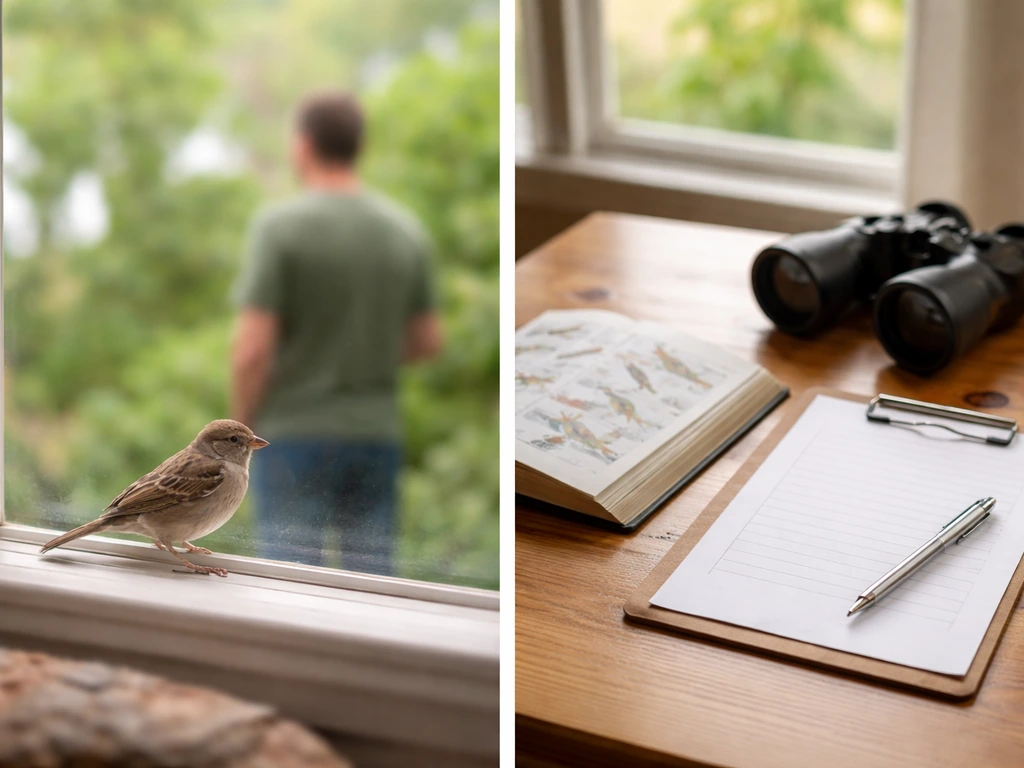
The Charlie Kelly meme has done something genuinely useful and genuinely harmful at the same time. It's useful because it signals that bird regulations are confusing and worth taking seriously. It's harmful because people sometimes interpret 'not governed by reason' to mean 'not real' or 'not enforceable. If you are also trying to understand slang or internet references to bird law, a bird law urban dictionary entry can help you spot what people mean online compared with the actual rules discussed here. ' Here are the most common misconceptions I encounter, with quick ways to check each one.
| Misconception | Reality | How to check |
|---|---|---|
| 'It's just a bird, there's no real law protecting it.' | Hundreds of common backyard species in the U.S. are federally protected under the Migratory Bird Treaty Act. That includes robins, sparrows, and swallows. | Search the USFWS species list at fws.gov/program/migratory-birds |
| 'Removing a nest is always legal if it's on my property.' | Active nests with eggs or chicks of protected species cannot legally be removed in the U.S. without a permit, regardless of where they're located. | Check USFWS nest disturbance guidance or contact your state wildlife agency. |
| 'Bird law is just folklore and superstition.' | Actual statutes, federal rules, and enforcement actions exist. The phrase is a joke; the law is not. | Pull the text of the Migratory Bird Treaty Act or your country's equivalent from a government .gov or .gov.uk source. |
| 'The regulations haven't changed, so old advice is fine.' | U.S. rules around incidental take shifted under multiple administrations between 2017 and 2025. Always verify current rules. | Check the Federal Register or your country's equivalent for recent amendments. |
| 'Bird law only matters for rare or endangered species.' | Many protection rules apply to common species. In the U.S., even non-listed migratory birds are covered. | Cross-reference the IUCN Red List with your national protection list; they are not the same. |
Keeping cultural and spiritual bird meanings separate from legal claims
A lot of the confusion around 'bird law' comes from conflating two entirely different frameworks: statutory law and symbolic tradition. If a crow lands on your windowsill and you're wondering whether it's an omen of death (it isn't, but that's a long conversation), that's a question about folklore and cultural symbolism. If a crow is nesting in your roof vent and you want to remove it, that's a question about wildlife regulation. Both are worth exploring, but never use one to answer the other. If you are searching for bird law hat style guidance, the key is still to identify the controlling wildlife statutes in your jurisdiction before acting.
In many Indigenous traditions across North America, specific birds carry specific meanings tied to ceremony, season, and community. In European folklore, owls signal wisdom or death depending on the tradition. In Hinduism, the crow is associated with ancestors. In Chinese tradition, the crane represents longevity. These are culturally rich, historically grounded frameworks for understanding bird encounters, and they deserve to be taken seriously on their own terms. But none of them constitute legal authority. A spirit guide that tells you a heron is protecting your land does not supersede a wildlife protection statute.
The cleaner way to think about it: cultural and spiritual bird meaning answers the question 'what does this mean? If you’re looking for the bird rights meaning, it generally refers to the idea that birds are protected by specific laws and rules rather than by symbolism. ' while bird law answers 'what am I allowed to do?' Both questions are legitimate. They just operate in completely different domains and require completely different sources.
Dream interpretation and the 'bird law' search
Some people arrive at this phrase through dream interpretation communities, where 'bird law' gets used loosely to describe unwritten cosmic or spiritual rules about birds. If you dreamed about a bird and found yourself here, the symbolic interpretation of that experience is a separate article entirely. What I'd caution against is treating symbolic 'laws' about birds (e.g., 'if an owl crosses your path, it means death') as factual or universal. These are cultural stories, not ornithological data. They vary enormously across traditions and shouldn't be confused with either scientific behavior patterns or legal statutes.
Real scenarios and what to do in each one
Here are some concrete situations where the phrase 'bird law is not governed by reason' tends to come up, and the immediate action steps for each.
Scenario 1: A bird has built a nest somewhere inconvenient
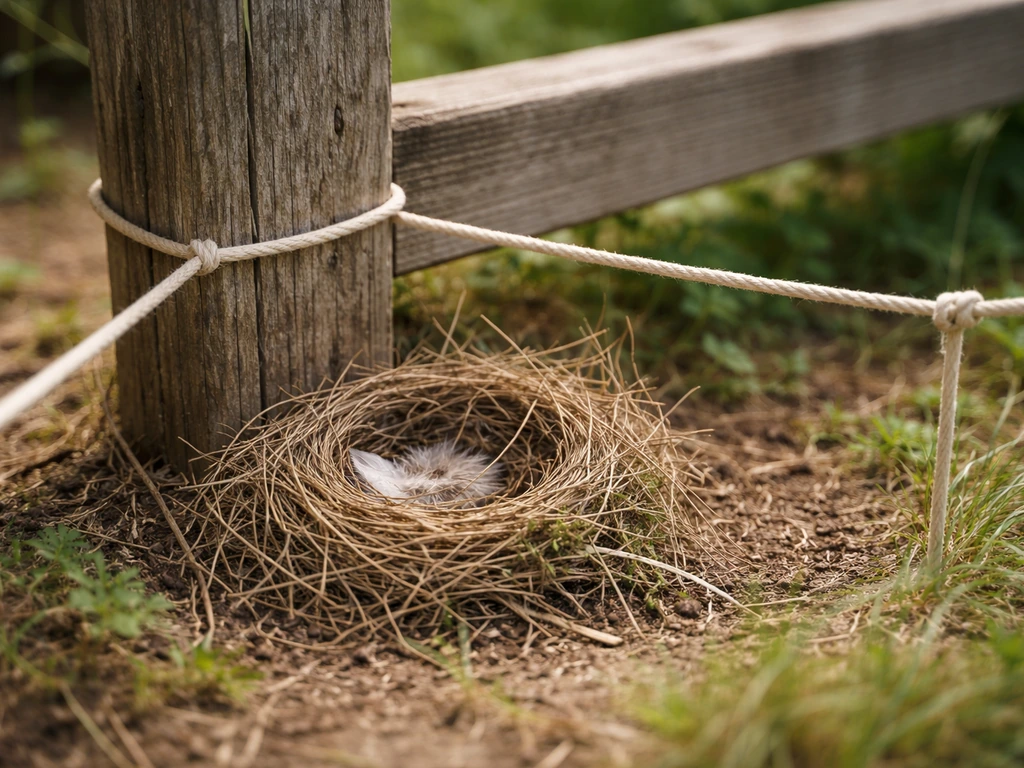
- Identify the species before touching anything.
- If the nest is active (contains eggs or chicks), do not disturb it. In the U.S., disturbing an active nest of a migratory bird is a federal offense.
- Check your national wildlife agency's website for species-specific nest guidance.
- If the location is genuinely dangerous (e.g., inside electrical equipment), contact a licensed wildlife rehabilitator or your state wildlife agency for guidance on legal relocation options.
- Document everything: dates, photos, agency communications.
Scenario 2: You found an injured or dead bird
- Do not keep a wild bird, even temporarily, without checking whether a permit is required in your jurisdiction.
- Contact a licensed wildlife rehabilitator immediately. In the U.S., find one at the National Wildlife Rehabilitators Association (nwrawildlife.org).
- If the bird is dead and you want to keep a feather or the body, be aware that in the U.S. possessing feathers of most native birds is illegal without a permit, even if the bird died naturally.
- Report unusual patterns of dead birds to your state wildlife agency, as these can signal disease outbreaks.
Scenario 3: You're dealing with a nuisance bird situation (pigeons, geese, starlings)
- European starlings, house sparrows, and feral rock pigeons are not protected under the Migratory Bird Treaty Act in the U.S. and can generally be managed more freely. Confirm this is still the case via the USFWS website, as lists do change.
- Canada geese are protected, even when they're congregating aggressively on your lawn. Hazing (non-lethal deterrence) is generally permitted; lethal control requires a federal depredation permit.
- For commercial properties, consult a licensed nuisance wildlife control operator who can advise on legal methods.
- Never use poison without confirming legality. Many common rodenticides also kill raptors that eat poisoned prey, which creates separate liability.
Scenario 4: You're using the phrase as a meme and just want to know more
- The It's Always Sunny in Philadelphia clip is from Season 5, Episode 1 ('The Gang Exploits the Mortgage Crisis'). Charlie Kelly's 'bird law' monologue has become one of the show's most quoted moments.
- The Arizona State Law Journal article 'Bird Law in the United States: Is It Governed by Reason?' is a real piece of legal scholarship that took the joke as a starting point for genuine analysis.
- If you're exploring the broader cultural footprint of the phrase, related discussions exist in communities covering bird law slang, online forums debating the topic, and even dedicated urban dictionary definitions of the term.
- This site's niche is bird meaning in cultural, spiritual, and folkloric contexts, so if you're here because you want to know what birds symbolize rather than what regulations apply to them, you're in the right place for that half of the question.
Your quick-action checklist for today
- Identify the exact bird species involved in your situation using a reliable tool like Merlin or All About Birds.
- Go to your national wildlife agency's official website (.gov in the U.S., .gov.uk in the UK, etc.) and search for the species by name.
- Check both federal and state/provincial protections. They stack.
- If you're unsure whether an action is legal, don't take the action until you've confirmed with the agency directly.
- If there's any risk of a violation, fine, or dispute, contact a wildlife attorney before acting.
- If your question is about bird symbolism, folklore, dreams, or cultural meaning, treat that as a separate inquiry. Use culturally grounded sources rather than legal ones.
- Bookmark the relevant agency contact page so you have it if the situation changes.
The phrase 'bird law is not governed by reason' is funny because it captures something true: wildlife regulations are a genuine maze, they vary by jurisdiction, and they change over time. But they are real, they are enforced, and 'it seemed arbitrary' is not a legal defense. The best move is to treat the joke as a signal to take the regulations seriously, find the right sources, and ask the right people. USFWS notes in its [June 2017 timing recommendations](https://www.
fws. gov/sites/default/files/documents/Timing%20Recommendations%20for%20Land%20Disturbance%20%26%20Vegetation%20Clearing%20-%20June%202017. pdf) that destroying active nests, eggs, or nestlings can result from land disturbance or vegetation clearing activities, so disturbance timing matters. If you need a starting point, this guide to bird law and enforcement is designed to help you verify what applies where you live.
If you need real-world perspectives, bird law reddit threads can be a useful starting point for questions and experiences wildlife regulations. Charlie Kelly is a great TV character. He is not, however, someone you want advising you on an actual federal wildlife matter.
FAQ
Is “bird law is not governed by reason” ever a real legal argument in a case?
No. Feeling that rules are illogical (or inconsistent) does not replace statutory requirements. Courts generally look at the actual elements of the offense, whether you had the required authorization, and the facts (species, location, season, and what action occurred), not at whether the law seems reasonable to you.
What’s the fastest way to figure out which laws apply to my exact situation?
Start with the basics that regulators use: your country, state or province, and nearest municipality, then the species and what the bird is doing (nesting, roosting, migrating, injured, trapped). If the action involves removal, disturbance, feeding near certain sites, or handling a wild bird, you typically need to confirm both wildlife statutes and any permit rules for that species and activity.
Does finding a nest on my property mean I can remove it immediately to stop damage?
Often you cannot. Many jurisdictions treat active nests and certain nesting behaviors as protected, and “damage” or “nuisance” does not automatically create a right to destroy. A safer next step is to pause removal, document the situation (photos and dates), and contact the appropriate wildlife agency or licensed wildlife control operator.
If a bird is injured, can I keep it or transport it myself?
It depends where you are and the species. Some places allow limited, short-term emergency care, but others require immediate transfer to a licensed rehabilitator. In addition, holding wild birds longer than permitted can create compliance issues, even when your intent is good.
Are “incidental take” and “prohibited take” the same thing?
No, they are usually evaluated differently. “Incidental” typically involves unintentional impacts tied to otherwise lawful activities, while “prohibited” turns on the nature of the act and intent or direct action. Because the definitions and thresholds vary by jurisdiction and administration, you should not assume your situation qualifies as incidental without checking the specific rule for the species and activity.
Can I relocate a bird or move its nest to another spot on my property?
Relocation is not automatically legal. Many protections focus on the bird or the nest during specific life stages, and moving them can still count as disturbance or take. The legally safer approach is to use exclusion methods that prevent entry when permitted, or to work with professionals who can conduct removal without violating protection rules.
What if the problem is a nuisance, like droppings, noise, or birds entering a home?
Nuisance does not automatically override wildlife protections. You usually need a compliance plan that relies on permitted, non-lethal measures (for example, sealing entry points at the right time, using bird-safe deterrents, and cleaning practices that do not destroy nests). If birds are actively nesting or roosting, timing and method matter a lot.
How do I tell whether I’m dealing with legal protection or just folklore and symbolism?
Use the action test: ask what you are trying to do. If the question is interpretive (what it “means”), that is symbolism. If the question involves handling, removal, feeding, trapping, or changing habitat, that is where legal protections apply. Keep those threads separate, because symbolism guidance has no authority over statutes and permits.
What’s the biggest mistake people make after reading the meme or venting about confusion?
They act first and verify later. Regulations can change, and the “right” answer depends on jurisdiction, species, and whether the bird is nesting or otherwise protected at that moment. If you are considering any direct action, pause and confirm what applies before you remove, trap, kill, or even relocate objects that birds are using.
If I post on forums asking about “bird law,” will that help me safely avoid violations?
It can help you find leads, but it is not a substitute for jurisdiction-specific rules. Use forum advice to generate questions for the right authority, like which species is involved, whether a nest is active, what permits exist, and which methods are allowed. Expect answers to vary because people often describe different countries or states.
Who should I contact when I need help, and what should I tell them?
Contact your local or national wildlife agency and, if needed, a licensed wildlife rehabilitator or wildlife control operator. Be ready with: location (address or nearest cross streets), species if known, dates and times you observed activity, photos, the behavior (nesting, roosting, injured), and what you want to do (clean, exclude, relocate, transport, or repair). Accurate facts speed up correct guidance.
Next Article
Bird Blindness Meaning: Causes, Signs, and What to Do Now
Bird blindness meaning: spot signs, tell vision loss from other issues, and take safe action or get urgent vet care.