"Bird law and order" isn't a species name, a legal term, or a formal ornithological concept. It's a phrase that floats across a few different worlds: a pop-culture meme tied to Charlie Kelly from 'It's Always Sunny in Philadelphia,' a loose metaphor for how birds have been used throughout history to symbolize justice, authority, and moral order, and sometimes just a quirky T-shirt slogan.
Bird Law and Order Meaning: Symbolism, Signs, and Next Steps

Marcus Holloway
17 Jun 2026
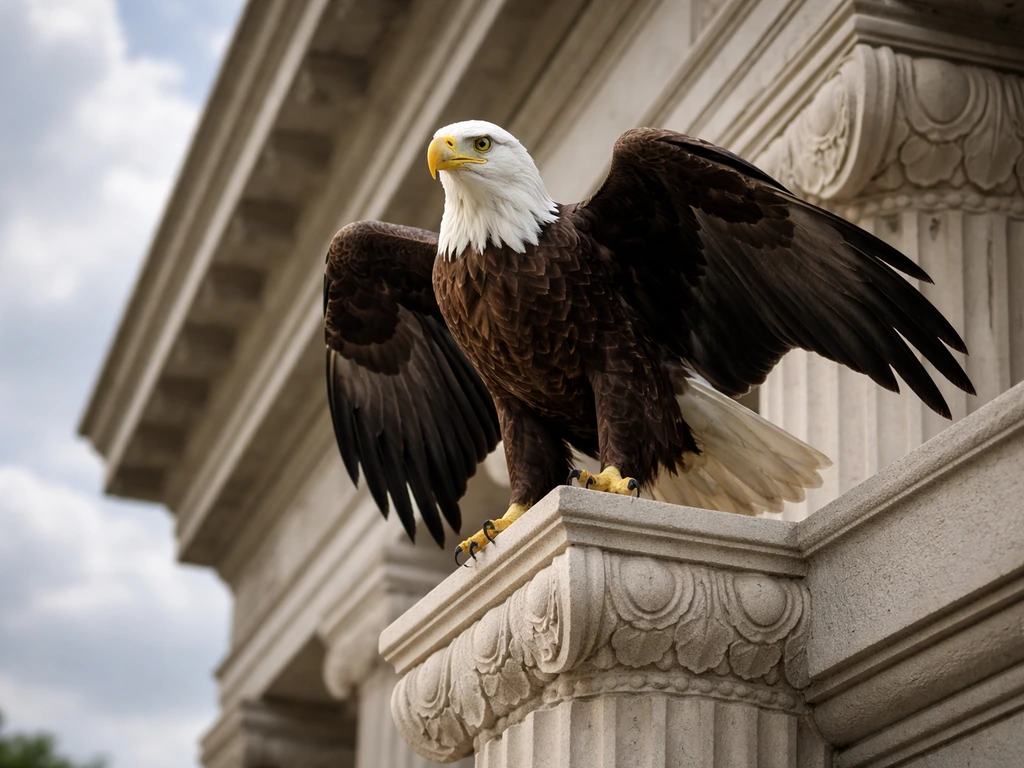
If you're here because you saw a bird and felt like it meant something about structure, judgment, or protection in your life, you're in the right place. Let's untangle what the phrase actually means, what bird symbolism around 'law and order' themes genuinely looks like across cultures, and how to interpret a real sighting or dream without overclaiming what it means.
If you're looking for more takes and examples, you can also browse bird law Reddit discussions to see how people connect symbolism with real-world legal questions.
What "Bird Law and Order" Actually Means (Disambiguated)
The most searchable pop-culture hook here is Charlie Kelly, the self-proclaimed bird law expert from 'It's Always Sunny in Philadelphia.' His ongoing bit about being an authority on 'bird law' is a running joke precisely because bird law is not a real legal discipline. Merchandise like 'Bird Law and Order' T-shirts has cemented this as a meme, and many people searching the phrase are following that cultural thread. If that's you, enjoy the joke, but there's actually more interesting territory to explore.
Separately, 'law and order' as a phrase has a deeply conventional political and legal meaning, referring to systems of rules, enforcement, and societal structure. That meaning is entirely distinct from bird symbolism, though it turns out the concepts of law, judgment, and moral order overlap with bird folklore in genuinely fascinating ways. And of course, some readers may be thinking of the TV franchise 'Law & Order,' wondering if there's a bird associated with it. There isn't officially, but the ideas of vigilance, judgment, and authority that the show trades in map onto real bird symbolism quite well.
So for the purposes of this site, the most useful interpretation of 'bird law and order' is this: birds that carry symbolic meaning related to justice, authority, moral judgment, protection, and the enforcement of boundaries. That's a rich tradition across many cultures, and it's worth exploring seriously.
Birds as Symbols of Law, Justice, and Order
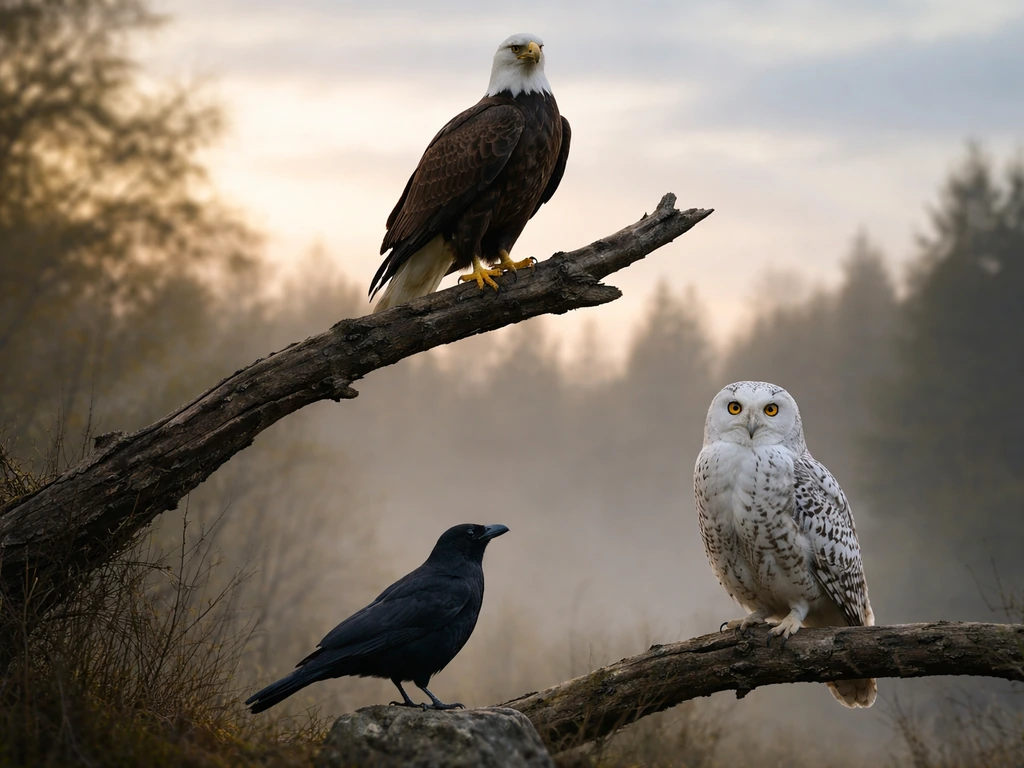
Across cultures, certain birds have consistently been associated with the kind of top-down authority, vigilance, and moral judgment that we associate with 'law and order.' The most prominent is the eagle. In ancient Rome, the eagle represented imperial authority and divine law. In the United States, the bald eagle became the national symbol precisely because it evoked power, sovereignty, and order. Eagles are still used today on courtroom seals, legal crests, and governmental insignia worldwide. When you see an eagle, the symbolic weight it carries in Western tradition is almost always tied to authority, strength, and righteous oversight.
The owl is the other major symbol in this space. Athena, the Greek goddess of wisdom and justice, was associated with the owl. In many European and North American Indigenous traditions, the owl is seen as a keeper of hidden truths, a witness to things done in darkness. That makes owls symbolically adjacent to law and judgment: they see what others miss, they're patient, and they don't flinch. In some traditions, an owl sighting signals that something hidden is about to be revealed, which fits neatly into justice-related interpretations.
Corvids (crows and ravens) take the symbolism in a darker but equally 'law and order' adjacent direction. In English folklore, there's a tradition of the 'blank" rel="noopener noreferrer">parliament of crows,' where a group of crows will gather and appear to preside over another crow, sometimes chasing or attacking it as if delivering a verdict. This folk image of crows sitting in judgment over one of their own gave rise to real associations between corvids and moral reckoning.
Ravens in particular appear across cultures as omens of consequence, from Norse mythology (Odin's ravens Huginn and Muninn acting as his intelligence-gathering agents) to Swedish folklore (where ravens were seen as the ghosts of the murdered, demanding justice).
Wikipedia’s overview of cultural depictions of ravens also covers regional meanings like ravens as the ghosts of murdered people demanding justice in Swedish folklore and “damned souls” in German stories Swedish folklore (where ravens were seen as the ghosts of the murdered, demanding justice). The raven as a symbol isn't just about death; it's often specifically about unresolved wrongs.
A Quick Cultural Comparison
| Bird | Cultural Tradition | Law/Order Association |
|---|---|---|
| Eagle | Roman, American, Germanic | Imperial authority, sovereignty, divine law |
| Owl | Greek, European, Indigenous North American | Wisdom, hidden truth, moral witness |
| Raven | Norse, Swedish, Celtic | Justice for the wronged, consequence, oversight |
| Crow | English folklore, East Asian | Moral judgment, communal reckoning, karma |
| Hawk | Egyptian (Horus), pan-cultural | Vigilance, protection, focused authority |
How to Actually Interpret a Bird Sighting as a Sign
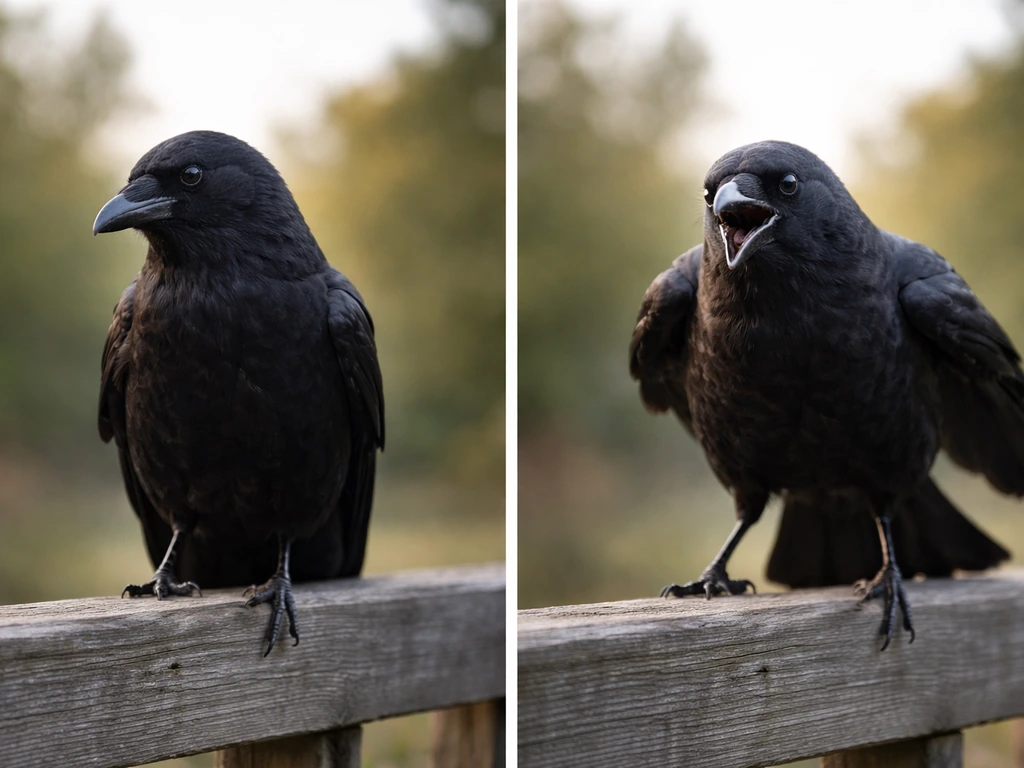
If you saw a bird and it felt meaningful, that instinct is worth taking seriously as a personal and symbolic experience, even if it doesn't come with a guaranteed universal meaning. The most responsible way to interpret a sighting is to gather the details first, then layer meaning on top, rather than jumping straight to symbolism before you even know what you're looking at.
Start with identification
Species matters enormously for symbolic interpretation. A crow and a raven look similar but carry different folklore weight in many traditions. An eagle sighting at a courthouse has different cultural resonance than a hawk circling your backyard. Use a tool like eBird or Merlin Bird ID to nail down the species. Note the time of day, your precise location, and the weather conditions, since these details help with accurate identification and add context to any spiritual interpretation you apply later. When you build checklists in eBird, follow the eBird Rules and Best Practices, including proper start-time handling such as when using eBird Mobile to add lists or incidental lists start-time handling for checklists.
Pay attention to behavior, not just presence
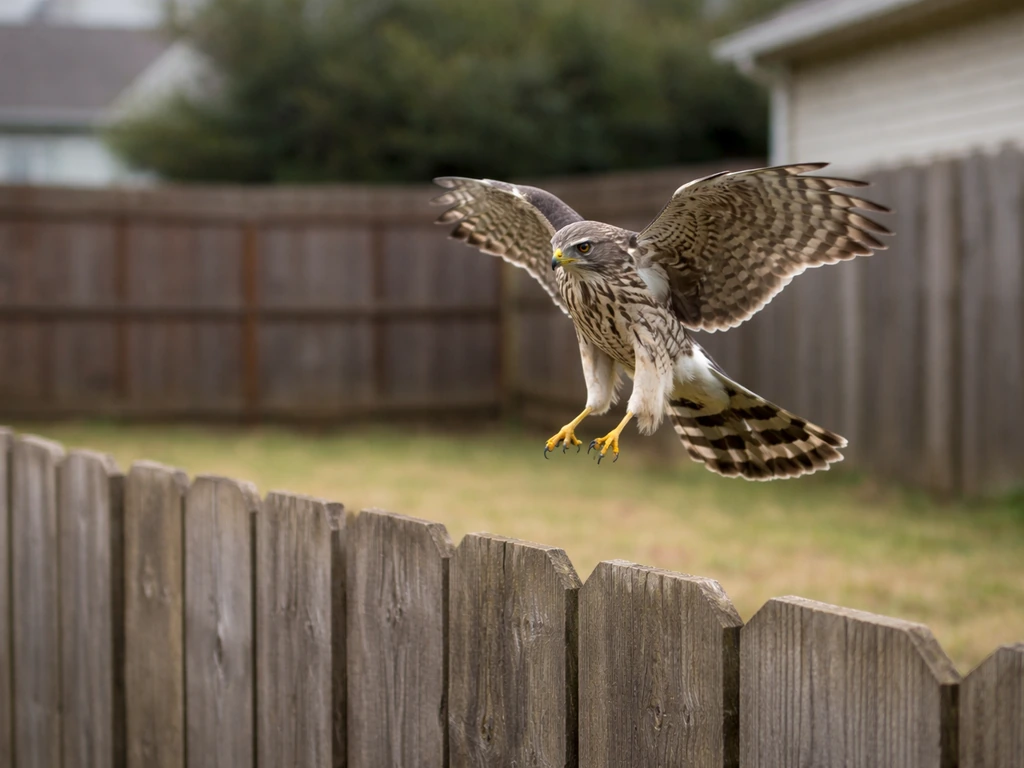
A crow sitting quietly on a fence means something different symbolically than a crow calling loudly and repeatedly while looking directly at you. Behavior drives interpretation. Birds of prey circling overhead in a slow, patient spiral are doing what raptors do when they're hunting thermals, but that image of patient, elevated surveillance maps directly onto ideas of authority and oversight. A bird that seems to track you, appear repeatedly over multiple days, or behave unusually (landing very close, following you, calling insistently) is the kind of sighting that folk traditions have historically flagged as meaningful.
Context shapes meaning
Where you are when you see the bird matters. Seeing a hawk at a moment when you're wrestling with a decision about fairness or boundaries carries more personal resonance than the same hawk spotted while you're picking up groceries with no particular weight on your mind. Symbolism works by meeting personal context. The same bird, the same behavior, different context, and the 'meaning' shifts. That's not a flaw in the system; it's how interpretive frameworks actually function.
Dream and Omen Interpretations: What to Take Seriously, What to Skip
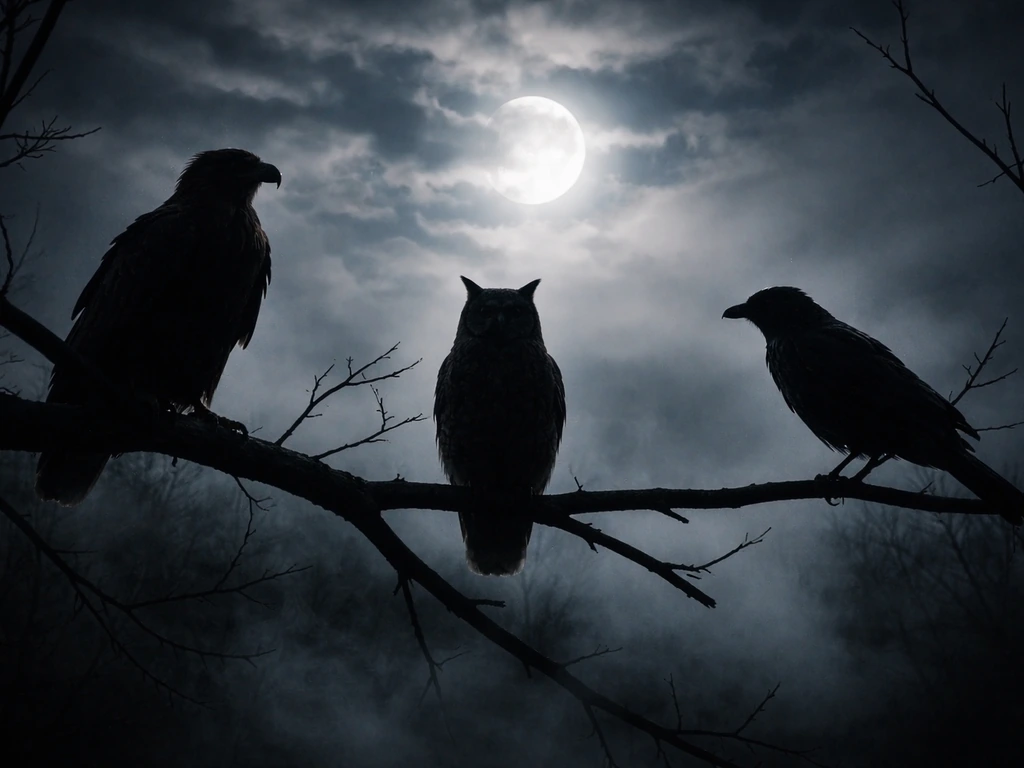
Dreams featuring birds associated with law and order themes (eagles, owls, crows, ravens) typically cluster around a few core interpretations in most traditions: authority you need to claim or confront, a situation requiring a fair judgment, something hidden that needs exposure, or a warning that your own behavior is under scrutiny. These are useful frames to try on. If you dream of an eagle and you're currently in a dispute or facing a decision about fairness, the authority and justice symbolism is directly applicable as a reflective prompt.
Owl dreams specifically tend to signal that wisdom or hidden information is accessible to you, which in a 'law and order' context could mean you already have the knowledge needed to make a just decision. Raven or crow dreams in many traditions point toward unresolved karma or the consequences of past actions catching up, which again is very much a 'law and order' theme: things don't stay hidden forever.
What to avoid: treating any single dream as a literal prophecy or guaranteed omen. The responsible approach is to use dream bird symbolism as a prompt for reflection, not a script for action. If you dream of a raven and then something bad happens the next day, that's correlation, not causation. Dreams are most useful as mirrors for what's already on your mind emotionally, and bird imagery in dreams tends to amplify the themes you're already processing.
Sorting Superstition from Ornithological Reality
This is where a lot of bird symbolism content goes wrong, so let's be direct about what's real and what's folklore getting dressed up as fact. If you ever ran into the term on the internet, bird law urban dictionary typically means different things than the symbolism in this article.
- The 'parliament of crows' is a folk observation, not a confirmed scientific behavior. Crows do mob and sometimes attack other crows, especially intruders or individuals that have behaved aggressively, but there's no evidence they conduct 'trials' in any intentional sense. The judgment imagery is projection, and interesting projection at that, but projection.
- Ravens are not inherently birds of bad omen. That reputation comes heavily from their dark plumage, their association with battlefields and carrion (they are scavengers), and literary reinforcement like Poe's 'The Raven.' In Norse mythology, they're symbols of wisdom and divine intelligence. The 'bad omen' reading is one cultural layer, not a universal truth.
- An owl calling near your house does not mean someone will die. This superstition is widespread across many cultures, but owls call near human dwellings because rodents concentrate there, making houses excellent hunting territory. Barn owls and barred owls are especially common near suburban edges. The calling is hunting behavior, not a death announcement.
- Eagles near legal or government buildings aren't signs or omens. The U.S. Fish & Wildlife Service notes that eagles are protected under the Migratory Bird Treaty Act, and their presence in urban areas has increased as conservation efforts have succeeded. More eagles in more places means more eagle sightings, which isn't symbolically meaningful on its own.
- A bird hitting your window is almost never an 'omen.' It's a reflection problem. Birds can't perceive glass as a barrier and strike windows thinking they're flying into open space or toward a reflected tree. It's a well-documented and tragically common cause of bird mortality, not a message from the universe.
The useful principle here is: know which layer you're operating in. Folk symbolism and ornithological fact can coexist without either invalidating the other, but you shouldn't dress up a biological behavior as a spiritual sign without acknowledging that's what you're doing.
Your Practical Next Steps
Whether you're trying to decode a sighting, process a dream, or just understand what 'bird law and order' means as a concept, here's a grounded approach to get from curiosity to actual interpretation.
- Identify the species first. Use Merlin Bird ID (free, from Cornell Lab) or eBird to pin down exactly what bird you saw. You can't interpret the symbolism meaningfully without knowing the species, since a sparrow and a hawk carry completely different symbolic weight.
- Document the sighting properly. Note the date, time, location, and behavior. eBird's best-practice guidance emphasizes that even good photos don't replace your in-person observational notes. Those details will also help you apply the right cultural or spiritual context later.
- Match the species to its symbolic tradition. Use the cultural comparison table above as a starting point. Look at multiple traditions rather than picking the one that sounds most exciting, since cross-cultural consistency is a better indicator of a symbolism's depth.
- Apply the personal context test. Ask yourself: what's the most pressing issue in my life right now related to fairness, authority, judgment, or protection? That's where the symbolism is most likely to resonate usefully. Symbolism is a mirror, not a map.
- Separate observation from interpretation. Write down (or mentally distinguish) what you actually saw versus what you're reading into it. 'A crow called loudly from a fence post as I was leaving court' is the observation. 'It felt like a signal about judgment' is the interpretation. Keeping those layers distinct makes you a better interpreter.
- Fact-check before you share. If you're going to tell someone that a bird sighting meant something, make sure you're not accidentally repeating a superstition as ornithological fact. The distinction matters, and your credibility as an interpreter improves when you acknowledge the difference.
If you want to go deeper on the cultural side of bird symbolism and authority, the idea that bird law is 'not governed by reason' is itself a fascinating folk concept worth exploring, as is the broader question of what 'bird rights' means across different symbolic and cultural traditions. The phrase 'bird law and order' is genuinely a doorway into some of the richest territory in bird symbolism: the idea that nature itself has a moral logic, and that birds, with their elevated perspective and their ability to move between earth and sky, have always been the messengers and enforcers of that logic in human imagination.
FAQ
Is “bird law and order” a real legal concept or just a symbolism meme?
In most contexts it is not shorthand for an actual legal doctrine. If you mean it literally, clarify what you want to discuss (wildlife legal protections, bird rights advocacy, or bird-related policy). If you mean it symbolically, treat it as a theme word for authority, fairness, and boundaries, not as a claim about what birds “enforce” in reality.
What if I cannot identify the species I saw, can I still interpret it?
Yes, but only when you are willing to verify the biological facts first. Use an ID app (like Merlin or eBird) and write down species, time, and location before you interpret. If you cannot identify the bird confidently, keep the meaning generic (watchfulness, fairness, hidden information) rather than assigning a specific tradition.
Does one bird sighting count, or should I wait for repeated signs to be meaningful?
Look at behavior and pattern, not just species. A single passing sighting usually supports a light reflection prompt, while repeated appearances (same spot over multiple days, unusual persistence, or consistent response to your presence) gives the symbolism more coherence as a personal “theme” signal.
How do I avoid turning a bird sign into something I must obey?
Distinguish “symbolic prompt” from “decision instruction.” A good method is to choose one reflective question (for example, “Where do I need to be fair?”) and then act on something concrete you would choose even without the bird meaning (like making a conversation plan or setting a boundary).
Which bird species are most commonly linked to “law and order” symbolism, and what is the main caveat?
If the bird is an eagle or owl, people often jump to justice and hidden wisdom. With crows and ravens, interpretations lean toward consequences or accountability. The caveat is that folklore associations vary by region, so you should use the theme as a starting point, then connect it to what you personally were grappling with.
How should I factor in where and when I saw the bird?
Time of day and setting change what the theme is “about.” A courthouse or government-related environment primes authority and judgment themes, while a backyard or commuting route primes vigilance and everyday boundaries. Weather and lighting can also affect species ID, so confirm first.
Crows and ravens look similar to me, does that affect the interpretation?
A common mistake is mixing up similar corvids. Crows and ravens can differ in size, vocal patterns, and regional symbolism, so treat a close look at shape and sound as part of the interpretation process. If you are unsure, keep the meaning broad until you confirm.
How can I turn a “bird law and order” themed dream into something useful without overthinking it?
Dream themes usually reflect current emotion and unresolved issues, but you can make it more actionable by journaling: write what the bird did in the dream, how you felt, and what real-life situation was strongest around that time. If you find a match, use it as a reflection trigger, not a forecast.
What if the dream makes me feel like I’m being judged?
Many people read “law and order” as moral verdict. If your dream involves surveillance or being “judged,” the healthier angle is self-audit and repair, not self-punishment. Ask, “What boundary or promise do I need to uphold?” rather than “Who is punishing me?”
What are the practical next steps if a bird seems unusually persistent near me?
Start with practical steps that have nothing to do with symbolism, especially if the bird relates to safety or property. For example, if a raptor is repeatedly circling near a nesting area, give it space rather than treating it as a message. Symbolic meaning should never override wildlife safety or common sense.
Next Article
Bird Law Hat Meaning and Next Steps: Legal, Product, or Symbol
Disambiguates bird law hat: legal bird rules vs themed hat vs symbolism, with checks and next steps.