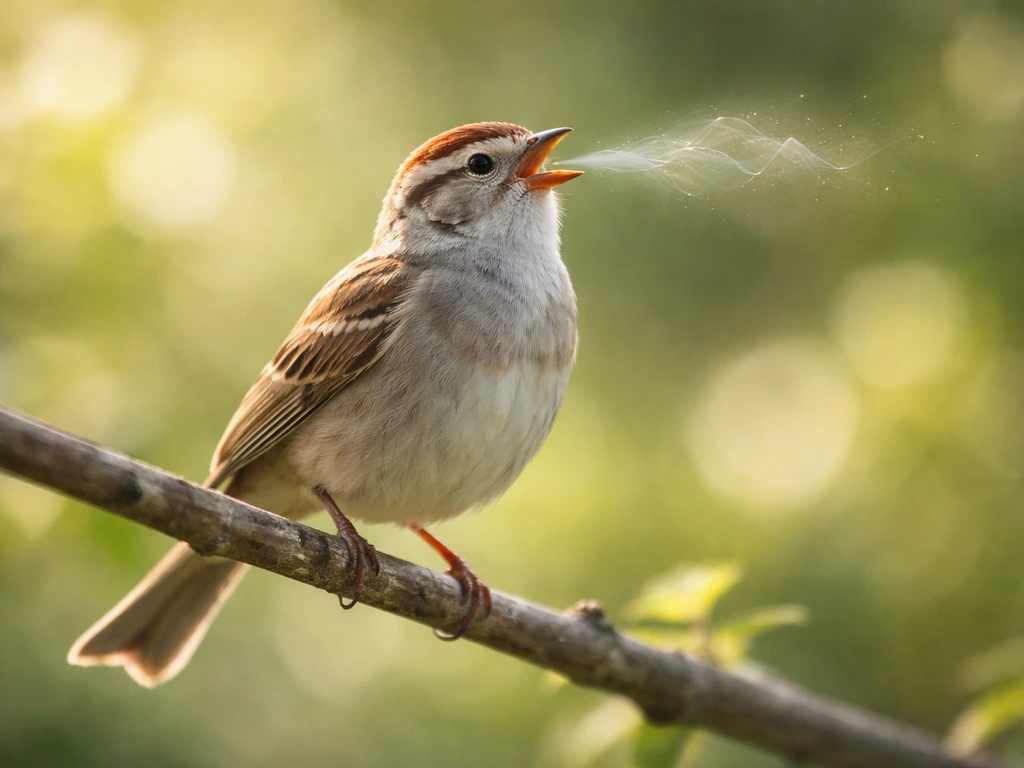
A bird whistle almost always means one of four things in real life: the bird is attracting a mate, defending territory, keeping in contact with its flock, or sounding an alarm. If you are also wondering about bird sounds meaning in a broader sense, the same behavioral logic behind whistling usually applies. Which one depends on the species, the time of year, the time of day, and what the bird is doing when it makes the sound. Everything else, including the spiritual omens, dream symbols, and folklore, layers on top of that behavioral foundation. If you are wondering about bird tweeting meaning in a more spiritual or superstitious sense, this “omen” layer is part of the story spiritual omens. Start with behavior, then decide how much weight you want to give the rest.
Bird Whistle Meaning: Calls, Omens, and Dream Interpretations

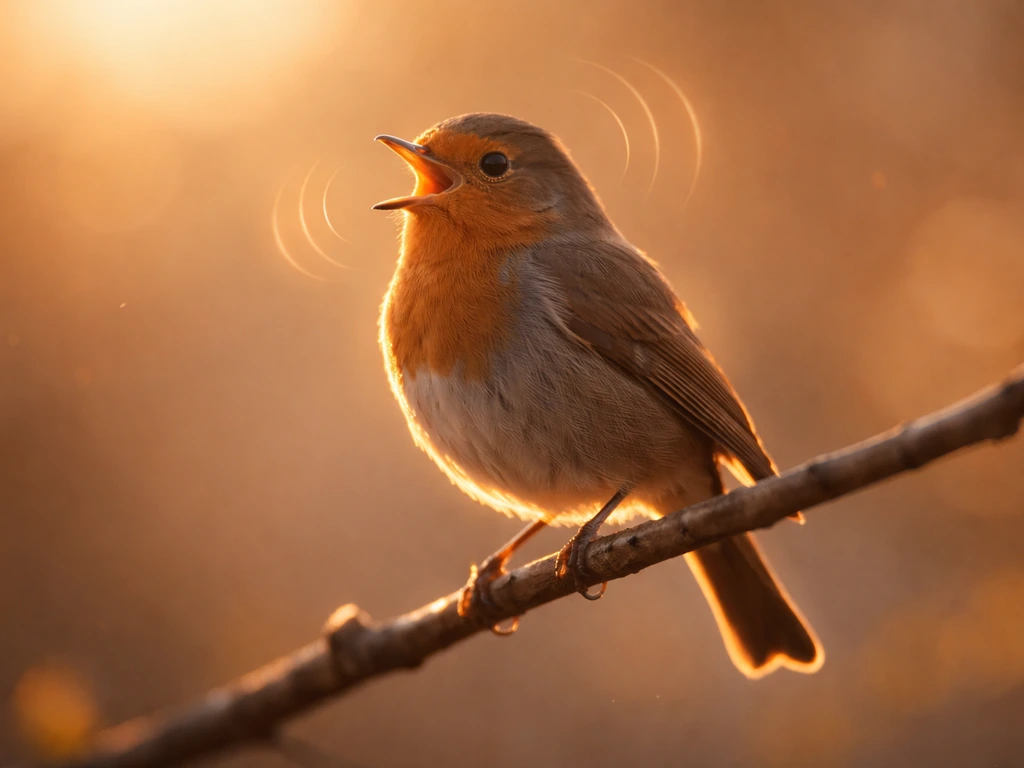
What a bird whistle most commonly means
Bird vocalizations split into two broad categories: songs and calls. In All About Birds, shorter, simpler calls help birds keep in touch and alert one another, while longer, more complex songs are used for mate attraction and territory defense songs and calls. Songs tend to be longer, more complex, and more melodic. Calls are shorter and more functional. A whistle can be either, and that distinction matters a lot for interpretation. The classic two-note 'fee-bee' of a Black-capped Chickadee, for example, is technically a song used during mate attraction and territorial declaration. The 'chickadee-dee-dee' sound you hear when a hawk flies over is a call, and the number of 'dee' notes actually encodes the level of threat. These are different messages in the same bird's vocabulary.
In general terms, here is what different whistle types tend to signal across most species:
- A long, clear, repeated whistle heard at dawn or dusk usually signals mate attraction or territory defense, especially in spring and early summer.
- A short, soft whistle repeated at irregular intervals often means flock contact, birds keeping tabs on each other in dense vegetation.
- A sharp, sudden whistle followed by silence or movement tends to be an alarm call, either directed at a predator or at you.
- A rapid, rising whistle that changes pitch mid-note is more likely a song performance directed at a rival or a potential mate.
- A thin, very high-pitched 'seet' style whistle that almost sounds electronic is a classic raptor alarm used by many small songbirds.
Context is the key variable. The same bird can whistle for completely different reasons depending on whether it is sitting still on an exposed branch, moving through shrubs, or responding to something in its environment. Pairing the sound with what you see the bird doing at that moment tells you far more than the sound alone. Cornell’s guide encourages identifying birds by sound by pairing listening with close observation of what the bird is doing in that moment Pairing the sound with what you see the bird doing at that moment tells you far more than the sound alone..
How to figure out which bird is whistling
Identification by ear takes practice, but you can narrow things down quickly using a handful of field clues even without being able to see the bird clearly. The goal is to combine what you hear with what you observe about the situation.
Time of day
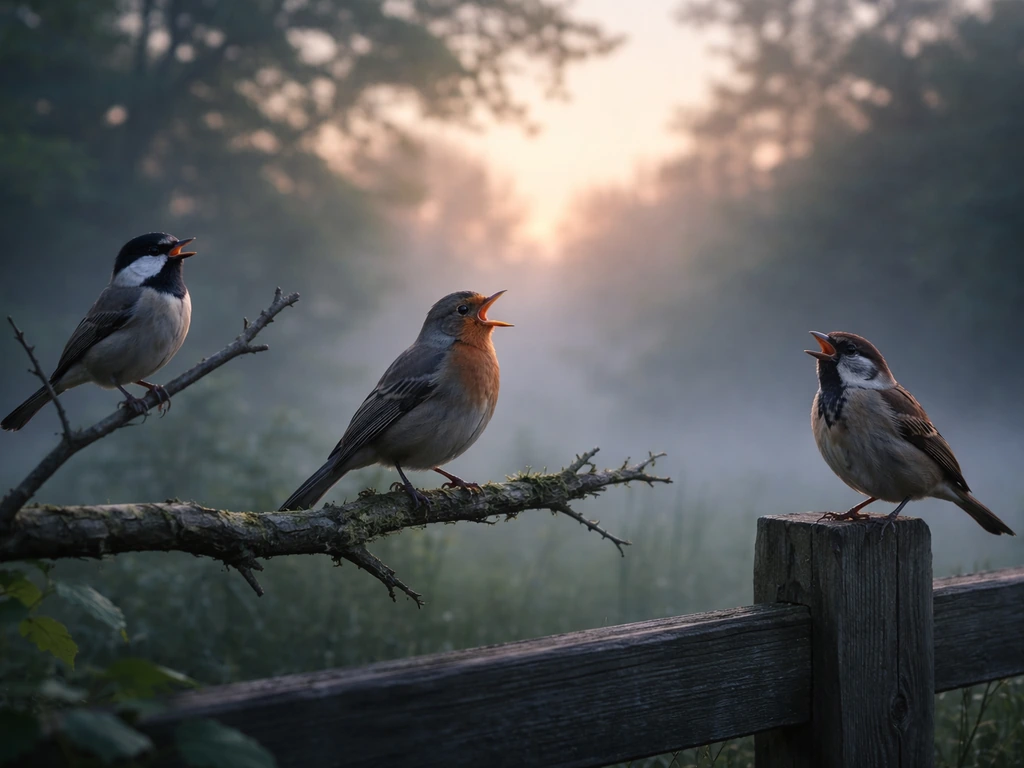
Dawn is dominated by songbirds in full territorial or mating song, which is why the 'dawn chorus' is so loud. Midday whistles tend to come from birds that are more heat-tolerant or still actively defending space. Late afternoon often brings another wave of song. A whistle heard in the middle of the night almost certainly belongs to a nocturnal species like a Northern Mockingbird, Eastern Screech-Owl, or Whip-poor-will depending on your region.
Pitch, pattern, and repetition
High, thin whistles with no real rhythm tend to be alarm sounds. Low, clear whistles with a distinct pattern that repeats on a loop are almost always songs. A whistle that sounds like it is going up at the end (an ascending pitch) often belongs to a different species than one that drops in pitch. The American Goldfinch has a flight call that rises; the Eastern Wood-Pewee drops. If you can hum back what you heard, you have enough information to start a search on a sound identification app.
Location and habitat
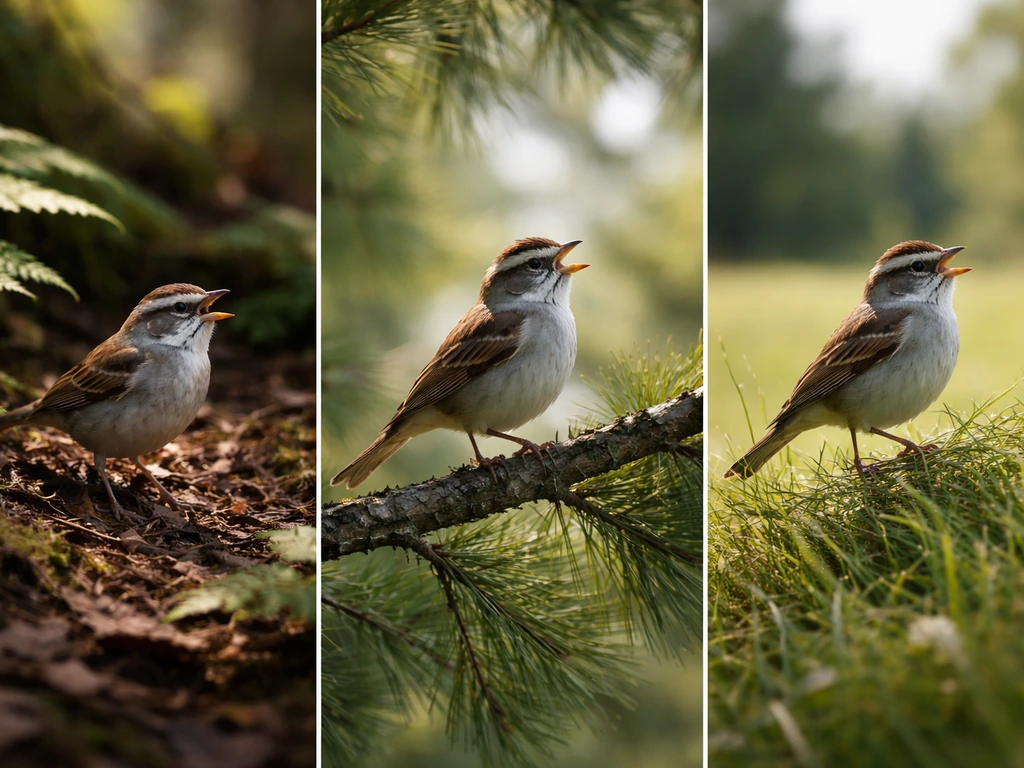
A whistling bird in a dense forest understory is going to be a different species than one at the top of a pine tree or in the middle of an open field. White-throated Sparrows whistle from brushy edges. Eastern Meadowlarks whistle from fence posts in open fields. Carolina Wrens produce surprisingly loud and clear whistles for their tiny size, usually from low shrubby cover. Knowing your habitat type immediately cuts your candidate list in half.
Behavior clues at the moment of the whistle
Watch what the bird is doing when it whistles. A bird puffed up on an exposed perch and singing repeatedly is almost certainly performing a territorial or mating display. A bird that whistles once and then ducks into cover just saw something that alarmed it. A group of birds that all whistle a similar note and then move together in the same direction are using contact calls to coordinate. These behavioral clues are often more diagnostic than the sound itself.
Spiritual and cultural meanings people attach to bird whistles
Across a huge range of cultures and traditions, bird whistles have been treated as messages from beyond the everyday world. These interpretations do not conflict with the behavioral science, they just operate on a different layer of meaning. You can hold both at once.
In many Indigenous North American traditions, particular bird whistles are understood as communications from ancestors or as guidance signals on important decisions. The specific bird matters enormously: a hawk's whistle carries different weight than a wren's. Celtic traditions historically associated certain whistling birds, especially the robin and the wren, with the threshold between the living world and the spirit world. In West African and Afro-Caribbean spiritual traditions, bird sounds are often interpreted as messages from orishas or ancestors, with the type and timing of the sound carrying specific guidance.
In many East Asian traditions, particularly in Chinese and Japanese folk belief, hearing a bird whistle near your home in the morning is commonly taken as a positive omen, a sign of good fortune arriving. Some traditions distinguish between a single clear whistle (interpreted as a direct message or announcement) and a series of whistles (understood as ongoing blessing or continued good energy in the space).
What is worth noting is that these traditions almost always embed their interpretations in careful observation of the bird's behavior, species, and context, not just the sound alone. The folk wisdom was developed by people who spent enormous amounts of time outdoors watching birds. The spiritual layers were built on top of genuine behavioral observation, not instead of it.
Slang, superstition, and whistle-pattern omens
The phrase 'bird whistle' shows up in a few colloquial contexts worth flagging. If you are also asking about bird call meaning slang, the colloquial phrases in this section can help you sort out the different uses bird whistle. In some British and Australian slang, a 'bird whistle' or 'wolf whistle' overlaps with the idea of a call directed at someone to get their attention, though this usage is distinct from bird behavior interpretation. The term also sometimes refers to physical whistle instruments designed to mimic bird calls, which birders use to attract or locate species.
On the superstition and omen side, some of the most persistent folklore involves specific whistle patterns. A bird whistling three times in a row at a window is widely considered an omen of death or bad news in English, Irish, and some Appalachian folk traditions. A bird that whistles and then flies toward you is read in some traditions as a message being delivered specifically to you. A bird whistling at night when it 'should not' be awake is treated as especially significant across many cultures, often as a warning.
Here is where it is worth being direct: most of these omen patterns cannot be supported by ornithological evidence as predictive tools. A Mockingbird singing at 2 a.m. is doing so because its internal clock, hormones, and local light pollution are triggering normal mate-attraction behavior, not because something bad is coming. That said, these superstitions are culturally real and have been meaningful to communities for generations. The honest position is to recognize them as cultural lenses, not behavioral fact. You get to decide how much weight you give them.
What a whistling bird in a dream might mean
Dream interpretation is its own domain, and bird whistles appear in dreams often enough that it is worth walking through what interpreters across various traditions tend to look for. Unlike behavioral interpretation, dream symbolism is inherently personal and contextual. The same dream image can mean different things depending on the emotional tone, the setting, and the dreamer's own associations.
Start with these four details from your dream to get a useful interpretation:
- How did the whistle make you feel? Comfort, urgency, longing, and fear each point in different symbolic directions. A whistle that felt like a call to follow something suggests a prompt toward change or a new direction. A whistle that felt alarming may reflect anxiety about being watched or judged.
- Was the whistle single or repeated? A single clear whistle in a dream is often interpreted as a signal or announcement, a one-time message. A repeated whistle tends to carry themes of persistence, insistence, or a message you may be ignoring.
- Could you see the bird, or only hear it? A visible bird that whistles tends to represent something transparent and direct in your waking life. An unseen bird that only whistles can symbolize intuition, an inner voice, or guidance from a source you cannot fully identify.
- What was the setting? A bird whistling in a forest dream carries different symbolic weight than one whistling in an urban or indoor space. Natural settings tend to push the interpretation toward instinct and nature wisdom; unnatural settings suggest something out of place or a message breaking through your ordinary mindset.
Across Jungian and archetypal dream traditions, birds in general represent the higher mind, spiritual aspiration, or messages from the unconscious. A whistle specifically, being directed and intentional, tends to intensify that interpretation: something is trying to get your attention. If the dream left you with a strong feeling, that feeling is usually the most reliable guide to its personal meaning.
What to actually do when you hear a bird whistle today
Whether your curiosity is scientific, spiritual, or somewhere in between, there are concrete steps you can take right now to make more sense of what you heard.
- Log the basics immediately: Write down or voice-record the time of day, your location and habitat type (backyard, woods, urban park, open field), the rough pitch and pattern of the whistle, how many times it repeated, and any behavior you observed from the bird. Details fade fast.
- Try to hum or replicate the whistle: Even a rough approximation will help you search. Apps like Merlin Bird ID from the Cornell Lab of Ornithology include a Sound ID feature that listens in real time and suggests species matches, which is genuinely the fastest path to identification.
- Cross-reference with All About Birds or Audubon: Once you have a candidate species, look up its vocalization page to confirm. Both sites offer audio playbacks organized by call type, song, and alarm, so you can verify which function the whistle was serving.
- Decide which lens you want to apply: Once you know the species and behavioral context, you have a solid foundation. From there, you can choose to also explore the cultural or spiritual meaning attached to that specific bird in traditions relevant to you. The Cornell Lab identifies the behavior; cultural encyclopedias and tradition-specific sources can fill in the symbolic layer.
- For a dream whistle: Write down the four key details (feeling, single vs repeated, visible vs unseen bird, setting) while they are fresh. Then sit with the interpretation for a day before deciding it means something definitive. Dream symbols tend to clarify themselves in retrospect.
- Separate what you know from what you believe: If you heard something that felt meaningful beyond the behavioral explanation, that is a valid human experience. Just be clear in your own mind which part is ornithological fact and which part is cultural or personal interpretation. Both are worth something, but they are not the same thing.
The broader territory of bird sounds, calls, and their meanings is deep enough that a single whistle can open into an entire world of behavioral science, cultural folklore, and personal symbolism. If you are trying to decode bird calls meaning, it helps to start with context like species, time of day, and what the bird is doing right then bird sounds, calls, and their meanings. Bird whistles are just one piece of that, and if you want to go further into how different call types compare to full songs, or how specific slang and colloquial uses of bird-sound language have developed, those threads are worth following too.
FAQ
If I can’t identify the bird species, how can I still interpret bird whistle meaning in the moment?
Use triage clues instead of species, focus on time of day, whether the bird is stationary or moving, and whether it repeats the sound. A single short whistle from a hidden bird in dense cover often functions like a call or contact signal, while repeated melodic output from an exposed perch is more likely song behavior. Then, compare pitch direction (rising versus dropping) and whether notes come in a pattern you can tap out or hum, to narrow the likely group.
Does the same whistle mean different things depending on the season?
Yes. During breeding season, whistles are more often tied to mate attraction and territorial behavior, especially around dawn and early morning. Outside breeding season, the same bird may rely more on contact calls and flock coordination. If you hear whistling in winter or after young birds have fledged, interpret it as communication first rather than assuming it is necessarily mating related.
What if I hear whistling coming from a window or right outside my door, is it always an omen?
Not necessarily. Birds commonly investigate windows because of reflections, and they may whistle repeatedly as part of territorial or mate-attraction behavior, then quiet when they realize there is no rival or partner. If the bird is tapping glass, hopping along the sill, or increasing volume when the light changes, that points to visual cues rather than a message. Folk readings can still be meaningful to you culturally, but treat repeated glass-directed behavior as the likely cause.
How many times does a bird whistle before I should stop interpreting it spiritually and focus on behavior?
A good decision rule is to stop when the pattern matches an obvious behavioral trigger you can observe. For example, if the whistles occur right after you move into view, appear to coordinate a group that then flies together, or stop immediately when a hawk or cat leaves the area, behavior is the most likely driver. If you cannot link the sound to any observable event, you may decide how much weight to give folklore without assuming it is predictive.
If I record the sound, what’s the fastest way to identify whether it is a song or a call?
Look for structure and timing: songs tend to run longer with more variation and a more melodic contour, while calls tend to be short and functional with a quicker, repeating role. Even without waveform analysis, check whether it is delivered in bursts from one perch (song-like) or as brief interjections during movement or after you disturb the bird (call-like). Keeping the recording metadata (time, location, what the bird was doing) often narrows the interpretation quickly.
Can bird whistle meaning change if the bird is alone versus in a group?
Yes. When multiple birds use similar notes and then shift direction together, contact and coordination calls become more likely. If one bird whistles persistently while others are distant or silent, it may be defending a space or advertising to a mate. Also note if you see flock members answering or “trading” whistles, that can indicate communication rather than a single announcement.
What are common mistakes people make when interpreting bird whistles?
The biggest mistake is treating the sound as a standalone omen without checking species, context, and timing. Another common error is assuming pitch alone equals meaning, since rising or dropping contours can vary by species and by call type (alarm, contact, flight, or song). Finally, people often ignore whether the whistle is brief and repeated versus long and melodic, which can flip the interpretation from call to song.
If I hear a whistle at night, what should I check first before concluding anything unusual?
First, confirm it is really a bird and note the region and exact time. Nocturnal species and street or window lighting can trigger normal nighttime calling, and light pollution can shift activity windows. If the sound begins after headlights or porch lights come on and then stops when lights go out, that strongly suggests environmental lighting and normal behavior rather than a supernatural cause.
Is the phrase “wolf whistle” or “bird whistle” the same thing as bird whistle meaning for birds?
No. In some slang, “wolf whistle” refers to a human-made call used to get someone’s attention, and “bird whistle” can also refer to whistle instruments used to mimic bird calls. Those uses are about attracting or calling attention, not interpreting animal vocal behavior, so separate human slang and bird sounds before applying bird whistle meaning.
In dreams, how do I interpret a bird whistle without overgeneralizing?
Anchor the interpretation to your emotion in the dream and the role the whistle plays (alerting you, calling you toward someone, or occurring in the background). If the dream feels like an intentional message you were meant to hear, interpreters often treat the whistle as heightened attention or a prompt from your unconscious. If the whistle is distant or you ignore it, meaning may lean more toward background thoughts or general aspiration rather than a specific “message delivered to you” scenario.
Bird Call Meaning Slang: How to Decode It Fast
Decode bird call meaning slang fast: identify the call, map behavior, and translate folklore or slang into plain English