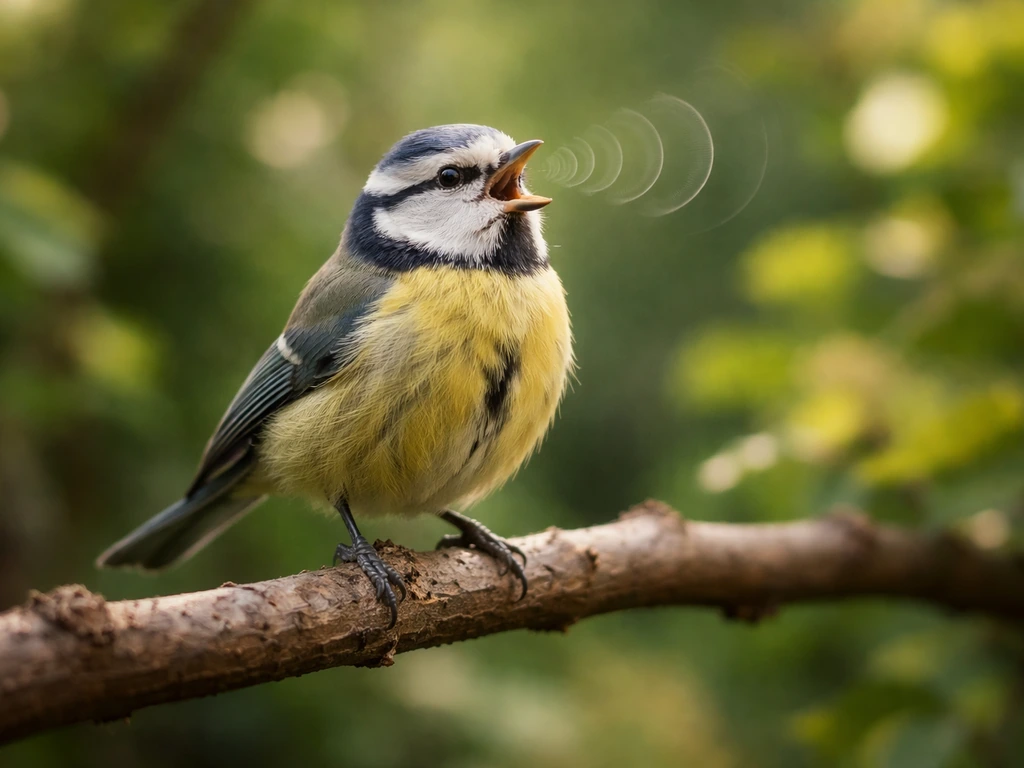
Bird call meaning depends on two things running in parallel: what the bird is actually doing behaviorally, and what cultural traditions have layered onto that sound over centuries. Both are real, and both are worth knowing. The practical answer is this: a bird call is a short, functional vocalization the bird uses to communicate something specific, whether that is danger nearby, a request to keep in contact with the flock, or a signal to a potential mate. Once you know the species and the context, you can decode the behavior with a reasonable degree of confidence. The cultural and spiritual meaning is a separate layer, and it is worth treating it that way.
Bird Calls Meaning: How to Decode Calls by Context

Marcus Holloway
19 Apr 2026
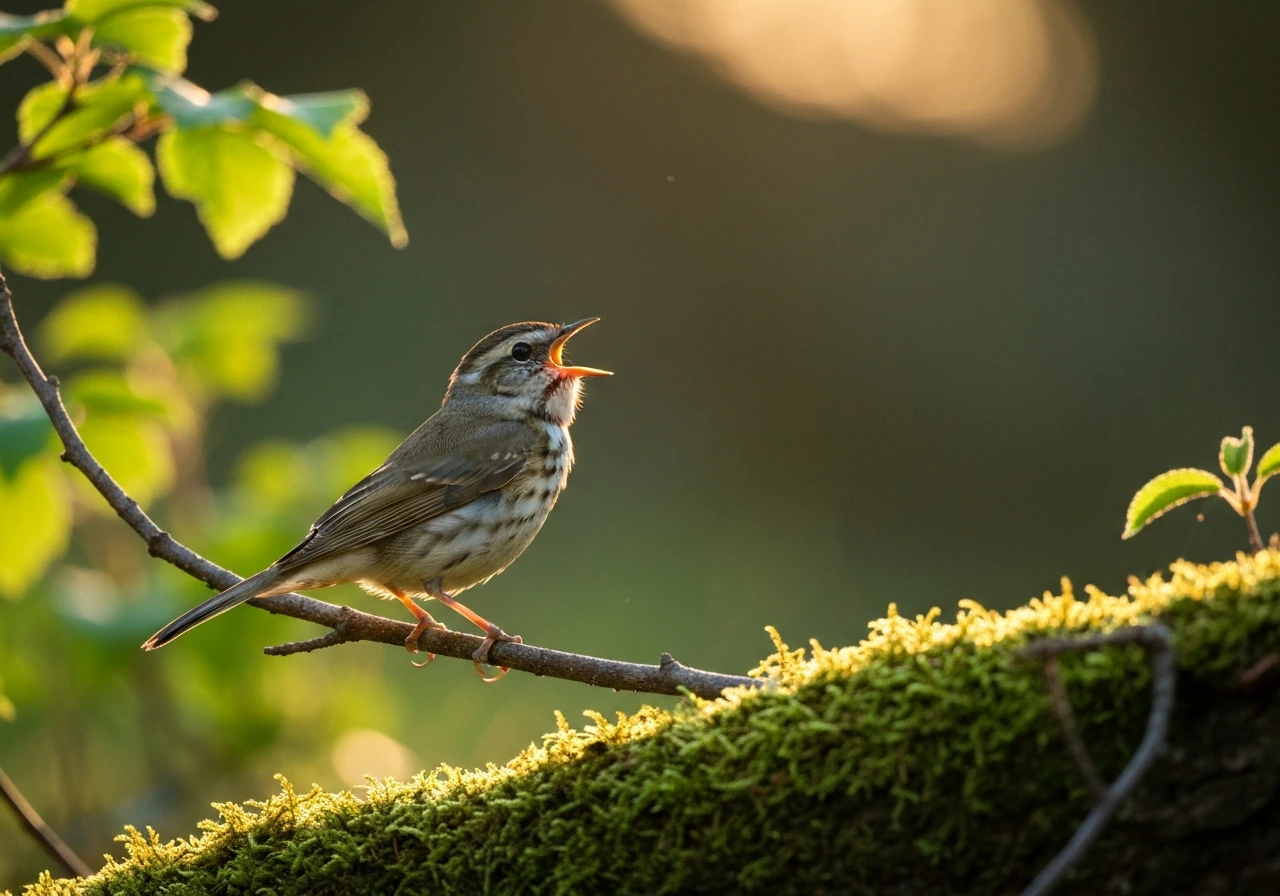
Song vs. call: they are not the same thing
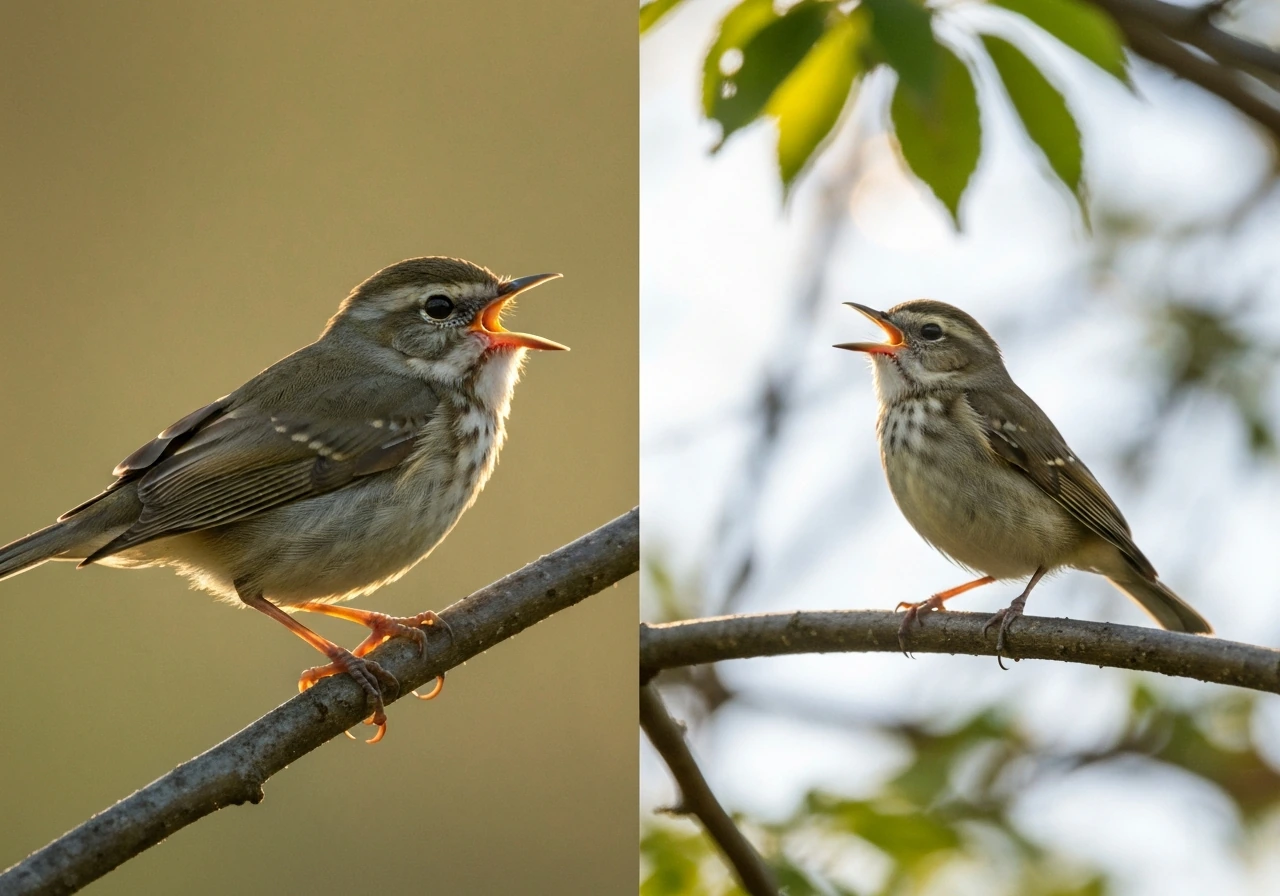
Before you can interpret what a bird sound means, you need to know whether you are hearing a song or a call. Ornithologists define these by function, not just length or complexity. A song is typically longer, more structured, and tied to territory defense or attracting a mate. A call is shorter, simpler, and used for immediate communicative tasks: alarm signaling, keeping contact with the flock, or coordinating movement. Audubon acknowledges that the distinction is not always obvious to beginners, and a bird like the Henslow's Sparrow offers a good example: its vocalization sounds almost too brief to be a song, but because its function is courtship and territory, ornithologists classify it as a song.
Why does this matter practically? Because a bird singing at dawn in spring almost certainly has a different motivation than a bird making a sharp, staccato chip note near your head while you walk past its nest. The dawn chorus is song. The sharp chip is a call, probably an alarm. Treating them as the same type of sound will lead you to the wrong interpretation every time. Related topics like bird sounds more broadly, or specific behaviors like tweeting or whistling, each carry their own nuance worth exploring separately.
How to figure out what you are actually hearing
The most reliable way to identify an unfamiliar bird call is to combine what your ears catch with three pieces of context: where you are, when it is, and what the bird (if visible) is doing. These three factors will narrow your candidate species dramatically before you even open an app.
Location and habitat

A call heard in a dense eastern hardwood forest points to a completely different set of candidate species than the same tonal quality heard in a coastal salt marsh or a suburban backyard. Habitat is your first filter. If you know your local birds well, unfamiliar sounds immediately stand out because they do not match the expected soundtrack. Audubon frames this nicely: learning what your familiar neighborhood species sound like is the real key to unlocking new identifications, because once you know the baseline, anything unusual jumps out.
Time of day and season
Dawn is the peak window for song, especially during spring breeding season. Calls can happen at any hour, but certain calls (flight calls during nocturnal migration, for example) are only meaningful at specific times. A rich, complex vocalization at 5 a.m. in May is almost certainly song. A single sharp note at midday could be an alarm, a contact call, or a fledgling begging. Season matters too: many species call in ways that change between breeding and non-breeding periods.
Visible behavior
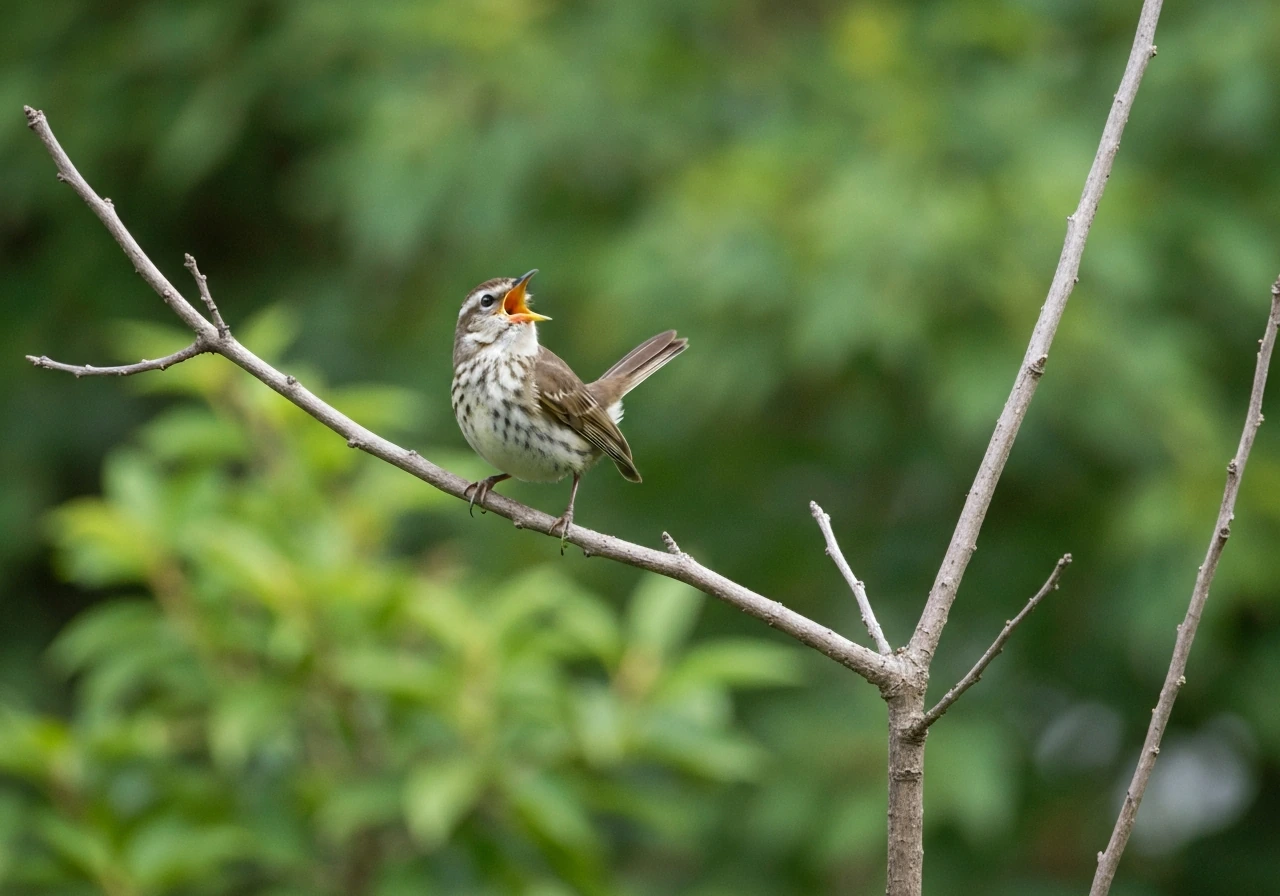
If you can see the bird, watch what it is doing while it calls. Is it perched high and exposed, head back, repeating a complex phrase? That is song. Is it flicking its tail and chipping repeatedly while you stand near a bush? That is alarm. Is a group of birds suddenly converging on one tree while making noise? That is likely a mobbing response to a predator. Behavior is often the clearest decoder you have.
Why birds call: the main behavioral reasons
Most bird calls fall into a handful of functional categories. Understanding these means you can make an educated interpretation even before confirming the species.
- Alarm calls: Sharp, often high-pitched notes used to signal a predator. Black-capped chickadees give a distinctive 'see-see' thin whistle when a fast-moving aerial predator like a hawk appears. The famous 'chick-a-dee-dee-dee' serves a different alarm function: it recruits nearby chickadees and other songbirds into a mobbing response. Research shows the number of 'dee' notes at the end encodes information about the threat level, with more notes added for smaller predators (which are more maneuverable and thus more dangerous in dense cover).
- Territory calls: Many species use calls (distinct from full song) to maintain and advertise territorial boundaries, particularly outside the breeding season when full song production drops.
- Contact calls: Short, repeated notes that keep flock members in touch with each other, especially during movement through thick vegetation or during migration. If you hear a sparse, rhythmic chipping from birds moving through a hedgerow, this is likely a contact call.
- Mate attraction and courtship: Though full song handles most of this work, some calls are used as part of pair bonding and courtship displays.
- Begging calls: Fledglings produce persistent, sometimes loud begging calls directed at parents. If you hear an insistent, repeated high note coming from a bush in summer, it is often a young bird demanding food.
- Flock coordination: Many social species use specific calls to initiate or coordinate group movements, warn the flock about upcoming departure, or signal arrival at a food source.
What cultures and traditions say about bird calls
Cultural interpretations of bird calls have existed across every human society, and they deserve to be taken seriously as expressions of how people have related to the natural world. At the same time, it is worth being clear about what they are: symbolic and narrative frameworks, not factual descriptions of bird behavior.
Owls are probably the most consistent example. A systematic review of global studies on human perceptions of owls found that in many regions, owl calls are culturally associated with death, witchcraft, or misfortune. The tawny owl's hoot, for instance, has a long documented history in Western folklore as a bad omen, reflected in Shakespeare's Julius Caesar and carried through into folk traditions across Europe. In Kerala, India, the call of the mottled wood owl carries similar ominous associations in local tradition.
Other traditions read bird calls as messages from ancestors, signals from spiritual forces, or indicators of coming weather. Some of these cultural readings correlate loosely with real behavior: certain birds do call more before rain, and birds reacting to predators create audible disturbances that historically tipped off hunters and travelers to danger. But many symbolic readings have no direct behavioral grounding, and that is fine. They are cultural meaning-making, not behavioral science.
The practical approach is to hold both layers at once. If you are trying to pin down a specific sound, look up bird whistle meaning for the exact call type you heard. If the sound you heard feels like tweeting, look up the bird tweeting meaning for that exact call type so you can interpret it more accurately.
If you hear an owl calling at night and your cultural background assigns significance to that, you can honor that meaning while also knowing that the owl is likely vocalizing to establish territory, attract a mate, or communicate with a neighboring individual. One explanation does not cancel the other. What matters is knowing which layer of meaning you are working in.
| Type of Meaning | What It Reflects | How Reliable Is It |
|---|---|---|
| Behavioral/ornithological | Function of the call within the bird's life: alarm, territory, contact, courtship | High reliability when species and context are confirmed |
| Cultural/traditional | Human symbolic frameworks built over generations around bird sounds | Culturally valid, not behaviorally factual |
| Superstitious/omen-based | Folk associations between specific calls and predicted events | No scientific grounding; often reflects historical fear or observation misattribution |
How to confirm what you heard using apps and references
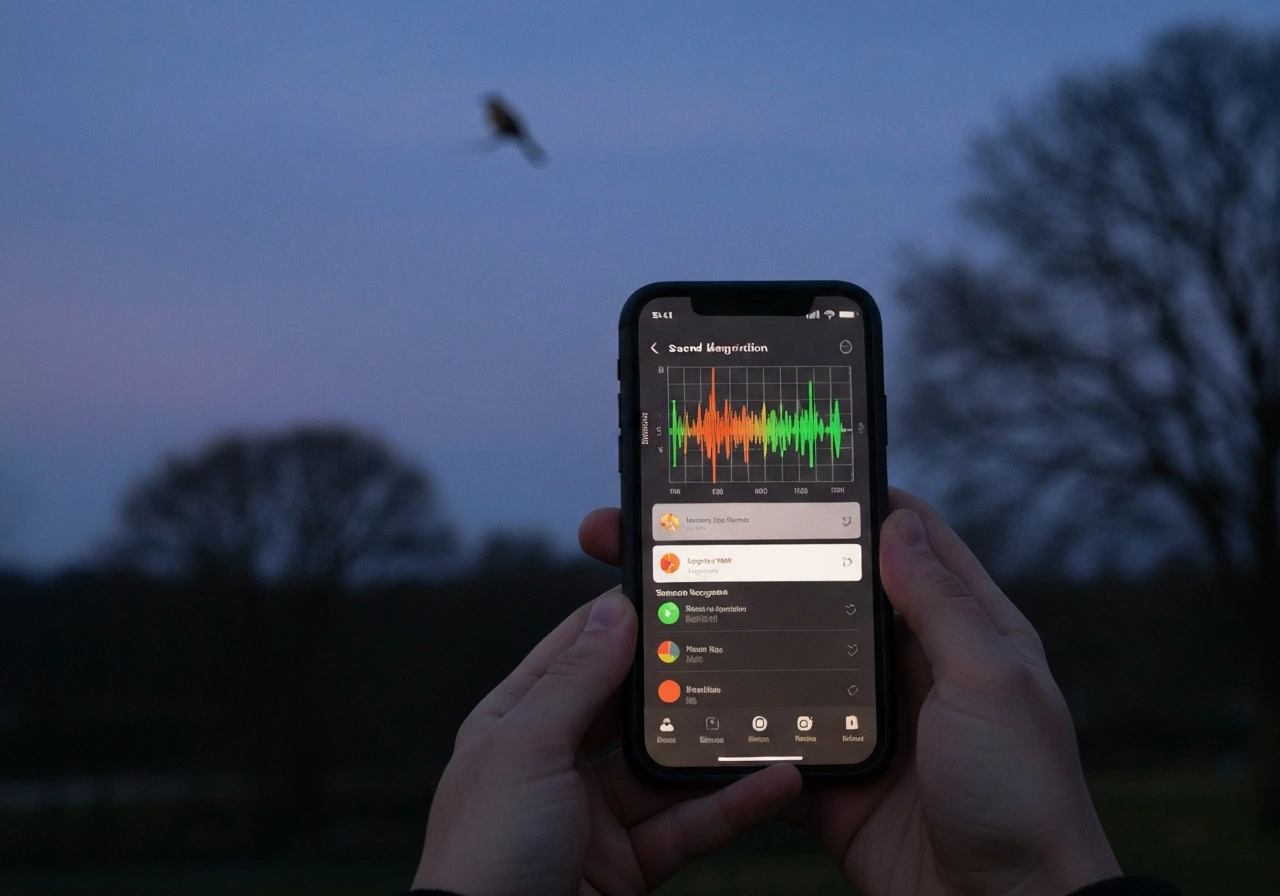
If you want a confirmed identification rather than a best guess, a few tools make this genuinely straightforward in 2026.
Merlin Sound ID (Cornell Lab)
Merlin's Sound ID is the most accessible starting point for most people. Open the app, tap to listen, and blank" rel="noopener noreferrer">Merlin displays a live spectrogram alongside real-time species suggestions. Tap any suggestion to pull up that species' entry and see how its call or song looks on the spectrogram compared to what you recorded. blank" rel="noopener noreferrer">The model was trained on recordings from Cornell Lab's Macaulay Library, which requires a minimum of around 150 recordings per species for Sound ID training, so coverage is solid for most regularly recorded birds. For best results, hold the phone steady, reduce background noise, and check the spectrogram visually to confirm the bird's pattern is clearly visible.
BirdNET
BirdNET, also from the Cornell Lab, works differently under the hood but produces similar outputs. It generates a spectrogram and runs it through a convolutional neural network that detects species-specific acoustic patterns. The BirdNET Live mode processes audio entirely on-device with no audio leaving your phone, which is useful if you are in a remote area with no signal. It is a good cross-check against Merlin, especially for less common species.
Macaulay Library and Xeno-canto
Once an app gives you a candidate species, go to the Cornell Lab's Macaulay Library to compare. The Library's guide to bird sounds includes expert-selected recordings covering songs, calls, flight calls, and display sounds for each species, making it a reliable reference rather than a crowdsourced free-for-all. Xeno-canto is another large open repository worth using, but do apply a small degree of skepticism: misidentified recordings do exist in crowdsourced archives, so comparing multiple entries rather than relying on a single recording gives you a more accurate picture.
Your local eBird data
Before committing to an unusual identification, check eBird to see what species have actually been reported in your area recently. A bird that has never been recorded in your county is possible but unlikely. Downloading the local bird pack in Merlin also loads your area's most likely species, which improves Sound ID accuracy and gives you a more grounded shortlist to work from.
The most common mistakes people make when interpreting bird calls
There are a few patterns of error that come up repeatedly, and being aware of them will save you a lot of frustration and misinterpretation.
- Conflating song and call: Hearing a complex, melodic phrase and calling it a 'bird call' without recognizing it as song leads to wrong assumptions about what the bird is communicating. The function is different, and the interpretation should be too.
- Assigning universal symbolic meaning to a call without knowing the species: 'A bird called from the left side, which means bad luck' is a cultural reading that only makes sense within a specific tradition. It says nothing about what the bird was actually doing or what species it was.
- Assuming the same sound always means the same thing: A chickadee's 'dee' calls vary in meaning depending on the number of notes and the context. Context is not optional. It is part of the signal.
- Treating app identifications as 100% certain: Merlin and BirdNET are impressive but not infallible, especially in areas with multiple similar-sounding species or poor recording conditions. Always cross-check with the spectrogram and a reference recording.
- Ignoring habitat and season: Identifying a bird by sound alone without accounting for what is actually present in your area at this time of year leads to false positives. A tropical species is not calling from a New England backyard in January.
- Treating folklore as behavior: Saying an owl hooting 'means death is coming' is a cultural statement, not a description of owl behavior. Treating it as a behavioral fact confuses two genuinely different types of meaning and makes both less useful.
- Assuming silence is meaningful: Birds stop calling for practical reasons: a predator is close, weather changed, or it simply moved on. The absence of a call is behavioral data, but it rarely carries the mystical weight some traditions assign to it.
Your practical next steps right now
If you heard a bird call and want to interpret it today, here is the most direct path forward. Open Merlin Sound ID, record the sound if you can hear it again, and note the spectrogram pattern alongside any species suggestions. Cross-reference with the Macaulay Library for a confirmed audio match. Check eBird for recent sightings in your area to validate whether the candidate species actually shows up locally.
Once you have a likely species, look up its call types specifically: many species have multiple distinct calls with very different functions, and most field guides and the All About Birds website break these down clearly. If you keep hearing the same sound and it seems connected to slang, look up its bird call meaning slang and how people use that phrase call types.
If the call carries cultural or spiritual weight for you, that layer is worth exploring separately. Understanding the behavioral meaning gives you the ornithological baseline. The cultural meaning is a different conversation, one rooted in tradition and symbolism rather than field observation. Both are legitimate. Knowing which one you are engaging with is what makes the interpretation useful rather than muddled.
FAQ
If I know the bird species, can I assume the bird call meaning is the same every time I hear it?
Yes, but you should treat it as a hypothesis, not a conclusion. Many species reuse the same call type across different situations (for example, contact calls can sound similar whether the bird is traveling or regrouping), so confirm with at least one additional clue like visible behavior (tail flicking, repeated chip cadence) or location and time window.
What should I do when the call sounds normal, but the context seems unusual or stressful?
Birds can change their vocal output during stress or unusual conditions (heavy rain, predators nearby, nest disturbance, or juveniles out of the nest), and those situations can make a typical “song versus call” pattern less reliable. When behavior looks atypical, prioritize what the bird is doing over what the sound “usually” means.
Why do call identification apps sometimes mislabel what I hear, and how can I record better?
Background sound can overpower the exact frequency bands that apps rely on, leading to a wrong shortlist. Improve results by recording closer to the bird, staying quiet, reducing wind noise if possible, and then verifying the spectrogram shows a clear repeated pattern rather than a fuzzy blob of sound.
How can I tell the difference between a brief song phrase and a short call when the sound is very close to a chip?
Not always. “Song” and “call” are functional categories, but beginners often mishear a short phrase as a chip when it is actually a brief song component, or they miss that a call is repeated in a structured way. A practical check is to look for redundancy: repeated, patterned delivery tied to territory or courtship is more consistent with song.
If I hear people say a bird call “means” something, does bird call meaning slang always match the real call type?
Because some “slang” labels are region or community specific, the same phrase can map to different actual call types. If you are following a slang meaning, also confirm the underlying call type in a species guide (and compare the spectrogram shape) so you are not carrying a human label onto the wrong bird.
What if I think I’m hearing one call, but there may be multiple birds calling at once?
Yes. A common edge case is overlapping vocalizations from multiple birds, especially in neighborhoods during dawn chorus or near dense vegetation. If the recording has more than one distinct pattern, treat it like multiple calls, re-record from a quieter spot, or wait for a single bird to dominate before interpreting meaning.
How much audio do I need to get a reliable bird calls meaning interpretation from an app?
Most apps perform best on clear, isolated bouts. If you can only capture a few seconds, you may still get the right species, but the certainty drops. Your next step should be to re-record when the bird repeats (watch for the same behavior cycle), then compare the new spectrogram pattern to the prior one.
What should I do if the spectrogram match looks close, but the app keeps suggesting different candidates?
Some species have highly variable calls by region, age, and season, and that can make a library match look wrong even when the species is correct. When candidates feel inconsistent, broaden the shortlist using habitat and recent eBird records, then compare multiple recordings for that species rather than a single exemplar.
Next Article
Bird Sounds Meaning: How to Interpret Calls and Songs
Translate bird sounds into likely species and real-time meaning, plus folklore, dream symbolism, and troubleshooting tip