If you searched "bird law it's always sunny," you're almost certainly looking for one specific thing: Charlie Kelly's absurd claim that "bird law in this country is not governed by reason." That line comes from Season 5, Episode 1 of It's Always Sunny in Philadelphia, titled "The Gang Exploits the Mortgage Crisis," and it is one of the most quoted cold-open moments in the show's history. But because the phrase "bird law" is genuinely ambiguous, it's worth unpacking both sides: what it means as a pop-culture punchline, and what it loosely points to in the real world.
Bird Law It’s Always Sunny: Episode Quote Explained

Marcus Holloway
7 Apr 2026
"Bird Law" Has Two Very Different Meanings
The first thing to sort out: "bird law" is not a real legal specialty. It is not a bar exam subject, a recognized practice area, or anything a real attorney would put on a business card. In the show, it functions as a fictional authority that Charlie invokes with total confidence and zero knowledge. If you've landed here because you heard the term and weren't sure whether it was a TV reference or an actual legal concept, the short answer is: it's a running gag from It's Always Sunny, and the bird law meaning in everyday use is almost entirely tied to that joke.
That said, real wildlife protections for birds do exist under federal and state law, and they are genuinely complex. The phrase accidentally gestures toward something real, which is part of why it's funny to anyone who has ever tried to read federal wildlife regulations. More on that in a moment.
The Exact Episode and Scene You're Looking For
The iconic "bird law" exchange happens in the cold open of Season 5, Episode 1. Charlie and Dennis are arguing about whether Charlie can legally keep a hummingbird as a pet. Charlie insists it's legal, invokes his supposed expertise, and delivers the line. Here is the verbatim exchange from the episode script:
- Charlie: "It's just that bird law in this country- it's not governed by reason."
- Dennis (or another gang member): "There is no such thing as bird law."
- Charlie: "Yes there is! I'm gonna get a hummingbird, and I'll show you."
That's the full nucleus of the bit. The cold open continues from there with Frank and a lawyer character escalating the comedic legal chaos, but the hummingbird argument is the origin point of the "bird law" meme. This is also not the only time Charlie claims bird law as his specialty. The It's Always Sunny wiki identifies additional episodes, including "The High School Reunion, Part 2: The Gang's Revenge," where the running gag resurfaces. So if you've seen a clip or a screenshot that doesn't quite match the dialogue above, it may be from a different episode in the same recurring bit.
Why Charlie's "Bird Law" Is Funny (and What It Says About the Character)
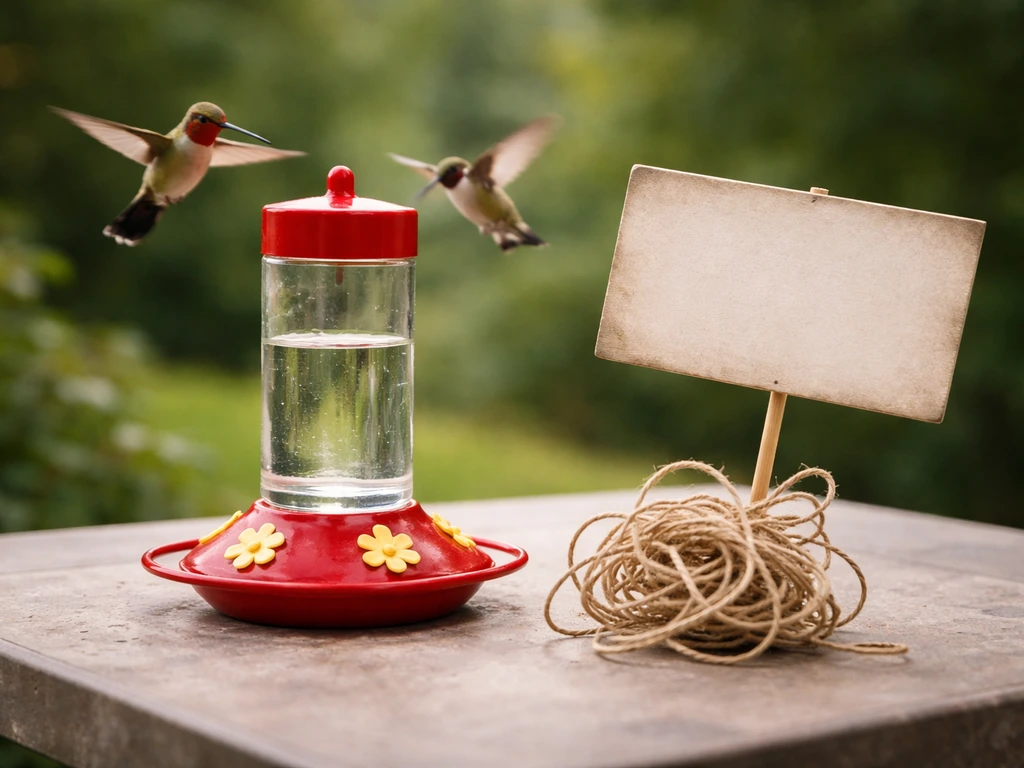
The comedy here is layered. Bird law and Charlie Kelly go together because Charlie is the show's designated "wild card": barely literate in some episodes, surprisingly resourceful in others, and consistently overconfident in areas where he has no business being confident. Claiming expertise in a made-up legal specialty is a perfect expression of that character. He doesn't argue that hummingbirds are legal pets because he looked it up. He argues it because he has decided he knows bird law, and in his mind, that settles it.
The line "not governed by reason" is the comedic payload. It sounds like a real legal principle, the kind of thing a lawyer might actually say about an arcane regulatory framework. But Charlie is using it to mean: "I can't explain why I'm right, but I'm still right, and bird law backs me up." That circular, self-sealing logic is exactly what makes it quotable. The Arizona State Law Journal even published an essay using the line as its framing device, titled "Bird law in the United States: Is it Governed by Reason?" which tells you something about how far the joke has traveled.
As a recurring gag, it fits a broader pattern: the gang routinely appoints themselves experts in things they know nothing about. Charlie's bird law is a particularly clean example because it combines a fake specialty with an absurdly specific subject matter (birds) and a grandiose, legally-flavored claim. If you want to go deeper into how the bird law meme spread and evolved as an internet joke, the trajectory from TV cold open to image macro to Twitter caption is genuinely interesting.
What Real Bird Law Actually Looks Like
Here's the thing: the joke lands partly because real bird-related law is legitimately complicated. The primary federal framework in the U.S. is the Migratory Bird Treaty Act (MBTA), codified at 16 U.S.C. 703-712. It makes it unlawful, without a waiver or federal authorization, to pursue, hunt, take, capture, kill, or sell nearly 1,100 species of listed migratory birds. That includes their nests, eggs, and parts. The "take" definition is broad enough to cover attempts, not just completed acts. The U.S. Fish and Wildlife Service testimony on the Migratory Bird Treaty Act explains that “take” includes harassing or harming and attempts to engage in conduct like pursuing, hunting, shooting, wounding, killing, trapping, capturing, or collecting.
On top of the MBTA, there's the Bald and Golden Eagle Protection Act, which adds specific prohibitions around eagles: no take, no possession of parts, no disturbing nests or eggs, with meaningful criminal penalties. For example, 16 U.S.C. § 668 sets out criminal penalties for prohibited conduct involving bald and golden eagles, including taking, possessing, selling, purchasing, bartering, transporting, exporting, or importing them (or their parts, nests, or eggs) without authorization Bald and Golden Eagle Protection Act. State laws add another layer. Many states protect all wild bird species encountered in nature, with narrow exceptions for certain invasive species like European starlings, house sparrows, and feral pigeons. Some states explicitly prohibit taking or destroying wild bird nests or eggs, with permit requirements for exceptions. Florida, Maine, Texas, and Georgia all have specific state-level protections that operate alongside federal rules.
So could you legally keep a hummingbird as a pet in the U.S.? No. Hummingbirds are migratory birds protected under the MBTA. Charlie was wrong about his conclusion and wrong about his reasoning, but the underlying regulatory territory is real and genuinely layered. That's a big part of why the line works: bird law, in actual practice, kind of does feel ungoverned by reason if you try to navigate it without guidance.
A Quick Comparison: TV Bird Law vs. Real Bird Law
| Dimension | Charlie's "Bird Law" | Real U.S. Bird Law |
|---|---|---|
| Source | Charlie Kelly's imagination | Federal statute (MBTA, 1918) and state wildlife codes |
| Governing principle | "Not governed by reason" | Treaty-based conservation logic with enumerated exceptions |
| Coverage | Whatever Charlie decides | ~1,100 migratory species plus eagle-specific statutes |
| Enforcement | Charlie's confidence | U.S. Fish & Wildlife Service; state wildlife agencies |
| Hummingbird as pet? | Charlie says yes | Illegal without federal permit (MBTA protected species) |
| Usefulness in argument | Zero (but very quotable) | Practically relevant if you work with wildlife or land management |
Why Birds Keep Showing Up in Law, Language, and Culture
Birds have an outsized presence in human meaning-making. They show up in law (MBTA, eagle protections), in slang (think of how the phrase bird rights in the NBA uses "bird" as a shorthand for a complex compensation rule named after Larry Bird), in literature, in dreams, and in everyday speech. Part of what makes Charlie's bird law bit resonate beyond the show is that birds already occupy this culturally inflated space. They feel significant in ways that are hard to pin down logically, which is maybe why "not governed by reason" sounds almost profound before you realize who's saying it and why.
Across cultures, birds function as messengers, omens, and boundary-crossers: creatures that move between earth and sky, that appear and disappear with the seasons. That symbolic weight is why legal systems specifically carve out protections for them, and why a joke about "bird law" lands differently than a joke about, say, squirrel law. Birds carry cultural gravity that the show's writers understood well enough to exploit. Even the idea that a bird "knows what's good" (a phrase that echoes how birds are read as instinctively wise in folklore) feeds into why Charlie's declaration about birds and reason feels like it almost means something. For more on that instinct-and-wisdom framing, the way a bird knows what's good shows up in cultural storytelling is genuinely worth exploring.
Songs use birds the same way. Billie Marten's "Bird" is one notable example of how birds get recruited to carry emotional and symbolic weight in ways that feel intuitive rather than reasoned, which is its own kind of argument for Charlie's thesis. If you're curious about that dimension, the bird in Billie Marten's songwriting is a good lens into how that symbolism works in contemporary music.
How to Find the Exact Quote and Verify It Right Now
If you need the verbatim line for a quote, a post, or just to settle a debate, here's the most reliable path today:
- Go to Springfield! Springfield's episode script page for Season 5, Episode 1 of It's Always Sunny in Philadelphia ("The Gang Exploits the Mortgage Crisis"). Search the page for "bird law" and you'll land directly on the cold-open exchange. This is the most accurate verbatim source for the dialogue.
- Cross-reference with a subtitle archive. Subtitle tracks (including time-coded .srt files) for the episode can be found via search and confirm the spoken wording matches the script. This is especially useful if you're trying to timestamp the scene for a clip.
- Check a reputable TV review. The AV Club's review of this episode explicitly calls the line an "immortal" cold-open moment and quotes it directly, which gives you a third-party confirmation that you have the right episode and the right wording.
- For additional episode appearances of the running gag (beyond Season 5, Episode 1), the It's Always Sunny fandom wiki is the most complete reference, including episode-by-episode notes on when Charlie invokes his bird law expertise.
One thing worth flagging: because "bird law" became a meme, there are misattributed versions floating around online. A fan theory thread in r/FanTheories discusses “Parroty law” versus “bird law” and why the phrase can be ambiguous in memes and spinoffs. Some quote images swap words or attach the line to the wrong episode. Always trace it back to a script or subtitle source before repeating it as verbatim dialogue.
Where to Go From Here
If you came here for the TV reference, you now have the episode (Season 5, Episode 1), the scene (cold-open hummingbird argument), and the exact quote ("It's just that bird law in this country, it's not governed by reason"). You also have a real-world anchor: hummingbirds are genuinely protected under federal law, Charlie would genuinely lose that case, and the MBTA is genuinely complex enough to feel, at times, ungoverned by reason.
For the best collection of quotable lines from the show, including the bird law exchange in its full context, bird law quotes from It's Always Sunny pulls together the most memorable moments. And if you're thinking about the broader question of what birds are worth, culturally and symbolically, the concept of bird worth in human meaning-making systems is a surprisingly rich rabbit hole that connects everything from legal protections to folklore to the kind of cultural weight that makes a throwaway TV joke about hummingbirds still circulating a decade later.
FAQ
If hummingbirds are mentioned, does that mean I can legally keep them if I do it carefully?
You usually cannot. In the U.S., most hummingbirds are migratory birds, and the Migratory Bird Treaty Act broadly covers “take” (including attempts), which makes keeping a hummingbird as a pet a high-risk violation without a specific authorization.
What counts as “illegal” under real bird protections, is it only hunting and killing?
Possession and handling are often the trap. Even if you never hunt or sell, rules can still treat “take” to include capture and parts, so owning, transporting, or keeping nests or eggs is not automatically legal just because you didn’t “harm” the bird directly.
Do I only need to worry about federal bird law, or do state laws matter too?
An individual state can add restrictions even when federal law is the baseline. Some states protect a broader set of birds, add nest or egg prohibitions, or require permits for specific activities, so you need to check both state and federal rules for your location and actions.
Are there any legal exceptions that let regular people possess birds?
Yes, but the rule is narrow. Federal and state protections can allow permits or exemptions for certain purposes (for example, authorized scientific or rehabilitation work), but “I found it” or “I meant well” generally does not qualify you to keep the animal.
Is there any real legal doctrine that matches the quote about bird law not being governed by reason?
No, the meme line does not map to a real principle. Real enforcement depends on specific statutes, definitions, and whether you exceeded an authorized activity, so “not governed by reason” is comedic framing, not a doctrine you can rely on.
Why do I see different versions of the bird law line online? How can I verify the exact wording?
Be careful when using quotes in posts or memes. The article notes that misattributions are common, so verify against a script, subtitles, or a reputable episode transcript before stating it as verbatim dialogue.
What should I do if I’m worried a bird in my yard is injured or I found a nest or egg?
If you want to keep a bird-related project legal, start with the least risky path: avoid possession, keep a distance, and contact a licensed wildlife rehabilitator or the appropriate state wildlife agency if you believe a bird is injured or a nest is active.
Does “not governed by reason” affect things like buying, selling, or breeding birds?
There is a practical difference. Buying or selling wild-caught migratory birds is generally unlawful without authorization, while having birds you legally obtained through an allowed pathway (and that are not wild-taken) is a separate question that still may trigger state cage, breeding, or species rules.
Why does the bird law joke resonate with real compliance issues, and what common mistakes does it hide?
The bird law meme can be used as shorthand for “complicated rules,” but it can also cause underestimation. Treat bird-related compliance like environmental and animal-welfare compliance, where small actions (disturbing a nest, relocating, transporting) can become violations.
Next Article
Bird Blindness Meaning: Causes, Signs, and What to Do Now
Bird blindness meaning: spot signs, tell vision loss from other issues, and take safe action or get urgent vet care.