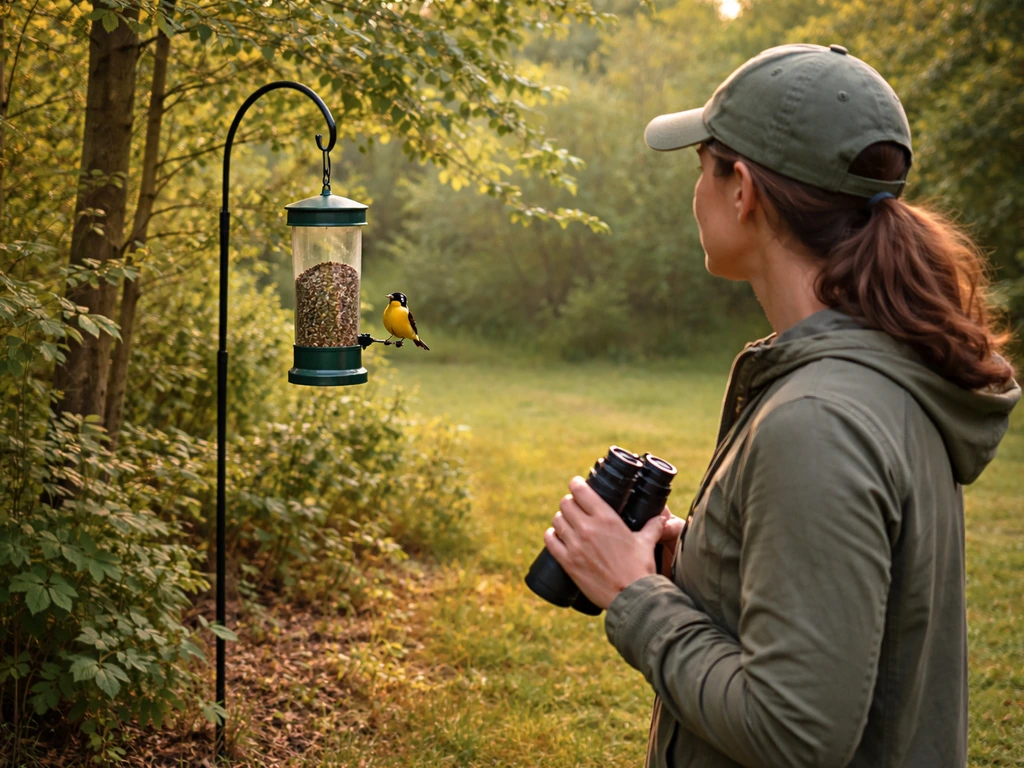
When someone says 'bird knows what's good,' they almost always mean it as a playful, knowing compliment, either to an actual bird making a smart-looking choice or to themselves by proxy. It started as an internet caption and spread because it captures something universally relatable: the idea that birds, with their instinct-driven lives, somehow cut through the noise and go straight for what matters. Whether you're searching for the meme, a spiritual interpretation, or trying to figure out why a bird keeps showing up at your window, this guide covers all of it.
Bird Knows What’s Good: Meaning, Behavior, Dreams, and Myths

Marcus Holloway
14 May 2026
What the phrase actually means
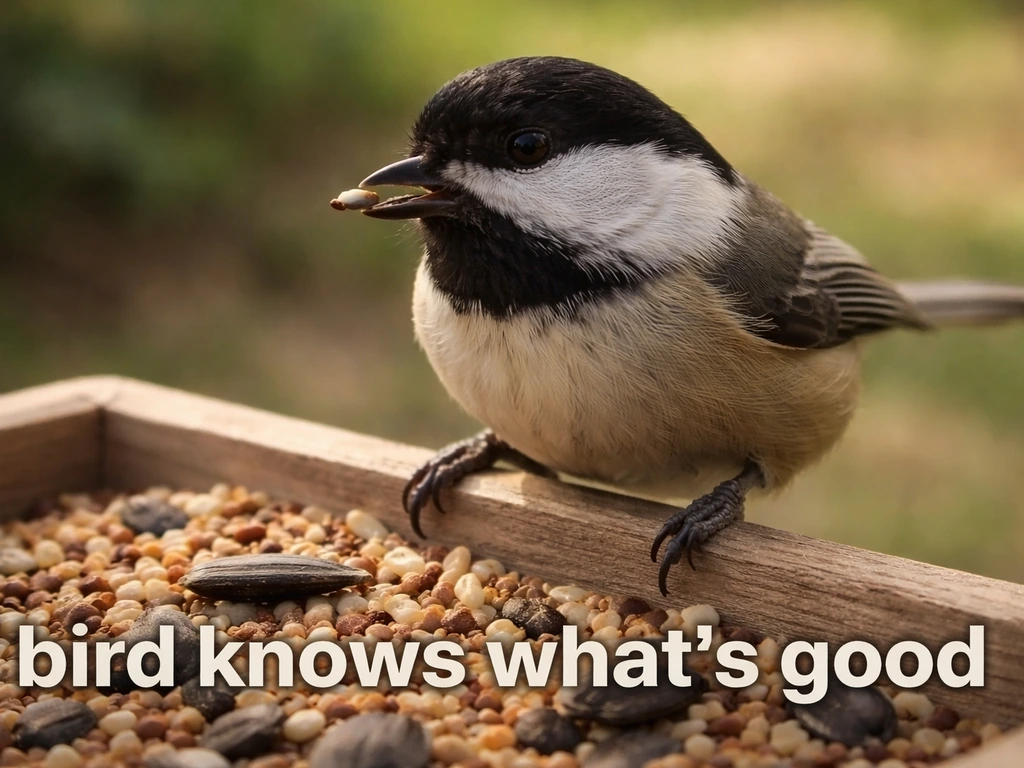
The phrase 'bird knows what's good' isn't a formal idiom and it doesn't come from a poem, a proverb, or a religious text. It's a meme caption. The Guardian included it in a roundup of genuinely funny internet moments, and Reddit threads treating it as a recognizable format confirm that it circulated widely as a humorous overlay on bird video clips. A 2012 forum post shows someone quoting a nature documentary narrator saying 'well the bird knows what's good,' which suggests the phrase felt funny enough to repeat even before it became a meme template. The humor works because birds look deliberate. They land somewhere, tilt their head, and leave. Whatever they just decided feels authoritative.
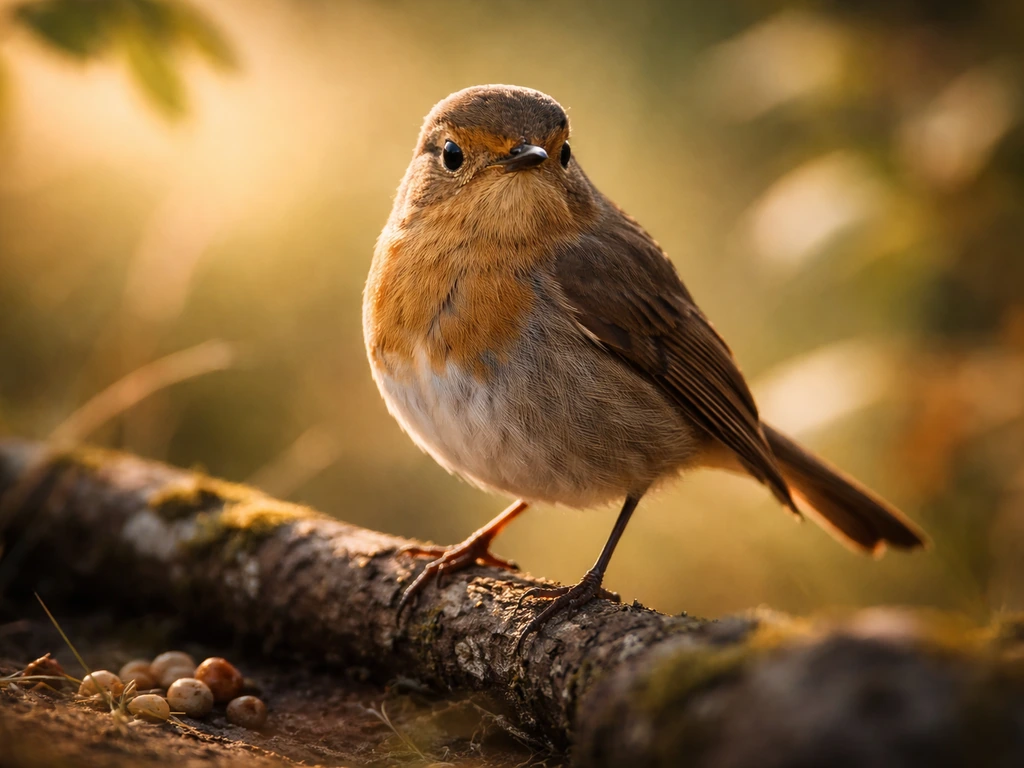
That's the literal read. But once you strip away the irony, the phrase also taps into something older: the idea that birds possess a kind of uncanny discernment. They navigate by the stars. They find food in places humans wouldn't think to look. They seem to know when weather is changing before any forecast. It's easy to see why people have projected wisdom and guidance onto them across every culture and era. The meme version is the modern, self-aware version of that same instinct.
Birds as symbols of guidance across cultures
The connection between birds and 'knowing what's good' runs deep across world traditions. The most striking scriptural example is the hoopoe (hudhud) in Surah An-Naml in the Quran. The hoopoe serves as a blank" rel="noopener noreferrer">messenger for the Prophet Solomon, bringing critical intelligence about the Queen of Sheba. It's not just a bird doing a task; the narrative specifically frames the hoopoe as uniquely capable of discernment, trusted with important knowledge when others failed to notice. In later Persian mystical poetry, particularly in Farid ud-Din Attar's 'Conference of the Birds,' the hoopoe leads all birds on a journey toward enlightenment. The bird literally knows the way.
In Christian and Jewish tradition, the dove carries a parallel weight. Noah's dove returns with an olive leaf, which is the first sign that the floodwaters are receding and that something good is coming. The dove doesn't just survive; it reports back with meaningful information. In Christian thought, the dove represents the Holy Spirit, again something that knows and reveals what is good. These aren't coincidences of imagery; they reflect how consistently humans across different traditions have used birds as stand-ins for higher knowing.
Shamanic and indigenous traditions worldwide assign birds messenger and guide roles. Lesley Morrison's work on avian spirituality draws explicitly on these worldwide mythological and shamanic frameworks to show how birds became vessels for wisdom-related symbolism long before the internet made it a meme. The through-line is remarkably consistent: birds move between worlds (sky and earth, human and divine), and that movement gets read as access to knowledge ordinary creatures don't have.
What bird behavior actually tells you
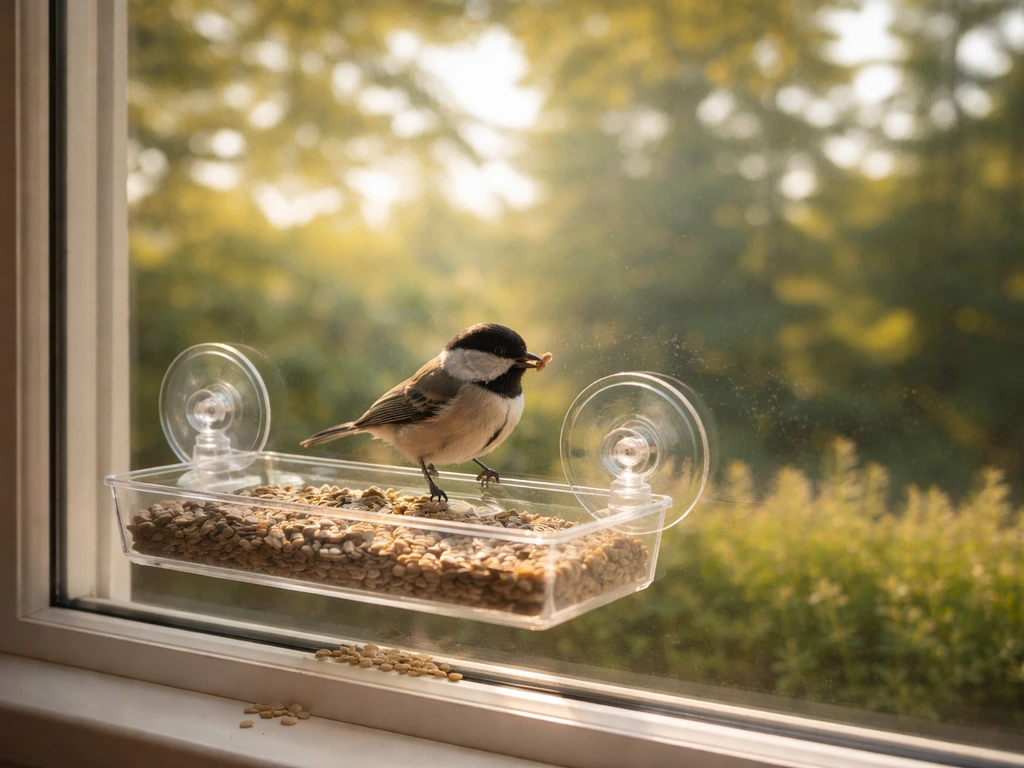
If a bird keeps showing up near you, the most likely explanation involves food, safety, or territorial behavior. Cornell Lab's research on feeder dynamics shows that birds returning repeatedly are responding to reliable food sources and navigating social hierarchies within their flock. Dominant birds get access first; others learn to time their visits around them. A bird that 'keeps choosing' your yard isn't picking you for any cosmic reason. It found something it needs there and remembers it.
Window strikes and window-attacking behavior have similarly mundane causes. The British Trust for Ornithology notes that robins, cardinals, and mockingbirds are especially prone to attacking windows because they see their own reflection and treat it as a territorial rival. They're not sending a message; they're trying to drive off an intruder that doesn't exist. Up to a billion birds die from glass collisions each year in the U.S. according to American Bird Conservancy estimates, and the cause is consistent: birds can't reliably distinguish transparent or reflective glass from open air or habitat.
A dead or dying bird near your home is worth taking seriously for public health reasons, not symbolic ones. West Nile virus surveillance programs in multiple states actively track dead bird reports as an early warning system for local virus activity. If you find a dead bird, reporting it to your local health department (and not handling it barehanded) is the right response. It contributes to real epidemiological monitoring.
The spiritual read: what people mean when they say a bird 'knows'
Modern spiritual writing frames bird appearances as invitations to trust your own inner guidance. Sites like Astrology.com and spirit animal resources describe a bird encounter as a symbolic prompt: pay attention to your instincts, trust what you already know, or notice what's being ignored. It's worth being clear that these interpretations are meaning-making frameworks rather than falsifiable claims. They're not wrong in the sense that they can't be useful, but they're not predicting outcomes either.
That said, the reason these frameworks resonate is psychologically real. Seeing something unusual, like a bird landing directly next to you or a species you've never noticed before appearing right as you're making a decision, naturally prompts reflection. Using that moment to check in with your own instincts isn't irrational. It's just important to understand what's actually happening: the bird isn't delivering a message, but the noticing can be useful. The meaning you assign is yours. If you’re looking for what a bird encounter is “worth” in that spiritual or symbolic sense, it helps to separate meaning from prediction bird worth.
If you find yourself drawn to spiritual interpretations of bird encounters, the most grounded approach is to treat them the way shamanic and Indigenous traditions have historically treated them: as prompts for self-reflection and community-level attentiveness, not as literal prophecy. The traditions that gave us bird symbolism were not naive; they embedded these images in rich ethical and communal frameworks. Lifting just the 'it's a sign' layer without that context flattens something more interesting.
Birds in dreams and what 'knowing what's good' looks like there
Dream interpretation has two main traditions to draw from here. Freud's psychoanalytic framework treats dream images as expressions of unconscious drives, wishes, or conflicts. A bird in a dream might represent freedom, escape, or a desire to rise above a situation, but Freud would push you toward what personal associations the bird carries for you specifically, not a universal bird symbol.
The Freud Museum in London has documented how bird imagery appeared in Freud's own study and how his method would approach such symbols. Freud Museum London also discusses how bird imagery appeared in Freud’s own study and connects it to his way of analyzing such symbolic material rather than treating it as literal prophecy [Freud Museum in London has documented how bird imagery appeared](https://www. freud. org.
uk/2019/03/12/discovering-birds-in-freuds-study/).
Jung's approach is closer to what most people mean when they look up dream symbolism. For Jung, a bird can represent the self's intuitive capacity, the part of you that navigates by instinct rather than logic. A bird 'knowing what's good' in a dream context maps directly onto Jungian ideas about instinct and the collective unconscious. If you dream of a bird confidently choosing a direction, flying freely, or leading you somewhere, Jungian symbolism would read that as your unconscious affirming your own directional sense. It's less about the bird and more about trusting a part of yourself you might be second-guessing while awake.
The International Association for the Study of Dreams takes a multidisciplinary view, incorporating both psychological and cultural-spiritual frameworks. What that means practically: there's no single right way to interpret a bird in a dream. What matters is what the image meant to you in context, what was happening in the dream emotionally, and what's happening in your waking life that the dream might be processing. If a bird appears in a dream while you're facing a real decision, the useful question isn't 'what does a bird mean in dreams?' but 'what was that bird doing, and how did it feel?'
Slang, captions, and common ways the phrase gets misread
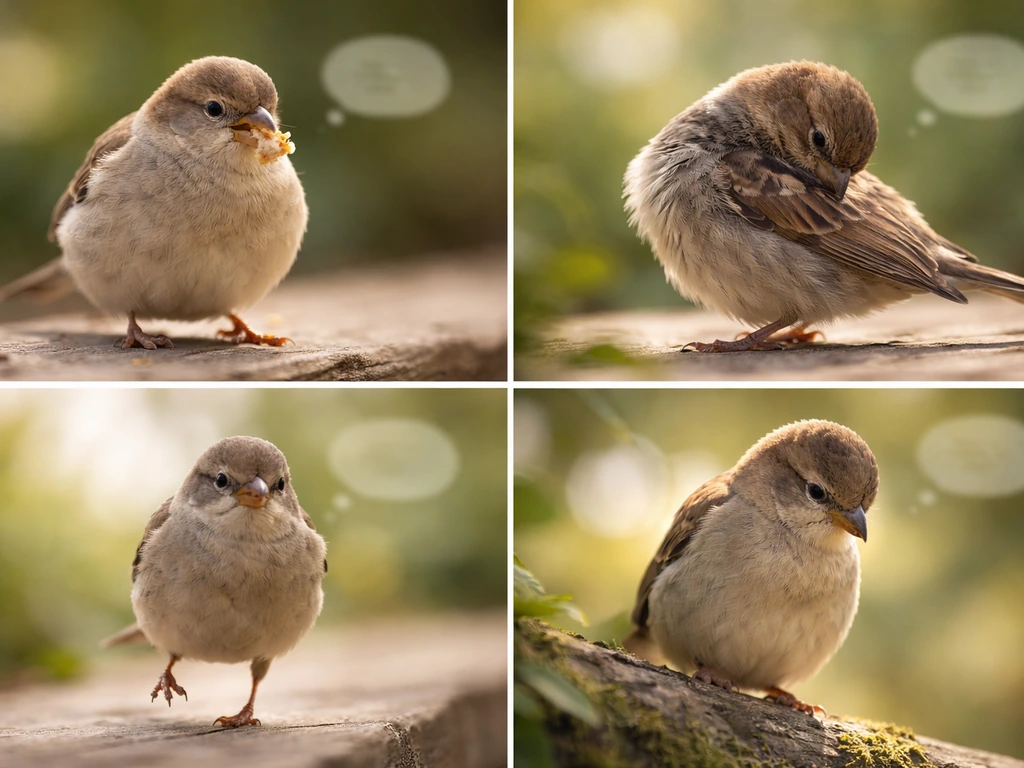
In everyday online usage, 'this bird knows what's good' is almost always an admiring caption on a video of a bird doing something that looks self-satisfied: eating something delicious, finding the warmest spot, ignoring chaos around it, or making a hilariously confident choice. It's affectionate and ironic at once. The humor comes from treating the bird as having deliberate taste and judgment.
The phrase can get misread a few ways. Some people encounter it and assume it's a real idiom with a traceable origin, similar to 'a bird in the hand.' It isn't. Others might search it expecting spiritual content and find only memes, or search it looking for the meme and find spiritual content. Context matters a lot here. The phrase also lives in the same neighborhood as other bird-related sayings that do have formal histories, like 'bird law' (which entered popular consciousness through the TV show 'It's Always Sunny in Philadelphia'), or 'bird worth' (which has its own meaning in NBA salary cap terminology). These are related only by the shared word 'bird,' not by any common meaning.
One genuine misreading worth flagging: some spiritual content creators use the phrase or similar ones to make expansive claims about birds as literal messengers or to sell 'bird reading' services. There's no evidence base for bird behavior predicting personal outcomes for specific individuals. That's distinct from cultural symbolism, which is a legitimate and interesting lens, but symbolic interpretation and personal prophecy are not the same thing.
What to actually do when a bird shows up
The first thing to do is observe before you interpret. Note what the bird is doing, what species it is if you can tell, and what the context is. A bird at your feeder is looking for food. A bird hitting your window is responding to its own reflection. A bird sitting unusually still near you might be stunned from a collision, in which case the Cornell Lab recommends placing it gently in a cardboard box with ventilation in a quiet, dark space for up to a few hours to recover, then releasing it outdoors when it's alert again.
- Identify the species if possible. Field apps like Merlin (from Cornell Lab) can help with a photo or sound recording.
- Check for injury. If the bird is on the ground and not flying away, it may be injured or stunned. Don't handle it unnecessarily, and don't try to feed it.
- If it's a window strike, use external window films, screens, or decals spaced 2 inches apart to break up the reflection going forward.
- If the bird is dead, don't handle it barehanded. Report it to your local health department if you're in an area with West Nile activity.
- If a bird keeps returning to your window aggressively, it's territorial behavior. Covering the outside of the window temporarily breaks the reflection cycle.
- If you want to assign personal meaning to the encounter, do that as a separate step, after the practical check.
That last step is a real one. There's nothing irrational about pausing after a bird encounter and asking what it prompted in you. If you're drawn to the spiritual or cultural symbolism, that's a legitimate layer to explore. Just keep it separate from the practical response, especially when a living animal might need help or a public health report might be useful.
Where the superstition ends and the evidence begins
It helps to be direct about what the evidence does and doesn't support when it comes to bird symbolism and bird behavior.
| Claim | What the evidence says |
|---|---|
| A bird at your window is a spiritual sign | Most likely: territorial behavior or reflection response (BTO, Environmental Literacy Council) |
| A bird keeps visiting because it chose you | Most likely: reliable food source and learned return behavior (Cornell Lab) |
| A dead bird near your home is a bad omen | More usefully: a data point for local West Nile virus monitoring (WV DHHR, CDC, Illinois DPH) |
| Birds sense things humans can't | Partly true: birds detect magnetic fields, barometric pressure changes, and infrasound; this is biology, not mysticism |
| Dreaming of a bird means something specific | Depends on your framework: Jungian symbolism offers one lens, personal association is another; neither is scientifically predictive |
| Birds are messengers from spiritual realms | Cultural/symbolic tradition, not falsifiable; meaningful as metaphor, not as literal fact |
The most honest framing is this: birds do 'know what's good' in the sense that their behavior is exquisitely tuned to survival. In discussions about bird rights NBA meaning, the phrase is often used to describe what fans think the message is, but it should be treated as interpretation rather than fact. Their instincts for food, safety, weather, and navigation are genuinely impressive and partially explain why cultures worldwide have projected wisdom onto them.
That biological reality is worth respecting on its own terms, without needing to add a layer of personal prophecy. At the same time, the symbolism traditions that assign birds meaning in spiritual, literary, and cultural contexts are rich and worth engaging with seriously. If you are looking for the bird billie marten meaning, it's also worth separating symbolism from literal claims so you can interpret the phrase in context birds meaning.
If you want more bird-centered inspiration, these bird law quotes connect wildlife protection with the way we talk about birds in law and policy symbolism traditions that assign birds meaning. The mistake is conflating the two: biology doesn't validate prophecy, and enjoying symbolism doesn't require you to believe a bird is literally sending you a message.
If you find yourself wanting to dig further into how specific bird-related phrases and traditions work, the landscape includes everything from the legal-absurdist humor of 'bird law' popularized by television, to formal frameworks like 'bird rights' in NBA contracts, to the lyrical and personal territory of songs like Billie Marten's 'Bird.' Birds carry a lot of cultural weight, and 'bird knows what's good' is a casual, funny entry point into something genuinely layered. You can stay at the meme level, or you can keep going.
FAQ
Is “bird knows what’s good” an actual idiom with a historical origin?
It is almost always a caption, not a proven proverb, and the safest way to use it is as “that looked smart” rather than “the bird predicted something for me.” If you want to go deeper, anchor the meaning to the bird’s observable behavior (food, territory, navigation), then treat any personal reflection as your interpretation, not a factual message.
How can I tell whether a bird showing up near me is just normal behavior versus a “sign”?
Look for the bird’s trigger before you assign meaning. If the bird is landing repeatedly near one spot, it is usually responding to reliable food or safety, while a sudden appearance at a window is often reflection-related. “Knowing” in the phrase is a human reading of instinct, not an indicator that the bird’s behavior has symbolic intent for you.
What should I do if birds keep hitting my windows, not just hovering around?
Window behavior is common, especially during breeding season and when light conditions make reflections stronger. If you experience repeat strikes, reduce reflections by closing blinds at peak times, adding exterior decals, or placing something visible on the outside of the glass (not just inside). If it is a larger species or you see repeated injuries, increase protection and consider contacting a local wildlife rehab.
If I find a bird sitting still near my house, is there a practical way to decide what to do next?
Yes. A bird that is stunned or disoriented may sit very still, or you might find it on the ground nearby. In that case, use a ventilated cardboard box, keep it quiet and dim, and avoid handling with bare hands. After a few hours, release it when it can stand and orient normally; if it is injured, contact a wildlife rehabilitator.
How do I know when bird symbolism is getting into “prophecy” territory rather than personal reflection?
The spiritual layer can be useful, but the line to watch is when claims become falsifiable predictions or guarantees about your specific life. If someone says the bird encounter “means” a particular event will happen to you, treat that as a marketing or belief claim, not a reliable interpretation.
What is the most useful way to interpret a bird in a dream without over-reading it?
Dream interpretations are most reliable when you focus on feelings and context, not universal bird meanings. Ask what the bird was doing (leading, circling, escaping), what the emotion was (comfort, threat, urgency), and what waking issue you were dealing with. That approach helps you avoid forcing a tidy “bird = X” storyline.
What should I do if a bird encounter feels intense or stressful instead of comforting?
If the bird encounter makes you anxious, try a grounding check first: what is the bird species, where is it located, what is it doing, and is there immediate risk (like a window strike area)? Then choose one action, such as improving window safety or reporting a dead bird. That turns symbolism into something constructive rather than spiraling.
Can I take the phrase seriously and still follow evidence-based advice?
You can combine biology and symbolism without mixing them up. Use biology to decide practical steps (food access, territory, window hazards, reporting). Use symbolism to decide what question to reflect on (trust yourself, pay attention to instincts, notice ignored needs). Keep them separate: actions are evidence-based, meaning is yours.
If a particular bird keeps coming back, what are the most likely non-mystical reasons?
Avoid assuming the bird species is “rare” based on your memory. If it keeps returning, it may be a regular visitor drawn to your setup (feeders, shrubs, water, or safety from predators). For a quick check, note the species, time of day, and where it lands, then adjust your environment if you want to discourage repeat visits.
Why should I report dead birds instead of treating it as symbolic?
A dead or visibly sick bird is also a potential health and safety signal. Do not handle with bare hands, and report to your local public health or wildlife channel as appropriate. The goal is not to “decode” meaning, it is to help track local risks while you stay safe.
Next Article
Bird Law Meaning: Legal Scope, Rules, and Permits Guide
Plain-English bird law meaning: regulations on birds and habitats, permits, protected species, and how to find your juri