If you searched for 'bird law charlie' or 'charlie bird law,' there's a very good chance you're thinking of Charlie Kelly, the fictional character from the TV show It's Always Sunny in Philadelphia, who famously declares himself an expert in 'bird law.' That's the most likely source of the phrase. But here's the thing: depending on why you searched it, you might actually need real information about wildlife protection laws, bird symbolism, or both. This guide is going to help you figure out which bucket you're in, and then give you practical steps for whatever you actually need.
Bird Law Charlie: What It Means and What to Do Now

Marcus Holloway
12 Apr 2026
What 'Charlie bird law' most likely means (and how to disambiguate fast)
The 'Charlie' in 'bird law Charlie' almost certainly refers to Charlie Kelly, played by actor Charlie Day in It's Always Sunny in Philadelphia. In the show, Charlie's character claims expertise in 'bird law,' which is played entirely for absurdist comedy. The joke became a meme, and if you've seen the bird law meme format, you'll recognize the image of Charlie Kelly captioned as 'Charlie Kelly, Bird Law Attorney.' The phrase 'bird law is not governed by reason' is probably the most quoted line that spread from that bit. So on the internet, 'bird law Charlie' = that character, that joke.
But 'bird law' as a phrase doesn't only live in meme culture. There is a genuine body of wildlife legislation that people informally call bird law, covering everything from migratory bird protections to nest removal rules. The bird law meaning actually spans two very different worlds: pop culture absurdism on one side, and real federal and state wildlife statutes on the other. Knowing which one you need makes all the difference.
Here's a quick way to figure out which you're dealing with. Ask yourself: Did you see the phrase in a meme, GIF, or social media post? If you saw the phrase in a meme or GIF, Know Your Meme’s documentation on “Annoyed Bird” can help provide context for how this meme ecosystem is understood and used online [meme, GIF, or social media post](https://amp. knowyourmeme.
com/memes/annoyed-bird). You're in the TV/comedy territory. Did you find a bird on your property, get told you can't move a nest, or wonder whether feeding birds is legal? You need actual wildlife law guidance.
Did someone use 'bird law' as a figurative 'rule' or omen about birds? That's the symbolism and superstition angle. All three paths are valid, and this article covers each of them.
Legal basics for bird protection (what 'bird law' usually covers)
Real bird law in the United States is built on a few major pieces of federal legislation. The Migratory Bird Treaty Act (MBTA) is the big one. It implements international treaties with Canada, Mexico, Japan, and Russia, and it makes it unlawful, without a permit, to pursue, hunt, take, capture, kill, or possess migratory birds, along with their parts, nests, and eggs. This covers thousands of bird species, not just the obvious ones like eagles. If a bird is migratory (and most common North American species are), the MBTA almost certainly applies.
The Endangered Species Act (ESA) adds another layer for threatened or endangered species. Under the ESA, 'take' is defined very broadly: harass, harm, pursue, hunt, shoot, wound, kill, trap, capture, or collect. That breadth matters because it means actions that don't seem violent, like repeatedly disturbing a nest site, can still qualify as illegal take under the ESA. Unauthorized take of a listed species carries serious penalties.
In the European Union, the EU Birds Directive provides equivalent protections for wild birds. It explicitly prohibits destruction or damage to nests and eggs, removal of nests, and deliberate disturbance of birds, particularly during breeding and rearing. So if you're in the UK or EU and dealing with a bird-related situation, the Birds Directive is your starting reference, though post-Brexit the UK now has its own framework that closely mirrors it.
State and local laws layer on top of all this. Some states have their own migratory bird protections or extend coverage to species not listed federally. This is why contacting your state wildlife agency matters just as much as checking federal rules.
Common real-life scenarios where laws matter
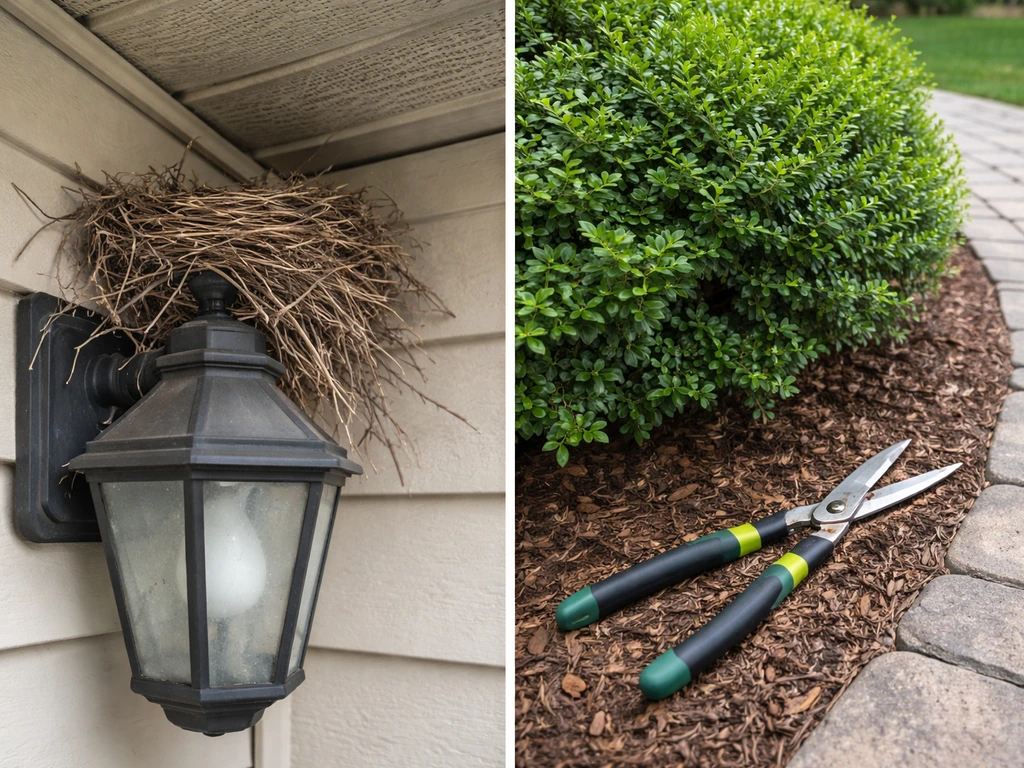
Finding a nest on your property
This is probably the most common situation people run into. You find a bird's nest in your eaves, on your porch light, or in a bush you were about to trim. Here's the practical rule: under the MBTA, you need a federal permit to destroy an active bird nest, meaning one that contains eggs or chicks. A nest is considered active from the time the first egg is laid until the young are no longer dependent on it. Moving or removing an active nest without a permit can result in heavy fines. If the nest is empty and the breeding season is over, the rules are generally more flexible, but you should still verify with your state agency.
Window collisions and injured birds
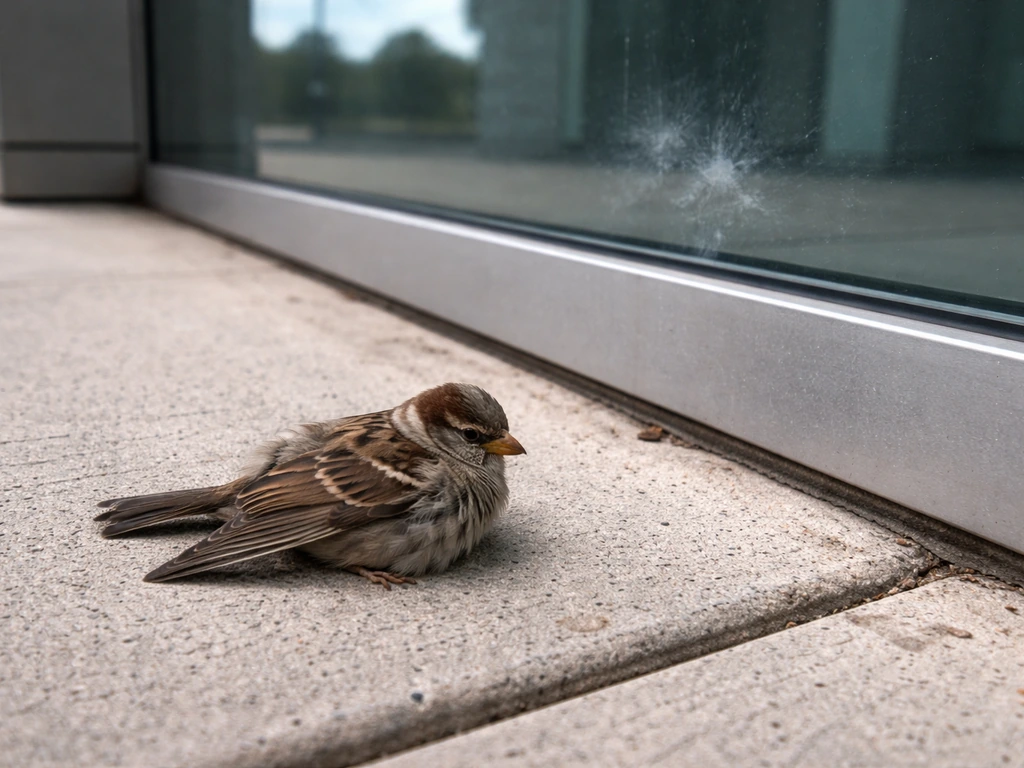
Window strikes are incredibly common, and they create a legal and practical gray area for well-meaning people. The USGS notes that birds can appear fine immediately after a window collision but die hours or days later from head trauma or internal injuries. USFWS guidance is clear on this: don't try to trap or handle the bird yourself before contacting a licensed wildlife rehabilitator.
In particular, USFWS rehabilitation-permit rules allow a person who finds a sick, injured, or orphaned migratory bird to take possession without a permit for immediate transport to a permitted rehabilitator or a licensed veterinarian [USFWS federal rehabilitation rules allow possession for immediate transport without a permit](https://www. law. cornell. edu/cfr/text/50/21.
76). Don't feed it either. Your job in that moment is to keep it safe from predators (a ventilated box in a quiet, dark space helps) and then get it to a professional. Attempting to nurse a protected bird without the appropriate permits can itself be a legal issue, even if your intentions are good.
Baby birds and nestlings
Found a baby bird on the ground? The instinct is to help, but the approach matters. California's CDFW, for example, explicitly states that attempting to approach or handle wildlife can cause serious harm and advises that if you can't return a nestling to its nest or observe signs of distress, you should contact a permitted rehabilitation facility or your regional wildlife office. The same logic applies across most U.S. states. If the bird is a fledgling (feathered but not fully flying), it's probably supposed to be there, and its parents are nearby.
Feeding and attracting birds
Backyard bird feeding is generally legal, but it has nuances. USDA's APHIS Wildlife Services advises against encouraging wildlife by leaving out food because it can create dependency and attract unwanted species. In some jurisdictions, feeding certain protected species or attracting birds to areas near airports or other sensitive locations can create liability. If you're dealing with a bird-related nuisance, wildlife damage, or conflict, USDA's Wildlife Services offices handle those situations and can give you location-specific guidance.
How to find the right laws and permits for your location today
Bird protection law is genuinely layered, and the right answer depends heavily on where you are and what species is involved. Here's the most efficient path to finding out what applies to you.
- Start with your state or provincial wildlife agency. Most have searchable permit databases and protected species lists. In Florida, for example, the FWC handles permits for activities involving migratory birds and their nests, and recommends contacting the USFWS Region 4 Migratory Bird Permit Office for federal overlap.
- For federal questions in the U.S., go to the USFWS Migratory Bird Program. Each USFWS region has a Migratory Bird Permitting Office you can contact directly. The USFWS FAQ pages answer common questions about whether a permit is needed for specific situations like nest removal.
- For EU/UK readers, search your national environment ministry's site or the European Commission's Birds Directive guidance for your member state's implementation.
- If you're unsure whether a species is protected, search the USFWS Birds of Conservation Concern list or use your state agency's database. Species-level details matter because MBTA coverage and ESA listings are species-specific.
- To report a suspected violation in the U.S., you can email [email protected] with details of where, when, and what you witnessed. For state-level violations, contact your state fish and game agency directly.
Figuring out the 'meaning' angle: when bird law is superstition or slang vs. real regulation
Part of what makes 'bird law Charlie' such a confusing search is that 'bird law' floats between two totally different registers: legal statute and cultural shorthand. In meme culture, 'bird law' is a punchline. But in spiritual and folkloric traditions, birds carry their own rules and meanings that people treat almost like laws. Some of the most persistent ones, like the idea that touching a baby bird means its mother will reject it (she won't, birds have a poor sense of smell), get repeated with the confidence of legal fact.
If your search came from a more symbolic or spiritual curiosity, the phrase 'bird law' might be someone's way of describing an informal cultural 'rule' about birds: don't harm a robin or you'll have bad luck, a crow tapping on your window means death is near, etc. These aren't laws, they're superstitions, and they deserve to be evaluated as folklore rather than fact. There's genuine cultural richness in those traditions, but they shouldn't be confused with actual wildlife regulations.
The Charlie Kelly version of 'bird law' is particularly good at blurring this line because the comedy works by treating fictional nonsense with total legal seriousness. The bird law quotes from the show lean hard into this, with Charlie speaking in the cadence of a legal expert while saying absolutely nothing coherent. The joke is that he sounds authoritative while being completely wrong, which is honestly a great metaphor for how a lot of bird folklore gets passed around.
There's also a slang dimension worth acknowledging. 'Bird' is used in a lot of cultural and linguistic contexts that have nothing to do with wildlife. The bird rights NBA meaning, for example, is a completely separate concept in basketball salary cap rules, showing how the word 'bird' migrates across domains and creates confusion when people search without full context. Similarly, the phrase bird knows what's good is used colloquially to suggest intuition or street wisdom, not ornithology. Context is everything.
If you came to this article because you were wondering about the symbolic meaning of a bird in your life, the bird Billie Marten meaning angle (exploring birds as emotional metaphors in art and music) is a good reminder that bird meanings extend well beyond legal and biological categories. The worth we assign birds, whether in law, culture, or spirit, says as much about us as it does about them. And on that note, if you're curious about what a particular bird might represent in your life or a dream, exploring bird worth as a concept across cultural traditions is a genuinely interesting rabbit hole.
Next steps checklist and who to contact
Here's a practical breakdown of who to call or contact depending on your situation. Use this as a quick triage guide.
| Your situation | Who to contact | What they handle |
|---|---|---|
| Injured or sick bird found | Licensed wildlife rehabilitator (search your state's rehabilitator directory) | Medical care for protected wildlife; avoids legal issues with possession |
| Active nest on your property you need to remove | USFWS regional Migratory Bird Permitting Office | Federal nest disturbance permits; guidance on timing and legality |
| Suspected MBTA or federal wildlife law violation | USFWS Office of Law Enforcement ([email protected]) | Federal wildlife crime investigation and reporting |
| State-level bird law question or violation | Your state fish and wildlife agency | State permits, protected species lists, local enforcement |
| Bird nuisance or property damage issue | USDA APHIS Wildlife Services local office | Conflict resolution, depredation permits, wildlife damage management |
| EU/UK bird protection question | Your national or regional environment agency | Implementation of Birds Directive or equivalent national law |
If you're genuinely unsure whether you need a lawyer, the honest answer is: for most everyday situations (a nest on your porch, a window strike, a baby bird), a wildlife rehabilitator or your state wildlife agency will get you further faster than an attorney. An attorney who specializes in environmental or wildlife law becomes relevant if you're facing a federal investigation, fines, or a commercial or construction project where habitat or nesting sites are affected. For the rest of us, the agencies and rehab networks exist exactly for these situations and are usually free to consult.
And if you came here purely because you saw a Charlie Kelly meme and wanted to understand the joke, now you know: it's a beloved bit of absurdist TV comedy, not a legal concept. But if the meme sent you down a rabbit hole wondering what bird laws actually exist, that curiosity is completely worth following. Real bird protection law is genuinely interesting, practically important, and nothing like what Charlie Kelly describes.
FAQ
I want to relocate a nest to a different part of my property. Is that ever allowed?
It depends on your activity and the species. Even if you are not “killing” anything, actions like clearing vegetation during nesting season, disturbing a nest repeatedly, or even moving parts of a nest can be treated as “take” under the ESA for listed species. For MBTA-covered migratory birds, removing or destroying an active nest generally requires the right federal authorization. If you cannot identify the species, treat it as potentially protected and contact your state wildlife agency before doing anything.
What if the nest is inactive, can I remove it after the birds leave?
Yes, but the key is whether the nest is active (eggs or chicks) and what you mean by “cleanup.” If a nest is active, you typically need authorization before removal. If it is inactive, some situations are still restricted, especially if you damage habitat or the timing affects dependent young. Also, local rules can be stricter than federal baselines. When in doubt, document timing (date, presence of eggs/chicks) and call the state wildlife agency first.
Is bird feeding always legal, or are there situations where it creates legal or practical problems?
Feeding is usually legal in the general sense, but the risk comes from creating conditions that attract problem species and from jurisdiction-specific rules. For example, feeding that concentrates birds near airports or other sensitive areas can trigger liability, and leaving food can attract species that cause property damage or health issues. If you are trying to resolve a nuisance, consider using deterrents or contacting a local wildlife damage control service for location-specific guidance.
I found a bird and brought it inside. Am I allowed to keep it until I find help?
Not necessarily. A protected bird can still be legal to possess only under specific circumstances, for example if it was obtained through permitted channels or you have proper authorization for rehabilitation. “I found it” is not a blanket defense. If you took the bird home, keep the bird contained (no attempt to nurse) and contact a licensed rehabilitator or your state wildlife agency immediately, because unpermitted care can create additional compliance issues.
The bird looked okay after hitting my window. Do I still need to do anything?
For window strikes, the “wait” matters. Birds may look alert right after impact but die later, so monitoring is important. Don’t try to handle it for long periods or attempt home rehabilitation. If you suspect the bird is injured, provide a quiet ventilated box in a dark warm-ish spot away from pets, then contact a licensed wildlife rehabilitator. If the bird is already dead, do not move it unless the agency instructs you to.
I’m doing landscaping or repairs near a nest site. What should I do right now?
Keep actions minimal until you verify status. For a suspected nest, avoid trimming, sealing, or cleaning the area. Take photos from a safe distance (nest location, whether eggs/chicks appear present) and note dates. If it is a construction or landscaping project, stop the work in that area until you get guidance, because timing and habitat disturbance are common trigger points for enforcement. Your state wildlife agency can tell you whether a permit or seasonal work window applies.
If “bird law” is also spiritual or symbolic, does that change what I should do in real life?
Folklore rules and “bird law” memes are not legal standards. The safest approach is to treat the situation as a wildlife-law question if there is any real-world action involved (touching nests, removing birds, feeding in a way that causes nuisance, trapping for relocation). You can keep the symbolic meaning for personal insight, but decisions about handling wildlife should follow actual wildlife agency guidance.
When does bird-related trouble go beyond contacting the agency, and I should consider a specialized attorney?
At minimum, you should document the event, the exact location, and what species you think it is, then contact the right professional. If a government agency, property manager, employer, or contractor is involved, also ask whether you need a stop-work instruction to avoid further disturbance. If you end up facing a complaint or citation, an attorney specializing in wildlife or environmental law becomes more relevant, but first-line triage is usually the state wildlife agency or a permitted rehabilitator.
How can I tell if my search for “bird law Charlie” is about the meme or about a real legal issue?
Yes, the “Charlie” part can cause the wrong advice path. If your search was triggered by a meme, you likely want context for what the joke means, not legal steps. If your search was triggered by a real incident (nest, injured bird, feeding nuisance, renovation near birds), follow the wildlife-law triage path. A quick self-check is whether you need to take an action today, if so, prioritize wildlife guidance over cultural interpretation.
Next Article
Bird Law It’s Always Sunny: Episode Quote Explained
Explains the Bird Law It’s Always Sunny quote, disambiguates real bird law, and helps verify the exact episode scene.