Bird meaning in the USA covers a wide and genuinely useful territory: the bald eagle on federal seals, a cardinal at your feeder after a loved one dies, an owl call at midnight, a crow that keeps showing up at your window, and even the gesture you throw at a rude driver on the freeway. None of those meanings come from the same tradition, and treating them as if they do is where most bird-symbolism content goes wrong. This guide sorts them out by context, from federally documented national emblems and regionally specific Indigenous traditions to vernacular folk belief, dream interpretation, behavioral science, and internet slang. Use the quick reference table first if you have a specific species in mind, then drop into whichever section matches your actual question.
Bird Meaning USA: Guide to Symbols, Omens, Culture & Science

What 'bird meaning USA' actually covers
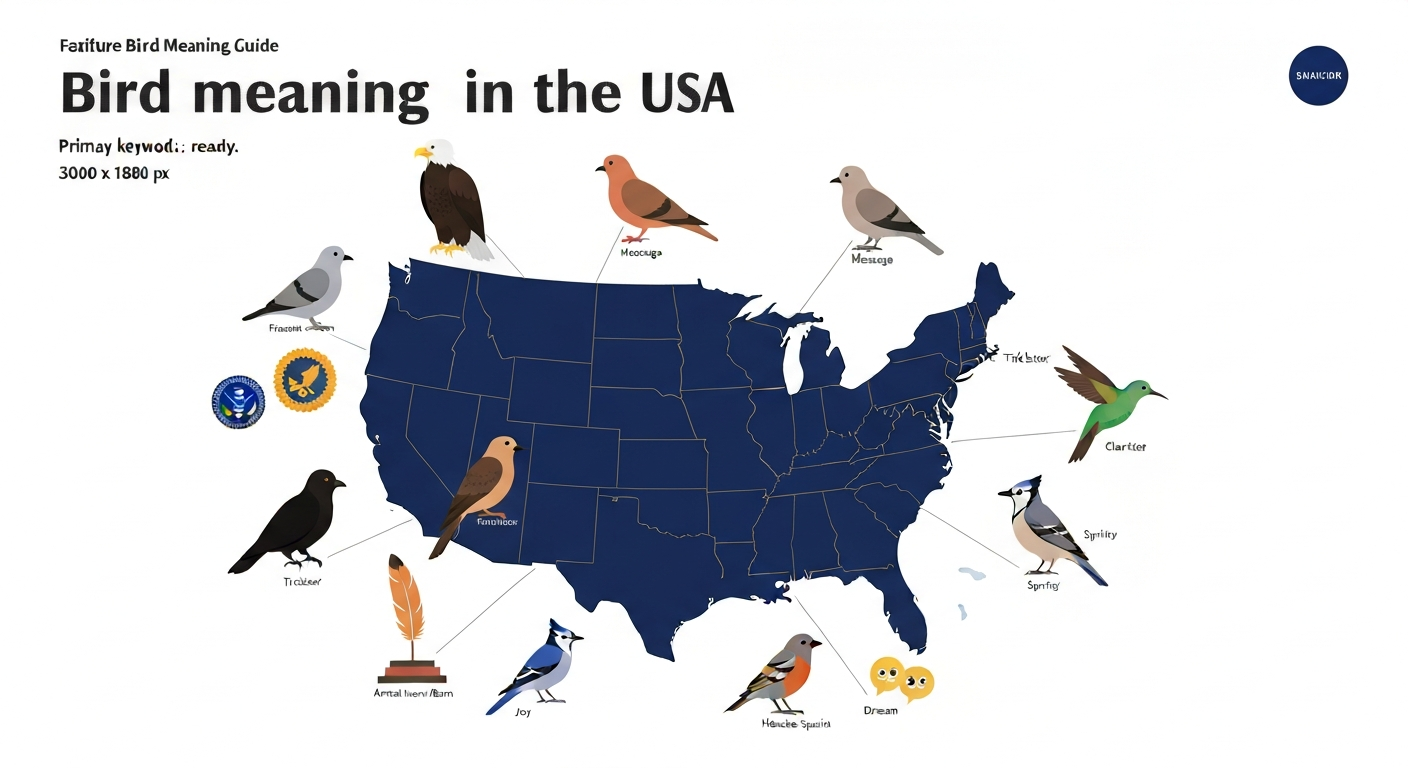
The phrase bundles several genuinely separate questions that are worth untangling before you go further. First, there is official and civic symbolism: the bald eagle was formally adopted as the national emblem in 1782 and has appeared on the Great Seal and federal currency ever since. That meaning is documented and fixed. Second, there is species-level folklore: the cardinal as a message from the dead, the whip-poor-will as a death omen in Appalachian communities, the robin as a herald of spring. These are vernacular beliefs recorded in American folklore archives, not ornithological facts. Third, there are Indigenous and tribal meanings, which vary significantly by nation, region, and ceremony and deserve their own careful handling. Fourth, there are dream and spiritual interpretations, which draw on frameworks ranging from Jungian psychology to personal intuition. Fifth, there are behavioral cues: what it actually means, in ecological terms, when a bird flies into your window or starts nesting on your porch. And finally, there is slang: 'giving someone the bird,' bird emoji use on social media, and the specific phrase 'bird meaning in chat.' Each of these deserves a different kind of verification, and this guide walks through all of them.
Key terms worth knowing before you dive in
A few definitions will sharpen everything that follows. Symbolism refers to a culturally agreed-upon association between a bird and an idea, such as the dove representing peace across a wide range of Western traditions. An omen is a specific event, usually a behavioral sighting, interpreted as a sign of things to come. The whip-poor-will calling outside a New England home, for example, was documented in American Journal of Folklore sources from the 1890s as a death omen in those regional communities. A totem is a term from Indigenous spiritual traditions in which an animal serves as a spiritual guide, protector, or ancestral emblem for a person or clan. It is frequently misused in non-Indigenous popular culture, and that matters: the word carries specific ceremonial weight in the traditions where it originates. A dream symbol is an image appearing during sleep that an interpreter assigns meaning to, either through personal association, Jungian amplification, or cultural reference. The psychologist Calvin Hall developed a content-analysis system for dreams in the 1960s that remains a benchmark for academic study, and researchers in that tradition consistently emphasize that no single image has a fixed universal meaning. A behavioral cue, finally, is an observable action by a bird that has a concrete ecological explanation, whether or not folk tradition has layered additional meaning onto it.
Quick reference: common U.S. bird meanings at a glance
| Species | Civic / Official Meaning | Common Folk / Spiritual Association | Behavioral Note |
|---|---|---|---|
| Bald Eagle | U.S. national emblem since 1782; on Great Seal and federal seals | Freedom, power, divine vision; sacred in many Indigenous traditions | Still legally protected under the Bald and Golden Eagle Protection Act even after 2007 ESA delisting |
| Northern Cardinal | State bird of 7 states | Widely cited as a sign from deceased loved ones in contemporary U.S. folk belief | Year-round resident across eastern U.S.; sightings not seasonally anomalous |
| Mourning Dove | None federal | Peace, grief, spiritual transition; common in funeral and bereavement symbolism | Common resident; cooing is a normal territorial and mate-attraction behavior |
| American Crow / Raven | None federal | Trickster, intelligence, transformation; Raven is a major creator figure in Pacific Northwest Indigenous traditions (Tlingit, Haida) | Highly intelligent; recognized for problem-solving and memory in behavioral research |
| Great Horned / Barn Owl | None federal | Death, wisdom, hidden knowledge; death-omen in multiple regional U.S. folk traditions | Nocturnal; calling at night is normal territorial behavior, not a sign |
| Red-tailed Hawk / Falcon | None federal | Messenger, clarity, focus; popular in contemporary spiritual practice | Common year-round hawk; frequently seen hunting from utility poles across the country |
| Ruby-throated Hummingbird | None federal | Joy, resilience, speed; common in Latin American and Indigenous symbolism adopted into U.S. popular culture | Wing beats exceed 50 per second; migrates to Central America and Mexico in winter |
| Blue Jay | None federal | Communication, assertiveness, sometimes trickery | Aggressive nest defender; mimics hawk calls to warn or deceive other birds |
| American Robin | State bird of 3 states | Arrival of spring in U.S. popular culture | Cornell Lab range data shows robins are year-round residents in many states; 'first robin of spring' varies significantly by location |
| House Sparrow | None federal | Community, persistence, humility in folk tradition; often overlooked symbolically | Introduced species from Europe; one of the most abundant birds in North America |
| Whip-poor-will | None federal | Death omen in Appalachian and New England folk belief; documented in late 19th-century American folklore sources | Nocturnal insectivore; calls are loud and repetitive, easily noticed at night |
Species-specific symbolism: the birds people ask about most
The bald eagle: America's most official bird
The bald eagle is the one case in U.S. bird symbolism where meaning is legally documented rather than culturally inferred. The Continental Congress formally adopted it as the national emblem on June 20, 1782, and it has appeared on the Great Seal, the presidential seal, and federal currency ever since. The association with freedom, power, and national identity follows directly from that civic role. What is less often acknowledged is that the bald eagle carries entirely separate and much older spiritual significance in many Indigenous nations, where eagle feathers are used in ceremony and their possession and use by tribal members are specifically protected under federal law through the U.S. Fish and Wildlife Service's National Eagle Repository. The two sets of meanings, civic and Indigenous, exist in parallel and should not be conflated.
The cardinal: a visitor from the other side?
Few birds generate as much personal correspondence as the Northern Cardinal. The belief that a cardinal appearing after a death is a message from the deceased is widespread in contemporary U.S. folk belief, especially across the eastern states where the species is a year-round resident. Audubon has documented the Northern Cardinal's prominence in state symbols, where it serves as the official bird for seven states, and in popular folklore, while noting that the 'cardinal as messenger' idea is a vernacular spiritual belief rather than an academically established mythic tradition with documented historical roots. That does not make the experience less meaningful for those who have it, but it is worth knowing that the belief is modern and informal in origin. It also matters to note that cardinals are visible year-round in much of their range: a cardinal at your feeder in January is not an unusual visit, it is just a cardinal doing what cardinals do.
The dove: peace, grief, and transition
The dove's association with peace is so embedded in Western culture that it crosses religious, secular, and diplomatic contexts without much friction. In the U.S., doves appear in funeral and bereavement traditions, in religious ceremonies, and as a general symbol of nonviolence. The Mourning Dove, which is one of the most common birds in North America, carries additional weight in its name alone: the mournful coo is actually a territorial and mate-attraction call, not an expression of grief, but the auditory association with loss is understandably strong. In practice, dove symbolism in the U.S. draws from a blend of Biblical tradition (Noah's ark, the Holy Spirit), classical Greek and Roman iconography, and mid-20th-century peace movement imagery.
Crow and raven: trickster, creator, and culture hero
Crows and ravens pull double duty in U.S. bird symbolism. In European-derived American folk tradition, both birds carry associations with death, darkness, and bad omens, partly through their scavenging behavior and their black plumage, and partly through the influence of writers like Edgar Allan Poe. In Pacific Northwest Indigenous traditions, the picture is far more complex and far older. Raven figures prominently as a creator and trickster figure in Tlingit and Haida traditions, documented in collections at the National Museum of the American Indian. In those traditions, Raven is not simply a death symbol: he is a transformer who brought light to the world. These two interpretive frameworks are genuinely distinct and should not be blended without acknowledging where each comes from.
The owl: wisdom or warning?
The owl is one of the most context-dependent birds in U.S. symbolism. In European-American popular culture, owls represent wisdom, a tradition rooted in classical Greek mythology through Athena's companion. In a number of Indigenous traditions and in Appalachian folk belief, an owl calling near a house is a bad omen, often specifically a death omen. The behavioral fact: owls are highly vocal, especially Great Horned Owls during late winter breeding season and Barn Owls year-round. Hearing an owl at night in a rural area is not anomalous. Whether you interpret that sound as wisdom or warning depends entirely on the cultural framework you are working within.
Hawks and falcons, hummingbirds, blue jays, and sparrows
Hawks and falcons, especially the Red-tailed Hawk, are the most frequently cited 'messenger' birds in contemporary U.S. spiritual practice, often connected to clarity, focus, and spiritual direction. The ruby-throated hummingbird, with its extraordinary wing-beat rate of more than 50 beats per second and its long migration from the eastern U.S. to Central America, has accumulated associations with joy, resilience, and the ability to find sweetness in difficult conditions across multiple cultural traditions. Blue jays, assertive and loud, tend to carry meanings around communication and self-expression. The House Sparrow, introduced from Europe and now one of the most abundant birds in North America, rarely commands much symbolic attention in U.S. contexts despite being ubiquitous, though it carries associations with community and persistence in some folk traditions.
Spiritual and dream interpretations: what the frameworks actually say
Dream interpretation involving birds operates across several frameworks that are worth distinguishing. Jungian analytical psychology treats birds as archetypal images, often linked to freedom, transcendence, or the movement between conscious and unconscious states. In Jungian practice, the recommended approach is 'amplification': exploring what a specific bird means personally and culturally to the dreamer, rather than pulling a fixed definition from a dictionary. That is a meaningful methodological point. Academic dream research, following the content-analysis norms developed by Calvin Hall and Robert Van de Castle in the 1960s, takes a more empirical approach, counting how often animals appear in dreams and comparing frequencies across populations, without assigning fixed symbolic meanings. Both frameworks agree on one thing: context matters more than any single interpretation.
In practical terms, the most useful questions to ask about a bird in a dream are: what was the bird doing (flying freely, injured, trapped, singing, silent)? How did you feel during the dream? What is your personal history with that species? A dream about a caged cardinal means something different from a dream about a cardinal tapping at a window. Species-specific associations (the cultural meanings covered in this article) can enrich an interpretation, but they should be starting points for reflection, not conclusions.
Spiritual traditions outside academic psychology, including contemporary practices influenced by Indigenous concepts, New Age frameworks, and Christian symbolism, each bring their own bird vocabularies. Dove as Holy Spirit, eagle as divine vision, and hawk as messenger all appear in these contexts with varying degrees of cultural specificity. The most important thing when using any of these frameworks is knowing where they come from so you can apply them, or set them aside, with appropriate context.
Behavioral cues and practical signs: what birds near your home actually mean
Birds hitting windows
If a bird flies into your window, the most accurate explanation is a well-documented ecological problem. Conservation organizations and Cornell Lab of Ornithology estimate that somewhere between hundreds of millions and over one billion birds die from window collisions in the U. See Why Birds Hit Windows, and How You Can Help Prevent It | All About Birds (Cornell Lab) for detailed guidance on causes and mitigation blank" rel="noopener noreferrer">Why Birds Hit Windows—and How You Can Help Prevent It | All About Birds (Cornell Lab). S. every year, at houses and low-rise buildings as much as at tall structures. The bird sees a reflection of sky or trees and does not recognize the glass as a barrier. The American Bird Conservancy maintains a product and retrofit database for preventing these collisions. blank" rel="noopener noreferrer">Preventing Glass Collisions | American Bird Conservancy offers best-practice guidance and product/retrofit databases and notes that many collisions occur at small buildings and residential windows as well as larger structures. The folk interpretation of a bird hitting a window as a death omen is a long-standing belief in multiple regional U.S. traditions, but the ornithological cause is reflective glass, not fate. You can hold the folk meaning and address the physical cause at the same time.
Flocking, nesting, and sudden arrivals
Large flocks arriving or departing, known as murmurations in starlings and as general staging behavior in migratory species, are seasonal and ecological events driven by food availability, weather patterns, and migration timing. Cornell Lab's eBird platform maps these movements in near real-time using citizen-science data and is the standard tool for verifying whether a large flock sighting is unusual for your location and season or perfectly routine. A sudden influx of birds at your feeder in October is almost certainly pre-migration staging. A bird nesting on your porch is looking for a cavity or platform, not delivering a message, though the association of swallows and martins with good luck in U.S. folk tradition does go back centuries.
Finding a dead bird
Finding a dead bird carries significant folk weight in U.S. and global tradition, with interpretations ranging from endings and transformation to warnings. The ornithological context: given that window collisions, cat predation, and disease account for enormous bird mortality every year in the U.S., finding a dead bird is statistically common, especially during migration season. That said, a dead bird on your doorstep, a window strike, or an unusual species found far out of its range can all prompt legitimate reflection. The ecological explanation and the symbolic experience are not mutually exclusive.
The 'bird wave to earth' motif: what it means and where it comes from
The phrase 'bird wave to earth' circulates primarily in two contexts in U.S. English. The first is the song 'Bird' by the South Korean indie folk group Wave to Earth, which has accumulated a significant English-speaking listener base since gaining viral traction. In that context, the phrase combines the band's name with the track title and carries the emotional and lyrical weight the song itself communicates, themes of longing, lightness, and being untethered. The second is a more general contemplative or poetic use: the image of a bird descending toward earth, or 'waving' as it lands or departs, as a metaphor for transition, arrival, or departure. In folk and spiritual contexts, a bird descending is sometimes interpreted as a message arriving or a spirit drawing near.
In dream interpretation, the direction of a bird's movement matters: a bird flying upward is frequently associated with aspiration or spiritual ascent, while a bird descending or landing is interpreted as grounding, arrival, or the completion of a journey. The 'wave to earth' image fits naturally into that interpretive vocabulary. For readers who arrived here specifically through interest in the Wave to Earth song, the deeper context of bird symbolism explored throughout this guide adds a layer of resonance to the track's imagery, though the song's meaning stands fully on its own terms. For a focused explanation of the phrase and its cultural uses, see the entry on bird wave to earth meaning (ID 9cb56d24-c2f5-4b49-9d77-9b38b29feceb).
Native American and tribal perspectives: how to engage respectfully
Bird symbolism in Indigenous U.S. traditions is extensive, regionally specific, and often ceremonially sensitive. The eagle, the raven, the thunderbird, and dozens of other species carry meanings that vary significantly between nations: a symbol sacred to one tribe may have no equivalent importance in a neighboring nation's tradition, or may carry a completely different significance. The guidelines established in the Protocols for Native American Archival Materials, developed by the First Archivists' Circle and adopted by multiple U.S. cultural institutions, recommend community consultation and proper attribution when presenting Indigenous cultural material. That principle applies directly to bird symbolism: if you read that 'Native Americans believe the owl represents death,' you are almost certainly reading an oversimplification. For more on how specific nations interpret birds, see our guide to tribal bird meanings. Specific nations hold specific beliefs, and those should be attributed to their actual source, not generalized across hundreds of distinct cultures.
Federal law reflects some of this complexity: the U.S. Fish and Wildlife Service's National Eagle Repository processes permits for eagle feathers for religious and ceremonial use by members of federally recognized tribes under the Bald and Golden Eagle Protection Act. The legal recognition of eagle feathers as items of genuine religious significance is itself a form of official acknowledgment that Indigenous bird symbolism operates at a different register than folk belief or civic iconography.
Chat, slang, and emoji: when 'bird' means something else entirely
In American English slang, 'giving someone the bird' means extending the middle finger as an obscene gesture of contempt or defiance. The expression has been in documented use in U.S. English since at least the mid-20th century, drawing on an older British tradition where 'the bird' referred to a hissing audience response (from 'boo, goose, hiss'). In everyday conversation, 'early bird' refers to someone who rises or acts before others, 'a little bird told me' signals a discreet source of information, and 'birds of a feather' describes people with shared characteristics or interests.
In digital chat and social media, bird meanings shift again. The bird emoji (the generic blue bird or the dove) carries different weight depending on platform and context. Twitter's original branding made the blue bird one of the most recognized symbols in social media history before the platform rebranded. On platforms like Snapchat, Discord, and TikTok, bird imagery appears in emojis and stickers with meanings that range from peace (dove) to sarcasm or absurdist humor (various parrot or bird memes). 'Bird' in some U.S. slang communities also refers to a kilogram of cocaine, a usage documented in hip-hop lyrics and urban dictionaries, which is an entirely separate meaning from any ornithological or spiritual context. Understanding which register someone is using when they ask about 'bird meaning in chat' is essential before you can answer the question.
| Expression or Usage | Context | Meaning |
|---|---|---|
| Give someone the bird | American English slang | The middle-finger gesture; an insult or expression of contempt |
| A little bird told me | Idiom | Information received from an unnamed or discreet source |
| Birds of a feather | Idiom | People who share similar interests, values, or habits |
| Early bird | Idiom | Someone who wakes early or acts ahead of others |
| Bird (drug slang) | U.S. street/hip-hop slang | A kilogram of a controlled substance, usually cocaine |
| Bird emoji (dove) | Social media / messaging | Peace, farewell, spiritual farewell, or religious reference |
| Bird emoji (generic blue bird) | Social media | Associated with Twitter/X platform; now used more broadly for social commentary |
| Jail bird | Idiom | A person who has been imprisoned |
How U.S. bird meanings compare to Japanese ones
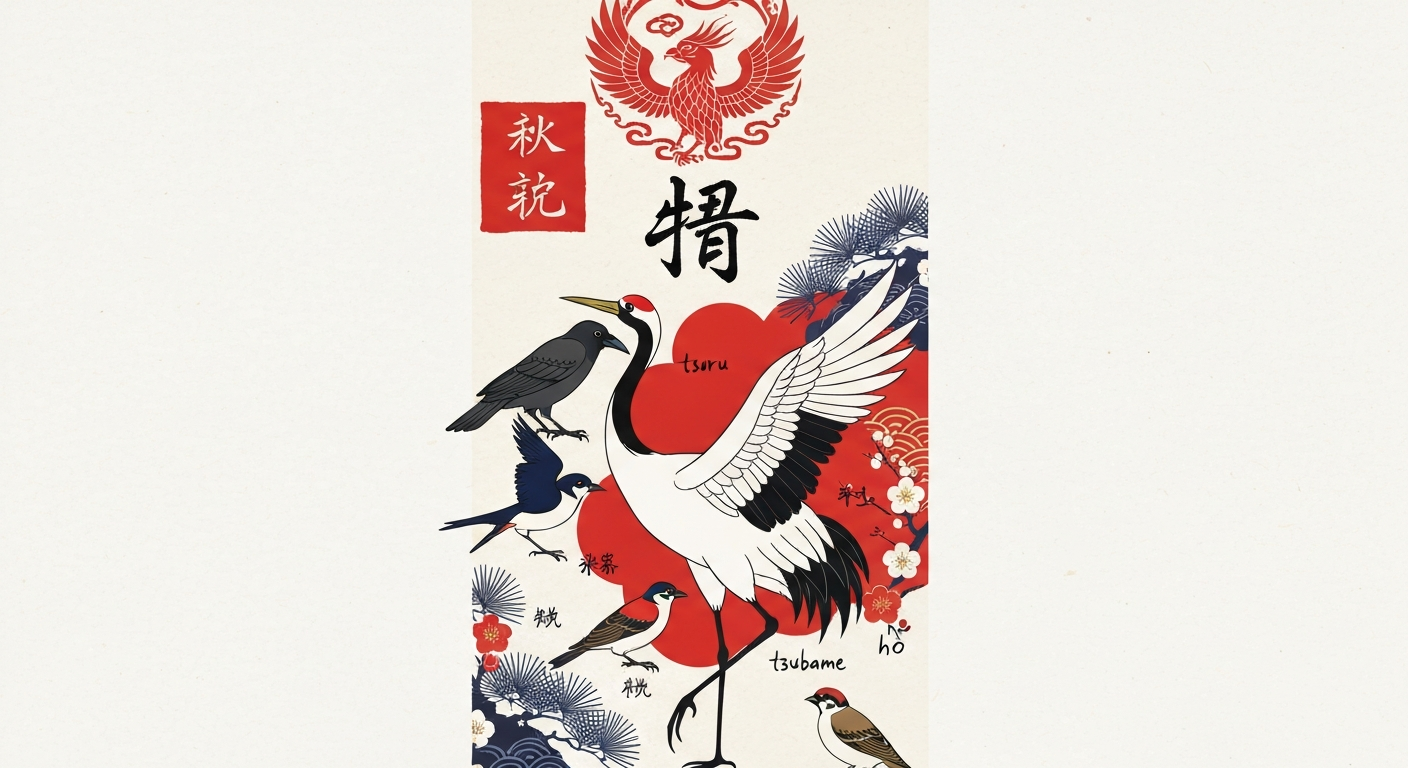
One of the more illuminating comparisons for U.S. readers is with Japanese bird symbolism, where the cultural associations can confirm, contradict, or simply run parallel to American meanings. The crane (tsuru) in Japanese tradition is a symbol of longevity, good fortune, and marital fidelity, with little equivalent prominence in U.S. mainstream bird symbolism. The owl, which in the U.S. splits between 'wisdom' in European-derived culture and 'death omen' in several folk traditions, carries a similar dual identity in Japan: the word for owl (fukuro) is sometimes parsed as containing the characters for 'luck,' giving rise to positive owl imagery, while in older Japanese folk belief owls were also associated with death and misfortune. The raven and crow hold negative associations in Japanese folk tradition broadly similar to European ones, though with their own specific mythological variants. These international comparisons are a useful reminder that no bird species comes with a fixed universal meaning: geography, language, and cultural history all shape what a bird means in a given place. For more on this topic, see our guide to bird meaning in Japanese.
How to verify a bird meaning you've read somewhere
The practical guidance here is straightforward. For species identification and behavioral claims, Cornell Lab of Ornithology's All About Birds is the most widely used public reference in the U.S., and eBird is the standard for checking whether a sighting is seasonally and geographically normal. For civic and official symbolism, the National Archives holds the documented record on the Great Seal and national emblems. For Indigenous meanings, start with museum collections like the National Museum of the American Indian and look for nation-specific attribution rather than pan-Indian generalizations. For folk and regional beliefs, the American Folklife Center at the Library of Congress holds archival material documenting American folk traditions. For dream interpretation, the work of researchers in the Hall/Van de Castle tradition and Jungian practitioners both offer frameworks, with the important caveat that both fields emphasize context over fixed meanings. Any bird-symbolism claim that presents itself as universal, ancient, and unambiguous is almost certainly flattening a much more complex picture.
- Species ID and behavior: Cornell Lab's All About Birds (allaboutbirds.org)
- Seasonal occurrence and migration: eBird (ebird.org), especially the Status and Trends tools
- Civic and national emblems: National Archives (archives.gov)
- Indigenous cultural meanings: National Museum of the American Indian; nation-specific tribal cultural departments
- American folk belief: American Folklife Center at the Library of Congress
- Dream interpretation frameworks: Hall/Van de Castle content-analysis norms; Jungian amplification practice
- Bird-glass collision prevention: American Bird Conservancy (abcbirds.org)
- Eagle legal status and tribal permits: U.S. Fish and Wildlife Service National Eagle Repository
FAQ
What does 'bird meaning USA' generally cover for U.S. readers?
'Bird meaning USA' covers species-specific symbolism (e.g., bald eagle as national emblem), popular spiritual and dream interpretations (cardinal as a 'visitor' in folk spirituality; birds as archetypal dream figures), behavioral cues and practical signs (birds hitting windows, flocking patterns), slang/chat uses (idioms like 'give the bird', emoji/chat shorthand), Native American and tribal perspectives (regionally specific corvid, raven, eagle stories), and international comparisons (notably Japanese bird symbolism). The topic balances cultural meanings with ornithological facts and evidence-based verification.
How should species-specific meanings be treated?
Treat species meanings as context-dependent: combine cultural sources (folklore, religious use, regional stories) with natural-history facts (range, seasonality, behavior). For example, bald eagle = U.S. national symbol (historical/legal facts) while cardinal-as-dead-relative is a contemporary folk belief. Verify presence or behavior claims with ornithological references (Cornell All About Birds, eBird) before asserting seasonal or behavioral meanings.
Which authoritative sources can I use to verify bird behavior, presence, and risk facts?
Use tier-1 ornithological and conservation sources: Cornell Lab of Ornithology's All About Birds for species life history and behavior; eBird for occurrence and migration data; American Bird Conservancy and All About Birds/Cornell for collision-risk guidance and mortality estimates; U.S. Fish & Wildlife Service for legal status of eagles and tribal-use programs.
What are reliable ways to interpret birds in dreams or spiritual experiences?
Use context-based interpretive methods rather than fixed dictionaries. Academic dream research (Hall & Van de Castle methods) and Jungian amplification emphasize personal, cultural, and situational context. Ask: What emotion or life-area accompanies the dream? What is the species' real-life behavior? Treat symbolic interpretations as one possible meaning, not empirical fact.
How do behavior, location, season and species change a bird's 'meaning'?
Interpretation rules: 1) Species matters—raptors evoke power/protection; corvids evoke intelligence/trickster motifs; doves evoke peace. 2) Behavior alters meaning—feeding, nesting, aggressive displays, or collision convey different messages. 3) Location matters—urban window collisions suggest hazard/anthropogenic risk; a bird at a gravesite signals local folkloric readings. 4) Seasonality and migration shift meanings—e.g., robins commonly signal spring only where and when they reliably return; verify with eBird/All About Birds.
Can you summarize common U.S. bird meanings in a quick reference way?
Quick-reference examples (use as starting points, not fixed rules): bald eagle = national emblem, power, legal protection; cardinal = popular 'visitor from the dead' folklore; dove = peace, religious sacrament; raven/crow = regionally variable (trickster, messenger, or death‑omen in some traditions); American robin = spring/return; hummingbird = joy, agility; behaviors: birds hitting windows = collision hazard (conservation concern), large flocking = migration or communal roosting. Always cross-check species occurrence and behavior with Cornell/eBird before stating seasonal meanings.
Bird Japanese Meaning: Symbols, Birds, Dreams & Culture
Explore bird Japanese meaning: words, symbols, key species, superstitions, dreams, and how to interpret sightings.