In Japanese culture, birds carry rich layers of meaning depending on which bird you're talking about, what context you're in, and whether you're looking at symbolism, folklore, language, or dreams. In the USA, bird meaning often reflects regional superstition and personal symbolism, so it's useful to compare traditions rather than assume the same message everywhere birds carry rich layers of meaning. The crane (鶴/tsuru) stands for longevity and rare opportunity. The owl (梟/fukurō) is a lucky symbol of wisdom. The crow (烏/karasu) pulls in two directions at once: death omen and divine messenger. The nightingale (鶯/uguisu) signals spring and beauty. And in everyday Japanese, bird words show up in idioms like 鳥肌が立つ that have nothing to do with literal birds at all. Here's exactly how to navigate all of it.
Bird Meaning Japanese Guide: Symbolism, Dreams, Omens

The Japanese word for bird and how bird names work
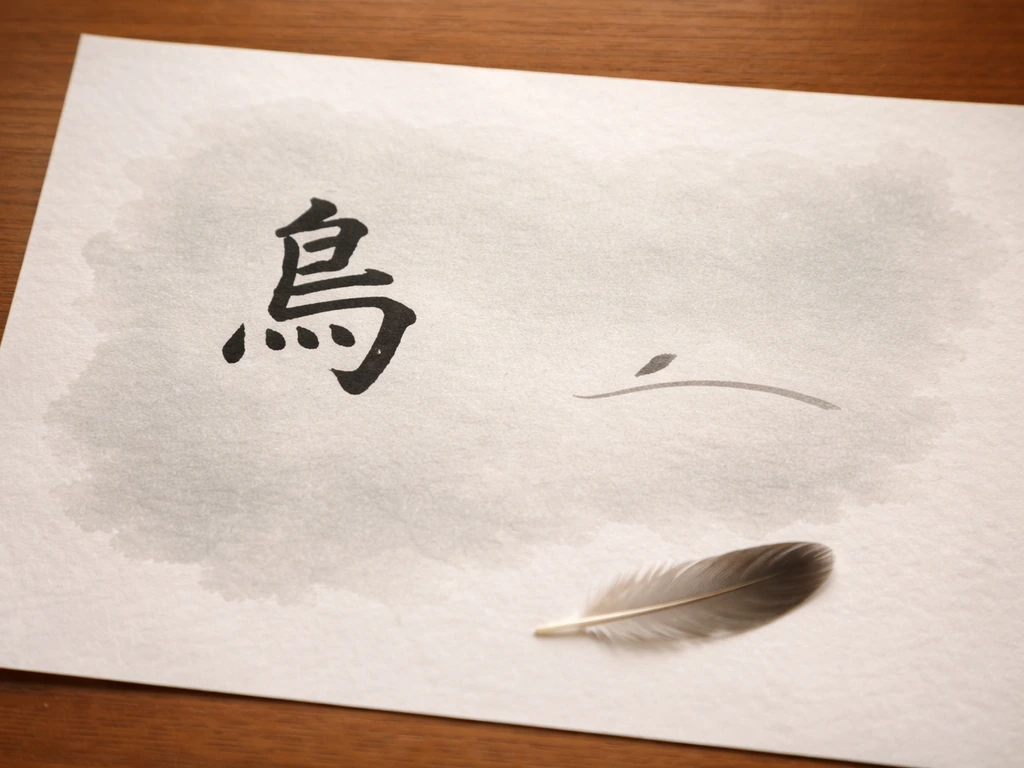
The basic word for bird in Japanese is 鳥 (とり, tori). It's pronounced with two syllables: "to" as in "tone" and "ri" as in "ree." You'll hear it used as a standalone noun (あの鳥は何ですか, "what bird is that?") and as a building block in compound words and place names. When counting birds, Japanese uses the counter 羽 (わ/ば/は, wa/ba/ha) rather than just a number, so three birds on a wire is 三羽 (さんば, sanba).
Each bird has its own dedicated kanji and reading. The core ones to know for meaning and symbolism are: 鶴 (つる, tsuru) for crane, 烏/鴉 (からす, karasu) for crow, 鶯 (うぐいす, uguisu) for Japanese nightingale, 鳩 (はと, hato) for pigeon or dove, 梟 (ふくろう, fukurō) for owl, 燕 (つばめ, tsubame) for swallow, and 鳳凰 (ほうおう, hōō) for the phoenix. Knowing these kanji matters because a lot of Japanese symbolism is tied directly to the written characters themselves, not just the sounds.
What specific Japanese birds actually symbolize
Japanese bird symbolism is specific. There's no single "bird meaning" that covers everything. Each species carries its own associations built up over centuries of art, poetry, religion, and everyday observation. If you’re trying to understand how the phrase “bird meaning wave to earth” is used, it helps to look at it through the same symbolic lens used for specific birds and their associations. Here's what the most important ones mean:
| Bird (Japanese) | Kanji | Core Symbolic Meaning |
|---|---|---|
| Crane (tsuru) | 鶴 | Longevity, good health, rare opportunity, marital happiness |
| Crow (karasu) | 烏/鴉 | Death omen AND divine messenger (both exist simultaneously) |
| Owl (fukurō) | 梟 | Wisdom, fortune, protection from hardship |
| Japanese nightingale (uguisu) | 鶯 | Spring, beauty, refined voice, renewal |
| Pigeon/Dove (hato) | 鳩 | Peace, joy, good fortune |
| Swallow (tsubame) | 燕 | Spring arrival, good luck, household blessing |
| Phoenix (hōō) | 鳳凰 | Imperial virtue, paradise, rare excellence |
| Sparrow (suzume) | 雀 | Everyday life, community, common good fortune |
The crane: the most recognizable Japanese bird symbol
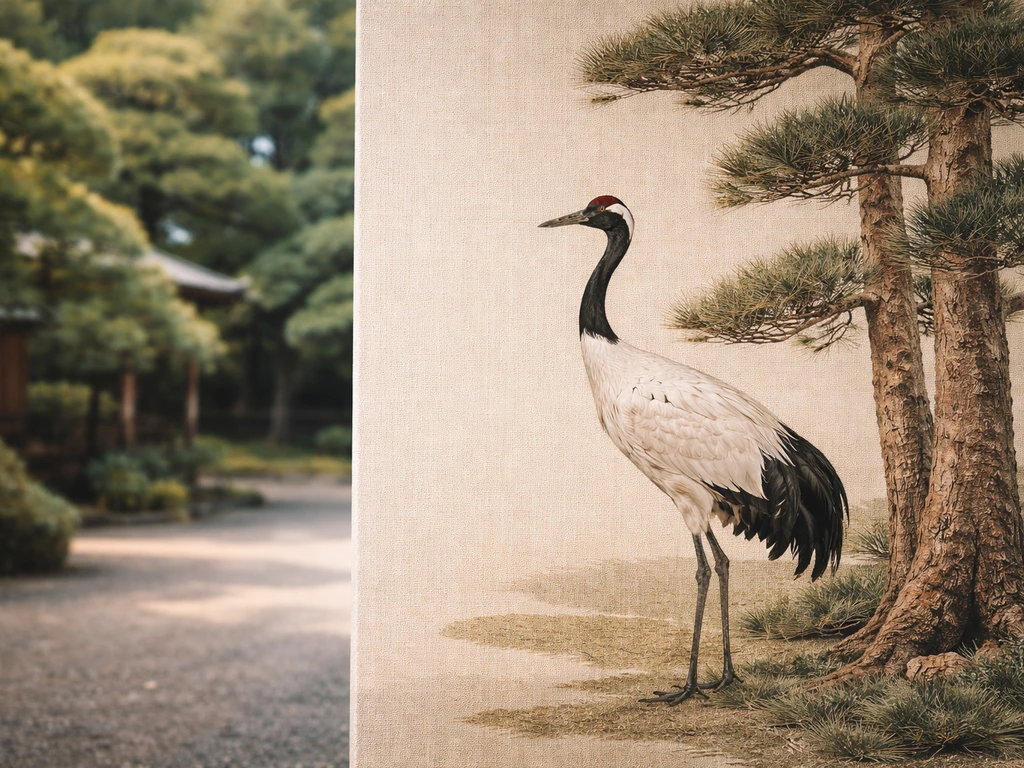
The crane is probably the most iconic of all Japanese bird symbols. It represents longevity and health, which is why you see it paired with pine trees in traditional art and textile motifs, and why it appears in place names like Tsuruoka (鶴岡), Tsurumi (鶴見), and Maizuru (舞鶴, literally "dancing crane"). The thousand origami cranes (千羽鶴/senbazuru) tradition links to the belief that folding 1,000 paper cranes grants a wish. In dreams and sightings, a flying or landing crane is read as a sign of a rare, once-in-a-lifetime opportunity coming your way.
The owl: lucky in Japan, not scary
The owl gets a very different reading in Japan than in many Western contexts. Rather than being associated with death or bad omens, the owl (ふくろう/fukurō) is considered a symbol of wisdom and good fortune. This is partly driven by wordplay: fukurō contains the sounds of 福 (fuku, good luck) and can be broken down as 不苦労 (fu-kurō), literally "without hardship." That's a strong positive association baked directly into the name. Owl charms, figurines, and motifs are genuinely popular as good-luck gifts in Japan.
The crow: complicated, powerful, and worth understanding
Crows in Japan carry two distinct sets of associations, and they coexist without contradiction. On one hand, there's the folk saying カラスが鳴くと人が死ぬ ("when a crow caws, a person dies"), which frames the crow as a death omen. On the other hand, the crow is revered in Shinto as a divine messenger, particularly the three-legged Yatagarasu (八咫烏), which guided Emperor Jimmu and is still the symbol of the Japan Football Association. Government-linked educational material about crows explicitly frames this duality: the crow has both bad-omen imagery and god's-messenger imagery. Neither cancels out the other.
Folk interpretations: what people think it means when they see a bird
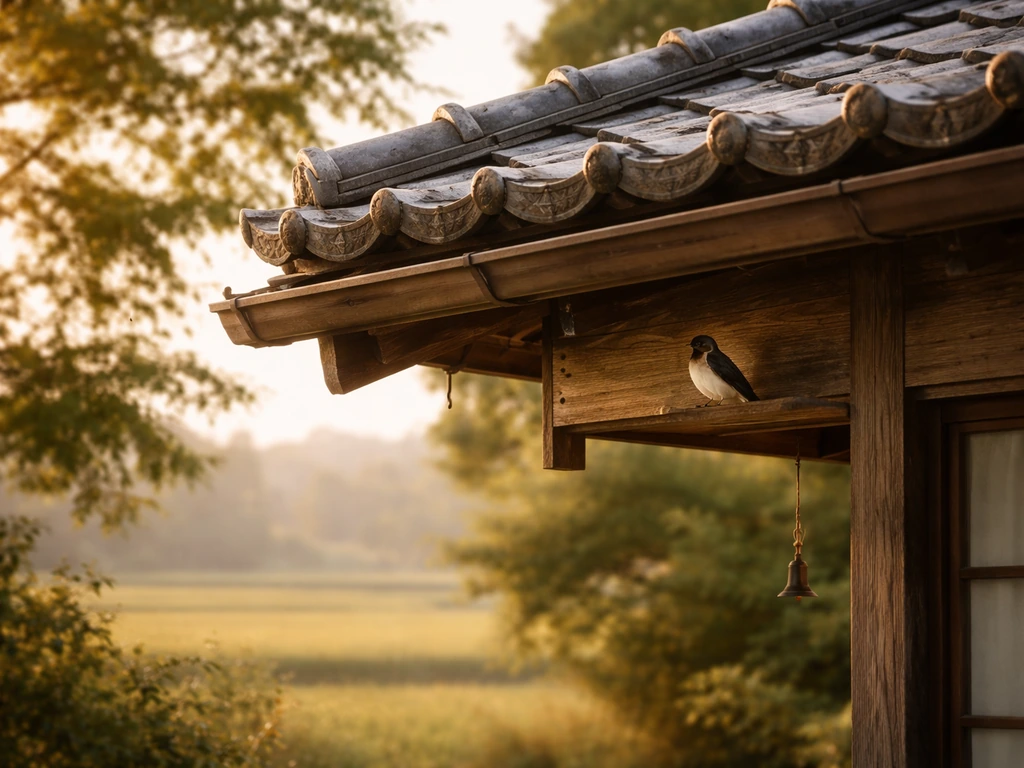
In Japanese folk tradition, bird sightings often get interpreted as messages or signals, especially in rural areas where traditional beliefs are more active. A swallow nesting under your eaves is considered very lucky, a sign that the household will prosper. Seeing a crane is treated as auspicious, particularly if you're going through a major life event like a wedding or illness. A crow calling persistently near your home is still interpreted by some people as a bad sign, though urban residents tend to treat it as just noise.
The pigeon or dove (鳩/hato) is a common sight at Shinto shrines, especially Hachiman shrines, where it's considered the messenger of the deity. Seeing doves at a shrine is generally read as a good sign. The nightingale's first call of the season (初音/hatsune) is considered a meaningful marker of spring's arrival, and hearing it is treated as a small but genuine piece of good luck.
It's worth being clear that these folk interpretations vary significantly by region, family background, and how traditionally-minded someone is. Younger Japanese people in cities often know these associations culturally without personally believing in them. The same pattern applies to bird meaning in other cultures, whether you're looking at American bird symbolism or European traditions.
Bird dreams in Japanese culture
Japanese dream interpretation (夢占い/yume uranai) is a popular genre of fortune-telling with a distinct system for reading bird dreams. The general framework treats bird dreams as symbols of freedom, aspiration, and rising fortune (運気上昇). A bird flying freely in a dream is typically read positively: longing for freedom or a sign that your situation is about to improve.
Specific birds get specific readings. Dreaming of a crane flying or alighting is interpreted as a rare big opportunity coming (千載一遇のチャンス, a once-in-a-thousand-years chance), and if you dream of two cranes together, it's read as a sign of rising luck in love and money. Dreaming of a dove or pigeon is generally read as joy and good fortune on the way. The specific actions in the dream matter: a bird landing near you reads differently from a bird flying away or a bird that's injured.
The responsible way to approach these dream readings is to treat them as cultural symbols, not literal prophecy. Japanese dream interpretation sites themselves often note that interpretations vary by region and personal context, and that the system works through symbolic association rather than prediction. Academic approaches to dreams, including psychological frameworks, are clear that dreams reflect processing of experience rather than forecasting future events. Use these readings as a lens for reflection, not as a forecast.
Which birds are good omens and which are bad
Here's a clear breakdown of how Japanese superstition maps bird species to luck categories, keeping in mind that most of these beliefs have nuance and regional variation:
| Bird | Omen Type | Specific Belief |
|---|---|---|
| Crane (tsuru) | Good | Longevity, health, rare opportunity; crane near home is very auspicious |
| Owl (fukurō) | Good | Wisdom, fortune, protection from hardship; popular as good-luck charm |
| Swallow (tsubame) | Good | Nesting under eaves brings household prosperity |
| Pigeon/Dove (hato) | Good | Shrine messenger; seeing doves at Hachiman shrine is auspicious |
| Nightingale (uguisu) | Good | First spring call is a lucky omen; arrival of good things |
| Crow (karasu) | Mixed | Persistent cawing = death omen in folk belief; also divine messenger in Shinto |
| Phoenix (hōō) | Good | Appears only in times of ideal virtue; sighting or symbol represents paradise and rare excellence |
The crow is the clearest example of a bird that resists simple categorization. The same crow that represents bad news in one folk context is the sacred Yatagarasu in another. How you interpret it depends heavily on the specific tradition you're drawing from. The beliefs persist because crows are genuinely conspicuous birds with loud, attention-grabbing calls that humans naturally pattern-match to events around them.
What birds are actually doing versus what folklore says
This is where it's worth separating ornithological reality from folk belief, because the science is genuinely interesting and doesn't cancel out the cultural meaning.
Crows are highly intelligent, highly social birds with complex communication. Their cawing near human settlements is mostly about territory, food sources, and flock coordination. There is no mechanism by which a crow cawing predicts human death. What likely happened historically is that crows gathered near illness and death because they're opportunistic scavengers around human activity, and people made a causal inference that runs backward. The crow isn't predicting death; it may have been responding to conditions associated with it. This doesn't make the cultural association meaningless, it just means you don't need to be alarmed when you hear a crow.
Swallows really do return to the same nesting sites year after year (site fidelity is a documented behavior), which makes the belief that they bring household luck easy to understand. A family that sees swallows return to their eaves each spring naturally associates that consistency with stability and good fortune. The bird's behavior supports the belief even if it doesn't confirm the metaphysical claim.
The Japanese nightingale's (uguisu) first call of spring is a real ornithological event: the species genuinely shifts its vocal behavior as breeding season approaches in spring, and the first song of the year is a documented phenomenon that Japanese people have been noting for centuries. The cultural marking of 初音 (hatsune, the first call) is built on an accurate observation about bird behavior, even if the luck interpretation layered on top is folkloric.
The honest approach is to appreciate that Japanese bird symbolism is built on centuries of close human observation of real bird behavior. The symbolism is a cultural interpretation of genuine patterns. You don't have to choose between "it's just superstition" and "it's literally true." Both lenses are useful depending on what you're trying to understand.
Bird words and expressions in everyday Japanese
Japanese uses bird words in idioms and expressions in ways that often surprise learners. Some of them are about the birds' symbolic qualities; others are about physical characteristics; and some have drifted quite far from their origins.
- 鳥肌が立つ (とりはだがたつ / torihada ga tatsu): literally "bird-skin rises," meaning goosebumps. Originally described the physical sensation of cold or fear causing skin to pimple like a plucked bird. In modern usage it has expanded to express disgust, shock, or negative surprise, and less commonly strong positive emotion. It's a common idiom worth knowing because Japanese speakers use it frequently.
- 鶴の一声 (つるのひとこえ / tsuru no hitokoe): "one word from a crane," meaning a decisive statement from an authority figure that settles a matter. The crane's high status makes its "voice" authoritative.
- 鳩が豆鉄砲を食ったよう (はとがまめでっぽうをくったよう): "like a pigeon hit by a bean gun," describing a blank, stunned expression of surprise.
- 烏の濡れ羽色 (からすのぬればいろ): "the color of a wet crow's feathers," a classical expression for lustrous jet-black hair, considered beautiful in traditional aesthetics.
- 飛ぶ鳥を落とす勢い (とぶとりをおとすいきおい): "momentum that can knock flying birds from the sky," describing someone at the height of their power or influence.
- 鳥のように空を飛ぶ (とりのようにそらをとぶ): "to fly through the sky like a bird," a simile used to describe freedom or lightness. The のように grammar pattern makes this structure widely reusable.
The idiom 鳥肌が立つ is particularly interesting because its meaning has evolved. Academic research on its usage patterns shows that it started as a strictly physiological description (caused by cold, fear, or psychological excitement, according to medical dictionary definitions) and expanded in contemporary Japanese to include reactions of disgust and negative surprise. Some usage guides note that using it to express positive awe or admiration ("it gave me chills in a good way") is considered non-standard or incorrect by traditionalists, even though younger speakers do use it that way.
How to actually interpret a bird sighting or dream
If you've had a bird dream or an unexpected bird sighting and you want to apply Japanese cultural meaning to it, here's a practical way to do it without falling into over-literal superstition.
- Identify the bird correctly first. Japanese symbolism is species-specific. A crow and a pigeon carry completely different meanings, so getting the ID right matters. Note color, size, call, and behavior.
- Match it to the cultural tradition that's relevant to you. If you're in Japan or drawing from Japanese tradition specifically, use the framework above. If you're mixing traditions, be aware that, for example, owls mean something very different in Japanese versus some Western contexts.
- Look at the context of the dream or sighting. Japanese dream interpretation explicitly considers what the bird was doing (flying, landing, singing, injured) and where. A crane flying freely means something different from a caged crane.
- Use the symbolic reading as a reflective tool, not a forecast. Ask yourself what the symbol might be pointing to emotionally or situationally in your life, rather than treating it as a literal prediction. Japanese dream sites themselves acknowledge that interpretations vary by personal and social context.
- Separate the cultural meaning from the behavior. If a crow is cawing outside your window, it's most likely communicating with other crows. You can appreciate the cultural weight of that association without taking it as a literal death warning.
The richest approach to Japanese bird meaning is to hold both the folklore and the ornithology at the same time. The symbolism developed from real human observation of real bird behavior over centuries. That doesn't make it scientific prediction, but it does make it culturally meaningful and often practically useful as a framework for noticing and reflecting on what's happening around you.
FAQ
How do I know whether Japanese bird meaning is referring to a specific species or just the general idea of “bird” (鳥, とり)?
In Japanese, 情報 is usually clearer when the text uses a kanji name for a species (for example, 鶴, からす, うぐいす). If it only says 鳥 or とり, it is often metaphorical or general (freedom, omen feeling, emotional reaction), so you should rely on the surrounding context (idiom, shrine setting, season, dream action) rather than picking one bird.
What’s the best way to interpret a bird dream if multiple birds appear, or the same bird changes behavior in the dream?
Use the dream’s “sequence and actions” logic. A bird that lands near you is read differently from one that flies away or is injured. If you see more than one bird, treat each as a separate symbol and then look for the dominant action (for example, one crane landing for opportunity, while a crow’s presence may add tension rather than cancelling the crane).
Is it appropriate to treat Japanese bird omens as predictions about my health or someone else’s death?
Most traditional associations are cultural pattern-matching, not a causal mechanism. The article’s crow example is a good warning, bird calls near people often relate to food and territory, so if you feel anxious, consider it a nudge to check real-world concerns rather than a forecast.
Why do Japanese people sometimes read the same bird (especially crows) as lucky in one context and unlucky in another?
Japan preserves multiple belief systems that can coexist, for example folk sayings versus Shinto-linked symbolism (like Yatagarasu). The practical decision aid is to identify the setting or source: a shrine, a football context, a neighborhood superstition, or a dream website will push you toward different interpretive frames.
How should I handle regional differences if I’m not in Japan, or if my Japanese friend has a different family tradition?
Treat regional and family variation as the default. If you are applying meaning from outside your friend’s background, keep it conversational (“people say this,” “some traditions interpret it this way”) and avoid claiming one “correct” omen. The safest approach is to use the symbolism for reflection, not certainty.
Do Japanese idioms that include bird kanji (like 鳥肌が立つ) have any connection to real bird symbolism?
Usually no. Many bird-containing idioms have become conventional expressions tied to physical sensations or emotions, and their meanings are not deducible from the bird species. For idioms, confirm the expression’s established usage and your register, because some interpretations (like positive “good chills”) may sound non-standard to traditionalists.
When Japanese dream-interpretation sources disagree, how do I choose which one to trust?
Prefer interpretations that match the dream’s specific details you recall most clearly, especially bird species plus action (landing, flying, injured, number of birds). If a source gives only generic “good luck/bad luck” claims, treat it as low-signal and use it mainly as a prompt for questions about your current goals, stress, or relationships.
If I see a swallow or hear a nightingale, does Japanese meaning depend on the season, location, or time of day?
Yes. The cultural “hit” often depends on timing, swallows returning in spring to familiar nesting spots supports the stability story, and the nightingale’s first call (初音) is tied to seasonal shift. If the sighting happens off-season or in an unusual place, consider it more as an observation than a strong omen.
How can I use bird meaning practically without spiraling into superstition?
Use a two-step filter: (1) identify the likely cultural frame (species symbolism, shrine messenger belief, dream action symbol, idiom usage). (2) translate it into a real-world reflection prompt (for example, “Is there an opportunity I should act on?” “Am I anxious about something I can check?”). If you’re feeling alarmed, lean on the “reflection lens” rather than taking it as literal instruction.
Bird Blindness Meaning: Causes, Signs, and What to Do Now
Bird blindness meaning: spot signs, tell vision loss from other issues, and take safe action or get urgent vet care.