"Bird medicine" most commonly refers to the spiritual power or healing energy that a bird carries in Indigenous and shamanic traditions, the idea that a bird's presence, call, feather, or behavior delivers a message, a lesson, or a form of energetic healing to the person who receives it.
Bird Medicine Meaning: Spiritual, Behavioral, Dream, Omen

Marcus Holloway
14 Jun 2026
If you also encounter the phrase bird blind meaning in a more literal outdoor context, treat it as a separate usage from bird medicine, since it refers to a setting rather than symbolic power. [It is not a literal medication. ](https://en. wikipedia.
org/wiki/Medicineman%28Native_American%29) Depending on your context, though, the phrase can also mean the symbolic guidance you take from a bird sighting, a dream omen, or even a colloquial shorthand for a charm or ritual. The fastest way to figure out which meaning applies to you is to ask: did this come up in a cultural or ceremonial context, a personal spiritual moment, a dream, or a backyard observation? Each one has a different interpretation path.
What 'bird medicine' means across traditions
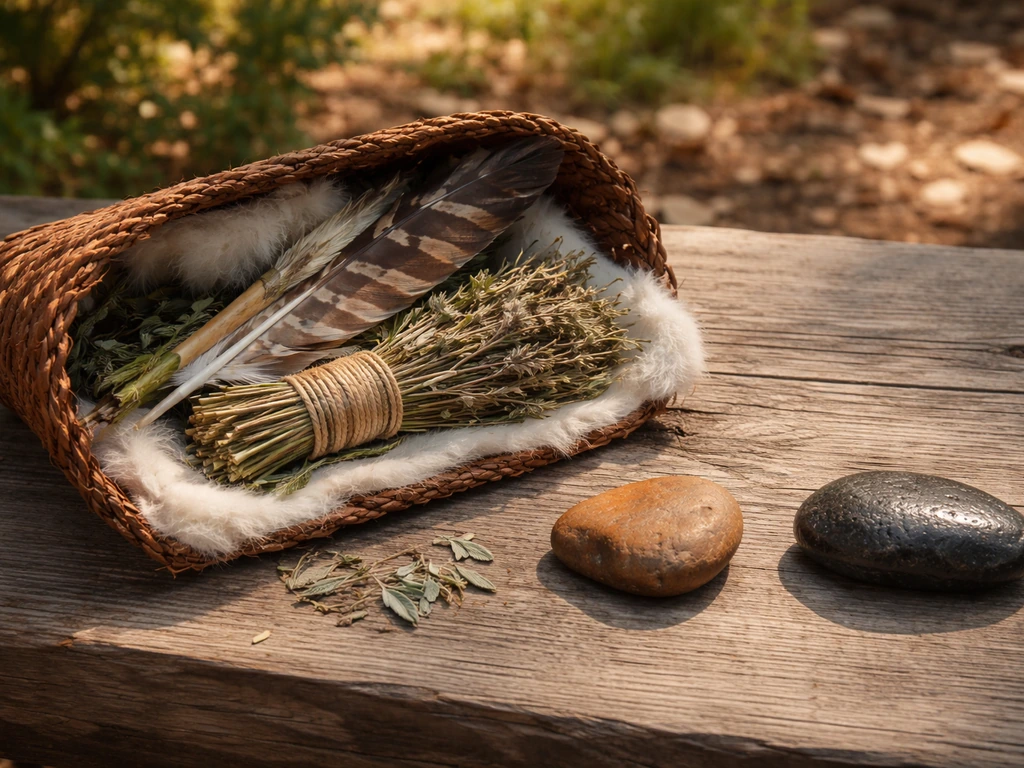
The phrase has deep roots in Indigenous North American traditions, where "medicine" broadly means spiritual power, not pharmacology. Ethnobotanist and anthropological sources are clear on this: when researchers in the early 20th century wrote about the "medicine man," they were using a somewhat misleading translation of a role that was fundamentally about spiritual guidance, ritual leadership, and healing through ceremony rather than any literal prescribing of drugs. The same principle applies to bird medicine. A bird isn't a pill. It's a carrier of something harder to quantify: attention, symbol, and presence.
In Southeastern ceremonial traditions like those of the Creek and Seminole peoples, feathers are explicitly connected to the Powers Above. Feather dances and the songs accompanying them reference birds as agents of spiritual power, and feathers themselves serve as conduits between the human world and something larger. That is bird medicine in its most structured, ceremonially specific form. It belongs to those traditions and should be understood in that context, not casually repackaged.
Outside Indigenous ceremony, the phrase has moved into broader spiritual and New Age usage, where it more loosely means the symbolic lesson or healing quality associated with a particular species. In this version, learning that a hawk's "medicine" is clarity and focused vision is less a cultural claim and more a personal reflective framework. Both uses are real; they just operate at different levels of cultural specificity and weight.
There's also a cross-cultural pattern worth noting. Ethnobiology research from communities in semiarid Brazil, for example, documents beliefs that certain birds or their feathers can protect people and domestic animals, and that specific bird behaviors are linked to curing within local worldviews. The idea that birds hold healing or protective power isn't confined to one continent. It's a widespread human pattern across ethno-ornithological traditions worldwide, the study of how people perceive and use birds in ritual, medicine, and divination across societies.
Spiritual interpretation: messages, healing, and how to work with it responsibly
If you've encountered "bird medicine" in a spiritual context and you're trying to use it as a personal reflective tool, here's how to approach it without either dismissing it or over-inflating it. The core practice is attention: you notice a bird, you look up its symbolic associations in the tradition you're drawing from, and then you sit with whether that meaning resonates with something going on in your life. That's it. Bird medicine in personal spiritual practice is essentially a prompted reflection.
Some common associations that appear across multiple traditions: eagles and hawks tend to carry meanings around vision, clarity, and higher perspective. Owls are frequently linked to wisdom, the unseen, and transitions. Ravens and crows appear in cultures worldwide as messengers, tricksters, or carriers of transformation. Hummingbirds often represent joy, resilience, and the ability to find sweetness even in small things. Doves carry peace and communication. These aren't fixed rules, but they're stable enough across sources to be useful starting points. Bird wisdom as a broader topic explores many of these associations in more depth. Bird wisdom meaning can help you connect specific bird symbols to themes like guidance, transitions, and insight.
Using bird medicine responsibly means being honest about where the symbolism comes from. If you're drawing on a specific Indigenous tradition, acknowledge that source and don't claim it as your own spiritual property. If you're using a more general symbolic framework, own that framing. There's a meaningful difference between saying "in this tradition, the crane represents longevity" and "my crane encounter was definitely a healing sign meant for me." One is respectful cultural knowledge; the other is a claim that requires more humility about how certainty works in spiritual matters.
Everyday behavioral meaning: why birds actually show up near you
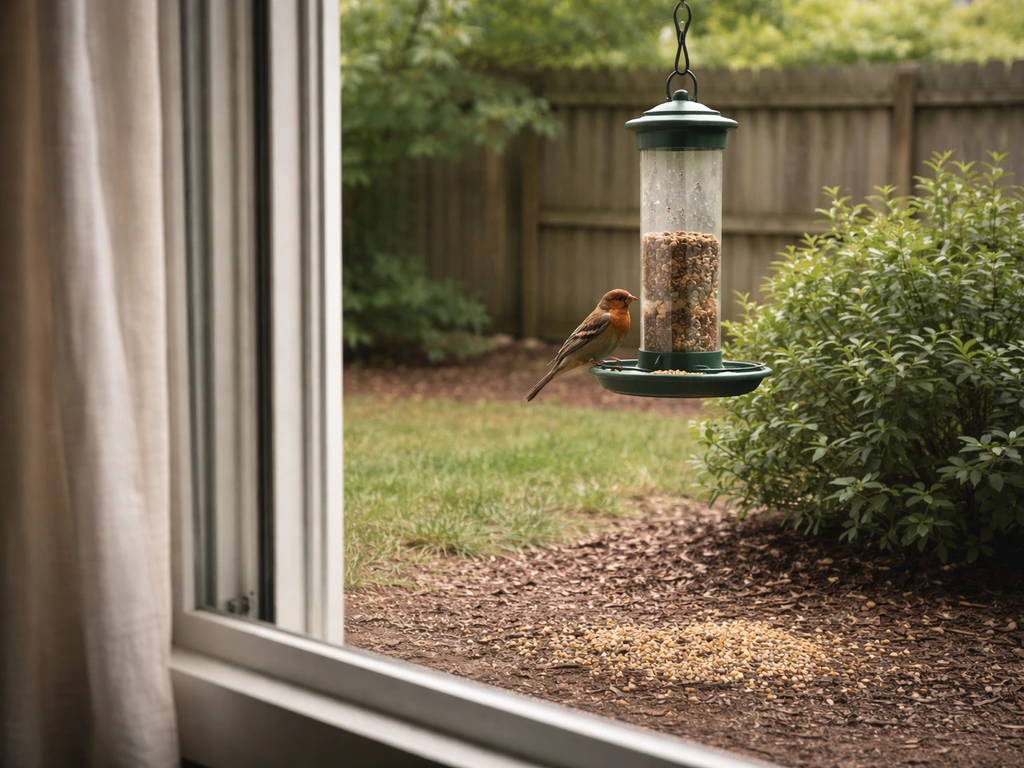
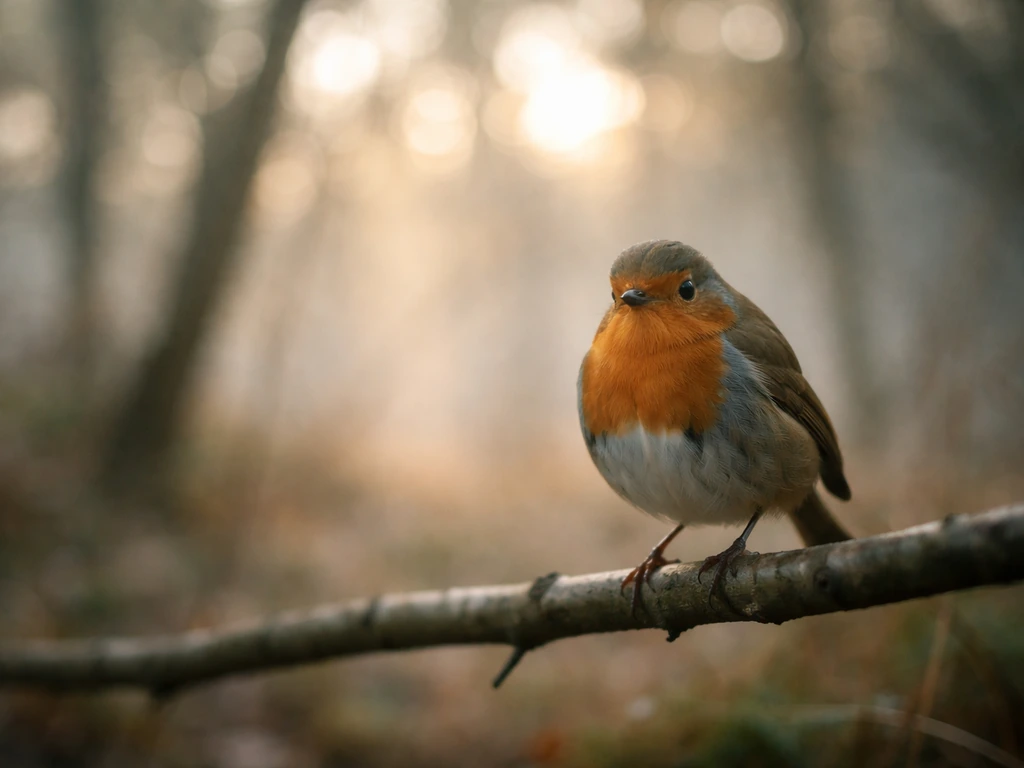
Before you assign spiritual significance to a bird's presence, it's worth running through the practical checklist. Birds show up near humans for very concrete reasons: food availability, nesting sites, shelter, migration routes, and thermal patterns. A hawk circling your yard is almost certainly hunting, not delivering a message. A robin tapping at your window is probably reacting to its own reflection, which it perceives as a rival. A sudden influx of sparrows likely signals a change in season or a local food source.
This doesn't make the experience less interesting or meaningful to you personally. But understanding the behavioral reality first makes your interpretation sharper. If a bird keeps appearing in conditions that have no clear ecological explanation, that's when the symbolic layer becomes more interesting to explore. If a bird keeps appearing because you put out a feeder, that's because you put out a feeder.
Timing matters enormously in bird behavior interpretation. Spring arrivals, fall departures, dawn choruses, dusk roosts, birds are intensely seasonal and rhythmic. What looks like a meaningful "sign" in October might simply be a migration event that happens every year. Learning the basic seasonal patterns for birds in your region is one of the most useful things you can do, both for honest interpretation and for appreciating the genuine wonder of bird behavior on its own terms.
Dream meaning and omen interpretations
When people search "bird medicine meaning" after a vivid dream, they're usually looking for what the bird in the dream was trying to tell them. Dream interpretation of birds follows some fairly consistent patterns across cultures. Birds in flight generally represent freedom, aspiration, or the movement of the soul. A bird that lands near you or makes direct contact in a dream is often interpreted as a deliberate message or a call to pay attention to something specific. A bird that is caged or injured tends to represent restriction, a silenced voice, or something in the dreamer's life that needs attention or release.
Species matters in dream interpretation too. An owl appearing in a dream can signal a need to look at what you've been avoiding or to prepare for a transition. A crow or raven often surfaces when a significant change is coming or when the dreamer needs to confront something uncomfortable. A bright, singing bird like a cardinal or bluebird in a dream is frequently associated with hope, reassurance, or a message from someone who has passed.
For omen interpretation outside of dreams, the most useful frame is this: what was happening in your life at the moment the bird appeared, and does the bird's traditional symbolism map onto anything you've been thinking about? Omens work best as reflection prompts, not as predictions. A bird doesn't know your future. But your subconscious might be using the bird as a focal point for something you've already been processing.
Common misconceptions worth clearing up
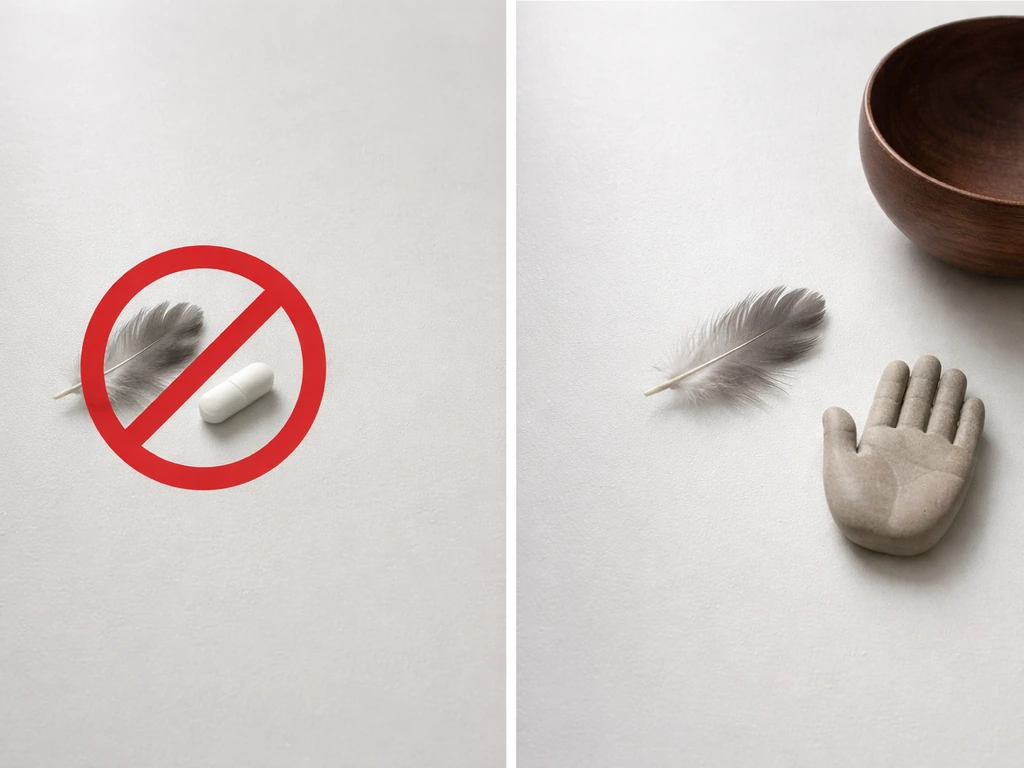
The biggest misconception about bird medicine is that it implies birds are literally medicinal in a pharmaceutical sense. They are not, and treating them as such, consuming feathers, using parts of protected wild birds in homemade remedies, or believing a bird encounter can substitute for medical care, is both legally problematic (many wild bird feathers are federally protected in the US) and genuinely harmful to your health. Bird medicine is a metaphor and a spiritual framework, not a pharmacology.
A second common mistake is assuming that any bird showing up near you is a personal message. Most bird behavior is ecological, not intentional. Birds are not watching you specifically. The crow that follows you on your walk is probably opportunistic about food scraps, not your spirit guide. Healthy skepticism about this doesn't diminish the practice; it makes it more honest and more meaningful when something genuinely unusual does happen.
A third misconception is that all bird symbolism is universal. It isn't. A raven means something specific in Haida tradition, something different in Norse mythology, something different again in Poe-influenced Western culture, and yet something else in contemporary spiritual communities. Treating any one cultural symbol set as the definitive truth about a bird flattens a rich and diverse set of human relationships with these animals. When you look up a bird's "medicine," check whose tradition you're drawing from.
How to interpret your specific bird: what to notice and what to do next
Whether you're approaching this from a spiritual angle, a behavioral one, or somewhere in between, here's a practical framework for working through what a bird encounter means to you.
- Identify the species as accurately as you can. General type (raptor, songbird, corvid, waterbird) is useful if you can't pin down the exact species. Color, size, behavior, and call all help.
- Note the context: time of day, season, location, and what you were doing or thinking about when the encounter happened.
- Observe the behavior: was the bird stationary or moving, silent or calling, alone or in a group, healthy or distressed? Behavior changes the interpretation significantly.
- Check for mundane explanations first: nesting season, local food sources, migration timing, or unusual weather that might push birds into unusual locations.
- If nothing obvious explains the encounter, and it felt significant, look up the species' symbolism across two or three different traditions and note any themes that recur across sources.
- Journal the encounter with a few reflection prompts: What was I thinking about when this happened? What is the bird's traditional association? Does any of that resonate with something in my life right now?
- Sit with ambiguity. You don't need a definitive answer. The point of bird medicine as a practice is the quality of attention it asks you to bring, not a confirmed cosmic verdict.
A quick reference for some of the most commonly reported meaningful bird encounters:
| Bird | Common symbolic association | Behavioral reality to check first |
|---|---|---|
| Hawk / Eagle | Clarity, vision, higher perspective | Hunting territory, thermal soaring, or nesting nearby |
| Owl | Wisdom, transition, the unseen | Nocturnal hunting, territorial calling, or nesting in hollow trees |
| Crow / Raven | Transformation, intelligence, messages | Opportunistic feeding, curiosity about shiny objects, social flocking |
| Cardinal | Vitality, connection to loved ones, reassurance | Year-round resident; males highly territorial in spring |
| Hummingbird | Joy, resilience, adaptability | Flower availability, feeder placement, or migration through your area |
| Dove | Peace, communication, gentleness | Ground feeding, nesting in low shrubs, or attracted to seed |
| Blue Jay | Clarity, assertiveness, truth-telling | Aggressive feeder competition, alarm calling, or acorn caching |
One final, important note: if you're in a situation where you feel like a bird encounter is the only guidance you have for a serious health, safety, or life decision, please seek real-world help. Bird medicine is a meaningful reflective tool. Bird blindness meaning can help you further compare how specific bird-related ideas are interpreted versus practical explanations. It is not a replacement for a doctor, a therapist, a lawyer, or a trusted person in your life. The traditions that developed these practices embedded them in community and in relationship with skilled interpreters, not in solo internet searches. Use the symbolism for reflection; use real support for real problems.
If you want to go deeper on related themes, bird vision and bird wisdom are closely connected concepts worth exploring alongside bird medicine, they touch on how birds perceive the world and what that broader perceptual intelligence can teach us symbolically and practically.
FAQ
How can I tell if “bird medicine meaning” in my situation is spiritual symbolism or just a real-world bird behavior?
Check for ecological drivers first, then compare timing and repetition. If the event aligns with feeding, nesting, migration, weather, or reflections, it is more likely behavior. If the same species or symbol shows up in a patterned way when you are already processing a specific life theme, then a spiritual reading is more plausible as a reflection prompt.
Can I use bird medicine meaning for a personal meditation practice even if I am not from an Indigenous tradition?
Yes, you can use it as personal reflection, but avoid claiming ceremonial authority. A respectful approach is to keep it non-literal and non-ritual, name the framework you are using (general symbolism, for example), and do not present feathers, chants, or “medicine protocols” as something you inherited from a specific community.
What should I do if I interpret a dream bird as an omen, and then the next day nothing happens?
Treat it as a prompt, not a prediction. Ask what decision, conversation, fear, or avoidance you were thinking about at the time of the dream. If nothing “externally” occurs, the symbolic message may have already been processed internally (for example, motivation to start something, or permission to let something go).
Does dream interpretation change depending on whether the bird is injured, dead, or caged?
In many dream-symbol frameworks, these states point to restriction or something needing attention. Use the emotion you felt in the dream as the key clue: fear may suggest an urgent boundary, grief may suggest a need to acknowledge loss, and anger may suggest a blocked voice or boundary you are ready to reclaim.
Are bird medicine meanings universal for specific species like owls, ravens, or doves?
No, they are not universal. Species associations often overlap across cultures, but details vary by tradition. When you look up a symbol, note the tradition or community the meaning comes from, then decide whether it resonates without treating one system as the definitive “truth.”
Is it okay to keep repeating a “bird medicine” mantra or affirmation after an encounter?
It can be helpful if it stays grounded and specific. Use a short, personal reflection such as “Notice what this theme is asking me to face,” and pair it with one actionable step (a journal prompt, a boundary conversation, or a scheduled check-in). Avoid using it as the only basis for high-stakes choices.
What are common mistakes people make when trying to apply bird medicine meaning to real life?
Three frequent errors are (1) assuming every bird nearby is a message, (2) ignoring seasonal and location patterns, and (3) treating symbolism as a substitute for medical, legal, or safety actions. Another less-discussed mistake is turning a symbol into certainty, instead of using it as a question you explore.
If I want to honor the meaning without “overclaiming,” how should I phrase my interpretation?
Use language that reflects personal resonance rather than certainty. For example, “This encounter made me reflect on clarity and timing,” or “In my life right now, the owl symbolism is pointing me toward what I have been avoiding.” This keeps respect and humility built into your reading.
Could “bird blind meaning” or similar phrases be confused with bird medicine meaning?
Yes, they can be. If the phrase is used in a literal outdoor context, it is likely about a bird blind (a hunting or observation setup), not spiritual power. If you see your results mixing both terms, isolate what you are actually being asked (spiritual symbolism versus an outdoor structure) before you interpret.
How can I make my bird-meaning interpretation more reliable without turning it into superstition?
Use a simple two-track method: Track A is ecology (date, location, species, behavior, weather, season). Track B is reflection (what you were thinking about, what emotion arose). If Track A fully explains the event, default to reflection. If Track B keeps matching across unrelated circumstances, then the symbol may deserve deeper attention.
Next Article
Bird Blind Meaning: Literal, Symbolic, Spiritual, Dream
Understand bird blind meaning in real life, symbolism, spirituality, and dreams, with practical next steps and tips.