A 'blind bird' can mean several completely different things depending on your context. If you just saw a bird acting confused or unable to track movement, that's a real medical situation requiring wildlife help. If you're digging into symbolism, blindness in birds traditionally signals vulnerability, hidden intuition, or being misled. In a dream, a blind bird usually points toward something you're not letting yourself see in your waking life. And in slang, the phrase can mean anything from ignorance to willful naivety. The meaning depends almost entirely on which of these you actually meant, so let's break each one down clearly.
Bird Blind Meaning: Literal, Symbolic, Spiritual, Dream

Marcus Holloway
12 Jun 2026
Literal vs symbolic: two very different roads
When people search 'bird blind meaning,' they're usually coming from one of two completely different directions. The first is practical: they encountered a real bird that seemed unable to see, and they want to know what's going on with it. The second is interpretive: they want to understand what a blind bird represents in symbolism, spirituality, a dream, or even a turn of phrase. So if you're asking specifically about bird blindness meaning, that would fall under the practical, literal “what’s wrong with the bird” side, not the symbolism side. These aren't competing answers. They're just different questions, and mixing them up leads to confusion. A bird with cloudy, white, or yellowish-brown pupils is almost certainly dealing with cataracts or an infection, not delivering a spiritual message. Conversely, a blind bird appearing in a recurring dream almost certainly isn't something a vet can fix. Getting clear on which context you're in is the single most useful thing you can do before going further.
What a blind bird means in symbolism and culture
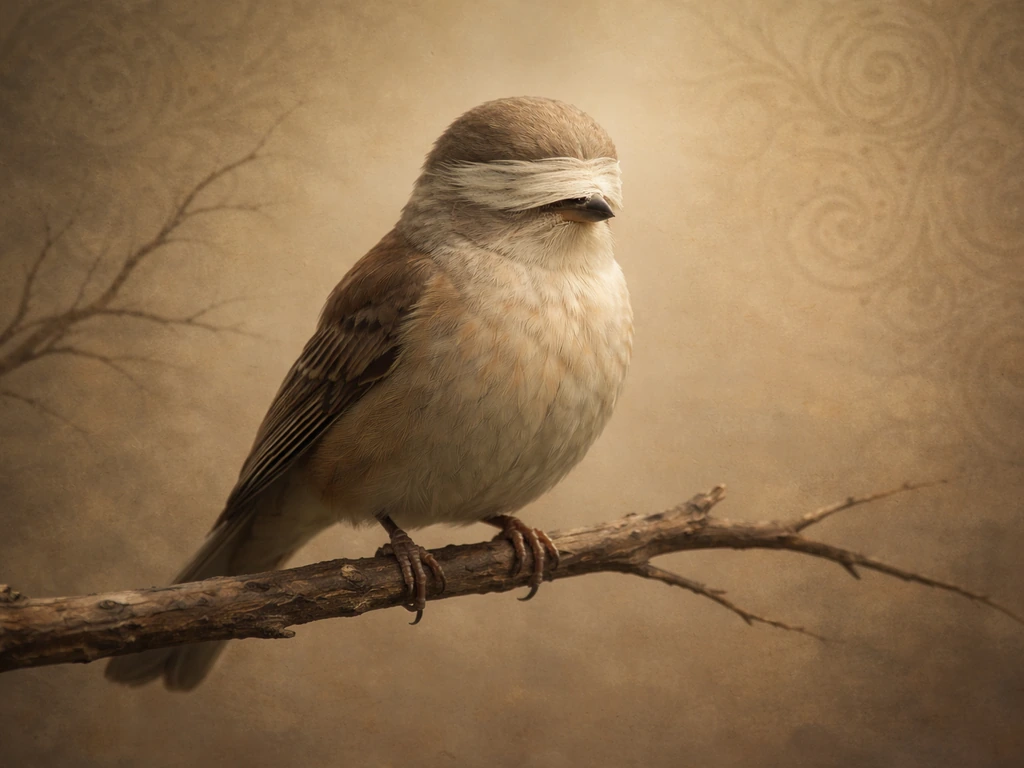
Across many traditions, birds have been used as messengers, omens, and symbols of perception. The ancient Greeks practiced ornithomancy, reading meaning from how birds moved, cried, or fed. Roman augurs interpreted the direction and behavior of birds as signs of good or ill fortune. In that interpretive framework, a bird that couldn't see, or couldn't navigate, carried specific weight: it disrupted the expected role of the bird as a clear-eyed messenger.
In broader symbolic terms, a blind bird tends to carry a few consistent meanings across cultures. It can represent vulnerability, someone or something that has lost its ability to perceive truth or danger. It can also flip into a symbol of inner knowing, since some traditions associate blindness with heightened intuition or spiritual sight beyond the physical. Think of the archetype of the blind prophet: sightless in the physical world, but more attuned to hidden truths. A blind bird in this reading becomes a symbol of wisdom that doesn't depend on outward appearances.
On the darker side, a blind bird can symbolize being misled, naivety, or an unwillingness to see what's plainly in front of you. This is close to how the phrase gets used in everyday speech, which we'll cover in the slang section. It's worth noting that the exact meaning in any cultural tradition depends heavily on which bird is involved. A blind owl carries different resonance than a blind dove or a blind raven, because those birds already carry distinct symbolic identities. Owl symbolism is deeply tied to wisdom and vision, so a blind owl is a striking symbolic reversal.
Spiritual and superstition angles (and what's actually worth taking seriously)
Some belief systems treat an encounter with a visibly impaired or disoriented bird as a spiritual signal. The interpretation varies: in some folk traditions it's seen as a warning that you're missing something important in your own life. In others, it's framed as a sign that something hidden is about to be revealed. There are also superstitions that treat a bird behaving strangely near your home as an omen of change, illness, or a message from a deceased loved one.
Here's my honest take on how to weigh this. Bird-based omens have deep historical roots, and there's genuine cultural value in engaging with them as meaning-making frameworks. But it's worth separating two things: the symbolic or intuitive resonance you personally feel when you encounter an unusual bird, and the factual claim that the bird's condition is literally a divine signal meant for you. The first is a legitimate form of reflection. The second deserves some skepticism, especially when it stops you from getting the bird actual help.
If an encounter with a struggling bird is prompting you to reflect on your own perception, what you're avoiding, or what you might be blind to in your life, that reflection has real value. Just don't let a superstition convince you to ignore a bird that needs a wildlife rehabilitator.
What's actually happening when a bird seems blind in real life
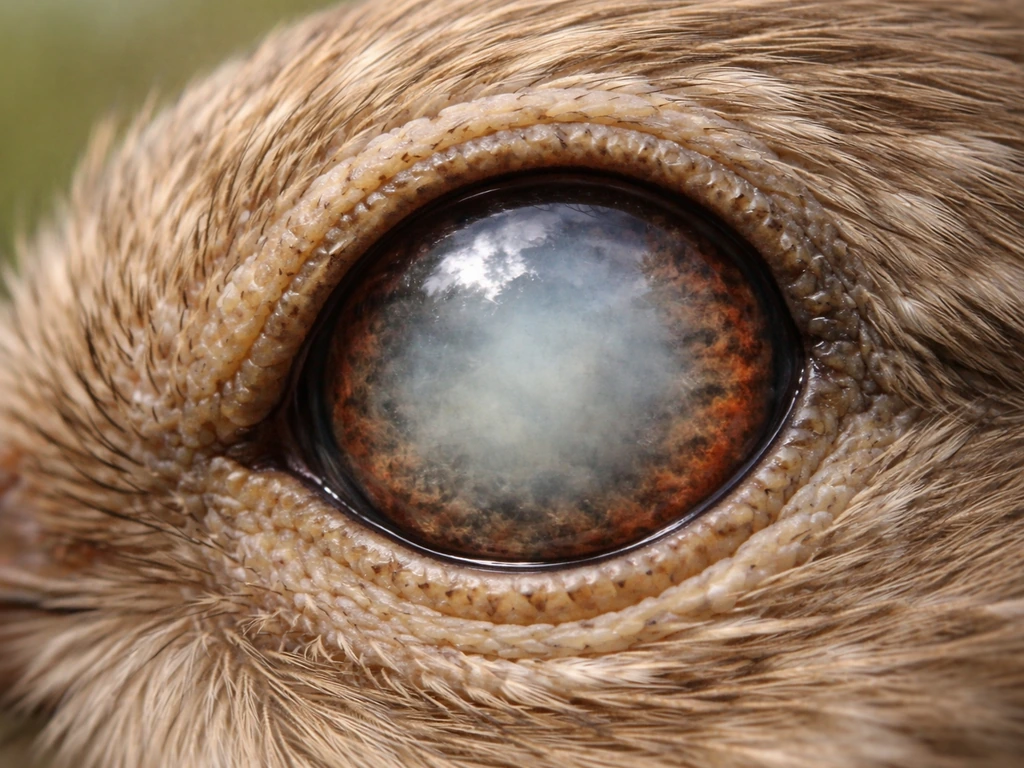
If you've found a bird that seems unable to track movement, is bumping into things, or just isn't responding to your approach the way a healthy wild bird should, there are a handful of likely causes. Understanding them helps you respond correctly.
Eye conditions that cause visible changes
Cataracts are one of the most recognizable. They show up as a blue-gray, white, or yellowish-brown cloudiness or opacity over the lens of the eye. You might also see swelling around the eye, discharge (including thick white or tan crusting), excessive blinking or squinting, or prolonged closure of one or both eyes. These can result from aging, genetics, infection, trauma, vitamin E deficiency, or diabetes in birds. Conjunctivitis, if left untreated, can actually lead to cataracts over time. Any of these visible eye changes are serious enough to warrant professional evaluation.
Neurological causes that look like blindness
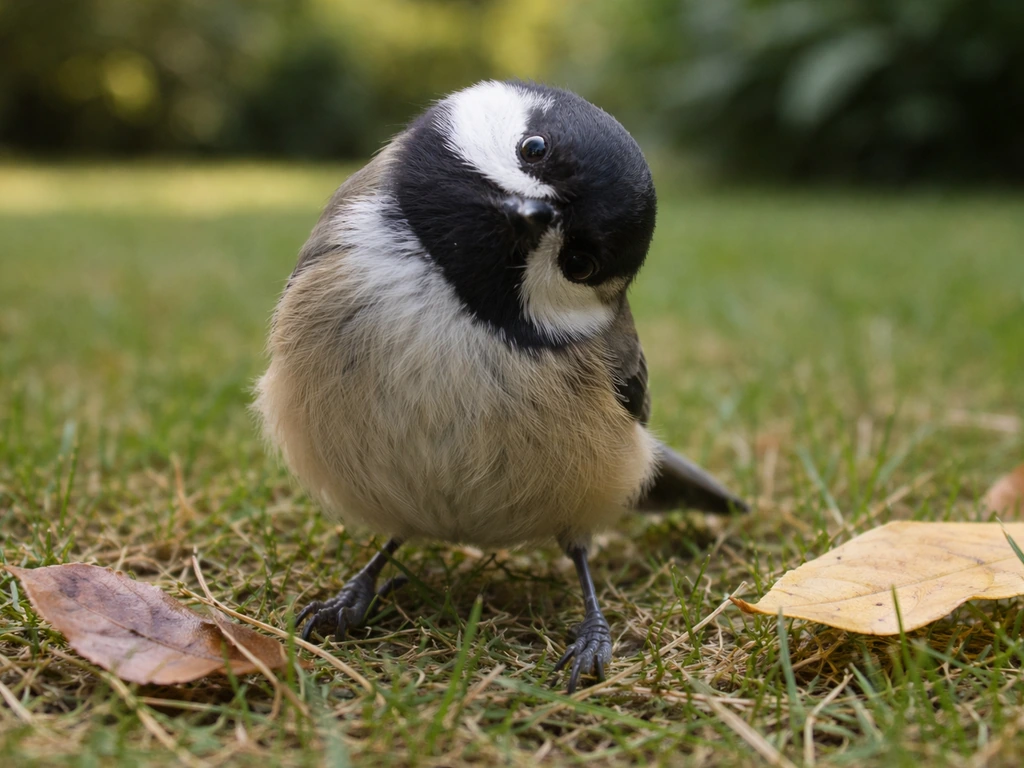
This one surprises a lot of people. A bird that appears disoriented, is circling, pacing aimlessly, getting stuck in corners, or has a noticeable head tilt (one ear lower than the other) may not have an eye problem at all. These are signs of vestibular dysfunction or broader neurological issues. Pesticide poisoning is a real and documented cause of neurological signs in wild birds, including actual blindness, tremors, lethargy, and convulsions. Raptors in particular are at risk from eating contaminated prey. So if you see a bird behaving in these ways, it may look blind but the problem may be systemic poisoning or a nervous system issue.
What to do if you find a bird that seems blind or disoriented
The guidance from every major wildlife organization is remarkably consistent, and it can be summarized simply: contain, keep quiet, and call an expert. If you suspect a bird is sick or injured, the RSPCA advises taking it for treatment and reporting it rather than trying to self-treat it rather than self-treating. Here's the practical version:
- Place the bird gently in a box or container with air holes. Line it with paper towels or a soft cloth.
- Keep the container dark, quiet, and warm. Darkness reduces stress significantly for wild birds.
- Do not give the bird food or water. This is emphasized strongly by wildlife rehabbers. Well-meaning feeding can do real harm depending on the bird's condition.
- Contact a licensed wildlife rehabilitator in your area as soon as possible. In the US, the National Wildlife Rehabilitators Association and state wildlife agencies can help you find one. In the UK, the RSPCA handles injured wildlife referrals.
- Note what you observed: the bird's behavior, whether one or both eyes looked cloudy or closed, any head tilt, and where you found it. This information is genuinely useful to the rehabber.
- If the bird is a raptor (hawk, eagle, owl), be extra cautious. Raptors have powerful talons and can injure you even when they're weak. Use thick gloves or a heavy towel for handling.
Even if the bird looks like it might be okay, or seems to manage short flights, expert evaluation is still the right call. Many injured birds can appear functional while having serious underlying conditions that will shorten their lives without treatment.
Dreaming about a blind bird: what it can mean
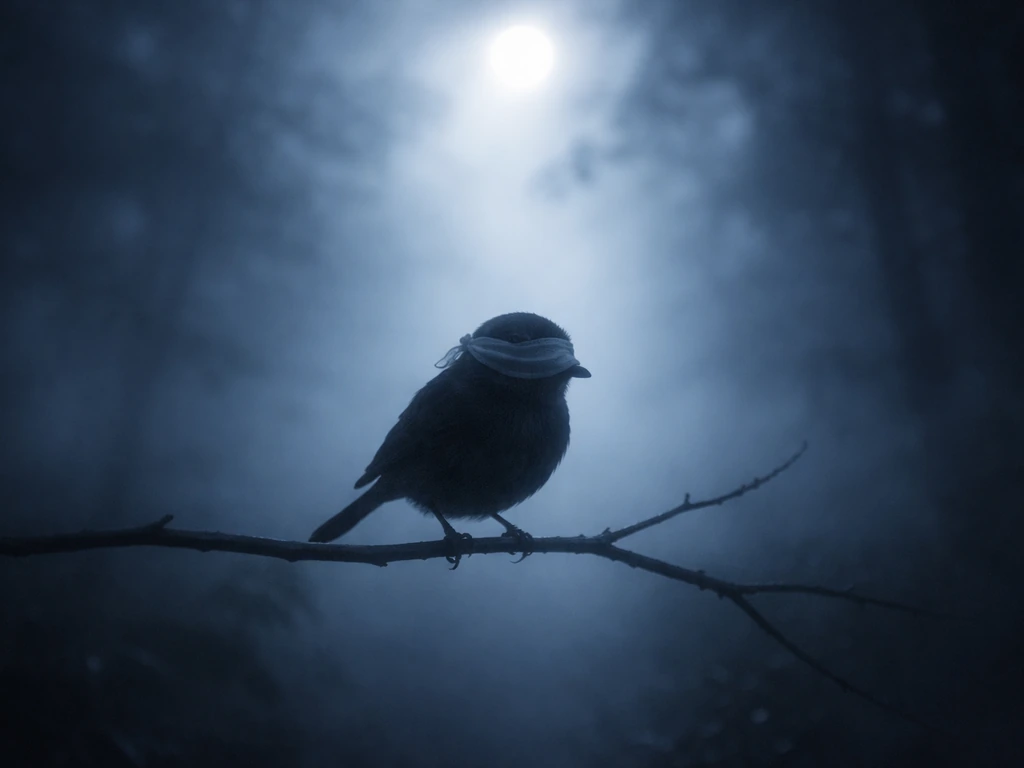
Dreams involving animals, especially birds, tend to carry symbolic weight in most major interpretive traditions. Jungian dream analysis treats animals in dreams as symbolic figures rather than literal omens, and the details of the dream matter far more than any one-size-fits-all interpretation. A blind bird in a dream is most commonly associated with one of a few recurring themes.
- Avoidance or willful ignorance: Something in your waking life you're choosing not to look at, whether a relationship, a decision, or a truth about yourself.
- Lost direction or purpose: Birds in dreams often represent freedom, aspiration, or a sense of where you're going. A bird that cannot see may reflect feeling lost or cut off from your instincts.
- Vulnerability: The blind bird can represent something fragile in your life that needs protection or care.
- Hidden perception or inner knowing: In some interpretive traditions, blindness in a dream figure signals that the real information is coming from somewhere other than the surface. What are you sensing rather than seeing?
- Being misled: A blind bird can sometimes represent someone in your life, possibly you, who is acting on incomplete or false information.
The most useful approach to any animal dream isn't to look up a fixed meaning and apply it mechanically. Jewish dream interpretation tradition, for example, explicitly acknowledges that the same dream can have very different meanings depending on the person and their circumstances, and that different interpreters may reach different conclusions. Islamic tradition around dream interpretation similarly emphasizes the importance of the dreamer's own condition and context. Jungian analysis asks what the dreamer's personal associations with the image are, before any general symbolism is applied.
A practical way to work with this: write down the dream in as much detail as possible right after waking. Note what the bird looked like, how you felt in the dream, what happened, and whether it reminded you of anything from your current life. Then ask honestly: what aspect of my waking life is this image pointing toward? That reflection is far more valuable than a generic symbol chart.
One caution worth stating plainly: dream interpretation, even from thoughtful traditions, is a tool for reflection and self-understanding. It's not a diagnostic tool for health decisions, financial choices, or predicting specific events. If a dream is causing significant distress, that's worth talking through with a mental health professional rather than a dream dictionary.
Slang and colloquial uses of 'blind bird'
In everyday speech, calling someone a 'blind bird' or using the phrase colloquially usually leans into one of a few meanings. It can describe someone who is oblivious to something obvious, similar to 'flying blind.' It can refer to someone who is trusting or naive to a fault. In some subcultures, it's used affectionately to describe someone who wanders through life without much caution but somehow keeps landing on their feet.
The key thing with slang is context. The same phrase can be gentle teasing between friends or a pointed criticism depending on tone and relationship. If you heard or read 'blind bird' used about a person and you're trying to decode it, the surrounding conversation usually makes the intent clear. Is it used warmly or critically? Is it describing a behavior (not noticing something specific) or a general character trait (habitually naive)? Those distinctions matter more than any fixed definition.
It's also worth knowing that 'bird blind meaning' sometimes surfaces in search queries because people are conflating 'bird blind' with the related concept of bird vision more broadly, or because they've encountered the phrase 'blind spot' used in a bird behavior context. If you're interested in how birds actually perceive the world visually, including where their actual blind spots are anatomically, that's a separate but genuinely fascinating topic that connects to wider discussions of bird vision and bird wisdom as symbolic themes. If you want the bird wisdom meaning in a more grounded way, look at how these symbolic interpretations connect to perception and intuition. Understanding bird vision meaning can help you connect what those signs symbolize with what birds can truly see.
Quick reference: which meaning applies to you
| Your situation | What 'blind bird' means here | What to do next |
|---|---|---|
| You found a real bird acting disoriented or with cloudy eyes | Likely a medical issue: cataracts, infection, neurological damage, or poisoning | Contain quietly, no food/water, call a licensed wildlife rehabilitator today |
| You're exploring symbolism or cultural meaning | Vulnerability, hidden intuition, being misled, or loss of direction depending on tradition | Consider which bird species is involved and which cultural framework resonates with you |
| You had a dream about a blind bird | A reflection prompt about avoidance, lost direction, vulnerability, or hidden perception | Write down full dream details and reflect on current life circumstances before consulting any symbol guide |
| You heard or read it used as slang about a person | Usually means oblivious, naive, or trusting to a fault | Use surrounding context and tone to determine if it's affectionate or critical |
| You're exploring spiritual or superstitious meaning | An omen of change, a call to self-reflection, or a warning in some folk traditions | Use it as a prompt for reflection, but don't let superstition delay real help for an injured bird |
FAQ
What should I do first if I find a wild bird that seems blind or can’t see well?
Start with safety and containment: keep people and pets back, keep noise and light levels low, and place the bird in a ventilated box or towel-lined carrier. Then contact a licensed wildlife rehabilitator or local animal control for the correct handling instructions, because even short periods of stress can worsen shock or injury.
How can I tell the difference between an eye problem and something neurological in a bird?
Eye problems often show direct eye signs like cloudiness of the pupil, discharge, squinting, or holding one eye closed. Neurological or vestibular issues are more about body behavior, like circling, falling to one side, pacing, head tilt that worsens when the bird tries to move, or abnormal coordination, even if the eyes look clear.
Is it safe to give water or food to an injured or disoriented bird?
Usually it is better to avoid feeding or watering wild birds. Many species are prone to aspiration if they are stressed or impaired, and incorrect diet timing can complicate treatment. Focus on warmth and quiet until a rehabber gives species-specific guidance.
What does “call an expert” mean in practice if I can’t find a wildlife rehab center?
If you cannot locate a rehabber quickly, call local animal services, a veterinary hospital that treats wildlife, or an emergency line for wildlife in your area. Tell them what you observed (eye cloudiness, head tilt, circling, any tremors) so they can advise whether you should transport the bird or wait while monitoring.
Can a blind or disoriented bird be dangerous to handle?
Potentially, yes. Wildlife can bite or scratch, and sick birds can carry pathogens. Use gloves if available, limit handling time, and avoid contact with your face. If you suspect poisoning or chemical exposure, do not try to clean the bird yourself beyond safe containment.
Does the phrase “bird blind” always mean the same thing symbolically?
No. Symbol meanings shift depending on whether the focus is perception (what is being missed), vulnerability (being exposed), or guidance (what needs to be revealed). A key check is what “blind” is attached to in your situation, a person’s awareness, your own intuition, or an external warning.
What common mistake leads people to misread a dream about a blind bird?
The common mistake is applying a generic dictionary meaning as if it were a literal forecast. A higher-value approach is to map the image to your emotions in the dream, what the bird could not do (fly, see, navigate), and what is happening in your waking life around uncertainty, trust, or information you are avoiding.
If I see the same blind bird image repeatedly in dreams, does that always mean something is “wrong”?
Not necessarily. Recurrence often reflects ongoing emotional processing, like lingering stress, grief, or a repeated decision point where you feel you lack clarity. If the dreams cause intense distress, panic, or sleep disruption, it can be helpful to talk with a mental health professional rather than relying on symbolism alone.
Could a blind bird meaning in slang refer to animal behavior, not a person’s traits?
Yes, sometimes. In conversation it can be used literally to describe someone’s inability to notice something, but other times it may reference a person’s metaphorical state of being “oblivious.” If you want to decode it accurately, look for whether the speaker talks about behavior in specific moments (missing a clue) versus character (habitually naive).
Next Article
Bird Chest Meaning on Urban Dictionary and Real Contexts
Explains bird chest meaning on Urban Dictionary, real conversation use, and non-slang alternatives to avoid misconceptio