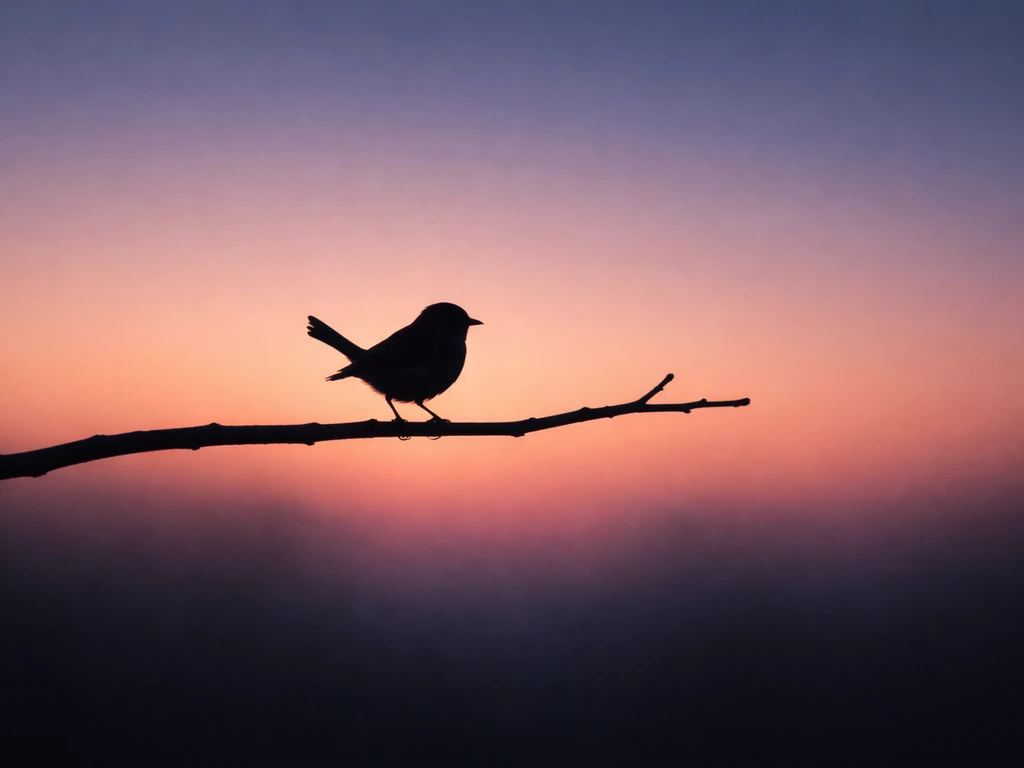
A bird shadow can mean several different things depending on where you encounter it. In the most literal sense, it is simply a dark shape cast on the ground or a surface when a bird blocks a light source, and its size, sharpness, and length are determined by straightforward geometry. In a dream, a bird shadow tends to carry psychological weight, pointing toward themes of the unconscious, hidden potential, or things just out of reach. In cultural and spiritual traditions around the world, a shadow cast by a bird overhead has been read as an omen, a blessing, or a warning, though those readings vary enormously by region and tradition. In art, design, and branding, a bird shadow or silhouette is a deliberate visual choice that strips a bird down to its most essential shape, creating mood, mystery, and instant recognizability. None of these meanings cancels out the others. The context in which you encounter a bird shadow is what determines which lens is most useful.
Bird Shadow Meaning: Literal, Dream, and Symbolic Guide

Who this guide is for
This article is written for anyone who has found themselves asking why a bird's passing shadow felt significant, or who needs a grounded breakdown of what bird shadow imagery actually communicates. That includes birdwatchers who want to understand the optics behind what they see, dreamers trying to make sense of an image that stuck with them on waking, designers working with bird silhouettes in logos or motifs, and people who grew up hearing folklore about birds and want to know which parts have cultural substance and which parts are pure myth. The guide is organized so you can jump to the section that matches your situation: the biological and optical explanation comes first, followed by symbolic and spiritual readings, then cultural superstitions, dream interpretation, and finally how shadow imagery works in art and design. A comparison table near the end maps contexts to their most likely meanings so you can orient yourself quickly.
How bird shadows actually form
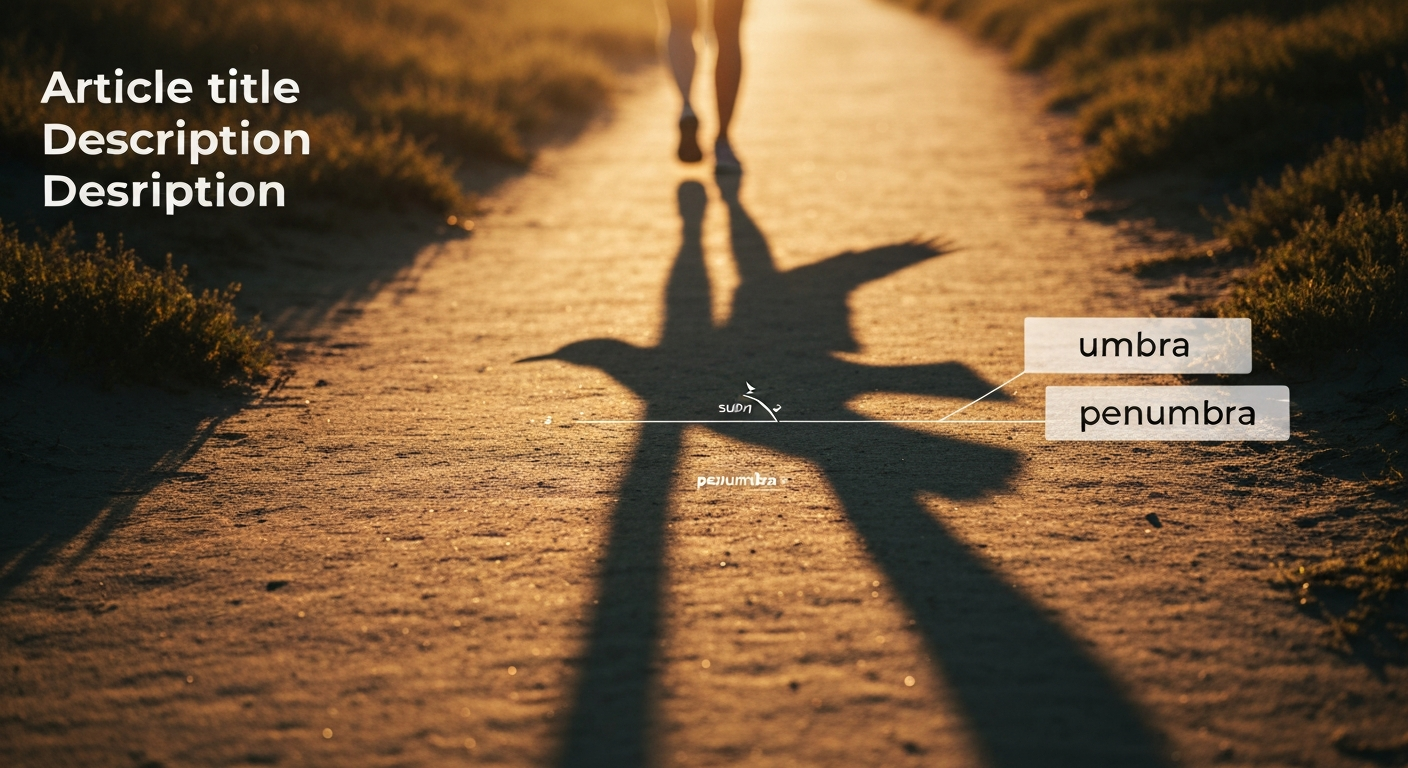
A bird flying between you and the sun (or any strong light source) casts a shadow using the same optics that govern every other shadow. The shadow has a dark central region called the umbra, where light is completely blocked, and a softer outer ring called the penumbra, where light is only partially blocked. The sharpness of that edge depends on how large and how distant the light source is. The sun, though enormous, is far enough away that it behaves almost like a point source at moderate distances, which is why bird shadows on the ground tend to have fairly crisp edges when the bird is close to the surface.
Shadow length is governed by a simple trigonometric relationship: shadow length equals the object's height divided by the tangent of the sun's elevation angle. When the sun is low on the horizon in early morning or late afternoon, that tangent value is small, so shadows stretch dramatically. A heron standing 1 meter tall at a 10-degree sun angle casts a shadow roughly 5.7 meters long. At noon with the sun at 70 degrees, that same heron's shadow is barely 36 centimeters. This is why photographers specifically seek low-sun conditions to capture striking bird shadow images, and it is also why a bird's passing shadow is far more dramatic and noticeable in the golden hours than at midday. Photographers can learn practical tips on using sun elevation and camera/view angle to capture sharp bird shadows in How to Use Lighting and Angles to Take Better Bird Photos, Audubon How to Use Lighting and Angles to Take Better Bird Photos — Audubon.
Wingspan matters enormously. A wandering albatross with a wingspan exceeding 3 meters casts a fundamentally different shadow than a house sparrow. Large raptors soaring on thermals, Andean condors, large swans (trumpeter and tundra swans have wingspans of roughly 1.8 to 2.4 meters), and pelicans all produce shadows substantial enough to be felt as well as seen when they pass low overhead. Most migratory birds fly at altitudes between roughly 100 and 10,000 feet above ground level depending on species, season, and weather conditions, but diurnal foragers and soaring raptors commonly fly low enough that their ground shadows are clearly visible to observers below. Radar‑based ornithology methods estimate flight altitude, speed, and density from weather‑radar reflectivity and algorithms, showing most migratory activity concentrates in altitude bands while low‑flying birds and soaring raptors are common enough to cast visible shadows locally Radar‑based ornithology methods estimate flight altitude, speed, and density from weather‑radar reflectivity and algorithms, showing most migratory activity concentrates in altitude bands while low‑flying birds and soaring raptors are common enough to cast visible shadows locally.. The shadow you notice on a trail or beach is almost always from a bird well within the lower portion of that altitude range.
Symbolic and spiritual meanings: the bigger picture
Once you move out of optics and into meaning, the territory shifts considerably. Symbolic readings of bird shadows draw on a long tradition of treating shadows themselves as liminal, threshold spaces: a shadow is not the bird, but it is caused by the bird. It is the bird's presence made visible on the earth without the bird itself touching the earth. That in-between quality, present but not fully here, is part of why shadow imagery across many spiritual traditions carries associations with the soul, the spirit world, or things that exist just outside ordinary perception.
In Jungian psychology, the shadow is one of the central archetypes: the part of the self that is unconscious, unacknowledged, or suppressed. When birds appear in dreams or symbolic contexts alongside shadow imagery, a Jungian reading might frame that as the psyche signaling something about hidden potential, unrecognized aspects of the self, or the need to integrate parts of one's identity that have been pushed aside. Carl Jung, in Man and His Symbols, treated birds as recurring archetypal images of spirit, the soul, and psychic ascent, meaning they already carry upward, transcendent associations before the shadow element is even added. The combination of bird (spirit, elevation) and shadow (hidden, unconscious) creates a layered symbolic image.
It is worth being honest about what symbolic readings can and cannot do. A shadow cast by a crow overhead does not carry a fixed, universal meaning that applies equally to every person who sees it. Symbolic frameworks, whether Jungian, Indigenous, folkloric, or spiritual, are interpretive lenses rather than literal codes. They are most useful when you bring your own associations and current life circumstances into the reading. What does a bird shadow bring up for you, specifically? That question is more productive than searching for a single correct answer.
Cultural meanings and superstitions around the world
Bird shadow omens appear in folklore across many cultures, but the specific meanings differ substantially by region, bird species, and local tradition. It is important to flag these as culturally specific and often unverifiable rather than presenting them as universal truths.
- In parts of Western European folklore, a bird's shadow falling across a sick person was sometimes read as a sign of approaching death or as the soul preparing to depart. The specific bird mattered: an owl's shadow carried different weight than a dove's.
- In some Indigenous North American traditions, birds are understood as messengers between worlds, and a raptor's shadow passing over a person or dwelling could be interpreted as a message from an ancestor or spirit. Interpretations vary significantly between nations and are not a single unified belief system.
- In certain South and Southeast Asian traditions, the shadow of particular birds (notably the crow, which appears extensively in Hindu and Buddhist iconography) cast on ritual objects or during ceremonies could be considered either auspicious or inauspicious depending on direction, time of day, and the specific ritual context.
- In ancient Roman augury, the flight paths and behavior of birds (particularly eagles and vultures) were used to read omens. Shadow behavior is not extensively documented as a separate category in surviving texts, but flight direction relative to the sun was part of the broader interpretive system.
- In parts of West African and African diaspora traditions, birds and their shadows appear in storytelling and spiritual practice as symbols of transformation, the soul's journey, and ancestral presence.
The honest takeaway from this regional survey is that there is no single universal meaning for a bird shadow across world cultures. The most consistent thread is that a bird passing overhead and casting its shadow is noticed, treated as significant, and interpreted through whatever cosmological framework the observer brings to it. Treat any single-source claim to a universal bird-shadow meaning with appropriate skepticism.
Common superstitions: separating signal from noise
Some commonly repeated superstitions about bird shadows include: a shadow falling on your path means a journey is coming; a bird shadow crossing your shadow means a meeting with a stranger; a large dark bird's shadow over your home predicts misfortune. These circulate widely in online folklore compilations, but most lack traceable cultural roots and appear to be modern assemblages rather than documented traditional beliefs. That does not make them meaningless to people who find them resonant, but it does mean they should not be presented as ancient or universal wisdom.
What bird shadows mean in dreams
Dream imagery of a bird's shadow, rather than the bird itself, is a meaningful distinction. Seeing a bird in a dream is one thing. Seeing only its shadow, the bird itself absent or invisible, adds a quality of elusiveness, something present in effect but not in form. In classical psychoanalytic tradition, Sigmund Freud treated bird imagery in dreams as often connected to libidinal or instinctual drives (in part due to the German slang Vogel, meaning bird, being used colloquially for sexual matters), while Jungian tradition focuses more on transcendence, aspiration, and the soul's movement.
Contemporary empirical dream research takes a more grounded approach. Researchers like G. William Domhoff, whose work informs the Oxford Handbook of Spontaneous Thought, argue that dream imagery is primarily continuous with waking life concerns, memories, and emotional preoccupations rather than encoded with universal archetypal symbols. From this perspective, a bird shadow in a dream is most meaningfully interpreted by asking what birds and shadows mean to you personally, what was happening in your life in the days before the dream, and what emotional tone the shadow carried in the dream itself.
Some useful reflection prompts if you have dreamed of a bird shadow: Was the shadow approaching or receding? Did it feel threatening, peaceful, or neutral? Did you try to follow it or avoid it? Was the bird itself visible or only its shadow? Did you recognize the species? The answers to these questions will be more diagnostic than any external symbol dictionary. The Jungian framework is still worth consulting, not as a definitive key but as a set of possible associations to try on: does the idea of the shadow as hidden potential resonate? Does the bird as spirit or messenger feel relevant to your current circumstances?
Bird shadows in art, heraldry, and logo design
In visual art and design, a bird shadow or silhouette is one of the most versatile and emotionally legible choices a creator can make. Stripping a bird down to its shadow, its pure outline, removes color, texture, and species-specific detail and foregrounds shape, movement, and gesture. The result is simultaneously universal (any bird) and specific (this particular bird shape). That combination of recognizability and ambiguity is precisely why bird silhouettes and shadow forms appear so consistently across logos, crests, motifs, and fine-art paintings.
In heraldry, bird forms have been used for centuries to communicate specific qualities: eagles signal power and sovereignty, doves signal peace and purity, ravens signal wisdom or mystery, and so on. Heraldic birds are often rendered in highly stylized forms that flatten and geometrize the bird, creating something closer to a shadow or silhouette than a realistic illustration. The emotional and communicative effect is immediate and readable even at small sizes or at a distance, which is exactly what a coat of arms or a flag requires. Modern logo design borrows this logic directly: a bird silhouette in a logo works because it combines aspiration (flight, freedom, elevation) with immediate visual clarity. For a brief guide to bird logo meaning and the associations designers intend with different bird silhouettes, see bird logo meaning.
In fine-art painting and photography, a bird rendered as shadow or contre-jour silhouette creates atmosphere and emotional resonance that a fully detailed, brightly lit bird portrait often cannot. The shadow form invites projection: the viewer brings their own associations to it. A flock of birds as shadow shapes against a sunset sky reads as melancholy, freedom, migration, longing, or celebration depending on the viewer's state of mind. Artists working with bird motifs in prints, textiles, and decorative arts frequently use shadow-derived forms precisely because they sit at the intersection of the recognizable and the suggestive.
Silhouettes, top-view drawings, and full illustrations: what's the difference
If you are working with bird imagery in design or trying to interpret what a specific visual representation is communicating, it helps to understand the practical and intentional differences between a bird silhouette (shadow form), a top-view or plan-view drawing, and a full illustrated bird.
A bird silhouette is defined by its outline as seen from the side or at an angle, with the interior filled in as a solid dark shape. It is the most reduced and symbolic form. Silhouettes appear in logos, crests, warning decals, and shadow-art because they communicate bird-ness instantly without requiring color or internal detail. The emotional register is bold, graphic, and often slightly mysterious or dramatic. A bird silhouette seen from below in flight (the view you get when a bird passes overhead) is literally what a bird shadow looks like, which is why the terms silhouette and shadow are so often used interchangeably in this context.
A top-view or plan-view drawing shows the bird as if seen from directly above, with wings spread. This view is used extensively in field guides to show wingspan, wing pattern, and the proportional relationship between body and wing length, information that is crucial for identification in flight. Top-view bird drawings are common in aviation and airport contexts (bird-strike warning signage), in military and heraldic designs where a spread-eagle form is needed, and in certain logo designs where wingspan breadth is the intended visual message. The bird drawing top-view form is more technical and identity-specific than a pure silhouette.
A full bird illustration, whether in a field guide, a painting, or a detailed logo, provides color, texture, posture, and species-specific detail. It is the richest form of bird representation, conveying the most information, but it is also the least flexible symbolically. A fully rendered cardinal is a cardinal; a silhouette of a bird in flight could be any number of species and carries broader, more open meaning as a result. Artists and designers choose between these forms based on whether they want specificity or universality, detail or mood, identification or atmosphere.
How contexts shape meaning: a quick comparison
| Context | What 'bird shadow' most likely means | Species specificity | Certainty of interpretation |
|---|---|---|---|
| Literal / biological | Shadow cast by a flying or perched bird via light-blocking geometry; size and sharpness depend on wingspan, altitude, and sun angle | High (larger birds cast larger, more visible shadows) | High (governed by measurable physics) |
| Cultural / spiritual | Omen, message, or threshold signal; meanings vary widely by tradition, region, and bird species | Often high (crow, eagle, owl carry different cultural weights) | Low to moderate (many claims are regionally specific or unverifiable) |
| Dream / psychological | Elusive aspect of self, hidden potential, unconscious content, something present but not fully seen (Jungian shadow + bird archetype) | Moderate (species detail can add nuance; absence of species is itself meaningful) | Low to moderate (best interpreted through personal association, not universal keys) |
| Art / logo / heraldry | Aspiration, freedom, power, mystery, or brand identity; the stripped-down form invites projection and signals universality | Low (silhouette form intentionally reduces species specificity) | High (the designer's intent is usually clear from context) |
| Cultural superstition | Varies: omen of journey, change, misfortune, or ancestral presence; many widely circulated claims lack documented traditional roots | Often high in authentic traditions; low in modern compilations | Low (flag unverifiable or modern-assembled beliefs) |
Myths and facts about bird shadows
A few persistent misconceptions are worth addressing directly.
- Myth: A bird shadow always has a single universal spiritual meaning. Fact: Meanings are culturally specific and variable. Even within a single tradition, the bird species, the direction of flight, the time of day, and the observer's circumstances all influence interpretation.
- Myth: Only large birds cast visible shadows. Fact: Any bird flying low enough relative to a strong light source will cast a shadow. A sparrow 5 meters above the ground on a sunny day casts a perfectly visible shadow. Wingspan determines the size and drama of the shadow, not whether one exists.
- Myth: A sharp, crisp bird shadow means the bird is close. Fact: Shadow sharpness depends more on the light-source geometry (angle, size) than on proximity alone. A bird can be at moderate height and still cast a sharp umbra if the sun angle is right.
- Myth: Bird-shadow omens in online lists reflect ancient wisdom. Fact: Many widely shared bird-shadow superstitions circulating on the internet are modern assemblages with no documented cultural origin. Authentic traditional beliefs do exist in specific cultures but should be sourced to those cultures specifically rather than presented as universal.
- Myth: Dream symbols have fixed meanings you can look up. Fact: Contemporary dream science emphasizes that dream imagery is personally contextual. A bird shadow in a dream is best interpreted by considering your own associations, recent experiences, and emotional response to the image.
How to interpret a personal bird shadow sighting
If you noticed a bird shadow and felt it meant something, here is a practical process for working through what that might be. The goal is not to arrive at a single correct answer but to make your interpretation as grounded and honest as possible.
- Identify the bird if you can. Species matters both biologically (how large a shadow would this bird realistically cast?) and symbolically (different species carry different cultural and personal associations). Note the wingspan class: small songbird, medium corvid or hawk, or large raptor/waterbird.
- Note the physical conditions. What time of day was it? Where was the sun? Was the shadow long and stretched (low sun angle) or short and defined (high sun)? This grounds your observation in physical reality and helps you describe it accurately to others or to yourself later.
- Document the sighting if possible. A photograph taken at the right moment can preserve shadow geometry, approximate bird size, and the quality of light. Metadata embedded in a digital photo (timestamp, sometimes location) can help you reconstruct the sun's position after the fact.
- Ask what the moment felt like before reaching for external meanings. Was it startling? Peaceful? Did you feel watched or accompanied? Your emotional response is primary data for any symbolic interpretation.
- Consult culturally specific sources, not generic symbol lists. If you are interested in what a crow shadow means in a particular Indigenous tradition, seek out sources from within that tradition rather than general 'bird symbolism' lists that flatten cultural distinctions.
- If the sighting came during a significant personal moment or has recurred, consider it through the psychological lens. The Jungian framework (bird as spirit/aspiration, shadow as hidden self) offers one useful set of questions: What part of yourself might be signaling for attention? What feels present but not fully visible in your life right now?
- Hold the interpretation lightly. The most honest position is that a bird shadow is, first, a physical event, and only secondarily a symbolic one. The meaning you find in it will be most genuine when it emerges from your own reflection rather than being assigned from outside.
Where bird shadows connect to related visual forms
Understanding bird shadows leads naturally into related visual and symbolic territory. A bird silhouette is the deliberate artistic formalization of what a bird shadow looks like, and exploring how silhouettes function in art and iconography deepens both the visual and the symbolic reading. For a focused look at how top-view and illustrated bird drawings convey meaning, see bird drawing meaning. Bird crests and bird logos often use silhouette or shadow-derived forms as their base geometry, which is why heraldic and brand-design considerations overlap so heavily with the shadow question. Bird motifs in textiles, architecture, and decorative arts similarly compress the full bird into a repeating shadow-form unit that carries symbolic weight across contexts. For a concise explanation, see the guide on bird motif meaning. And bird paintings, from Japanese ink-wash work to Dutch Golden Age still life to contemporary wildlife art, make deliberate choices about whether to render the bird in full color and detail or to let it exist as a darker shape against a luminous background, a formal choice that carries meaning in itself. For a focused analysis of how painted birds convey symbolism and mood, see our guide on bird painting meaning.
FAQ
Short answer: What does “bird shadow” mean in one sentence?
Literally, a bird shadow is the dark silhouette cast when a bird blocks light; symbolically, a bird’s shadow can be read in many contexts (dreams, culture, art, design) as representing freedom, change, omen, the soul, or simply form and movement — but its interpretation depends on context, culture and the observer’s associations.
How do I distinguish literal/biological explanations from symbolic or spiritual readings?
Literal/biological: - Physical optics (umbra/penumbra, sun angle, height, wingspan, view angle) explain whether and how a bird casts a visible shadow; species, altitude and lighting determine size and sharpness. - Use measurement (height estimate, time of day, photo EXIF) and field knowledge (wingspan, behavior) for factual identification. Symbolic/spiritual: - Meanings arise from cultural stories, personal associations or spiritual systems (e.g., birds as messengers, souls, omens). - These readings are interpretive, not empirical; treat them as subjective frameworks for reflection rather than scientific fact. In practice: if you want factual answers, gather physical data and species ID; if you want symbolic insight, note feelings, cultural background and any recurrent themes in your life.
What physical/optical facts determine whether I see a distinct bird shadow?
Key factors: - Light-source geometry: small, distant light (e.g., sun low on horizon) produces sharper umbra; large/extended sources create penumbra and blur. - Solar elevation angle: low sun → long, high-contrast shadows; high noon → short or faint shadows. (Shadow length ≈ object height ÷ tan(solar elevation angle).) - Bird altitude: low-flying birds (foragers, shorebirds, raptors) more likely to produce visible ground shadows than high-altitude migrants. - Bird size/wingspan: larger wings produce larger, easier-to-see shadows. - Observer/camera angle and exposure settings: backlit (contre-jour) shots highlight silhouettes; camera metadata (EXIF) helps reconstruct geometry. Sources: NASA (umbra/penumbra), optics outreach (University of Arizona), Cornell Lab and BirdCast for flight altitudes.
What are common cultural or spiritual meanings attached to bird shadows and silhouettes?
Common themes (with cultural variation and uncertainty): - Messengers: birds often symbolize messages between worlds (living/dead, human/divine) in many traditions. - Freedom/aspiration: flight imagery evokes transcendence, escape and aspiration. - Omens or portents: some cultures read bird behavior or sudden shadows as lucky/unlucky signs (species-specific in folklore). - Soul or spirit: certain religions and folk beliefs associate birds with souls or the afterlife. - Transformation and change: birds’ mobility makes them symbols of transition. Note: meanings vary widely by culture and species; always flag local variations and avoid asserting universal significance.
What superstitions involve bird shadows or bird sightings?
Examples (variable by region): - A bird flying over the house: in some traditions, it foretells visitors, news, or death — specifics depend on species and direction. - Shadowy or sudden bird silhouettes near windows: sometimes considered omens of change or bad luck in folktales. - Species-specific superstitions: crows and ravens widely linked to death or intelligence; doves with peace and good news. Myth-versus-fact: many such sayings are folkloric and culturally specific; verify local folklore sources and treat claims cautiously.
How should I interpret a bird shadow in a dream?
Guidance: - Short answer: there is no single fixed meaning — interpret by personal context. - Steps: 1) Record the dream: details about the bird (size, color, behavior), the shadow (sharpness, size, movement), your feelings on waking. 2) Ask prompts: Were you afraid or calm? Was the shadow looming or distant? Did the bird belong to a species you know? 3) Consider waking life: are you facing change, loss, aspiration, or messages from others? 4) Compare interpretive lenses: Jungian sees birds as archetypes (spirit, self, ascent); Freudian might link to instinctual desires; contemporary dream science emphasizes personal memory/concern links. - Use symbols as prompts for reflection rather than proof; if recurring or distressing dreams occur, consider discussing with a therapist or dreamworker.
Bird Silhouette Meaning: Symbolism, Dreams, and Behavior Clues
Bird silhouette meaning in symbolism, dreams, and real-life behavior, with bird-type cues to decode what you see.