A bird silhouette means different things depending entirely on context. In everyday birding, it is the outline shape of a bird that helps you identify the species without seeing color or fine detail. In symbolism and art, it is a stripped-back image that carries cultural or spiritual weight based on which bird it represents. In dreams and folk belief, a dark bird shape often signals transition, a message, or a warning, though the specific meaning shifts dramatically based on the bird type, your emotional state, and where you saw it. The trick is not to chase a single universal meaning but to layer context, bird shape, and setting to get a useful answer.
Bird Silhouette Meaning: Symbolism, Dreams, and Behavior Clues

Marcus Holloway
25 Jun 2026
What a bird silhouette actually is (and why it matters for meaning)
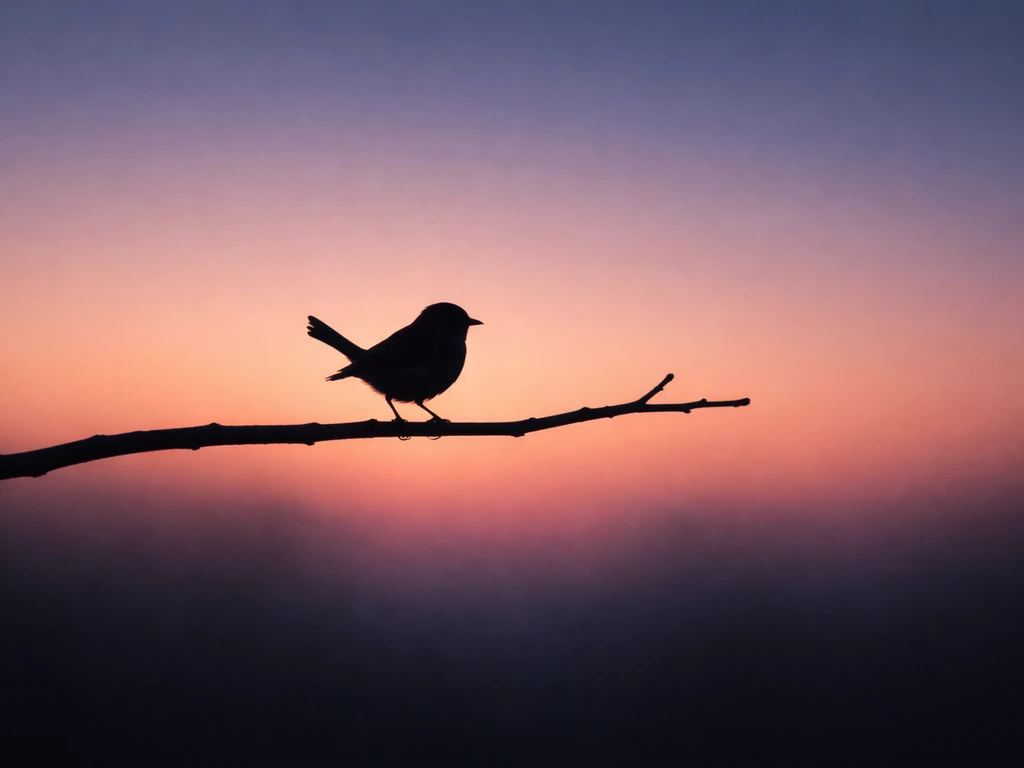
A bird silhouette is a solid, single-tone outline of a bird with no internal color or feather detail visible. It can be a real bird you spot at dawn against a lit sky, a tattoo or logo design, a shape in a dream, or a motif on a piece of art or fabric. In all of these cases, the silhouette strips the bird down to its most essential visual form: overall body size, wing shape, tail length, and posture. That simplicity is exactly what gives it so much symbolic power. When you remove color and detail, what remains is pure archetype. The bird crest meaning can also depend on the specific bird species and the cultural context where the crest is used.
It is worth separating two versions of the term right from the start. The first is a generic bird shape, meaning you can tell it is a bird but not which one. The second is a recognizable species silhouette, where the shape is distinctive enough to identify the bird even without color, like the hooked beak and broad wings of a raptor or the round head and upright posture of an owl. That distinction matters enormously for interpretation. A nameless dark bird shape carries vague, open-ended symbolism. A clearly identifiable crow, dove, or hawk silhouette carries centuries of specific cultural and spiritual meaning.
Meaning by bird type: raptors, owls, doves, crows, and more
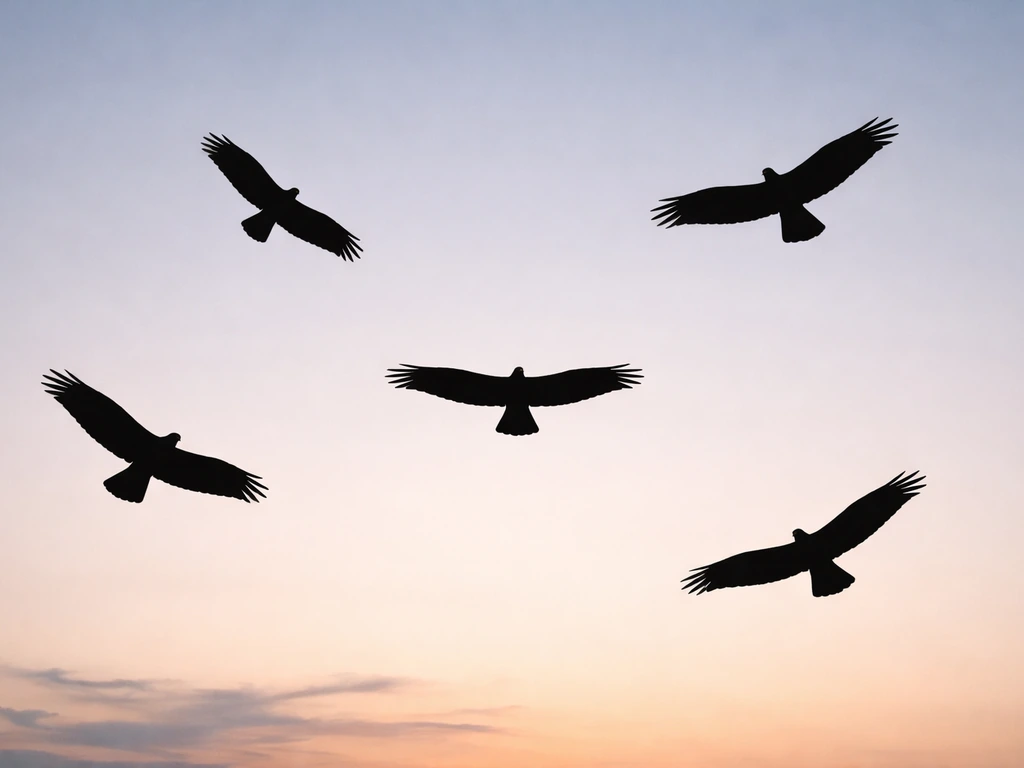
The single biggest factor shaping a bird silhouette's meaning is the bird type. Here is a practical breakdown of the most commonly encountered silhouettes and what they traditionally represent.
Raptors (hawks, eagles, falcons)
Raptors are identified by broad, wide wings, a relatively short tail, and a heavy body. Eagles tend to hold their wings flat in a straight line during soaring; hawks often show a slight droop or dihedral angle. In symbolism, raptor silhouettes represent power, vision, sovereignty, and freedom. An eagle silhouette is one of the most politically loaded bird images in the world, used on national symbols from the United States to Germany to Mexico. A hawk silhouette is associated with focus, precision, and messages from the divine in many Indigenous North American traditions.
Owls
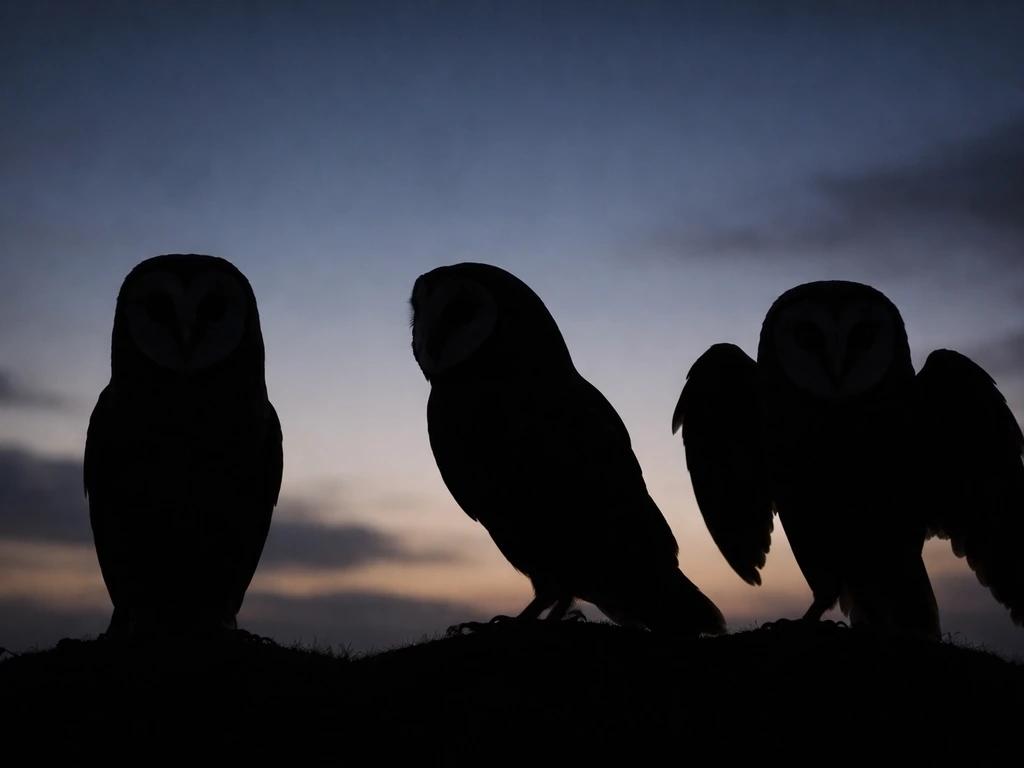
An owl silhouette is one of the most recognizable in the world: round or heart-shaped head, no visible neck, upright posture, and large forward-facing eyes visible even in outline. Symbolically, owls carry dual meanings across cultures. In Western and Greek tradition, the owl (associated with Athena) represents wisdom and knowledge. In many Indigenous American, African, and South Asian traditions, an owl silhouette spotted at night is an omen of death or bad news. In Japanese and some contemporary Western contexts, the owl has been reframed as a luck symbol. Context and cultural background do a lot of work here.
Crows and ravens
A crow or raven silhouette shows a stocky body, a fan-shaped or wedge-shaped tail (ravens have a more distinctly diamond or wedge tail, crows a rounded fan), and a heavy, straight bill. These birds are among the most symbolically loaded in human history. In Norse mythology, Odin's ravens Huginn and Muninn represented thought and memory. In Celtic tradition, the crow or raven was associated with battle, prophecy, and transformation. In many folk traditions worldwide, a crow silhouette seen at dusk signals a crossing between worlds or an incoming change. In contemporary symbolism, crows often represent intelligence, adaptability, and mystery.
Doves and pigeons
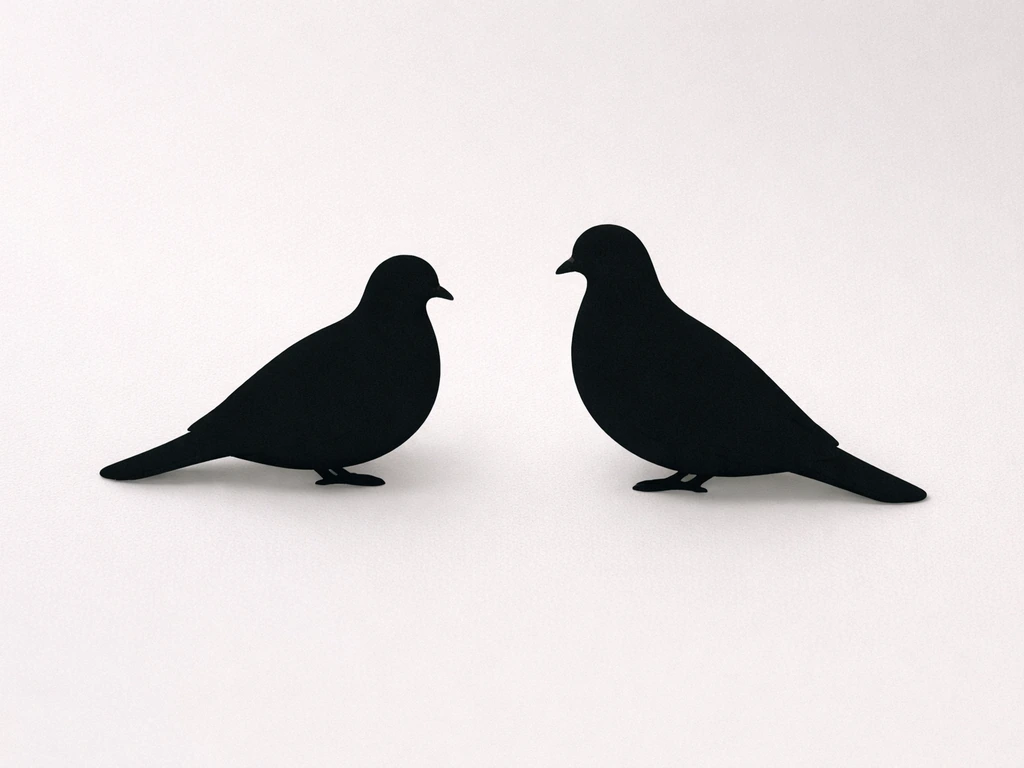
A dove silhouette is compact and round-bodied with a small head and tapered tail. In both religious and secular tradition, the dove silhouette is one of the most universally recognized symbols of peace, hope, and the Holy Spirit in Christian iconography. In ancient Mesopotamian and Greek traditions, the dove was sacred to Aphrodite and Ishtar, representing love and fertility. A dove silhouette in art, tattoo, or dream contexts almost universally carries positive connotations of gentleness, new beginnings, and reconciliation.
Swallows and swifts
Swallows and swifts have extremely distinctive silhouettes: long pointed wings, a forked tail (especially visible in barn swallows), and a compact body. They are traditionally associated with safe return, good luck, and fidelity. Sailors historically tattooed swallow silhouettes to mark miles traveled and to signal a safe return home. Seeing a swallow silhouette in spring is widely considered a good omen across European and East Asian cultures.
Hummingbirds
A hummingbird silhouette is tiny, with a long thin bill, rounded body, and short tail. In Mexican and Central American traditions, hummingbirds are associated with the souls of deceased warriors and with love, resilience, and joy. In many New Age spiritual frameworks, a hummingbird silhouette represents the enjoyment of life, lightness, and the ability to adapt quickly.
Cultural symbolism of bird silhouettes across traditions
Bird silhouettes appear in human art and culture going back tens of thousands of years, from cave paintings to Egyptian hieroglyphs to modern minimalist tattoos. If you are wondering about the bird painting meaning specifically, start by identifying the species and the cultural context behind the artwork. The stripped outline of a bird has always carried more weight than its full-color counterpart because it demands the viewer bring meaning to it.
In heraldry and national flags, bird silhouettes encode political identity. The double-headed eagle silhouette appears on coats of arms from Albania to Russia. The condor silhouette represents sovereignty in several Andean nations. The phoenix silhouette is a recurring motif in East Asian art and architecture, symbolizing renewal and imperial virtue in Chinese tradition, and resurrection and transformation across Greek-influenced Western cultures.
In tattoo culture, bird silhouettes are among the most popular design choices precisely because the outline is clean and scalable. A flock of birds in silhouette flying upward is a widespread tattoo motif symbolizing freedom, personal transformation, or breaking away from constraints. Related forms, like a bird motif on textiles or a bird painting in fine art, often use the silhouette as a starting point for layered meaning, and the species chosen does most of the interpretive work. If you are trying to interpret a specific bird silhouette, “bird drawing meaning” helps you match the shape to likely symbolism.
In Japanese ink painting (sumi-e), the silhouetted crane is one of the highest symbolic images, representing longevity, fidelity, and noble character. In West African Adinkra symbolism, the Sankofa bird shown in profile or silhouette represents the wisdom of learning from the past. In Indigenous Australian art, bird outlines frequently encode specific Dreaming stories with ancestral and territorial significance.
Spiritual and folk interpretations: omens, messages, and superstition
Across folk traditions worldwide, seeing a bird in silhouette, especially at liminal times like dawn, dusk, or during a significant life event, is frequently interpreted as a sign or message. It is worth being clear about what these traditions actually claim versus what gets conflated or exaggerated in modern pop spirituality.
In Roman augury, priests called augurs interpreted the flight of birds to divine the will of the gods. The direction of flight, the species involved, and the number of birds all mattered. A hawk flying from right to left (a sinister omen in the original Latin sense) was a warning. The silhouette against the sky was the primary visual cue, which shows just how old the practice of reading bird outlines really is.
In British and Irish folk tradition, a single crow or raven silhouette is the basis for the rhyme 'one for sorrow, two for joy,' which assigns meaning to the number of corvids seen. Seeing a solitary dark bird silhouette was considered unlucky, while a pair was a good sign. This is one of the more commonly encountered pieces of folk belief in contemporary Western culture.
In many South and Southeast Asian traditions, including Hindu and Buddhist contexts, birds are seen as vehicles or messengers of the divine. A bird silhouette crossing your path at an important moment is interpreted as a signal to pay attention, though what the signal means depends on the species. A peacock silhouette is considered auspicious; a crow or vulture silhouette can signal impending change or death, depending on the regional tradition.
Where you need to be careful: modern pop spirituality sites often flatten these rich, regionally specific traditions into generic statements like 'birds are always messengers of hope.' That is not accurate. The actual folk traditions are much more nuanced, and in many of them a bird silhouette is a warning or a signal of transition rather than comfort. Treat the folklore with the complexity it deserves.
Reading a real-life silhouette: behavioral clues that change the meaning
When you actually see a bird in silhouette in the real world, behavior and setting add a layer of meaning that goes beyond symbolism. This is where birding skill and cultural interpretation genuinely overlap.
Birders use silhouette as a primary identification tool, and their methodology translates directly to more precise symbolic interpretation. According to the Audubon Society, the overall shape of a bird, including wing shape, tail length, and the cadence of wingbeats, is one of the most reliable identification cues available. A common method for interpreting flight silhouettes is to use multiple structural cues together, such as size (against known yardsticks), wing shape, and tail shape blank" rel="noopener noreferrer">wing shape, tail length, and the cadence of wingbeats. The RSPB similarly emphasizes that blank" rel="noopener noreferrer">concentrating on the length and shape of the tail and wings when a bird is flying gives you enough to work with even in low light. So even if you cannot see color, you can often identify whether you are looking at a hawk (broad, rounded wings, fanned tail), a falcon (long pointed wings, narrow body), or a crow (broad flat wings, fan tail) from shape alone.
Once you know the species, behavior layers on additional meaning. A raptor silhouette circling slowly on thermals at midday is simply hunting. The same silhouette perched motionless at the top of a dead tree at dusk is far more likely to trigger folk omen associations, and historically that is exactly the kind of sighting that generated them. Context matters: a bird silhouetted against a setting sun while you are at a graveyard hits differently than the same bird spotted through your kitchen window.
Time of day is particularly meaningful. Dawn and dusk are liminal times in virtually every spiritual and folk tradition. A bird silhouette visible at these hours, especially perched or slowly moving rather than actively foraging, is the classic setup for both genuine omen interpretation and the cognitive pattern-matching that generates spiritual experiences. Neither response is wrong; they are just operating on different frameworks.
| Silhouette behavior | Likely species cue | Common symbolic reading |
|---|---|---|
| Circling slowly overhead | Raptor or vulture (broad wings, stable glide) | Vigilance, transition, end of a cycle |
| Perched motionless at dusk, upright | Owl (round head, no neck visible) | Omen, message, liminal awareness |
| Fast, darting flight with forked tail | Swallow or swift | Good luck, freedom, swift change |
| Hopping on ground, fan tail | Crow or raven | Intelligence, transformation, warning |
| Small, hovering with long bill | Hummingbird | Joy, resilience, love |
| Large, soaring with flat outstretched wings | Eagle | Sovereignty, freedom, divine vision |
| Compact, round-bodied, tapered tail | Dove or pigeon | Peace, hope, new beginning |
Bird silhouettes in dreams: what they can signal
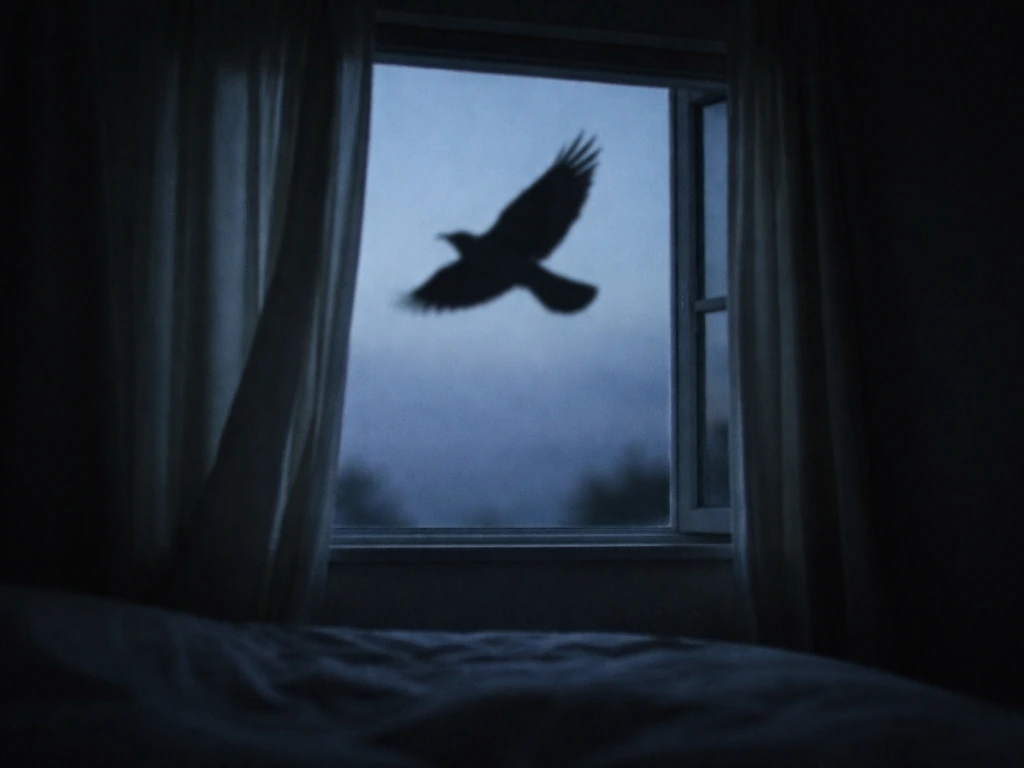
A bird silhouette in a dream, as opposed to a fully visible, colorful bird, carries a specific nuance worth paying attention to. The silhouette form suggests something partially known, or something approaching clarity but not yet there. Dream interpretation frameworks, from Jungian psychology to folk dream dictionaries, treat a dark or shadowy bird shape as a figure associated with the unconscious, with what you know but cannot yet name.
The bird type still matters even in dreams. A large dark silhouette circling above you in a dream is commonly associated with feelings of being watched, judged, or facing an unavoidable situation. A small silhouette flying away can represent lost opportunity or the need to let something go. A bird silhouette approaching you often signals incoming news or a shift in perspective. A flock of silhouetted birds is frequently linked to community, social pressure, or collective unconscious themes.
Your emotional state in the dream is the most important interpretive variable. The same crow silhouette feels entirely different if you experience it with calm curiosity versus dread. If the silhouette makes you feel peaceful, most dream frameworks read it as a positive signal of transition or freedom. If it feels threatening, that points toward unresolved fear or an approaching challenge you are not yet ready to face consciously. Trust the emotional register of the dream before reaching for a species-based meaning.
Compared to seeing a fully rendered bird in a dream, a silhouette dream tends to point toward something not yet fully understood, an idea forming, a relationship changing, or a decision approaching. The shadow form is the key clue. That shadow form is often what people mean when they talk about bird shadow meaning shadow form is the key clue. This connects meaningfully to the broader territory of bird shadow meaning as a distinct interpretive category.
Slang, colloquial use, and misconceptions worth clearing up
In contemporary slang, 'bird' carries its own set of meanings that occasionally bleed into how people interpret bird silhouette imagery. In British English, 'bird' is casual slang for a woman. In hip-hop and street slang, 'bird' often refers to a kilogram of cocaine. Neither of these usages has any connection to bird silhouette symbolism, and if you are searching for the meaning of a bird silhouette tattoo on someone's arm or a bird logo on a brand, you are firmly in the art and symbolism territory, not the slang territory.
One common misconception worth addressing directly: not every dark bird is a bad omen. Pop spirituality content online has a strong bias toward framing dark-colored bird silhouettes, especially crows and ravens, as universally negative. In reality, corvids are among the most positively regarded birds in many traditions, including Norse mythology, Pacific Northwest Indigenous cultures, and contemporary Western witchcraft traditions where the crow is a symbol of intelligence and magic rather than misfortune.
Another misconception: a bird flying into your window and leaving a silhouette-like smudge on the glass is not the same interpretive territory as a bird silhouette. The window strike has its own folk tradition, but the smudge shape is usually the result of the oils from the bird's feathers, not a deliberate symbolic outline. Conflating these two things leads people down confusing interpretive rabbit holes.
Finally, generic bird silhouettes used in graphic design, logos, and branding do not inherently carry the symbolism of the species they resemble. A bird logo may look like a swift or a hawk, but the brand likely chose it for aesthetic reasons rather than deep symbolic intent. Unless the brand has explicitly invoked the symbolism, be cautious about reading too much into it. Bird logo meaning operates somewhat differently from traditional symbolic or folk interpretation.
How to figure out the meaning fast: a practical checklist
Whether you just saw a bird silhouette in real life, in a dream, on a piece of art, or as a tattoo, running through this sequence will get you to a useful interpretation quickly. If you are using a drawing that shows a bird from a top view, the species shape and wing outline will still drive what the image suggests bird drawing top view.
- Identify the context first: Is this a real bird you observed, something in a dream, a piece of art, a tattoo, or a symbol? Each context has its own interpretive framework.
- Identify the species or type if possible: Look at overall size, wing shape (broad and rounded vs. long and pointed), tail shape (forked, fan, wedge, or pointed), bill length, and posture. Use structural cues together for the best result. Raptors, owls, corvids, doves, and swallows all have distinct enough silhouettes to separate.
- Note the time and setting: Dawn, dusk, a graveyard, a hospital, a celebratory event, a significant personal day. These contexts amplify or modulate meaning considerably.
- Note the bird's behavior: Circling, perching motionless, flying toward you, flying away, in a group or alone. Behavior shifts the symbolic reading significantly.
- Check your emotional response: Especially relevant for dreams. Calm, curious, afraid, or joyful responses point you toward different interpretations regardless of species.
- Apply the most relevant cultural framework: If you are in a tradition that has specific lore about this bird (Celtic, Norse, Hindu, Indigenous American, etc.), prioritize that over generic online content. If no specific tradition applies, lean on the broad cross-cultural associations.
- Separate folk belief from behavioral reality: If the bird is acting in a way that has a clear ecological explanation (hunting, migrating, roosting), acknowledge that first. The symbolic layer sits on top of the real behavior, not instead of it.
- Cross-check with related imagery if relevant: A bird silhouette in art may be functioning as a bird motif or a bird drawing with its own design language, so consider the full visual context before assigning a single meaning.
The goal here is not to land on one definitive answer but to arrive at the most plausible, well-grounded interpretation given everything you know about the sighting, image, or dream. Bird silhouettes are rich precisely because they can carry multiple meanings simultaneously. A crow silhouette at dusk can be an owl hunter, a Norse omen, and a piece of your unconscious processing a life change all at once. None of those readings cancels the others out.
FAQ
How can I tell what bird a silhouette is if I only see the outline?
Use posture and wing geometry first. A raptor-like silhouette (broad wings, fanned or short tail) suggests hunting or sovereignty themes, while a dove-like silhouette (compact body, tapered tail) tends to read as peace or reconciliation. If you cannot confirm species, interpret it as a general “transition or message” rather than assigning a specific bird’s long-standing symbolism.
What’s the difference between a real silhouette and a lighting or motion illusion when interpreting meaning?
Check whether it is a true silhouette image (solid single tone) or a “partial shadow” effect. Backlit wing shapes can create misleading silhouettes, especially for small birds or flapping motion. If the edges look blurred from movement or lighting, treat the meaning as tentative until the shape stabilizes (or try comparing to a known profile).
If a silhouette shows up in a dream, should I trust the species meaning or my feelings more?
Do not treat dream silhouettes as fixed omens without the emotional tone. Two people can have the same crow-shaped silhouette dream and get opposite meanings if one feels calm and the other feels threatened. If the dream repeats with the same feeling, that is a stronger signal of an unresolved fear or pending decision than the bird species alone.
Does the number of silhouettes (single bird vs flock) change the meaning?
In most folk frameworks, the number of birds and their movement pattern matter more than people expect. A single silhouette may align with “one message” themes, while a flock often points to community pressure or collective change. Direction and spacing also help, for example, a group flying upward is commonly read as release or expansion rather than danger.
How do I know if a window smudge is part of the “bird silhouette meaning” topic?
Yes, and it is a common mistake. A bird strike smudge on a window is typically residue from feather oils, not an intentional outline or sign. If you can identify a deliberate silhouette shape in the scene (clear outline in art, direct sighting at dusk, or a consistent graphic), then symbolism reading is more defensible than if it is just an accident-shaped smudge.
When I see a generic bird icon in a logo or graphic, does it still carry the same symbolism as a species silhouette?
Treat generic “bird outline” art differently from species-specific silhouettes. If the design is not explicitly referencing a species (for example, a simple flying bird icon), the meaning often defaults to broad archetypes like freedom or transition. If the outline matches a recognizable species and the creator likely intended it, species symbolism becomes more relevant.
How should I interpret a bird silhouette tattoo beyond just the bird shape?
If you are interpreting a tattoo, check whether it is paired with extra context cues like dates, direction of flight, location (over the heart vs forearm), and accompanying symbols. The same silhouette can flip meaning depending on orientation, scale, and whether it is shown alone or as a flock, those are common tattoo conventions that heavily steer interpretation.
Does the time of day change how a bird silhouette is interpreted?
When the silhouette is against a bright sky, the scene is already signaling “liminal time” in many traditions. Dawn or dusk sightings, especially with the bird perched or slowly moving, are more likely to be interpreted as messages in folk contexts. Midday soaring can be read more practically (behavior and ecology) than spiritually.
Why do people assume dark bird silhouettes are always bad, and is that accurate?
Avoid the “dark bird equals bad omen” shortcut. Corvids can be framed as intelligence, magic, or transformation in multiple traditions, and even in darker contexts the meaning often depends on circumstances (weather, flight pattern, and your reaction). Use the broader context first, then refine with species and emotion.
What’s a practical way to go from “I saw a silhouette” to a useful interpretation?
In birding, the most reliable clues come from overall silhouette proportions, not internal detail. After you identify the type (raptor, owl, crow-like, dove-like), interpret meaning through behavior (circling, perched, hunting), setting (graveyard, garden window, open field), and your emotional response. If you skip species and behavior, you usually end up with vague interpretations.
Next Article
Bird Drawing Top View: Proportions, Steps, and Fixes
Step-by-step top-down bird drawing: proportions, visible details, reference tips, and fixes plus light bird-meaning cont