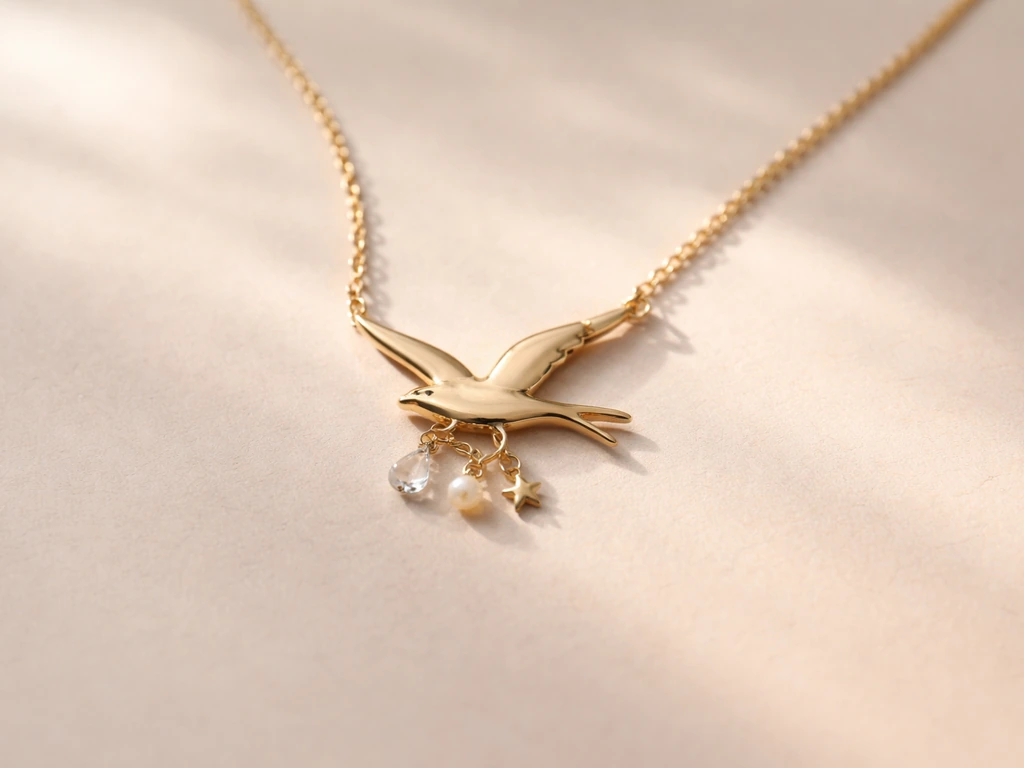
A bird charm means something different depending on whether you're holding a small bird-shaped amulet, watching a robin land on your windowsill, or dreaming about a glowing feather. At its core, a 'bird charm' is either a physical token (a piece of jewelry, figurine, or talisman featuring a bird) believed to carry protective or lucky energy, or it's the bird itself acting as an omen or sign in waking life or dreams. If you mean a bird bell or charm tied to “tota,” that often points to a specific cultural bird-bell tradition and its localized symbolism bird bell tota meaning. The meaning shifts based on which bird, what color, where you encountered it, and whether it's a physical object or a real event. Once you know which of those categories you're in, the interpretation becomes much more specific and useful.
Bird Charm Meaning: Symbolism, Folklore, Dreams, and How to Decode

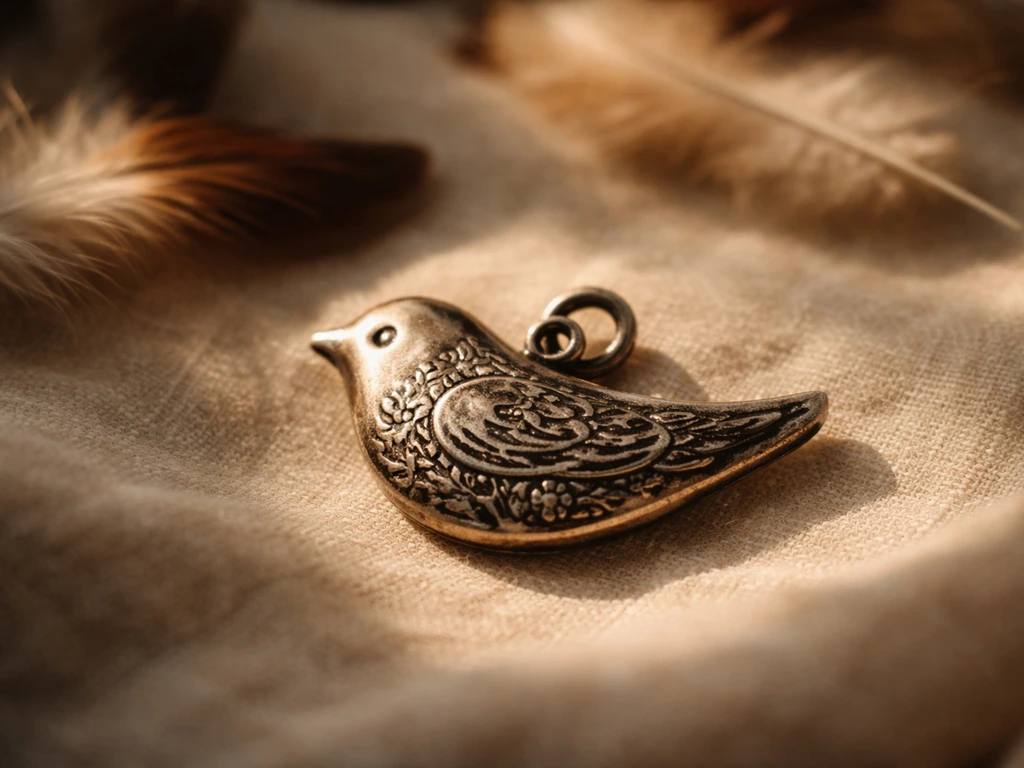
What 'bird charm' usually means (and the most common readings)
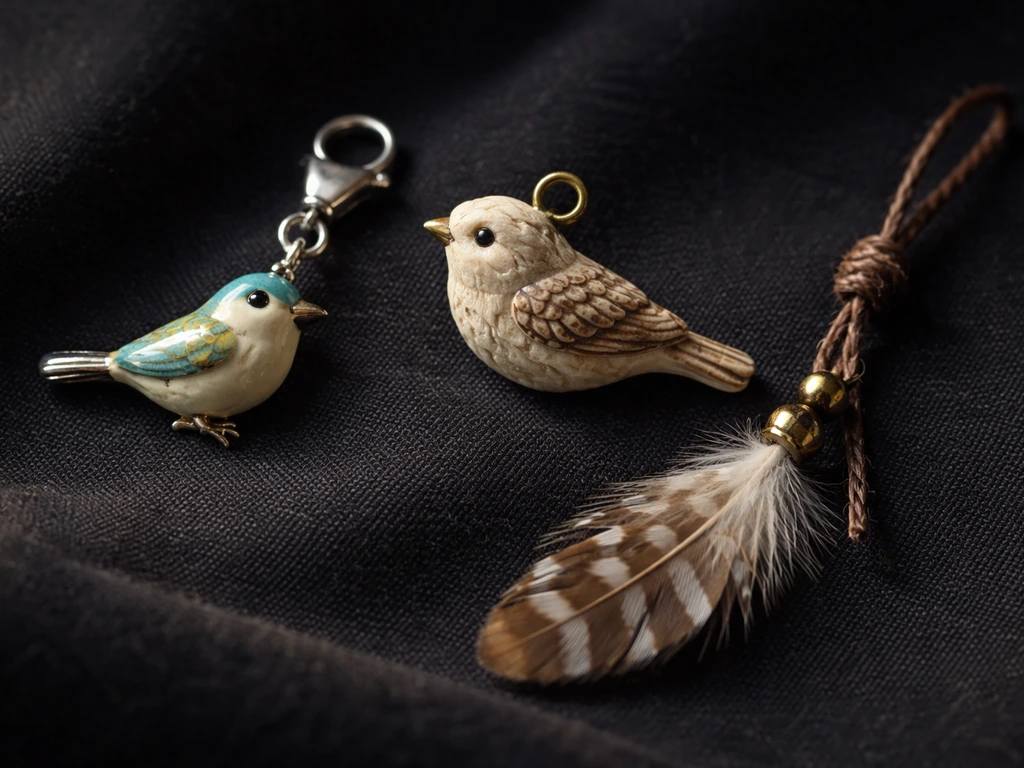
The word 'charm' carries at least three distinct meanings, and all three show up in how people use 'bird charm.' First, there's the object: a charm in the jewelry or amulet sense is something worn or carried on the body, believed to offer protection, attract luck, or carry spiritual energy. Second, there's the omen or sign: a bird that appears in an unusual or striking way is sometimes called a 'charm' in folk speech, meaning an enchanting or meaningful event. Third, there's the verbal or ritual sense: in older magical traditions, a 'charm' was a spoken spell or blessing, sometimes tied to birds as messengers of that magic.
In practice, most people searching 'bird charm meaning' are asking about one of two things: (1) what does a bird-shaped amulet, pendant, or token symbolize, or (2) what does it mean when a specific bird shows up in their life in a noticeable way. Both are legitimate questions with real answers, and this guide covers both. If you're looking specifically at bird jewelry, bird necklaces, bird pendants, or bird bracelets, those objects draw on the same underlying symbolism but carry their own nuances worth exploring separately.
Bird symbolism basics: species, color, and context matter enormously
Bird symbolism is not a one-size-fits-all system. blank" rel="noopener noreferrer">Ancient Greek ornithomancy (reading omens from bird behavior) and Roman augury both treated different species as carrying completely different meanings, and that specificity still holds in most cultural traditions today. A swallow charm means something very different from an owl charm. If you are wondering about a bird nest necklace meaning, the same approach applies by matching the bird type and symbolism to your situation swallow charm. A white bird carries different energy than a black one. And the context in which you encounter a bird, whether it's flying left or right, entering your home or leaving it, singing or silent, changes the reading significantly.
| Bird | Common charm/symbolic meaning | Color note |
|---|---|---|
| Swallow | Safe return, loyalty, good luck at sea, protection of home | Blue/white coloring reinforces peace and fidelity themes |
| Owl | Wisdom, prophecy, transition; protective in some cultures, ill omen in others | White owls = spiritual guidance; dark owls = death/transition |
| Robin | New beginnings, renewal, a message from the deceased | Red breast is the key visual; red = life force, passion |
| Hummingbird | Joy, resilience, lightness; good luck charm in many Latin American traditions | Iridescent coloring = transformation and magic |
| Eagle | Power, divine authority, courage; national/tribal protective symbol | Golden eagle = solar energy and higher vision |
| Dove | Peace, love, the Holy Spirit, purity; one of the most universal 'good' bird charms | White is essential to the meaning; a dark dove shifts the tone |
| Crow/Raven | Intelligence, mystery, magic, shapeshifting; protective in Celtic and Norse traditions | All-black = liminal energy; associated with transitions |
| Peacock | Beauty, protection (the 'eye' feathers ward off evil), immortality | Eye pattern is the protective charm element |
| Sparrow | Humility, community, the soul; sailors used sparrow tattoos as protective charms | Plain brown = everyman energy, approachability |
| Phoenix (mythical) | Rebirth, resilience, transformation; heavily used in modern charm jewelry | Red/gold = fire, renewal |
Color is a shortcut that runs across nearly every tradition. White birds trend toward purity, spiritual messages, and peace. Black birds trend toward mystery, transition, and magic rather than doom (despite popular misconception). Red birds, especially in North American folk tradition, are seen as messengers. Blue birds carry calm, loyalty, and happiness associations in many cultures. If you're trying to decode a bird charm quickly, start with species, then color, then the direction or behavior of the bird if it's a live sighting.
Spiritual and occult readings: protection, luck, and guidance
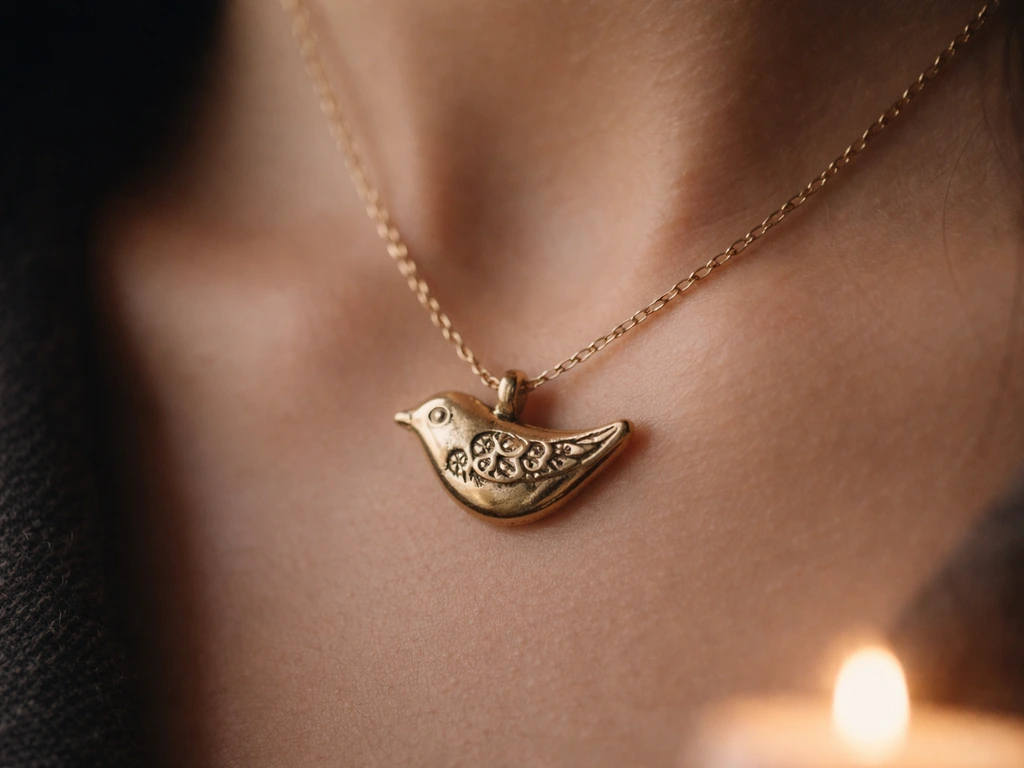
In spiritual and occult frameworks, a bird charm functions as an amulet: an object worn or kept close to the body that is believed to deflect harm, attract fortune, or connect the wearer to divine guidance. This is one of the oldest categories of human artifact. The protective logic is consistent across traditions: birds, as creatures that move freely between earth and sky, are seen as natural intermediaries between the physical and spiritual realms. Wearing a bird charm is a way of aligning yourself with that in-between energy.
Here's how the three main spiritual functions break down in practice:
- Protection charms: Owl, eagle, and peacock are the most commonly used birds for protective amulets. The peacock's 'eye' feathers are specifically cited across South Asian and Mediterranean traditions as warding off the evil eye. Wearing an owl charm is often connected to psychic protection and warding off deception.
- Luck and abundance charms: Swallows, hummingbirds, and robins are most often associated with good fortune, fresh starts, and attracting positive energy. In many Latin American and Caribbean spiritual traditions, hummingbird charms are used in love and luck workings.
- Guidance and connection charms: Doves, cranes, and ravens are frequently used when the intent is communication with spirit, ancestors, or higher self. In many Indigenous American traditions, specific bird feathers (and by extension, bird charms) are used in ceremony to carry prayers upward.
- Transition and transformation: Phoenix and crow charms are common in modern witchcraft and new age practice specifically for periods of major life change. If you're in a transitional phase and drawn to a crow or raven charm, that instinct fits the symbolism.
One practical note: in many spiritual traditions, the material of the charm matters alongside the bird depicted. A silver swallow charm carries different energy than a copper one. If you're choosing or interpreting a bird charm in a spiritual context, factor in metal, stone, and color of the piece alongside the species. A “bird stone meaning” often depends on the type of bird carved into the stone and how the stone is used, worn, or carried.
Cultural and folklore meanings of birds used as charms
Bird charms appear in virtually every major cultural tradition on earth, and the symbolism is often surprisingly consistent across cultures that had no contact with each other. That consistency is worth taking seriously as a reflection of how universally humans have projected meaning onto birds.
European and Celtic traditions
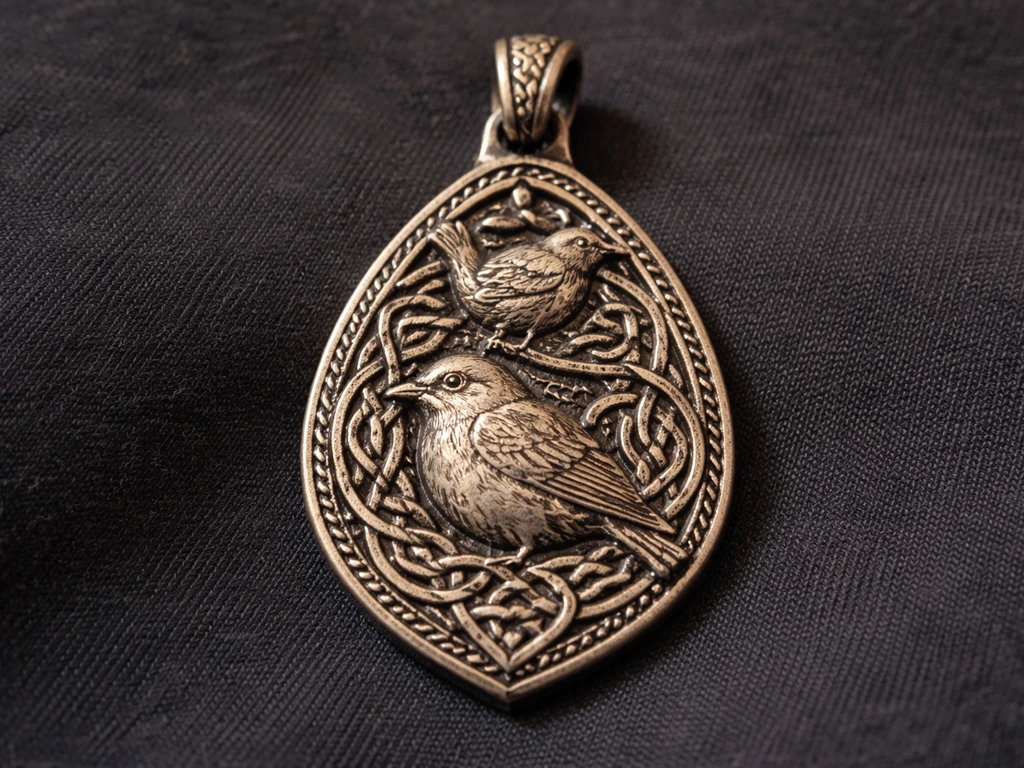
In Celtic traditions, the wren was considered the king of birds and was associated with prophecy and cunning. The robin was a guardian of the dead and a messenger from the other world. British sailors historically tattooed swallows as protective charms: one swallow for 5,000 nautical miles sailed, and the belief was that the bird's spirit would carry a drowned sailor's soul home. The swallow became one of the most enduring bird charm symbols in Western folk tradition, and it's still one of the most common bird motifs in charm jewelry today.
East Asian traditions
In Chinese culture, the crane is a symbol of longevity, wisdom, and immortality, and crane charms are given as gifts for long life and good health. The phoenix (Fenghuang) represents yin energy, virtue, and grace, and is paired with the dragon in marriage symbols. In Japan, the crane is the central figure in the legend of one thousand paper cranes: folding 1,000 cranes (senbazuru) is believed to grant a wish, making the paper crane itself one of the most widely practiced bird charm traditions in the world.
Indigenous and African traditions
Across many Indigenous North American nations, specific birds are considered spirit helpers or clan animals, and wearing bird imagery or feathers is connected to clan identity, ceremony, and spiritual protection. In many West African and Afro-diasporic traditions (including Vodou, Candomblé, and Santeria), specific birds are associated with specific orishas or lwa: the rooster with Oggun, the parrot with Obatala, the vulture with Maman Brigitte. Bird charms in these traditions are ritual objects with specific consecration protocols, not decorative items.
Ancient Egyptian and Mediterranean traditions
The ibis was sacred to Thoth, god of writing and wisdom, and ibis amulets were buried with the dead to ensure safe passage. The falcon (associated with Horus) was one of the most powerful protective amulets in ancient Egypt. In Greece and Rome, augury involved reading the flight patterns and calls of specific birds: flight from the left (sinister) was a bad omen, from the right (dexter) was favorable. This directional logic shows up in folk superstition all the way through to modern times.
Real bird behavior versus omens: separating signal from noise
This is where a bird-meaning site needs to be honest with readers: a lot of events that get interpreted as bird omens have straightforward natural explanations, and knowing those explanations doesn't have to cancel out the symbolic meaning. You can hold both.
The most common example is a bird flying into a window or entering a house, which has a longstanding folklore association with death or bad news. Snopes has documented this as one of the most persistent bird superstitions. The ornithological reality is that bird-window collisions are an extremely common, well-documented conservation problem. The American Bird Conservancy estimates up to one billion birds die from window strikes in the US each year. Birds hit glass because they perceive reflections of sky and trees as navigable space, not because they're delivering a message. The USGS notes that these strikes follow seasonal and temporal patterns tied to migration and sun angle, which is why they seem to happen in clusters. Tufts Wildlife Clinic notes that the behavior changes as territories shift and sun glare changes over the course of the year. The USFWS offers practical guidance for preventing collisions, including applying window decals and breaking up the reflective surface.
None of that means you can't find personal meaning in the moment. It means that if a bird hits your window repeatedly over several weeks, the most actionable response is to check your window for reflective hazards, not to brace for disaster. Meanwhile, if you want to use the event symbolically, a bird surviving a strike and flying away is actually a powerful image of resilience, which maps neatly to the phoenix or crane symbolism above.
Genuine behavioral signals worth paying attention to are more about patterns than single events:
- An unusual species showing up in your yard (one you've never seen before) can be a legitimate prompt for reflection, and is also worth noting ornithologically as a range extension or migration event.
- A bird returning to the same spot repeatedly, especially at an unusual time, is more behaviorally meaningful than a one-off sighting.
- A bird making sustained eye contact or approaching unusually close is genuinely atypical behavior that can reasonably prompt a 'what is this?' question.
- A bird calling at night when it typically doesn't (like a robin singing at 3am) is worth noticing, though it's usually attributable to light pollution in urban areas.
What 'bird charm' means in a dream
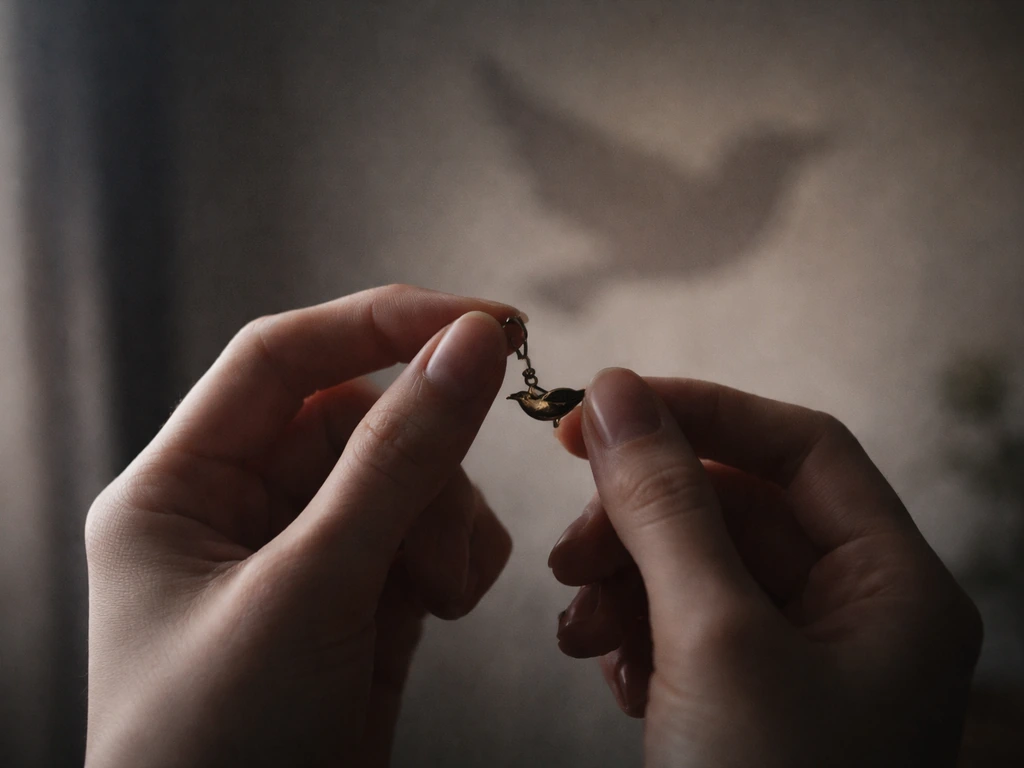
Dreams involving bird charms or birds that seem to carry a 'charmed' or magical quality are worth unpacking carefully because the dream language is layered. A bird charm in a dream could appear as a physical object (you're wearing a bird pendant, someone gives you a bird amulet), as a bird that behaves in a supernatural or enchanted way (glowing, speaking, unusually tame), or as a bird that seems to be protecting or guiding you.
In classic dream interpretation frameworks, birds in general represent aspirations, freedom, perspective, and the soul's journey. When the bird in a dream has a 'charm' quality, either because it's a token or because it feels magical, the interpretation typically centers on receiving guidance, protection, or a message from a part of yourself you're not consciously accessing. In particular, the bird pendant meaning often centers on receiving guidance, protection, or reassurance. The emotional tone of the dream is the most important factor: a dream that feels peaceful and warm around a bird charm points toward comfort, protection, and reassurance. A dream that feels urgent or unsettling around the same image points toward a warning or something you're avoiding.
Common dream scenarios and what they suggest
| Dream scenario | Common interpretation |
|---|---|
| Someone gives you a bird charm as a gift | You're receiving support, protection, or wisdom from a relationship in your waking life; the giver is significant |
| You find a bird charm on the ground | Unexpected guidance or luck; something valuable you nearly overlooked is available to you |
| A bird charm breaks or is lost in the dream | Anxiety about losing protection or stability; a relationship or belief system feels fragile |
| A bird charm transforms into a real bird | Transition from receiving external symbols to embodying the quality yourself; a sign of growing personal power |
| A real bird in a dream feels 'charmed' or magical | Your subconscious is flagging the bird's species symbolism as especially relevant right now |
| You're making or crafting a bird charm | Taking active steps to protect yourself or invite something specific; a self-empowerment signal |
| A bird charm glows or emits light | Strong spiritual guidance signal; traditionally associated with ancestral or divine contact in dream traditions |
One thing to factor in: if you went to sleep thinking about bird symbolism, or you've been handling bird charm jewelry recently, the dream may be processing that waking stimulus rather than generating new meaning. Dreams closest to falling asleep (hypnagogic states) often replay waking preoccupations. Dreams in deeper sleep cycles are generally considered more symbolically rich in most interpretive traditions.
How to land on the right meaning fast
If you're trying to interpret a specific bird charm experience right now, answer these questions in order. They'll narrow down the correct framework quickly.
- Is it a physical object or an event? If you're holding or wearing a bird charm (jewelry, figurine, amulet), go to the amulet/talisman framework: species + color + material. If it's a bird you saw or that did something notable, go to the omen/behavioral framework.
- Which bird or species? Even a rough identification helps enormously. Robin, owl, crow, dove, hummingbird, eagle, swallow, and sparrow all carry distinct meanings. If you don't know the species, describe the size, color, and behavior and work from there.
- What color is dominant? White, black, red, blue, and iridescent all shift the reading significantly. For physical charms, also note the metal or material color.
- Where did you encounter it? At home suggests personal/domestic themes. At work suggests career and ambition themes. Near water suggests emotional and intuitive themes. On a journey or in transit suggests transition and movement themes.
- Was it waking life or a dream? Waking-life sightings get the behavioral and cultural folklore framework. Dreams get the dream-interpretation framework, with your emotional reaction in the dream weighted heavily.
- What's your emotional context right now? Are you in a period of change, grief, new beginnings, or seeking protection? The meaning that resonates with your current situation is usually the most accurate one for you, regardless of tradition.
- Is there a specific tradition or framework you identify with? Celtic, East Asian, Indigenous, Afro-diasporic, or general Western spiritual traditions all use different bird symbolism systems. If one of those is your background or practice, prioritize that framework over generic internet symbolism lists.
Once you've answered those seven questions, you'll have a specific enough picture to get a real interpretation rather than a vague 'birds mean freedom' generalization. If you're working with physical bird charm objects specifically, the same questions apply but also consider the context of how you received the object: a gifted charm often carries the intention of the giver as much as the symbolism of the bird. A self-chosen charm reflects what you're intentionally calling in. A found charm is its own category, much like a found feather, and is widely regarded as one of the more significant ways a symbolic object can arrive.
Bird charms in all their forms, physical tokens, folkloric omens, dream imagery, and spiritual tools, are ultimately a language. A bird cage necklace meaning can follow the same logic, since the charm is shaped to carry symbolism about freedom, protection, and emotional boundaries. Learning that language means getting specific. The more precisely you can identify which bird, in which context, with which emotional backdrop, the more useful and accurate your interpretation will be. Start with what you actually experienced and work outward from there.
FAQ
What’s the difference between a bird charm meaning as an amulet versus a bird charm meaning as an omen?
Use the “source” test. If you are interpreting something you wore, kept, or received (a pendant, figurine, stone, or feather), it fits the amulet meaning. If you are interpreting a live bird event (a landing, a sudden appearance, a window strike) it fits the omen or sign meaning. In real life, people often mix them, but the most useful readings keep those categories separate until you have a clear pattern.
If the bird in the story is the wrong species, can the meaning still apply?
Usually, no. Many traditions treat species as the primary key, and species shifts the interpretation more than most people expect. If you only remember “a small bird” or “a dark bird,” treat the meaning as provisional, then refine it by describing size, beak shape, tail length, and typical behavior (hovering, ground foraging, perching). Color helps, but species uncertainty is the biggest source of misreadings.
Do bird charm meanings depend on whether the charm is gifted, self-chosen, or found?
Yes. A gifted bird charm often reflects the giver’s intention (comfort, protection, remembrance), even if the symbolism overlaps. A self-chosen piece tends to mirror what you are actively calling in. A found charm or found feather is often treated as a “message delivery,” so people emphasize timing and circumstances around the discovery more than the object itself.
How should I interpret a bird charm dream if the dream emotion is mixed (comfort but also anxiety)?
Mixed emotions usually point to both invitation and hesitation. Comfort can signal reassurance or alignment with guidance, while anxiety can indicate you are not ready to act on that guidance yet. A practical next step is to write two lists from the dream, “What felt safe” and “What felt threatening,” then look for real-world parallels, such as boundaries you want to set or a decision you are avoiding.
What if a bird charm meaning online seems to contradict what I experienced in my life?
Don’t force the match. Start with your concrete details, species or at least likely type, color, direction or movement, and your emotional tone. Then choose the interpretation framework that best fits those specifics. If multiple sources claim the same bird means opposite things, that’s a sign the context (culture, color, and your emotion) matters more than the generic description.
Is it a mistake to take window-flying birds as a bad omen?
It can be, if you treat it as a sure sign rather than a cue to check the environment. Bird-window strikes have strong natural explanations, so the most actionable approach is to reduce reflective hazards (decals, frit, or visual breaks on the glass) before assuming the event is supernatural. Symbolically, a bird surviving and leaving can be framed as resilience, which tends to be a more psychologically useful interpretation.
How do I know whether the “direction” matters in a bird charm meaning I’m reading (left versus right, entering versus leaving)?
Use the directional rule only when the narrative clearly includes it and when you are working in a tradition that emphasizes augury or omen mechanics. If your encounter is simply “a bird landed,” direction is usually less reliable than species and color. If your encounter explicitly includes entry (into the home) or repeated patterns (same route, same time of day), direction can become more meaningful as part of the pattern.
Does the material of a bird charm (silver, copper, stone type) change the meaning?
Often, yes in occult and spiritual usage, even if the bird species symbolism stays the same. Material can affect the “tone” of the charm, for example a base-metal piece may be treated as grounding and a bright metal as protective or reflective, depending on the practitioner. If you want a consistent approach, interpret bird species as the main theme and treat material as a secondary modifier rather than the primary driver.
If I don’t know the color or bird species clearly, what’s the best way to interpret anyway?
Stop and collect better sensory cues. Without reliable species and color, your interpretation should stay broad, focused on the most stable themes in your tradition (guidance, aspiration, protection, freedom). For a more accurate reading, note the setting (indoors or outdoors), time (morning versus night), and behavior (perching, flying in loops, staying close), then build the meaning from those anchors.
Can a bird cage necklace meaning still follow the same bird charm meaning logic?
Yes, but treat it as symbolism with constraints. A bird cage theme usually points to boundaries, containment, or controlled freedom, while still using the bird archetype of movement and soul-like aspiration. When you interpret it, ask what “freedom versus restriction” looks like in your current life, relationships, habits, or emotional limits, rather than only focusing on protection or luck.
Bird Necklace Meaning: Symbolism by Bird Type and Context
Decode bird necklace meaning by bird type, symbolism, culture, myths, and charms to identify your necklace’s message.