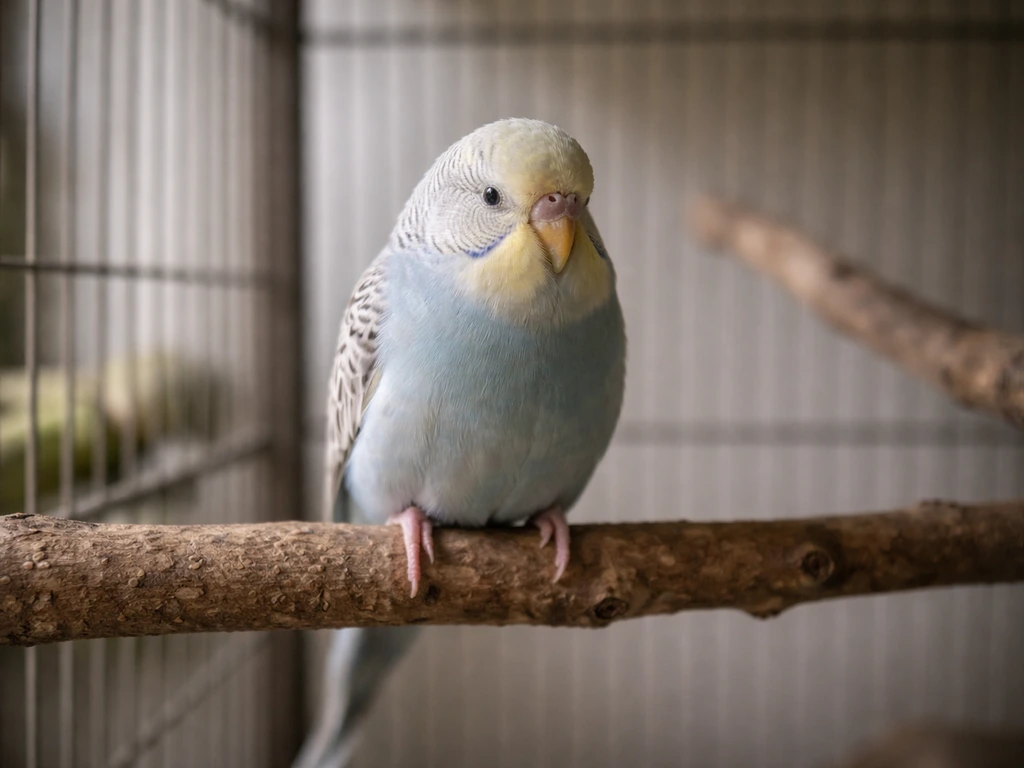
A bird necklace most commonly signals freedom, transformation, or a spiritual connection to something beyond the everyday. But that's the broad answer. The specific meaning shifts depending on the bird species depicted, the posture of the design, any added charms, the material, and the cultural tradition the piece is drawing from. A dove necklace with an olive branch means something quite different from a raven pendant, and both mean something different from a tiny hummingbird charm.
Bird Necklace Meaning: Symbolism by Bird Type and Context

Marcus Holloway
13 May 2026
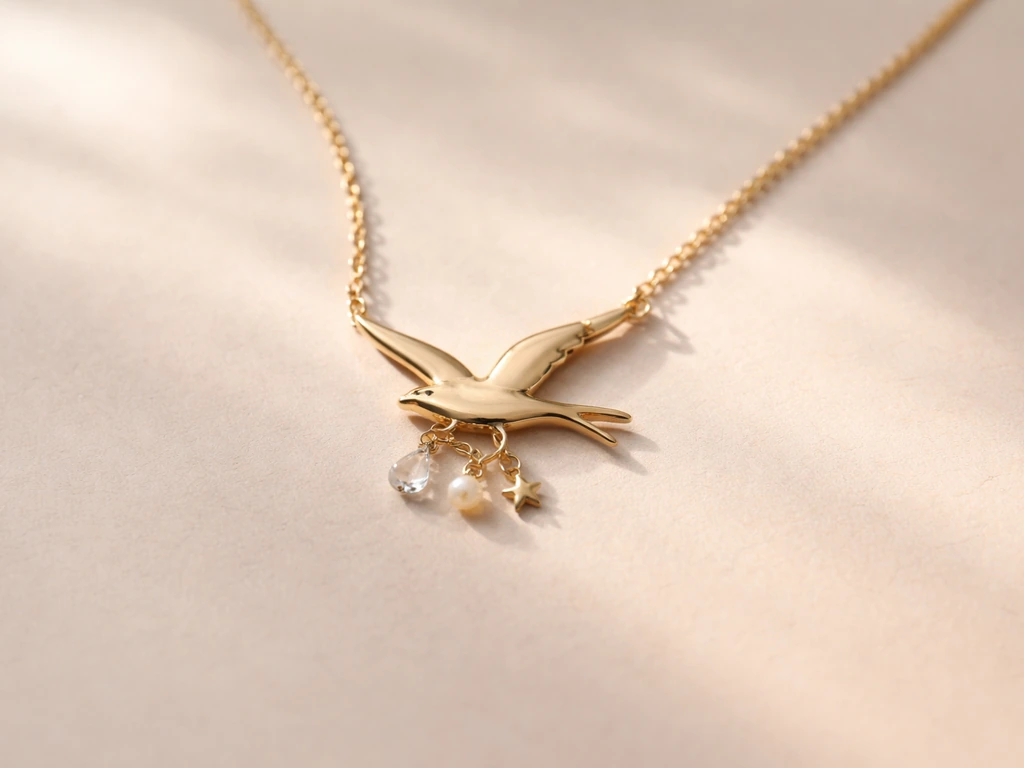
Once you know what to look for, narrowing down your necklace's most likely meaning takes only a few minutes. If you're instead asking about a bracelet, the bird species and design details guide the symbolism in much the same way as a bird necklace bird bracelet meaning.
What people actually mean when they search 'bird necklace meaning'
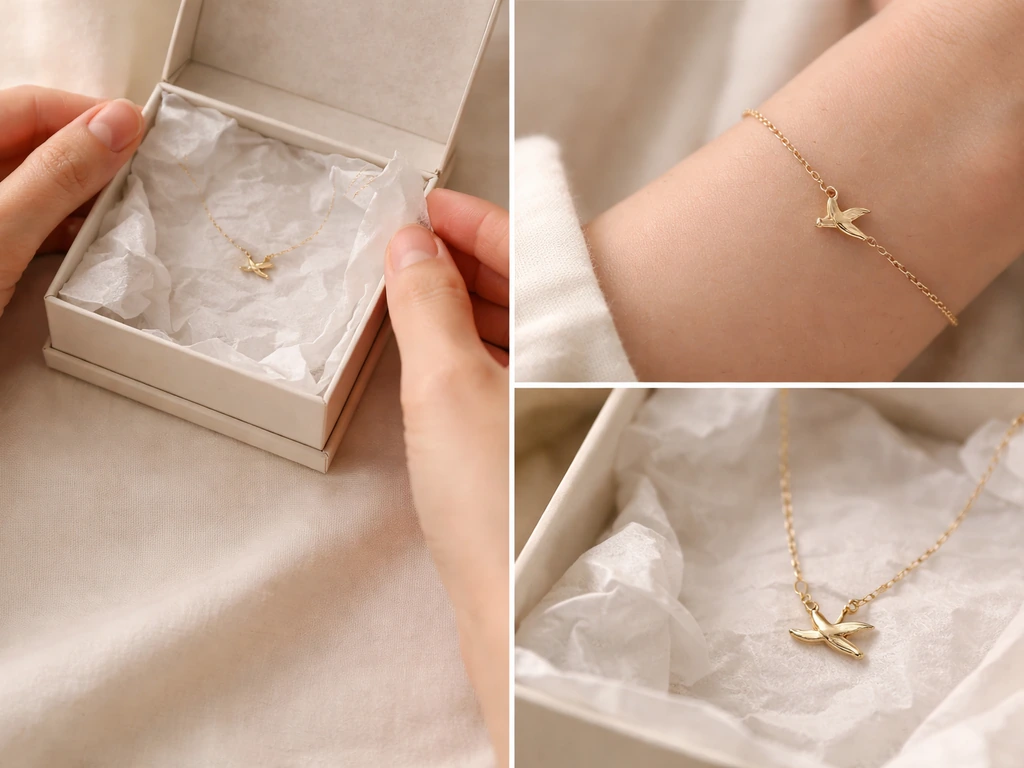
Most people searching this phrase fall into one of three camps. First, someone received a bird necklace as a gift and wants to understand the intent behind it. Second, someone is shopping for a bird necklace and wants the symbolism to be intentional rather than random. Third, someone already owns one and is curious whether the piece carries a deeper spiritual or cultural significance they haven't thought about. If you mean the bird stone meaning, match the symbol to the bird type and the specific material so the message stays consistent bird necklace meaning.
All three are valid reasons to dig in. Bird imagery in jewelry is one of the oldest and most globally distributed forms of wearable symbolism. If you’re wondering about the bird bell tota meaning, the specific bird type, posture, and cultural context are what usually determine it. It shows up in ancient Egyptian amulets, Celtic metalwork, Chinese imperial ornaments, and mass-market fashion necklaces sold online today. The common thread is that birds occupy a space humans have always envied: they move freely between earth and sky, they navigate by instinct, and they appear and disappear in ways that feel almost magical. That's the core of what most bird necklaces are reaching for, even a simple, decorative one.
The most frequently layered meanings across bird necklaces in general are freedom and independence, transformation or personal growth, messages from beyond (spiritual or ancestral), protection, love and loyalty, luck and good fortune, and connection to the natural world. You'll notice those can pull in quite different directions. Whether your necklace leans toward 'freedom' or 'protection' or 'love' depends heavily on the specific bird, so let's work through that.
How birds in jewelry carry cultural weight around the world
Bird symbolism in jewelry is not uniform. What feels like a universal meaning is often one tradition's interpretation that got amplified by commerce or Western media until it became 'the' meaning. Knowing the regional roots helps you use the symbolism more honestly and gives the piece more resonance.
In Celtic traditions, birds were messengers between the human world and the otherworld. Celtic jewelry designs function as a kind of symbolic language, and bird motifs in that context often carry themes of spiritual guidance, transitions, and protection during journeys. Modern jewelers working in the Celtic tradition still use this framing, though the original mythology was rarely as tidy as a product description makes it sound.
In Chinese tradition, the fenghuang (often translated as the Chinese phoenix) is one of the most important bird symbols in jewelry. Historically it was associated with virtue, fire, the sun, justice, fidelity, and feminine imperial power. It is not the same symbol as the Western phoenix, even though both carry themes of renewal. A necklace with a fenghuang motif is typically chosen for its associations with beauty, good fortune, and harmonious relationships rather than destruction and rebirth.
In many Indigenous and First Nations traditions across the Americas, specific birds carry highly specific ceremonial and spiritual meanings that belong to those communities. It is worth being cautious about applying generalized 'spiritual meaning' labels to bird jewelry that draws from those traditions without understanding the source, since the meaning is embedded in community and story, not just the image.
In Christian iconography, birds (especially doves, pelicans, and peacocks) carry layered theological meanings that shaped a lot of Western jewelry traditions. The dove as a symbol of the Holy Spirit, peace, and divine blessing has been embedded in jewelry since at least the early medieval period and remains one of the most recognized bird symbols in Western ornamental design today.
What the bird species on your necklace actually signals
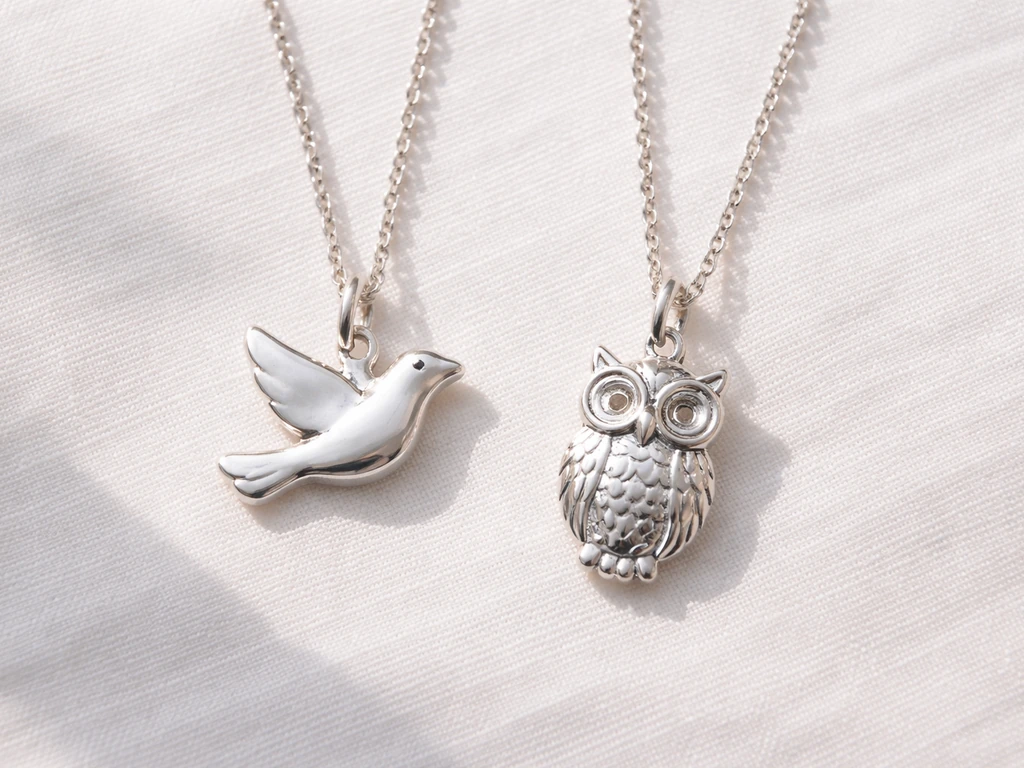
This is where interpretation becomes genuinely useful. Different species carry different associations, and those associations are fairly stable across most modern Western spiritual and jewelry contexts, even if they vary more across global cultures. Here is what the most common bird types in necklaces tend to represent. Because bird launchers are often used in the same spirit as other bird-themed charms, the meaning usually comes down to the species and the action implied by the design bird species.
| Bird | Most Common Associations | Notable Conflicts or Caveats |
|---|---|---|
| Dove | Peace, love, freedom, hope, the Holy Spirit | Meaning shifts significantly with posture and charms: a dove with an olive branch fixes the meaning toward peace and hope; without the branch, it can lean toward love or spiritual themes instead |
| Owl | Wisdom, intuition, mystery, protection, independence | In parts of China and some African traditions, owls are associated with bad luck or death rather than wisdom; context matters considerably |
| Hummingbird | Joy, spiritual messages, emotional healing, transformation, resilience | Strongly associated across multiple cultures with being a messenger; one of the more consistent cross-cultural bird symbols in jewelry |
| Raven or Crow | Intelligence, transformation, mystery, spiritual messages | Carries genuine 'dark omen' associations in some traditions (bad luck, death); in others (Norse, some Indigenous traditions), ravens are divine messengers and wisdom figures |
| Eagle | Strength, freedom, courage, national/patriotic identity, spiritual power | In the U.S. context, bald eagle jewelry is often patriotic rather than spiritual; in other cultures, eagle symbolism centers on solar power and divine connection |
| Swan | Grace, love, transformation, loyalty, purity | Swan maiden folklore adds themes of hidden identity and magic; pairs of swans specifically signal enduring love and partnership |
| Sparrow | Simplicity, community, resilience, protection of the humble, love | Sailor tattoo/charm tradition associates the sparrow specifically with safe return and nautical luck; this meaning carries into sparrow necklaces and charms |
| Phoenix (Western) | Rebirth, transformation, rising after hardship, resilience | A reliable symbol of 'coming through something difficult'; distinct from the Chinese fenghuang despite visual overlap in some modern jewelry |
| Peacock | Beauty, confidence, immortality, protection, spiritual vision | Eye-spots on peacock feathers are associated with the 'evil eye' protective tradition in some Mediterranean and Middle Eastern cultures |
If your necklace features a bird type not listed here, the same framework applies: look at the bird's behavioral and physical traits and consider which human qualities those have historically been mapped onto. Fast and colorful often maps to joy and energy. Nocturnal often maps to mystery and the hidden. Birds of prey map to power and protection. Migratory birds map to freedom, journeys, and return.
Why the bird's posture and design actually matter
The species is only part of the story. A bird in flight carries different weight than a bird perched quietly on a branch. A bird with wings spread wide is much more likely to be invoking freedom, aspiration, or spiritual ascent. A bird with wings folded and head tilted suggests something more contemplative, like intuition, patience, or watchfulness. An owl with wide-open eyes almost always emphasizes the wisdom and alertness angle rather than the protective or funerary angle.
This is worth noting because jewelry designers make these choices deliberately. A hummingbird mid-hover with wings blurred signals urgency and joy. A hummingbird perched on a flower suggests a quieter kind of contentment or gratitude. When you're trying to identify what a specific necklace means, the posture and motion implied by the design often give you as much information as the species itself.
The same principle applies to bird pendant designs, which often appear in minimalist or abstract forms. A single-line outline of a bird in flight has become shorthand for 'freedom and lightness' in contemporary jewelry. A more detailed, realistic rendering tends to carry species-specific meaning more deliberately.
Superstitions, folklore, and the stuff you can safely set aside
Bird lore is full of colorful superstitions, and some of them have migrated into how bird jewelry gets marketed. It's worth knowing what's grounded in tradition, what's romanticized, and what's outright marketing fluff.
One common claim is that wearing a specific bird necklace will literally attract luck, protection, or love into your life. This is the talisman framing, and it's ancient. Amulets and talismans have been used across nearly every culture as objects believed to carry protective or attractive power. Whether you believe in that literal function is a personal and spiritual question, not one with an empirical answer. What is verifiable is that these beliefs have real cultural history and that wearing meaningful jewelry can influence behavior and mindset in measurable ways, since symbols act as reminders and anchors for the values we associate with them.
Another piece of lore worth addressing: the superstition that birds flying into houses predict death or disaster. This has been examined in fact-checking contexts and the conclusion is that it is folklore rather than a predictive pattern. If your bird necklace features a bird associated with this superstition (usually a crow or raven), the piece itself carries symbolic meaning rooted in that tradition without any literal predictive power attached.
On materials: you will sometimes see claims that gold bird necklaces carry solar or divine energy, while silver bird necklaces carry lunar, protective, or intuitive energy. Some spiritual communities hold these beliefs sincerely and with historical grounding. But it is also true that metal symbolism varies significantly by tradition, and the 'silver equals protection' or 'gold equals divine power' shorthand is not universal. The bird species and design carry more consistent symbolic weight than the metal in most modern interpretive contexts.
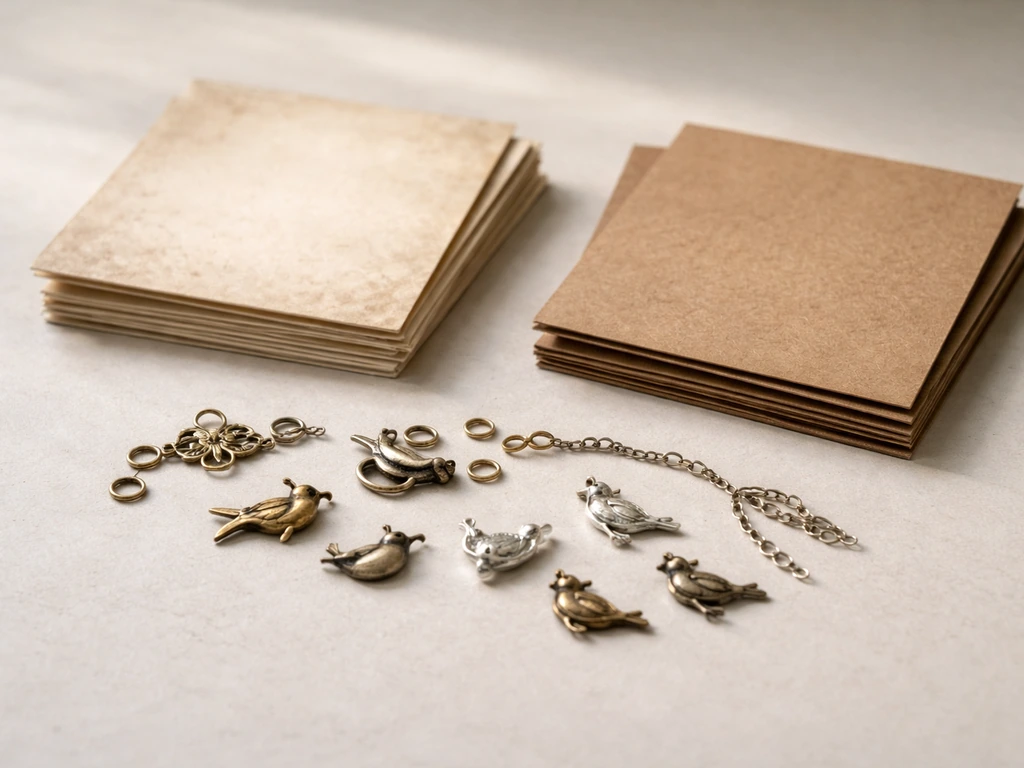
Bird charm necklaces, bird nest necklaces, and bird cage necklaces each carry their own specific symbolic layers beyond the bird alone. Bird cage necklaces add their own symbolism too, so it helps to look at that element when interpreting the overall meaning. A bird nest necklace meaning can vary, but it often points to home, nurturing, and new beginnings. A nest adds themes of home, nurturing, and new beginnings. A cage, interestingly, can cut two ways: captivity and restriction, or the safety and shelter of a protected space. These design choices are worth investigating separately if your piece combines a bird with one of those elements.
How to figure out what your specific necklace means
Start with the bird species, then work outward to the design details, added charms, material, and any inscriptions. Here is a practical sequence.
- Identify the bird species. If it's stylized or abstract, look at the body shape, beak length, tail shape, and any coloring for clues. If you genuinely can't identify the species, treat it as a general 'bird' symbol (freedom, messages, transformation).
- Note the posture. In flight or wings spread usually signals freedom, aspiration, or spiritual movement. Perched usually signals contemplation, watchfulness, or presence. Nesting signals home, nurturing, or new beginnings.
- Look at added charms and elements. A heart shifts the meaning toward love and affection. A key suggests unlocking something (often used for new beginnings or secrets). A branch or olive branch shifts toward peace or rootedness. Feathers add lightness and spiritual connection. An egg adds fertility, potential, and new starts.
- Consider the material. Gold tends to appear in pieces drawing on solar, divine, or celebratory symbolism. Silver appears more often in pieces oriented toward intuition, protection, and lunar themes. Wood or natural materials usually signal a connection to nature and grounding.
- Read any inscriptions. Many bird necklaces include a word, date, or initial that firmly anchors the meaning to a personal story rather than a universal symbol.
- Look at the gifting context. A bird necklace given at a graduation likely emphasizes freedom and new horizons. Given during a period of grief, it may be intended as a message of spiritual presence or hope. Given as a romantic gift, it probably centers love and loyalty.
If the piece came from a specific cultural tradition (Celtic, East Asian, Indigenous, etc.), research that tradition specifically rather than defaulting to generic 'bird symbolism.' The meaning will be richer and more accurate.
Putting the meaning to work for yourself
Once you have a working interpretation, the most valuable thing you can do with it is make it intentional. Jewelry that carries meaning you are actually aware of functions differently than jewelry you wear without thinking about it. Research on intentional or symbolic jewelry suggests that the practice of 'setting an intention while wearing a piece' works because the physical object becomes a recurring prompt, something that pulls your attention back to a value or goal throughout the day.
A new moon intention ritual for healing jewelry similarly uses symbolic jewelry as a structured prompt for reflection, goal-setting, and daily follow-through Research on intentional or symbolic jewelry suggests that the practice of 'setting an intention while wearing a piece' works because the physical object becomes a recurring prompt, something that pulls your attention back to a value or goal throughout the day. .
Practically, this looks like: hold the necklace and articulate what it means to you before putting it on, especially on a day when that meaning feels relevant. If your hummingbird necklace represents resilience after a difficult year, put it on before a hard conversation and let it remind you of what you have already moved through. If your dove necklace represents hope for a relationship, wear it intentionally during a period of reconnection.
Journaling is genuinely useful here. Write down what the necklace represents to you right now, what it might mean to you in a year, and what quality you want it to remind you of. Personal symbols accrue meaning through repeated, conscious association. The more you engage with the symbolism deliberately, the more naturally it functions as an anchor.
For gifting, a bird necklace works best when you attach a note explaining the specific meaning you chose. A hummingbird for someone going through a hard season, with a note that says 'hummingbirds are messengers of resilience and joy, I thought of you,' lands completely differently than the same necklace handed over without context. The story is part of the gift.
Quick checklist: confirm your necklace's meaning in under two minutes
- What bird species is depicted, or is it a generalized bird silhouette?
- Is the bird in flight, perched, nesting, or in another specific posture?
- Are there additional charms or elements (heart, key, branch, feather, egg, cage, nest)?
- What is the material: gold, silver, wood, mixed metals, gemstones?
- Are there any inscriptions, dates, or initials that personalize the meaning?
- Was it a gift? If so, what was the occasion and what do you know about the giver's intent?
- Does the design draw from a specific cultural tradition (Celtic, East Asian, etc.)?
- What meaning feels most personally resonant to you, regardless of 'official' symbolism?
That last question matters more than people expect. The meaning you carry with a piece of jewelry is ultimately the one you assign and reinforce through use. Cultural and spiritual traditions give you a rich vocabulary to draw from, but the symbol becomes yours when you decide what it means in the context of your actual life. A bird necklace can be all of freedom, transformation, love, and resilience at once.
A bird necklace can be all of freedom, transformation, love, and resilience at once, and the same approach applies when you’re trying to interpret bird charm meaning for your specific piece. It just works better when you pick the thread that matters most to you right now and follow it. If you are specifically wondering about the bird pendant meaning, start by matching the species and posture to the symbolism described here.
If you are trying to get the bird bell tota meaning, check how the bird type, posture, and cultural context align with the associations discussed above.
FAQ
What does a bird necklace mean if the bird species is unclear or stylized?
Use the design cues, not just the shape. Focus on posture (wings spread, perched, hovering), head orientation (watchful vs contemplative), and any secondary elements (branches, flowers, branches in flight). If it still feels ambiguous, treat it as a general “freedom and spiritual connection” piece rather than forcing a specific species meaning.
Do bird necklace meanings change if the bird is shown carrying something (like an olive branch or a ribbon)?
Yes. Added objects usually narrow the theme to a specific message. An olive branch context typically points to peace and reconciliation, while a ribbon or loop can emphasize connection, continuity, or a commemorative intent. The “carrying” element often outranks generic bird symbolism.
Is there a difference between a bird necklace meaning and a bird pendant meaning?
They overlap, but pendants are typically interpreted more directly because the bird is the focal point and is often worn closer to the heart. If your piece has a pendant plus a chain charm set, the bird’s meaning can be modified by the other charms (for example, a heart charm leaning the message toward love).
How can I tell whether my necklace is meant as a spiritual symbol versus fashion decoration?
Look for intentional markers: inscriptions, a clear cultural motif (such as phoenix/fenghuang styling), a traditional setting style, or a seller description that ties the piece to a specific tradition or practice. If it has none of that and is purely minimalist, it may be meant as aesthetic bird symbolism, even if the meanings can still be personal to you.
What should I watch out for with “talisman” claims like luck or protection?
Be cautious about guarantees or promises. The most grounded way to use these pieces is as a reminder for your values and behavior, since symbols can affect mindset and attention. If a listing claims literal outcomes (for example, “will attract love by date X”), treat it as marketing unless it includes cultural or historical context you can verify.
Does the bird necklace meaning differ by metal color (gold vs silver), or is the bird type more important?
In most practical interpretations, the species and design posture hold more consistent meaning than metal. Metal color can add nuance (warmth, brightness, formality), but it is not a universal code across traditions. If you want a reliable read, prioritize bird type, action, and any cultural/inscription details first.
What does it usually mean when the bird is perched versus in flight?
Perched birds often suggest presence, patience, watchfulness, or a settled kind of protection. Birds in flight most often read as freedom, aspiration, spiritual ascent, or movement through change. If you have both flight and perched elements, interpret them as a “journey plus grounding” message.
My necklace is a bird cage, bird nest, or charm necklace. Does the cage or nest override the bird meaning?
It adds a layer and can shift the emphasis. A nest frequently points to home, nurturing, and new beginnings, while a cage can suggest either limitation or shelter, depending on the design style and sentiment (decorative vs ornate, open vs closed cage). In mixed pieces, decide which element is the visual focal point first, then combine meanings.
Can a bird necklace have multiple meanings at once, or should I pick only one?
Multiple meanings are common, but you should choose a “primary thread” for how you will use it. Pick one aspect that matches your current intention (for example, resilience for a hummingbird) and let the other themes sit in the background. This prevents the symbol from becoming vague or overgeneralized.
If I received the necklace as a gift, how do I confirm what the giver intended?
Ask a specific question rather than “what does it mean?” For example, ask whether they chose the bird for a reason tied to a life event (loss, new job, reconciliation) and whether any note or message was included. If no context exists, infer from the bird posture and any extra charm elements, then compare it to the recipient’s likely moment.
What’s the best way to set an intention with a bird necklace so the meaning feels consistent?
Do it at the moment you put it on, then connect it to a concrete trigger. Example: say, “This reminds me to stay hopeful during difficult conversations,” then wear it during planned situations where you want to embody that value. Repeating this link over time builds the symbol’s meaning in your own life.
If my necklace is an owl or bird of prey, are those always about protection or wisdom?
Not always, but those themes are frequent. Owl designs often emphasize alertness and wisdom when the eyes are prominent. Birds of prey more often map to power and protective boundaries, especially if talons are visible or the bird is shown with a forward-leaning stance. Still, interpret posture and surrounding elements to avoid assuming a single theme.
Next Article
Bird Blindness Meaning: Causes, Signs, and What to Do Now
Bird blindness meaning: spot signs, tell vision loss from other issues, and take safe action or get urgent vet care.