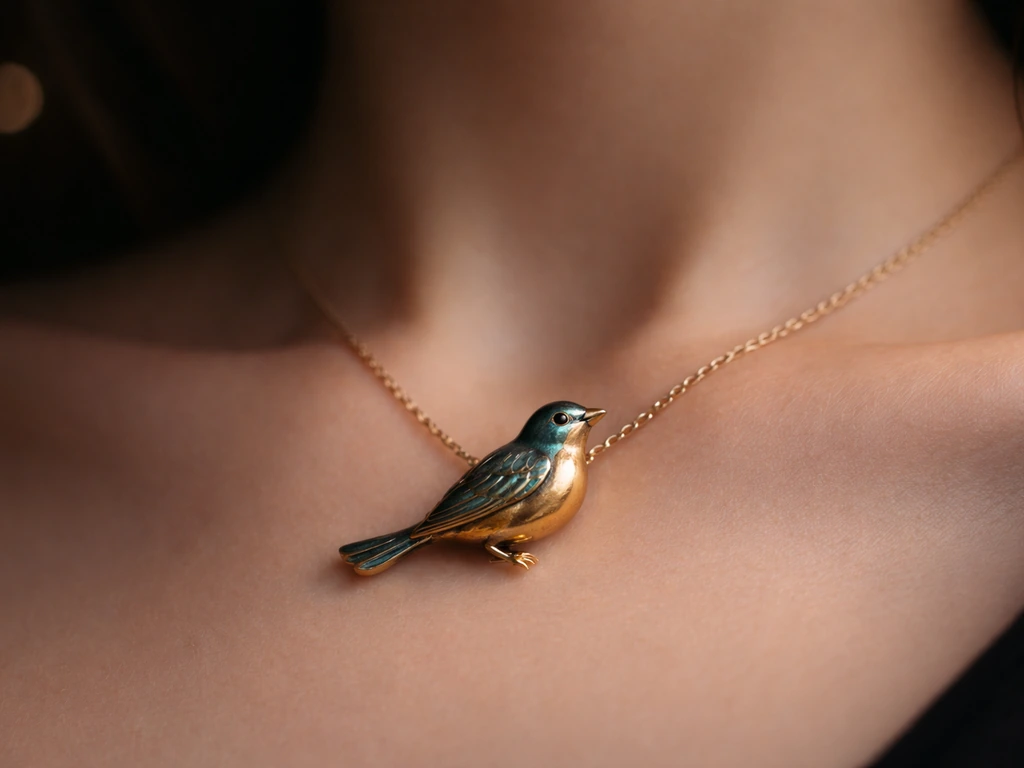
A bird bracelet most commonly means whatever the specific bird on it symbolizes, layered with the personal context of why you have it. There is no single universal answer, but there are reliable patterns: a dove bracelet leans toward peace, love, or hope; an owl toward wisdom or intuition; an eagle toward freedom and strength; a swallow toward good luck and homecoming; a crane toward longevity; a peacock toward beauty or protection. The bracelet format itself, worn on the wrist and kept close to the body, has historically been associated with protection, intention-setting, and personal identity. Put those two things together and you get a working starting point for what your bracelet most likely means.
Bird Bracelet Meaning: Symbols, Bird Types, and How to Interpret

Marcus Holloway
28 Jun 2026
What people actually mean when they search this
When most people type "bird bracelet meaning" into a search bar, they are asking one of two things: what does this specific bird symbolize, or what was the intent behind this piece of jewelry. Sometimes both. They might have received it as a gift, found it in a family member's things, or bought one on impulse and are now curious whether there is deeper significance behind it. Occasionally the question comes from someone who keeps seeing a particular bird in daily life and wants to know if wearing it carries the same meaning.
It is worth being clear upfront: a bird bracelet is not the same thing as a bird sighting or a bird in a dream, even though all three share overlapping symbolism. The bracelet is a physical object you chose to wear or received as a gift. Its meaning comes primarily from the bird depicted, the materials and design, the cultural tradition it draws from, and the story attached to it.
A bird flying past your window operates in a different symbolic register. Both are worth exploring, but they answer different questions. If you are also trying to figure out a bird bell tota meaning, keep the same approach in mind: the context and tradition behind the symbol can shift what it is actually pointing to.
Start here: identify the bird accurately
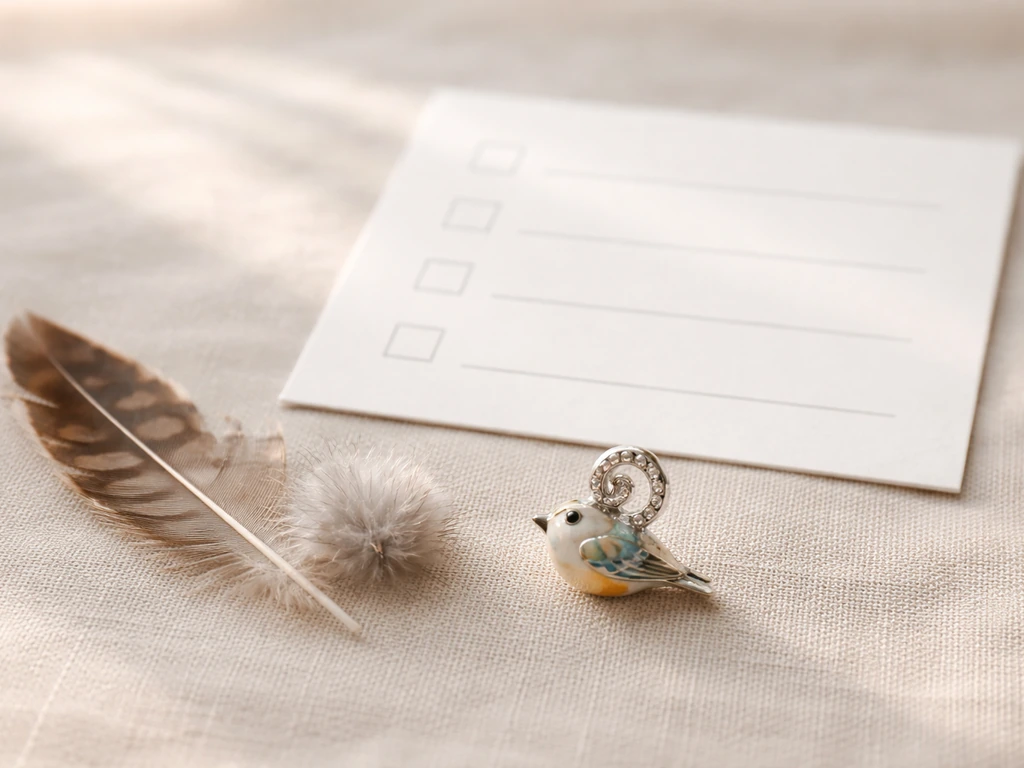
This sounds obvious, but it is the step most people skip. You cannot reliably decode a bird bracelet if you are guessing at the species. A real-world example: someone finds a bracelet and says it "looks kinda like a dove," when it might actually be a heron, a swallow, or a stylized generic bird. Each of those carries completely different symbolism. Dove and heron are not interchangeable. Before you go any further, try to pin down exactly what bird is depicted.
- Look for distinguishing features: long legs suggest a wading bird like a heron or crane; a fan-shaped tail or iridescent markings suggest a peacock; a small compact body with a forked tail is likely a swallow; a large hooked beak and broad wings point to an eagle or hawk.
- Check for engravings, stamps, or accompanying text on the bracelet itself. Some pieces name the bird or reference a cultural tradition directly.
- If the bracelet came with packaging or a card, that context is gold. Jewelers who design intentional symbolism pieces almost always note the meaning they had in mind.
- Search the visual design style: a Japanese or Chinese aesthetic often features cranes or phoenixes; a Celtic design may use ravens or doves; a nautical vintage style almost certainly features swallows.
- When in doubt, post a clear photo to a bird identification community or a jewelry symbolism forum. Ambiguity is fixable.
What the most common birds on bracelets actually symbolize
Here is a practical breakdown of the birds that appear most frequently in bracelet jewelry and what they reliably mean across multiple cultural traditions. These are not invented associations. They have documented roots in ancient mythology, religious texts, and cross-cultural symbolism that has been studied and catalogued by institutions like the Smithsonian and the Metropolitan Museum of Art.
| Bird | Core Symbolism | Cultural Roots |
|---|---|---|
| Dove | Peace, hope, love, purity, spiritual blessing | Ancient Mesopotamia (Inanna/Ishtar), classical Greece (Aphrodite), Christianity (Holy Spirit, Noah's Ark) |
| Owl | Wisdom, mystery, intuition, perspicacity | Ancient Greece (Athena/Minerva), Western tradition through Renaissance and beyond |
| Eagle | Freedom, strength, national identity, vision | Roman Empire, Native American traditions, modern American symbolism |
| Swallow | Good luck, safe return, loyalty, new beginnings | Nautical tradition, European folklore, global good-fortune associations |
| Crane | Longevity, immortality, purity, true love | East Asian traditions (Chinese and Japanese), described as the 'bird of the immortals' |
| Peacock | Beauty, protection, Mother Earth, abundance | Dravidian/South Asian tradition, also appearing in Greek myth (Hera) and Christian art |
| Hummingbird | Joy, transformation, resilience, healing | Indigenous American traditions, modern spiritual interpretation |
| Raven/Crow | Intelligence, magic, change, prophecy | Norse mythology (Odin), Celtic tradition, Native American cosmology |
| Phoenix | Rebirth, renewal, overcoming adversity | Greek, Egyptian, Chinese, and Persian traditions |
One thing worth noting: crane symbolism, for example, takes on slightly different shades depending on whether you are looking at Chinese or Japanese tradition, and can encompass immortality, wisdom, prosperity, independence, and true love depending on the specific cultural context. The same is true for nearly every bird on this list. The table above gives you a starting cluster of meanings, not a definitive single answer.
Read the bracelet itself, not just the bird
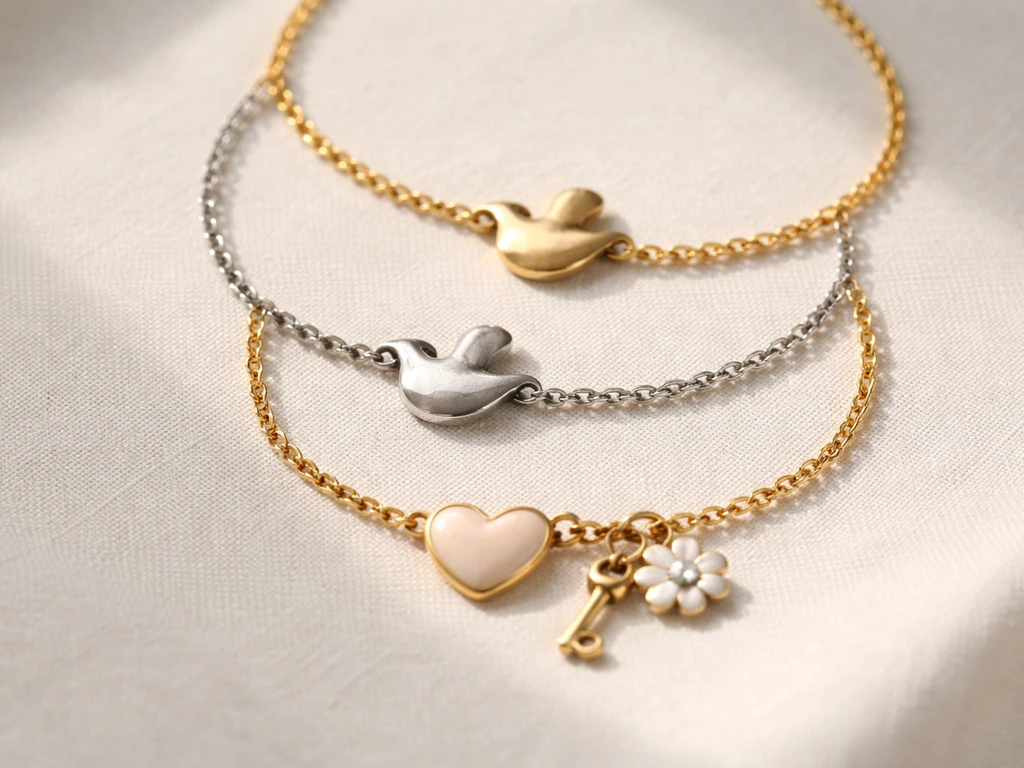
The bird species is only one variable. The design, materials, colors, and circumstances all shift the meaning. Think of it like this: a gold dove bracelet given to you by a romantic partner on Valentine's Day carries different weight than a silver owl charm bracelet you bought yourself after a difficult year. Same bird species, wildly different contexts, legitimately different meanings. If you are specifically trying to understand a bird cage necklace meaning, start by identifying how the cage motif is being used in your piece’s overall design.
Materials and finish
In some traditions, the material itself is understood to carry power, not just the image on it. Gold is historically associated with the sun, divine connection, and permanence. Silver links to the moon, intuition, and protection. Turquoise stones have protective associations in Native American and Persian traditions. A bracelet featuring a bird plus a gemstone may be drawing on both symbol systems simultaneously. If your bracelet has stones, it is worth researching their specific meanings alongside the bird.
Color
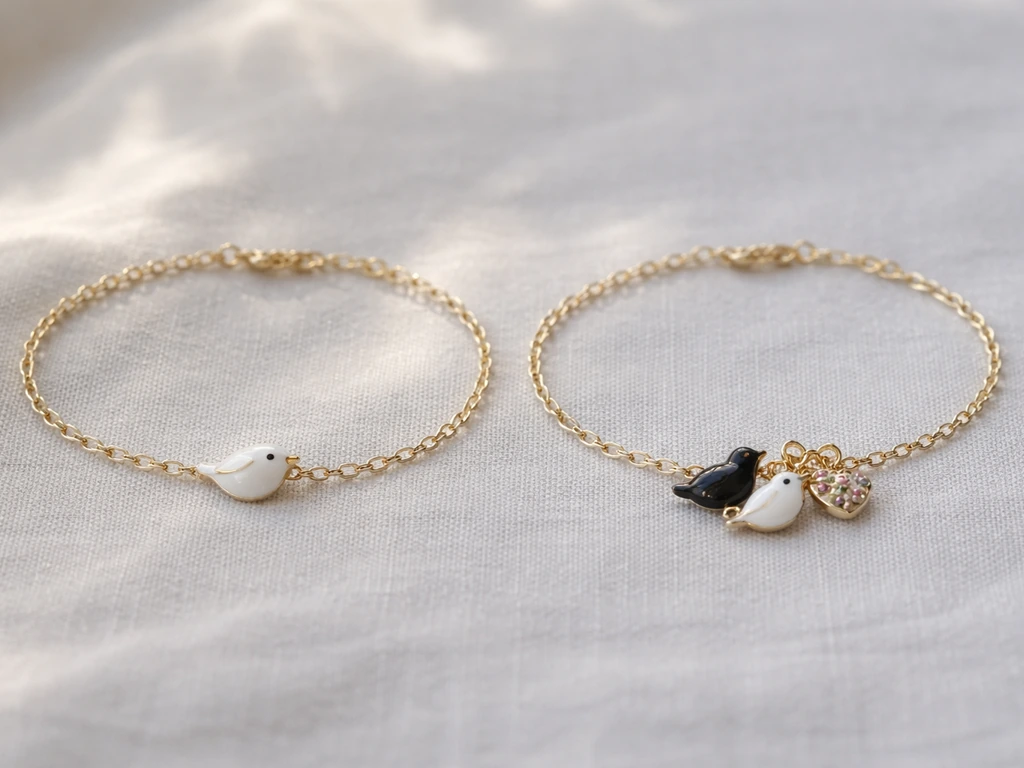
Color matters significantly in bird symbolism. A white bird figure almost universally leans toward purity and peace across cultures. A black bird figure can suggest mystery, magic, or transformation depending on the tradition. The red crown of a crane, for instance, has specific symbolic meaning in East Asian art: it reaches symbolically toward heaven. If your bracelet depicts a colorful or painted bird, note the dominant colors before you try to interpret it.
Charms, multiples, and groupings
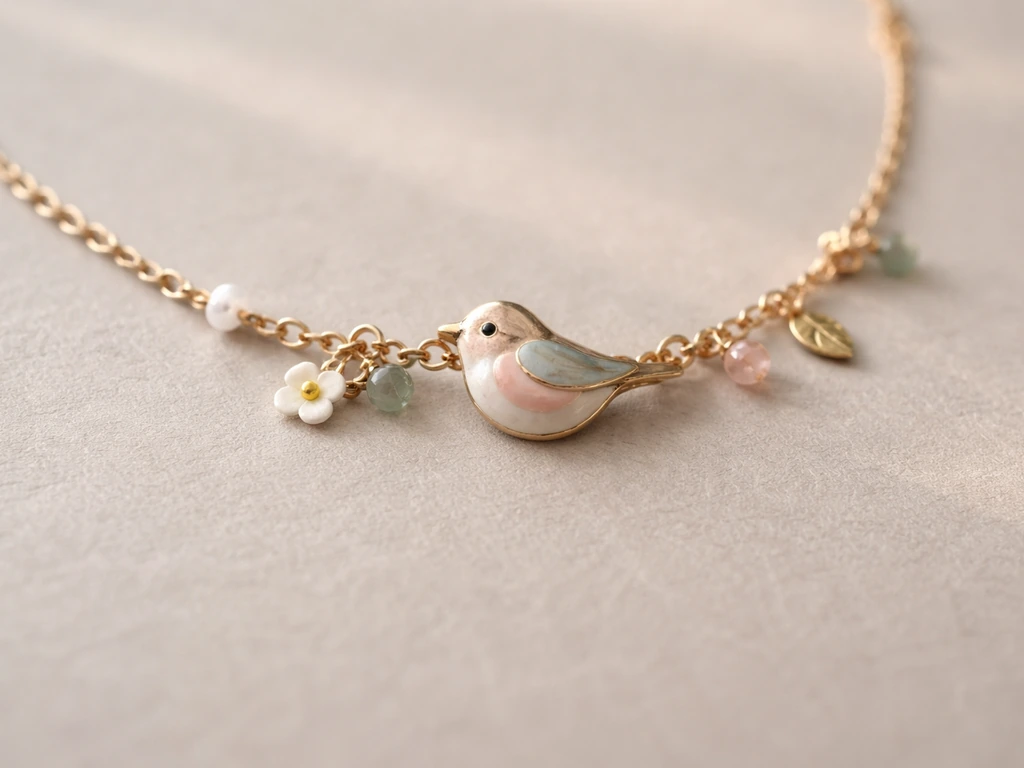
Some bracelets feature a single bird charm; others carry multiple birds or combine birds with other symbols like flowers, keys, or hearts. A swallow alongside a hummingbird and a dragonfly, for example, can be read as a life-cycle or seasonal arc, suggesting joy, transformation, and the passage of time. If your bracelet has a charm cluster, treat the whole composition as a single message rather than decoding each charm in isolation.
Who gave it and why
A bracelet given as a memorial piece for someone who loved birds carries personal meaning that overlays the cultural symbolism completely. A bracelet purchased from a designer who explicitly sources meaning from a specific tradition means something different from a mass-market piece where the bird was chosen for aesthetic reasons. Both are valid. Neither is more real than the other. The question to ask is: was this chosen intentionally for its meaning, or is the meaning something you are choosing to attach after the fact? Both are legitimate ways to relate to jewelry symbolism.
Cultural vs. spiritual: where these meanings actually come from
There is a useful distinction between cultural symbolism and spiritual symbolism, even though the two overlap constantly. Cultural symbolism is the shared, socially learned meaning that a community assigns to an image over time. The owl representing wisdom in Western culture is a cultural meaning that traces back to Athena's emblem in ancient Athens and has been reinforced through art, literature, and education for over two thousand years. You do not have to personally believe in Athena for that meaning to be operative when you wear an owl bracelet, because the meaning lives in the shared cultural vocabulary.
Spiritual symbolism is more personal and tradition-specific. If you come from a tradition that treats the dove as the Holy Spirit, or from an Indigenous tradition where the eagle is a sacred messenger, the bracelet carries specifically spiritual weight for you within that framework.
If your piece uses a dove imagery, Biblical Archaeology Society notes that doves accumulate religious symbolism “layer upon layer” over time, including Christian associations such as the Holy Spirit symbolism and the dove with the olive-branch peace image continuing in modern contexts treats the dove as the Holy Spirit. Spiritual meanings are not universally transferable across traditions, and it is worth being careful about treating them as though they are.
A peacock bracelet means something specific in a Dravidian Hindu context that is different from what it means to someone who just thought the peacock looked beautiful.
The honest answer is that most modern bird bracelets sold today are drawing on popular Western interpretations of these symbols, which are a blend of ancient cultural associations, Victorian-era flower and charm language, New Age spirituality, and modern jewelry marketing. That is not a criticism. It just means you should hold the meaning lightly and verify where your specific piece is drawing from.
Myths and misconceptions worth setting aside
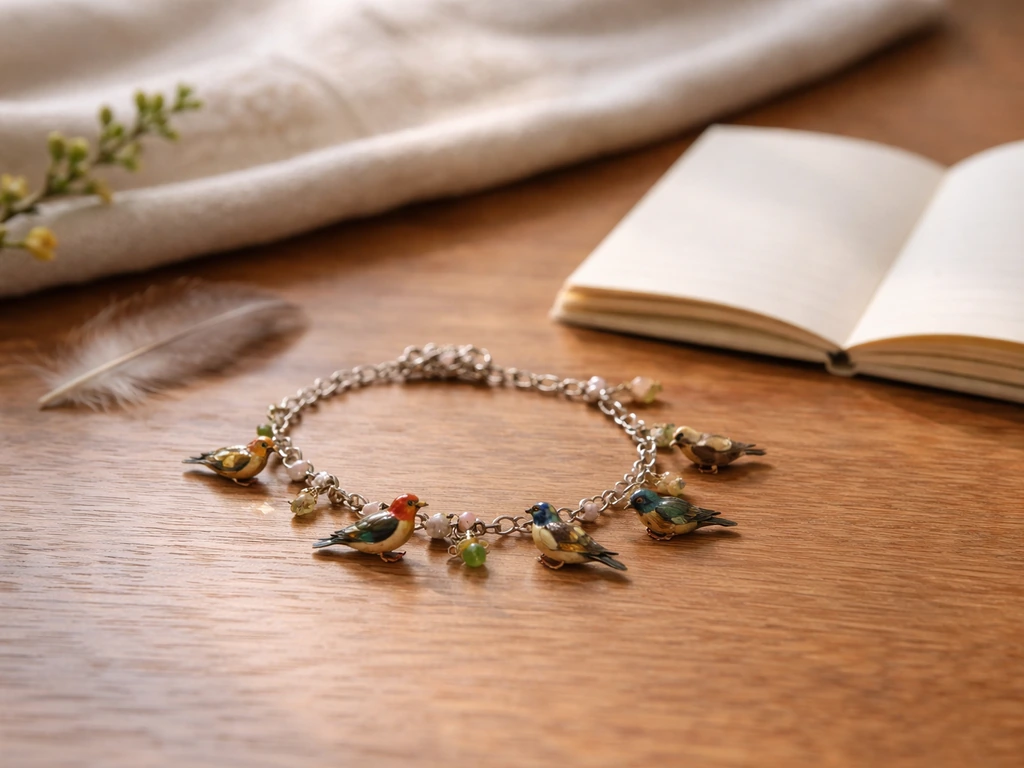
The biggest misconception about bird bracelet meaning is that there is one fixed answer. The Met Museum's scholars, who have spent careers studying symbolic objects, explicitly caution that a wide range of meanings can be assigned to the same symbol, and that what matters is context. A dove bracelet does not automatically mean peace any more than a black cat automatically means bad luck. The meaning is constructed, socially shared, and context-dependent.
- Myth: every bird bracelet carries a spiritual or intentional meaning. Reality: many are purely aesthetic. A manufacturer picked a swallow because it looks elegant on silver, not because they were thinking about nautical good-luck traditions.
- Myth: the meaning is fixed and universal across cultures. Reality: a crane means longevity in East Asian tradition but may mean nothing specific in a Scandinavian context. Meanings are learned, shared within communities, and do not transfer automatically.
- Myth: if you do not know the intended meaning, you cannot assign one. Reality: you are allowed to adopt a meaning that resonates with you. Personal meaning and cultural meaning coexist and neither cancels the other out.
- Myth: a more expensive or older bracelet carries more authentic symbolism. Reality: a handmade modern piece created with explicit symbolic intent can carry more intentional meaning than an antique piece whose original meaning has been lost.
- Myth: amulet and talisman mean the same thing. If your bracelet is described as one of these, the distinction matters: an amulet traditionally protects against harm, while a talisman draws good fortune toward you. Different function, different intent.
How to actually decode your bracelet today
Here is a practical checklist you can work through right now. It takes maybe twenty minutes and will give you a much clearer picture than guessing at a single meaning.
- Identify the bird species as precisely as possible using the visual features described earlier. If you are unsure, look up field guide images or use a bird ID app to narrow it down.
- Note the materials, finish, and any stones. Gold, silver, copper, and specific gemstones all carry their own symbolic associations that may compound or shift the bird's meaning.
- Note the colors used in the bird depiction, especially if it is enameled or painted. White, black, red, and iridescent tones all carry distinct symbolic weight.
- Record the context: was it a gift, a purchase, an inheritance? Does the giver or the occasion tell you anything about the intended meaning?
- Search the bird species plus the word 'symbolism' alongside a specific cultural tradition if you have a hunch (e.g., 'crane symbolism Japan' or 'swallow symbolism nautical'). This gives you tradition-specific results instead of generic lists.
- Cross-check against at least two sources with documented cultural roots, not just product listings or Pinterest captions. Museum collections, academic folklorists, and ethnographic records are far more reliable than generalized spiritual content sites.
- Decide consciously whether the meaning is culturally received (you are adopting a meaning from a tradition) or personally constructed (you are attaching meaning based on your own experience with this bird or this gift). Both are valid. Knowing which one applies helps you communicate what the bracelet means to you.
How bird bracelet meaning connects to broader bird symbolism
If you arrived here because you have been noticing a specific bird repeatedly in your daily life and then found or bought a bracelet featuring that same bird, there is a layered reading available to you. Bird sightings, bird dreams, and bird jewelry all pull from the same well of cultural and spiritual symbolism, but they operate differently. A bird in a dream is often interpreted as a message from the subconscious or a spiritual signal, depending on your framework.
A bird you keep seeing in waking life can be understood as an omen or a recurring symbol drawing your attention to a particular theme. A bird bracelet is a deliberate, physical anchor for a meaning you want to carry with you. If you are trying to interpret bird stone meaning on a bracelet, start by pairing the bird symbolism with the specific gemstone and its traditional associations bird bracelet.
Some people wear a bird bracelet precisely to hold onto a meaning they encountered through a dream or a repeated sighting. Others wear one because someone who mattered to them associated with a particular bird. The bracelet becomes a container for the meaning rather than the source of it. This is why related jewelry pieces, such as bird necklaces, bird pendants, bird charms, and bird nest necklaces, often carry overlapping themes: freedom, protection, love, remembrance.
One common framing used in modern U. S. symbolism is that birds are linked with freedom, hope, guidance, and change, and specific species can add extra themes like peace (dove) or wisdom (owl).
If you are also looking at bird necklace meaning, the same ideas apply: identify the bird, then read the materials and context bird necklaces. The format changes but the symbolic language stays consistent. If you are exploring bird bracelet meaning in depth, following those threads across different jewelry forms can give you a richer picture of how bird symbolism functions in personal adornment more broadly.
The short version: your bird bracelet almost certainly means something, whether it was intended to or not. The meaning is yours to claim, but it is worth rooting it in something real. If you are trying to pin down bird launcher meaning, focus on what bird is shown and the context it was chosen for bird bracelet almost certainly means something. Identify the bird, trace the tradition, read the context, and then decide what you want to carry forward.
FAQ
What should I do if I cannot identify the exact bird on my bracelet?
Treat it as a “species uncertainty” problem. Look for distinctive features (beak shape, tail length, wing posture, crown or crest) and compare to common silhouette styles. If it is clearly stylized or generic, use the closest matching bird category and then rely more on materials, colors, and any accompanying charms (hearts, keys, flowers) to refine meaning.
Does the bird bracelet meaning change if the bird is facing left, right, or upward?
Yes, direction can matter in jewelry interpretation. Birds shown facing upward are often read as aspiration, arrival, or spiritual uplift, while birds in profile can be read as presence or watchfulness. Check whether your design emphasizes flight, stillness, or an “at rest” posture, then align that with the bird’s baseline symbolism.
How much does the metal color (gold, silver, rose gold) actually affect the meaning?
It can shift the emphasis even when the bird stays the same. Gold tones tend to foreground permanence or warmth, while silver tones often lean toward protection or intuition. If your bracelet also includes stones, the metal can change whether the interpretation reads more like intention (bird + goal) or more like safeguarding (bird + protective material).
My bracelet has multiple birds. Do I interpret each bird separately or as one message?
Use a “composition-first” approach. If the birds are clustered as a scene (same scale, same background motif, connected chain elements), interpret the set as one theme. If the birds are clearly separate charms (individual pendants on a bracelet bar), interpret each bird for its role, then combine the themes into a single personal narrative.
Can I interpret a bird bracelet meaning differently if it was a gift versus something I bought for myself?
Yes. A gift often carries relational context, like remembrance, support, apology, or a shared life event. A self-purchase usually reflects intent you are actively choosing to embody, so the meaning may be more “goal-setting” than “received message.” You can still use bird symbolism, but weigh the circumstances more heavily in gift cases.
What if the bracelet is clearly tied to a specific culture, but I am not from that tradition?
You can still appreciate the cultural meanings, but avoid treating spiritual-specific readings as automatically applicable. A safe method is to frame it as cultural symbolism plus personal resonance, not as a claim to spiritual authority or ritual meaning. If you are unsure, prioritize the bird’s widely shared cultural themes and the bracelet’s design context.
Do birthstones or gemstones on the bracelet change the bird meaning, or just add decoration?
They often change the “tone” of the message. A bird associated with protection can become more specifically protective when paired with a stone commonly treated that way, while a bird associated with love can intensify when the stone is linked to devotion or emotional healing. The key is to read bird symbolism and stone symbolism as co-operating systems, not competing explanations.
How can I tell whether a bird bracelet’s meaning is marketing-style symbolism versus personal symbolism?
Check for intent signals: creator notes, a named collection, a card or inscription, or symbolism described by the seller. If there is no attached story and it matches common mass-market motifs, it may be mostly general cultural meaning. If it includes personalization (initials, dates, a memorial context, a specific bird chosen by someone who knew you), it likely has stronger personal symbolism than the general archetype.
My bracelet is for a memorial. Does the bird still “mean” what it does in general symbolism?
Often yes, but with an overlay. In memorial contexts, the bird’s cultural meaning becomes a supporting layer for grief, remembrance, or love, rather than the sole message. Look for additional cues like dates, engraving, or dove versus crane choices, because those can indicate whether the bracelet is meant to honor peace, longevity, guidance, or safe passage.
What is the most common mistake people make when interpreting bird bracelet meaning?
They assume there is one fixed definition for each bird and ignore design and context. Another common error is misidentifying the species from a stylized image. Use a hierarchy: identify the bird first, then read color and materials, then interpret the circumstances you associate with wearing it.
How do I decide what meaning to “claim” if multiple interpretations fit?
Pick one primary meaning that matches your current life theme, then choose one secondary meaning as a supporting detail. For example, if the bird suggests hope and the stone suggests protection, you can anchor on hope while letting protection be the way you express it. If your bracelet was chosen by someone else, let their likely intent guide the primary meaning and keep your own meaning as the secondary layer.
Next Article
Bird Pendant Meaning: Symbolism by Species, Color, and Pose
Discover bird pendant meaning by species, color, pose, and style, with cultural, spiritual, and omens-based readings