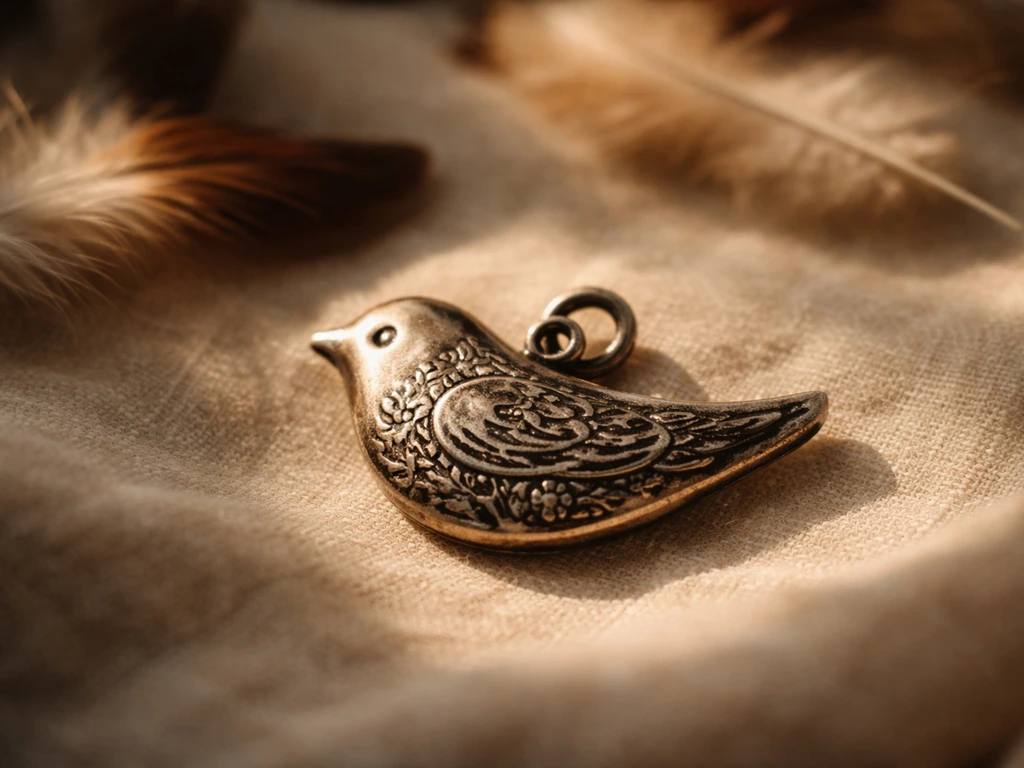
A bird pendant's meaning depends on three things working together: which bird is depicted, how it's designed (posture, material, color, gemstones), and the cultural or personal context you bring to it. There is no single universal answer, but there is a clear process for narrowing it down. If you know your bird species and have a few design details in front of you, you can land on a meaning that actually fits your pendant rather than a vague catch-all about "freedom."
Bird Pendant Meaning: Symbolism by Species, Color, and Pose

Marcus Holloway
23 Jun 2026
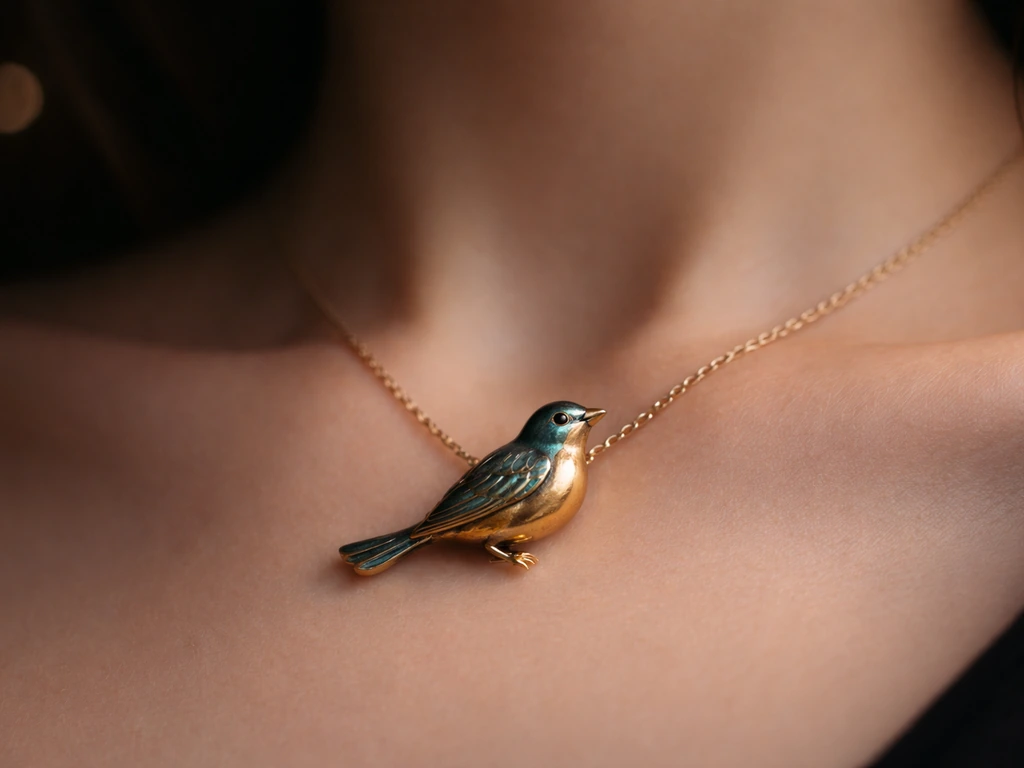
What a bird pendant actually is (and the types you'll encounter)
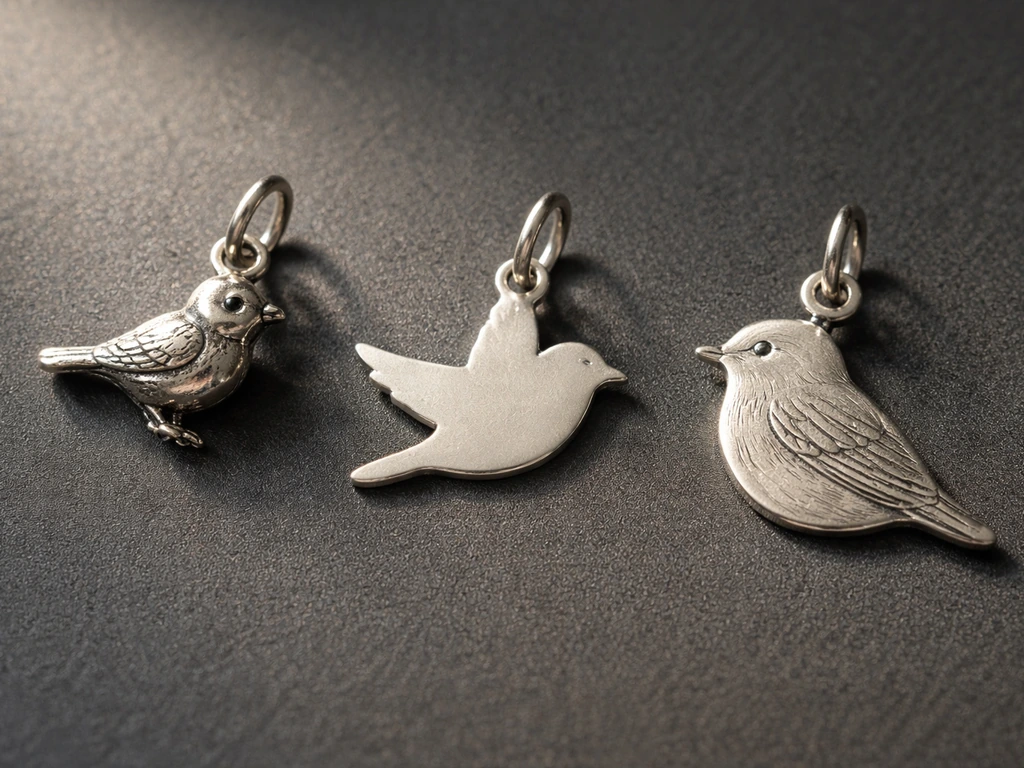
A bird pendant is a piece of jewelry worn at the neck that features a bird as its central motif, either as a three-dimensional charm, a flat stamped silhouette, an engraved profile, or an enamel illustration. If you are specifically looking for the bird cage necklace meaning, the “bird” symbolism usually points to freedom and protection, while the cage can shift the message toward containment or guarding something precious. They range from mass-produced fashion pieces to handcrafted heirlooms and antique collectibles, and the type of piece matters for interpretation because a mass-market dove pendant from a fast-fashion retailer carries different intentionality than a hand-engraved Victorian mourning piece featuring a swallow.
The most common pendant types you'll see fall into a few categories. Silhouette pendants show only the bird's outline, often in flat metal. Dimensional or sculptural pendants render the bird in three dimensions with feather detail. Enamel or painted pendants use color fills to distinguish species more precisely. Gem-set pendants incorporate stones as the bird's body or eye, which adds a layered symbolic reading (more on that below). Some pendants include motifs alongside the bird, like olive branches, moons, keys, or floral elements, and those companions actively shift what the pendant means. If you are asking about a bird bracelet meaning, the same principles apply, since jewelry symbolism is shaped by species, design details, and personal context.
- Silhouette/cutout: minimalist, usually species-agnostic unless the shape is distinctive (e.g., owl ears, hummingbird bill)
- Dimensional charm: more species-specific, often sold with an explicit meaning in the brand's copy
- Enamel or painted: color-accurate, easiest to identify the species
- Gem-set or crystal: meaning is layered between the bird and the stone
- Vintage or antique: meaning is tied to the era's conventions (mourning jewelry, love tokens, heraldic symbols)
- Multi-motif: bird paired with another element that anchors the primary meaning
What each bird species tends to mean in pendant form
Species is the biggest variable. Once you know which bird you have, you can start cross-referencing its symbolic tradition with the design. Here's how the most common pendant birds are read across jewelry culture and the traditions that underpin those readings.
| Bird | Core symbolic associations | Traditional roots |
|---|---|---|
| Dove | Peace, the Holy Spirit, love, fidelity, hope | Christian art (Holy Spirit), Judaism, Islam, pacifist symbolism — 'dove = peace' is widespread but varies by tradition |
| Eagle | Power, strength, authority, imperial ambition, courage | Babylonian origins, Roman and American national symbolism, Holy Roman Empire heraldry (black eagle on gold) |
| Owl | Wisdom, knowledge, night sight, mystery, occasionally witchcraft | Greek mythology (Athena's owl, specifically the little owl Athene noctua), blended with modern gothic/spiritual aesthetics |
| Raven | Messages, memory, thought, transformation, omens | Norse mythology (Odin's ravens Huginn and Muninn as messengers of thought and memory), also Celtic death-and-rebirth traditions |
| Swan | Love, grace, loyalty, beauty, transformation | European folklore and classical mythology (Zeus, Apollo), also Romantic-era poetry |
| Hummingbird | Joy, resilience, lightness, love of life | Central and South American indigenous traditions, also widely used in modern positive-affirmation jewelry |
| Robin | New beginnings, good luck, seasonal renewal | British folklore (robins as bringers of news), also used emotionally to represent lost loved ones returning |
| Swallow | Loyalty, safe return, hope, freedom | Maritime tradition (sailors' tattoo culture), also love tokens in Victorian jewelry |
| Wren | Resourcefulness, humility, cunning wit | Celtic tradition (the wren as king of birds), British and Irish folklore |
| Phoenix | Rebirth, resilience, overcoming hardship | Greek mythology and Chinese feng shui (Fenghuang), widely blended in modern jewelry |
A few important caveats: raven jewelry in modern retail often blends Norse sources with Celtic and general gothic aesthetics, so a seller's description may combine multiple traditions into one story. That blending is normal, but it means you should treat marketed symbolism as a starting point rather than a canonical answer. Similarly, the owl's 'wisdom' association is specifically Greek and Western classical in origin. Similarly, the owl’s “wisdom” and “witchcraft” messaging is presented by a modern owl-ring retailer as a marketed symbolism mix rather than a single fixed tradition owl's 'wisdom' association. If your pendant's design is clearly referencing a different culture (e.g., a stylized Mesoamerican owl), that tradition's meaning may differ significantly.
How color, material, posture, and design details shift the meaning
The same bird species can read very differently depending on how it's rendered. This is where a lot of generic symbolism guides fall short: they tell you what a raven means but not what a gold raven with wings spread means versus a matte-black raven perched and still. These details are not decorative accidents.
Posture and wing position
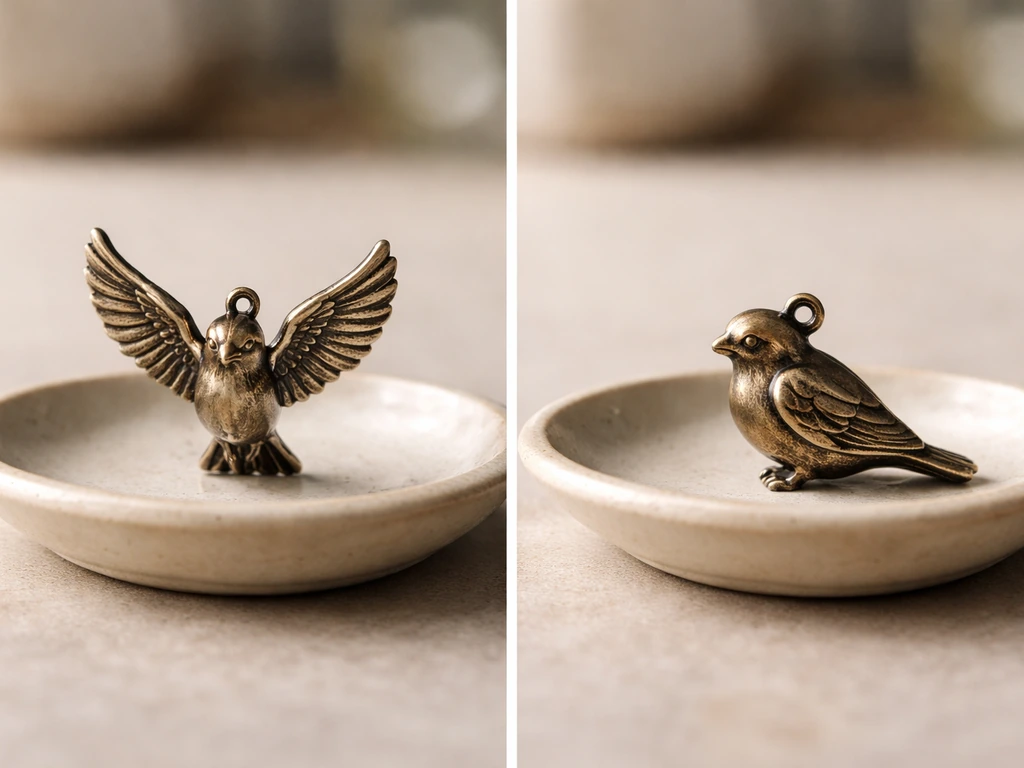
- Wings spread upward or in flight: liberation, active journey, ambition, spiritual ascent
- Wings folded, perched and still: contemplation, wisdom at rest, stability, protection from above
- Head turned to look back: memory, reflection on the past, sometimes grief or longing
- Beak open or singing: communication, song, joy, expression
- Nesting or carrying something (olive branch, twig, key): the carried object anchors the meaning (peace, home-building, unlocking something)
Color and metal choices
In bird symbolism, color carries real weight. A white bird (dove, swan, egret) immediately signals purity, peace, or spiritual presence in most Western traditions. A dark or black bird (raven, crow, blackbird) leans toward mystery, the unseen, transformation, or omen territory depending on the tradition. Gold metal tends to layer in solar energy, success, and divine authority, which is why a gold eagle has historically been used for heraldic power symbols. Silver tends toward lunar, intuitive, and feminine energy in folk traditions. Rose gold has softer romantic associations in contemporary jewelry culture.
Gemstones set into the pendant
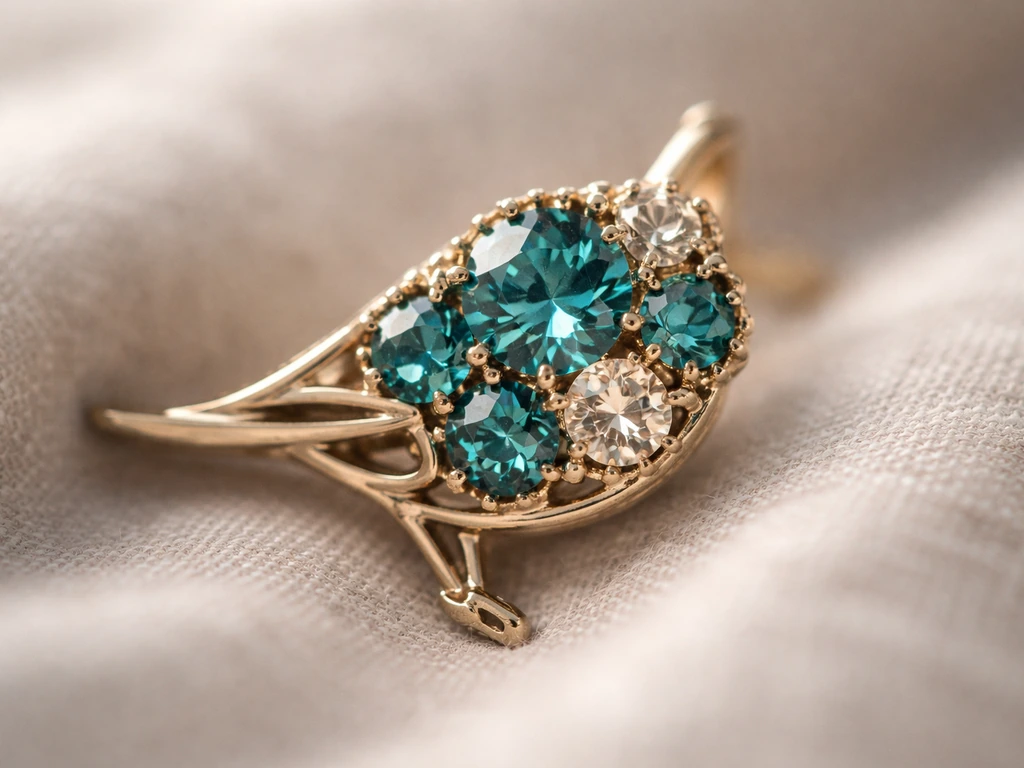
Gem-set bird pendants add a second layer of symbolism on top of the bird's species meaning, and sometimes the stone steers the overall reading more strongly than the bird does. If you are trying to interpret a bird bell pendant specifically, the tota meaning will depend on the bird species and the gemstone or metal details you see bird bell tota meaning.
Amethyst, for example, is traditionally linked to spiritual wisdom and protection, and has been used as a protective amulet as far back as medieval European soldiers who wore it in battle. Pair amethyst with an owl and the wisdom angle doubles down. Onyx is associated with grounding, focus, and quiet confidence, so an onyx-eyed raven pendant reads less as 'dark omen' and more as 'focused protection. ' Clear quartz amplifies intention and clarity.
Turquoise in Native American traditions carries deep spiritual protection meaning. When you have a gem-set pendant, always look up the stone independently and then see how it interacts with the bird.
Accompanying motifs
Moon: mystery, intuition, cyclical change. Floral elements: growth, femininity, seasonal renewal. Keys: access, unlocking potential, secrets. Infinity symbols: eternal connection, usually love or loyalty. Skulls or bones: mortality, transformation, memento mori tradition. Hearts: obvious, but worth noting that a bird carrying a heart often represents love being carried or delivered.
Spiritual, faith-based, and personal intention meanings
Many people wear bird pendants as intentional spiritual objects rather than just decorative pieces, and that intention shapes what the pendant means as much as any design element does. Research into symbolic objects and grief rituals confirms that personal jewelry functions as a vehicle for meaning-making: the wearer assigns the object significance through ritual, story, or intention, and the symbol becomes a tool for coping, commemorating, or setting direction.
In Christian contexts, a dove pendant worn close to the body often represents the Holy Spirit, spiritual peace, or a prayer for guidance. In Norse-inspired spiritual practice, a raven pendant may be worn as a connection to Odin's messengers, representing the desire for insight or ancestral memory. In pagan and Wiccan traditions, owl pendants are sometimes used as protective talismans, with the owl's night vision read as an ability to see through deception. In grief contexts specifically, a robin or swallow pendant is frequently chosen as a way to feel close to a deceased loved one, working from the folk belief that certain birds carry the souls of the departed.
None of these meanings are objectively 'true' in a scientific sense, but they are valid within their respective belief systems and traditions, and they are psychologically real for the person wearing them. If you bought or received a pendant in a specific emotional context (grief, a milestone, a spiritual practice), that context is a legitimate part of the pendant's meaning for you. Don't discount it in favor of a 'more official' symbolism.
- Protection: eagle, owl, raven (especially in Norse or Celtic practice)
- Guidance and messages: raven, robin, hummingbird
- Love and fidelity: dove, swan, swallow
- Grief and memory: robin, swallow, phoenix (rebirth from loss)
- New beginnings: phoenix, hummingbird, robin
- Wisdom and clarity: owl (classical Greek tradition), raven (Norse)
- Strength and courage: eagle, falcon, hawk
- Joy and lightness: hummingbird, goldfinch, wren
Cultural folklore and myth behind common pendant birds
The most widely sold bird pendants are backed by specific folklore traditions, and knowing those traditions helps you decide whether a particular cultural framing feels relevant to your pendant or not.
Dove: older and more complex than just 'peace'
The dove appears across Judaism, Christianity, Islam, and classical paganism, which makes it one of the most cross-cultural birds in pendant symbolism. In Christianity, it represents the Holy Spirit at the Baptism of Christ. In ancient Greek culture, it was sacred to Aphrodite and linked to love. In Islamic art, the dove is a symbol of purity. In modern usage, it became the international symbol of peace (especially after Picasso's lithograph was adopted by the World Peace Congress in 1949). So a dove pendant can be read through any of these lenses. The design cues help: a dove with an olive branch is specifically about peace and biblical covenant; a dove alone is more open to spiritual or love interpretations.
Eagle: power across civilizations
Eagle symbolism as power and authority dates back to Babylonian culture and carries through to Roman imperial imagery, the American bald eagle as a national symbol, and the black double-headed eagle of the Holy Roman Empire in German heraldry. Heraldic references also note that eagle coloration in heraldry often uses sable (black) with Or (gold/yellow), and that eagles became associated with the Holy Roman Empire in German heraldry by the late medieval period.
If your eagle pendant has a heraldic feel (formal posture, spread wings, stylized feathers), it's likely drawing on European power symbolism. If it's more naturalistic, it may be leaning toward American or indigenous traditions. The distinction matters because heraldic eagle symbolism is about institutional authority, while indigenous eagle symbolism in many North American traditions centers spiritual connection and vision.
Raven: Odin's messengers and the limits of modern blending
Most modern raven jewelry traces its meaning to Huginn (thought) and Muninn (memory), the two ravens of Odin in Norse mythology who flew the world daily and returned to whisper what they'd seen. This is a well-documented textual tradition, and it's where the 'raven as messenger of wisdom and memory' reading originates. What's worth knowing is that modern jewelry brands often layer Celtic, gothic, and general 'dark mysticism' associations on top of this Norse core. That blending is commercially common but historically imprecise. If your raven pendant came with specific Norse imagery (runes, Yggdrasil, knotwork), the reading is more confidently Norse. If it's purely aesthetic with no cultural markers, the meaning is broader and more personal.
Swallow: sailors, loyalty, and Victorian love tokens
The swallow was one of the most loaded symbols in Victorian and maritime jewelry culture. Sailors traditionally had a swallow tattooed after sailing 5,000 nautical miles, and a swallow pendant given to a sweetheart was a promise of safe return. In Victorian mourning jewelry, swallows sometimes appeared as symbols of hope and spring return. In contemporary jewelry, the swallow is most often read as loyalty, safe homecoming, and steadfast love, which makes it a popular anniversary and long-distance relationship gift.
Phoenix: the rebirth bird across traditions
The phoenix myth appears in Greek, Egyptian, Chinese (as the Fenghuang), and Persian traditions, with different specifics but a shared core: a bird that dies and is reborn from its own ashes. In contemporary jewelry, phoenix pendants are almost universally read as symbols of resilience, overcoming hardship, and transformation. They're frequently chosen as gifts for people going through recovery, major life changes, or grief. If your pendant has flame details at the wings or tail, that's a deliberate design choice reinforcing the rebirth reading.
What wearing a bird pendant can signal (behavioral and psychological readings)
Beyond cultural folklore, there's a real psychological dimension to why people choose bird pendants and what wearing one communicates. If you are trying to understand the bird nest necklace meaning specifically, look at the bird and nest details together with your own reason for wearing it bird pendant. Research in jewelry studies frames personal jewelry as an object at the boundary of the self: what you choose to wear close to your body tends to reflect something about identity, aspiration, or emotional state. A bird pendant isn't just decorative; it's often a wearable declaration of something the wearer is holding onto or reaching toward.
Someone who buys an eagle pendant after a difficult period of feeling powerless is often using the symbol intentionally, whether or not they articulate it that way. Someone gifted a robin pendant by a grieving family member is participating in a meaning-making ritual even if the pendant looks simple on the surface. In meditation or mindfulness jewelry research, symbols like bird pendants function as anchors: touching or noticing the pendant during stress is a prompt to return to whatever quality the bird represents for that person.
It's also worth connecting pendant symbolism to real bird sightings. If you wear a raven pendant and a raven turns up repeatedly in your daily environment, many people in folk and spiritual traditions would read that as confirmation or amplification of the pendant's message. This isn't a scientifically testable claim, but it is a coherent interpretive framework for people who engage with bird symbolism as a living practice rather than a historical curiosity. The pendant and the sighting reinforce each other as part of the same symbol system.
If you're wondering what your pendant is signaling to others: most people won't read it at the species level unless they're specifically interested in bird symbolism or jewelry. What they'll likely perceive is the general aesthetic register: a delicate gold bird reads as elegant and feminine; a bold black raven reads as alternative or gothic; an eagle reads as patriotic or powerful; a colorful enamel hummingbird reads as joyful and whimsical. Both the internal meaning (yours) and the external signal (how others perceive it) are real and valid parts of what the pendant means in practice.
How to figure out exactly what your pendant means today
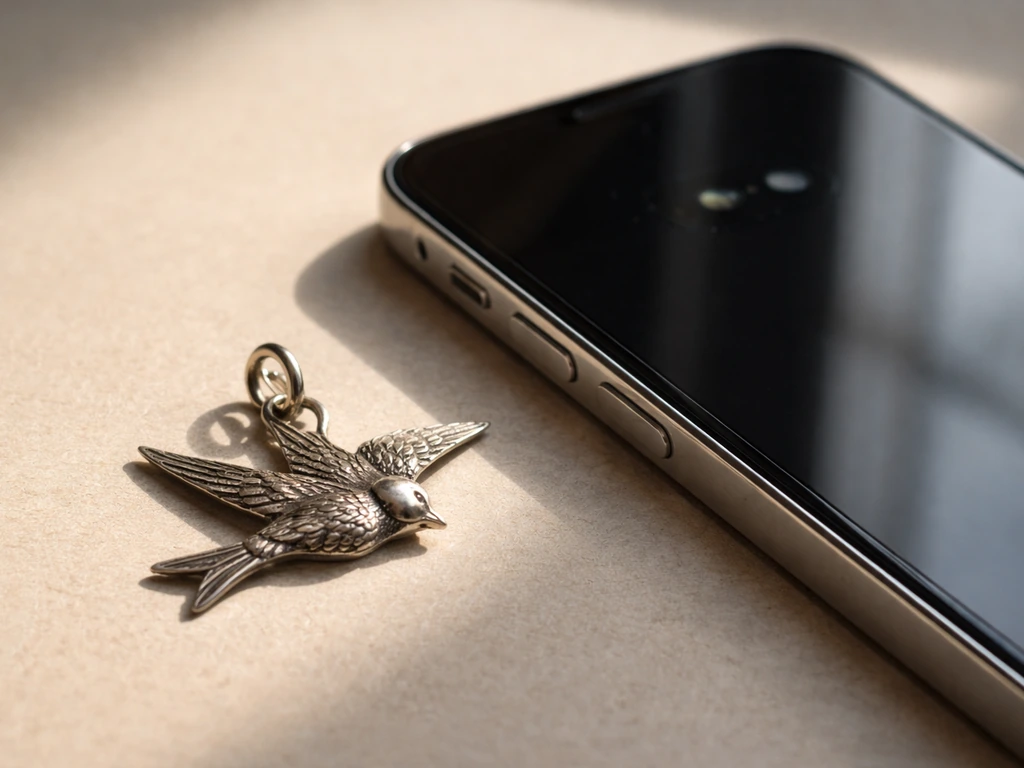
Here's the practical process. Go through these steps in order and you'll land on a specific, defensible reading for your exact pendant rather than a generic answer.
Step 1: Identify the bird species
Take a clear photo in natural or direct light. Look at bill shape (hooked = raptor; straight pointed = songbird; long curved = hummingbird), tail shape (forked = swallow; fan = peacock; wedge = raven), ear tufts (owls), and distinctive markings. If you are trying to pin down the bird launcher meaning behind a specific pendant design, start by identifying the exact bird and its design cues bird identification. If the bird is stylized, look for the most prominent feature the designer chose to emphasize. That feature is usually the species identifier. If you're still unsure, post the photo to a jewelry identification community or a bird identification forum.
Step 2: Check the back of the pendant for hallmarks and maker's marks
Flip the pendant over and look for stamps. Use a flashlight held at an angle to a white surface to pick up faint engravings. Look for metal purity stamps (925 for sterling silver, 750 for 18k gold, 585 for 14k gold), maker's marks (initials or logos in geometric frames), country or assay marks, and any brand name or date letters.
Hallmarks and maker's marks tell you who made the piece and often lead you directly to the brand's stated symbolism for that pendant. Antique pieces in particular often have a documented meaning tied to their era. If the piece is vintage and has clear hallmarks, use Invaluable's jewelry guides or a hallmark database to trace the maker before interpreting the symbolism.
Step 3: Identify design details that modify the meaning
Once you know the species, note the posture (perched or flying), wing position, any objects the bird is holding or accompanied by, the metal color, and any gemstones. Use the color and material section above to layer these in. Write down all the details before you start looking up meaning, because it's easy to stop too early and miss a detail that significantly changes the reading.
Step 4: Ask yourself why you have this pendant
Was it a gift? If so, from whom and on what occasion? Did you choose it yourself? If yes, what drew you to it? Was there something happening in your life when you got it? The acquisition story is frequently the most direct route to meaning. A pendant chosen during a period of loss and featuring a robin is almost certainly a grief and renewal symbol for that person, regardless of what the product listing says.
Step 5: Cross-check against cultural tradition and seller copy
Look up the species + cultural tradition that feels most relevant to you or the pendant's design style. Check at least two or three sources, not just the seller's product description, because brand copy often blends traditions loosely. If the seller says 'owl = wisdom and magic,' check whether the design references a specific tradition (Greek, Native American, Celtic) and whether that tradition's owl meaning actually matches. If sources agree on a core meaning, you can use it with confidence. If they conflict, that's a signal that the meaning is genuinely context-dependent, and you should default to what feels personally resonant.
Questions to ask before settling on a final interpretation
- Which bird is it, and can I confirm the species from the design features?
- Is the bird perched, flying, or posed in a way that signals action versus stillness?
- What color is the metal, and does the pendant include any gemstones?
- Does the design include any additional motifs (branches, moons, keys, hearts)?
- Who gave me this pendant or why did I choose it, and what was happening in my life at the time?
- Does the pendant have any hallmarks, maker's marks, or brand labels that I can trace?
- Is there a specific cultural tradition (Norse, Greek, Christian, Celtic, indigenous) that the design style seems to reference?
- What feeling do I get when I wear it, and does that feeling align with the symbolism I'm finding?
If you work through those questions with your pendant in hand, you'll have a specific, layered answer rather than a vague 'birds mean freedom' response. Bird pendants related to other jewelry forms, like bird charms, bird necklaces, bird cage necklaces, or bird bracelets, follow similar identification logic, but pendants are often more symbolically loaded than generalist bird jewelry because the pendant format has historically been used for intentional, close-to-the-body symbolic objects. If you specifically mean the bird charm meaning, use the same approach: identify the species, then match the design details and your personal context bird charms. That history is worth leaning into when you interpret yours.
FAQ
What if I cannot tell which bird species my pendant shows?
If the bird is not clearly identifiable, focus on the most visually dominant feature the designer emphasized (for example, a hooked beak and talons usually signals a raptor, while a forked tail usually points to a swallow). Then treat symbolism as a spectrum, pick the best-matching “bird family” meaning, and avoid overcommitting to a single species-specific claim like “raven equals Huginn and Muninn.”
Does the bird’s pose change the bird pendant meaning?
A “spread wings” pose often shifts meaning toward protection at a distance, openness, and empowerment, while a perched or resting pose more often reads as calm guardianship or fidelity. For practical interpretation, also check whether the bird is facing left or right, because some artisans compose directional “energy flow” even when they do not explain it.
How should I interpret bird pendant meaning if it is costume jewelry versus solid metal?
Yes, especially for materials. A plated or fashion metal version tends to make the symbolism feel more personal and aesthetic, while hallmarked solid metals (like clearly stamped sterling or 18k) often carry more weight as a long-term talisman. Also check for patina or deliberate aging, because matte, weathered finishes can be read as grounded, time-worn protection rather than bright “inspiration” energy.
What should I consider when the pendant has gemstones or a stone eye?
Gem-set pendants often work like a two-layer code, bird first, stone second. A common mistake is reading only the stone label (for example “amethyst means protection”) and ignoring that a wisdom-associated bird (like an owl) can change the focus toward learning and discernment. If there is a gem “eye” detail, treat the eye gemstone as the strongest modifier of the overall meaning.
My pendant was given during a tough time, how do I balance that context with the design symbolism?
Trust the acquisition story, but verify the physical cues. If the pendant was gifted during grief, a robin or swallow motif typically aligns with renewal and closeness, but the bird species still matters. If the piece has conflicting markers (for example, a “dove of peace” design paired with skull imagery), treat it as a mixed-intent memorial piece rather than trying to force one single theme.
What will other people realistically think a bird pendant means?
Most people do not read the species-level symbolism unless they already know bird-and-symbol traditions, so external meaning is usually driven by the overall aesthetic. Choose how you want to be read visually: delicate pale birds generally signal softness and approachability, bold dark birds often signal alternative taste, and bright enamel birds signal playfulness. Decide whether you want your internal meaning or your outward “signal” to lead.
How do I interpret bird pendant meaning when there are multiple motifs (nest, keys, hearts, moons)?
If the pendant uses two birds, a bird plus a nest, or a bird plus symbolic objects (keys, hearts, moons), you should combine meanings rather than choosing only one. A bird nest typically points to home, protection, and nurturing, and if the bird is a dove, it can read as peace-seeking within the home. Write each motif separately, then decide the “dominant” one by which element is most visually centered.
How can I tell when a pendant is using cultural symbolism respectfully versus just marketing language?
Yes, and the safest approach is to check whether the design contains explicit cultural markers beyond generic “aesthetic.” Raven jewelry may be marketed as Norse even when it lacks Norse identifiers like runes, knotwork patterns, or Yggdrasil-like elements. If those markers are absent, treat any tradition-specific claim as optional framing and default to personal resonance or the bird-and-pose cues.
If my pendant is a bird bell or bird launcher style, what extra details matter?
Start by identifying the exact bird and posture, then look for the stone, metal color, and whether the bird is holding or “guarding” anything. For example, “bird bell” style pieces often read as a call, alert, or protective chime, and the bird type plus the gemstone usually determines whether it feels like spiritual guidance, grounding, or warding. If you cannot confirm the exact bird, do not assume the bell means the bird’s folklore theme.
Can bird sightings near the pendant affect its meaning, and how should I handle that?
Yes, repeated symbolism can be meaningful in a personal-practice way, but it should not replace your own interpretation. If ravens appear frequently after you put on the pendant, many people treat it as confirmation or a prompt to reflect, not as a guaranteed future event. Consider keeping a simple note of what you were thinking when you noticed the bird, because that links the “sighting” to the pendant’s purpose for you.
How does vintage or antique origin change the way I interpret bird pendant meaning?
Quick check for authenticity and era cues. Look for clear hallmarks and maker’s marks on the back or clasp, then compare the design style to its likely period (for instance, Victorian engraving and specific mourning motifs vs modern enamel and mass-market shaping). If the piece is antique and hallmarks are identifiable, symbolism may be more tightly tied to its era’s intended emotional function than today’s generalized “freedom” readings.
Next Article
Bird Charm Meaning: Symbolism, Folklore, Dreams, and How to Decode
Decode bird charm meaning with symbolism, folklore, superstition and dream clues plus a quick ID framework for real case