A yard bird is simply a bird that shows up in your yard on a regular basis. In everyday birdwatching language, it usually means any common species that visits your garden, lawn, or outdoor space often enough to feel like a regular, whether that is a robin hunting earthworms on the grass, a blue tit swinging off your feeder, or a mourning dove bobbing along the path. The term is casual and affectionate, not a formal ornithological category.
Yard Bird Definition: Meaning, ID Tips, and Practical Signs

Marcus Holloway
8 Jun 2026
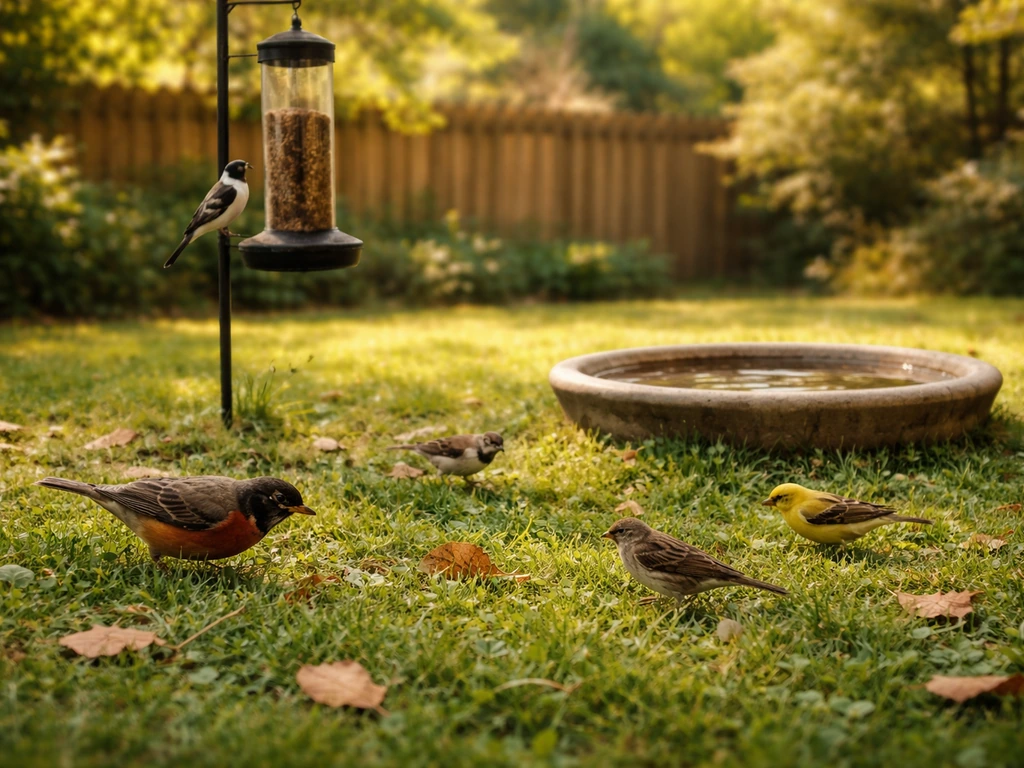
If you searched this term wondering about slang or spiritual meaning, there are a few other definitions worth knowing, and this article covers all of them. If you are asking about bird behavior meaning in slang or spiritual terms, keep reading for the practical and symbolic interpretations side by side bird behavior meaning slang.
What 'yard bird' means in plain language
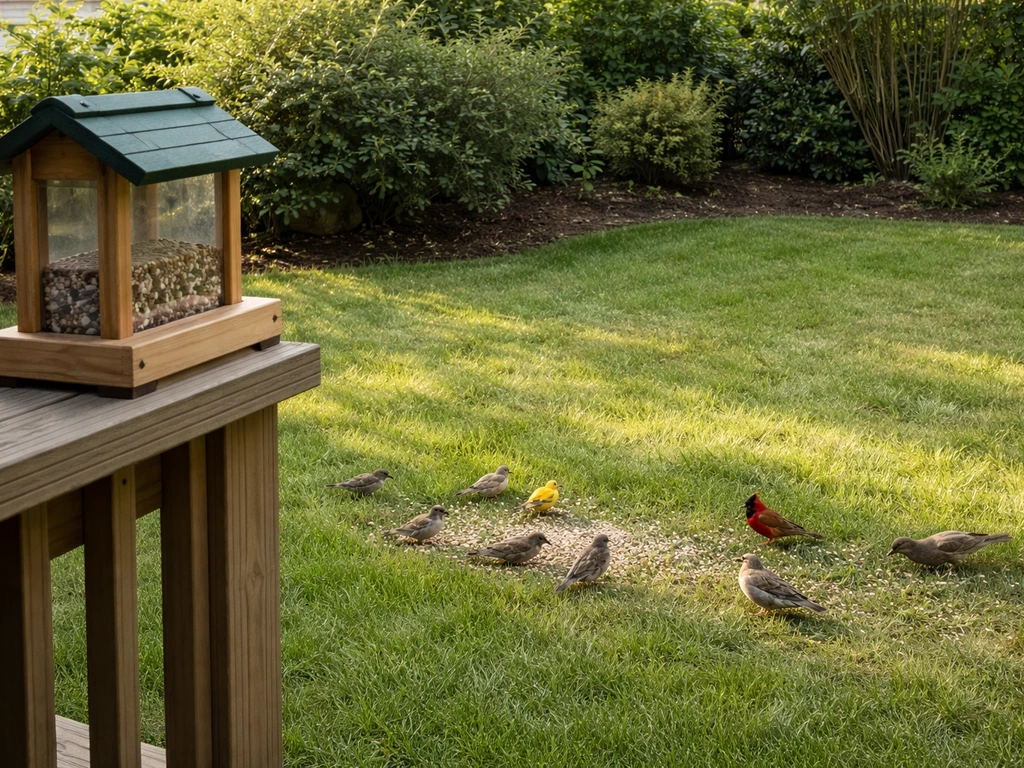
At its most literal, a yard bird is a bird that lives in or regularly visits a residential yard. The phrase is informal birdwatcher shorthand for the reliable, familiar species that share domestic space with people. If you are searching for bird ka meaning, this yard-bird usage is the casual, everyday way of talking about familiar birds that visit your home. Birdwatchers sometimes use it to describe a species so common in their local patch that spotting it barely registers as an event, the avian equivalent of wallpaper. That does not make these birds uninteresting. It just means they are comfortable around human habitation, which actually tells you a lot about their ecology and behavior.
The term sits naturally alongside other bird-related slang and casual expressions. If you have come across similar phrases in birdwatching communities or everyday speech, it helps to understand that yard bird specifically implies familiarity and proximity rather than rarity. It is the opposite of a life bird (a species you have never seen before). Your yard bird is the one you could probably identify with your eyes half open.
Common yard birds: typical species and seasons
Which birds qualify as yard birds depends on where you live, but across the UK and North America there are reliable regulars that show up year after year. In the UK, the Big Garden Birdwatch 2026 ranked House Sparrow as the most recorded garden bird, with Blue Tit second and Common Starling third. BTO Garden BirdWatch survey data puts Robin and Blackbird among the most consistently recorded species across gardens, with Robin topping nesting records at 26.3% of monitored gardens. In North America, American Robin, Northern Cardinal, Mourning Dove, and Tufted Titmouse are classic yard birds across most of the eastern half of the continent.
Seasonality matters. Some yard birds are year-round residents: robins, cardinals, and house sparrows rarely leave. Others are seasonal visitors. American Robins tend to concentrate in yards during spring and early summer when earthworm foraging on lawns is at its best, but they may drift toward fruit-bearing trees and hedgerows later in the year. Mourning doves are particularly tied to backyard feeders in winter, which is why you tend to see more of them on cold mornings. Migration seasons bring surprises too: a bird you would not normally call a yard bird might stop in for a few days, making your garden a temporary pit stop.
| Species | Region | Peak Season in Yards | Key Habit |
|---|---|---|---|
| House Sparrow | UK | Year-round | Flocks near feeders and eaves |
| Robin | UK | Year-round (nesting spring) | Ground foraging, territorial song |
| Blue Tit | UK | Year-round | Acrobatic feeder visits |
| Common Starling | UK | Autumn/Winter flocks | Lawn probing, murmurations |
| American Robin | North America | Spring/Summer | Earthworm foraging on open lawns |
| Northern Cardinal | North America | Year-round | Seed feeders, dense shrubs |
| Mourning Dove | North America | Year-round (peak winter) | Ground feeding, millet/seeds |
| Tufted Titmouse | North America | Year-round | Sunflower seeds, frequent feeder visits |
How to tell what your yard bird is
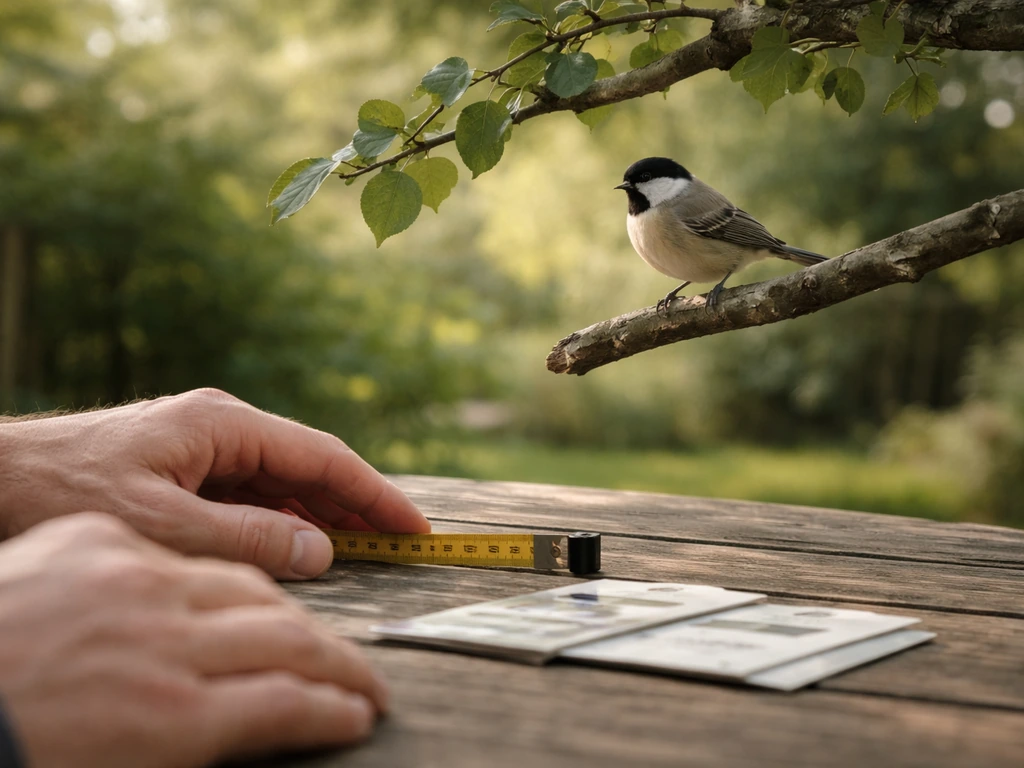
You do not need binoculars or a field guide to start narrowing things down. Most yard bird identification comes down to a handful of quick cues you can clock in seconds.
Shape and size
Start with overall size and silhouette before you worry about color. A Tufted Titmouse looks large for a small bird because of its rounded head, big dark eye, and prominent crest, a useful clue that holds even when light is bad. A Northern Cardinal is the only crested red bird you are likely to see at a North American feeder, making it, as Audubon's field guide puts it, genuinely unmistakable. Starlings have a short tail and triangular wing shape in flight that is distinctive once you know it.
Color and markings
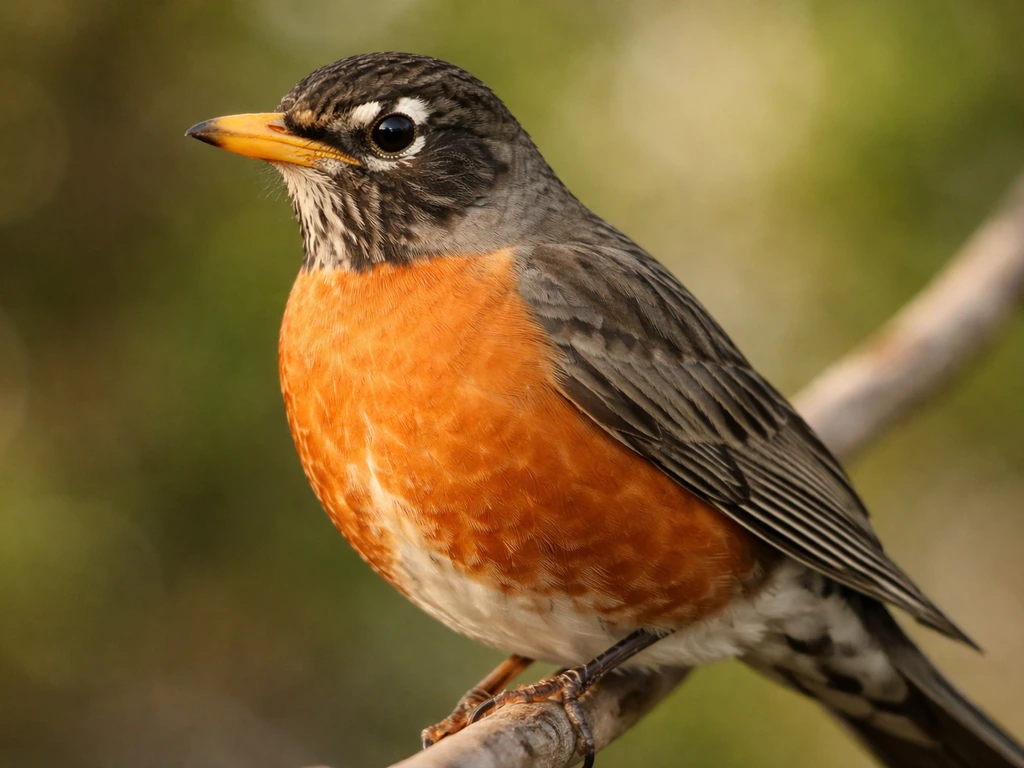
Color is useful but can mislead in poor light. For the Tufted Titmouse: mostly gray above, white below, with rusty-orange washed flanks and a black forehead patch. For tufted titmouse identification, Audubon’s field guide summarizes the key markings such as mostly gray upperparts, a black forehead patch, and rusty-orange washed flanks. For a Robin: the orange-red breast is the giveaway in both UK and North American species, though they are unrelated birds. For Blue Tit: bright yellow underparts, blue cap and wings, white face. Look for two or three field marks together rather than relying on one.
Behavior and movement
How a bird moves often identifies it faster than plumage. American Robins run and stop across open lawns, tilting their heads to locate earthworms by sight. Mourning doves walk with a distinctive head-bobbing motion while foraging on the ground. Blue Tits hang upside down from feeders. Starlings probe lawns with open-bill searching. Watching for a minute beats staring at a static photo in an app.
Sound
Sound is often the first clue, especially in dense vegetation. A UK Robin's contact call is a sharp, abrupt 'pink, pink' sound, easy to learn and very recognizable. The Tufted Titmouse gives a harsh scolding 'zhee zhee zhee.' The Mourning Dove's mournful 'hoo, hoo, hoo' call is so owl-like that people frequently mistake it for an owl, especially at dawn. If you can record a few seconds of audio on your phone, apps like Merlin (for North America) or the RSPB's identifier tools can match it quickly.
Behavioral meaning: what a yard bird's presence usually signals
When a bird becomes a regular in your yard, it is telling you something practical about your outdoor space. It means your garden offers at least one of the three things birds actually need: food, water, and shelter. A yard consistently visited by robins, for instance, usually has open lawn with accessible soil and good earthworm populations, a sign of healthy, pesticide-free ground. Cardinals staying year-round suggest dense shrubs or evergreen cover nearby where they can nest and roost safely.
Seasonal shifts in which birds show up also carry behavioral information. Mourning doves concentrating at feeders in winter signals that natural seed sources in the wider landscape are depleted. A sudden arrival of starlings in autumn often precedes colder weather pushing flocks from more exposed areas. When a bird you have never seen before appears in your yard during spring or autumn, it is almost certainly a migrant pausing to refuel, and that tells you your yard sits on or near a flight path.
Nesting behavior is one of the clearest signals. If a robin is repeatedly visiting a particular shrub or ledge carrying nesting material, it is not random, it is prospecting or building. BTO data shows robins nest successfully in gardens at a higher rate than almost any other species. Watching for alarm calls near a specific spot (parents give sharp warning calls near predators, as Smithsonian notes for robins) is often the first sign that eggs or chicks are present.
Spiritual, cultural, and superstitious interpretations
Birds appearing around human dwellings have attracted symbolic interpretation across cultures for thousands of years. The practice of reading meaning from bird behavior, known as ornithomancy, is one of the oldest forms of divination, rooted in ancient augury traditions across Rome, Greece, and the Americas. The Ch'orti' Maya of Guatemala, for example, treat birds as active messengers for prognosticating events ranging from love to sickness to death, a cultural framework studied in peer-reviewed ethnobiology research.
In everyday Western folk tradition, a robin appearing in a garden is widely associated with good luck, the arrival of spring, and even the presence of a deceased loved one watching over the home. Blackbirds singing from a rooftop are sometimes read as a warning of change in British folklore. Cardinals in North American folk belief are often said to represent deceased family members visiting. These are genuine, living folk traditions that many people find comfort in, and they deserve to be taken seriously as cultural meaning-making.
Here is where fact-checking matters, though. None of these symbolic meanings have an ornithological basis. A robin in your garden is there because your soil is good and your shrubs offer cover. A cardinal at your feeder is there because you have sunflower seeds. The bird is not reading your emotional state or delivering a message from the beyond, at least not in any way science can verify. Both lenses, the ecological and the symbolic, can coexist. You do not have to choose one. But it is worth knowing which is which so you can engage with each honestly.
Myth vs fact: a quick separation
| Belief | Type | Ornithological Reality |
|---|---|---|
| A robin in the yard means good luck is coming | Folk superstition | Robins visit yards with good earthworm habitat and cover |
| A cardinal is a deceased relative visiting | Cultural/spiritual belief | Cardinals stay year-round where food and shrubs are available |
| A bird tapping on a window means death | Folk omen | Birds hit windows when they see reflections; placement matters |
| Mourning dove call signals sorrow or loss | Poetic/folk tradition | Call is a territorial and pair-bonding vocalization, not an omen |
| Starlings arriving in flocks predict bad weather | Folk weather prediction | Flocks form due to temperature drops and food availability, not prophecy |
Slang and alternate uses of 'yard bird'
If you landed here after hearing 'yard bird' in a completely different context, you are not alone. The term has at least two well-established slang meanings that have nothing to do with birdwatching.
The most common slang use, and the one you will find on Urban Dictionary, refers to chicken, specifically a chicken prepared as food. If you meant the slang sense, it can also refer to chicken in everyday conversation yard bird. Ordering 'yard bird' at a restaurant or in casual speech just means ordering chicken. If you are also wondering about the bird joke meaning behind this slang, it helps to know which context the phrase is being used in. The term leans on the image of a chicken wandering a yard before it became a meal. This is probably the meaning you will encounter most often outside of birdwatching communities.
The second slang meaning is older and more specific. 'Yardbird' (often written as one word) entered American slang in the 1940s as a term for a prisoner or convict, someone confined to the yard. It was also used for soldiers assigned to menial camp duties as punishment. This is a dated usage now, but it still appears in historical texts and some regional speech. If someone uses it in a conversation about crime, incarceration, or military history, that is almost certainly the intended meaning.
For the purposes of this site, the birdwatching definition is the most relevant. If you searched 'yard bird definition' while watching an actual bird in your garden, you are in the right place. If you meant the term you might see on sites like Urban Dictionary, that is usually the chicken meaning people are pointing to. If you are looking at a menu or reading a 1940s novel, now you know what you are dealing with.
These kinds of slang overlaps are common across bird-related language, and they come up frequently in broader discussions of bird slang meanings and bird idioms. If you are trying to pin down what people mean when they say “bird slang meaning,” this article helps you connect the common uses back to context bird slang meanings.
What to do next: practical steps for observing, attracting, and troubleshooting

Whether you want to identify the bird you are seeing, attract more birds, or deal with a specific problem like window strikes, here are concrete steps you can take today.
Identify your yard bird
- Note size, shape, and dominant color first, before reaching for your phone.
- Watch how it moves and where it goes: ground forager, feeder visitor, or canopy bird?
- Record a short audio clip if it is calling and run it through Merlin (North America) or the RSPB bird song identifier (UK).
- Cross-reference with a local field guide or All About Birds (Cornell) for range confirmation, as range rules out many lookalikes.
Attract more yard birds
- Add a water source: a drip bath or small fountain is especially effective during migration, and running water attracts species that do not visit feeders at all.
- Plant locally native species: Audubon's Plants for Birds program recommends consulting local native plant resources rather than generic mixes, since natives provide the insects and berries that birds actually eat.
- Create layered structure: ground cover, shrubs, and trees together attract far more species than any single feeder.
- Avoid pesticides: a pesticide-free lawn supports earthworms and insects that ground-feeding birds like robins and starlings depend on.
- Add a brush pile from yard clippings: Smithsonian notes this provides shelter and potential nesting habitat at essentially zero cost.
Keep feeders safe and clean
Dirty feeders spread disease fast. Project FeederWatch recommends cleaning seed and suet feeders every one to two weeks under normal conditions, and more often during wet weather or if you spot sick-looking birds. Hummingbird feeders need cleaning every couple of days. For window strikes, Audubon's guidance is practical: place feeders either within 3 feet of a window (so birds cannot build up fatal momentum) or more than 30 feet away (so they have clear flight space to navigate).
Document what you see
If a bird is nesting in your yard, consider logging it through NestWatch (Cornell's nest monitoring program), which gives you a structured method for recording nest visits without disturbing the birds. For general sightings, eBird (North America) and the BTO's BirdTrack (UK) turn your casual observations into genuinely useful scientific data. Your yard bird sightings matter more than you might think, especially given how much garden bird monitoring depends on volunteer records like the Big Garden Birdwatch.
FAQ
Does a “yard bird” have to live in my yard, or can it just visit often?
When people say a bird is your “yard bird,” they usually mean it shows up regularly, not that it nests there. A winter feeder regular can still be a yard bird even if it roosts elsewhere, so look for repeated visits across days or weeks rather than a single appearance.
How do I avoid misidentifying a yard bird when the lighting or color looks off?
A good rule is to prioritize the behavior cues you saw over the “average” description you expect. For example, an American robin’s head-tilting and ground-running pattern is often more reliable than breast color alone under dim, shadowy, or backlit conditions.
If someone says “yard bird” but it is not about birds, how can I tell which slang meaning they mean?
If you want to confirm the slang meaning, use context clues. “Yard bird” on a menu is almost always chicken, while “yardbird” in older writing or discussions about inmates or wartime camps is typically referring to a convict or prisoner assigned to the yard.
Can a bird be a yard bird for only a season, and how should I track that?
A bird can be a temporary yard bird during migration, and that is still a meaningful pattern. Note the date, time of day, and whether it is feeding, resting, or searching for water, since refueling stops often change what species you see from week to week.
What should I do if my “yard bird” seems to be nesting or prospecting in a specific spot?
If you see a bird carrying nesting material or repeatedly visiting one spot, you should assume nesting could be underway and watch from a distance. Use quiet observation, avoid handling plants or shaking branches, and if you must, wait until the bird is out of the area before doing yard work nearby.
Why did my usual yard bird suddenly stop coming, even though other birds still visit?
Feeder dependence can shift what looks like a yard bird. If you remove seed or change brands, some species may disappear for days, while others (like certain doves and sparrows) often persist longer, so count visits before and after any feeder changes.
Can more than one individual yard bird be “the regular,” and how does that affect identification?
Yes, many “yard birds” are effectively different birds of the same species. For example, feeder visitors may include multiple individuals with different ages and sex, so consider grouping by behavior and timing (morning vs afternoon) rather than assuming one bird is always present.
Is it ever reasonable to treat yard bird symbolism as more than cultural meaning?
If you are trying to interpret behavior meaning, avoid treating your yard bird as a guaranteed omen. Instead, treat symbolism as cultural meaning and ecology as the actionable explanation, then verify by checking habitat cues (cover, food availability, water, and recent weather).
What are the best next steps to prevent window strikes if I cannot move my feeders?
If you want to reduce window strikes, use the spacing guidance first, then add a visible barrier if you cannot relocate feeders. Also watch for early-morning activity, since many species strike most often around dawn when visibility and bird movement patterns are changing quickly.
Next Article
Bird Definition Urban Dictionary: Meaning, Slang, Symbols
Urban Dictionary bird meaning explained with slang uses plus cultural, spiritual, dream and real-life bird behavior symb