Bird idioms are figurative expressions that use birds as metaphors for human behavior, opportunity, timing, secrecy, and luck. The most common ones in English include 'a bird in the hand is worth two in the bush' (stick with what you have), 'the early bird catches the worm' (act first to get the reward), 'a little bird told me' (I heard it from a secret source), and 'birds of a feather flock together' (similar people tend to group up). None of these are literal statements about bird behavior, they are cultural shorthand built up over centuries, and knowing how to use them correctly (and how not to over-interpret them) is exactly what this guide covers.
Bird Idioms Meaning: Common Phrases, Origins, and Use

Marcus Holloway
27 Apr 2026
Common bird idioms and what they actually mean
Here is a solid working list of the most frequently used bird idioms in English, with plain-language definitions and a quick note on when each one typically shows up in conversation.
| Idiom | Plain-English Meaning | Typical Context |
|---|---|---|
| A bird in the hand is worth two in the bush | Hold onto what you already have rather than risking it for something uncertain | Decision-making, financial choices, relationships |
| The early bird catches the worm | The person who acts first or arrives earliest gets the advantage | Work ethic, punctuality, competition |
| A little bird told me | I heard this from a secret or anonymous source | Gossip, rumors, hinting at insider knowledge |
| Birds of a feather flock together | People with similar values, habits, or backgrounds tend to associate with each other | Social commentary, character judgments |
| Kill two birds with one stone | Accomplish two tasks with a single action | Efficiency, problem-solving |
| The bird has flown | The person or opportunity you were looking for is already gone | Pursuit, escape, missed chances |
| Free as a bird | Completely free with no obligations or restrictions | Personal freedom, relief after constraints |
| A bird's-eye view | A broad, high-level perspective of something | Planning, overviews, presentations |
| Sing like a canary | Confess or reveal information, especially to authorities | Crime stories, interrogations, betrayal |
| Eat like a bird | Eat very little | Dietary habits, appetite |
| An albatross around one's neck | A persistent burden or source of guilt that is hard to escape | Responsibility, regret, ongoing problems |
| A rare bird (rara avis) | A person or thing that is unusually exceptional or hard to find | Complimenting uniqueness, describing scarcity |
A few of these overlap with bird slang territory (especially 'sing like a canary' and 'the bird has flown'), which carry slightly different weight depending on whether you're speaking casually or describing something more serious like a criminal fleeing a scene. The line between idiom and slang is genuinely blurry in bird language, and if you're curious about how birds get used as straight-up slang terms rather than longer expressions, that's a related thread worth exploring separately. Bird behavior meaning slang is usually about how people borrow bird-related expressions as short, informal references, not about real observations.
Where these idioms came from and why birds became the metaphor
Birds became embedded in human language for practical reasons. Before industrialization, most people lived close to nature and observed birds daily. Their behavior, arriving early, flying freely, flocking together, singing loudly, mapped naturally onto human experiences. That closeness generated a rich vocabulary of comparisons that stuck.
The bird-in-the-hand proverb
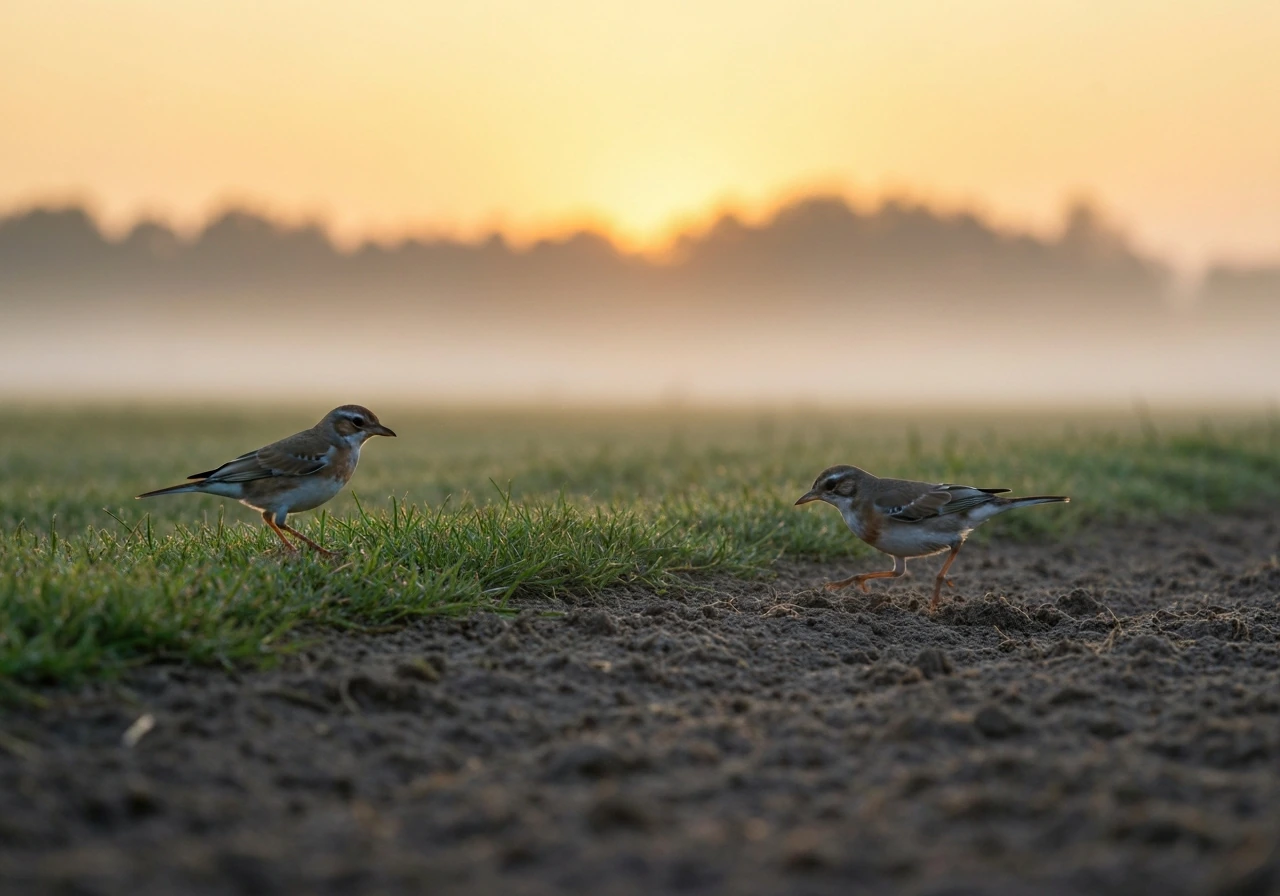
The phrase 'a bird in the hand is worth two in the bush' is one of the oldest English proverbs still in active use. It refers to falconry, where the bird a hunter actually held was more valuable than two birds spotted in the distance that might escape. Wiktionary's etymological records show close equivalents across dozens of languages, including French versions that keep the same risk-versus-certainty logic with different wording. This cross-linguistic durability tells you the underlying idea is universal: people everywhere weigh certain gains against uncertain ones.
The early bird
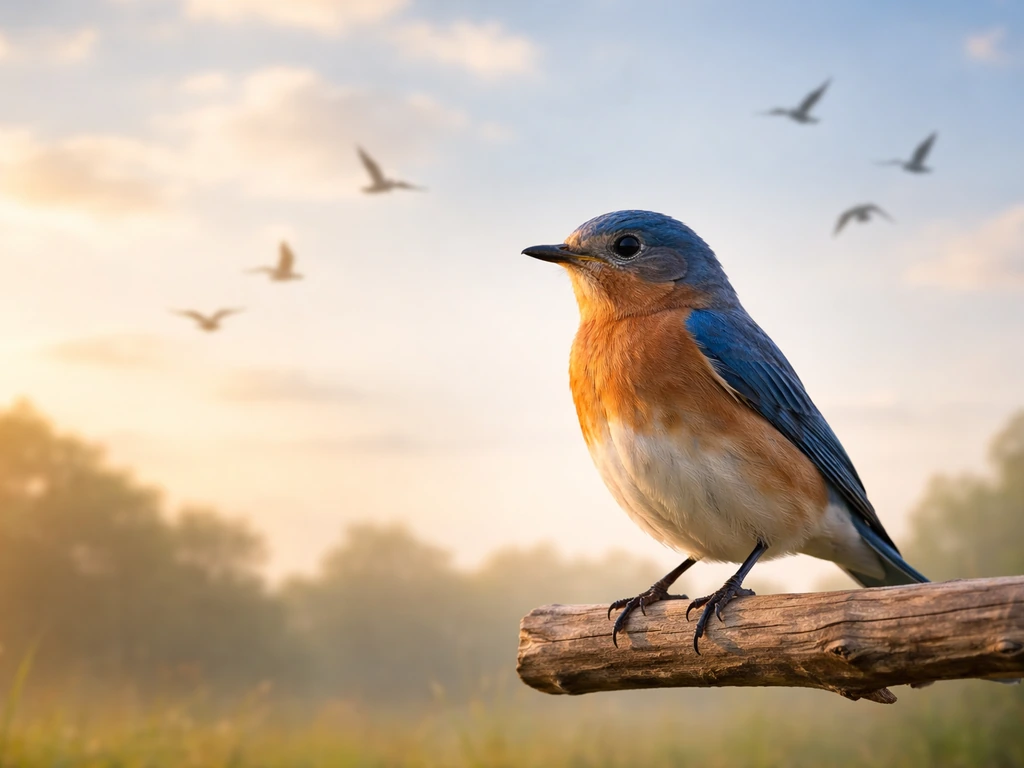
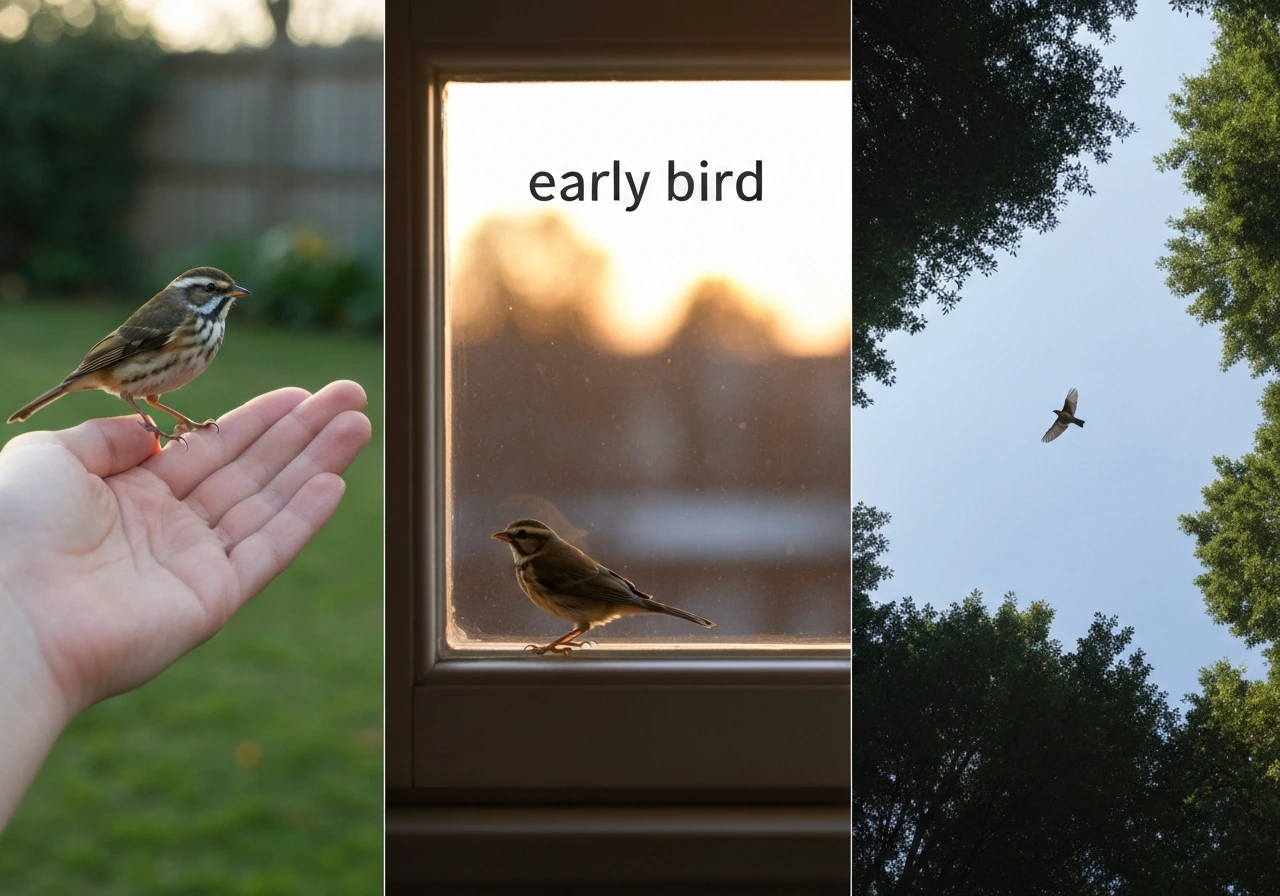
The Cambridge Dictionary definition is blunt: an early bird is simply a person who gets up or arrives very early. The proverb version ('the early bird catches the worm') extends that into reward: the first to act gets the benefit. The USC Digital Folklore Archives traces the logic directly to literal bird behavior, the bird that wakes earliest gets to the worm before another bird eats it. What started as an observable fact about foraging became a cultural instruction about industriousness. Importantly, it also has a counterpoint: 'the early worm gets eaten.' Context matters.
Why birds, specifically?
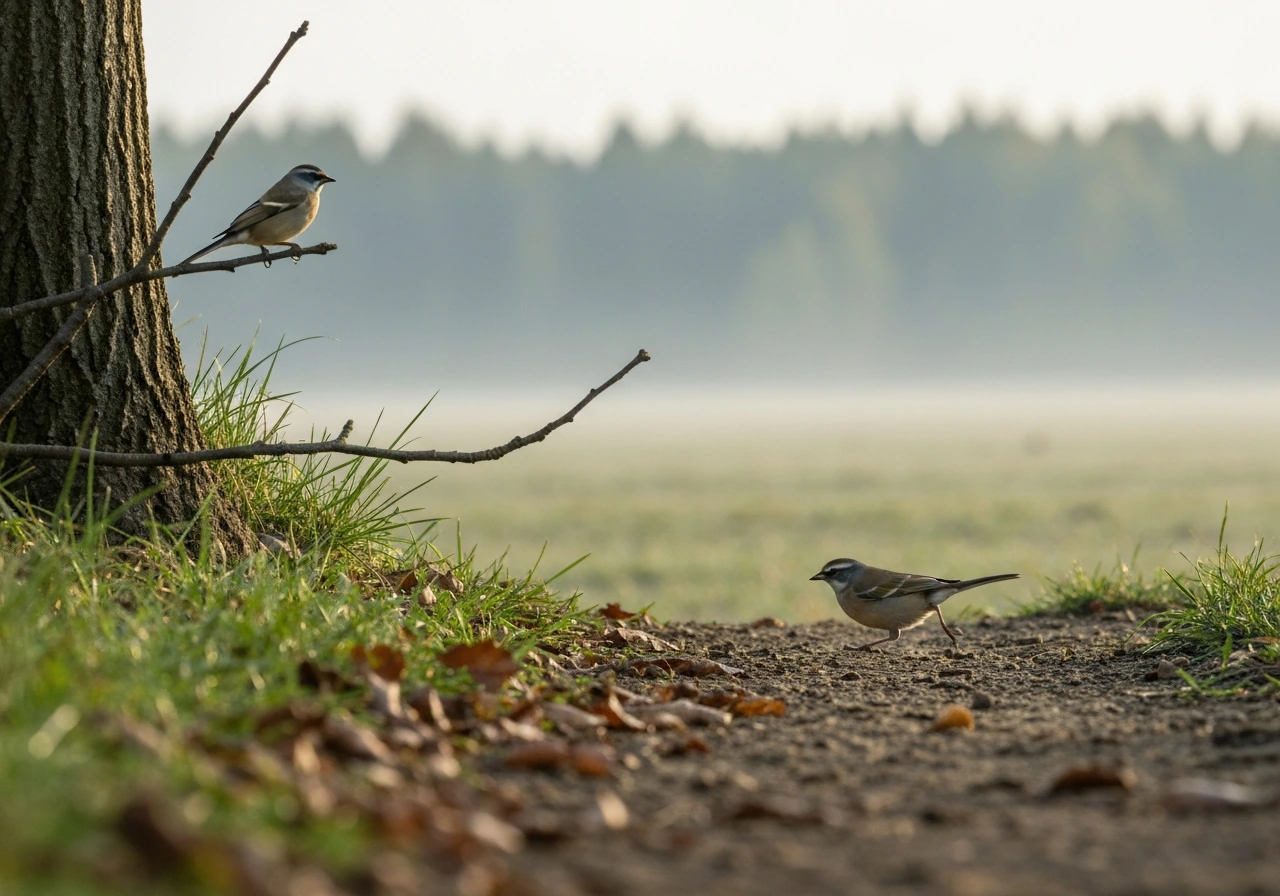
The field of ethnoornithology studies exactly this question: the interdisciplinary relationship between people and birds, combining anthropology, linguistics, and natural science. Birds were among the earliest omens, messengers, and symbols in human culture because they do things humans cannot: fly, migrate across continents, appear suddenly, and disappear. That gap between human capability and bird capability made birds natural vehicles for metaphor. They represented freedom, knowledge from elsewhere (hence 'a little bird told me'), speed, and elevation above ordinary life.
How to use bird idioms correctly in real conversation
Most bird idioms are fairly informal, but their register varies. Getting the tone right matters more than people realize.
Formality levels
- 'A bird's-eye view' is the most professionally safe idiom here. It appears in business writing, presentations, and academic introductions without sounding folksy.
- 'Kill two birds with one stone' is common in workplace conversation but some people now find it too violent in image. Alternatives like 'hit two goals at once' work if you're unsure of the audience.
- 'The early bird catches the worm' suits motivational contexts but can sound clichéd in formal writing. Use it in speech more than in text.
- 'Sing like a canary' has a distinctly criminal/thriller register. It sounds odd in casual non-crime contexts.
- 'A little bird told me' works in light gossip and friendly teasing. It signals playful secrecy, not genuine anonymity.
- 'An albatross around one's neck' is one of the more literary choices on this list. It reads well in written essays and opinion pieces but can confuse listeners unfamiliar with Coleridge's The Rime of the Ancient Mariner, where it originates.
Common misuses to avoid
The most frequent mistake is using 'birds of a feather flock together' as a neutral observation when it often carries a negative implication (that people associate with others of the same bad habits or poor character). Merriam-Webster defines “birds of a feather” as the idea that similar people associate with each other, often captured by the phrase “birds of a feather flock together.”. In many conversations it functions as a quiet accusation. Similarly, 'eat like a bird' is sometimes used as a compliment for healthy eating, but it actually implies eating an uncomfortably small amount. Real birds eat a significant percentage of their body weight daily, so the idiom is also ornithologically backward, though that doesn't stop it from being understood the way it is.
Bird idioms in dreams and what they might mean
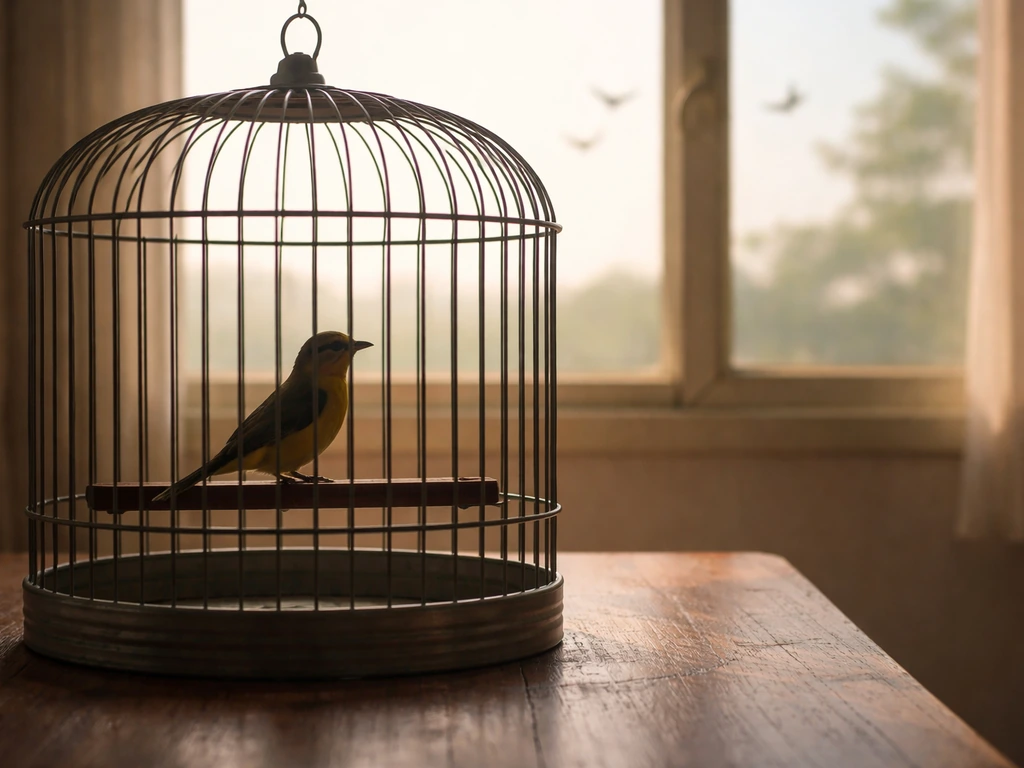
People frequently search for what it means when bird idioms or bird imagery show up in dreams. So, when you look up bird ka meaning, you are really checking how bird-based phrases carry meaning in a particular language and culture. The honest answer is that dream interpretation is not a precise science. Wikipedia's overview of dream interpretation notes that historically, dreams were treated as prophetic and interpreted through symbolism and personal associations. Carl Jung's tradition, documented in the analytical psychology literature, frames dream symbols as meaning-making through personal and cultural associations, not literal prophecy.
That said, if you dream of a caged bird and wake up feeling trapped, your mind is likely doing something coherent with that imagery. The bird idiom 'free as a bird' exists because the association between birds and freedom is deeply culturally embedded. Merriam-Webster provides the “free as a bird” definition entry The bird idiom 'free as a bird'. If you dream of an early bird, of flying birds, of a bird in your hand, the cultural meaning of those images is real in the sense that your brain learned it from your cultural environment. The Jungian lens would say: what does a bird mean to you personally, and what were the circumstances in the dream?
What dream interpretation cannot tell you is that seeing a specific bird or bird idiom in a dream predicts a specific future event. That's where folk belief and symbolic interpretation part company. The symbolic resonance is meaningful. The predictive claim is not verifiable.
Bird-related slang and superstition versus what birds actually do
There's an important distinction between three overlapping things: bird idioms (figurative expressions), bird slang (informal terms using 'bird' as a word), and bird superstitions (folk beliefs about what actual birds do or signal). If you are specifically looking for a bird definition slang, it is worth checking how the same “bird” word is used as direct slang rather than as an idiom bird slang. If you meant the bird definition from slang listings, a good adjacent stop is the bird definition urban dictionary entry. Bird slang meaning varies by context, so it helps to check the specific term and how it is used. They are frequently confused.
Bird slang is a separate category from idioms. Words like 'yardbird,' for instance, are slang terms rather than idiomatic expressions. In that context, bird slang meaning usually comes down to what the word “bird” is standing in for in modern slang. A yardbird definition usually points to the slang meaning of a “yardbird,” tied to prison-yard or military contexts. Merriam-Webster defines 'yardbird' with two meanings: a soldier assigned to menial disciplinary tasks, and an untrained military recruit, with first known use around 1941. Dictionary.com adds a third sense: a convict or prisoner. The etymology connects to prison-yard imagery and WWII armed forces usage. That is fundamentally different from an idiomatic expression like 'a bird in the hand,' which functions as a complete phrase with a non-literal meaning.
Superstitions occupy a third lane entirely. The West Virginia folklore record includes the belief that a bird flying into a house foretells a death in the household. The magpie-counting superstition ('one for sorrow, two for joy') is documented as far back as the early sixteenth century in Britain. Wikipedia's entry on the nursery rhyme 'One for Sorrow' connects this directly to ornithomancy, the practice of reading omens from birds. Sir Humphry Davy noted in 1828 that seeing a single magpie was considered unlucky because lone magpies in cold weather meant a mate had died, while pairs signaled health and survival. That is a folk interpretation of actual bird behavior, which made it feel credible, even though it has no scientific predictive value.
Debunking common misconceptions about bird meanings
A few myths around bird idioms and bird meanings come up so often that they deserve a direct response.
Myth: bird idioms reflect how birds actually behave
Most bird idioms are loosely inspired by bird behavior but have drifted far from accuracy. 'Eat like a bird' is the clearest example: small birds consume proportionally large amounts of food relative to body weight. The idiom means the opposite of ornithological reality. 'Sing like a canary' referring to confessing information is metaphorical, not behavioral. Canaries sing because of territorial and mating drives, not because they are unusually forthcoming. The fact that an idiom uses a real bird as its vehicle does not mean it encodes a fact about that bird's behavior.
Myth: if a bird idiom appears in a dream or a bird appears in your life, it's a sign
The human tendency to find meaning in coincidence is well-documented in psychology. If you read about 'a bird in the hand' and then see a bird land near you, that is coincidence reinforced by attention bias, not a message. Bird symbolism is real as a cultural and linguistic phenomenon. It is not real as a predictive or supernatural system. The Wikipedia entry on Human Uses of Birds explicitly notes that perceptions of bird species vary widely across cultures, with the same bird considered a good omen in one region and a bad omen in another. That cultural variability is itself the best evidence that the meaning lives in the culture, not in the bird.
Myth: bird idioms mean the same thing in every language
They largely do not, even when the surface structure looks similar. The 'bird in the hand' proverb exists across many languages with comparable logic, but the specific wording shifts and the emotional weight can differ. In some traditions the proverb is a gentle reminder about gratitude; in others it functions as a warning against greed. Cross-linguistic comparisons show structural similarity but contextual divergence.
How different cultures use bird idioms
Bird idioms are not exclusive to English. Every major language tradition has developed bird-based expressions, and comparing them reveals both shared human instincts and meaningful cultural divergences.
| Idiom / Expression | Culture / Language | Core Meaning | Notes |
|---|---|---|---|
| A bird in the hand is worth two in the bush | English (widespread) | Value certainty over uncertain gain | Falconry origin; close equivalents in French, Spanish, German, and many others |
| One for sorrow, two for joy (magpie counting) | British / Celtic | Single magpie = bad luck; pair = good luck | Documented from 16th century; varies by region (some versions go up to eight magpies) |
| The early bird catches the worm | English (also German and Scandinavian parallels) | Act first to gain the reward | German equivalent: 'Morgenstund hat Gold im Mund' (morning hour has gold in its mouth) |
| Tsuru (crane) symbolism | Japanese | Longevity, loyalty, good fortune | Cranes are positive omens in Japan; contrast with European associations of birds as death omens |
| Owl as wisdom | Greek / Western | Intelligence and foresight | The owl was Athena's symbol; in many African and South Asian traditions, the owl is a bad omen instead |
| Raven as trickster / messenger | Indigenous North American | Cunning, transformation, communication | Multiple nations attribute different meanings; the trickster role is common across many but not universal |
| Crow as bad omen | European folk tradition | Death, misfortune | Contrast: in Hindu mythology, crows are associated with ancestors and are given offerings |
The take-away from this comparison is practical: if you encounter a bird idiom or bird symbol in a cultural context that isn't your own, the default assumption that it means what it means in English is likely wrong. The ethnoornithological framework is useful here precisely because it treats bird symbolism as culturally constructed, not as a universal code. When you are decoding any bird idiom, the first question is always: which cultural tradition is this expression coming from?
For everyday English use, the safest approach is to treat bird idioms as stable conventional phrases with agreed-upon meanings, use the list above as your reference, and resist the impulse to layer supernatural or predictive significance onto them unless you are deliberately engaging with a specific folk tradition. The idioms are genuinely useful communication tools. The mythology around them is interesting context. Keeping those two things separate makes you a sharper reader of both language and culture. If you want a bird joke meaning, start by checking whether the “bird” wording is an idiom, slang, or a deliberate prank setup.
FAQ
How can I tell if a phrase is an idiom (“bird idioms meaning”) or literal bird talk?
Check whether the phrase works if you replace the bird with a human role. For example, “a little bird told me” cannot be read as real observation, because “told me” requires a speaker, not a bird. Literal talk will usually keep the grammar tied to real actions (nesting, flying, feeding).
What’s the safest way to use “birds of a feather flock together” without sounding insulting?
Use it only when you intend to comment on shared traits in a neutral or positive way. If you are unsure, add a softener like “people with similar interests often stick together,” because the common default reading can be negative (implying shared flaws).
Is “eat like a bird” ever appropriate, or does it always suggest a small amount?
It typically implies eating very little, so it can come off as criticism or a joke rather than praise. If you mean “healthy portions” or “light but balanced,” choose different wording, since the idiom’s usual implication is the opposite of what healthy eating messages intend.
Can I use these idioms in formal writing, or should I keep them casual?
Most bird idioms are informal to semi-informal. If the context is formal, prefer the plain meaning (for example, “act early for the best chance”) or a more neutral proverb. Otherwise you risk sounding like you are using everyday figurative language instead of a precise claim.
What if I only remember part of an idiom, can I still say it?
Avoid fragments, because many bird proverbs rely on a full contrast (“hand” versus “bush”). People will still understand if you get the idea across, but partial recall often changes the implied lesson. If you are uncertain, paraphrase the meaning instead of guessing the wording.
Do bird idioms change meaning depending on tone or who says them?
Yes. A phrase can become supportive, teasing, or accusatory based on delivery and surrounding context. For instance, “the early bird catches the worm” is usually motivational, but in a complaint about unfairness it can sound like someone is blaming others for being late.
Are bird idioms and “bird slang” always interchangeable?
No. Idioms are set multiword phrases with figurative meanings, while bird slang often uses “bird” as a single-word label (for example, prison- or military-related terms). If you are searching, confirm whether you are dealing with a full proverb or a standalone slang noun.
How should I interpret bird imagery in dreams without turning it into a prediction?
Treat it as meaning you pull from your personal associations rather than a guaranteed forecast. Focus on the feeling and situation (trapped, lucky, hurried, exposed), then map that to the cultural metaphor you know, rather than assuming the dream indicates a specific event.
What’s the biggest myth about bird idioms meaning that I should avoid?
The myth that bird idioms encode factual claims about real birds. Several common ones drift from biology (like “eat like a bird”), and that mismatch is exactly why the idioms function as human shorthand rather than reports of animal behavior.
If an idiom exists in my language, will it have the exact same emotional meaning in English?
Not necessarily. Even when the logic matches across languages (similar “certain reward versus uncertain reward” ideas), the lesson can shift from gentle advice to a harsher warning. When translating, compare the implied attitude, not only the surface structure.
What’s a good method for decoding an unfamiliar bird expression I hear?
Step 1: identify whether it is a fixed phrase. Step 2: infer the intended human theme (timing, secrecy, similarity, freedom, luck). Step 3: check whether the speaker likely has a positive or negative stance. If it sounds like a label or short term, it may be slang rather than an idiom.
Next Article
Bird Slang Meaning: How to Decode Common Uses Today
Decode bird slang meaning with common phrases, context clues, and a checklist to tell playful from insulting use