The meaning of a bird hand gesture depends almost entirely on context: where you saw it, who used it, and what it looked like. The most common version circulating on social media right now is the 'bird hands' pecking gesture, where fingers are closed and pointed forward at someone, meaning something like 'you better listen to me.' But a bird hand sign could also be the ASL sign for BIRD, the slang phrase 'giving someone the bird' (middle finger up, back of hand forward), a spiritual or cultural hand symbol referencing a specific bird like a dove or eagle, or even a digital emoticon. Getting the meaning right means identifying which of these you actually saw.
Bird Hand Gesture Meaning: How to Identify It Accurately

Marcus Holloway
7 May 2026
Which 'bird hand gesture' are we actually talking about?
This is one of those terms that sounds specific but actually covers a pretty wide range of signs. Before you can interpret what the gesture means, you need to know which gesture you're dealing with. Here are the four main categories you'll run into.
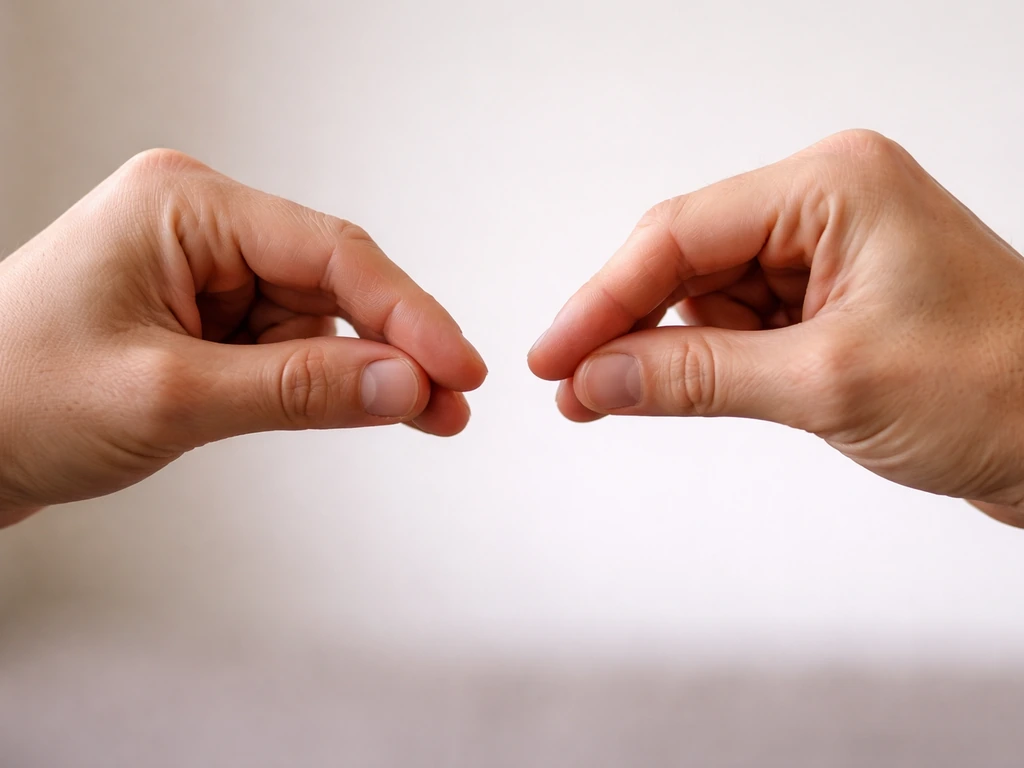
- Slang/social gesture: The 'bird hands' pecking motion (closed fingers pointed at someone, pushing forward) popularized on TikTok and in internet commentary around relationship dynamics and social power.
- Offensive idiom: 'Giving someone the bird,' meaning flipping someone off. The Cambridge Dictionary defines this as turning the back of the hand toward someone while raising the middle finger.
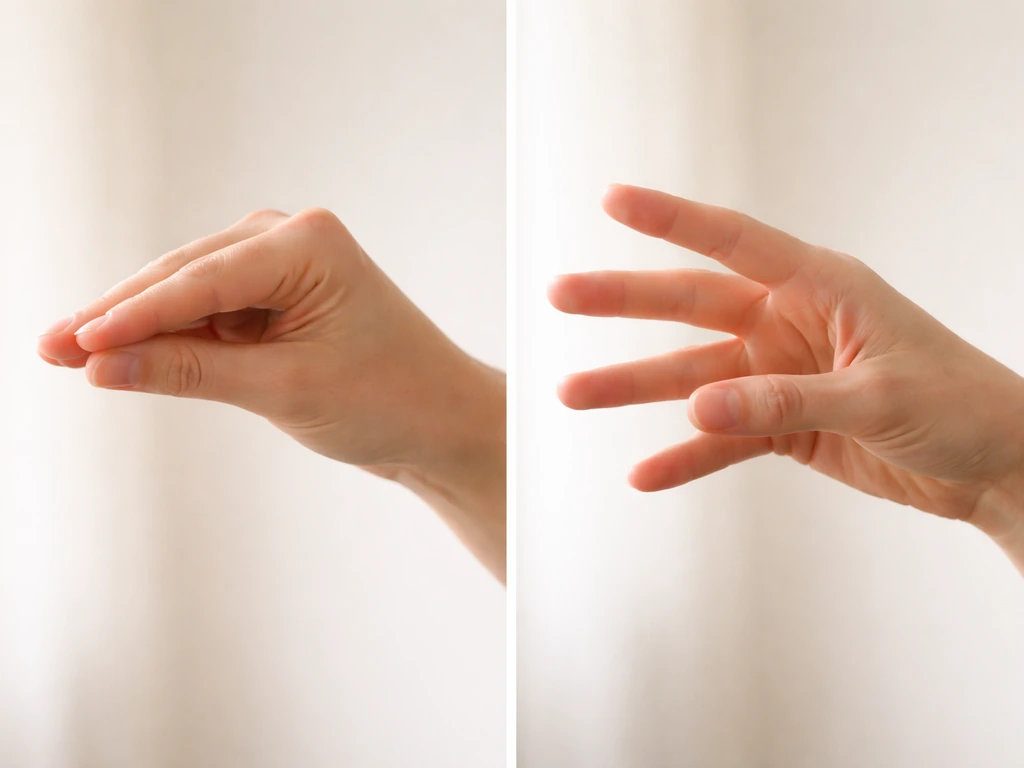
- Sign language: The ASL sign for BIRD uses thumb and index finger pinched together at the mouth, opening and closing like a beak. Specific birds like OWL also have their own distinct ASL signs.
- Cultural or spiritual symbol: A hand forming a bird shape (like a shadow puppet dove or an eagle-wing spread) used in meditation, religious ceremony, or cultural ritual.
- Digital/emoticon: The 'bird hands up' emoticon (ㄟ(・ө・)ㄏ) carries a surprise or shock meaning in online spaces, completely separate from any real-world gesture.
Each of these has a different origin, a different meaning, and a different social context. Mixing them up is very easy to do, and that confusion is exactly why this article exists.
Quick checklist: identify the gesture before you interpret it
Before jumping to a meaning, run through these four checkpoints. They'll narrow down which category the gesture belongs to faster than any single definition will.
- Hand shape: Were the fingers closed and bunched together pointing forward (pecking gesture), pinched at the mouth (ASL BIRD), or was a single finger extended upward with the back of the hand facing out (offensive 'bird')? A full hand spread like wings suggests a spiritual or performance context.
- Direction and motion: Was the gesture aimed at another person in a forward pecking motion? Toward the speaker's own mouth? Or was it static and held? Directed-at-someone motions lean slang or confrontational; mouth-region signs lean ASL or ritual.
- Bird type cues: Did the person say a bird name (dove, owl, eagle) alongside the gesture, or was it mime-like without reference to a specific bird? Naming a bird species usually points to symbolic or spiritual use.
- Setting and audience: Was this on TikTok or Instagram Reels? Probably the 'bird hands' slang. In a conversation class, a hearing-impaired setting, or with children? Likely ASL. At a spiritual gathering, ceremony, or cultural event? Probably symbolic. Directed at you in an argument? Almost certainly the offensive 'flip the bird' or the pecking slang.
The most common gesture categories and what they mean
The 'bird hands' slang gesture (social/TikTok)

This is the gesture most people are searching for right now. Fingers closed and pointed forward, hands pecking toward the person you're speaking to. Urban Dictionary defines it as a gesture used to make people listen, typically framed as a frustration signal that escalates before the speaker starts 'clapping while speaking.' The comparison to the Italian hand gesture (pinched fingers pushed forward) is deliberate: it has the same energy of 'pay attention to what I am saying.' Online commentary, including widely shared creator content, frames this as a relationship and social dynamics signal, sometimes called a 'henpeck' style gesture. The meaning is essentially: 'You will hear me out, no argument.' It signals escalating frustration and asserted conversational dominance.
Giving someone the bird (offensive idiom)
This one is old, widely understood in English-speaking countries, and has nothing to do with bird symbolism. The Cambridge English Dictionary is plain about it: you turn the back of your hand toward someone and raise the middle finger. It's a general-purpose insult. The 'bird' in this phrase is pure slang with roots in British and American vernacular, not ornithology or spirituality.
ASL and sign language (linguistic, not symbolic)
The ASL sign for BIRD is a specific, standardized lexical item. You form a small beak with your thumb and index finger at the corner of your mouth and open and close them. This is a word in a language, not a symbolic gesture. The sign for OWL in ASL is different again, with its own specific handshape. If someone is using these signs, they are communicating literally, 'bird' or 'owl,' not invoking spiritual or cultural meaning. Context (are they signing within a conversation? are they Deaf or hard of hearing, or working with a child?) makes this category easy to recognize.
Cultural, spiritual, and ritual bird gestures
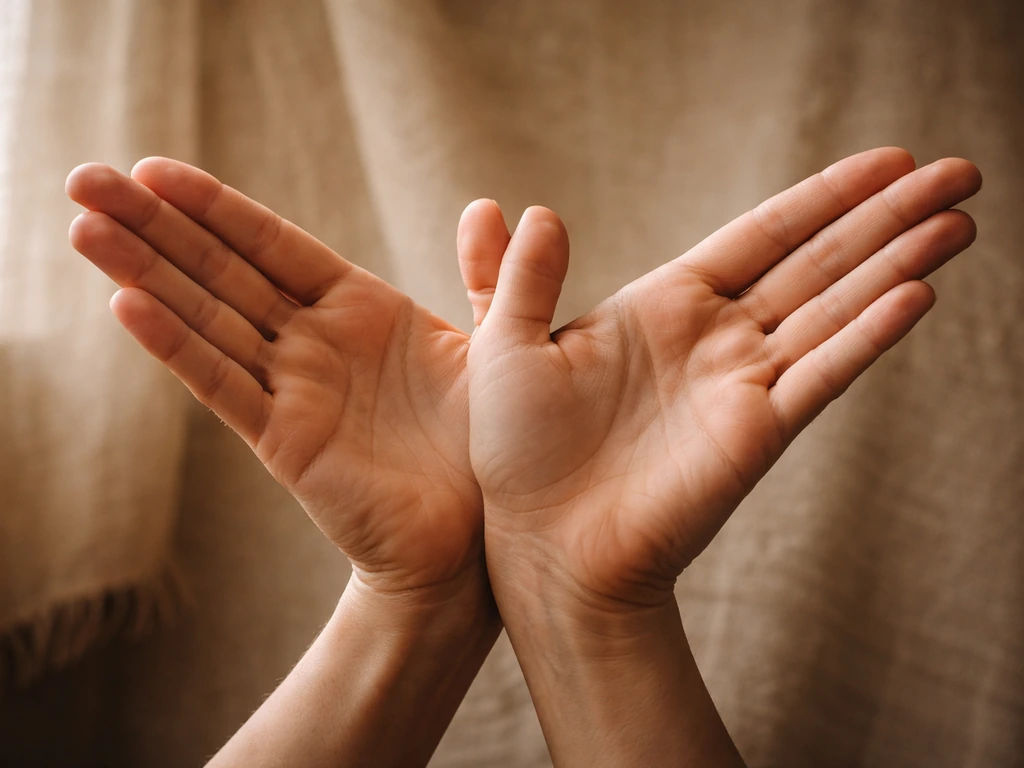
This is the category most relevant to the symbolic side of bird meaning. Across many traditions, hand gestures shaped like birds carry intentional spiritual weight. Dove-shaped hands (both hands interlaced with thumbs up and fingers spread as wings) appear in Christian, Buddhist, and folk peace ceremonies. Eagle or hawk wing spreads appear in Indigenous American ceremonial contexts. Mudras in Hindu and Buddhist practice include bird forms (Garuda mudra, for example, links hands to represent the eagle deity Garuda and is used in yoga and meditation for energy and breath work). These gestures are deliberate, practiced, and tied to the specific bird's symbolism in that tradition.
Superstition and omen-based gesture traditions
Some gestures involving birds are protective or ward-off actions rather than communication. In parts of European and Latin American folk tradition, mimicking a bird's movement with your hands (or crossing your fingers when a specific bird appears) is meant to neutralize an omen. Scholars studying ethno-ornithology note that these omen beliefs are fluid and vary by community, so there is no single fixed meaning to cross-reference. If you saw a gesture in this kind of context, the meaning is almost always locally specific and worth asking about directly rather than assuming.
Connecting the gesture to the actual bird it references
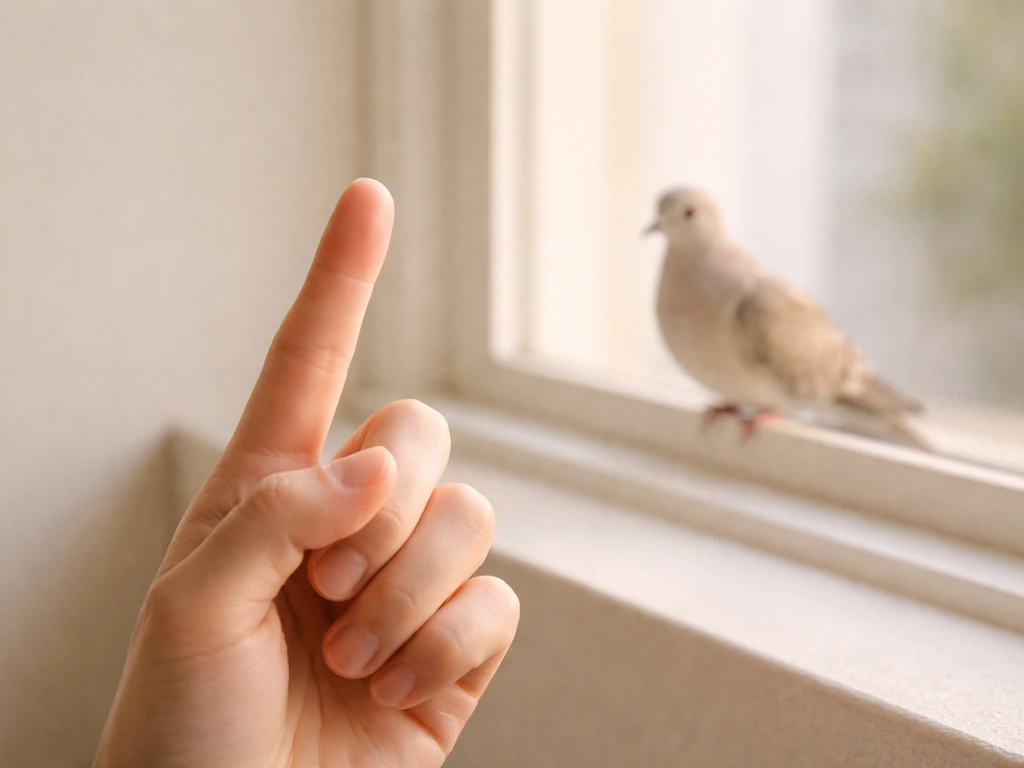
When a gesture is clearly tied to a specific bird, the bird's established symbolism gives you a strong interpretive anchor. Here's a practical reference for the most commonly referenced birds in gesture symbolism.
| Bird Referenced | Symbolic Tradition | Gesture Context It Appears In | Core Meaning |
|---|---|---|---|
| Dove | Christian, universal peace symbolism | Hands-as-wings shape, ceremonial or ritual | Peace, purity, hope, the Holy Spirit |
| Owl | Greek (Athena), global folklore | ASL sign or ceremonial hand shape, sometimes worn as a hand symbol | Wisdom, foresight, or (in some traditions) death omen |
| Eagle | Indigenous American, national symbolism | Wing-spread gesture in ceremonial dance or spiritual practice | Strength, freedom, divine messenger, vision |
| Crow/Raven | European and Indigenous folklore | Rarely a hand gesture; usually associated with pointing at or acknowledging a bird's appearance | Transformation, magic, omen (positive or negative depending on tradition) |
| Generic bird (pecking) | Internet/social slang | Forward pecking motion with closed fingers aimed at a person | Social dominance, frustration, demand to be heard |
| Generic bird (middle finger) | English-language slang idiom | Back of hand toward recipient, middle finger raised | Contempt, dismissal, offensive insult |
The key principle here: if the gesture references a named bird with cultural weight, lean on that bird's established symbolism for interpretation. If no specific bird is named, you're almost certainly in slang or sign language territory, not spiritual symbolism.
Common myths and misreadings to watch out for
A few mistakes come up constantly when people try to interpret bird hand gestures, and they're worth naming directly.
- Assuming every bird gesture is spiritual: The vast majority of bird hand gestures you'll encounter in 2026 are either slang, ASL, or offensive idiom. Jumping to spiritual symbolism as a first interpretation will lead you wrong most of the time.
- Treating slang gestures as universal: The 'bird hands' pecking gesture is a social media-era label applied to a cluster of similar frustrated pecking motions. It doesn't have one single standardized form, so slight variations in finger position or direction can shift the meaning entirely.
- Confusing ASL with symbolic gesture: The ASL sign for BIRD is a linguistic item, not a spiritual message. Someone using it is literally saying the word 'bird,' not invoking bird symbolism.
- Believing bird-omen gestures are culturally fixed: Ethno-ornithology research makes clear that bird omen meanings are in constant flux, especially across generations. What a gesture meant to a grandparent in a specific cultural context may mean nothing (or something different) to a younger person in the same family.
- Reading the internet emoticon as a real-world gesture: The 'bird hands up' emoticon (ㄟ(・ө・)ㄏ) means surprise or shock in digital communication. It doesn't translate to a real-world gesture with that meaning. These are platform-native symbols.
- Assuming the 'bird hands' gesture is gender-specific: While some online commentary frames the pecking gesture in gendered terms, the motion itself is observed across genders and contexts. Applying a narrow demographic interpretation to the gesture often says more about the commentator's bias than the gesture itself.
How to confirm the meaning today: practical next steps
If you've worked through the checklist and still aren't sure, here's how to close the gap on the specific gesture you saw.
- Ask directly if you can. The most reliable method, especially for gestures seen in person or in a known community, is to ask the person who used it what they meant. Most people are happy to explain, especially if the gesture is slang or ASL.
- Replay or screenshot the gesture. If you saw it on video, pause on the exact hand shape, orientation, and motion. Compare it against the specific categories above: pecking forward (slang), mouth-level beak (ASL), middle finger extended (offensive idiom), or a full-hand wing spread (spiritual/cultural).
- Check the platform context. TikTok and Instagram Reels strongly favor the slang 'bird hands' interpretation. A ceremonial or religious setting strongly favors cultural/spiritual. A conversation involving someone who is Deaf or learning baby sign language points to ASL.
- Cross-check slang against Urban Dictionary and current creator content. Slang evolves fast, and the 'bird hands' gesture cluster has multiple overlapping descriptions online. Urban Dictionary entries and creator commentary (search 'bird hands meaning' on TikTok or YouTube) give you the current social consensus.
- For spiritual or cultural gestures, verify against tradition-specific sources. If someone used a dove or eagle hand shape in a ceremony or spiritual context, look for tradition-specific resources: Hindu mudra guides for Garuda mudra, Indigenous cultural educators for eagle gestures, or Christian iconography resources for dove symbolism. Don't rely on general symbolism sites for tradition-specific ritual gestures.
- If it still doesn't match any category, treat it as idiosyncratic. Some people invent personal or family gestures. If a gesture doesn't map cleanly to slang, ASL, or documented cultural practice, it may simply be a personal habit or a regional variation with no widely agreed meaning.
Where this overlaps with 'bird hands' and 'bird chest' meanings
If you've come across related searches around bird hands or bird chest meanings, those topics are in the same neighborhood but with distinct angles. 'Bird hands' as a body descriptor (referring to a physical characteristic rather than a gesture) and 'bird chest' as a body trait each carry their own separate meanings in slang and medical contexts.
The gesture meaning covered in this article is specifically about the intentional movement someone makes with their hands in a communicative context, not a description of physical appearance. Bird chest meaning can vary depending on whether you're looking at slang or a body-and-fitness context, so it's best to verify the usage you saw. If you landed here from one of those adjacent searches, it's worth checking those specific terms separately.
The bottom line: most bird hand gestures you encounter today are either the TikTok-era slang pecking motion, the classic offensive 'flip the bird,' or the ASL sign for BIRD. Spiritual and cultural bird hand symbols exist and carry real meaning, but they appear in specific, recognizable settings. Match the hand shape and context first, then apply meaning. That sequence will get you the right answer almost every time.
FAQ
How can I tell the difference between the “bird hands pecking” gesture and the ASL sign for BIRD?
Watch for whether the handshape is actually “making a beak” near the mouth with repeated opening and closing, which is typical for ASL. The pecking version usually points fingers forward toward a specific person or space between you and them, without forming a beak at the mouth.
What if the gesture is done with one hand instead of two, does that change the meaning?
Yes, it can. Slang versions like the pecking “bird hands” are often shown with both hands, but the offensive “middle finger” variant is clearly defined by the back-of-hand facing the recipient. For spiritual or mudra-like gestures, one-hand or two-hand forms can indicate a different tradition or a different intended symbol, so you should avoid assuming a single universal meaning.
What should I do if someone used the gesture in a religious or ceremonial setting?
Treat it as tradition-specific. If the person looks like they are participating in a ceremony, instruction, or ritual, ask a follow-up question or look for cues like accompanying chants, clothing, or group context. Those gestures can have precise meanings that do not transfer cleanly to everyday slang.
Does “giving someone the bird” always mean the same thing?
It usually means an insult, but tone and setting matter. In casual conversation it is often a direct dismissal or anger signal, while online it can be more about sarcasm or boundary-setting. Also check whether the back of the hand is clearly toward the other person, since variations (different finger orientation) can change what people think they saw.
How can I avoid misreading it when the gesture is partially blocked in a photo or video?
Use edge cues that do not require full visibility. For example, the offensive version has a very specific “raised middle finger with the back of the hand toward the recipient” look. ASL BIRD has the beak-like pinch at the mouth area. If you cannot confirm either cue, it is safer to label it as “unclear” rather than guessing spiritual symbolism.
Is it ever a harmless “peace” or “dove” gesture instead of an insult?
Yes, but only when the shape matches a dove or peace-style symbol, typically with a wings-like hand configuration and a calm, ceremonial, or friendly context. If the hands are pointed like they are correcting or escalating toward a person, it is far more likely to be the slang pecking or dominance-style variant.
Do these gestures mean the same thing across countries and languages?
No. Slang gestures like “flip the bird” are broadly recognized in many English-speaking contexts, but the social meaning, intensity, and even the “bird hands” pecking interpretation can vary by region and platform. For anything tied to a named bird, stick to the originating cultural context, since symbolism can differ across communities.
Can a gesture be a “warding off an omen” action rather than communication to another person?
Yes. In omen-neutralizing folk practices, the gesture may be directed at the environment or performed as a protective action rather than in direct response to someone’s behavior. If you notice it occurring when a bird appears, or as a quick ritual before continuing activity, interpret it as local belief practice, not a message to the person you are watching.
How should I handle it if I’m dealing with Deaf or hard-of-hearing communication (interpreting ASL signs)?
Don’t map what you think you see to spiritual meaning first. If the motion matches a standardized ASL lexical sign, interpret it as literal signing within conversation. If you are uncertain, consider that a single frame might miss the beak opening and closing pattern needed to confirm BIRD.
What’s the quickest decision aid for interpreting a new “bird hand” I’ve never seen before?
First, identify the category by hand mechanics: (1) beak-pinching at the mouth for ASL BIRD, (2) raised middle finger variant for the insult, (3) forward pecking toward someone for TikTok-era dominance/slang, (4) clearly winged or mudra-like shapes for tradition-linked symbolism. Then use context to refine meaning, especially whether the gesture is directed at a person or used ceremonially.
Next Article
Bird Chest Man Meaning: Symbol, Dream, and Real Life Signs
Bird chest man meaning explained with symbolism, dream and spiritual signs, plus real-life bird behavior checks