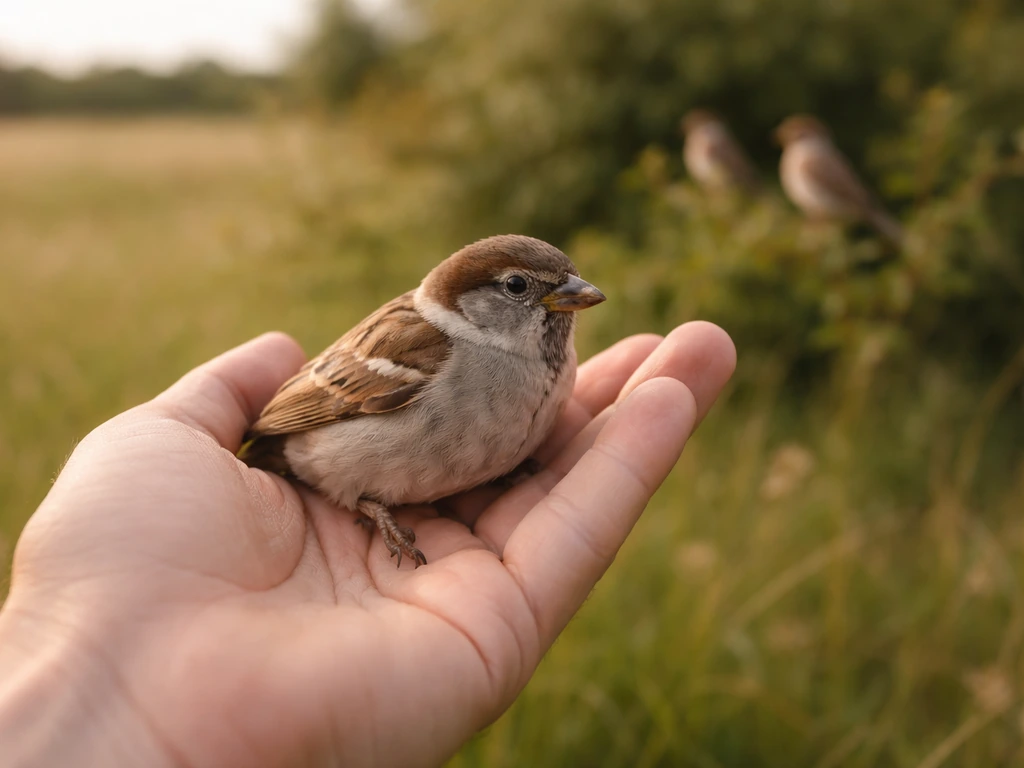
"Bird chest man meaning" is genuinely ambiguous, so the answer depends entirely on context. It could be slang (a body-shaming insult about a thin or underdeveloped chest), a medical term (pectus carinatum, the protruding "bird keel" chest shape), a symbolic or spiritual image (a bird resting on or near a man's chest as a sign, tattoo, or cultural motif), a dream scenario (a bird flying into or landing on someone's chest), or a real-life behavioral event (a bird that keeps swooping or landing near a specific person). None of these are the same thing, and the right meaning snaps into focus the moment you identify which type of experience you're describing.
Bird Chest Man Meaning: Symbol, Dream, and Real Life Signs

Marcus Holloway
28 Apr 2026
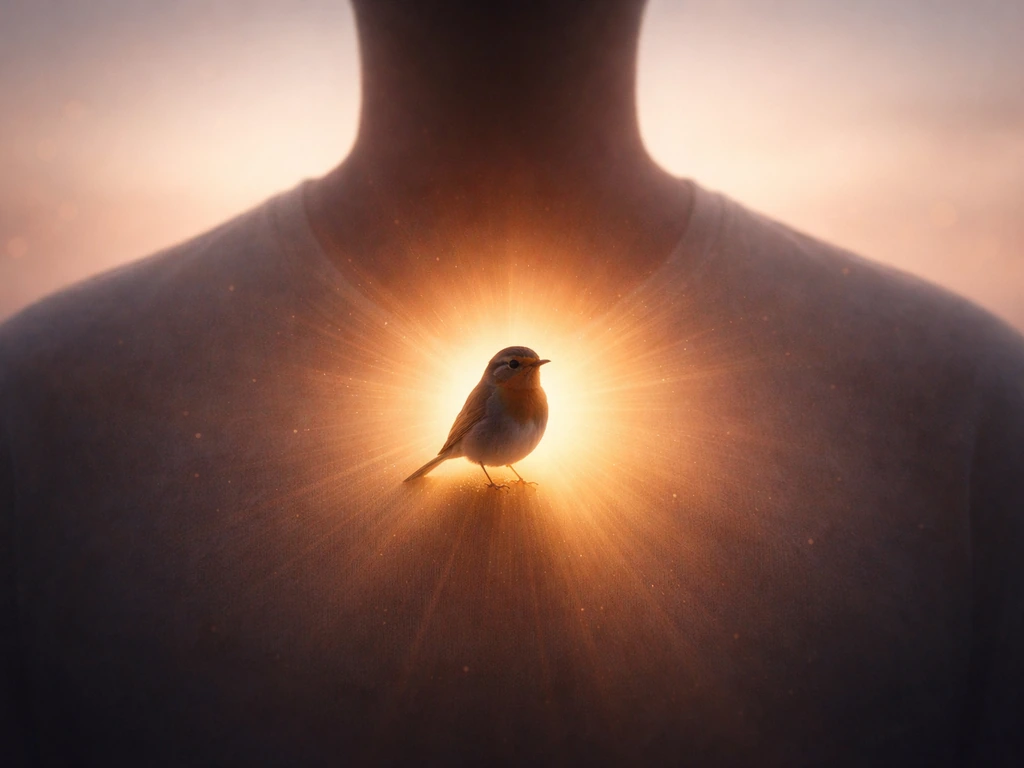
What "bird chest man meaning" most likely refers to (disambiguation)
Most people searching this phrase are coming from one of five different places, and it's worth naming them clearly so you can skip straight to the one that fits.
| Interpretation | What it usually means | Who searches it |
|---|---|---|
| Slang / insult | Thin, underdeveloped chest with little muscle; ribs visible | People who heard the term used against someone or want to understand the insult |
| Medical term | Pectus carinatum: a chest wall deformity where the sternum protrudes outward | People researching a physical condition in themselves or a family member |
| Symbolic / cultural image | A bird perched on or near a man's chest as a tattoo, artwork, or cultural symbol | People decoding an image, artwork, or dream they encountered |
| Spiritual / sign | A bird appearing near the chest or heart area as a perceived message or omen | People who experienced something and want a spiritual framework for it |
| Dream scenario | A bird flying into, landing on, or attacking a man's chest in a dream | Active dreamers doing self-inquiry or looking for guidance |
The slang and medical interpretations sit in their own lane and are covered quickly below. The bulk of this article focuses on the symbolic, spiritual, behavioral, and dream angles, which tend to be the more layered questions people are sitting with.
The slang and medical side: "bird chest" as an insult or condition
Urban Dictionary and slang reference sites define "bird chest" as a derogatory term for someone with little to no chest muscle, often with visible ribs. If you are really looking for the slang definition people share online, check what Urban Dictionary says about it and how the meaning is used in context. Urban Dictionary and slang reference sites define “bird chest” as a derogatory term for someone with little to no chest muscle, often with visible ribs.
It's used as a body-shaming insult aimed at people perceived as weak or underdeveloped, and it can sting because it targets both appearance and physical capability. FastSlang notes the term is considered hurtful and offensive in most contexts, rooted in body-image shaming. If someone called a man a "bird chest" in an argument or on social media, this is what they meant.
On the medical side, "bird chest" is a recognized informal synonym for pectus carinatum, a chest wall deformity where the breastbone protrudes forward like the keel of a bird. The Children's Hospital of Philadelphia (CHOP) also notes that pectus carinatum is nicknamed “pigeon chest” because of the bird-like appearance, with the clearest sign being a protruding chest at the sternum or ribcage area. It's distinct from pectus excavatum (a sunken chest). If you're researching a physical condition rather than a cultural meaning, that's a different conversation entirely and worth taking to a physician or specialist rather than a symbolism site.
If either of those two angles is what brought you here, you now have your answer. If you're looking for something deeper, keep reading.
Cultural and symbolic meanings of the bird and chest image
Across cultures worldwide, birds have long served as messengers, omens, and symbols of the soul. The chest, meanwhile, is universally associated with the heart, breath, inner life, and emotional courage. When you combine the two, the image carries a lot of freight.
In many Western and Near Eastern traditions, a bird near the chest or heart suggests a message being delivered directly to the soul. The dove is the clearest example: in Christian tradition it represents the Holy Spirit, divine favor, peace, and purity, and images of a dove hovering over or near a figure are layered with that entire symbolic history. In Native American traditions, birds are clan animals and messengers between the human and spirit worlds, with specific species (eagle, raven, hummingbird) carrying very different meanings depending on the tribe and context.
In tattoo culture, a bird on or near the chest (especially over the heart) is one of the most common placements precisely because of what that location signals: something personally significant, close to the emotional core. Swallows were historically tattooed on sailors' chests as symbols of safe return. Ravens and crows on the chest lean into mystery and transformation. A phoenix over the heart carries obvious rebirth symbolism.
As a visual or artistic motif, "bird chest man" often reads as: a man carrying something spiritual, free, or transformative within him, or having that quality recognized from the outside. The bird is rarely neutral in this imagery. Its species, color, and posture all shift the meaning considerably.
Spiritual and energetic interpretations

From a spiritual standpoint, a bird appearing near a man's chest, especially in a recurring or emotionally significant way, is often interpreted as a sign directed at the heart chakra: the energetic center associated with love, grief, connection, and personal truth. This framework is common in New Age, Reiki-adjacent, and folk spiritual traditions, though it isn't tied to any single religion.
Ornithomancy, the practice of reading omens from bird behavior, has roots in ancient Greek, Roman, and many indigenous cultures. The Audubon Society has noted a genuine revival of avian divination traditions in contemporary culture, with oracle decks and bird-omen guides gaining popularity. In these frameworks, the species matters enormously: a hawk near the chest might signal clarity or focus returning; a small songbird might suggest joy or lightness; a dark bird like a crow or raven is more commonly linked to transformation or a message from ancestors.
The key qualifier I always apply here: spiritual interpretation is a meaning-making framework, not a prediction system. What it does well is help people articulate feelings and transitions they're already experiencing. A man going through grief, a major life change, or a period of emotional opening might find the "bird at the chest" image deeply resonant, not because the bird delivered a literal message, but because the symbol maps onto something real in his life.
When a real bird gets close to a person's chest: what's actually happening
If this is about a real-life event where an actual bird landed on, swooped at, or kept returning to a specific person, there are clear ornithological explanations to consider before reaching for spiritual ones.
Swooping and defensive behavior
Birds swoop at people almost exclusively during nesting and breeding season, and they are defending their territory or young, not singling out an individual for any symbolic reason. Magpies, mockingbirds, crows, and red-winged blackbirds are the most commonly reported swooping species. Research published in peer-reviewed literature and backed by institutions like the Australian Museum confirms that magpies can recognize individual human faces and will target the same person repeatedly if that person was perceived as a threat near the nest.
They've been documented swooping from up to 100 meters away. This is territorial intelligence, not a spiritual sign, and the right response is to avoid the area during breeding season (typically late spring), carry a stick or umbrella held above your head, or establish a non-threatening presence over time.
Landing and flock-bonding behavior in pet birds
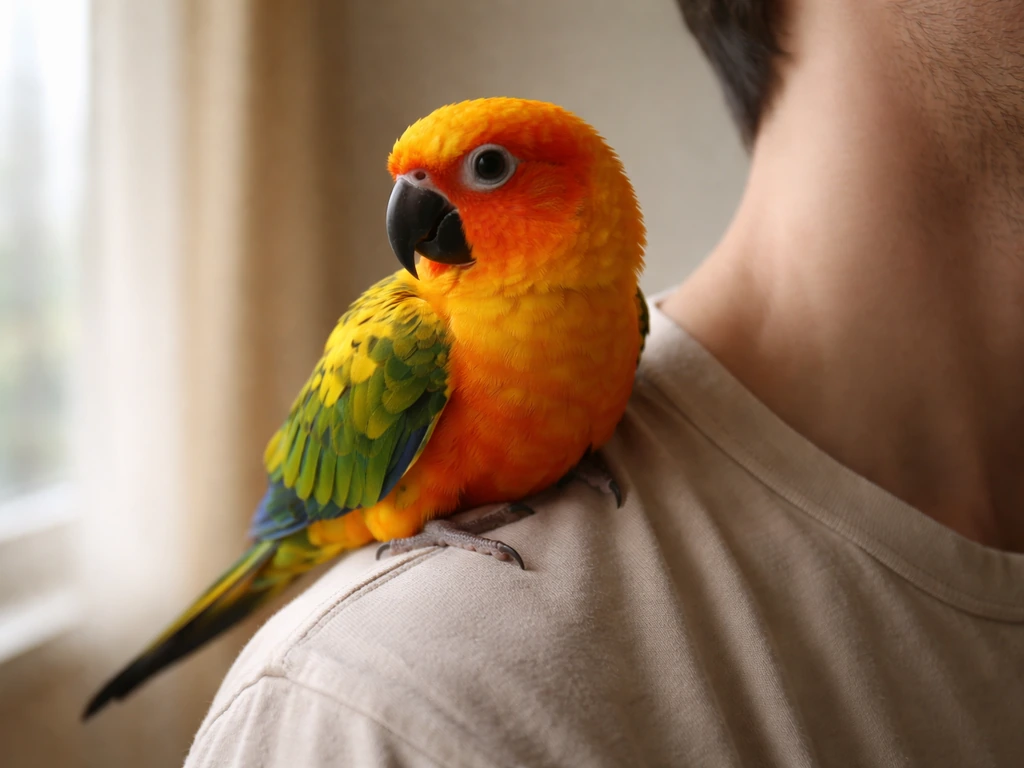
For pet birds, landing near the face, chest, or neck is flock-bonding behavior. The bird views its human as a flock member and seeks closeness and warmth. Parrots and parakeets especially will press against a person's chest or climb toward the face because that's where they feel safest. This is affectionate, not prophetic. Allowing the behavior consistently will reinforce it, so it's worth deciding intentionally whether you want that boundary or not.
Wild birds landing on or near a person
A wild bird landing on or very close to a person is unusual enough that it tends to feel significant. In most cases it means the bird is young and not yet flight-conditioned (a fledgling), injured or disoriented, or habituated to humans from years of being fed in that location. It doesn't mean the bird chose that specific person for a cosmic reason, though I understand why it feels that way in the moment. It's a rare, startling, genuinely beautiful event. It just has a pretty mundane explanation most of the time.
Dream interpretation: bird flying into or landing on a man's chest
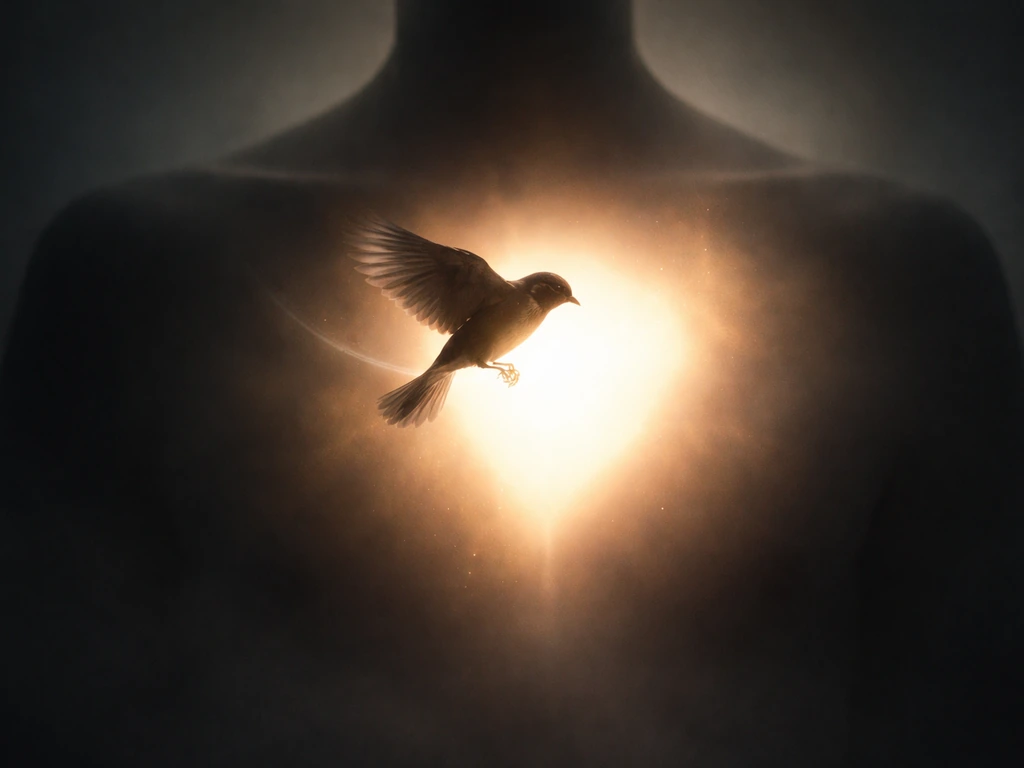
This is one of the more evocative dream scenarios people search for, and there are real interpretive traditions worth exploring here, as long as you hold them lightly.
From a Jungian or archetypal framework, birds in dreams represent the connection between conscious and unconscious realms, freedom, and the part of the self that can rise above material problems. A bird landing on or flying into a man's chest in a dream typically points to something awakening in the emotional or spiritual core of that man, whether the dreamer is that man or observing him. It can signal the arrival of a message the dreamer needs to hear, a shift in emotional openness, or the reclaiming of something that felt lost.
Standard dream dictionaries characterize bird dreams broadly as positive omens linked to freedom, spirituality, transitions, and goals. But as almost every serious dream interpreter acknowledges, the details completely change the read. A wounded bird landing on the chest carries a different emotional weight than a golden eagle landing there calmly. The dreamer's emotional response during the dream (fear, peace, awe, grief) is often the most reliable signal.
Ibn Sirin's classical dream dictionary, one of the most referenced in Islamic dream interpretation, assigns structured meanings to bird encounters that vary by species, direction, and what the bird does. In Freudian frameworks, birds can carry anxiety-based symbolism, particularly if the dream involves being attacked. Neither framework should be applied as a universal rulebook, but they offer useful lenses if one resonates with your cultural or personal background.
If you dreamed of a bird flying directly into a man's chest and want to decode it: start with the species and color, your emotional reaction during the dream, and what's going on in your waking life right now. Those three factors will give you more traction than any generic symbol list.
Superstitions, folk beliefs, and how to fact-check them
There are a number of folk beliefs that attach specific meanings to birds near a person's chest or heart area. Some common ones include: a bird landing on your chest means a message from a deceased loved one is coming; a bird tapping at your chest or breastbone is a warning of illness or death; a bird that repeatedly returns to the same person has chosen them as spiritually significant.
These beliefs are culturally real in the sense that many people genuinely hold them and find comfort or warning in them. They deserve respect as traditions. But they don't hold up to the basic fact-check test. Psychological research on magical thinking and superstition (covered extensively in both Psychology Today and peer-reviewed literature) shows that humans are pattern-detection machines, and we're especially prone to assigning causal significance to coincidences when the emotional stakes are high. If you're grieving, and a bird lands near you, your brain is primed to connect those two things. That doesn't make the experience meaningless. It means the meaning is coming from you, not from the bird.
The practical fact-check questions to ask: Has this bird species been seen in this location before? Is it nesting season? Is the bird behaving the same way around other people? If yes to any of those, the behavior is likely territorial or habituated rather than targeted. If the answer is genuinely no, it's still worth considering whether your emotional state is heightening pattern recognition before concluding there's a metaphysical message involved.
Superstitions are worth knowing and engaging with as cultural artifacts. They become problematic only when they're treated as reliable predictors, particularly around illness, death, or life decisions. Use them as one lens among several, not as the final word.
How to figure out which meaning actually fits your situation
Here's a quick context checklist. Running through it will usually land you on the right interpretation within a few seconds.
- Was this a real-life event, a dream, an image/artwork, or a phrase you heard? That single question rules out at least three of the five categories immediately.
- If it was real life: Was the bird swooping defensively or landing calmly? Swooping almost always means nesting defense. Landing calmly on a wild bird's part usually means the bird is young, injured, or habituated.
- If it was an image or tattoo: What species and color was the bird? What was the man's posture? These details point directly to specific cultural or symbolic traditions.
- If it was a dream: What was your emotional reaction during the dream? What species was the bird? What's happening in your life right now that the dream might be processing?
- If you heard the phrase used as slang: Was it directed at someone's body/appearance? Almost certainly the body-shaming slang definition applies.
- What's your own cultural and personal background? A dove near the chest will resonate very differently for someone raised in a Christian tradition versus someone coming from a Native American or Shinto background.
- What's your gut reaction to the event or image? Your emotional response is often the most honest signal about which interpretive layer is actually relevant to you.
Once you've run through those questions, you should have a shortlist of one or two likely meanings rather than a fog of possibilities. From there, the next steps depend on which lane you're in.
Next steps by category
- Slang/insult: You have the definition. If this was said to you or someone you know, it's a body-shaming comment and worth addressing as such, not a symbol to decode.
- Medical (pectus carinatum): Talk to a physician or pediatric specialist. This is a structural condition with real treatment pathways, not a symbolism question.
- Symbolic image or tattoo: Research the specific bird species and color, then look at the cultural tradition the image comes from. The bird chest meaning topic and the bird chest meaning urban dictionary topic on this site cover additional context worth exploring.
- Spiritual sign: Ground it in what's happening in your life right now. Use the species and color as your starting point, and treat the experience as a prompt for reflection rather than a directive.
- Behavioral/real-life bird encounter: Rule out the ornithological explanations first (nesting season, habituation, young bird). If none of those fit, then the experience can carry whatever personal meaning resonates with you.
- Dream: Journal the details immediately, especially species, color, your emotional state, and what the bird was doing. Then compare against multiple interpretive traditions rather than one dictionary.
The phrase "bird chest man meaning" is one of those search queries where the person asking it knows something happened or appeared, and they want to understand it. That's a completely reasonable impulse. Birds have genuinely carried symbolic and cultural weight across nearly every human civilization, and the chest and heart area carries its own deep resonance.
If you meant the bird hand gesture meaning instead, the interpretation can change a lot depending on the specific sign and context bird chest man meaning. If you meant the bird hand gesture meaning instead of the bird chest idea, this comparison can help you narrow it down: bird hands meaning.
The key is just being clear about which type of experience you're actually working with, because the meaning that matters is the one that fits your actual situation, not a generic shortlist applied without context.
FAQ
If a bird landed on or near a man’s chest, how can I tell whether it’s symbolism or just the bird’s behavior?
Look for three anchors you can answer quickly: the bird species, where it landed (face, chest, clavicle, near the heart), and the sequence of behavior (flew in, landed once, tapped repeatedly, or swooped). Species and posture often shift symbolic readings, while repeated swooping or nesting behavior points more to territorial defense than message delivery.
What should I do if the same bird keeps swooping at one specific person?
In most ordinary cases, repeated targeting has a practical cause during breeding season (nest defense), and the bird may recognize the person’s face. If you are being swooped, treat it as an immediate safety issue, avoid the area, and do not try to approach or feed the bird, especially in late spring.
Can “bird at the chest” mean something good for a pet bird owner, and how do I set boundaries?
If the bird is a pet (parrot, parakeet, lovebird), chest pressing is usually flock-bonding and comfort seeking. A simple boundary test helps: if you consistently redirect the bird with a hand target or perch, many birds will relearn the new rule within days to weeks.
What if the bird seems injured or unable to fly, and it lands right on someone’s chest?
A wounded, disoriented, or fledgling bird landing very close to someone usually indicates its flight skills or orientation are off, not that it selected that person. Contact a local wildlife rehabilitator if it cannot fly normally, and keep pets and kids away.
For dream interpretations, which details matter most, species or my feelings in the dream?
Try journaling the dream emotion in one line (fear, peace, grief, awe) and then write what is happening in waking life that matches that emotion. A “wounded bird” dream tends to intensify the emotional weight around vulnerability, while calm landing often tracks steadier internal change.
What does it usually mean if the bird dream involves being attacked or chased?
If you felt fear and the bird attacked in the dream, that often points to anxiety, threat perception, or emotional conflict rather than a purely positive omen. A useful next step is to identify the waking-life trigger you were avoiding (a conversation, decision, or confrontation) and treat the dream as emotional signal, not literal prediction.
Are folk beliefs like warnings about death or illness ever a reliable reason to make medical decisions?
Avoid treating “bird chest man meaning” as a literal checklist for death, illness, or ancestry messages. If you are worried about health after a bird encounter, base actions on symptoms and facts (a medical check if needed), not the coincidence itself.
How should I handle it if “bird chest” shows up as an insult toward a specific man?
Use a harm-reduction approach. If someone is being called “bird chest” as an insult, respond by asking what they mean, redirecting away from appearance-based shaming, and (if needed) setting a boundary or addressing the bullying directly. If it is medical pectus carinatum, the framing should switch to health support, not ridicule.
If I want a spiritual explanation, how do I know it’s helping interpretation rather than distracting from real issues?
Before adopting a spiritual chakra interpretation, check whether you have recurring emotional themes you can name (grief, love, shame, forgiveness, authenticity). Spiritual readings are most useful when they help articulate real emotions, not when they’re used to claim guaranteed external events.
Next Article
Bird Hands Meaning: Proverb, Symbolism, and Women Explained
Decode bird hands meaning: the proverb a bird in the hand, plus symbolism and women myths for clear context.