
"Bird chest" is a slang term used to describe a person's chest shape, most commonly referring to a narrow, lean, or prominently protruding chest that reminds people of a bird's breast. It is not a spiritual or symbolic bird phrase, and it has nothing to do with omens, dreams, or animal symbolism. If you landed here expecting that kind of interpretation, this article will redirect you clearly. If you heard someone call another person "bird chested" and you want to know exactly what they meant, you're in the right place.
Bird Chest Meaning: Slang Definition, Context, and How to Reply

Marcus Holloway
6 Apr 2026

What "bird chest" actually means
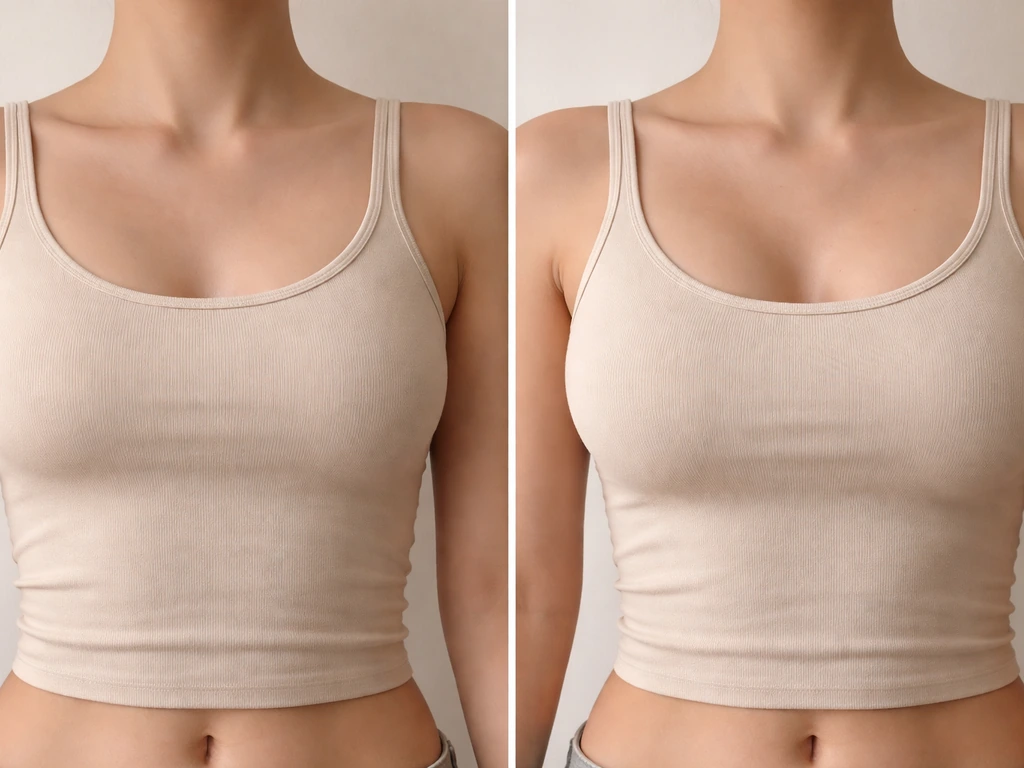
At its core, "bird chest" is a body-shape descriptor. It draws a visual comparison between a person's chest and the way a bird looks: either a narrow, flat chest with a slightly forward-jutting breastbone, or a lean, upright torso that gives someone a slender, almost delicate upper-body silhouette. The metaphor works because many birds have a pronounced keel-shaped sternum that sticks forward, and some human chests share that visual quality.
In casual conversation, calling someone bird chested usually means one of two things: their chest is narrow relative to their shoulders and body, or their sternum has a visible forward protrusion. Which meaning applies depends almost entirely on context and tone. In fitness and gym talk, it usually means someone has a small or underdeveloped chest. In general body-shape conversation or teasing among friends, it often just means "slim in the torso." The term doesn't carry a single fixed definition the way a medical term does, which is exactly what makes it worth unpacking.
"Bird chested" vs. "bird chest": wording differences that matter
You'll see this phrase written and said in a few different ways: "bird chest," "bird chested," "bird-chested," and occasionally "bird chest man" or "bird chest guy." These are all describing the same thing from slightly different angles. "Bird chested" (adjective) describes the person directly, as in "he's bird chested." "Bird chest" (noun phrase) usually describes the shape itself, as in "he has a bird chest." The hyphenated "bird-chested" is just the more grammatically tidy version of the adjective form.
On social media and in urban slang, "bird chest" tends to appear as a standalone noun, often used to tease or describe someone in a clipped, punchy way. If you want to dig into how this exact phrasing shows up across slang communities, the bird chest meaning urban dictionary breakdown covers the specific definitions people have submitted and voted on over time, which reflects how the term actually travels through everyday speech rather than how any dictionary officially defines it.
Where you'll actually hear this term used
Fitness and gym culture

This is probably the most common context. In gym communities, having a "bird chest" is a criticism of underdeveloped pectoral muscles. Someone who skips chest day, or who has naturally narrow shoulders and a shallow chest, might get called bird chested as a ribbing among training partners. It's usually meant as motivation or teasing rather than a serious insult, but it stings in the way gym talk often does. The implication is that the person needs to do more bench press, more dips, more volume.
Dating and attraction conversations
In dating contexts, "bird chested" almost always reads as a negative, especially when men's physiques are being compared or discussed. Broad, muscular chests are generally treated as desirable in mainstream culture, so describing someone as having a bird chest is usually a way of saying their chest doesn't meet that standard. That said, not everyone uses it as an insult. Some people describe their own body type this way neutrally, as in "I'm naturally bird chested, so fitted shirts look odd on me."
Jokes, insults, and casual teasing
Among friends, "bird chested" gets tossed around as light ribbing, often alongside other body-type teasing. It's the kind of phrase that lands differently depending on the relationship and the tone of voice. Between close friends, it might get a laugh. Said to a stranger or in a mean-spirited way, it's clearly an insult. Context is everything here, and if you're unsure which category a comment fell into, that ambiguity itself is worth addressing.
Social media slang
On platforms like TikTok, Twitter/X, and Reddit, "bird chest" appears in comment sections discussing physique, in reaction memes, and in posts where people describe their own body type candidly. It's part of a broader ecosystem of informal body-shape vocabulary that includes phrases like "bird hands," which describes thin, bony hands. If you've seen "bird hands" used in a similar way, the bird hands meaning article covers that phrase in comparable depth. These body-part bird comparisons tend to cluster together in online spaces because they share the same visual logic: slender, lean, or bony features compared to a bird's frame.
The medical side: myth-busting time
Here's where things get genuinely interesting. "Bird chest" does have a legitimate medical reference point, though most people using it in slang have no idea. Pectus carinatum is a chest wall deformity where the sternum and adjacent ribs protrude forward, creating a visibly jutting breastbone. Clinically, it's also called "pigeon chest" or "keel chest," and the Cleveland Clinic and other medical sources note that the name comes directly from the bird-like shape the protrusion creates. It affects roughly 1 in 1,500 people, is more common in males, and can range from mild (barely noticeable) to pronounced (visibly affecting the chest's contour).
So if someone calls you bird chested, do they mean you have pectus carinatum? Almost certainly not, unless they're a medical professional in a clinical setting or you actually have a diagnosed chest wall condition. In everyday slang, people are not diagnosing anything. They're making a casual visual comparison. Pectus carinatum is a structural condition involving the sternum and ribs. "Bird chested" in slang is just someone eyeballing your torso and reaching for a metaphor. Conflating the two causes unnecessary anxiety, and it's worth being clear: one is a clinical finding requiring assessment, the other is a figure of speech.
If you do have a visibly protruding sternum and you're wondering whether it's worth getting checked out, that's a separate and valid question for a doctor, not something to resolve based on a slang term someone used. Pectus carinatum itself is usually benign and more cosmetic than dangerous, but a physician can give you an actual evaluation.
How to respond when someone says it to you or about someone else
If someone calls you bird chested, your best first move is to figure out what they actually meant. Were they joking with you? Making a genuine observation? Using it as an insult? The tone, relationship, and setting will tell you most of what you need to know. If it was teasing among friends and you're not bothered, let it go. If it was said meanly or in a way that felt like it was meant to embarrass you, it's worth naming that directly: "That felt like a dig at my body, and I'd rather you not." You don't need to over-explain or justify yourself.
If someone else used the phrase and you're not sure exactly what they meant by it, asking a clarifying question is totally reasonable. Something like "What do you mean by that?" puts the burden back on the speaker to articulate their point clearly, which is where it belongs. Sometimes people use slang without thinking about whether the person on the receiving end understands it the same way.
It's also worth knowing that body-shape slang carries different weight depending on who's saying it and why. Just as bird hand gesture meaning can shift completely depending on context and culture, body-shape phrases like "bird chested" can range from neutral self-description to targeted mockery. Your read of the situation matters.
Clearer, more respectful ways to describe body shape
If you're the one describing someone's build and you want to be accurate without being reductive or unkind, there are better options than "bird chested." Here are some alternatives that describe the same physical features more neutrally or precisely:
- Lean frame or lean build: describes a slim, low-body-fat physique without implying underdevelopment
- Narrow chest: straightforward anatomical description, no metaphor involved
- Slender torso: neutral and descriptive without carrying a negative connotation
- Upright posture with a visible sternum: more precise if that's actually what you're observing
- Ectomorphic build: the body-type classification for naturally lean, narrow-shouldered people (though this is more jargon than casual speech)
- Flat-chested or shallow chest: direct, clinical-adjacent, no animal comparison
These alternatives say what you actually mean without layering in a judgment through metaphor. "Bird chested" gets its mild sting precisely because it compares a person to an animal in a way that implies fragility or inadequacy. Swapping it for precise descriptive language removes that subtext entirely.
One quick note if you came here for bird symbolism
If you searched "bird chest meaning" expecting something about bird omens, spiritual symbolism, or what it means when a bird lands on your chest in a dream, this isn't quite that article. "Bird chest" is a human appearance phrase, not a bird-behavior one. That said, if you're curious about the symbolic or cultural meanings attached to birds in general, this site covers that territory extensively in other articles. The distinction matters because mixing up slang body-shape phrases with bird symbolism leads to a genuinely confusing reading experience, and you deserve a clear answer whichever one you were actually looking for.
Similarly, if you're reading about a specific type of person described using bird terminology, like the particular way "bird chest man" gets used as a character type in certain online communities, the bird chest man meaning article covers that angle more specifically. And if you've run into "bird hands" in a slang context and want to understand the full range of how that term has been defined by everyday speakers, the bird hands meaning urban dictionary breakdown is worth a look for the same reason this article started with the urban dictionary angle: crowd-sourced definitions reflect real usage patterns that formal definitions miss.
The short version, if you need it fast
| Context | What "bird chested" usually means | Tone |
|---|---|---|
| Gym / fitness talk | Underdeveloped or small pectoral muscles | Teasing or critical |
| Dating / attraction | Narrow, lean, or non-muscular chest | Usually negative |
| Friends joking around | Slim torso, bony chest area | Playful or mild ribbing |
| Social media slang | General lean/narrow body-type shorthand | Varies: neutral to mocking |
| Medical usage | Pectus carinatum (protruding sternum) | Clinical, not a slang insult |
| Self-description | Acknowledging a naturally narrow chest | Neutral or self-deprecating |
Bottom line: "bird chest" is a colloquial body-shape phrase, not a medical diagnosis and not a spiritual metaphor. It describes a lean, narrow, or prominently keeled chest by comparing it to a bird's build. Merriam-Webster defines “ectomorphic” as characterized by a lean, slender body build with slight muscular development, which can be a more neutral alternative body-type term ectomorphic as characterized by a lean, slender body build with slight muscular development. Whether it lands as an insult, a joke, or a neutral observation depends almost entirely on who's saying it and why. If it was said to you and it stung, that reaction is valid. If you used it and didn't mean harm, it's worth reaching for clearer language next time.
FAQ
Is “bird chest” ever meant as a compliment?
It can be neutral or even mildly flattering when someone is describing their own natural build (“I’m bird chested”), or when the tone is clearly playful and non-targeted. If it’s used to compare you to “ideal” physiques in a dating or social ranking context, it usually lands as a negative.
How do I tell if “bird chested” is teasing or body-shaming?
Watch for intent signals: teasing typically includes a friendly relationship, softer language, and no ongoing focus on your body after the first comment. Body-shaming is more likely when the speaker repeats it, says it in public to embarrass you, or ties it to judgments about your masculinity, attractiveness, or discipline.
What should I say if someone labels me “bird chested” in the gym?
A calm, boundary-setting line works best, for example, “I get it, but I’m working on my chest, please don’t make it personal.” If you want to redirect, you can also ask what they mean (narrow chest vs visible sternum) so it becomes practical rather than mocking.
Can “bird chest” be used for women, or is it mostly about men?
The phrase is gender-neutral as a body-shape comparison, but in practice it’s more commonly directed at men in online and dating talk. If someone uses it toward a woman, it can still be teasing, but it may be more likely to be insensitive because it’s often imported from “male physique” commentary.
Does “bird chested” always mean pectus carinatum (pigeon chest)?
No. In everyday speech it’s almost always a casual visual metaphor about a lean or narrow torso. Only a clinical assessment can determine pectus carinatum, especially if you have symptoms or a clearly protruding sternum that worries you.
If I have a protruding sternum, should I ignore the comment and just assume it’s normal?
Don’t rely on slang. If the shape is noticeable, painful, getting more pronounced, or affecting posture or breathing, consider asking a healthcare professional about a formal evaluation. Many cases are cosmetic, but the decision should be medical, not social.
What’s a good alternative to “bird chested” when describing someone respectfully?
Use plain, non-judgmental descriptors like “narrow chest,” “lean upper body,” “slender torso,” or “slightly protruding sternum” (only if that’s accurate). If you’re discussing training, “underdeveloped pectorals” is more specific than animal-based slang.
Is it okay to ask, “What do you mean by that?”
Yes, it’s often the quickest way to regain control of the conversation. It also helps if the speaker used slang casually. You can add a tone-check, like “Are you joking, or are you making a critique?”
Can the phrase mean something different depending on phrasing, like “bird chest” vs “bird-chested”?
The core meaning is the same, but “bird-chested” is usually a direct description of a person’s build (“he’s bird-chested”), while “bird chest” more often refers to the chest shape itself (“he has a bird chest”). Either way, context controls whether it’s teasing or insulting.
What if the person I’m replying to seems offended when I clarify?
If your goal is understanding, keep it neutral and short. For example, “I’m not sure what you meant, can you clarify?” If they react defensively, that’s a cue the comment may have been deliberately cutting, and you can calmly state your boundary.
Next Article
Bird Blindness Meaning: Causes, Signs, and What to Do Now
Bird blindness meaning: spot signs, tell vision loss from other issues, and take safe action or get urgent vet care.