Bird dogging (also written bird-dogging) means closely watching, following, or investigating someone or something with persistent, focused attention. That's the plain-English core of it. Merriam-Webster defines the verb "bird-dog" as "to closely watch someone or something" or "to doggedly seek out," and that dual sense, observing and pursuing, covers almost every modern use of the phrase you're likely to encounter. Merriam-Webster reports that “bird-dog” began to be used as a verb in the early 20th century meaning “to closely watch someone or something” (and also “to doggedly seek out”) Merriam-Webster defines the verb "bird-dog" as "to closely watch someone or something" or "to doggedly seek out".
Bird Dogging Meaning: Definition, Origins, and Symbolic Takeaways

Marcus Holloway
11 Apr 2026
Quick definition you can actually use

If someone says they're "bird-dogging" a person, a deal, or a situation, they mean they're keeping a close, often relentless eye on it. The phrase functions as both a verb ("she bird-dogged the candidate through three town halls") and a noun ("he works as a bird dog for a real estate investor"). Collins English Dictionary nails it as "blank" rel="noopener noreferrer">to follow, watch carefully, or investigate" with an emphasis on unceasing vigilance. The American Heritage Dictionary puts it even more vividly: "Police bird-dogged the suspect's movements." That surveillance-style framing captures the intensity the phrase usually implies. For the fuller bird-dogging definition across multiple usage contexts, the core idea of active, sustained tracking is the constant thread.
Where the phrase actually comes from
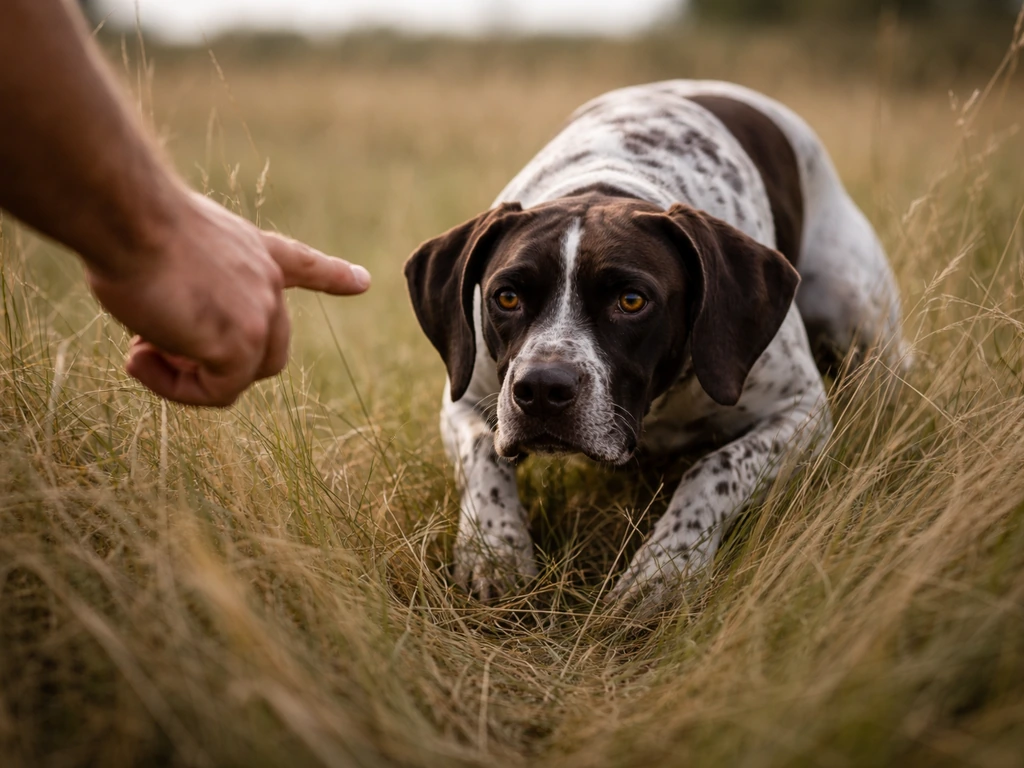
The origin is hunting, and it's genuinely descriptive once you see it. A bird dog, typically a pointer or retriever, is trained to locate game birds and either flush them out or retrieve them for the hunter. The Commons Library describes the metaphor well: the dog tracks birds by staying on their scent, flushing them from cover so the hunter gets a clear shot. Some guides describe the dog barking at birds hiding in trees or bushes to drive them into the open. The whole point is the dog doesn't give up. It stays on the trail.
Etymonline traces the verb meaning "to follow closely" to 1941, though Merriam-Webster notes the verb usage began in the early 20th century more broadly. By the 1930s, one particularly colorful slang use had emerged: bird-dogging someone's date, meaning moving in on a romantic partner someone else had brought to an event. That dating-scene usage is mostly dated now, but it shows how early the phrase jumped from hunting fields into everyday social language.
How bird-dogging shows up in everyday life
The phrase is doing real work across several completely different domains right now. Politics, real estate, and general surveillance slang are the three biggest ones, and they use the same word in ways that can feel almost unrelated.
Politics and activism

This is probably the context you're most likely to see it in news coverage. Political bird-dogging means showing up at candidates' public events and asking pointed, prepared questions to get their positions on record. The ACLU of New Mexico has an entire guide on the practice, defining it simply as a way of holding elected officials accountable through persistent public questioning.
The Ruckus Society frames it as activists going to public forums and eliciting responses, specifically to capture commitments candidates might otherwise dodge. The Commons Library has called it "candidate haunting" or "accountability on the campaign trail. " For a deeper look at bird-dogging meaning in politics, the accountability angle is central to how organizers and journalists talk about the tactic.
WFSU has also reported on a harder-edged version where video trackers follow politicians specifically to catch unguarded moments or gaffes. That's still called bird-dogging, but it sits closer to the aggressive surveillance end of the spectrum than the public-forum accountability model.
Real estate and business
In real estate investing, a bird dog is a person who scouts properties or distressed sellers and passes those leads to an investor in exchange for a referral fee. They find the deal; someone else closes it. Real Estate Skills describes the role as lead generation and searching for deals, with the bird dog handing off promising opportunities rather than executing the transaction themselves. REIClub makes the same distinction: once a match is found, the bird dog passes the lead on. It's a scout role, not a buyer role. If you want to understand the bird-dogging meaning in business more broadly, the scout-and-refer model applies in sales and recruiting contexts too, not just property investing.
General slang and everyday use
Outside those formal contexts, bird-dogging is common casual slang for persistently watching or following anyone or anything. Someone might say they're bird-dogging a job application, a contractor who keeps missing deadlines, or a person they're suspicious of. The bird dogged meaning urban dictionary entries reflect this loose everyday usage, where the phrase can mean anything from relentlessly pursuing a goal to keeping obsessive tabs on a person.
Harmless tracking vs. harassment: where the line is

This is where it gets genuinely important to think carefully. Bird-dogging sits on a spectrum, and the same word covers behavior that ranges from completely legitimate to potentially criminal.
| Scenario | Context | Generally harmless or harmful? |
|---|---|---|
| Activist asks candidates pointed questions at public events | Political accountability | Harmless, even encouraged |
| Video tracker follows politician to catch unguarded moments | Political opposition research | Legal gray area depending on conduct |
| Real estate scout finds leads and passes them to an investor | Business/real estate | Harmless, standard industry practice |
| Manager closely monitors an employee's output | Workplace | Depends on intent and degree |
| Person follows an ex-partner's movements repeatedly | Personal/interpersonal | Potentially stalking |
| Private investigator surveils a subject | Legal/professional | Legal when properly licensed and scoped |
The legal and ethical line runs through two factors: consent and impact. Public figures at public events have reduced expectations of privacy regarding their public statements. A politician at a town hall is fair game for pointed questions. A private individual being followed to their home, workplace, or personal appointments is a completely different situation.
Stalking is defined legally as repeated, unwanted attention combined with conduct that causes fear or distress. The key word from legal guidance is "persistent": not every unwanted follow rises to stalking, but following someone repeatedly, especially after being told to stop, can meet the legal threshold depending on your jurisdiction. The prosecutors' guides on stalking typically include surveillance and following as core behaviors in stalking definitions. If bird-dogging is happening to you and involves repeated contact, monitoring your location, or unwanted attention you've clearly communicated you don't want, treat it as a potential harassment or stalking situation and document everything.
The symbolic and cultural layer people attach to it
Because this site sits at the intersection of bird behavior, symbolism, and language, it's worth addressing the cultural and spiritual dimensions people sometimes layer onto the phrase. Dogs and birds both carry rich symbolic weight across traditions. In many Indigenous and folk traditions, dogs represent loyalty, protection, and tracking instincts, while birds frequently symbolize freedom, spiritual messengers, and the ability to see what's hidden. The "bird dog" as a combined image fuses those meanings: something loyal and grounded (the dog) in service of locating something that tries to stay hidden or take flight (the bird).
Some people attach a persistence and vigilance symbolism to the phrase itself, reading "bird-dogging" as a metaphor for staying on a spiritual path or pursuing a truth that others are trying to conceal. That's a poetic reading, and it's not without cultural basis. The hunting metaphor maps onto a broader human archetype of the tracker, the seeker who won't quit. In that light, being a "bird dog" carries a certain admirable quality in cultures that value tenacity and loyalty. This also connects to how certain expressions around birds carry layered meanings, much like the bird business meaning in symbolic and colloquial contexts, where bird-related language often implies watchfulness and keen perception.
If it comes up in dreams or as a "sign"
Occasionally people search for "bird dogging meaning" because they dreamed about being followed by a dog and a bird, or they feel like they're being spiritually "tracked" and want a symbolic interpretation. That's a valid angle to explore, but here's where I'd encourage some grounded thinking.
Dreams about being followed, watched, or pursued by animals, dogs especially, often reflect feelings of anxiety, accountability, or the sense that something in your life is demanding your attention. A bird in the same dream might represent an aspect of yourself trying to remain free or hidden. The combination could symbolize an internal conflict between wanting to be seen and wanting to escape scrutiny. But dream symbolism is personal. No fixed dictionary of symbols applies universally.
The bigger caution here is the superstition trap: treating any repeated experience of being watched, followed, or tracked as a spiritual "sign" when it might be describing a real-world situation worth addressing practically. If you feel like you're being bird-dogged in your waking life, the cultural or dream-interpretation layer is less urgent than asking whether something real and unwanted is actually happening. That distinction, between symbolic resonance and literal concern, is worth taking seriously. It also connects to how certain unconventional financial or relationship dynamics get discussed in metaphor-heavy language, such as the bird banking meaning, where the symbolic framing can sometimes obscure what's actually going on in plain terms.
If you're drawn to the sign or symbol angle purely from curiosity, trust your intuition about what feels resonant, but hold it lightly. Dreams about tracking and being tracked are more likely processing real feelings about surveillance, accountability, or pursuit in your daily life than delivering a literal spiritual message.
What to do next, depending on your situation
Where you go from here really depends on which context brought you to this phrase. Here's a practical breakdown:
- If you heard it in a political conversation: it almost certainly means someone (an activist, journalist, or opposition tracker) is following a candidate or official to public events to press them on their positions. It's a recognized accountability tactic with training guides and organized campaigns behind it.
- If you heard it in real estate or investing: someone is scouting deals and passing leads for a fee. It's legal in most places but check local regulations around referral fees and unlicensed real estate activity, which vary by state.
- If you're trying to understand whether someone is bird-dogging you: document dates, times, locations, and what happened. If it's unwanted and repeated, that documentation matters legally. Contact local law enforcement or a victim advocacy organization if you feel unsafe.
- If you're using the phrase yourself: be aware that the intensity it implies can read as threatening depending on context. In professional settings, "closely monitoring" or "tracking" is usually clearer and less loaded.
- If you're here from a dream or sign-interpretation angle: sit with what the imagery means to you personally before reaching for external symbol dictionaries. Ask what in your life currently feels like it's watching you or demanding to be found.
The phrase bird-dogging has a lot of life across very different worlds, from hunting fields to campaign trails to real estate offices to online slang. What stays consistent is the core image: relentless, focused pursuit that doesn't let the subject out of sight. Whether that's admirable or alarming depends entirely on who's doing it, who it's being done to, and whether anyone asked for it.
FAQ
Is “bird dogging” and “bird-dogging” the same phrase, or do they mean different things?
In most everyday uses, “bird dogging” and “bird-dogging” mean the same thing (the hyphen is optional). The key idea is the persistent, close-watching action, not whether the word is written with a hyphen.
Can “bird dogging” ever mean something positive, and how do I tell which meaning applies?
Yes, but it depends on setting. In politics, it usually means asking sustained, prepared questions in public. In real estate and sales, it’s about scouting leads and passing them on. If someone uses it casually about you personally, ask what they mean (public questioning, lead scouting, or following/surveillance).
What’s the simplest way to judge whether “bird dogging” is accountability or harassment?
A clean rule of thumb is consent and location. If the person is inviting scrutiny in a public forum, it generally reads as accountability. If they are following you around private or non-public spaces, monitoring your whereabouts, or approaching after you have told them to stop, it can slide toward harassment.
If I think someone is bird-dogging me, what should I document first?
If you are being “bird-dogged,” keep a timeline and preserve evidence like messages, dates, times, where you were, and what conduct occurred. Also note whether you explicitly told the person to stop or that you did not consent to contact, because those details are often central when determining whether behavior crosses into stalking.
Does bird-dogging only mean physically following someone, or can it include online or repeated contact?
“Bird dogging” can be verbal or behavioral, not just physical trailing. It can include repeated calls or messages, showing up at your places frequently, or repeatedly trying to get access to you after clear refusal. Any repeated unwanted attention can be relevant, even if they are not “following” you physically.
In real estate or business, what does a “bird dog” do exactly, and do they ever close deals?
In the scouting or referral sense, the “bird dog” typically does not close the deal, they identify opportunities and route them to someone with authority to transact. A common mistake is assuming the bird dog is the buyer or decision-maker, when the role is more like lead identification and handoff.
If I hear “bird-dogging” in a conversation, how can I clarify what the speaker means without sounding accusatory?
Because “bird-dogging” is used across domains, ambiguity is common. A quick clarifier is to ask, “Are you talking about public accountability questions, or are you talking about tracking someone’s location or behavior?” That forces the speaker to choose the correct meaning.
Are there common synonym alternatives to “bird-dogging” that fit different contexts?
Yes. People often say “bird-dogged the candidate,” but the same idea can apply to a contract, a schedule, or a goal (persistently requesting updates or attention). If the context is about attention without pursuit, “pursued,” “tracked,” or “followed up” might be closer than “dogged,” depending on tone.
How should I write or report “bird-dogging” so it doesn’t imply stalking by accident?
The phrase can sound aggressive because the hunting image implies relentless pursuit. If you are using it in writing or reporting, it helps to specify the mechanism (public questions, lead scouting, or monitoring) so readers do not assume a surveillance intent.
If I searched “bird dogging meaning” because of a dream, how do I know whether it’s symbolic or a sign of something real happening?
Dream themes are often tied to anxiety, feeling scrutinized, or fear of being discovered, but you should treat literal claims cautiously. If you suspect real-world unwanted attention, focus on practical steps first (boundaries, documentation, and safety planning) rather than relying on dream interpretation.
Next Article
Bird-Dogging Meaning in Business: Definition and Examples
Understand bird-dogging meaning in business, real examples, tone differences, and what to do when someone tracks your wo