
In politics, "bird-dogging" means activists or constituents deliberately seek out candidates and elected officials at public events, then press them with pointed, specific questions to force a commitment or expose a position on the record. It is an organized accountability tactic, not random heckling. The goal is usually to get a usable response captured on video or in front of reporters, then push that response into media coverage.
Bird-Dogging Meaning in Politics: What It Is, Examples

Marcus Holloway
6 May 2026
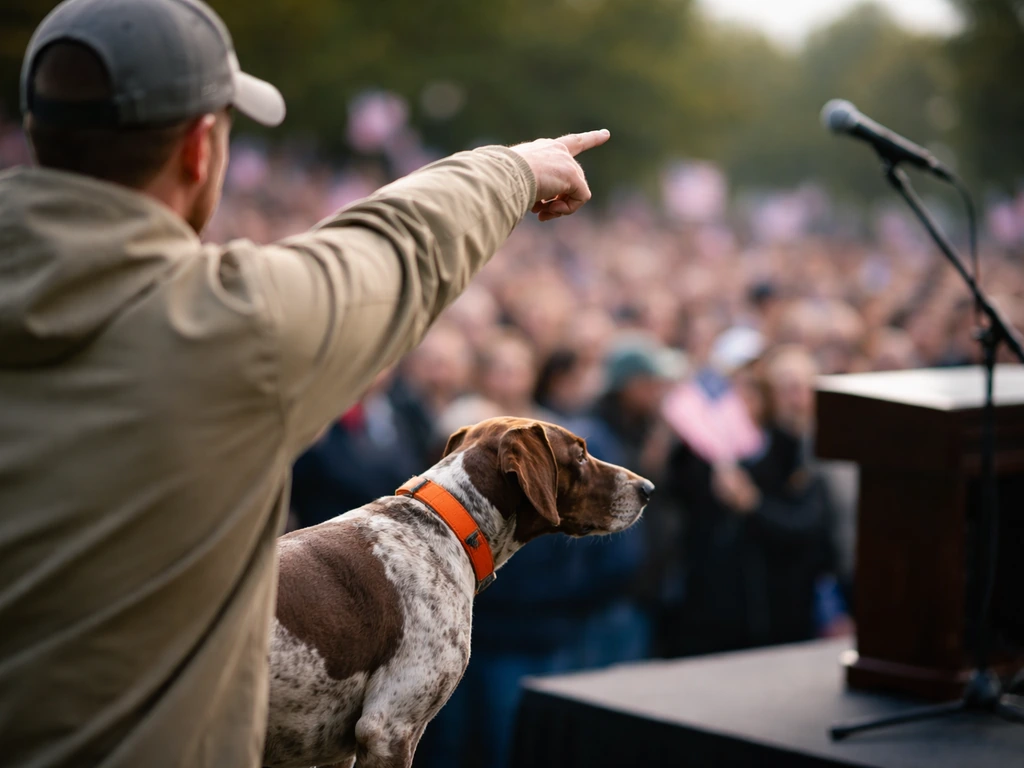
Where the term actually comes from
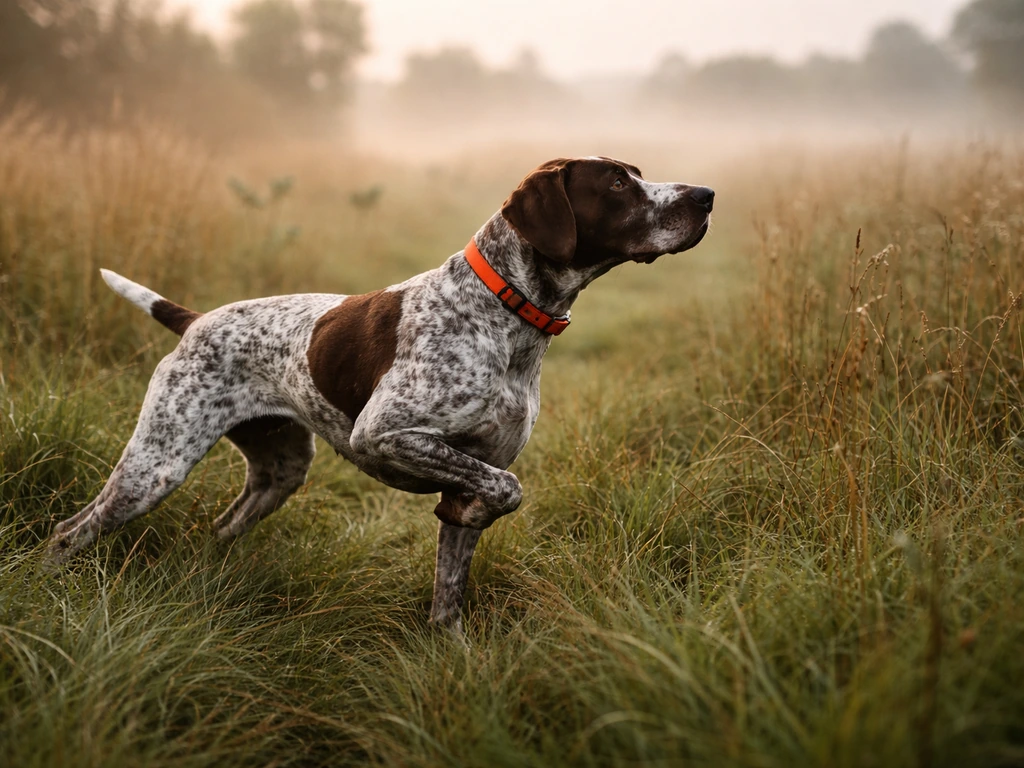
The literal bird dog is a hunting breed trained to locate game birds and hold a rigid pointing stance until the hunter arrives. That image of relentless, focused tracking is exactly where the metaphor comes from. Merriam-Webster traces the verb "bird-dog" to at least 1943, defined as "to watch closely" or "to doggedly seek out and follow." Collins captures the journalistic leap well with an early example: a reporter "spent the election year bird-dogging Kennedy and Nixon." So the word has been tied to political coverage and scrutiny for decades, long before it became an organized grassroots tactic.
The hunting analogy runs deeper than just "following." A bird dog flushes the quarry into the open, forcing it to move where it can be seen. That flushing-into-the-open quality is precisely what political bird-doggers are trying to do: bring a candidate out from rehearsed talking points into unscripted, visible territory.
How bird-dogging works in politics
Political bird-dogging is a structured practice. Organizations like Indivisible, the ACLU of New Mexico, the AFSC, and the Ruckus Society publish step-by-step guides for it. A typical operation looks like this: a group identifies an elected official or candidate's public schedule, assigns team members specific roles (questioner, camera operator, note-taker), shows up at a town hall, campaign stop, meet-and-greet, or public announcement, and asks a carefully prepared question designed to elicit a specific commitment. If the official evades, the follow-up is already ready. The entire exchange is recorded.
The point isn't just the conversation in that room. It's the clip. Groups that bird-dog effectively are thinking about earned media coverage from the start: Will this exchange look compelling in a thirty-second video? Will a local reporter pick it up? Indivisible's guidance explicitly lists generating press coverage of the candidate's response as a core goal of the tactic.
Wiktionary's slang entry for the political sense defines it plainly as "following candidates and asking pointed questions at each stop. Commons Library defines blank" rel="noopener noreferrer">bird-dogging as activists intentionally and persistently seeking out candidates or public officials at events or forums to ask questions about issues or positions, with alternate labels like “candidate haunting” or “accountability on the campaign trail.”. If you are looking for the bird dogged meaning urban dictionary version, Wiktionary and other slang references often frame it as relentlessly following people and asking pointed questions Wiktionary's slang entry. " The Commons Library describes it as activists "intentionally and persistently" seeking out officials to get commitments, and notes it's sometimes called "candidate haunting" or "accountability on the campaign trail." Those alternate names tell you something about how it feels from the candidate's side.
Who does it and when it matters most
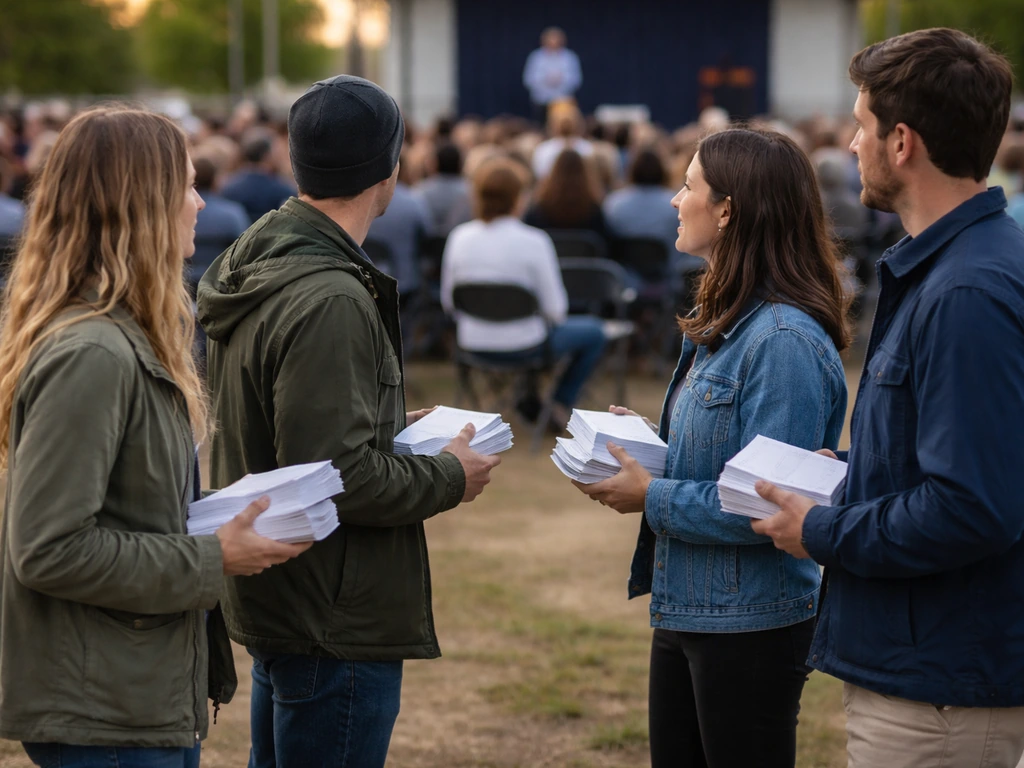
Bird-dogging is most common during election cycles when candidates are actively attending public events and need voter engagement to look good. Grassroots advocacy groups, issue-focused nonprofits, investigative journalists, and opposition research operatives all use versions of this tactic. Citizens who aren't affiliated with any organization also do it, though the term is more often applied to the organized, repeat-visit version. It tends to matter most when a candidate has been vague on a key issue, when a voting record contradicts public statements, or when an official has been avoiding direct public contact.
Related terms and easy mix-ups
People confuse bird-dogging with several related but distinct behaviors. Here is how to separate them:
| Term | What it actually means | How it differs from bird-dogging |
|---|---|---|
| Heckling | Shouting interruptions or insults at a speaker, often to disrupt | Bird-dogging uses prepared questions to extract information; heckling aims to disrupt or embarrass without a strategic question |
| Tailing / Surveillance | Covertly following or monitoring someone's movements over time | Bird-dogging is typically overt and public; the questioner identifies themselves and speaks directly to the target |
| Opposition research | Background investigation into a candidate's record, finances, or history | Opposition research happens off-site in databases and records; bird-dogging happens face-to-face in public |
| Electioneering | Legal term covering efforts to persuade voters for or against candidates | Bird-dogging is a specific tactic within the broader category of political activity; electioneering is the legal policy umbrella |
| Filibustering | A legislative procedure of prolonged speaking to delay a vote | Completely different context; filibustering happens inside a legislature; bird-dogging happens at public-facing events |
The confusion around bird-dogging's tone is real. Some sources, particularly those covering the 2016 Project Veritas sting, framed it as a form of "voter-candidate intimidation." Mainstream activist organizations frame the same tactic as nonviolent accountability work. The Washington Post noted that reporters recognized certain behaviors as bird-dogging but that media framing shifted depending on intent and execution. So when you see the word, pay attention to who is using it and why, because the same label covers a wide range of behavior from perfectly legal public questioning to conduct that crosses ethical or legal lines.
It's also worth noting that bird-dogging in politics is a specific subspecies of a broader slang family. The general term "bird-dogging" appears in business (recruiting and lead generation), real estate, and everyday conversation with the core sense of persistent pursuit. If you've come across the term in those contexts, the political version carries the same DNA but adds the public accountability and media-capture dimension.
What it looks like in real situations
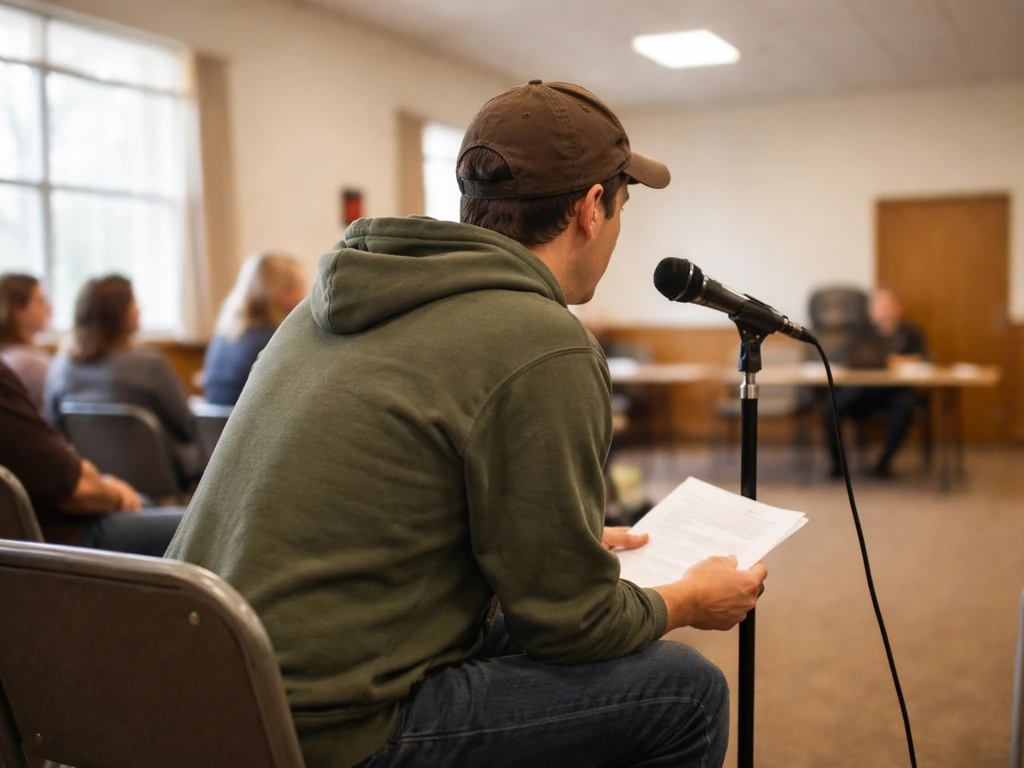
Here are concrete examples of how bird-dogging shows up in practice, drawn from documented cases and published guides:
- Campaign trail questioning: An activist group opposing a senator's healthcare position attends every public town hall in the state over a three-month campaign. At each stop, a different member asks a version of the same question about coverage for pre-existing conditions. The senator's evolving or inconsistent answers become a storyline for local journalists covering the race.
- Costumed protests (UK and US): The Washington Post documented cases of political staffers and protesters showing up in elaborate animal costumes to trail politicians at public events, asking questions and generating visual content that is inherently shareable. This is bird-dogging with a media-amplification strategy baked in.
- Meet-and-greet interception: The AFSC's guide specifically advises calling a campaign office to find out when public events are scheduled if they aren't posted online, then attending with a prepared question. This is the textbook low-tech version: show up, ask clearly, record the answer.
- Investigative journalism version: Collins' example of a journalist spending an election year following Kennedy and Nixon is the professional media equivalent. Beat reporters and documentary filmmakers use the same persistent-presence logic as grassroots bird-doggers, though with press credentials and editorial oversight.
- Coordinated multi-event strategy: Indivisible's model involves multiple members attending different appearances by the same official across a region, each asking related questions. The compiled responses are then shared publicly or provided to journalists, creating a documented record of the official's stated positions.
Where the ethical and legal lines are
Bird-dogging is legal when it stays in the zone of public questioning at public events. Once you move outside that zone, you are in different legal and ethical territory. Here is a practical breakdown of where the lines sit:
- Public events, public questions: Attending an open town hall, campaign rally, or press event and asking a question is protected political activity. You do not need permission to attend public events or to speak during designated Q&A periods.
- Recording in public: In most public settings in the US, you have the right to record interactions on public property. The ACLU notes that generally a law enforcement officer needs a warrant to confiscate your device or review its contents without consent. However, recording laws vary by state, particularly around two-party consent for audio.
- Persistent attendance is not automatically harassment: Showing up at multiple public events and asking similar questions is a recognized accountability tactic, not harassment, as long as you are not threatening, physically intimidating, or following someone into private spaces.
- Private spaces and private events: If an event is ticketed, restricted, or on private property, your right to attend is conditional on the owner's terms. Misrepresenting yourself to gain access can create legal exposure, as illustrated by the Project Veritas case that resulted in a $120,000 federal jury award related to fraudulent misrepresentation and wiretapping issues.
- Physical proximity and intimidation: Blocking someone's exit, getting physically close in a threatening way, or coordinating a group to surround someone can cross into intimidation even if no one says anything threatening. Intent and physical conduct matter.
- Online follow-up: Using video clips of a public exchange to inform voters or generate press coverage is standard advocacy. Using the same footage to harass, threaten, or target individuals personally crosses into conduct that can attract civil or even criminal liability depending on jurisdiction.
- If you are organizing a bird-dogging effort: Assign clear roles, stick to public events, train participants to ask questions rather than make statements, and document everything your team does as well as what the official does. This paper trail protects you if conduct is later disputed.
The ethical question that sits underneath all of this is about proportionality and purpose. Asking an elected official a hard question about their voting record is a legitimate exercise of democratic accountability. Coordinating repeated personal intrusions into someone's private life, or using deception to gain access, moves the tactic from accountability into something that reasonable observers, and potentially courts, would call harassment or misconduct.
What to do if you think you're being bird-dogged
If you're a candidate, staffer, or public official who suspects an organized bird-dogging effort, the most important thing to know is that showing up at your public events and asking questions is typically legal activity. The ACLU also emphasizes that the First Amendment protects blank" rel="noopener noreferrer">the right to record or document law enforcement performing duties in public, and that an officer generally needs a warrant to confiscate your device or view its contents if you are not under arrest and you do not consent. Bird-dogging meaning is about deliberate, persistent follow-up questions at public events to hold officials to their words. Your response strategy should focus on preparation and documentation, not confrontation. In short, the bird banking meaning is about the tactic of pushing targeted responses into media coverage.
- Start a log immediately. Note dates, locations, names if known, questions asked, any video equipment observed, and who was present on your team. If this is organized, patterns will emerge across multiple events and a log makes those patterns visible.
- Identify the pattern, not just the individual incident. A single pointed question at a town hall is normal. The same group appearing at five events in a row with coordinated questions is a campaign. Distinguishing these early shapes your response.
- Prepare answers, not deflections. Bird-dogging works best when a candidate is caught unprepared or evades in a way that looks bad on camera. Having clear, honest answers to likely questions removes the tactic's effectiveness. Work with your communications team to develop consistent on-record positions.
- Document any behavior that crosses into harassment or intimidation. If someone blocks your path, makes physical contact, enters a private event under false pretenses, or follows you into non-public spaces, document it with timestamps, witnesses, and if possible your own video record.
- Know your venue rights. At events on private property or ticketed events, you can work with event staff to remove individuals who are disrupting proceedings or who have misrepresented themselves to gain entry. You cannot have people removed simply for asking questions at an open public event.
- Consult an attorney if conduct escalates. If you believe someone is using recording in ways that may violate state wiretapping or consent laws, or if online publication of footage is being used to threaten or harass rather than inform, get legal advice specific to your jurisdiction.
- Do not engage with the social media bait. A sharp exchange captured on video is the outcome bird-doggers are hoping for. A calm, direct, on-the-record answer typically serves you better than a confrontation. If a question is outside the scope of a particular event, it's reasonable to say you're happy to address it through your official contact channels.
The practical reality is that being bird-dogged by a well-organized group is a sign that someone cares enough about your positions to invest real time tracking you. That is uncomfortable, but it is also a form of political engagement that has been part of democratic campaigning for a long time. How you respond on camera in those moments often matters more than the question itself.
FAQ
What is the difference between bird-dogging and regular political Q&A at town halls?
In most cases, it means the person is asking you a prepared, issue-specific question at your public stop, and they are staying focused on that topic rather than using intimidation tactics. The key tell is whether they are seeking a recordable commitment in the public venue, with respectful conduct, or trying to push into private spaces or personal targeting.
How do bird-doggers decide what question to ask, and what should I expect as follow-ups?
A common mistake is treating follow-up questions like “one more try” instead of a planned information request. Effective bird-dogging usually has a specific goal for each question (a clear yes or no, a definition, or a commitment), and an agreed-upon backup follow-up if you evade.
Does bird-dogging change if it is done by a lone citizen rather than an organized advocacy group?
If you are conducting bird-dogging as an individual, you are still expected to stay within the same boundaries as organized groups. Even without a group, repeated visits become risky if you cross from public venues into restricted areas, approach you repeatedly after you leave, or use deception to gain entry.
What are practical legal or safety boundaries to keep in mind during public questioning?
It is not “automatically illegal,” but enforcement depends on venue rules and local law. In practice, the safe framing is public-event questioning with distance and no blocking, no entry into restricted areas, and no conduct that turns persistent presence into stalking. If you are filming, also watch for venue policies and recording restrictions that can apply even in public spaces.
If I am being bird-dogged, what is the best response strategy that reduces risk and misrepresentation?
Candidates and staff should separate “preparation” from “confrontation.” A useful approach is to request the questioner’s topic, answer the underlying issue directly, and avoid engaging in personal back-and-forth. Also, have a documentation plan (time, location, transcript or notes) in case the moment is later mischaracterized.
Can bird-dogging include heckling, or is that a different thing?
Yes. Sometimes the term gets applied to behavior that looks similar on the surface, like aggressive heckling or refusing to stop after asked. Bird-dogging is distinguishable by purpose and conduct, meaning a focus on extracting a specific public position at public events, rather than chaotic disruption.
Does bird-dogging always lead to media coverage, and what factors affect whether a clip gets traction?
Coverage is often the “second goal,” but it is not guaranteed. If local reporters do not attend or the clip is not visually clear, the attempt may have limited reach. That is why groups plan for how the exchange will look on camera (clear framing, readable question, and a clean statement of the response).
How can reporters or observers tell whether something is legitimate bird-dogging versus harassment?
If you are a reporter or observer trying to label what you are seeing, look at intent cues and logistics. Organized bird-dogging often includes role assignments (questioner, camera, note-taker) and pre-planned follow-ups, while harassment typically involves personal targeting, obstruction, or efforts to force contact outside the public process.
What does “candidate haunting” mean, and why does the terminology affect how people judge the tactic?
The phrase “candidate haunting” is basically a synonym emphasizing persistence, and it can sound harsher than “accountability on the campaign trail.” The difference matters because the same tactics, when described with a different label, can change public interpretation of the behavior’s purpose.
What can candidates do before an event to reduce the chances of being repeatedly bird-dogged?
If you are worried about becoming a repeat target, focus on proactive transparency rather than avoidance. That can mean clearly stating your position in advance, addressing the most common evasive topics at appropriate public forums, and ensuring staff control access routes and follow venue rules.
Next Article
Bird-Dogging Definition and How It’s Used in Real Life
Bird-dogging definition and real-life use: follow, keep tabs, shadow. Includes signs, synonyms, and how to respond.