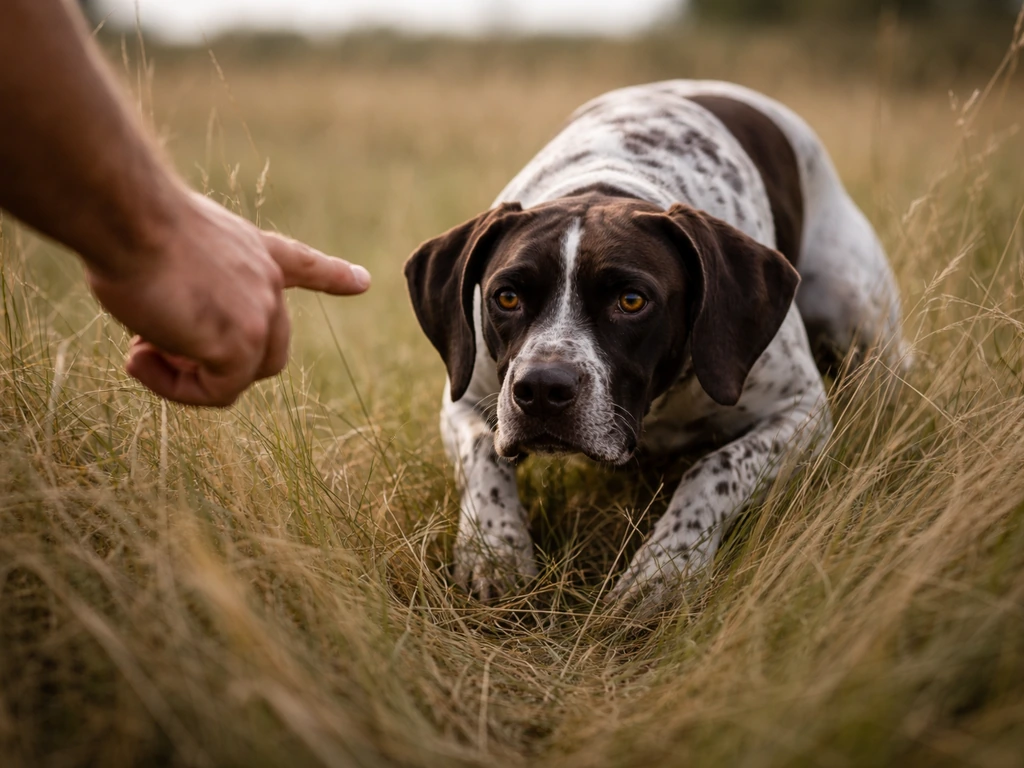
Bird-dogging means watching someone or something closely, tracking their actions, and following through persistently until a goal is met. That is the short answer. The phrase comes from the hunting world (more on that in a moment), and it has nothing to do with bird watching, bird symbolism, or any spiritual meaning tied to birds. If you landed here expecting a connection to ornithology or dream interpretation, you are in the right place to clear that up. This article covers the definition, the real-world contexts where people use it, how to recognize it in a sentence, and what to do if someone is bird-dogging you in a way that feels unwanted.
Bird-Dogging Definition and How It’s Used in Real Life

Marcus Holloway
17 Apr 2026

What bird-dogging actually means

Merriam-Webster defines bird-dog as a verb meaning "to watch closely" and "to seek out: follow, detect." The phrasing is direct. Bird-dogging is the act of persistent, close monitoring of a person, project, or situation. It implies more than a casual glance. It involves staying on something the way a well-trained hunting dog stays on a scent: methodically, attentively, and without letting up until the target is found or the task is done.
The term entered common usage in the early 20th century. By the 1930s it had branched into multiple meanings, including a slang sense of stealing someone's date (which explains why the word can carry a slightly pushy or intrusive edge in certain contexts) and a more professional sense of scouting out customers or talent. Today the dominant meaning is simply: track closely, follow up diligently, or monitor with sustained attention. The broader bird dogging meaning has remained remarkably consistent across these decades, even as the specific contexts have multiplied.
Where people actually use this term
In the workplace and business settings

This is probably where you are most likely to hear bird-dogging today. In real estate, a bird dog is a person who researches off-market or undervalued properties and brings leads to investors, often earning a flat fee, a percentage, or a hybrid arrangement in return. A real-estate investing Reddit discussion defines a bird dog as someone hired by an investor to find deals or properties and get paid for leads blank" rel="noopener noreferrer">bird dog is a person who researches off-market or undervalued properties and brings leads to investors. It is essentially a referral and scouting role. Bird-dogging meaning in business extends well beyond real estate though: in operations, project management, and sales, bird-dogging describes the act of tracking a deal, a deliverable, or a person's progress through a process without letting it fall through the cracks. A 1975 AT&T technical paper used the term in exactly this sense to describe tracking down users with performance problems and monitoring their utilization data before following up with counseling. The framing was constructive: find the issue, stay on it, resolve it.
In construction and project oversight, bird-dogging refers to scouting and monitoring project progress. Someone might be assigned to bird-dog a subcontractor, meaning they show up, observe, document, and report back. The word captures both the watching and the follow-through. Bird business meaning in these professional settings is almost always about accountability and results, not surveillance for its own sake.
In politics and civic advocacy
The ACLU of New Mexico has published guides on bird-dogging as a civic tactic, defining it as "to follow, watch carefully, or investigate" elected officials or candidates. In this context, activists attend public events, ask pointed questions, document responses, and report findings to hold officials accountable. Bird-dogging meaning in politics carries a distinctly organized, intentional flavor: it is structured, documented oversight by citizens who want to create a public record of what a politician actually says and does.
In sports recruiting and everyday conversation

Merriam-Webster gives this example: "Scores of college recruiters bird-dogged the 7-foot high school senior for their basketball programs." That sentence captures the competitive, relentless quality the word implies. Recruiters, talent scouts, and headhunters bird-dog promising individuals all the time. In casual conversation, someone might say "I've been bird-dogging this deal for three weeks" to mean they have been persistently following up. The context is usually admiring of the persistence, not critical of it.
Spotting bird-dogging in a real sentence
The verb usually appears with a direct object (a person, a project, a situation) and signals sustained attention rather than a one-time check. Here are the patterns to watch for:
- "Citizens are bird-dogging the riverfront development project to its completion." (Tracking a project's progress over time)
- "She's been bird-dogging that contractor for weeks to get the estimate." (Persistent follow-up with a person)
- "He bird-dogged the new employee through every step of onboarding." (Close supervisory monitoring)
- "The advocacy group plans to bird-dog the senator at every town hall." (Investigative political accountability)
- "I bird-dogged that property for six months before the owner finally agreed to sell." (Real estate lead pursuit)
Notice that in all these cases, the person doing the bird-dogging is actively initiating and sustaining the attention. The subject is not passively waiting. That persistence is the core of the meaning. The Urban Dictionary sphere has also picked up the term with slightly edgier connotations. Bird dogged meaning in slang can lean into the idea of being relentlessly followed in a way that is irritating or aggressive, especially in social or romantic contexts.
Helpful oversight or unwanted surveillance? It depends on intent and relationship
Whether bird-dogging feels positive or negative almost always comes down to two things: who is doing it and whether the target has any say in the matter. In professional settings, a manager who bird-dogs a project might be seen as diligent or micromanaging depending on the team's culture and the level of trust in the relationship. In civic life, an advocacy group bird-dogging a politician is exercising a democratic right. In those cases the oversight is legitimately in the public interest.
The term turns uncomfortable when the attention becomes unsolicited and persistent toward a private individual, especially in personal or social contexts. That early 20th century "date-stealing" connotation lives in this zone. If someone bird-dogs you in a way that feels like monitoring your movements, checking in constantly without invitation, or showing up in spaces you did not ask them to enter, the dynamic has shifted from professional diligence to something more intrusive. The word itself is neutral, but the behavior it describes can range from admirable persistence to genuine harassment depending on context.
Some financial and referral industries have developed formal structures around bird-dogging that blur the line further. Bird banking meaning in certain informal lending and investment circles involves referral networks where the expectation of ongoing oversight can feel transactional or even coercive if the terms are not clearly defined up front.
Synonyms and related phrases (and how they differ)
| Term | Meaning | How it differs from bird-dogging |
|---|---|---|
| Tracking | Following the progress or location of someone/something | More neutral and data-focused; lacks the dogged pursuit quality |
| Tailing | Physically following a person, often covertly | Usually implies secrecy; bird-dogging can be open and acknowledged |
| Shadowing | Following someone closely to observe and learn | Often positive and educational; less associated with accountability |
| Monitoring | Watching or checking a process over time | Broader and more passive; bird-dogging implies active follow-through |
| Canvassing | Systematically covering an area to gather information | More about breadth/coverage; bird-dogging is about depth/persistence on a target |
| Scouting | Seeking out promising people or opportunities | Focuses on the finding phase; bird-dogging includes the sustained follow-through |
| Dogging | Following or pursuing persistently (informal) | Essentially synonymous but cruder; bird-dogging implies the methodical hunting-dog quality |
Merriam-Webster's thesaurus links bird-dogging to a synonym cluster that includes tracking, following, and detecting. The hunting-dog metaphor is what distinguishes bird-dogging from a casual synonym like "keeping an eye on": a bird dog is trained, methodical, and does not quit until the task is done. That is the register the word carries.
This is not about birds: clearing up the literal vs. figurative confusion
Given that this site covers bird symbolism, bird behavior, and bird-related idioms in depth, it is worth being completely direct: bird-dogging has nothing to do with birds as animals, bird watching, bird spirit guides, or any ornithological meaning. The "bird" in bird-dog refers to the type of hunting dog, not to an actual bird. A bird dog (or bird-dog) is a canine trained to locate and flush out game birds during a hunt. The metaphor is drawn entirely from the dog's tracking behavior, not from anything birds do.
Etymonline's entry on bird-dog confirms this: the term names the dog that assists in hunting birds, and the verb use of bird-dog draws on the dog's role of seeking, locating, and staying on the scent. If you came to this article wondering whether there is a spiritual meaning, a dream interpretation, or a cultural symbolism connected to bird-dogging, the answer is no. The birds in this idiom are the prey being tracked by the dog, not the subject of the metaphor itself. The dog is doing all the work in this expression, and the bird is largely incidental.
This kind of disambiguation matters on a site dedicated to bird meanings. Plenty of bird-related idioms and phrases do carry genuine symbolic weight rooted in how birds actually behave. Bird-dogging is not one of them. It belongs squarely in the "slang and figurative language" category rather than "ornithological behavior" or "spiritual symbolism."
What to do if someone is bird-dogging you

If the bird-dogging is happening in a professional context, such as a manager closely monitoring your work output, the first step is to figure out whether the attention is proportionate to the situation. A new employee in a high-stakes role being closely supervised is different from a seasoned professional being micromanaged out of mistrust. If it feels disproportionate, a direct conversation about expectations and autonomy is usually the most effective starting point. Name what you are observing: "I notice you are checking in on this project multiple times a day. I want to make sure I understand what level of visibility you need, and how I can demonstrate that I have it handled."
If the bird-dogging is coming from a peer, a competitor, or someone outside your organization (such as a recruiter you are not interested in), a clear and documented statement of your preference is your first and most important tool. Say once, directly, that you do not want further contact. If the contact continues after that, keep records. The U.S. Department of Justice Office for Victims of Crime recommends keeping a record or log of each contact and documenting police reports when unwanted stalking or harassment develops keep records. Save emails, voicemails, texts, and any documented appearances or incidents with dates and times. Stalking safety resources consistently emphasize documentation as the foundation of any response, because patterns are easier to act on than isolated incidents.
If the monitoring has crossed into territory that feels threatening or frightening, including someone showing up at your workplace, tracking your location, or making repeated unwanted contact after you have asked them to stop, that behavior may fall under state harassment, stalking, or disorderly conduct laws. Following someone repeatedly and without consent is not simply persistence. Resources like the National Domestic Violence Hotline and legal advocacy organizations can help you understand your options and build a safety plan. Consulting a lawyer to understand workplace protections is also worth considering if the situation involves a professional context.
The practical steps, summarized:
- Identify the context: professional oversight, competitive attention, or personal/social unwanted contact.
- Have a direct conversation first if you are in a professional relationship where that is reasonable and safe.
- State your preference clearly and once if the attention is unsolicited. Do not repeat the request repeatedly, as that can escalate.
- Document everything after that point: dates, times, medium, content of communications, any witnesses.
- Consult legal or HR resources if the behavior continues after a clear request to stop.
- Reach out to a safety advocacy organization if the situation involves any element of fear, physical proximity, or threat.
Bird-dogging is one of those words that can describe something admirable or something alarming depending entirely on context. Knowing the definition, recognizing the pattern, and understanding the spectrum from constructive oversight to unwanted pursuit gives you the language and the framework to respond appropriately on either end.
FAQ
Can bird-dogging be positive, or is it always negative?
Yes. In the “good” sense it usually means follow-up and accountability tied to a role or deadline (for example, a manager checking project status). In the “bad” sense it can describe unwanted, persistent monitoring of a private person, especially after you have expressed a boundary. A quick decision aid is to ask whether you were expecting and consenting to the level of attention, and whether there is a legitimate work or public-interest purpose.
What’s the difference between “bird-dogging” and just checking in?
Common mistake: treating it as interchangeable with “checking in” or “keeping tabs.” Bird-dogging implies sustained, methodical pursuit until something is resolved or found, often with repeated follow-through. If the person stops after one update, it is more like a check-in than bird-dogging.
Is it normal for a manager to bird-dog my schedule or personal routine?
In most professional contexts, “bird-dogging” should be aimed at deliverables, timelines, or agreed-upon process milestones, not at your personal life. If the monitoring repeatedly targets private routines (where you go, who you meet) without a work justification, that is a red flag and you should reframe the conversation around scope and boundaries.
How do I tell whether a “bird-dog” referral pitch is legitimate follow-up or pushy monitoring?
In real estate and business, a bird-dog relationship is often supposed to be transactional but not necessarily intrusive, meaning there should be clear terms about what information is being sought and what follow-up looks like. If someone is “scouting” your deal, you can ask what data they need, how they will use it, and how often they will contact you before it feels like pressure.
What does grammar usage tell me about what the speaker means by bird-dogging?
Yes. The phrase often appears with an object, like “bird-dog a deal” or “bird-dog a candidate,” and it can show up as a verb describing the persistent party (subject) and the monitored target (object). If you see it used without a clear objective (no deal, person, or deliverable is specified), it can be a clue the speaker is using the term loosely.
What should I say if I want bird-dogging to stop at work, but I still need to cooperate?
If you want to disengage professionally, don’t just say “stop,” try to redirect to scope. For example, “I will update you on X by Friday, but I am not able to support more frequent check-ins.” This gives a clear stopping rule and a replacement cadence, which reduces back-and-forth.
How does bird-dogging differ in politics when it is accountability versus harassment?
In civic or political contexts, bird-dogging typically involves documenting public actions at public events, asking questions, and creating a public record. It becomes inappropriate when it shifts to private, nonpublic harassment or targeting based on identity. If you are on the receiving end, pay attention to whether interactions are at public forums with relevance to official duties.
If bird-dogging turns intrusive, what practical steps should I take first?
If you feel unsafe, focus on pattern evidence and protective logistics. Save messages and note dates, times, locations, and witnesses, then limit personal information sharing, adjust routines if needed, and involve trusted contacts or workplace security. If the behavior includes threats or repeated unwanted contact after a boundary, consider getting professional help from a lawyer or local advocacy resources.
Does bird-dogging apply to dating and relationships, and how should I respond?
If someone is “bird-dogging” you romantically, the conversation should be boundary-first, not debate-first. State what you want clearly and what you do not consent to (for example, no repeated checks of your whereabouts or no showing up uninvited). If they continue after you set the rule, keep it documented and reduce further contact.
Next Article
Bird Dogging Meaning: Definition, Origins, and Symbolic Takeaways
Bird dogging meaning explained: hunting-style origins, real-life slang use, and symbolic bird takes plus how to respond.