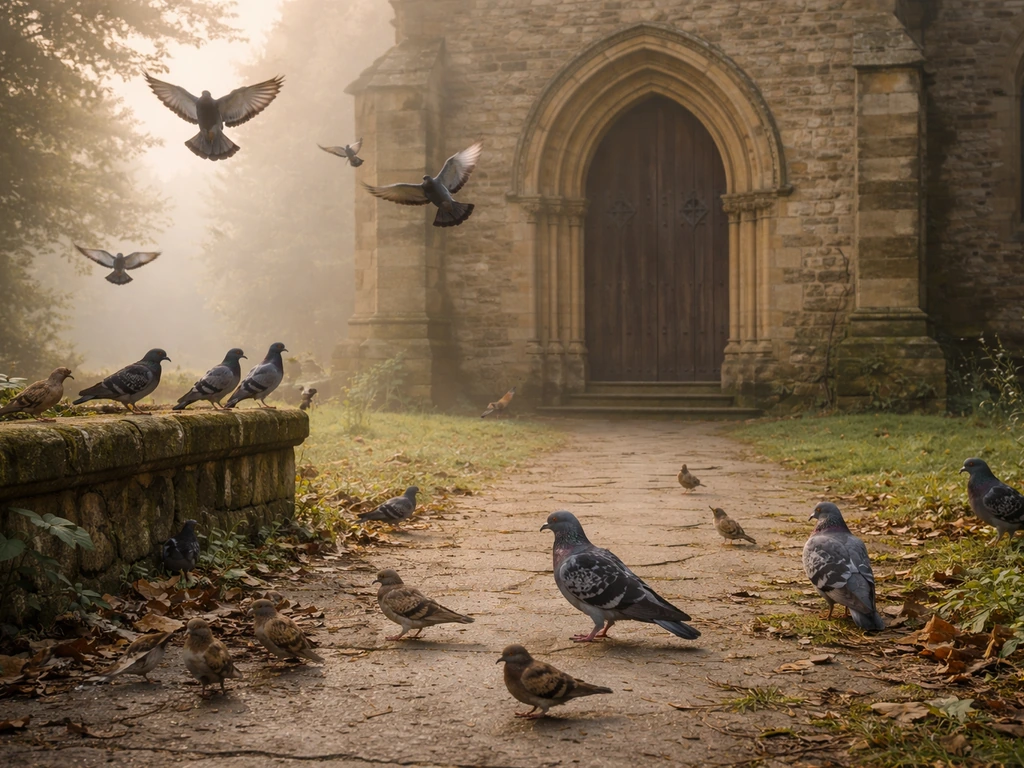
In Catholic tradition, birds carry genuine symbolic weight rooted in Scripture, sacred art, and centuries of theological reflection. When a Catholic sees or hears a bird and wonders what it means, the honest answer is this: the meaning is almost always about reflection and prayer, not prediction. The Church distinguishes clearly between faithful symbolism (which points toward God) and superstition or divination (which it explicitly rejects). It can help to compare this with how church teaching explains the bird definition church concept, rather than relying on omens. So a dove can legitimately remind you of the Holy Spirit, a pelican can call you to think about Christ's sacrifice, and an unexpected bird sighting can be a prompt to pray. But no bird guarantees good luck, signals death, or functions as a divine forecast. That distinction matters enormously, and it's where most confusion around "bird Catholic meaning" begins.
Bird Catholic Meaning: What It Can and Cannot Mean

What Catholics Actually Mean When They Talk About Birds as Symbols
There are two very different things people mean when they ask about birds in a Catholic context. The first is theological symbolism: birds as images deliberately used in Scripture, liturgical art, and church teaching to express truths about God, salvation, and the soul. The second is folk belief: the popular, culturally inherited idea that a specific bird appearing at your window is a message from a deceased relative or a sign of what's coming. These two things are not the same, and the Catholic Church treats them very differently.
Catholic sacramental theology holds that God communicates through perceptible signs, including images and art, when those signs are oriented toward revealing divine truth. Sacred art, according to the Catechism of the Catholic Church (nn. 2502–2503), is considered true and beautiful precisely because it evokes and glorifies God's transcendent mystery. A painting of the dove descending at Christ's baptism is a valid, Church-approved symbol. It teaches something real about the Holy Spirit. But that's fundamentally different from claiming that a dove landing on your car means God is pleased with a decision you just made. One is theological; the other is magical thinking, and the Church, at CCC n. blank" rel="noopener noreferrer">2111, defines superstition as "the deviation of religious feeling" from authentic faith.
The practical implication: when you encounter a bird and feel spiritually moved, the Catholic approach is to let it prompt reflection, gratitude, or prayer. It's not to decode it as a guaranteed omen. That framing keeps the encounter meaningful without crossing into territory the Church formally warns against.
What Different Birds Mean in Catholic Tradition
Catholic iconography and tradition have assigned specific meanings to particular birds over centuries. These aren't arbitrary. Most are grounded in Scripture passages, early Church writings, or the natural behavior of the birds themselves. Here's a breakdown of the most significant ones.
The Dove
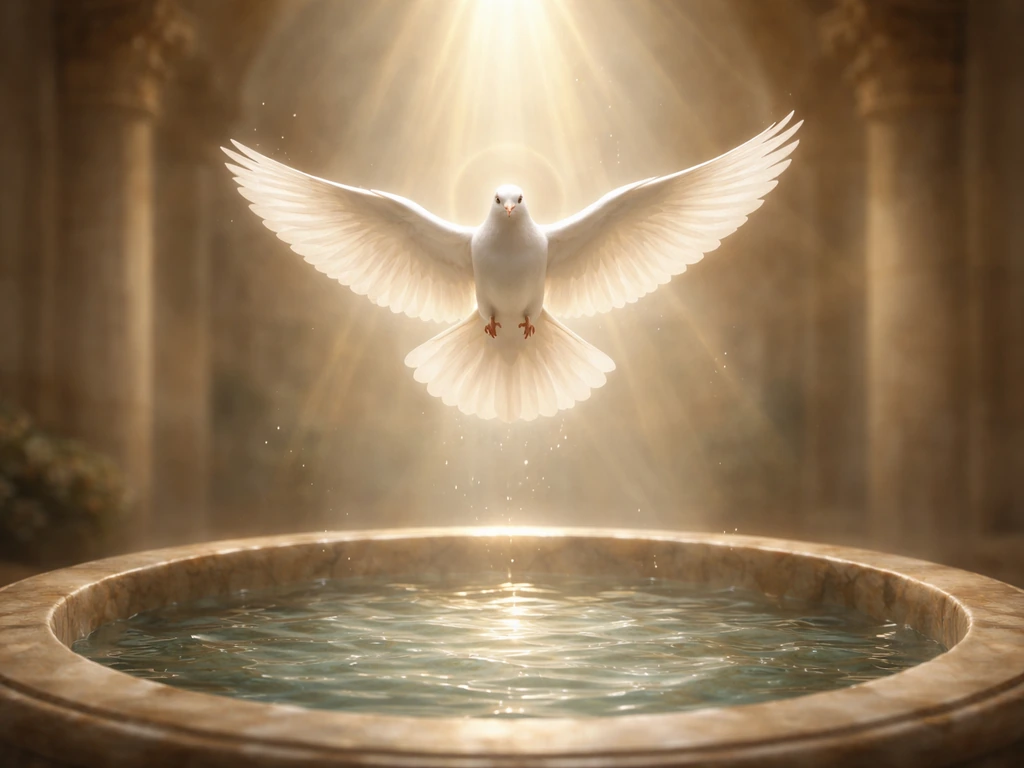
The dove is the most theologically loaded bird in Catholicism. It appears at Jesus's baptism (Matthew 3:16) when the Holy Spirit descends "like a dove," making it the primary symbol of the Holy Spirit in Catholic art and liturgy. It also appears in the story of Noah (Genesis 8), carrying an olive branch as a sign of God's peace and covenant restoration. In Catholic iconography you will see doves on baptismal fonts, vestments, and altarpieces. A dove sighting in daily life can be a natural invitation to recall peace, the Spirit's presence, or your own baptismal call.
The Pelican
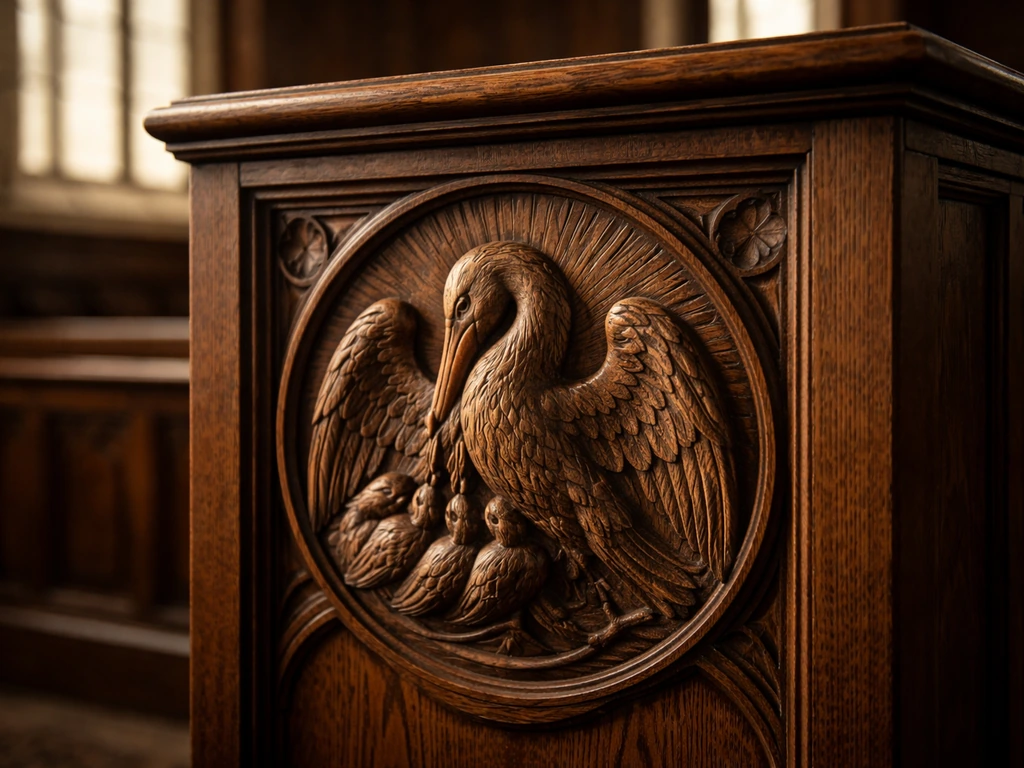
The pelican is a surprisingly rich Catholic symbol and one that non-Catholics often don't recognize. Medieval natural history (largely inaccurate, but theologically productive) described the pelican as piercing its own breast to feed its starving young with its blood. That image became a direct metaphor for Christ's self-sacrifice in the Eucharist. St. Thomas Aquinas used it in the Eucharistic hymn Adoro Te Devote, calling Christ "Pie Pellicane" (Pious Pelican). You'll still find pelican imagery carved into many older church tabernacles and chalices. Seeing a pelican can be a natural reminder to reflect on the Mass and the sacrificial love at its center.
The Eagle
The eagle is the symbol of St. John the Evangelist, one of the four evangelists whose symbols (called the tetramorph) appear throughout Catholic art. The eagle represents John's Gospel because it soars to the greatest theological heights, opening with "In the beginning was the Word." Eagles also carry Old Testament significance: Isaiah 40:31 promises that those who hope in the Lord will "soar on wings like eagles." In many churches the Gospel lectern is shaped like an eagle, symbolizing the Word of God being carried to the people.
The Rooster
The rooster is one of the most narrative-specific birds in Catholic tradition. It is tied directly to Peter's denial of Christ (Matthew 26:74–75), where the rooster crowing marked Peter's moment of failure and, immediately after, his repentance. For that reason the rooster became a symbol of vigilance, repentance, and the call to morning prayer. Many churches have a rooster weathervane on their steeple as a reminder of Peter's tears and the call to wake from spiritual sleep. It's a bird of accountability, not bad luck.
The Sparrow and Small Birds
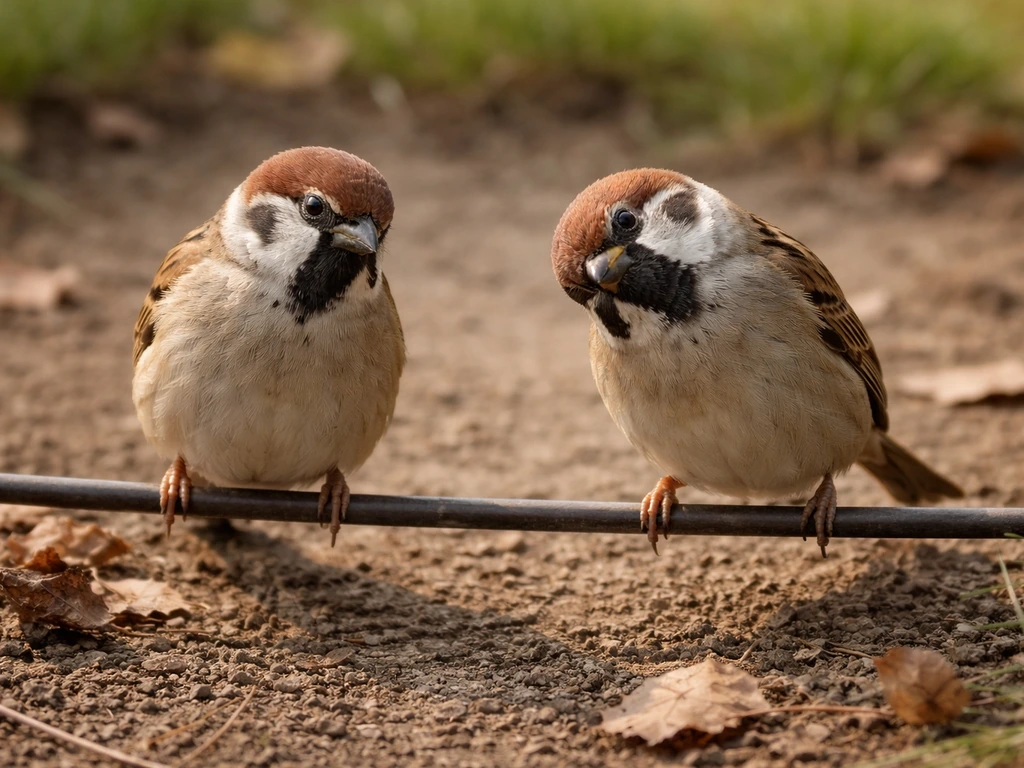
Small birds like sparrows carry a specific teaching from Jesus himself. In Matthew 10:29–31, Christ notes that not a single sparrow falls without the Father's knowledge, and that you are worth far more than many sparrows. This passage is a direct statement about divine providence and care for the individual. A sparrow sighting in Catholic reflection is a prompt to trust in God's attentiveness to your life, even in small things.
The Owl
The owl occupies a more complicated space. In the Old Testament, particularly in passages describing desolation (Isaiah 34, for example), owls appear among the creatures inhabiting ruined lands, which led to associations with darkness, solitude, and spiritual desolation in some Catholic folk traditions. However, in other strands of Christian symbolism, the owl's ability to see in darkness became a symbol of wisdom and the capacity to perceive truths hidden from others. The meaning isn't fixed, and a Catholic seeing an owl is not receiving a warning of death. Context and prayerful reflection determine the takeaway.
| Bird | Catholic/Scriptural Association | Reflection Prompt |
|---|---|---|
| Dove | Holy Spirit; peace; Noah's covenant | Am I open to the Spirit's movement in my life right now? |
| Pelican | Christ's sacrifice; the Eucharist | Do I receive the Eucharist with gratitude for its cost? |
| Eagle | St. John the Evangelist; divine Word; hope | Am I rooted in Scripture and theological depth? |
| Rooster | Peter's denial; repentance; vigilance | Is there something I need to face honestly today? |
| Sparrow | Divine providence; God's care for the small | Do I trust that God sees and cares about my situation? |
| Owl | Wisdom; also desolation in Old Testament imagery | What is this dark or quiet season asking me to learn? |
What the Bible and Church Tradition Actually Say About Birds
Birds appear throughout Scripture in ways that range from direct theological statements to poetic metaphor. The key passages worth knowing aren't obscure. Genesis opens with birds appearing on the fifth day of creation (Genesis 1:20–21), establishing them as part of God's good order. The dove and raven both appear in the flood narrative (Genesis 8), with the dove eventually returning with an olive branch, signaling renewed creation. At the Transfiguration and at Christ's baptism, bird imagery or presence accompanies moments of divine revelation. In Revelation and related biblical imagery, birds can also be part of how God reveals truth, which is often discussed under bird revelation meaning.
In the Psalms, birds appear as images of the soul's longing for God: Psalm 84:3 describes the sparrow finding a home near God's altar. Psalm 55:6 expresses the desire to have wings like a dove to fly away and rest. These are poetic, emotionally resonant images of the soul's relationship with God, not literal ornithological claims.
In the New Testament, beyond the baptism dove and the sparrow passage, Jesus compares himself to a hen gathering her chicks in Matthew 23:37, a striking image of maternal protective love that doesn't get nearly enough attention. The four living creatures of Revelation 4:7 (related topics like bird meaning in Revelation are worth exploring separately) include an eagle, reinforcing its association with divine majesty and the Gospels. This also connects with bird meaning in Revelation, where symbolic imagery reinforces themes of divine majesty.
Church tradition continued this symbolic language. The Physiologus, an early Christian text that became the basis of medieval bestiaries, interpreted animal behavior through a theological lens. The pelican's supposed behavior, the eagle's renewal by flying toward the sun, the phoenix (a mythical bird adopted into early Christian resurrection imagery) were all read as parables about Christ and the soul. These weren't scientific claims. They were theological teaching tools that the Church used because symbols, as Catholic Answers has noted, express truth "via another layer of teaching" that moves people from intellectual understanding to interior meaning.
Birds as Spiritual Prompts: What a Sighting Can Say to You in Prayer
Here's where things get personally useful rather than just historically interesting. The Catholic spiritual tradition, particularly through Ignatian discernment, holds that God can use ordinary moments to prompt interior movements. A bird sighting won't tell you who to marry or whether to take a job. In that same spirit, many people are drawn to the bird prophetic meaning idea, but the Church focuses on reflection rather than predictions. But it can function as what Ignatian spirituality calls a "consolation": a moment that draws your heart toward God, peace, or gratitude, if you're disposed to notice it.
Spiritual direction in the Ignatian tradition is specifically about learning to recognize God's presence in daily life and to discern which interior movements are from God. A sudden, unexplained sense of peace when a bird lands near you during a difficult moment isn't a divine telegram. But it can be an invitation to stop, breathe, and pray. The Church doesn't ask you to ignore those moments. It asks you to receive them as possible prompts toward God rather than decode them as predictions about the future.
The difference is subtle but important. You're not asking, "What is this bird telling me will happen?" You're asking, "What is this moment inviting me to feel, remember, or pray about?" That shift from prediction to reflection is the distinctively Catholic way to handle the spiritual resonance that birds genuinely carry.
What Catholic Households Actually Believe (Folk Traditions and Superstitions)
Let's be honest: popular Catholic culture in many countries is thick with bird-related folk beliefs that the official Church does not endorse. These circulate in families, particularly in Latin American, Filipino, Irish, Italian, and Polish Catholic communities, because folk religion and official doctrine have always coexisted in complex ways.
- A bird tapping on or flying into a window is sometimes interpreted as a message from a deceased loved one, particularly in Latin American and Filipino households.
- Owls calling at night near a home are associated with death or illness in several Catholic-influenced folk traditions, particularly in Mexican and Puerto Rican communities.
- A dove appearing near a grave or at a funeral is widely interpreted as a sign the deceased person's soul is at peace.
- Cardinals (the red bird, not the clerical office) are popularly believed in North American Catholic families to represent deceased relatives visiting, though this is cultural rather than doctrinal.
- In some Irish Catholic tradition, a robin redbreast near the home at Christmas is considered a blessing, connected to legends about the robin at the Nativity trying to shield the Christ child from fire.
- Black birds, particularly crows, entering a home are considered bad omens in several Catholic-heritage folk cultures across Europe and Latin America.
None of these beliefs are endorsed or condemned outright as a category by the Church, but the Catechism's treatment of superstition (n. 2111) and its explicit rejection of interpreting omens (n. 2116) make clear that treating these as reliable predictive signs is theologically problematic. The Church distinguishes between a folk practice that expresses emotional and spiritual longing (understandable, even healthy in a pastoral sense) and one that functions as a substitute for trusting God's providence. If the belief makes you feel comforted and draws you toward prayer, that's very different from making decisions based on bird behavior.
How to Actually Interpret a Bird Sighting: A Practical Step-by-Step

If you've seen or heard a bird in a moment that felt significant and you're wondering what to do next, here's a grounded, Catholic-minded way to work through it.
- Observe the behavior first. Before assigning meaning, note what the bird was actually doing. A bird repeatedly flying into a window is almost certainly responding to its own reflection, not delivering a message. A bird singing at dawn is doing what birds do at dawn. Scientific context matters before spiritual interpretation.
- Note the species. If you can identify the bird, check its Catholic or Scriptural symbolic associations. A dove carries different traditional weight than a crow. This isn't about prediction; it's about finding a relevant reflection prompt if one exists.
- Note your internal state at the moment. Were you anxious, grieving, praying, or at peace? Ignatian discernment pays attention to what's happening inside you. The bird may have done nothing more than arrive at a moment when you were already open to a spiritual impression.
- Ask what the encounter invites, not what it predicts. Shift your question from "What does this mean for my future?" to "What does this invite me to think about, feel, or pray?" This is the distinctively Catholic move, and it keeps the experience meaningful without making it superstitious.
- Pray, don't decode. If the sighting moved you, bring that movement to prayer. Light a candle, read the relevant Scripture passage associated with the bird (Matthew 10:29 for sparrows, for example), or simply sit quietly and let the impression inform your conversation with God.
- Don't make decisions based on it. If you're weighing an important choice, a bird sighting is not a sign to proceed or stop. Seek sacramental guidance, talk to a spiritual director, or bring it to confession or adoration. The Church offers robust tools for discernment that don't depend on animal behavior.
- Keep perspective. Birds are part of God's creation, which Catholic teaching affirms as good and capable of pointing toward the Creator. Enjoying a bird sighting as a moment of created beauty that reflects God's care is entirely appropriate. Treating it as a guaranteed divine message is where things go sideways.
What Catholicism Does and Doesn't Actually Support
There are some persistent myths about birds in Catholic contexts worth addressing directly, because the internet mixes genuine Catholic symbolism with folk superstition and New Age interpretation in ways that can genuinely mislead people.
| Claim | What Catholicism Actually Says |
|---|---|
| Birds are messengers from deceased loved ones. | Not a Catholic doctrine. Belief in the communion of saints is real, but the Church does not teach that souls communicate through animals. This is a folk belief, not theology. |
| Certain birds predict death or misfortune. | Explicitly rejected. CCC n. 2116 names interpretation of omens among practices Catholics should avoid because they express a desire for power over time that belongs to God alone. |
| The dove symbol means the Holy Spirit is visibly present. | The dove is a valid symbol of the Holy Spirit in art and Scripture. A literal dove in your garden is not a literal manifestation of the Holy Spirit. Symbol and literal presence are not the same. |
| Seeing a specific bird after a prayer means God answered yes. | No Catholic authority supports this. Prayer discernment uses Scripture, spiritual direction, conscience, and the sacraments, not bird behavior. |
| Bird symbols in Catholic art are superstitious. | False. Theological symbols in sacred art are approved and encouraged by the Church (CCC nn. 2502–2503) when they express truth about God and faith. |
| Catholics shouldn't think about birds spiritually at all. | Also false. Appreciating creation as a reflection of God's goodness, and using the symbolic tradition of the Church to prompt reflection, is entirely within Catholic practice. |
The line the Church draws is consistent: symbolism that points toward God and invites faithful reflection is good. Claims that bird behavior predicts or controls outcomes, or substitutes for trust in God's providence, fall into what the Catechism calls superstition or divination. You don't have to abandon cultural bird beliefs entirely, but holding them lightly, as emotional and cultural expressions rather than theological certainties, keeps you on solid ground.
Where to Go from Here
If you're exploring bird meaning in a Catholic context, the most rewarding path is through the tradition's actual symbolic depth rather than folk omens. If you want to dig deeper into bird biblical meaning, start with how Scripture uses birds as theological symbols and poetic images rather than as literal forecasts bird meaning in a Catholic context. The Church's rich iconographic language around birds connects directly to Scripture, the sacraments, and the saints in ways that can genuinely enrich your prayer life. The dove pointing to the Holy Spirit, the pelican pointing to the Eucharist, the sparrow pointing to divine providence: these are theologically serious and spiritually nourishing. The related symbolism of birds in a broader biblical context (how birds appear throughout Scripture, in church teaching, and in prophetic tradition) is worth exploring further if this has sparked your interest.
For any specific encounter that felt significant, the best next step is prayer followed by a conversation with a spiritual director or trusted priest, especially if you're trying to discern a decision. Bring the feeling, not the bird, to that conversation. And if you're simply curious about the tradition, spend some time with the Psalms where birds appear most richly as images of the soul's life with God. Psalm 84, Psalm 55, and Matthew 10:29–31 are good places to start. They'll give you more genuine Catholic grounding on birds than any list of folk omens ever could.
FAQ
If a dove appears when I’m making a big decision, can I treat that as a sign God approves of my choice?
In Catholic terms, you can treat it as a prompt to pause and pray, but you cannot treat it as a reliable approval or guarantee. If the bird moment moves you toward peace, charity, or gratitude, that can be a “consolation” to bring into discernment. If it drives anxiety or pressures you to decide quickly, treat that emotional pull cautiously and continue using ordinary discernment (prayer, counsel, and facts).
What should I do if I already promised myself I would follow a “bird sign” or omen?
Slow down and correct the underlying posture. Ask yourself whether you were outsourcing trust in God to a creature’s behavior. A prudent step is to reframe it as a human vow of attention rather than a promised divine forecast, then bring the decision back to prayer and trusted guidance (especially if your previous “sign” led you to a harmful or irreversible action).
Is it ever acceptable to interpret bird symbolism as a message from a deceased relative?
Catholic teaching generally cautions against treating omens or specific occurrences as information meant to guide decisions. If the thought comforts you, you may respond with prayer for the dead and gratitude, without concluding the bird is a communication channel. If it becomes a basis for commands, predictions, or certainty, shift away from it and toward prayer and pastoral counsel.
How do I distinguish genuine “spiritual consolation” from superstition when birds feel significant to me?
A helpful test is the direction of the interior movement. Consolation tends to draw you toward God, greater self-knowledge, patience, and hope, while still preserving freedom. Superstition tends to demand certainty, short-circuit discernment, or make you fear punishment if you ignore the sign. If you cannot discern which pattern you’re experiencing, talk with a priest or spiritual director.
Does it matter whether I see the bird, hear it, or dream about a bird?
Yes, the Church’s guidance is not about the sense channel, it is about what you do with the experience. A sighting or sound can be a reminder to pray, and a dream can be treated as material for reflection (not as a literal prediction). For dreams especially, avoid decisive actions based on them alone, and bring them to prayer for clarity.
Are there any birds Catholics should avoid interpreting because of fear-based folk beliefs?
Rather than avoiding birds, avoid fear-based certainty. The owl, for example, can show up in some folk associations with desolation, but it does not automatically mean death or doom. If you feel dread, return to prayerful context (what was happening in your life, what thought or emotion the moment stirred), and do not conclude the bird is announcing events.
What if I want to use bird symbolism in prayer, but I’m worried I’m being “too literal”?
You’re on the right track if you treat symbolism as a doorway to prayer, not as a contract with God. A safe approach is to ask, “Lord, what might You be inviting me to notice?” Then choose a concrete prayer action (a short prayer, an examination of conscience, or a thanksgiving) instead of predicting outcomes.
Can I look up a “bird meaning list,” like the one for sparrows or roosters, and treat it as Catholic teaching?
Be careful. Many lists mix Church-rooted symbolism with folk omens and modern guesswork. A Catholic-friendly method is to prioritize Scripture passages and well-established iconography, then use them as prompts for reflection. If a “list meaning” tells you to do something based on future events (luck, death, reconciliation outcomes), treat it as unreliable.
Should I report a bird encounter to a spiritual director, and what details are most useful?
Yes, especially if the encounter is tied to a decision or is emotionally intense. Share what you noticed (what bird, where, what time), what feelings or thoughts arose, whether it calmed you or pressured you, and what discernment you were already doing. Keep the focus on the interior movement, not on trying to force the bird into a forecast.
What is a good practical step the same day after a bird encounter that felt meaningful?
Pray briefly, then write two lines: (1) what emotion or insight the moment stirred, (2) what concrete next step you’ll take that is faithful and prudent. For example, if it stirred peace, you might offer a thanksgiving. If it stirred vigilance or repentance, you might plan a confession or a conversation to repair harm. Then continue living your discernment using ordinary means.
Bird Church Meaning: Spiritual, Superstition, and Real Explanation
Bird church meaning decoded: spiritual symbolism, superstitions, and real bird behavior near churches with a clear check