
When the Bible gives a bird meaning, it's grounded in a specific text, a specific story, or a specific law. It is not a floating spiritual energy attached to every sparrow that lands on your windowsill. That distinction matters a lot, because a huge portion of what circulates online as "biblical bird symbolism" is actually a blend of folklore, New Age spirituality, and wishful interpretation. So if you want to know what the Bible actually supports about a particular bird, you need to start with what Scripture says and work outward, not the other way around.
Bird Biblical Meaning: What Scripture Says About Birds

Marcus Holloway
14 Apr 2026
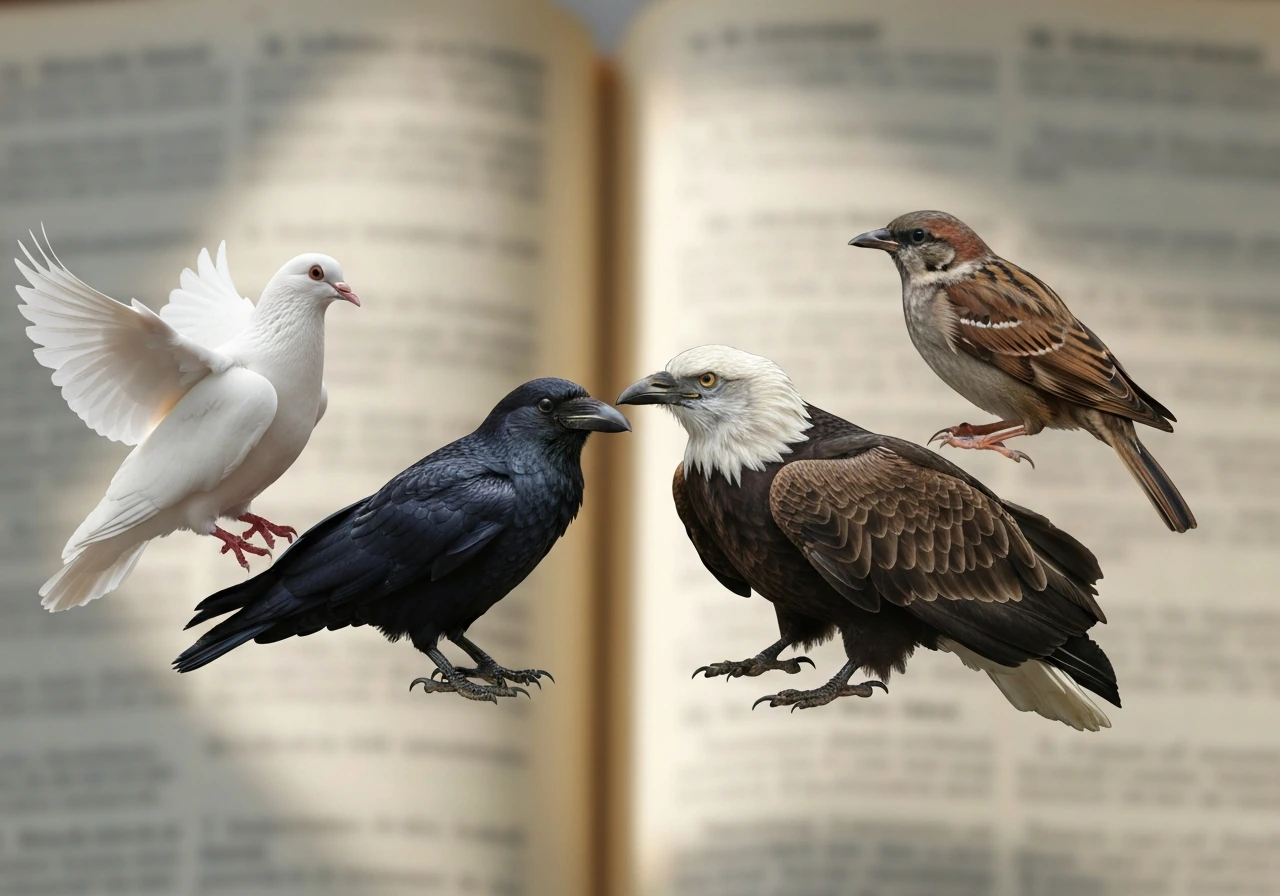
What "biblical meaning of a bird" actually means in Scripture
The phrase "biblical meaning" gets thrown around loosely, so let's pin it down. A biblical meaning is a symbolic, theological, or narrative association that comes directly from a passage in the Bible, supported by its literary and historical context. It is not a meaning assigned by general spiritual tradition and then retroactively attached to a verse. When you read that a dove represents the Holy Spirit, for example, that claim has a textual anchor: the Holy Spirit descending "like a dove" at Jesus' baptism (Matthew 3:16). That is different from someone telling you that a dove landing near you means God is about to bless your finances. The first comes from Scripture; the second does not.
The Bible uses birds in at least four distinct ways: as characters in narratives (the raven and dove in Genesis 8), as legal categories in Mosaic law (clean versus unclean animals in Leviticus 11), as teaching illustrations (Jesus referencing sparrows in Matthew 10), and as metaphorical imagery in prophecy or wisdom literature. Each context carries its own interpretive rules. A bird mentioned in a legal code does not automatically carry the same symbolic weight as a bird appearing in a prophetic vision. Reading the two the same way produces confusion, which is exactly where most bird-omen folklore comes from.
Common birds in the Bible and what they symbolize
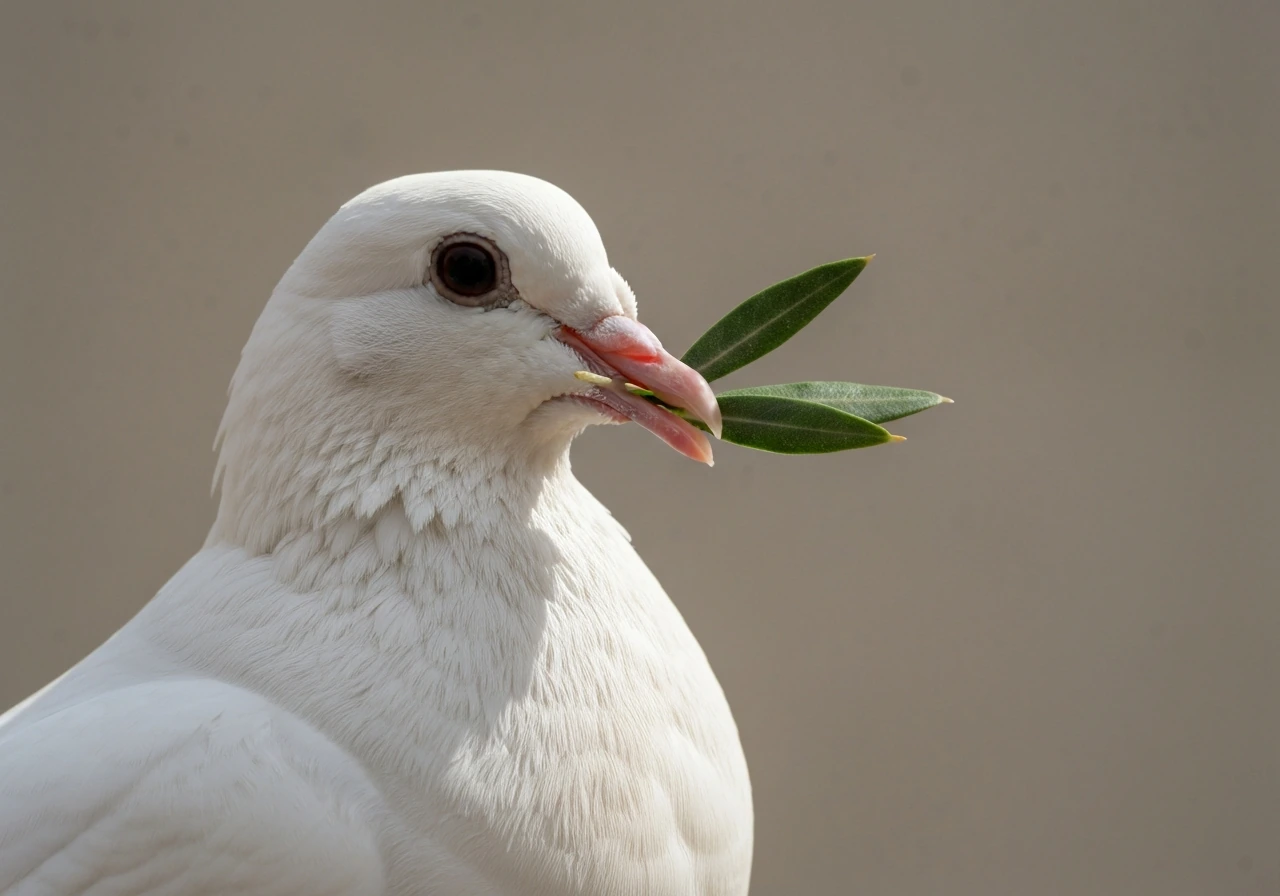
Several birds appear repeatedly enough across Scripture that they have developed recognizable symbolic associations. Here is what the text actually supports for the most commonly asked-about species.
The dove
The dove carries the strongest and most consistent symbolic resume in the Bible. In Genesis 8:10-12, Noah sends a dove out after the flood, and it returns with an olive leaf, signaling that the waters had receded. That image of the dove as a messenger of peace and restoration has been central to Western religious symbolism ever since.
The dove then appears again in Luke 2:24, where Mary and Joseph offer "a pair of turtledoves or two young pigeons" at the temple, connecting the bird directly to atonement and covenant ritual rooted in Leviticus 12. The most theologically significant moment comes at Jesus' baptism, where the Holy Spirit appears in the form of a dove. So the dove's biblical associations, across multiple testaments, include peace, divine presence, purity, and sacrifice.
The sparrow

The sparrow's biblical meaning is almost entirely built on one passage: Matthew 10:29, where Jesus tells his disciples that not one sparrow "falls to the ground" apart from the Father. The point Jesus is making is about God's intimate care for even the smallest, cheapest, most overlooked creatures, and by extension, for his followers. Sparrows were sold two for a penny in the market, making them the most common and least remarkable bird imaginable. That is precisely why Jesus chose them. The biblical meaning of a sparrow is God's attentive, personal providence, especially during fear or persecution.
The raven
Ravens appear in two major biblical moments. The first is Genesis 8:7, where Noah releases a raven before the dove. The raven flies back and forth without bringing a clear sign. The second is 1 Kings 17:4-6, where God explicitly directs ravens to bring bread and meat to the prophet Elijah in the wilderness. This is a critical detail: the text says God "directed the ravens" to do this, which means the ravens were instruments of God's specific provision in a specific narrative, not independent omens. The biblical symbolism of the raven is complex but includes themes of provision, wilderness, and divine resourcefulness, not bad luck or dark omens as folklore often suggests.
The rooster
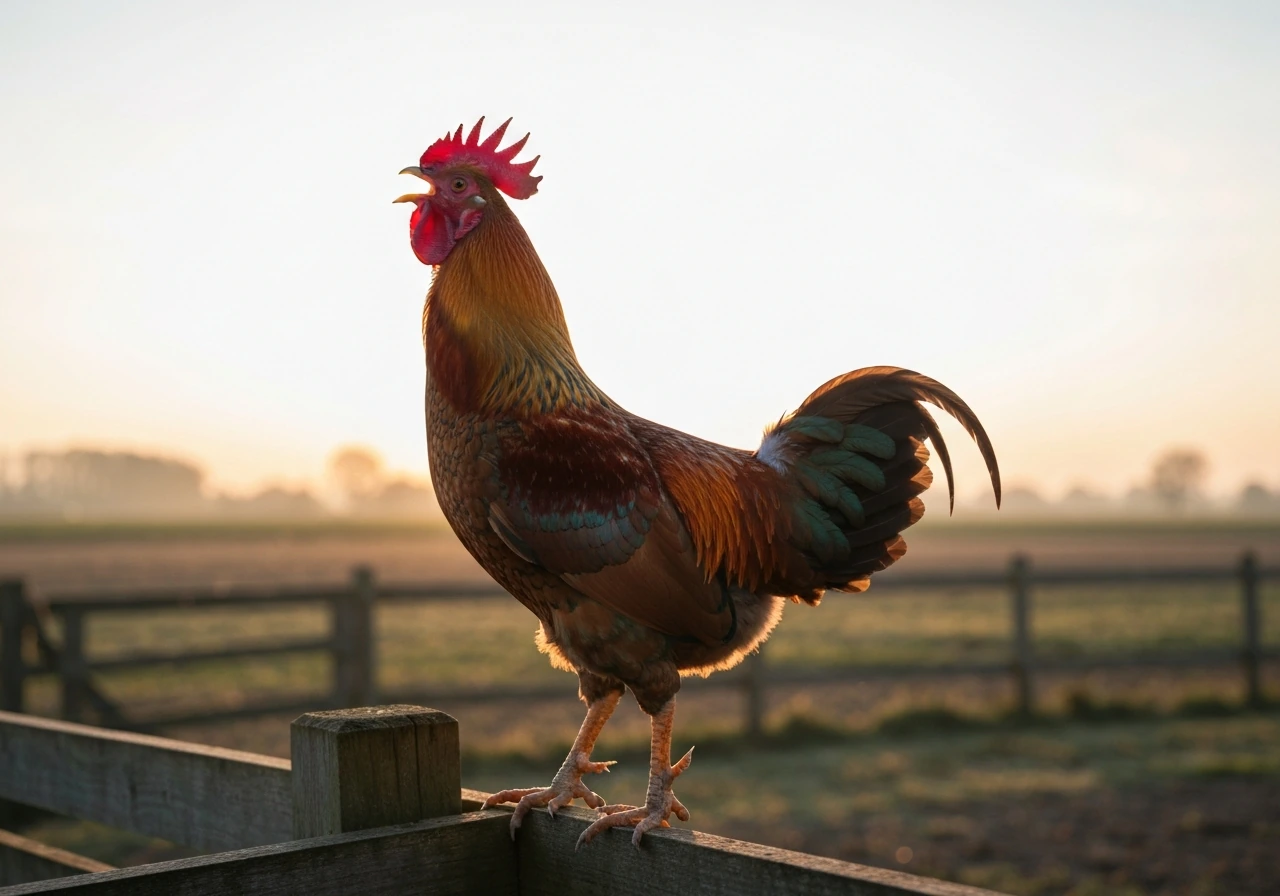
The rooster's most famous biblical moment is in Matthew 26:74, where a rooster crows immediately after Peter denies Jesus for the third time, fulfilling Jesus' earlier prediction. The rooster here functions as a narrative marker of prophetic fulfillment, not a standalone omen system. It signals that something significant has happened in real time. Outside of that moment, roosters do not carry a developed symbolic system in Scripture. If someone tells you that hearing a rooster means something spiritually, that is cultural folklore, not a biblical framework.
The eagle and vulture
Eagles appear throughout the Old Testament as symbols of strength, speed, and God's protective power (Exodus 19:4, Isaiah 40:31). Vultures appear in Matthew 24:28, where Jesus uses them as an image in his end-times discourse: "Wherever there is a carcass, there the vultures will gather." That is a metaphor for visible, undeniable signs of judgment, not a comment on what it means if a vulture circles your house. Both birds also appear in Leviticus 11:13-14 on the list of birds that are "unclean" for eating, but that classification is a food-law category, not a spiritual symbolism system.
Birds as signs: prophecy, provision, and God's messages in biblical stories

Birds do function as signs in the Bible, but the mechanism is important. In every clear biblical case, the bird is either acting within a direct divine mandate or is being used as a teaching metaphor. There is no passage where the Bible instructs readers to watch birds for spontaneous omens and decode messages from them. That is a fundamentally different interpretive posture.
The raven-and-Elijah story in 1 Kings 17 is a good example of the biblical model. God does not tell Elijah to watch for ravens as a sign. God tells Elijah to go to a specific place, and then God directs the ravens. The provision is real, miraculous, and bird-involved, but the birds are instruments, not the message itself. Similarly, for anyone thinking about the prophetic meaning of birds, the key is always to ask what the narrative context says God is doing, rather than treating the bird as a self-contained symbol.
Joel 2:28, quoted by Peter in Acts 2 at Pentecost, frames dreams and visions as part of a broader outpouring of God's Spirit in the last days. This is often cited to support the idea that God can speak through dreams involving birds. That is theologically defensible, but Joel 2:28 also does not make every bird-dream a guaranteed divine message. The passage is about God's Spirit being poured out widely, not about any particular dream being authoritative. Discernment is still required.
Sacrifice, purity, and covenant: the deeper ritual significance
One of the most underappreciated dimensions of bird symbolism in the Bible is the ritual and legal framework of Mosaic law. Leviticus dedicates significant space to birds, both in terms of food regulations and sacrificial use. Understanding this layer helps you see why birds show up where they do in the New Testament.
Leviticus 11 lays out a comprehensive legal framework for which birds Israel could eat and which were considered unclean. The list of unclean birds includes eagles, vultures, every kind of raven, owls, and bats, among others. The point of this classification was not to encode spiritual meanings into each species but to establish ritual boundaries for the covenant community. When the New Testament later wrestles with clean and unclean foods (Acts 10, for instance), that background is crucial.
On the sacrificial side, turtledoves and pigeons play a significant role in Leviticus 12:8 and Leviticus 14:22 as accessible alternatives for people who could not afford a lamb. This was a deliberate divine concession ensuring that everyone, including the poor, could participate in purification and atonement rituals. When Luke 2:24 records that Mary and Joseph offered turtledoves at the temple, it is telling us something about both the family's economic situation and the fulfillment of Torah-based covenant practice.
That is theologically rich, and it is a very different thing from treating turtledoves as lucky birds. For readers interested in how this practice connects to broader Christian liturgical tradition, it is worth exploring what birds mean in Catholic tradition, where some of these ceremonial associations have continued to develop.
Interpreting modern bird encounters through a biblical lens

So what do you do when a bird lands on your fence and you feel like it means something? Or when you dream about an owl or a white dove? The honest biblical answer is: be careful, be humble, and test it against Scripture. Here is a responsible framework.
- Ask whether the Bible actually says anything about that bird in a symbolic or theological context. Not every bird mentioned in Scripture has a developed meaning.
- If the Bible does address that bird, look at the context of the passage, not just the bird itself. Who is speaking? What situation is being described? Is this narrative, law, prophecy, or teaching?
- Separate what Scripture says from what you have heard in church, from a friend, or read online. Many popular "biblical meanings" are actually folk traditions or borrowed from other spiritual systems.
- If you believe God may be using a bird encounter to communicate something, bring it to prayer and to a trusted community. Do not build a major life decision on a bird sighting alone.
- Compare what you sense against clear biblical principles. Does the "message" you are receiving align with what the Bible teaches about God's character, your situation, and your calling?
Numbers 23:23 (NIV) is a useful touchstone here: "Surely there is no enchantment against Jacob, neither is there any divination against Israel." The Old Testament consistently steers God's people away from omen-reading as a system of interpreting reality. That does not mean God cannot use natural events, including birds, to communicate. It means God's people are not supposed to operate as omen-readers who scan the sky for signs. The posture is one of prayer and Scripture, not pattern-matching birds to outcomes. Those exploring how this plays out in a congregational context may find it helpful to read about what birds mean in a church setting, which addresses how these symbols are commonly taught and applied.
Debunking bird myths that are not actually biblical
This is worth spending time on, because a lot of misinformation circulates under the label "biblical." Here are the most common ones.
| Common Claim | What the Bible Actually Says | Verdict |
|---|---|---|
| A black bird is an omen of death or bad luck | Leviticus 11 classifies ravens as unclean for eating, not as omens. 1 Kings 17 portrays ravens positively as God's providers. | Not biblical — this is folklore |
| A dove at your window means God is sending you a blessing | Doves symbolize peace, the Holy Spirit, and sacrifice in Scripture, but no passage teaches that a dove's location is a personal sign | Not biblical — overapplication of symbol |
| Owls are associated with evil or witchcraft | Owls appear in Leviticus 11 as unclean for food and in Isaiah 34 as inhabitants of desolate places. No biblical link to witchcraft. | Not biblical — cultural superstition |
| Seeing a bird after someone dies means the deceased is visiting you | The Bible does not teach this. It contradicts the biblical understanding of death and the afterlife. | Not biblical — syncretistic folklore |
| A rooster crowing in the morning is a good omen | Matthew 26:74 links the rooster's crow to Peter's denial, a moment of failure and grief, not blessing. No omen system is taught. | Not biblical — generic folk tradition |
| Eagles always represent God's favor personally visiting you | Eagles in Scripture symbolize God's protective power and strength, but this is a metaphor, not a personal omen system. | Partial — symbol yes, omen system no |
Jeremiah 23:25 is relevant here too. God warns against those who claim divine authority for their dreams and visions while speaking lies: "I have heard what the prophets have said who prophesy lies in my name." The warning applies broadly to anyone who packages their own interpretation as God's guaranteed word, including bird-omen systems dressed up with Bible verses. If you have been told a specific bird "means" something biblical and it sounds more like a horoscope than a Bible study, trust that instinct.
It is also worth noting that some of what gets labeled as "biblical" in online content actually comes from bird symbolism in church history, where artistic and liturgical traditions developed meanings that go beyond the direct text of Scripture. Those traditions are not worthless, but they are not the same as exegesis, and conflating the two creates confusion.
How to actually study this and apply it to your situation
If you want to understand what the Bible says about a specific bird or situation, here is a practical process that works whether you are a new believer or someone who has been reading Scripture for decades.
- Start with a concordance or Bible search tool. Search the name of the bird (try multiple names: "dove," "turtledove," "pigeon") and read every passage it appears in. Note the genre: is it law, narrative, prophecy, poetry, or teaching?
- Read the surrounding context, not just the verse. A bird mentioned in a lament psalm means something different from one appearing in a Levitical sacrifice law.
- Compare two or three translations (ESV, NIV, NLT are good starting points). Sometimes the translated bird name differs, and that matters for understanding the original meaning.
- Ask: is the bird being used literally, metaphorically, or as part of a legal category? Each category carries different interpretive weight.
- If you are processing a personal experience (a dream, a bird encounter), bring it to prayer. Ask God for wisdom, not confirmation of what you already want to believe.
- Talk to someone you trust spiritually. A pastor, mentor, or theologically grounded friend can help you test whether your interpretation aligns with the broader witness of Scripture.
- If the meaning you heard does not hold up under Scripture, let it go. You are not spiritually less attuned for rejecting a superstition. You are more biblically grounded.
For those who want to go deeper on how birds are treated in specific theological and liturgical contexts, exploring the definition of birds in church tradition can give you a clearer picture of how these symbols developed over time and why they carry such weight in Christian culture. And if you are curious about how birds appear in the Bible's most symbolic and visionary book, the discussion of bird imagery in Revelation is a natural next step, given how much apocalyptic literature uses animal symbolism in ways that require careful handling.
The bottom line is this: the Bible does have meaningful things to say about birds, and those meanings are worth taking seriously. Sparrows speak to God's care for you. Doves point toward peace, purity, and the Spirit. Ravens remind you that God's provision can come through unexpected channels. But the Bible does not hand you a bird-symbol decoder ring for daily life. It hands you Scripture, prayer, community, and the Spirit, and those are the tools for making sense of what you are experiencing.
FAQ
Is it biblical to interpret a bird landing near me as God’s personal message?
Yes, but Scripture does not treat every bird sighting as a guaranteed message. The Bible’s clear pattern is either God gives a specific instruction and uses a bird as an instrument (for example, ravens supplying Elijah), or the bird is part of a teaching or prophetic illustration. If you cannot identify a passage that actually connects the bird and the situation you’re facing, treat it as ordinary providence you thank God for, not a decoded omen you must follow.
How can I tell the difference between a real biblical bird meaning and folklore?
Try the “anchor test.” Ask whether the meaning you’re considering has a direct textual anchor (a particular bird tied to an explicit passage) or whether it is a generalized lesson someone added later. Also check the genre, because legal lists and narrative scenes function differently than metaphors in prophecy. If you cannot state the passage and the connection in one sentence, you likely have folklore, not exegesis.
If I dream about birds, does that always count as a message from God?
Not automatically. Dreams that mention birds can be relevant, but Scripture teaches discernment, not automatic authority for every dream image. Joel 2 and Pentecost describe God’s Spirit being poured out, yet the Bible still warns that not every “vision” is true. A practical approach is to compare the dream’s themes to Scripture’s moral and theological truths, then consult mature believers before acting as if the bird image settles an important decision.
What should I do if a bird seems to “coincide” with a decision I’m considering?
The Bible allows God to use circumstances for guidance, but it does not endorse scanning nature for coded outcomes. A cautious way to apply this is: pray, look for convictions that align with Scripture, seek counsel, and make the decision based on wisdom and accountable counsel, not on the bird itself. If the bird sighting becomes the main decision driver, that’s a sign you’re slipping into divination rather than discernment.
Does a “white dove” sighting mean the Holy Spirit is coming to bless me specifically?
No, and it matters that the “like a dove” detail at Jesus’ baptism is narrated in connection with the Spirit’s work and Jesus’ inauguration. If someone claims that any dove sighting equals the Holy Spirit blessing your personal plans, that moves beyond what the text supports. You can honor the dove’s biblical themes (peace, purification, divine presence) without treating every dove as a specific spiritual guarantee.
Can I use Leviticus clean and unclean birds to predict spiritual meaning today?
Be careful about importing food-law categories into spiritual symbolism. Leviticus classifies certain birds as unclean to set ritual boundaries for Israel. That information can inform your understanding of covenant life and what changed in the New Testament, but it does not provide a reliable map for “this bird is spiritually bad” in everyday life.
What if the bird I saw is not one of the common ones like dove, sparrow, or raven?
Usually, no. The roster of birds with strong biblical themes is fairly limited, and the Bible does not consistently assign unique symbolic meanings to every species. When a bird species is not discussed in Scripture, you should not assume it has a fixed spiritual dictionary entry. Instead, focus on the closest biblical category (for example, birds as part of teaching about God’s care) or on the passage that actually mentions a similar function.
Is hearing a rooster crowing a biblical sign that something will happen?
Yes, and the key is remembering the birds function within a story. A rooster in Matthew 26 is not a general omen system, it is a narrative fulfillment marker tied to Peter’s denial and Jesus’ prediction. So if you apply rooster symbolism to your daily life as a sign to expect a specific event, you are leaving the biblical model.
How should the Noah story (dove and raven) affect how I interpret bird symbolism?
Start by separating the “bird” from the “message.” In the raven-and-Elijah case, God directs the birds to deliver food, but the birds are not the meaning on their own. In practice, that means you look first for God’s instruction, promises, and providence through Scripture, prayer, and counsel, rather than treating bird behavior as the message generator.
What is a responsible way to apply biblical bird themes without turning it into obsession?
If you want to build a personal practice, keep it simple: thank God for providence, ask what Scripture might be teaching (for example, God’s care, peace, or provision), and act based on wisdom and obedience. A useful safeguard is to write down the exact bird observation, the Scripture you believe applies, and the decision you made. If you cannot connect those clearly, pause and reset your interpretation.
Next Article
Bird Blindness Meaning: Causes, Signs, and What to Do Now
Bird blindness meaning: spot signs, tell vision loss from other issues, and take safe action or get urgent vet care.