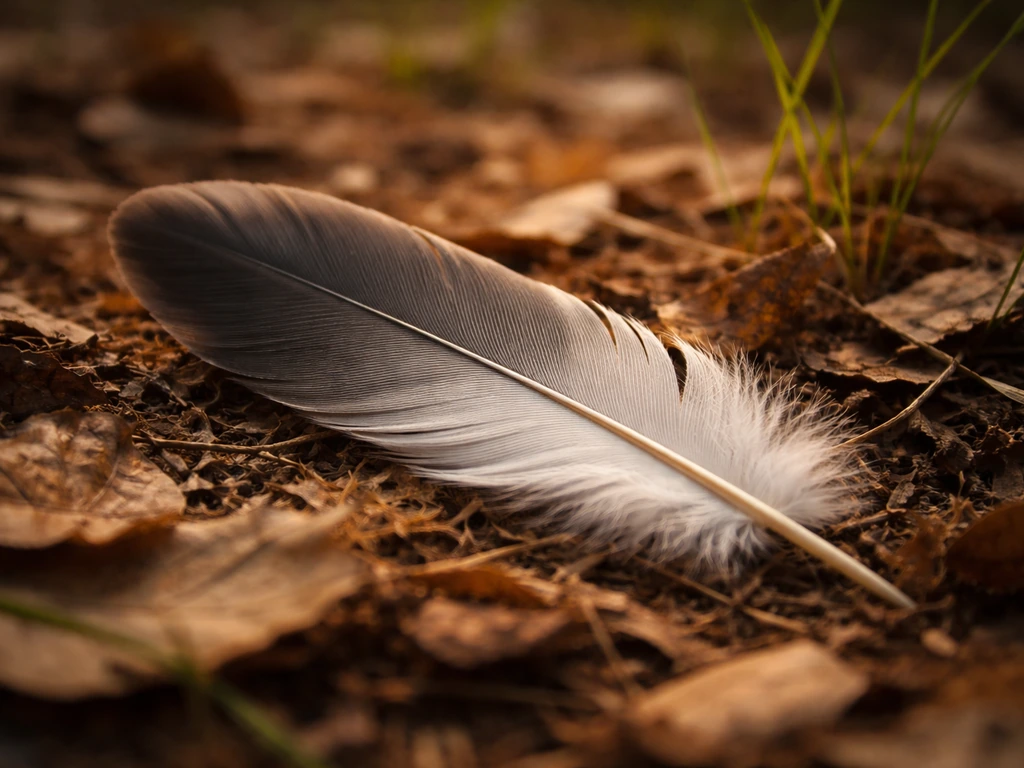
Bird plumage is a layered communication system. The colors, patterns, and condition of a bird's feathers tell you what species it is, whether it's male or female, how old it is, what time of year it is, and sometimes even how healthy the individual bird is. Separately, those same feathers carry enormous symbolic weight across dozens of cultures and spiritual traditions. Both readings are valid, but they answer different questions, and knowing which one you're actually asking makes all the difference.
Bird Plumage Meaning: How to Read Color, Pattern, and Condition

Marcus Holloway
30 May 2026
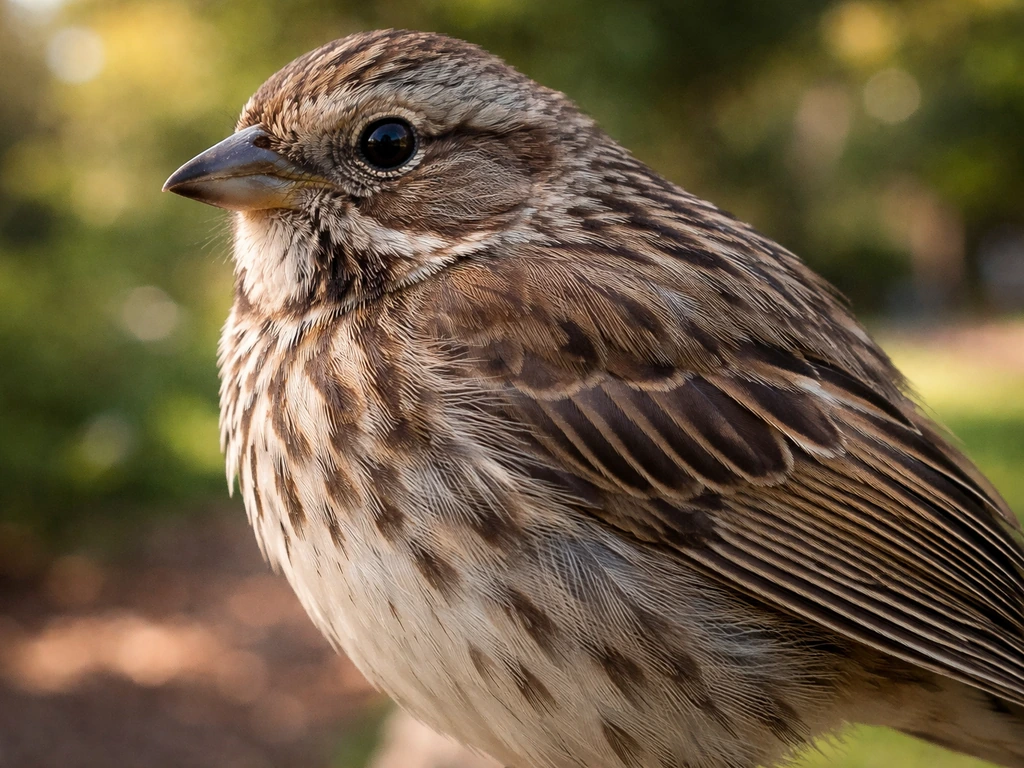
How to read plumage at a glance
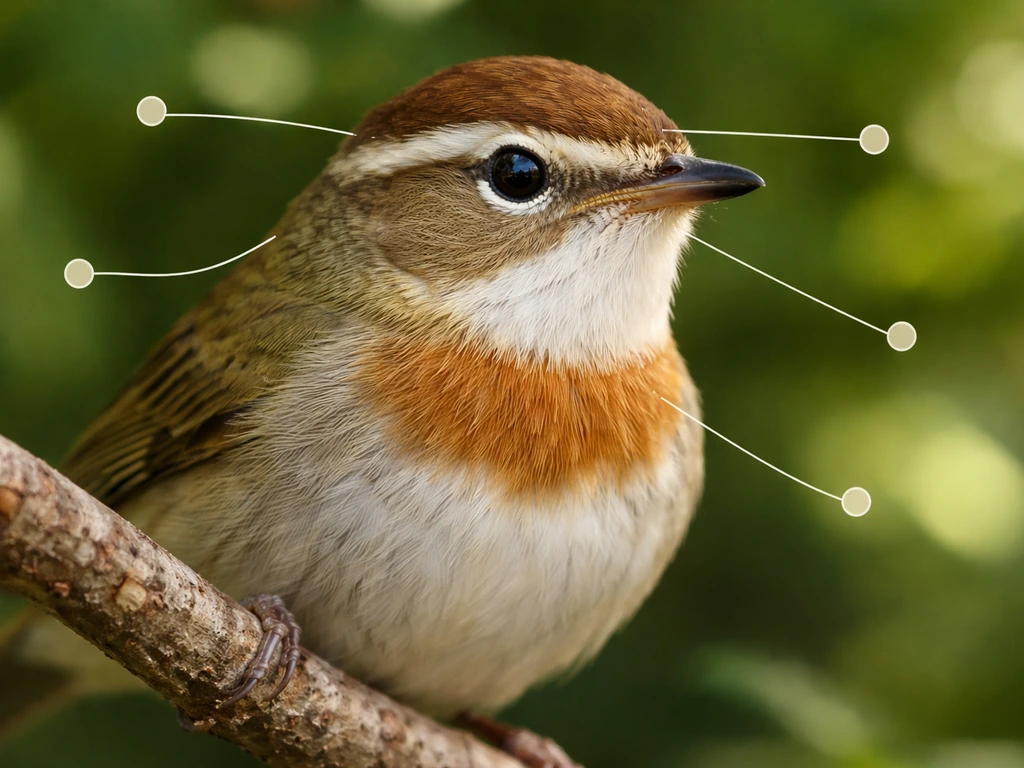
The fastest way into any plumage reading is through what birders call field marks: the specific colors, stripes, spots, and highlights that distinguish one bird from another. Think of them as the diagnostic details you'd note if someone asked you to describe a stranger: eye color, hair pattern, that unusual jacket. For birds, the most reliable field marks tend to cluster in predictable places.
- Head and face: eye rings, supercilium (eyebrow stripe), cap color, throat patches, and bill shape/color
- Wings: wing bars (one or two thin stripes across the folded wing), wing patches, and flight feather contrast
- Tail: outer tail feather color, tail shape, and whether there's a terminal band
- Breast and belly: streaks, spots, solid washes, or contrast between upper and lower parts
- Back and rump: rump patches are especially visible in flight and can clinch an ID fast
Color alone is rarely enough, and that's important to internalize early. A wash of yellow on a warbler's breast means almost nothing without knowing whether there are streaks on it, whether the back is olive or gray, and whether there's a bold eye ring or not. Pattern and texture together with color are what actually nail the ID. Texture matters too: flat, absorptive feathers look very different from glossy or iridescent ones, and that structural difference is biologically meaningful, not just pretty.
A practical starting point: use the Cornell Lab's four-key framework of size and shape, color and pattern, behavior and habitat, and specific field marks. Run through those four in order rather than jumping straight to color, and you'll cut the possibility space dramatically before you even open a field guide or app. If you can photograph it, the Merlin Bird ID app’s photo ID tool can help you identify a mystery bird, as All About Birds recommends Merlin Bird ID app photo ID.
Plumage meaning in real life: sex, age, season, and breeding
The single biggest thing plumage communicates in nature is reproductive status. In many species, males in breeding condition carry their most vivid, saturated plumage. The American Goldfinch is a classic example: the brilliant lemon-yellow males in summer look almost like a different bird from their drab olive-yellow winter selves. That color shift is not random. Bright breeding plumage is an honest signal to females that a male is healthy enough to grow and maintain those expensive feathers.
Sex differences in plumage (called sexual dichromatism) show up in roughly half of all bird species. Males are typically the more colorful sex, but not always. In some shorebirds and raptors, females are larger and sometimes more boldly marked. A good field guide will always show male and female plumages separately for species where they differ significantly, which is why matching a bird to a single illustration without checking the sex column can send you completely wrong.
Age is the other big plumage variable. Young birds fresh out of the nest often wear dull, streaky juvenile plumage that looks almost nothing like either parent. A first-year Bald Eagle is mostly mottled brown with no white head or tail at all. That white only develops fully by year four or five. If you saw one and expected the iconic white-headed look, you'd completely misidentify it. Field guides typically include separate plates for immature birds in species where the transition takes multiple years.
Season and breeding condition are tightly linked. Many species produce their brightest plumage specifically in spring and early summer, then transition to a duller non-breeding or eclipse plumage afterward. In some ducks, males shed their colorful breeding plumage entirely after the nesting season, temporarily looking female-like, before growing it back in late fall. This eclipse plumage phase trips up a lot of beginners every August.
Molt and feather condition: what fresh vs worn feathers usually signal
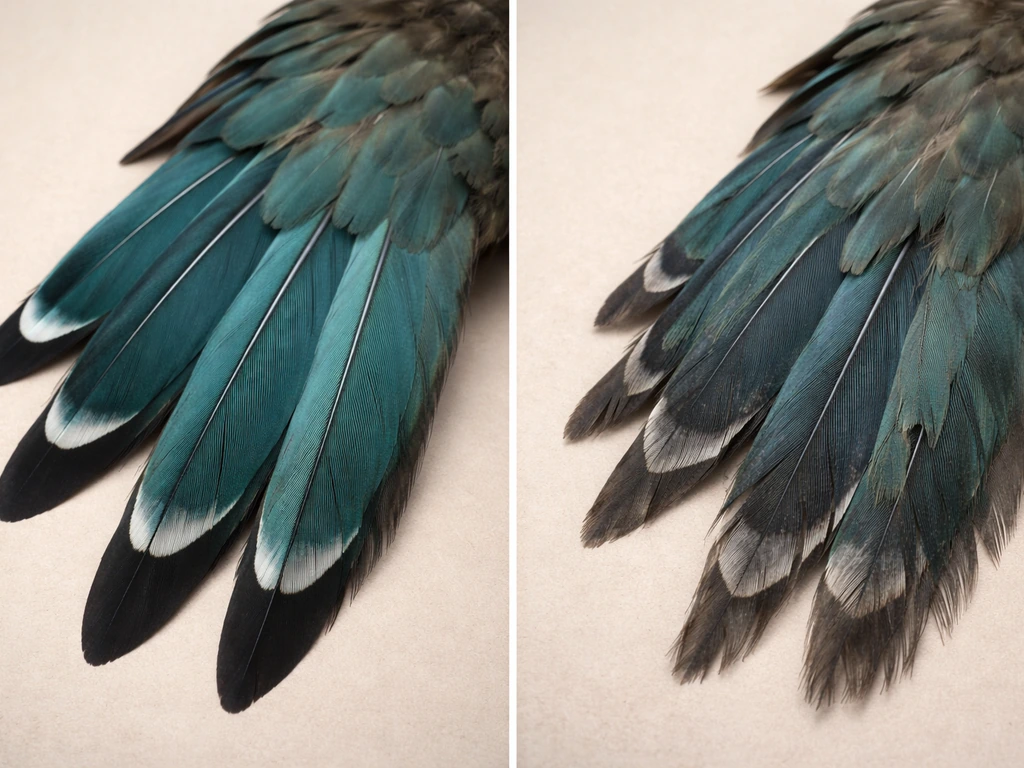
Molt is the process by which birds replace old feathers with new ones, and understanding it is probably the most underappreciated skill in reading plumage. A bird can look completely different from one month to the next as it moves through molt, which means a single photo matched to a single field guide plate will sometimes fail you. Some species go through a complete molt, replacing every feather over one period. Others do a partial molt, replacing only the body feathers while keeping the wing and tail feathers from a previous season. You can sometimes see both in the same bird at once: crisp new body feathers alongside faded, frayed flight feathers.
Fresh feathers are easy to recognize. They have clean, crisp edges, saturated color, and a slightly glossy or smooth surface. Worn feathers look bleached, frayed at the tips, and sometimes show pale edging that's rubbed off. Some birds (like many sparrows) actually look more boldly marked in fresh fall plumage because their feathers have pale fringes that wear away by spring, revealing the richer colors underneath. So a bird can look brighter in late winter not because it grew new feathers but because its old ones wore down.
Feather condition also gives you behavioral clues. A bird with heavily worn wing feathers is likely due for a molt and may be less agile in flight until the new feathers grow in. Interestingly, feathers have no nerve endings, so a bird can't directly feel feather damage the way you'd feel a cut. That means feather wear can sneak up on an individual bird, and for observers, it means you can't assume a bird with ragged feathers is in distress. It may just be late summer before its annual molt.
Young birds also molt differently from adults. Juveniles often replace only their body feathers in their first partial molt, keeping their original flight feathers longer. This can be a useful age clue if you know what to look for: mismatched feather generations in the wing are a sign you're looking at a first-year bird.
What different plumage styles actually imply
Once you've got the basics of field marks down, plumage styles carry their own interpretive logic. Here's how to think about the major categories.
Iridescence
Iridescent plumage, the kind that shifts from green to purple to blue depending on the angle, is not produced by pigment. It's structural color: the keratin, melanin, and air-filled nanostructures in the feather barbules physically interfere with light waves to produce specific hues. This is why a Common Grackle looks flat black in shadow and blazes blue-green-purple in direct sun. Iridescent feathers are strongly linked to sexual selection.
Males displaying iridescent patches are advertising their condition through feathers that are metabolically expensive to grow and maintain to structural precision. In hummingbirds, the throat gorget can shift from jet black to electric ruby or magenta depending on the viewing angle, which the bird actively leverages during courtship displays by positioning itself so the light hits correctly.
Spots and streaks
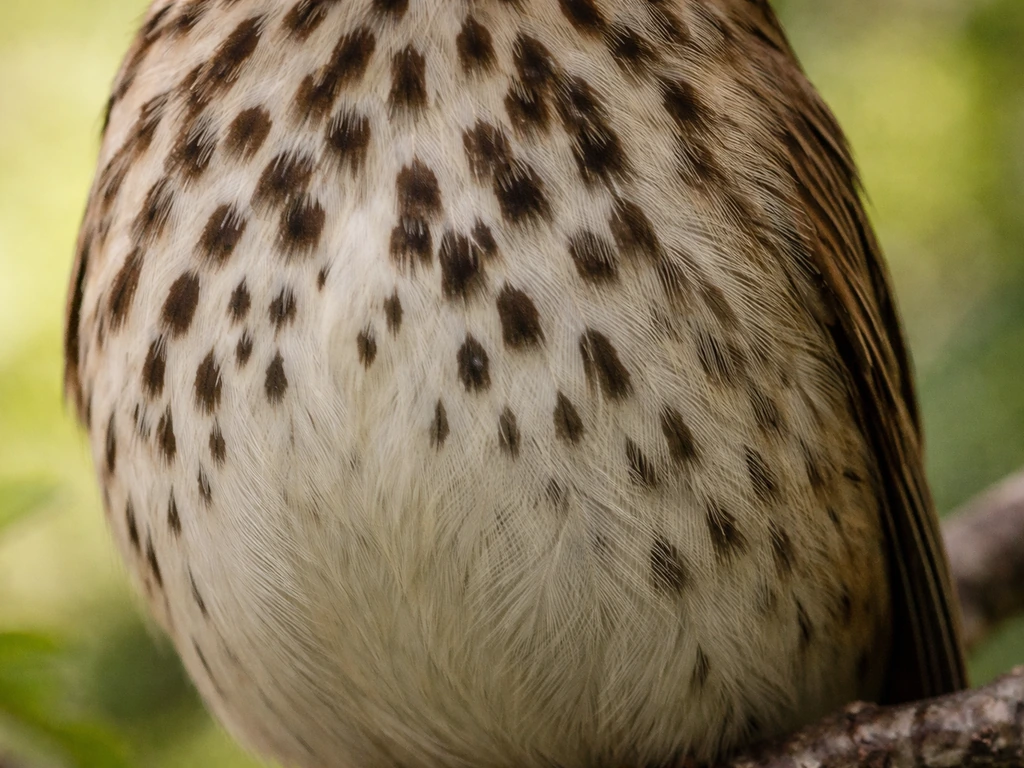
Spots and streaks generally signal one of two things: camouflage or age. Heavy streaking on the underparts, especially in ground-dwelling or grassland birds like sparrows, thrushes, and certain raptors, helps break up the bird's outline in dappled light or dense vegetation. In juveniles of many species, spotted or streaked plumage is the default starting point before they develop adult coloration. A spotted breast on a young robin is not a different species from an adult with a solid orange-red breast. It's the same bird at a different life stage.
Bars and bands
Horizontal barring across the breast or flanks typically functions as disruptive camouflage in forest and dense brush environments. You see it heavily in owls, nightjars, and many hawks. It can also appear as fine vermiculation (a tight, wavy barred texture) on the backs of waterfowl, which provides exceptional camouflage when they're sitting on nests or roosting. Wing bars, the narrow stripes across the wing, are primarily a field mark tool for birders, but they also likely serve as species recognition signals within flocks.
Camouflage plumage
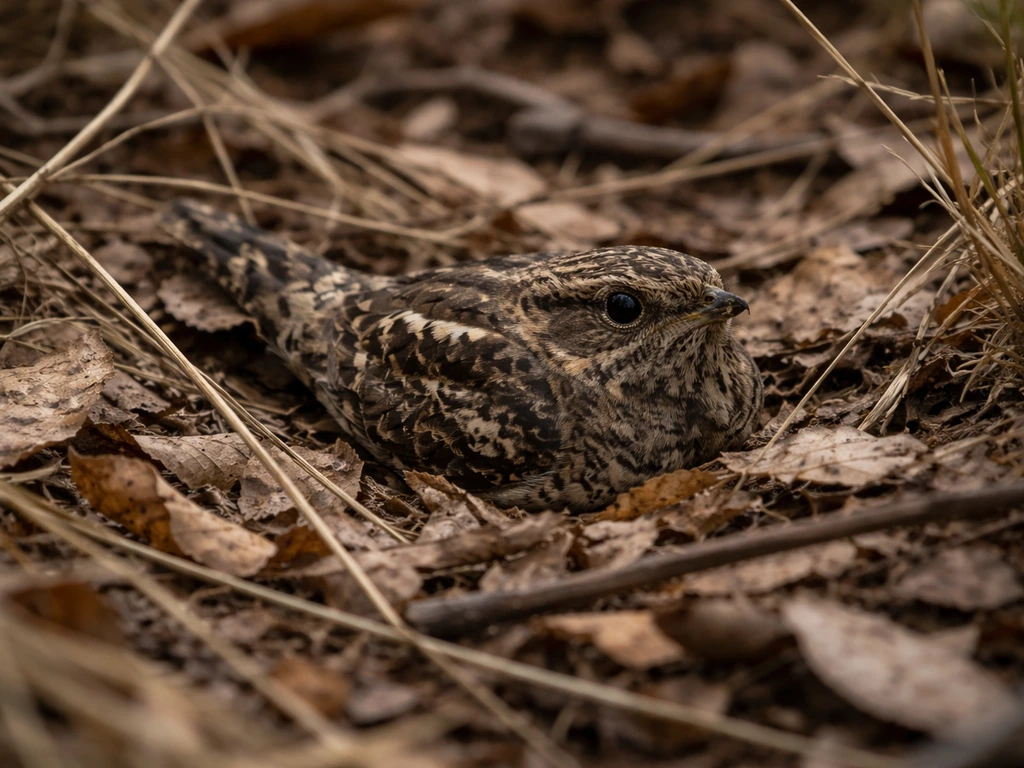
Full cryptic plumage (think American Bittern, Common Nighthawk, or Whip-poor-will) is the opposite end of the spectrum from iridescence. These birds have been shaped by selection pressure to disappear into their backgrounds. If you find a bird that seems almost impossibly well-matched to bark, dead leaves, or dry grass, you're seeing functional camouflage plumage optimized over thousands of generations, not a dull individual.
If you are asking about bird leaf meaning, it can also help to separate species identification from the symbolic interpretations people attach to feathers and birds. If you’re looking for the bird of paradise napkin fold meaning, it’s typically treated as a symbol of elegance, celebration, and a “wow” presentation. The lack of bright color here is the signal.
Cultural symbolism and spiritual associations
Across cultures and across centuries, feathers and plumage have carried deep symbolic meaning. It's worth engaging with that honestly: these traditions are real, they matter to a lot of people, and they often carry genuine ecological observation baked into them, even when the interpretation framework is spiritual rather than scientific.
In many Indigenous North American traditions, specific feathers hold ceremonial and spiritual significance tied directly to the bird species they come from and the nation or family tradition in question. Eagle feathers, for example, are among the most sacred objects in many Plains nations, associated with strength, connection to the Creator, and honor. But it's critical to note that meaning is not universal across all nations, and even within a tradition, meaning depends on the specific feather (primary vs. downy, wing vs. tail), its color, and its context of use. There is no single pan-Indigenous meaning for any given feather.
In many European and Asian traditions, birds with striking or unusual plumage carry omens or spiritual associations. Peacock feathers are considered unlucky in some Western European theater traditions but are symbols of beauty, immortality, and protection in Hindu, Buddhist, and Persian contexts. White birds, including white-plumaged individuals of normally dark species, have long been treated as supernatural in many cultures, from Irish folklore's association of white birds with the Otherworld to widespread Western traditions linking white doves with peace and purity.
The color of a found feather is probably the most common place people encounter plumage symbolism in popular culture. If you are wondering about a specific phrase like bird cherry meaning, context and tradition determine what people intend when they attach symbolism to a color or species. White feathers are widely interpreted as signs from deceased loved ones, a belief particularly common in British and American folk tradition.
Black feathers are interpreted as warnings or protection in some traditions, and as bad omens in others. Red feathers appear frequently as symbols of vitality and passion. These associations are emotionally meaningful to many people, and the site's approach is to hold both the cultural truth (this is what people believe, and why) and the scientific caveat (color meaning is not fixed, and context determines everything).
For deeper exploration of what individual feathers mean symbolically, the sibling topic on bird feathers meaning covers found-feather symbolism in more focused detail across spiritual and cultural traditions.
Common misconceptions and when to trust science over symbolism
The biggest misconception in popular plumage reading is treating color as a fixed message. Many online resources present lists like "a blue feather means communication" or "a green feather means healing" as if these were stable, universal facts. People often search for bird flower meaning, but feather symbolism is highly contextual and varies by culture. They aren't. Color meanings are culturally constructed, vary between traditions, and have no ornithological basis. A blue feather is biologically a feather from a bird that either produces blue pigment or uses structural coloration to appear blue, and what that means depends entirely on which bird, which context, and which tradition you're working within.
The second major misconception is that a striking or unusual plumage sighting carries a special message directed at the observer. From a biological standpoint, unusually bright plumage is more likely a sign of a healthy individual in peak breeding condition, or a leucistic (partially white) variant, or simply a species that's reached the edge of its range, than a supernatural communication. That doesn't mean the experience of noticing a beautiful or unusual bird is meaningless. It just means the meaning lives in how you interpret it, not in the bird itself.
Wear and staining are genuinely confusing for beginners and even intermediate birders. Audubon explicitly flags this: old feathers can lose their markings or change color through bleaching and abrasion, and birds in muddy or mineral-rich environments sometimes stain to odd colors entirely. A white egret with rust-stained plumage isn't a new species or an omen; it's been wading in iron-rich water. A House Sparrow that looks oddly pale might just be worn and bleached, not leucistic.
The right move when you're uncertain is to default to the tools: the Merlin Bird ID app from Cornell Lab can photo-ID a mystery bird from your phone, and eBird lets you document sightings with enough detail (lighting, distance, observation duration) that your record is actually useful and reviewable. No amount of symbolic interpretation replaces knowing what bird you actually saw.
Quick interpretation checklist and next steps
When you see a bird and want to make sense of its plumage, work through these steps in order. The first few are pure identification; the later ones layer in meaning once you know what you're looking at.
- Note size and shape first: how big is it compared to a sparrow, a robin, or a crow? What's the bill shape? Tail length?
- Scan the head for field marks: eye ring, cap color, eyebrow stripe, throat patch, bill color
- Check the wings for wing bars or patches and the rump for contrast
- Note the breast and belly: are there streaks, spots, solid color, or contrast between chest and belly?
- Assess feather condition: are the feathers crisp and fresh or frayed and worn? Are there mismatched feather generations visible in the wing?
- Consider the context: what habitat, what time of year, what behavior was the bird showing? These constrain possibilities dramatically
- Use Merlin photo ID or a regional field guide to narrow to species, checking both male/female plates and immature plates
- Once you've identified the species, you can meaningfully ask: is this breeding plumage? Is it a juvenile? Is the individual particularly bright or dull, suggesting something about its health or age?
- For cultural or spiritual interpretation: identify the species first, then research the specific traditions relevant to your cultural context, keeping in mind that meanings vary by nation, region, and family tradition
- Document unusual sightings with notes on lighting, distance, and observation time before drawing any strong conclusion
| Plumage cue | Most likely biological meaning | Common cultural/spiritual association |
|---|---|---|
| Bright, saturated male coloring | Peak breeding condition, sexual selection signal | Vitality, passion, divine favor in many traditions |
| Dull or streaky plumage | Female, juvenile, or non-breeding season | Rarely symbolized; often overlooked in folklore |
| Iridescent feathers | Structural color; strong sexual selection signal | Magic, transformation, otherworldly in many cultures |
| Spotted breast | Often juvenile; camouflage in some species | Varies by species; spots sometimes linked to luck |
| Barred or vermiculated pattern | Camouflage; common in raptors, owls, and waterfowl | Mystery, stealth, hidden knowledge in some traditions |
| White or pale plumage | Leucism, albinism, or normal species coloration | Purity, spirit contact, omens across many cultures |
| Worn or frayed feathers | Late in molt cycle; near annual feather replacement | Rarely assigned meaning; often misread as illness |
| Mismatched feather generations | First-year bird in partial molt | Liminality and transition in some interpretive frameworks |
The most important thing to carry away: plumage gives you real, usable information in two genuinely different registers. In the biological register, it's one of the most reliable windows into a bird's identity, age, sex, health, and life stage. In the cultural and spiritual register, it connects to traditions of meaning-making that are centuries old and emotionally significant to many people. Neither register cancels out the other. You can know that a white feather is structurally the result of reduced melanin production and still hold space for what it means to find one on a hard day. Just be honest with yourself about which question you're answering.
FAQ
How can I tell if a “color change” I’m seeing is molt versus just worn or stained feathers?
Look for a feather-generation mismatch within the same individual (new-looking body feathers alongside faded frayed flight feathers suggests molt). If the whole bird looks uniformly dulled or oddly tinted but feather edges are consistently worn, staining or seasonal wear is more likely. Also check for “clean edge” contrast, fresh feathers usually have crisp boundaries and stronger saturation.
If a field guide shows different plumages, what date range should I use to match them correctly?
Use the local breeding calendar rather than only the month the bird photo was taken. Many species shift quickly around nesting time, so a bird seen in late spring may already be in post-breeding eclipse. A practical approach is to record location and approximate observation date in your notes, then compare to the guide’s “breeding” versus “non-breeding” plates.
Can feather color be affected by lighting in a way that leads to misidentification?
Yes. Iridescent birds (and sometimes “blue” birds that are structurally colored) can look different depending on sun angle, cloud cover, and whether you see the bird directly or from the side. For identification, prioritize stable field marks that don’t rely on shine, like eye ring shape, wing bar presence, or bill shape, before committing to a color-based ID.
What should I do if the bird looks “almost right” but none of the plates match perfectly?
Assume one of three things: you are viewing a different sex, an immature age class, or a feather stage during molt or abrasion. Recheck the sex column first for species with sexual dichromatism, then check whether juvenile traits (duller tone, heavier streaking, mismatched wing feather generations) fit. If the bird’s wing and tail look older than the body, treat it as a partial molt scenario.
How can I tell whether spots or streaks are camouflage patterning or just juvenile plumage?
Compare overall body stage signals, not just the pattern. Juveniles often have broader, fuzzier-looking streaking or spots and overall less distinct adult color contrasts, while camouflage adults usually still show species-consistent structure (for example, consistent wing bars, correct head patterning, and typical bill shape). If the underparts pattern seems “default” but the head and wing lack adult traits, age is a stronger guess.
Is it possible for a bird to look unusually bright or oddly pale without it being a special “mutation” or symbol?
Yes. Peak breeding condition, fresh feather growth in late fall, and localized wear patterns can all make plumage look exceptionally vivid. Pale appearance can also come from bleaching, dusty environments, or sun-fading. Leucism or other rare variants exist, but they are less common than season, molt timing, and abrasion effects.
Do feathers have a “health” meaning I can rely on from appearance alone?
Plumage can suggest condition indirectly, but it is not a definitive health diagnosis. Freshness, feather-edge integrity, and whether the bird is approaching molt can inform age and life stage, yet “ragged” feathers do not automatically mean distress. Because feathers lack nerve endings, damage can persist without a visible immediate behavioral reaction, so pair plumage with behavior and molt timing.
How should I document a mystery bird to improve ID results from photo tools or eBird records?
Capture multiple angles if possible (front/side/back) and note the bird’s behavior (perching versus flying, feeding type), habitat, and distance. In your notes, include observation duration and whether the bird was in direct sun, because iridescence and shine can swing perceived color. For eBird, these details help other reviewers confirm identification.
What are the most common beginner mistakes in reading plumage?
The top mistakes are treating color as a universal message, assuming a single photo matches a single guide plate, and skipping sex or age differences. Another frequent error is over-weighting one trait (like a “bright” patch) without confirming the stable field marks first. When uncertain, work in the order of size and shape, then color and pattern, then behavior and habitat, then specific field marks.
Next Article
Bird Feathers Meaning: Spiritual, Cultural, Dream, and Real Causes
Meaning of bird feathers: spiritual omens, cultural symbolism, dreams, and real causes, plus myths vs fact and how to in