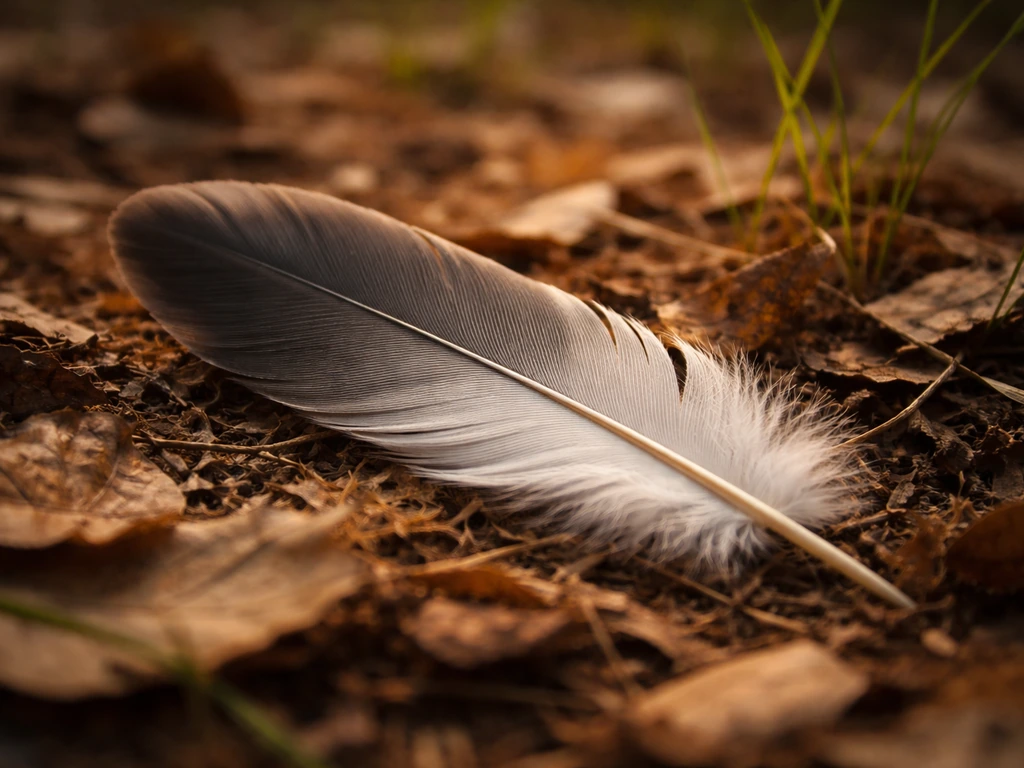
Finding a bird feather usually means one of two things: a bird was nearby and simply molted, or you're one of the millions of people who sense something more in that moment and want to understand what traditions say about it. In the same way, understanding the bird leaf meaning context you see online often depends on details like the plant type, region, and the cultural or symbolic tradition behind it. If you specifically mean a bird cherry, the bird cherry meaning is often tied to themes like renewal, healing, and pleasant transformation. Both are completely valid. The feather's color, size, condition, and where you found it all factor into any interpretation worth taking seriously, whether you're approaching this from a spiritual angle, a cultural one, or pure curiosity about the bird that left it behind.
Bird Feathers Meaning: Spiritual, Cultural, Dream, and Real Causes

What 'bird feathers meaning' actually refers to
When people search this phrase, they're usually looking for one of three things: a spiritual or omen interpretation (what does this feather mean as a sign?), a cultural or symbolic explanation (what do feathers represent across different traditions?), or a practical biological explanation (why did the bird lose this feather and what does its condition tell me?). Some people also come across the phrase in dream interpretation contexts, wanting to know what feathers in a dream signify. This article covers all four angles because the honest answer is that a feather can carry meaning on any of those levels depending on your own framework and the specific details of what you found.
Identify the feather first: color, pattern, size, and location
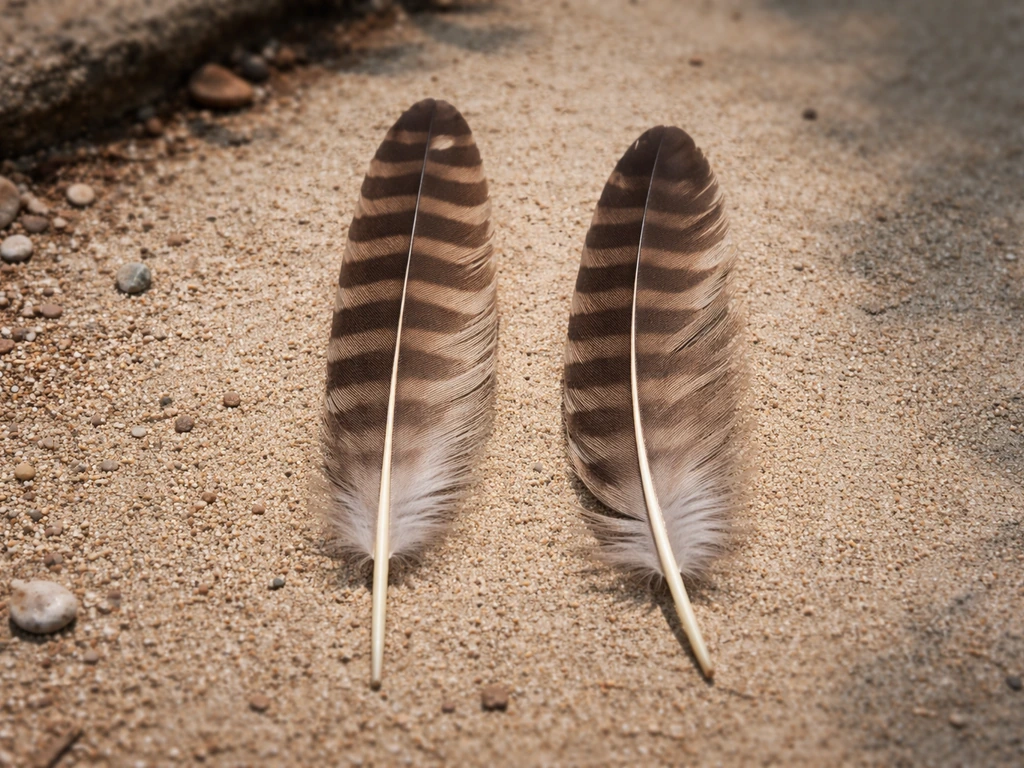
Before jumping to any interpretation, take a good look at the feather itself. Every feather has a central shaft called the rachis, paired branches called barbs that form the vane on each side, and even tinier branches called barbules that interlock to give the feather its structure and stiffness. A flight feather (long, asymmetrical, stiff) comes from the wing or tail. A contour feather (shorter, more symmetrical, softer) comes from the body. A down feather (fluffy, no structured vane) is an insulating underfeather. These structural differences already narrow down what bird dropped it and where on the bird it came from.
Color and pattern are your next clues. Is it solid or barred? Iridescent or matte? Does it have a distinctive tip, eye-spot, or striping? Size matters too: a feather under two inches likely came from a small songbird; one over ten inches could be from a raptor, heron, or large corvid. The U.S. Fish and Wildlife Service Forensics Lab runs a free online Feather Atlas where you can input size category and pattern to help narrow down the species, which is genuinely useful if you want a grounded identification before layering any symbolism on top.
Location adds another layer of context. Feathers found indoors (especially near a window or doorway) carry different symbolic weight in many traditions than ones found in a park or forest. Some people attach meaning to finding a feather in a car, on a threshold, in a bedroom, or during a significant life moment. Make a note of where you were, what you were thinking about, and the feather's condition, because all of those details will shape any interpretation you choose to apply.
Spiritual and omen interpretations (and how to hold them sensibly)
The most widespread spiritual interpretation treats finding a feather as a message, often framed as guidance, reassurance, or a sign from a deceased loved one or spiritual guide. These interpretations vary enormously by color, and while there's no independently verifiable evidence behind them, they are genuinely meaningful for a lot of people and are rooted in long traditions. Here's how color meanings tend to map across mainstream symbolism sources:
| Feather Color | Common Spiritual Interpretation | Reliability Level |
|---|---|---|
| White | Purity, angelic presence, peace, spiritual protection | Widespread folk tradition, not scientifically verified |
| Black | Protection, transition, mystery; sometimes misread as a 'death omen' | Highly variable by tradition; 'death' reading is exaggerated |
| Black and white | Balance, clarity, seeing both sides of a situation | Less universal, mostly modern symbolism sites |
| Blue | Calm, communication, truth, throat chakra connections | Common in New Age contexts; not historically universal |
| Red | Passion, vitality, courage, strong life force energy | Appears in multiple traditions independently |
| Brown | Grounding, stability, home, connection to earth | Common in nature-spirituality traditions |
| Gray | Neutrality, peace, moving between states | Appears in modern symbolism; less rooted in historical tradition |
| Yellow/Gold | Mental clarity, joy, optimism, solar energy | Modern symbolism; less cross-cultural historical grounding |
| Green | Growth, healing, abundance, nature connection | Moderate cross-cultural presence, especially in Indigenous traditions |
| Iridescent | Magic, transformation, seeing hidden truths | Primarily modern; connected to peacock and hummingbird symbolism |
The practical takeaway: if a color meaning resonates with you during a meaningful moment, that resonance is worth sitting with. But treat color charts as starting points, not rigid rules. The same black feather that signals protection in one tradition might mean something entirely different in another, and in ornithological reality it just means a crow or a starling was nearby. The interpretation you choose to apply is a personal act, not a verifiable fact, and that's okay as long as you hold it that way.
What to do if you feel an omen reading is meaningful

- Pause and notice what you were thinking or feeling when you found it; often that context shapes the meaning more than the feather itself.
- Journal about it: write down the feather's details, your emotional state, and any associations that come up spontaneously.
- Research the most likely bird species it came from; knowing it was a mourning dove versus a red-tailed hawk adds real cultural and biological context.
- Treat the experience as a prompt for reflection, not a prediction of a specific outcome.
- If anxiety comes up around omens, grounding exercises or speaking with someone you trust can help separate superstition-induced worry from genuine intuition.
Cultural symbolism across traditions and regions
Feather symbolism shows up across cultures in ways that are both fascinating and importantly different from each other. If you're also curious about bird flower meaning, the link between the two usually comes from how people connect nature imagery with symbols like growth, beauty, and messages. The mistake most symbolism roundups make is flattening these into one universal meaning, which erases the specific cultural logic behind each tradition.
In Māori culture, feather cloaks called kahu huruhuru are woven onto a muka (flax fiber) base and are among the most prestigious garments a person can wear. blank" rel="noopener noreferrer">Red feathers specifically signal chiefly rank within this tradition. The meaning isn't just color symbolism in the abstract; it's embedded in the specific bird, the craft, the wearer's lineage, and the ceremonial context. That's a much more nuanced and grounded form of feather meaning than 'red = passion' on a symbolism website.
In many Indigenous North American traditions, eagle feathers carry deep ceremonial importance representing honor, strength, and connection to the divine. Their use is governed by specific protocols that vary by nation, and treating them casually or as generic 'good luck' objects is considered disrespectful. Peacock feathers appear across Hindu iconography, associated with Saraswati (knowledge) and Kartikeya (war and victory), but in some European folk traditions they were historically considered unlucky indoors. Raven feathers carry trickster and transformation energy in Pacific Northwest Coast traditions, tied to specific origin stories rather than a generic 'darkness' meaning.
The broader point: feather meaning in cultural traditions is always specific. It depends on the bird, the community, the ceremony, and the context. If you're drawn to a particular tradition's feather symbolism, it's worth going deeper into that tradition specifically rather than mixing and matching from a general color chart. This connects naturally to how bird plumage meaning operates more broadly, where the full visual identity of a bird (not just a stray feather) carries layered cultural significance. The bird of paradise napkin fold meaning is usually tied to how the folded napkin resembles the dramatic plumage, symbolizing elegance and celebration bird plumage meaning.
The practical explanation: molting, shedding, and feather condition
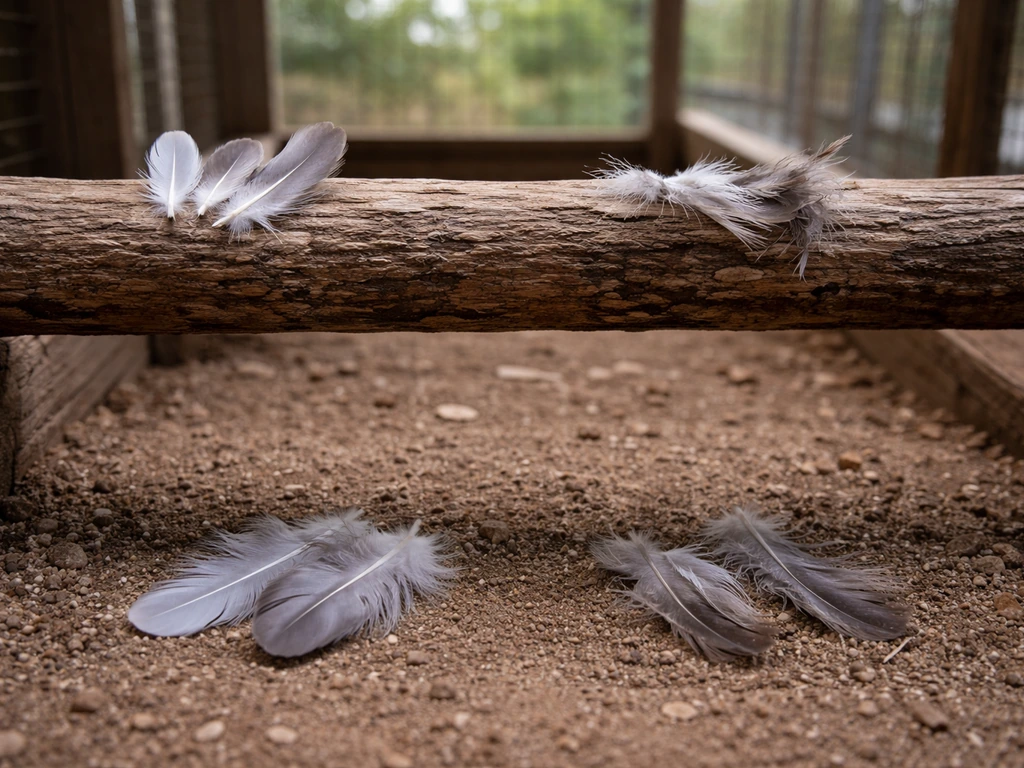
Here's the most grounded explanation for why you might find a feather: birds molt. Molting is the regular, biological process of replacing worn or damaged feathers with new ones, and it happens in nearly every bird species on a predictable annual cycle. A healthy songbird might replace all its feathers once or twice a year. During active molt, loose feathers are completely normal and expected. Finding a feather in your yard, on a trail, or even near a window is overwhelmingly likely to be molt-related rather than anything unusual.
Beyond regular molt, birds also experience what's called adventitious molt, where feathers lost accidentally (through a close call with a predator, a window strike, or physical stress) are replaced outside the normal cycle. A feather that looks freshly detached with no damage at the base was probably released cleanly during molt. A feather that's ragged, broken, or has tissue at the quill end suggests it came out traumatically, which might indicate a stressed or injured bird in your area worth watching for.
Feather condition tells you a lot. A bright, structurally intact feather with interlocking barbules is a healthy, recently grown feather. A faded, frayed, or worn feather is an old one near the end of its useful life, likely shed naturally. Pin feathers (new feathers still encased in a keratin sheath) found near your feeders or in a roosting spot indicate active molt in progress. None of this requires a supernatural explanation, though it doesn't prevent a spiritual one if that's the lens you're using.
A note on handling found feathers
If you're picking up feathers indoors or plan to keep them, there are a few practical considerations. In the U.S., most wild bird feathers are protected under the Migratory Bird Treaty Act, meaning collecting them without a permit is technically illegal even if casually done. Beyond legality, prolonged exposure to feathers in enclosed spaces can contribute to hypersensitivity pneumonitis in some people, a lung inflammation response to organic dust from feathers and bird dander. If you have respiratory sensitivities, be cautious about keeping large quantities of feathers indoors.
Dream meanings involving feathers

Dreams about feathers are among the more common bird-related dream searches, and dream-dictionary interpretations tend to cluster around a few themes: burdens being lifted, freedom, lightness, prosperity, or, if the feather appears dirty or damaged, themes of being weighed down or something 'tainted' in the dreamer's life. These are symbolic associations based on the feather's cultural and physical properties (lightness, flight connection, beauty) rather than any established predictive science.
Modern sleep research is clear that dreams are not reliable predictors of future events. What they do offer is a window into your current preoccupations, emotional states, and things your brain is processing. A dream featuring a feather, especially a vivid or emotionally charged one, is worth reflecting on in terms of what the feather represented to you personally in that dream context. Were you holding it, losing it, searching for it? Was it beautiful or disturbing? Those narrative details matter more than a fixed color-to-meaning chart.
If you dream of being covered in feathers, many traditions interpret this as a call toward a more instinctual or free way of living. Dreaming of a single perfect feather is often read as a message of encouragement or a sign you're on the right path. Dreaming of feathers falling like rain can suggest abundance or, in more anxious dream contexts, a sense of being overwhelmed by small things. Treat these as reflection prompts rather than verdicts.
Common myths, misconceptions, and what's actually reliable
There's a lot of noise around feather symbolism online, and some of it is genuinely misleading. Here's a straight myth-versus-reality breakdown for the claims you're most likely to encounter.
| Claim | Reality Check |
|---|---|
| Black feathers always mean death or bad luck | False. Black feathers most commonly come from crows, ravens, starlings, or blackbirds, all healthy, common birds. In many traditions black feathers represent protection, mystery, and transformation. The 'death' association is one narrow folk reading, not a universal truth. |
| White feathers are a guaranteed sign from a deceased loved one or angel | This is a widespread and personally meaningful belief, but it's not verifiable. White feathers come from pigeons, doves, seagulls, and white domestic birds very commonly. The meaning is a personal or cultural frame, not a supernatural fact. |
| Finding a feather crown (circle of feathers) in a pillow predicts death | This is an Appalachian folk tradition called a 'feather crown' or 'angel crown.' It's a culturally specific superstition with no causal evidence behind it. The crown forms from down feathers clumping during regular use. It's folklore, not prophecy. |
| Each feather color has one fixed universal meaning | No. Color meanings vary significantly by tradition, region, and cultural context. A red feather signals chiefly rank in Māori tradition, vitality in some New Age frameworks, and danger in others. Context and tradition always matter more than a universal chart. |
| Finding a feather means a bird is trying to send you a message | This is a spiritual belief, not an ornithological one. The bird left the feather during molt or after an accident. Whether you choose to receive it as a message is a personal interpretive act. |
| Keeping feathers indoors is always safe and legal | In the U.S., most wild bird feathers are protected under the Migratory Bird Treaty Act. Additionally, feather dust can trigger respiratory issues in sensitive individuals. Know your local laws and your own health situation. |
The most reliable approach to feather meaning is a layered one: start with identification (what bird, what feather type, what condition), then layer in whatever cultural or spiritual framework resonates with you, while being honest with yourself about what's personal belief versus verifiable fact. That combination gives you both a grounded understanding and room for the meaning-making that makes feather encounters feel significant. It's also worth remembering that bird symbolism operates at multiple scales: the feather you find is just one piece of a much richer picture that includes the bird's behavior, plumage, species history, and the tradition you're drawing from. For a fuller perspective, you can also look at bird plumage meaning, since the whole bird's colors, patterns, and traits often carry extra context.
FAQ
Can bird feathers meaning be different for the same color if I find them at different times or places?
Yes. Even within the same color symbolism, traditions often treat context as part of the message. A feather found at a doorway, near a bedroom, during a stressful conversation, or after a major decision can lead people to interpret it as protection, transition, reassurance, or release, while the same color picked up at a random walk may feel like simple molt. Keep a short note of date, location, and your emotion at the moment.
What should I do if I want to identify the bird without over-interpreting it?
Start with the feather structure (flight, contour, or down), then measure length and observe the shaft, barbs, and any pattern like barring or an eye-spot. If you can, photograph it next to a ruler and note whether it was found outdoors, indoors, or near a window. Use identification first, then apply symbolism only after you have a reasonable match for species and feather type.
Are all feather meanings “omens,” or is there a way to tell when symbolism is likely to be personal rather than a real sign?
You can treat it as an omen in the reflective sense, without assuming it predicts events. If your interpretation mainly draws on how the feather made you feel (comfort, hope, dread, curiosity), it is probably your meaning-making rather than an external signal. If you are searching for certainty, shift back to biological explanations like molt or window strikes, because those are far more consistent than predictive claims.
How can I tell whether a found feather came from normal molt versus an injured bird?
Look at the base and condition. A cleanly detached, whole feather with no tissue at the quill end is more consistent with molt. Ragged edges, broken structure, or visible tissue at the quill end suggest traumatic loss and the bird may be stressed or injured locally. If this seems possible, you can keep distance and monitor from afar rather than trying to handle the bird.
Is it okay to keep bird feathers indoors as a hobby or decoration?
Legality is the first consideration. In the U.S., most wild bird feathers are protected under the Migratory Bird Treaty Act, so collecting or possessing may require care and proper sourcing. Also consider health risks, if you have asthma or sensitivities, repeated indoor exposure to feathers and bird dust can be problematic. If you do keep them, store in sealed containers and minimize dust.
What does it mean if the feather I find is tiny, fluffy, or seems like “down”?
Down feathers are typically insulating and usually relate to molt. Because down has no rigid vane like flight or contour feathers, it can feel more “soft” in symbolic readings, which is why some people link it to comfort or lightness. Practically, down often points to the bird being in a feather-replacement period rather than any unusual event.
Why do online feather meaning charts disagree so much (for example, black or white feathers)?
Many charts mix tradition-specific meanings with generalized color associations, then present them as universal. Different cultures, different species, and even different ritual contexts can change the interpretation. A more reliable approach is to choose one tradition or framework you actually relate to, then interpret with your feather’s bird type, condition, and location as the anchor.
What should I look for if I find a feather indoors near a window?
A window found feather can be linked to a bird strike, then subsequent loss during recovery or later molt. Check for other signs nearby, such as feather fragments, blood-like material, or a bird behaving unusually outdoors. If you suspect a strike and there is a live bird, focus on safety and contact local wildlife resources rather than handling it immediately.
Do dream feather meanings have fixed definitions by color, or should I ignore color entirely?
Color can influence symbolism in dreams, but it is not a fixed rule. The more actionable detail is the dream narrative: whether you were holding the feather, searching for it, losing it, or covered in it, plus the emotional tone (calm, overwhelmed, comforted, disgusted). Use color as a clue to your association, not as a guarantee of one meaning.
If I dream of many feathers, does that always mean abundance?
Not always. In calmer dreams, falling feathers can align with abundance or opportunity, but in anxious contexts it can reflect feeling overwhelmed by small issues. A practical way to interpret is to list what was happening in your waking life that matches the dream feeling, then connect “feather quantity” to your sense of load, not just a prosperity symbol.
Bird Blindness Meaning: Causes, Signs, and What to Do Now
Bird blindness meaning: spot signs, tell vision loss from other issues, and take safe action or get urgent vet care.