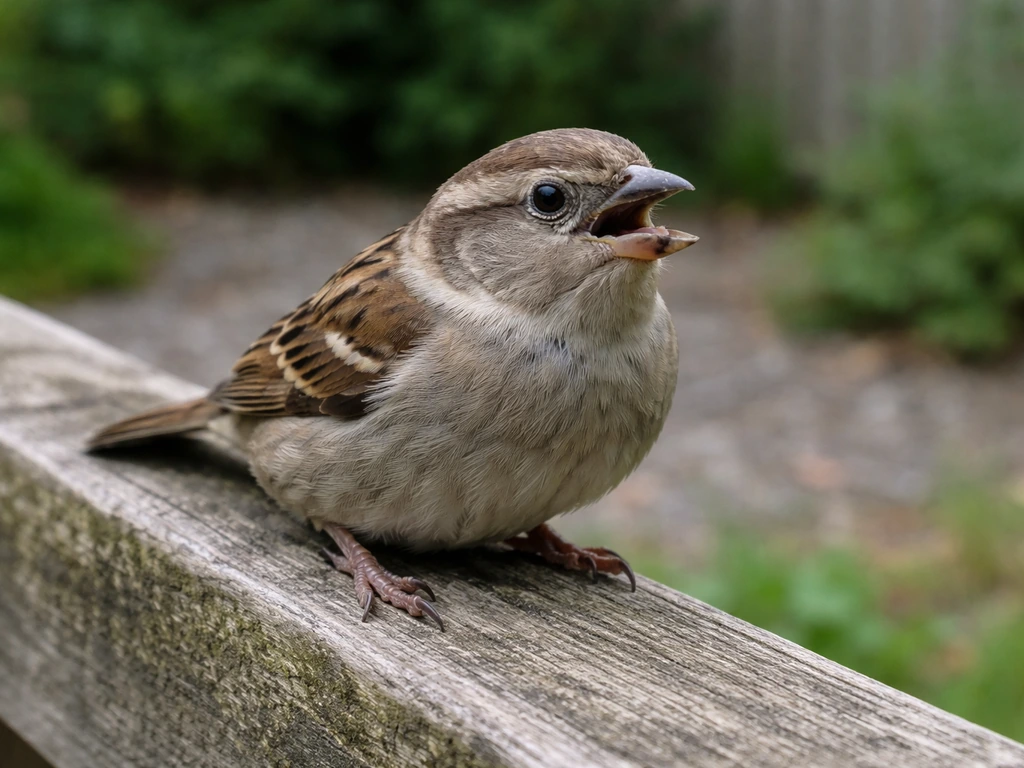
On TikTok, 'bird beaks' is most commonly used as a visual and comedic shorthand: creators film or edit their faces, pets, or characters to exaggerate a pointed-mouth expression, pair it with trending audio, or tag content with #beak and #birdbeaks to tap into a niche but active aesthetic community. It is not one single defined trend but rather a cluster of overlapping uses, filters that elongate the nose or mouth into a beak shape, POV skits about birds 'judging' humans, and slang comments about someone's lips or facial features. Separately, it carries real ornithological weight (beak shape is one of the most information-rich features in a bird's biology), layers of cultural and spiritual symbolism, and a handful of spicy Urban Dictionary entries that mean something very different from bird biology.
Bird Beaks Meaning TikTok: Slang, Symbolism & Safety

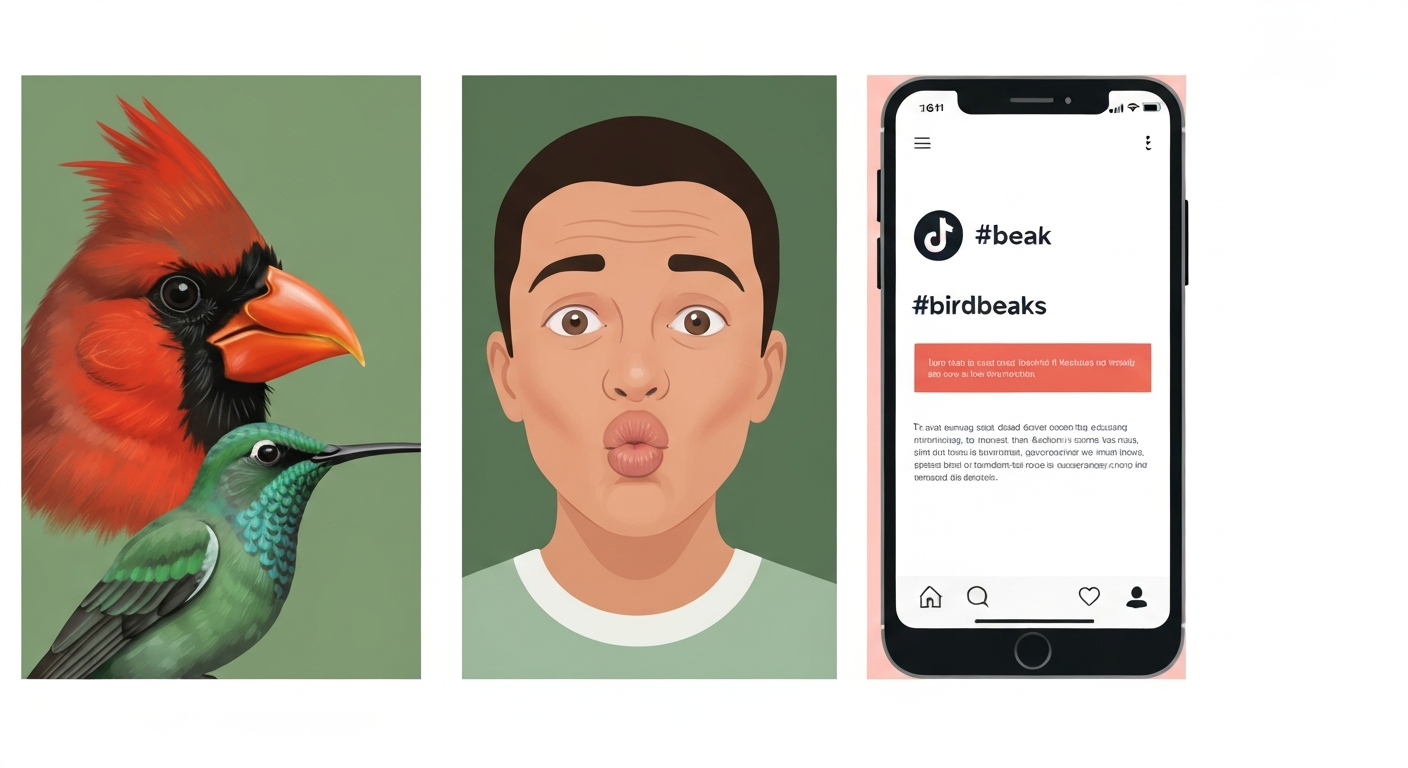
What 'Bird Beaks' Actually Means on TikTok
The phrase arrives on TikTok through several independent channels at once, which is part of why it confuses people searching for a clean definition. At its most literal, creators use it to tag videos of real birds, close-up shots of parrots, toucans, puffins, or hummingbirds where the beak is the visual star. These videos collect under hashtags like #beak, #birdbeaks, and #birdwatching, and third-party hashtag aggregators confirm all three tags have accumulated substantial view counts and active posting histories on the platform.
Beyond pure bird content, 'bird beak' functions as slang in comment sections and captions. It is applied to a specific pursed-lip or pointed-mouth facial pose, someone making a face that resembles a beak, either deliberately for comedy or as an insult pointing out prominent lip or nose features. This usage bleeds directly into Urban Dictionary territory (more on that below) and is why the phrase shows up in comment threads that have nothing to do with actual birds.
There is also a softer aesthetic strand: 'bird beak' as part of cottagecore, dark academia, and nature-adjacent aesthetics, where creators romanticize bird imagery broadly. In these videos, beak close-ups serve as visual metaphors for sharpness, precision, survival, or wildness. The tone is poetic rather than comedic.
How TikTok Uses the Phrase, Memes, Filters, and Format Patterns
TikTok's Creative Center hashtag analytics tools let publishers track exactly how tags like #birdwatching and #beak perform over time in terms of views and posting frequency. What those numbers confirm is that bird content broadly is perennial on the platform, it spikes whenever a video of an unusual or funny-looking bird goes viral, then settles back to a steady baseline. The 'beak meaning' angle specifically spikes when a slang usage catches on in a comment pile-on or when a particular filter blows up.
Filters are a big driver. Several face-distortion filters on TikTok (and on CapCut, which feeds into TikTok) elongate the lower or upper face into a bird-beak silhouette. Creators use these for transformation videos, 'what animal are you' templates, and pure absurdist comedy. When the filter itself goes trending, search volume for 'bird beak' spikes even among people who have no interest in ornithology or slang, they just want to find the filter.
TikTok Trend Types Featuring Bird-Beak Imagery
| Trend Type | What It Looks Like | Typical Tone |
|---|---|---|
| Audio memes | A bird sound or a remix drops; creators lip-sync or react while making a beak face or showing a bird doing something expressive | Comedic, absurdist |
| POV skits | Creator plays the role of a bird judging, rescuing, or interacting with a human; caption reads 'POV: you are a bird with opinions' | Dry humor, relatable |
| Face-filter transitions | Creator starts with normal face, transitions to beak filter via a spin or hand-swipe, then reacts | Comedy, shock-value |
| Text overlays on bird footage | B-roll of a real bird with dramatic or ironic text overlay ('me explaining my trauma', 'me at 3am') | Ironic, meme format |
| Aesthetic/nature close-ups | Macro or slow-motion shots of bird beaks feeding, preening, or calling, tagged with beak-related hashtags | Peaceful, educational, cottagecore |
| Slang comment drops | Creator posts a photo or video; commenters reply 'bird beak' as shorthand for a facial feature observation | Depends on context — compliment, tease, or insult |
The slang comment use is the one most likely to catch someone off guard. Because TikTok's comment culture moves fast and relies on shorthand, 'bird beak' dropped in a comment reads very differently depending on whether the original content is a beauty video, a comedy skit, or an actual bird video. Context is everything, and tone shifts from affectionate to cutting depending on the creator's community and the commenter's history in that space.
The Actual Biology: What a Bird Beak Is and Why Shape Matters
Before decoding the symbolism and slang, it helps to ground things in what a beak actually is. Cornell Lab of Ornithology's All About Birds site is clear on one point that surprises a lot of people: there is no strict biological difference between the words 'beak' and 'bill. Cornell Lab of Ornithology's All About Birds states there is no strict difference between 'beak' and 'bill' and provides field‑guide descriptions of beak/bill morphology and usage for identification there is no strict biological difference between the words 'beak' and 'bill.'. ' Both terms describe the same structure, the keratinized outer sheath (called the rhamphotheca) covering the bony core of the upper and lower jaw. Ornithologists use both words interchangeably, and the choice is mostly a matter of convention or regional preference.
The beak is one of a bird's primary tools for interacting with the world. It handles food acquisition, nest building, preening, defense, communication, and in some species temperature regulation, woodpeckers, for instance, use their beaks partly as a heat-dissipation system, functioning almost like an air conditioner. Beak shape is not cosmetic: it is one of the most direct expressions of a species' ecological niche. The American Bird Conservancy notes that the keratin of the rhamphotheca can repair minor chips and cracks through natural regrowth, but damage to the underlying bone is generally irreversible, a fact worth keeping in mind if you ever encounter an injured bird.
Developmentally, beak shape is determined by a tightly regulated cascade of cellular, molecular, and genetic signals during embryonic development, with well-documented heritability. This is why Darwin's finches became a textbook example of adaptive radiation: small genetic shifts in beak-shaping pathways produce dramatically different beak morphologies adapted to different food sources. One thing beak shape does not determine, despite popular claims, is a bird's 'personality.' Peer-reviewed bioacoustics research confirms that beak gape and configuration affect how the vocal tract filters sound (specifically mid-range harmonics), but this is a mechanical acoustic effect, not a personality trait.
Common Beak Shapes and What They Tell You
Audubon's explainer on beak function is the most accessible resource I've found for non-specialist readers. It uses tool analogies that instantly click: think of different beaks as nutcrackers, tweezers, strainers, probes, and hooks. Here is how those categories break down across the birds you're most likely to encounter or see in TikTok content.
| Beak Type | Shape | Function | Example Species |
|---|---|---|---|
| Seed-cracker (nutcracker) | Short, thick, conical | Crushing hard seeds and nuts | House sparrow, cardinal, grosbeak |
| Probing (tweezer) | Long, thin, often curved | Extracting nectar, insects from bark or soil | Hummingbird, woodpecker, kiwi |
| Tearing (hooked) | Strong, curved, sharp-tipped | Tearing meat, gripping prey | Eagle, hawk, owl, parrot |
| Fishing/straining | Long, flat, or pouched | Scooping fish, filtering water for invertebrates | Pelican, spoonbill, flamingo |
| Crossbill | Upper and lower tips cross over each other | Prying open conifer cones | Red crossbill, white-winged crossbill |
| Insect-catching (wide, flat) | Short, broad, slightly hooked at tip | Catching insects in flight | Nightjar, flycatcher, swallow |
The crossbill is worth a special mention because it looks 'wrong' at first glance, the tips of the upper and lower mandibles actually cross each other, which seems like a deformity but is a precise evolutionary adaptation for levering open the tightly scaled cones of spruce and pine. If you see a crossbill on TikTok and the comments fill with 'that beak is broken,' that is a misconception worth correcting. This connects to a broader point about birds with unusual beak appearances: not all asymmetry or unusual shape is injury or disease.
Symbolism and Cultural Meanings of Beaks
Across cultures, the beak specifically (rather than the bird as a whole) carries meaning tied to precision, directness, and transformative power. In many Indigenous North American traditions, birds with powerful hooked beaks, eagles, ravens, hawks, are associated with vision, authority, and the ability to pierce through deception to truth. The sharpness of the beak is the symbolic anchor: it stands for discernment, the capacity to cut through to what matters.
In ancient Egyptian iconography, the ibis-headed god Thoth carries enormous symbolic weight: the long, curved probing beak of the ibis was associated with wisdom, writing, and the precise measurement of truth. The beak as a tool of careful, accurate inquiry, fitting for a god of knowledge. Similarly, the hooded crow and raven in Celtic and Norse mythology carry beak-forward imagery: Odin's ravens Huginn and Muninn ('thought' and 'memory') are often depicted with beaks open, as if speaking or reporting.
In popular Western metaphor, 'beaky' or 'having a beak' as applied to a person has historically meant nosiness or sharp-tongued observation, someone who pokes their (nose/beak) into other people's business. This folk metaphor is the cultural root of a lot of the modern slang that ends up on Urban Dictionary and in TikTok comments. The beak became synonymous with the nose in British English slang centuries ago, which is why 'bird beak' as a facial insult or observation lands the way it does.
In art, the plague doctor mask with its long curved beak is one of the most recognizable beak-associated cultural images in the Western canon. Those beak-shaped masks were stuffed with aromatic herbs to filter supposedly disease-carrying air during the Black Death, a practical rather than symbolic origin, though the imagery took on tremendous symbolic power later, becoming associated with death, mystery, and transformation in contemporary art and dark aesthetics, which is a direct pipeline into TikTok's dark academia and gothic aesthetics.
Spiritual and Dream Meanings Tied to Bird Beaks
Dream interpreters and spiritual traditions that engage with bird symbolism generally break down beak appearances in dreams into a few recurring themes. The condition and action of the beak in the dream matters enormously, it is not just 'a bird appeared.' A beak that is open and calling is read differently from one that is closed and still, and a beak that is cracked or injured carries different weight from a healthy, sharp one.
- An open beak in a dream: often interpreted as a call to speak up, communicate more directly, or a warning that someone in your life is speaking over you
- A sharp, clean beak: associated with clarity of purpose, decisive thinking, and the ability to cut away what is unnecessary
- A broken or missing beak: interpreted in many traditions as blocked communication, feeling unable to express yourself, or powerlessness in a situation — which resonates with the literal ornithological reality that a bird with a severely damaged beak struggles to feed, vocalize, and survive
- Being pecked by a beak: often read as a sharp truth being delivered, a lesson arriving abruptly, or an alert to pay closer attention to something you have been avoiding
- A beak that transforms or grows: in transformation-oriented dream interpretation, this suggests expanding voice, emerging confidence, or developing a new capacity for directness
In numerological and totem traditions, the type of bird whose beak appears matters: a hawk's hooked beak in a dream is read as a signal about power and focus, while a hummingbird's needle-thin probing beak suggests a need for delicate, patient pursuit of sweetness or joy. Dream interpreters working in these traditions would want to know both the beak's condition and the species, as the combination creates the full interpretive picture. This is territory that overlaps with broader bird symbolism, where beak shape connects directly to the bird's ecological role and thus its metaphorical role in the dream.
Urban Dictionary, Online Slang, and Gendered Uses
Urban Dictionary hosts multiple crowd-sourced entries for 'bird beak,' and they range from relatively tame to explicitly sexual. For community-written definitions and examples, see our Urban Dictionary roundup of 'bird beak' meanings. The most upvoted definitions cluster around two uses: first, a facial pose or facial feature description (a person making a pointed, pursed expression with their lips or having a noticeably pointed nose), and second, more explicit sexual slang that I'll describe plainly: some entries use 'bird beak' as shorthand for a specific sexual act or as a description of genitalia, with connotations that vary by submitter and date. Urban Dictionary is crowd-sourced with no editorial oversight, so entries reflect who was posting on a given day more than any stable cultural consensus.
The gendered dimension of 'bird beak' slang, which connects to the sibling topic of bird beaks meaning in relation to women, typically appears in two forms. For more on how this slang targets and describes women specifically, see bird beaks meaning women. One is a physical appearance comment (lips or nose compared to a beak, directed at women in comment sections), and the other is the sexual slang layer of Urban Dictionary entries that are gendered in their framing. Both uses exist on a spectrum from affectionate teasing to genuine mockery, and the TikTok context determines which end of the spectrum a given comment sits on. A creator with an established comedic persona using it on themselves is doing something very different from an anonymous account dropping it on a stranger's beauty video.
It is worth noting that 'bird beak' slang online is distinct from other slang uses of 'bird' (which in British English is casual slang for a woman) and from the 'beak' meaning a magistrate or judge in British slang. These etymologies do not usually converge in TikTok comment culture, but if you see 'beak' used in a clearly British-coded comment that has nothing to do with birds or lips, the magistrate sense is worth knowing.
The Tool That Shares the Name: Bird-Beak Pliers
A genuinely separate use of the phrase that confuses search results is 'bird beak pliers' or 'bird-beak pliers,' a type of jewelry-making and wire-working tool. These pliers have one round jaw and one flat jaw (or two tapered conical jaws), allowing the user to form smooth curves and loops in wire, the shape of the jaw resembles a beak, hence the name. In trade literature and tool manufacturer catalogs (companies like Knipex catalog similar formats under 'duckbill' or flat-nose pliers), this is a specific professional tool with a clear, literal-tool meaning. If you search 'bird beak meaning' and land on pages about pliers, you have drifted into the hardware sense. It has no TikTok slang significance and no ornithological or spiritual connection. For deeper coverage of this tool definition, the sibling article on bird beak pliers definition goes into full detail.
If a Bird Has a Missing or Injured Beak, What to Do
TikTok regularly surfaces videos of birds with unusual or injured beaks, sometimes as genuine concern posts, sometimes as 'look at this weird bird' content. If you encounter a real bird with a missing upper beak or visible beak damage in the wild, the guidance from veterinary and wildlife authorities is consistent and clear: do not attempt home treatment, and do not keep the bird. PetMD's consumer guide on broken and injured beaks explains bleeding risks, pain, feeding difficulties, and advises prompt veterinary assessment and possible prosthetics.
- Assess from a distance first — a bird that is alert and mobile may be managing better than it appears, especially if it is a species with natural beak asymmetry
- If the bird is grounded, visibly bleeding, or unable to move, approach calmly and contain it in a ventilated box lined with a towel — keep it in a quiet, dark, warm place
- Do not offer food or water to an injured bird; incorrect food can cause additional harm and water can aspirate into an already-stressed bird
- Contact a licensed wildlife rehabilitator immediately — the National Wildlife Rehabilitators Association (NWRA) maintains a directory, and organizations like Tufts Wildlife Clinic publish public guidance on who to call locally
- In the United States, the Migratory Bird Treaty Act prohibits keeping most wild birds without a federal permit, and the U.S. Fish and Wildlife Service advises the public to contact licensed rehabilitators rather than attempting to care for injured wild birds themselves
- For pet birds with beak injuries, the Merck Veterinary Manual and PetMD both recommend controlling any hemorrhage with gentle pressure, isolating the bird to prevent further stress injury, and getting to an avian veterinarian as quickly as possible — beak injuries can bleed significantly and underlying bone damage requires professional assessment
- Beak prosthetics exist and have been successfully fitted by avian surgeons for birds with severe beak loss, but this requires specialist care through avian veterinarians or facilities with Association of Avian Veterinarians (AAV) members
The American Bird Conservancy notes that while the outer keratin of a beak can heal from minor chips, the rhamphotheca does regenerate slowly, underlying bone damage is usually permanent. This means a bird filmed on TikTok with a severely shortened or partially missing beak and apparently surviving is likely a remarkable animal that has adapted, not evidence that beak injuries 'heal fine on their own.' The sibling topic on bird missing top beak covers this scenario in more detail, including what adaptation looks like versus active distress.
Myths Worth Clearing Up
A few persistent misconceptions circulate in TikTok comments and general online discussions about bird beaks that are worth addressing directly.
- Myth: 'Beak' and 'bill' mean different things scientifically. They do not — both words describe the same structure, and ornithologists use them interchangeably.
- Myth: A crossbill's crossed beak is a deformity. It is not — it is a precisely adapted evolutionary feature for opening conifer cones, and crossbills are healthy, functional birds.
- Myth: Beak shape reflects personality or intelligence. Beak shape affects acoustic filtering of vocalizations (how harmonics are shaped as sound exits the vocal tract), but it does not correlate with personality traits in the way popular videos sometimes suggest.
- Myth: Broken beaks grow back completely. Minor keratin surface damage can heal, but bone damage is generally irreversible and serious injuries require professional veterinary care.
- Myth: 'Bird beak' on TikTok always refers to slang. It does not — it is used simultaneously for literal bird content, filter-based comedy, aesthetic tagging, and slang commentary, often in the same comment section.
Reading the Full Picture
The reason 'bird beaks meaning TikTok' generates so much search traffic is that the phrase is genuinely doing several things at once on the platform, and none of the individual definitions fully explains the others. For a focused definition that ties together the slang, biological, and tool usages, see the bird beaks meaning guide. If you came here trying to decode a TikTok comment, the slang section above is your most direct answer. If you came because you saw a video of an unusual-looking bird and wondered if something was wrong, the ornithology and injury sections cover that. If the phrase showed up in a dream or a spiritual context, the symbolism and dream-interpretation sections give you the frameworks interpreters actually use. And if you're a creator trying to understand what content lands under these hashtags, the trend-types breakdown is the place to start. These threads are genuinely separate, which is what makes the phrase so persistently confusing, and worth a full unpacking.
FAQ
What does “bird beaks meaning TikTok” refer to?
On TikTok the phrase points to a mix of uses: hashtags and trends showing birds or beak-shaped facial poses/filters; aesthetic edits and memes using close-ups of beaks; shorthand slang (often playful or mocking) in comments and captions; and occasional symbolic or dream‑interpretation videos. It’s a catchall search term creators and viewers use to find or tag videos about literal beaks, beak‑themed aesthetics, or social slang involving ‘beak’.
How is “beak” used as a TikTok trend or meme?
Common TikTok types include: (1) short wildlife clips (birdwatching/feeding) tagged #beak or #birdbeaks, (2) augmented‑reality filters that exaggerate nose or lip shapes and get called ‘beak’ edits, (3) comedic skits comparing people’s mouths/expressions to beaks, (4) aesthetic edits (close‑ups, ASMR) focused on beak sounds or visuals, and (5) slang videos where ‘beak’ becomes an insult, flirt, or in‑group joke. Hashtag analytics pages show view tallies and examples for these categories.
What is the literal ornithological meaning of a bird beak (bill)?
In ornithology, a beak (also called a bill) is the keratin‑covered projection of the jaws used for feeding, grooming, nest‑building, preening and defence. Beak shape reflects function—tweezers for insect gleaners, nutcrackers for seed eaters, probes for nectar feeders, and sieves for filter feeders—and is shaped by ecology, development, and genetics.
How does beak shape inform a bird’s behavior and ecology?
Beak morphology is closely tied to diet and foraging method: conical heavy bills crush seeds, long curved bills probe flowers or mud, hooked raptors’ bills tear flesh, and wide gapes aid aerial insect capture. Researchers use beak form to infer feeding niche, ecological roles, and even aspects of vocal tract filtering that affect bird sounds.
What cultural, spiritual, or dream‑interpretation meanings do beaks have?
In cultural and spiritual contexts, birds and their beaks can symbolize communication, perception, transformation, or a ‘message’ from the subconscious. In dream interpretation, a beak might be read as a sign about speaking truth, being guarded, or needing to ‘peck away’ at a problem. Interpretations vary widely across traditions; they are symbolic rather than scientific and depend on personal and cultural context.
What Urban Dictionary or slang meanings exist for “bird beak”?
Urban Dictionary contains crowd‑sourced entries for ‘bird beak’ describing several slang meanings: a facial pose or lips that resemble a beak, an insult about someone’s mouth/appearance, and sexualized usages in some entries. These definitions are user‑generated and reflect informal, often regional or in‑group uses—use them to gauge tone but not as authoritative sources.
Bird Missing Top Beak: What to Do Today and Likely Causes
Immediate steps for a bird missing its top beak, likely causes, do and don’t care, and how to contact rehab fast.