If you searched 'bird guhl meaning,' the most likely answer is that you're looking at a phonetic or misspelled version of one of two things: either the song title 'Bird Guhl' (or 'Bird Gerhl') by Antony and the Johnsons, which translates loosely to 'bird girl' and is about identity and liberation, or the English word 'gull' (pronounced exactly like 'guhl'), which is a real aquatic bird carrying its own spiritual and symbolic weight. Neither is a recognized superstition phrase or traditional omen formula, but once you know which one you're dealing with, the meaning becomes very clear.
Bird Guhl Meaning: Symbolism, Signs, Dreams, and Myths

Marcus Holloway
1 Jul 2026

What 'bird guhl' most likely refers to
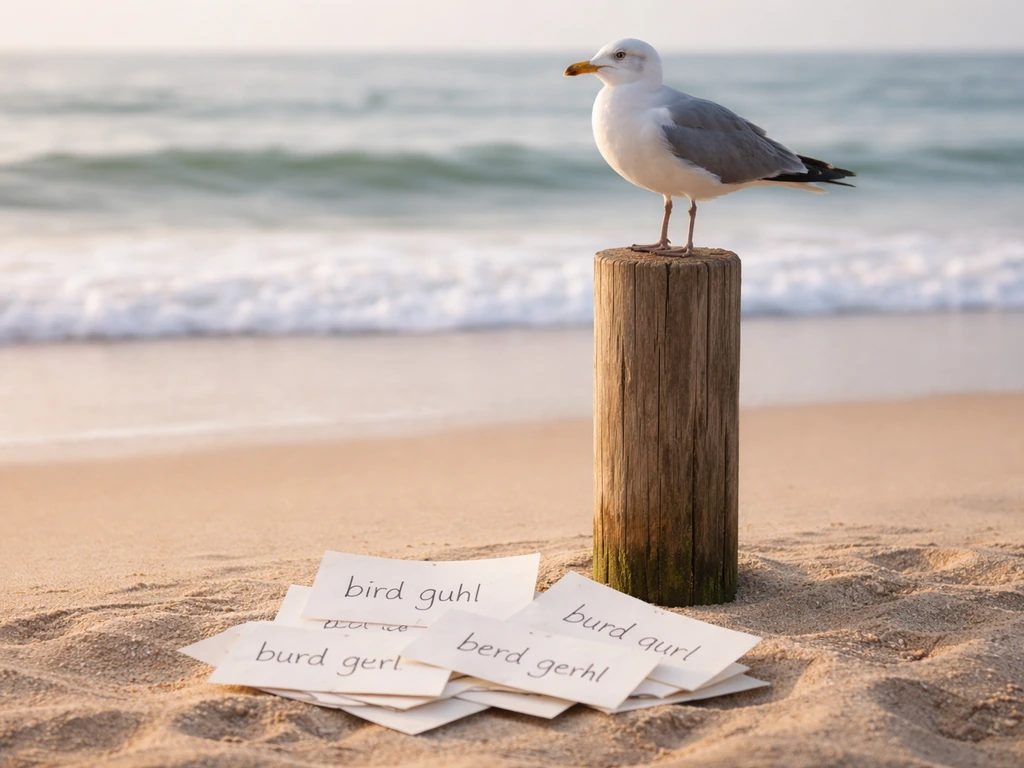
The phrase 'bird guhl' doesn't appear in any established folklore dictionary, spiritual tradition, or ornithological glossary. That's actually the most important thing to know upfront. What it does appear in is music: 'Bird Guhl' is a track on the 2005 Mercury Prize-winning album 'I Am a Bird Now' by Antony and the Johnsons (the artist now known as ANOHNI). The French Wikipedia entry for that album even translates 'Bird Guhl' directly as 'oiseau-fille,' meaning 'bird girl.' The Guardian covered the album that same year using that exact spelling, so it's not a typo, it's an intentional artistic choice.
The spelling variant 'Bird Gerhl' (which you'll find on Spotify) refers to what appears to be the same song or a closely adjacent version of it. Both 'Guhl' and 'Gerhl' are phonetic representations of the word 'girl' written in a stylized, slightly drawling way, similar to how certain slang communities render sounds. So if someone passed you the phrase 'bird guhl' in a music or pop-culture context, it almost certainly points back to this song and its themes of identity, transformation, and self-discovery.
There's also a straightforward pronunciation overlap worth knowing: the word 'gull,' the common seabird, is literally pronounced [guhl] according to Wordsmyth and Dictionary.com. So 'bird guhl' could simply be someone writing out 'bird gull' the way it sounds. The word 'gull' also has a secondary meaning as a verb, meaning to deceive or trick someone, so 'bird gull' could theoretically refer to being tricked in a bird-related context, though that usage is rare outside of literary or archaic contexts.
Decoding the symbolism: what does a 'bird girl' or gull mean spiritually?
If you're drawn to the 'bird girl' interpretation, there's a rich symbolic tradition to draw from. Birds as feminine or transformative symbols appear across dozens of cultures. The idea of a 'bird girl' or bird-woman figure often represents freedom from social constraint, spiritual ascension, or a liminal state between earthly life and something more transcendent. In the context of the Antony and the Johnsons song, this imagery is deliberately tied to gender identity, the longing to inhabit a self that feels true, and the courage that transformation requires. The 'bird' in this framing isn't an omen, it's a metaphor for becoming.
If you're landing on the gull (seabird) interpretation, that bird carries its own symbolic tradition. Gulls are often associated with freedom, adaptability, and navigating between worlds, since they operate across land, sea, and air. In some coastal and maritime folk traditions, gulls represent the souls of sailors, and seeing one near your home or during a moment of transition has been read as a message from someone who has passed. They also symbolize resourcefulness, since gulls are famously opportunistic birds that thrive in challenging environments.
What birds are actually communicating in real life
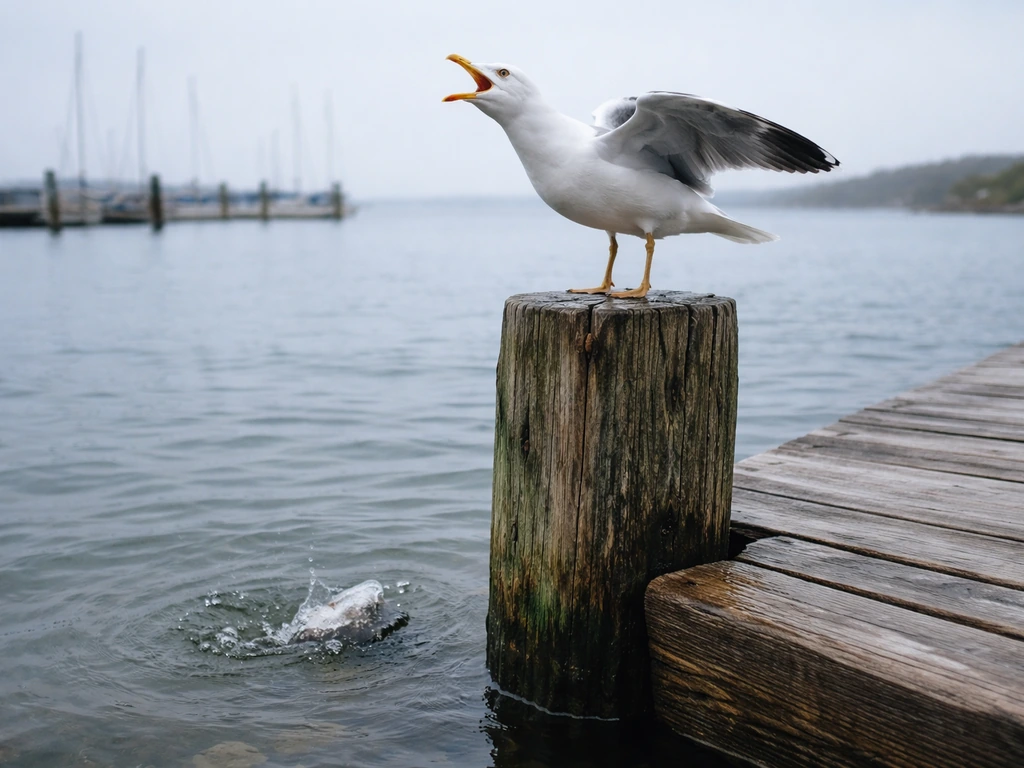
Regardless of the symbolic layer, birds communicate behaviorally in ways that are genuinely worth paying attention to. Different species showing up repeatedly, acting unusually, or appearing in unexpected places can carry real informational value, even if that information is ecological rather than supernatural.
| Bird | Common behavioral signal | Symbolic/spiritual tradition |
|---|---|---|
| Gull (seagull) | Presence inland often signals incoming storms or disrupted coastal conditions | Souls of sailors; freedom; navigating transitions |
| Owl | Daytime appearance may indicate disturbance of habitat or hunting pressure | Wisdom and truth in many traditions; ill omen in some Indigenous and European folklore |
| Raven | Following or circling behavior often linked to food sources or carrion | Spiritual-world connection, intuition, transformation |
| Sparrow | Repeated visits near windows or doors often mean food or nesting interest | Joy, community, perseverance; sometimes read as a message from ancestors |
If a bird keeps appearing near your home, the most useful first question is behavioral: is it nesting season? Is there a food source nearby? Is it reacting to its own reflection in a window? These explanations cover the vast majority of 'unusual bird behavior' reports. That said, noticing a bird repeatedly and feeling that it carries meaning for you is a deeply human response, and there's nothing wrong with exploring the symbolic layer alongside the practical one. If you’re specifically wondering about the term “bird turd meaning,” this guide will help you separate folklore claims from the literal context people are using online.
Is 'guhl' a real slang term, and does it appear in bird superstitions?
One slang definition online describes 'guhl' as an onomatopoeic exclamation of glee or overexcitement, sometimes associated with rural American dialect, with alternate spellings like 'GOL.' This is not connected to any bird symbolism tradition. It's essentially phonetic enthusiasm, not a term with spiritual or ornithological weight.
The closest legitimate slang overlap is 'gully' (sometimes written 'guh-lee'), which Dictionary.com defines as meaning 'acting tough' or 'street-savvy,' with roots in 'gully' meaning ravine or ditch plus urban slang connotations. You can see how 'guhl,' 'gully,' and 'gull' all sound similar enough to get tangled up in online searches. But none of these slang senses connect to an established bird omen or superstition. There is no traditional or reputable spiritual framework that uses 'guhl' as a specialized term for a bird sign or message. If you've encountered it presented that way, it's almost certainly a misattribution or a very localized informal usage with no wider cultural backing.
One phonetically adjacent confusion worth flagging: 'guano' (the technical term for bird droppings, also covered on this site) sounds nothing like 'guhl,' but when people are searching for bird-related terms they've misheard or partially remember, they sometimes land in the wrong neighborhood. Bird dung and bird turd have their own separate symbolism traditions worth exploring if that's what you're actually looking for.
If 'bird guhl' shows up in a dream

Dreams involving birds are among the most commonly reported and interpreted dream symbols across cultures. If you dreamed specifically of a 'bird girl' or a figure that was part bird and part human female, that imagery tends to cluster around themes of freedom, identity in flux, creative expression, or a desire to break free from a situation or role. Shapeshifting between human and bird in dreams often reflects a psychological state of being caught between two versions of yourself.
If the dream featured a gull specifically, the interpretive tradition points toward navigating transitions, movement between emotional or life 'territories,' and adaptability in uncertain situations. Gulls in dreams are rarely read as negative omens. Astrology.com likewise frames raven symbolism as a potentially positive spiritual-world connection and intuition marker, showing that some animal-omen traditions are not uniformly negative gulls in dreams are rarely read as negative omens. If the dream felt tied to the song 'Bird Guhl' or its emotional register, pay attention to the feeling the dream left you with: liberation, longing, transformation. Those emotional textures are usually more diagnostic than the specific bird species.
For owls in dreams, the tradition is more divided. Some cultures, including certain readings within Judaism's Talmudic tradition, treat an owl in dreams as an ill omen, while modern Western spiritual frameworks tend to read it as a wisdom or intuition signal. The Wikipedia overview of owl symbolism documents exactly this split, so if you dreamed of an owl and want to know what tradition you're working with, your own cultural background is actually the most relevant factor.
How to pin down the right meaning for your situation
Context is everything when decoding a phrase like this. If you're also looking up bird puns meaning, the same idea applies: the “meaning” depends on whether you’re reading a phrase, a sound-alike, or an actual pun. Run through these quick checks to narrow down which interpretation actually applies to you:
- Where did you encounter the phrase? If it was in a music app, article, or social media post about a song, you're almost certainly dealing with the Antony and the Johnsons track, not a spiritual or folkloric term.
- What did the original source look like? The song title uses the specific spelling 'Bird Guhl' or 'Bird Gerhl.' If the text you saw matches one of those, it's the song.
- Did you hear it spoken aloud? If so, consider whether the speaker might have said 'bird gull' (the seabird, pronounced guhl) and you filled in the spelling phonetically.
- What bird was actually involved? If a specific bird appeared in your life or dream, look that species up directly. The bird's identity matters far more than the spelling of a phrase you searched.
- What location and time of year? Seasonal and geographic context completely changes bird behavior and which species you'd realistically encounter, which in turn shapes both the practical and symbolic interpretation.
- Did the phrase come with any cultural or regional context? Rural American slang, urban dialect, and artistic titles all use phonetic spelling differently, and knowing the source community helps disambiguate.
Why this phrase gets misread and misheard so easily
The confusion around 'bird guhl' is a textbook case of phonetic spelling colliding with multiple legitimate meanings. The word 'gull' is pronounced exactly as 'guhl,' so anyone writing by sound rather than by dictionary will produce that spelling. Then you have an internationally recognized album track using 'Guhl' as a stylized spelling of 'girl,' and separately a slang ecosystem where words like 'gully' and 'guhl' float around with loose definitions. When these all land in the same search space, it looks like there's a mysterious phrase with deep meaning, when actually there are three or four unrelated things sharing a sound.
A common misconception is that 'bird guhl' must be an ancient or cultural omen phrase because it appears in spiritual-search contexts. It isn't. No major folklore tradition, Indigenous omen system, or established spiritual practice uses 'guhl' as a technical bird-related term. If a website presents it that way without sourcing a specific tradition, treat that claim with skepticism. The legitimate bird symbolism traditions (around gulls, owls, ravens, sparrows, and others) are well-documented under their actual names, and those are the frameworks worth consulting. Birdfactsdaily similarly frames sparrows through a broader “bird symbolism” lens, noting spiritual interpretations that people may map onto related or mistaken phrases spiritual meanings.
Similarly, 'Bird Gerhl' (the Spotify spelling variant) is not a different phrase with a different meaning. It's the same song, the same concept, and the same phonetic rendering of 'bird girl,' just with a slightly different vowel cluster. The sibling topic 'bird gerhl meaning' on this site covers that specific spelling in more depth if you want to compare the two variants directly. Bird manure is called guano.
The bottom line: if you heard it in music, it's an Antony and the Johnsons song about identity and transformation. If you’re specifically looking for the meaning of the spelling “Bird Gerhl,” that variant is explained in detail on the dedicated page Bird Gerhl meaning. If you heard it spoken and think you caught the name of a bird, it's almost certainly a gull. If you're looking for what a bird sighting or dream means, skip the phrase and focus on the actual species you encountered. That's where the real interpretive tradition lives.
FAQ
How can I tell whether “bird guhl” I saw online is a song reference or a supposed spiritual omen?
If you saw the phrase in a video, caption, or lyric screenshot, check whether it includes “Antony and the Johnsons,” “I Am a Bird Now,” or “Bird Guhl” in quotation marks. Those formatting cues strongly suggest the music track meaning (bird girl, identity, liberation) rather than an omen phrase.
What pronunciation cues help me decide between “gull” (guhl) and “girl” (guhl/gerhl)?
Use an audio clue: if a speaker says it like “bird gull” (with a clear “guhl” sound), the pronunciation overlap with the seabird is likely. If the emphasis feels more like “girl” or it appears alongside gender or identity themes, it usually points back to the stylized “oiseau-fille” (bird girl) interpretation.
If I’m using this for dream interpretation, should I focus on the bird species name or my emotions in the dream?
In folk or dream interpretation, the safest next step is to anchor on your personal context, not the label. Ask yourself what you were longing for or resisting in the moment, and whether you felt liberation, fear, or grief. Those emotions typically predict the meaning better than whether the bird is named “gull” versus “bird girl.”
If a “gull” keeps showing up near my house, what should I check first before assuming symbolism?
If the bird appears near your home, prioritize practical causes that create repeated visits, like nesting season, predictable feeding (leftout food or unsecured trash), or mirrors and windows that trigger territorial or courtship behavior. The most “meaningful” answer is often ecological, not symbolic.
Why does “bird guhl meaning” vary so much across websites, and how should I evaluate conflicting claims?
Treat “guhl” as a phonetic overlap rather than a single established term. It can map to unrelated meanings depending on the source (song spelling, gull pronunciation, or casual slang). If a site claims a specific superstition, look for a named tradition or origin story, otherwise treat it as unsourced internet folklore.
What search tactics can I use to narrow down which meaning I’m actually looking for?
If you want to confirm which interpretation fits your search intent, try searching the phrase together with your context words, for example “bird guhl lyrics,” “bird guhl dream,” or “bird guhl gull.” Your results will usually cluster around the correct interpretation quickly.
Is “Bird Gerhl” a different meaning from “Bird Guhl,” or just a spelling variant?
“Bird Gerhl” is best handled as the same song spelling variant, not a separate symbol system. A good way to verify is to see whether the page or post also mentions the album track and the “bird girl” theme, rather than treating it as an independent folklore term.
What does a bird-human or “bird girl” figure in a dream usually point to, beyond general freedom symbolism?
If you’re reading about dreams and you encountered a mixed human and bird figure, consider it a “liminal identity” image that reflects being between roles or versions of yourself. In practice, journaling what the figure did (flight, hiding, singing, attacking, rescuing) gives more actionable insight than the label itself.
Next Article
Bird Blindness Meaning: Causes, Signs, and What to Do Now
Bird blindness meaning: spot signs, tell vision loss from other issues, and take safe action or get urgent vet care.