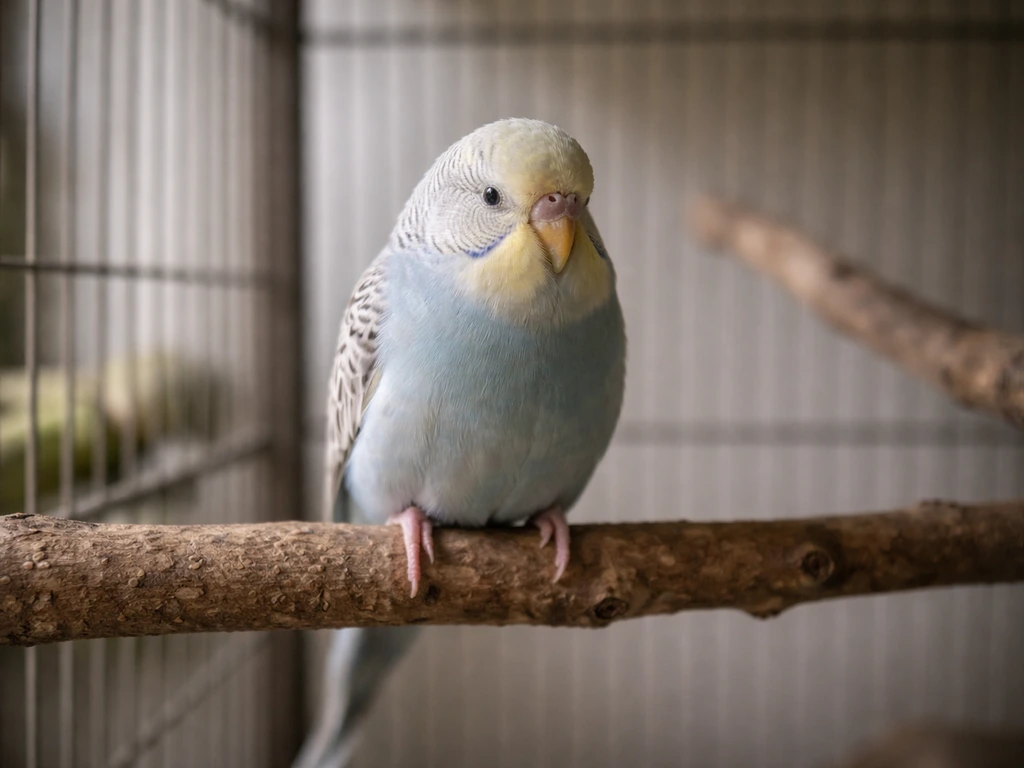
Bird related meaning covers a surprisingly wide territory: the symbolic weight a culture places on a species, what a bird's behavior in the field tells an observer about its ecology or mood, what slang terms like 'bird' signal in conversation, and even what a recurring bird in a dream might represent according to psychological or folk traditions. None of these contexts is more 'correct' than the others, they just answer different questions. The key is knowing which lens you're using and what kind of evidence sits behind it.
Bird Related Meaning: Guide to Symbolism, Sightings & Science

Marcus Holloway
20 Jul 2026
What 'bird related meaning' actually covers
The phrase 'bird related meaning' is a catch-all. Depending on who's asking, it might mean: what a robin symbolizes in English folklore, why a crow calling outside a window unsettles people, what the Merlin app's confidence score is telling you, or what someone means when they call a person 'a rare bird.' All of these are legitimate uses of the idea, and they live in genuinely different disciplines: ornithology, cultural anthropology, semiotics, dream psychology, and colloquial linguistics.
This site works across all of those registers. You'll find species-specific symbolism, behavioral interpretation based on real flight-initiation distance research, folklore clearly labeled as folklore, and practical birdwatching guidance. The aim is to give you whichever layer of meaning you're actually looking for without conflating a peer-reviewed behavior study with a medieval omen tradition, both interesting, but not the same kind of knowledge.
How to read bird meanings: context, questions to ask, and limits
Before interpreting any bird encounter, it helps to ask three questions: What is the bird actually doing? Where are you geographically, and what is the cultural tradition you're drawing on? And what kind of answer do you want, scientific, cultural, or personal? The same crow sitting on a fence means something different to a behavioral ecologist watching its vigilance posture, to a person raised with Irish superstition about magpies, and to someone grieving who finds comfort in the idea of spirit messengers. None of these frameworks invalidates the others, but mixing them up produces confusion rather than insight.
A useful habit is to separate the observation from the interpretation. Start with the observable facts: species (if you can identify it), behavior, time of day, number of individuals, and habitat. Then layer on context. If you're working scientifically, use authoritative sources like the Cornell Lab of Ornithology's Birds of the World database or eBird's curated observation records. If you're exploring cultural tradition, trace the symbolism to its documented source and note the region and era. If you're working in a personal or spiritual register, that's valid too, just hold it as personal meaning rather than universal fact.
- Identify the species as precisely as possible before assigning meaning — a crow and a raven carry very different symbolic histories despite looking similar at a glance.
- Note the behavior: is the bird calling, flying away, feeding, or approaching you? Behavior changes interpretation significantly.
- Anchor cultural interpretations to a specific tradition and region. 'Birds mean freedom' is too vague to be useful; 'the crane represents longevity in East Asian culture' is traceable and accurate.
- Label your evidence level: ornithological fact, documented cultural tradition, personal folk belief, or dream symbol.
- Resist the urge to read every bird sighting as meaningful — birds are common animals doing ordinary things most of the time.
Cultural and spiritual symbolism: common themes and how interpretations vary
Across cultures and centuries, birds have been assigned spiritual roles with remarkable consistency: messengers between worlds, omens of death or luck, symbols of the soul, and emblems of divine power. Scholars cataloguing folk motifs use systems like the Aarne-Thompson-Uther (ATU) tale-type index and Thompson's Motif Index to map these patterns across oral literature globally. What they find is that bird symbolism is widespread but rarely universal, the same species can mean opposite things depending on region and era.
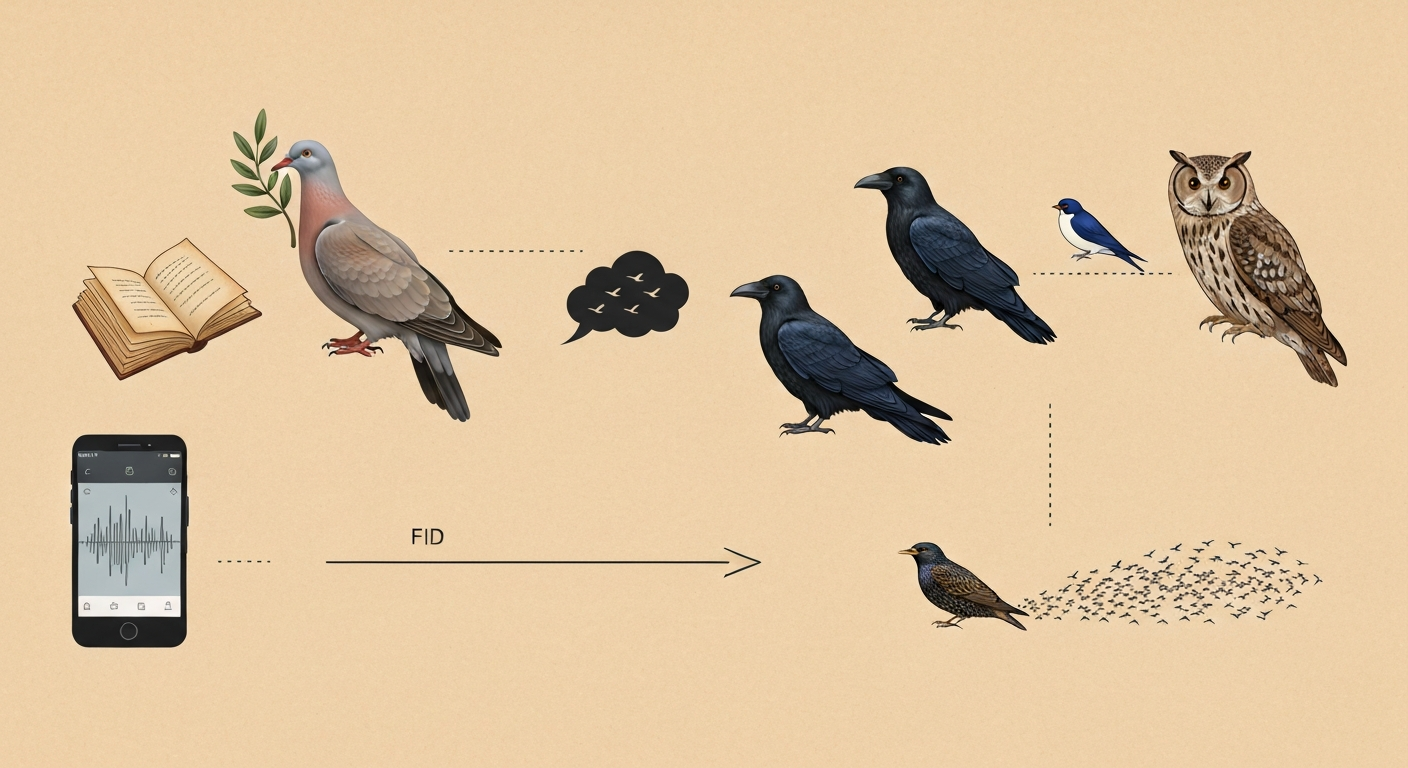
The dove is one of the most studied examples. In the Biblical account of Noah's ark, the dove returning with an olive branch became a symbol of peace and divine favor, a reading that spread through Christian tradition and now operates globally as secular shorthand for peace. The same bird appears in Hindu traditions linked to Kamadeva, the god of love. The 'peace dove' shorthand we use today is historically recent and specifically Western-modern, worth knowing if you're tracing the symbol's real genealogy. (This distinction between ancient religious source and contemporary pop-cultural shorthand comes up repeatedly in bird symbolism research.)
At the other end of the spectrum sits the owl. In ancient Greek tradition, the owl was Athena's companion, a symbol of wisdom. In many Indigenous North American traditions, the owl is a death omen or associated with witchcraft. In Japanese folklore, the barn owl (fukuro) is a good-luck symbol. None of these is 'wrong', they simply reflect different cultural relationships with a nocturnal, wide-eyed, silent-flying bird that people have been trying to make sense of for millennia. Mircea Eliade's comparative work on shamanism documents birds across many traditions as psychopomps, guides for souls between worlds, a role that appears in Siberian, Central Asian, and some Indigenous American spiritual systems, though the specifics vary enormously.
The Garuda of Hindu and Buddhist tradition is a different kind of bird symbolism altogether: a divine being who is bird-formed rather than a real bird given symbolic weight. Garuda represents royal power, solar energy, and the destroyer of serpents (symbolic of obstacles or ego). This category of mythological bird-being, alongside the Phoenix, the Roc, and the Thunderbird, operates in a register distinct from the symbolism attached to actual observable species, and it's worth keeping those two categories separate when researching.
One pattern worth noting: birds that are highly visible, vocal, and present near human habitation tend to accumulate the most folklore. Corvids, owls, robins, sparrows, and swallows appear in traditional beliefs far more than, say, remote pelagic seabirds. This is almost certainly because proximity to people creates more opportunities for storytelling. It doesn't mean those species are intrinsically more meaningful, just more noticed.
Species-specific meanings: how the bird itself shapes interpretation
Species identity is probably the single biggest variable in bird meaning. A generic 'bird sighting' carries far less interpretive weight than a specific species, and the specificity matters both for cultural symbolism and for behavioral interpretation. This is why accurate identification is the first practical step in any meaningful engagement with birds, whether you're a birdwatcher, a folklorist, or someone who just saw something unusual outside their window.
In cultural traditions, species-specific attributes, color, call, habitat, migratory behavior, nesting habits, directly shape the symbolism assigned to them. The swallow's migratory return each spring made it a natural symbol of renewal in European tradition. The raven's intelligence and omnivory (including scavenging at battlefields) contributed to its role as an omen in Norse mythology and its complex dual symbolism in Pacific Northwest Indigenous traditions, where Raven is simultaneously creator and trickster. The hummingbird's speed and apparent hover-stillness made it a symbol of joy and love in some Mesoamerican traditions. These are not arbitrary associations, they grew from real, observed qualities of each species.
For behavioral interpretation, species identity matters just as much. Corvid species, for example, are genuinely highly intelligent, they use tools, recognize individual human faces, and respond differently to people based on past interactions. That's documented ornithological behavior, not folklore. So when someone notices that crows seem to 'know' them, there's a real phenomenon underneath the impression. The Handbook of the Birds of the World and the Cornell Lab's Birds of the World database are the most authoritative references for species-level natural history, they document diet, habitat, vocalizations, migration, and social behavior in detail useful for separating behavioral fact from cultural projection.
Common birds and what they typically represent
| Bird | Cultural/Spiritual Symbolism (Folklore) | Behavioral/Ecological Notes (Fact) | Evidence Level |
|---|---|---|---|
| Raven | Omen, trickster, creator figure (Norse, Pacific Northwest Indigenous traditions) | Highly intelligent, uses tools, long-lived, opportunistic omnivore | Symbolism: cultural folklore; Behavior: documented ornithology |
| Dove (Rock Pigeon / Mourning Dove) | Peace, love, the Holy Spirit, divine messenger (Christian, Hindu, secular-modern) | Widespread commensal species; strong pair bonds; well-studied | Symbolism: traced to primary religious texts; Behavior: documented ornithology |
| Owl (various) | Wisdom (Greek), death omen (many traditions), good luck (Japanese barn owl) | Nocturnal, near-silent flight, acute hearing; actual behavior varies by species | Symbolism: documented cross-cultural folklore; Behavior: documented ornithology |
| Robin (European) | Good luck, harbinger of spring; associated with death in some British traditions | One of the most studied songbirds; defends territory year-round with song | Symbolism: regional European folklore; Behavior: documented ornithology |
| Crane | Longevity, fidelity, good fortune (East Asian traditions); sacred in Shinto | Long-lived, monogamous, elaborate courtship dances documented | Symbolism: East Asian cultural tradition; Behavior: documented ornithology |
| Swallow | Return of spring, good luck, sailor's symbol of safe return (European/maritime tradition) | Long-distance migrant; nests in human structures; highly aerial feeder | Symbolism: European/maritime folklore; Behavior: documented ornithology |
| Crow (American/Carrion) | Death, bad luck (Western tradition); intelligence, adaptability; dual omen in many cultures | Highly social, tool-using, demonstrated face-recognition, communal roosts | Symbolism: widely documented folklore; Behavior: peer-reviewed research |
| Hummingbird | Joy, love, resilience (Mesoamerican, some Indigenous North American traditions) | Only bird capable of sustained hovering; extremely fast metabolism | Symbolism: documented cultural tradition; Behavior: documented ornithology |
| Albatross | Soul of a dead sailor (maritime folklore); good/bad omen depending on context | Extraordinary navigators; longest wingspan of any living bird; extremely long-lived | Symbolism: maritime European folklore; Behavior: documented ornithology |
| Magpie | One for sorrow, two for joy (British counting rhyme); luck varies by number (UK/China) | Intelligent corvid; highly adaptable; documented object manipulation | Symbolism: documented regional folklore; Behavior: documented ornithology |
Reading bird behavior: calls, flight, feeding, and group size
Behavioral interpretation is where ornithological science and folk intuition most directly overlap, and where the science often turns out to be more interesting than the superstition. When a bird flushes suddenly at your approach, that's not an omen: it's flight-initiation distance (FID) in action. FID research (theoretical groundwork from Ydenberg and Dill in 1986, with extensive empirical follow-up by Blumstein and colleagues) establishes that birds weigh the cost of fleeing against the risk of staying as a predator, or a human, approaches. FID is measurable, partly species-specific, and shaped by covariates like habitat, starting distance, and human behavior. Blumstein et al. (2003) provide empirical evidence that FID is partly species‑specific and that covariates such as starting distance, habitat, and human behaviour systematically influence measured distances blank" rel="noopener noreferrer">Blumstein et al. (2003) Testing a key assumption of wildlife buffer zones: Is flight initiation distance a species-specific trait? — Blumstein et al., Biological Conservation (2003). Species with short FIDs (those that tolerate close approach) are often the ones humans describe as 'bold' or 'trusting', but this is habitat familiarity and evolutionary exposure to humans, not personality in a human sense.
Calls carry genuine behavioral information. Alarm calls signal a detected threat; contact calls maintain flock cohesion; song in most songbirds signals territorial occupancy and mate attraction. Mobbing calls, the agitated chattering you hear when small birds harass a hawk or owl, communicate the presence of a predator and often draw other species in to help. If you hear an abrupt silence fall over a hedgerow, that itself is a signal: something has alarmed everything at once. Learning to distinguish alarm calls from song from contact notes gives you real-time ecological information, not just ambient sound.
Flight patterns also carry meaning in the behavioral sense. Undulating flight (the rise-and-dip pattern of woodpeckers and finches) is energy-conserving. Soaring on thermals indicates a bird with broad wings using rising air columns rather than active flapping, large raptors and vultures do this routinely, which is why ancient cultures associated them with the sky and the sun: they genuinely do float effortlessly at height while other birds work harder. Murmurations of starlings (the swirling flock formations) are now understood through computational modeling as emergent behavior driven by each individual responding to its nearest neighbors, visually spectacular, scientifically documented, and the subject of genuine wonder without needing a supernatural frame.
- Alarm call: bird has detected a threat — check what else is reacting in the area.
- Sudden silence: strong alarm signal from multiple species responding simultaneously.
- Mobbing behavior: predator (usually owl, hawk, or cat) is nearby — look in the direction the mob is facing.
- Singing at dawn (dawn chorus): territorial behavior; most intense in spring and early summer.
- Flock size increasing: often indicates a roost site, a food source, or pre-migratory staging — not an omen.
- Birds feeding on the ground in unusual spots: may indicate a temporary food event (worm emergence after rain, insect hatch).
Birdwatching tools, hides, and habitats: what they mean for bird behavior
The physical setup of birdwatching matters enormously for what you actually see, and therefore for what a sighting means. A bird hide (called a blind in North American usage) is a structure designed to conceal observers from birds. The core logic is that it reduces the observer's visual and acoustic signature, lowering the bird's perceived threat and therefore its FID. This directly affects which behaviors you can witness: birds near a well-placed, quiet hide will often feed, display, preen, and interact normally in ways they wouldn't if a human were standing in the open.
Research into hide and blind design confirms that design details matter. A 2023 study on noise-cancelling blind designs found that the acoustic signature of an observer (movement, camera sounds, whispering) can reach birds even when they can't see the observer. Proper hide etiquette, arriving quietly, settling in before birds return, minimizing movement, avoiding reflective surfaces, is grounded in real behavioral science, not just courtesy. Practical guides used by land managers and NGOs specify placement considerations like sightlines, prevailing wind direction (to carry human scent away), and proximity to water or feeding sites where birds naturally congregate.
Feeders, nest boxes, and water features (like birdbaths) are smaller-scale habitat modifications that concentrate bird activity around specific points. From a 'meaning' perspective, these tools shape your observations by creating artificial abundance: a garden feeder doesn't tell you what birds naturally use your habitat, it tells you which species in the area are willing to use a concentrated food source. That's still useful data, and the Cornell Lab's eBird platform lets you log feeder observations with appropriate metadata, but it should be interpreted differently from observations made during a transect survey in natural habitat.
Bird hides in practice: what observers should expect
If you're new to using a bird hide, the single most important thing to know is that patience is the mechanism, not just the virtue. Birds that were disturbed when you arrived will return to normal behavior within minutes to hours depending on species and habituation level. Blumstein's research on FID documents that habituation to humans is a real, measurable process: birds in areas with regular non-threatening human presence have systematically shorter FIDs than birds in areas with little human contact. A hide at a well-visited reserve will generally show you more relaxed birds than a makeshift hide at a rarely visited site, simply because the resident birds have learned that the structure is not a threat.
The behavioral impacts of birdwatching are also worth understanding. Reviews of disturbance literature show that certain practices, playback of bird calls to attract species, repeated flushing of ground-nesting birds, photography at active nests, can alter behavior and in some cases reproductive success. A serious observer or researcher using a hide is, ideally, minimizing their footprint precisely to gather better data and reduce harm. This is both good ethics and good epistemology: the less you disturb the bird, the more meaningful your observation.
From a symbolic or cultural standpoint, the bird hide itself carries meaning for the birding community. It represents a kind of humility, the observer making themselves invisible to enter the bird's world rather than demanding the bird perform for human convenience. That orientation sits at the heart of serious ornithological fieldwork and also resonates with Indigenous traditions of observation that emphasize patience and respect over extraction. The hide as a concept is explored in more depth through the dedicated treatment of bird hide meaning, which covers observer ethics, habitat expectations, and how different hide types function across reserve types.
Apps, nicknames, and the broader landscape of bird meaning
Bird identification apps have created a new register of bird-related meaning in the last decade. When Merlin (Cornell Lab) gives you a match, it's drawing on eBird occurrence data, regional bird packs, and Macaulay Library media to rank candidate species by probability for your location and date. The Story, Merlin Bird ID (Cornell Lab / All About Birds) documents how Merlin uses regionally curated 'Bird Packs', eBird occurrence data and Macaulay Library media to prioritize and rank candidate species for photo and sound ID The Story — Merlin Bird ID (Cornell Lab / All About Birds) documents how Merlin uses regionally curated 'Bird Packs', eBird occurrence data and Macaulay Library media to prioritize and rank candidate species for photo and sound ID.. The confidence shown is not certainty, it reflects prior probability and match quality. BirdNET, the deep-learning audio classifier documented by Kahl et al. in 2021, works through spectrogram analysis of recorded sound and has known limits when used outside its training conditions, particularly in species-poor or acoustically complex environments. Understanding what these apps are actually doing, and what their outputs mean, matters for interpreting their results accurately. The specific meanings of app outputs, community tags, and platform-specific features are covered in more detail in the bird app meaning guide.
Bird nicknames and slang are a distinct but related thread. Common birds often acquire colloquial names, 'dunnock' vs. 'hedge sparrow,' 'mudhen' for the American coot, 'seagull' as a blanket term that ornithologists avoid because there is no single 'seagull' species. Nicknames encode familiarity, regional culture, and sometimes affection or contempt. When a bird earns a nickname, it usually means people have lived alongside it long enough to develop an opinion. The way nicknames form and what they reveal about human-bird relationships is covered in the bird nickname meaning section of this site.
Species meaning as a dedicated subject, going deeper into how individual species carry different symbolic and ecological significance, is explored through the bird species meaning section. That material treats species as cultural and biological units in their own right, rather than examples within a broader framework, and is worth reading alongside this overview.
Folklore versus fact: a working evidence guide
One of the most useful habits when engaging with bird meanings is explicitly tagging the evidence type behind each claim. Here is a working framework for doing that.
| Evidence Type | What It Looks Like | How to Use It | Limitations |
|---|---|---|---|
| Peer-reviewed ornithology | Published studies in journals; species accounts in Birds of the World, HBW | Treat as best available fact for behavior, physiology, ecology | May not cover all species or regions; science updates |
| Curated citizen science | eBird checklists with effort metadata; iNaturalist Research Grade observations | Useful for distribution and phenology; apply quality filters | Subject to observer bias and geographic gaps |
| App-generated ID | Merlin confidence scores; BirdNET audio detection results | Useful starting point; verify with field marks or additional evidence | Algorithms have confidence limits; location/date priors affect results |
| Documented cultural tradition | Traceable to primary religious texts, ethnographic records, or ATU folklore index | Valid for cultural interpretation; note region and era | Varies by community; do not generalize across cultures |
| Regional folk belief | Oral tradition, superstition, local saying (e.g., counting magpies) | Valid as cultural data; label clearly as belief, not fact | Highly variable; meaning can reverse between communities |
| Personal/spiritual meaning | Dream symbolism, personal omens, intuitive interpretation | Valid as personal framework; not generalizable | Not empirically testable; treat as personal rather than universal |
The most common mistake in bird meaning writing is presenting cultural folklore as though it were universal fact, and the second most common is dismissing folklore as meaningless because it isn't scientifically verifiable. Both approaches miss the point. Folklore is evidence of how humans have related to birds across time and geography, it's anthropologically real and worth studying on those terms. Ornithological fact tells you what birds are actually doing and why. Both are true; they're just true in different registers. The goal here is to give you enough context to work confidently in both.
FAQ
What primary natural-history and species-reference sources should be consulted to ground species-specific meanings in ornithology?
Authoritative sources: Birds of the World (Cornell Lab), Handbook of the Birds of the World (HBW/HBW Alive), BirdLife International species factsheets, regional field guides, and peer‑reviewed taxonomic checklists. Research questions: What are the species’ range, habitat, vocalizations, diet, migratory status and phenology? How visible or cryptic is the species (detectability) and how variable is its behavior across regions/seasons?
Which citizen‑science databases and app documentation are needed to interpret observation metadata and community IDs correctly?
Authoritative sources: eBird (review process and Best Practices), iNaturalist (Data Quality Assessment), Merlin Bird ID documentation, BirdNET papers. Research questions: How are observations reviewed and flagged? What metadata (effort, location precision, date/time, starting effort) determine reliability? How do app priors, training data and confidence scores affect automated IDs and how should probability/confidence be reported?
What behavioral and disturbance literature should be used to explain meaning derived from bird behaviour and human–bird interactions?
Authoritative sources: empirical studies and reviews on flight‑initiation distance (Ydenberg & Dill; Blumstein et al.), disturbance and birdwatching impacts reviews, and species‑specific ethograms. Research questions: Which behaviors are reliably species‑typical vs context‑dependent? How do human presence, playback, photography and hides change behaviour? What covariates (starting distance, habitat, season) mediate responses?
What sources document hide/blind design and how hides affect sightings and bird behaviour?
Authoritative sources: practical agency guides to viewing/photography blinds, recent acoustics/design studies of hides, site management manuals. Research questions: Which hide designs reduce disturbance and/or increase detectability? How do visibility, acoustics, entry/exit procedures and location relative to habitat influence species use and interpretive meaning of sightings?
What technical and scientific literature is necessary to explain how bird ID apps and audio classifiers work and their limitations?
Authoritative sources: Merlin Bird ID documentation, BirdNET (Kahl et al. 2021), app developer whitepapers and algorithm papers. Research questions: What are the models’ training sets and geographic coverage? What are known domain‑shift, false‑positive/negative, and confidence/threshold behaviors? How should app outputs be presented to readers (probabilistic, caveated)?
Which folkloristic, religious and comparative‑mythology sources should be used to document cultural and spiritual symbolism?
Authoritative sources: Aarne–Thompson–Uther (ATU) motif/tale indices, folklore journals and regionally focused ethnographies, classic comparative religion/shamanism syntheses (e.g., Eliade), and primary religious texts plus scholarly commentary. Research questions: What bird motifs recur cross‑culturally and how do local ecological realities shape motifs? What are documented ritual/psychopomp roles and historical changes in symbolism?
Next Article
Bird Blindness Meaning: Causes, Signs, and What to Do Now
Bird blindness meaning: spot signs, tell vision loss from other issues, and take safe action or get urgent vet care.