"Bird talk" doesn't have one locked-in meaning. Depending on your context, it could refer to unintelligible chatter (slang for nonsense), the real vocal communication birds use with each other, a spiritual or omen-based message from the natural world, or a talking bird appearing in a dream. The fastest way to figure out which meaning applies to you is to ask a simple question: were you searching because of something you heard, something you saw, something you dreamed, or something someone said? Each of those leads to a completely different answer.
Bird Talk Meaning: Everyday, Spiritual, and Dream Guides

Marcus Holloway
3 Jun 2026
What "bird talk" actually means in everyday language
In plain everyday English, "bird talk" doesn't have a firm dictionary entry the way "bird language" does. Bird language meaning is often about how different species communicate, not just the phrases people project onto bird calls. It floats somewhere between informal description and loose slang. Most people who use the phrase mean one of two things: either they're describing the sounds birds actually make ("I woke up to bird talk outside my window") or they're using it loosely to describe someone speaking in a way that sounds like meaningless chatter or noise. Neither usage is wrong, but neither is formally codified in standard dictionaries either.
The related phrase "talking bird" is much more established. It refers specifically to a bird capable of mimicking human speech or producing speech-like sounds, like parrots, mynas, and corvids. When people search "talking bird meaning," they usually want to know either what species can talk or what it symbolizes when a bird seems to speak to them. When you’re asking about bird voice meaning, it often comes down to whether you mean real bird calls or a symbolic “bird talk” interpretation. The same questions about bird text meaning can also help you interpret what a calling bird is “saying” to you in context. That's a different question from "bird talk" used as slang, so it helps to be clear about which one you're actually after.
"Bird talk" in slang and culture, and how it differs from real bird sounds
In slang, "bird talk" or "talking like a bird" tends to carry a slightly dismissive edge. It implies chatter that's lively but hard to follow, fast-paced conversation that feels like noise, or language that doesn't quite make sense to the listener. Crowd-sourced definitions (like those on Urban Dictionary) often lean into this "gibberish" framing. Urban Dictionary’s definition entries for “bird talk” are crowd-sourced, so they reflect slang usage more than an authoritative lexicographic meaning Crowd-sourced definitions (like those on Urban Dictionary). Culturally, birds have long been associated with gossip and chatter in many Western traditions, which is probably where this usage comes from.
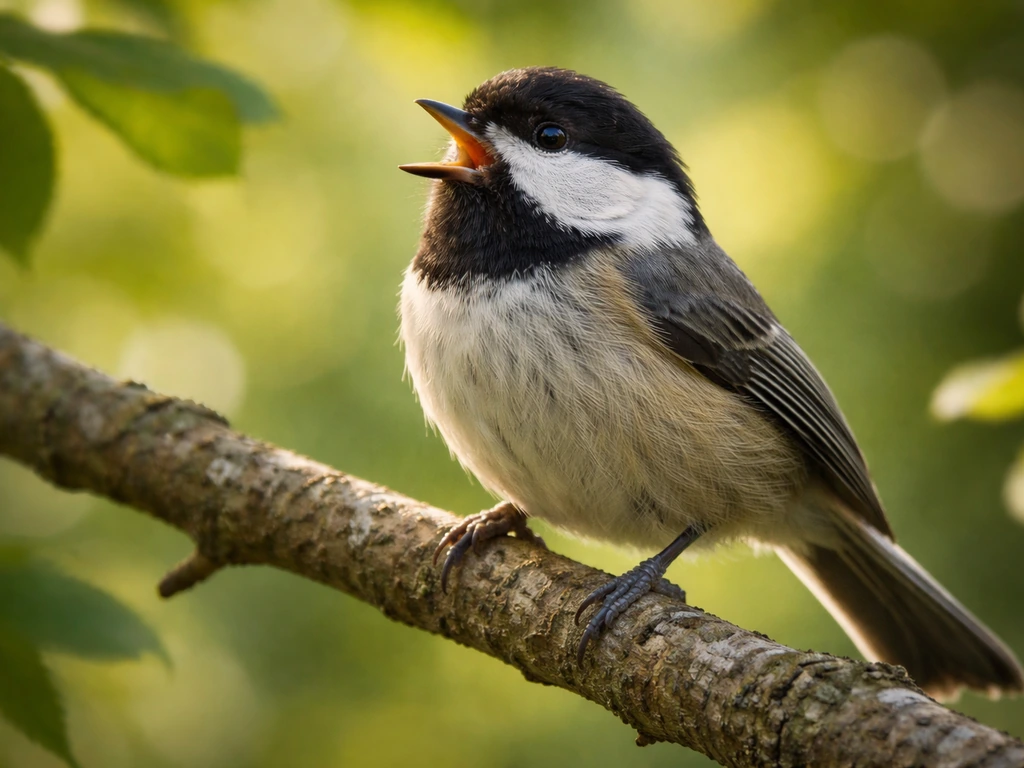
This is almost the opposite of how ornithologists and naturalists use the idea of "bird talk." For researchers and serious birders, bird vocalizations are precise, meaningful, and species-specific. A black-capped chickadee's alarm call has measurably different information content depending on the predator it's responding to. A crow's series of caws follows social patterns that researchers have documented in detail. Real bird communication is anything but gibberish. This is where the popular slang meaning and the behavioral reality genuinely conflict, and it's worth knowing the difference, especially if you're trying to interpret what you heard outside your window this morning.
The spiritual and omen side of birds "talking"
Across a wide range of belief systems, birds speaking or calling near a person is treated as a message from the spiritual world. In many Indigenous North American traditions, birds are messengers between the physical and spirit worlds, and an unusually persistent or directed call is interpreted as communication meant specifically for the listener. In West African and Afro-Caribbean spiritual traditions, birds (especially ravens, owls, and doves) that call near a home or person are read as omens, sometimes as warnings, sometimes as reassurance from ancestors. In Celtic folklore, the wren and the robin were believed to carry messages from the Otherworld, and their calls near a dying person or grieving family were treated as a sign of spiritual presence.
More broadly, the spiritual interpretation of bird talk tends to hinge on a few factors: the species, the timing (dawn vs. dusk vs. dead of night), the direction the bird is calling from, and the emotional state of the person hearing it. An owl calling at midnight near a window carries very different symbolic weight in most traditions than a robin singing at dawn. If you're drawn to a spiritual reading of what you heard, those details matter enormously and are worth sitting with before reaching for a meaning.
What it actually means when birds seem to "talk" near you
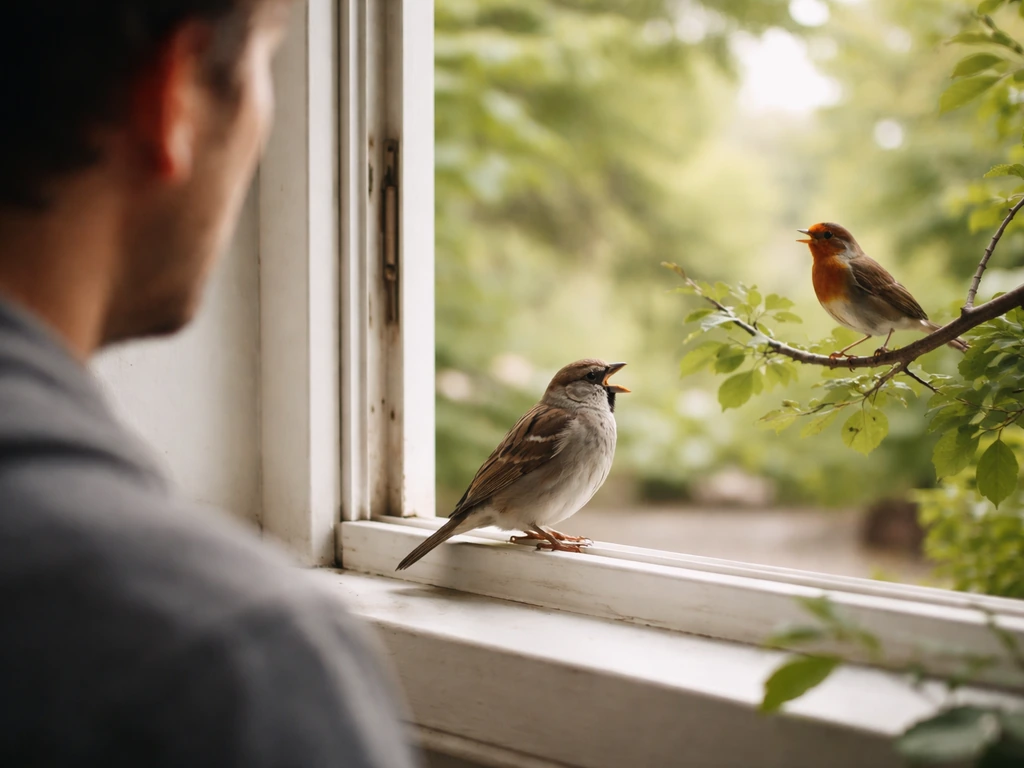
Most of the time, when birds seem to be "talking" around you, there's a clear behavioral explanation. Understanding the most common ones helps you decide quickly whether you're dealing with ordinary bird behavior or something worth paying closer attention to.
Common behavioral reasons birds vocalize near people
- Alarm calls: Many songbirds produce rapid, repeated chip notes or scolding calls when a predator (or a person) enters their territory. If birds are suddenly chattering loudly as you walk past a bush, they're almost certainly alarming at you, not sending you a message.
- Territorial singing: Male birds in breeding season (roughly March through July in the Northern Hemisphere) sing persistently and loudly to establish and defend territory. If you hear the same species singing from the same spot every morning, that's territoriality, not a spiritual sign.
- Flock communication: Species like starlings, cedar waxwings, and house sparrows maintain contact calls within a flock. A sudden surge of chatter often just means the flock is moving or settling.
- Mimicry: Mockingbirds, starlings, and blue jays routinely imitate other birds, phones, and even human speech patterns. If a bird sounds uncannily like it's "talking," it's very possibly a mimic species doing exactly what it evolved to do.
- Mating calls and duets: Some species, including Carolina wrens and certain corvids, engage in call-and-response patterns that genuinely sound like conversation. This is often pair bonding or courtship behavior.
- Nighttime calling: If you're hearing bird sounds late at night, the most likely culprits are northern mockingbirds (which sing at night during breeding season), Eastern whip-poor-wills, or barred owls whose calls famously sound like "Who cooks for you?"
If you're not sure what species you're hearing, Merlin Bird ID's Sound ID feature (from the Cornell Lab of Ornithology) lets you record the sound and get a real-time species suggestion. That's a far more reliable starting point than guessing based on vague impressions, and it gives you solid ground before you move into any symbolic interpretation.
Dream interpretation: what a talking bird usually means
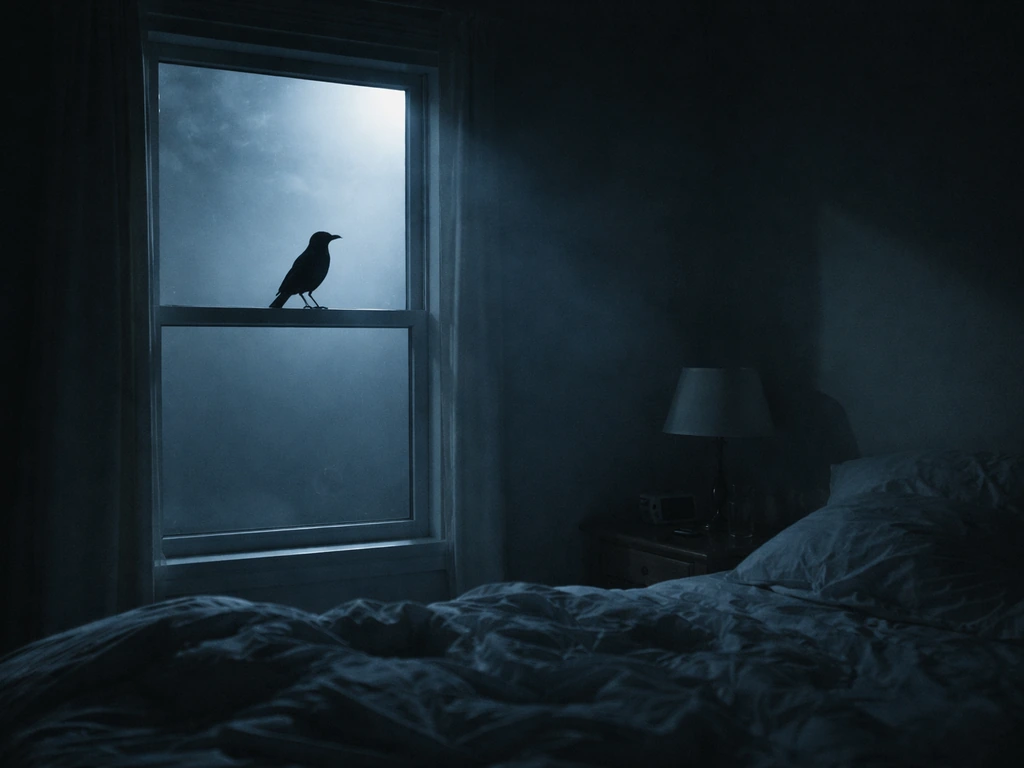
When a bird speaks to you in a dream, or when you dream of birds making sounds that feel meaningful, dream interpretation traditions tend to read that as a message from your own deeper intuition rather than a literal external sign. In Jungian psychology, birds in dreams represent the psyche's capacity for higher thought, perspective, and freedom. A bird that speaks in a dream is often interpreted as the dreamer's intuition trying to surface something important, a feeling or realization that hasn't quite made it into waking awareness yet.
Across more traditional dream interpretation frameworks, the specific species matters. A talking parrot in a dream often signals communication issues, repetition, or the need to reconsider what you're simply parroting from others. A speaking raven or crow tends to signal hidden knowledge or a warning to pay attention. A dove speaking in a dream is usually read as reassurance or peace. If the bird's words were clear in the dream, they're worth writing down immediately on waking, even if they don't make immediate sense. If the bird was just making sounds that felt meaningful without actual words, the emotional tone of the dream (comforting, urgent, ominous) is usually the more useful signal to work with.
How to figure out the real meaning for your specific situation
Here's a practical checklist you can run through in about two minutes. Answer each question honestly and the right interpretation usually becomes obvious.
- Was this something you heard in waking life, or in a dream? If a dream, jump to the dream section above and focus on the species and emotional tone.
- If waking life: what time of day was it? Dawn or daytime almost always points to normal territorial or flock behavior. Night calls narrow the species list significantly and can carry more symbolic weight if that resonates with you.
- What species was it, or what did it sound like? Use Merlin Sound ID if you're unsure. Knowing the species is the single most useful piece of information for both behavioral and symbolic interpretation.
- Was the call directed, persistent, or unusual for that location? A bird calling from the same spot repeatedly over several days is more likely territorial. A single unusual call from a species you rarely see near your home is more likely to feel meaningful, and understandably so.
- What was your emotional state when you heard it? If you were already in a reflective or emotionally heightened moment, your brain is primed to find meaning. That's not invalidating the experience, it's just useful self-awareness.
- Does the species have a known symbolic meaning in your own cultural tradition? Stick to traditions that are actually part of your heritage or practice rather than pulling from whichever culture gives the most dramatic answer.
- Can the behavior be explained by season, location, or a nearby nesting site? If yes, start with the behavioral explanation and layer symbolism on top only if it still feels relevant.
Common misconceptions, and when to treat it as coincidence
The biggest misconception around bird talk is the assumption that any unusual or striking bird sound near you must be a sign. Birds are loud, they're frequent, and they're behaviorally complex. The average suburban backyard in North America hosts dozens of species producing hundreds of distinct calls daily. The human brain is extraordinarily good at finding patterns and meaning, especially in sound, which means we are genuinely prone to interpreting normal bird behavior as a message when we're already in a searching or emotionally heightened state.
That doesn't mean spiritual or symbolic interpretation is wrong. It means it should be held lightly. A few good rules of thumb: if the behavior has a clear, common biological explanation (mating season, alarm call, flock movement), start there. If the encounter was genuinely unusual, repeated across multiple days, involved a species you rarely see, or coincided with a significant personal moment, a symbolic reading is more defensible. And if you're drawn to the spiritual interpretation, the meaning you arrive at through reflection is often more valuable than any fixed dictionary definition anyway.
| Situation | Most likely meaning | What to do |
|---|---|---|
| Loud chattering birds as you walk past shrubs | Alarm call directed at you as a perceived threat | Keep walking; it's behavioral, not a message |
| Same bird singing from same spot every morning | Territorial song during breeding season | Enjoy it; normal spring/summer behavior |
| Unusual species calling near your window repeatedly | Could be territorial, could carry symbolic weight | ID the species first, then consider meaning |
| Bird seems to mimic speech or human sounds | Likely a mimic species (mockingbird, starling, myna) | Identify the species; fascinating behavior, not supernatural |
| Nighttime bird calls near your home | Mockingbird, owl, or whip-poor-will (region dependent) | ID first; owls do carry significant omen symbolism in many traditions |
| Talking bird in a dream | Intuition or unconscious insight surfacing | Write it down; reflect on the species, words, and emotional tone |
| Heard 'bird talk' used in conversation as slang | Informal expression for chatter or gibberish | Context is the key; no spiritual or behavioral reading needed |
If you're interested in going deeper into how birds actually communicate with each other and with their environment, the broader subject of bird language as a field of study covers alarm calls, baseline behavior, and interspecies communication in a way that bridges the gap between ornithology and the kind of intuitive awareness that spiritual traditions have always pointed toward. Bird language basics can help you separate what you heard from what you might assume about it. Similarly, exploring bird voice meaning and bird whisperer traditions can add useful texture if you're drawn to the idea that learning to read bird behavior is itself a meaningful practice, not just a superstition.
FAQ
How can I tell if “bird talk” is slang (gibberish) or real bird communication?
Check whether you heard recognizable patterns that match bird behavior, such as repeated alarm calls, mating songs that start and stop, or calls associated with a visible bird action. If the sound felt like random noise with no relation to any visible behavior, the “slang” sense may fit better.
Does the species matter when I interpret bird talk spiritually or as an omen?
Yes, especially in traditions that treat birds as messengers. If you can identify the species (even approximately, like owl versus robin), you can usually narrow the reading, because timing and symbolism often change by species.
What should I do if I keep hearing the same bird “calling” near my home every day?
First, rule out common causes like nesting, nearby food sources, or territory defense. Then note details (time of day, direction from which it calls, what other birds are doing) before adopting a symbolic meaning.
Can bird talk mean something if I did not see the bird?
It can, but it’s less reliable. Without sight or species identification, your brain fills in gaps. Try to capture the sound, identify the species from a recording if possible, and base any interpretation on your emotional and situational context rather than fixed “words”.
What if I think a bird said a clear sentence, but I cannot confirm it?
Treat it as an experience rather than literal text. Write down what you think you heard, but also record whether the “words” matched the bird’s typical vocal range and repetition. Ambiguous “speech-like” sounds are common, especially with noisy backgrounds.
Is it okay to mix spiritual interpretation with an ornithology-style explanation?
Yes. A helpful approach is layered meaning: start with the most plausible biological behavior, then treat the spiritual reading as reflective meaning (what you were thinking or feeling) rather than proof of a supernatural message.
How do I interpret bird talk in dreams if the bird’s species is unclear?
When species is unknown, focus on the dream’s emotional tone and role of the bird (comforting, warning, urging action). Species-specific traditions can be added later once you recall the visual details, but tone usually gives the most actionable signal.
If I dream of a talking parrot, does that always point to communication problems?
Often, but not always. Consider whether you were repeating someone’s opinion, avoiding a hard conversation, or feeling stuck. The “parrot” theme can also relate to imitation, misinformation, or the need to speak more precisely.
Can timing, like dawn versus midnight, change the meaning of bird talk?
In many symbolic traditions, yes. Dawn calls are frequently read as beginnings or renewal, while night calls are more often read as warnings or heightened awareness. Even if you treat it lightly, timing can guide what kind of reflection to do.
What is the biggest mistake people make when trying to decode bird talk meaning?
Assuming every unusual sound near you is automatically a sign. A better method is to gather basic facts first (species, time, repeated pattern, nearby behavior) and only then decide whether a symbolic interpretation fits better than the likely biological explanation.
Next Article
Bird Whisperer Meaning: Literal, Spiritual, and Behavioral Uses
Meaning of bird whisperer in everyday, spiritual, and behavioral uses, with debunking and practical ways to read bird si