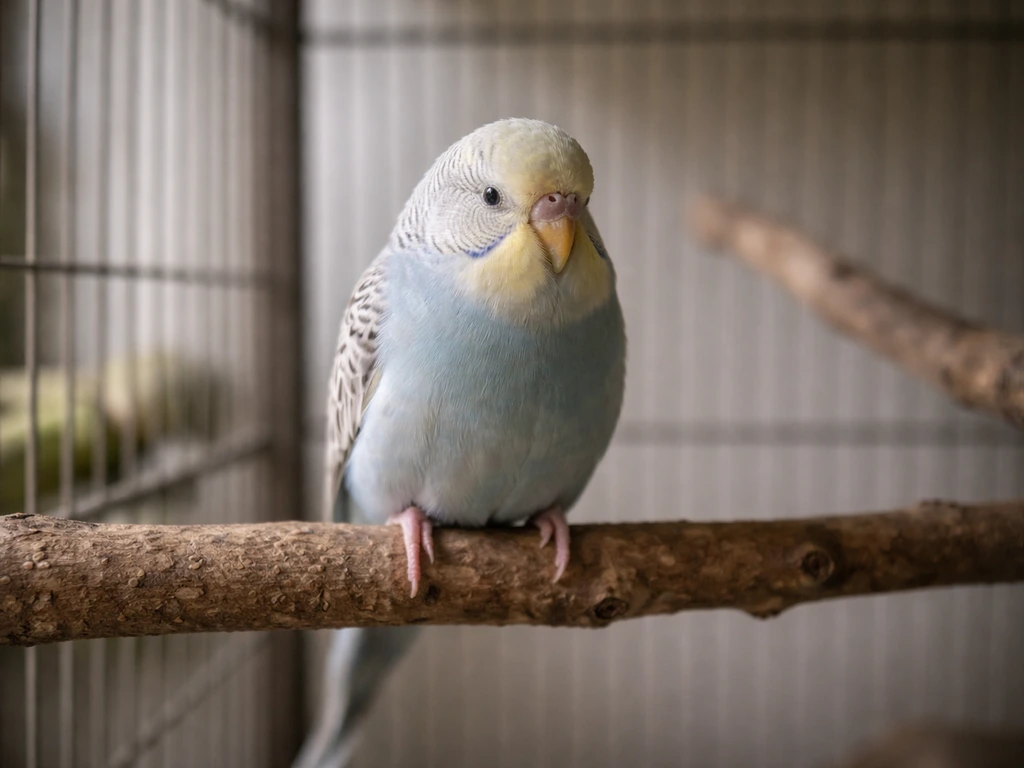
A 'bird whisperer' is someone who can calm, communicate with, or intuitively interpret birds in a way that seems almost magical to onlookers. In practice, it covers a wide range of people: professional bird trainers who use behavioral desensitization, backyard birders who've learned to move quietly and read body language, and folks in spiritual communities who believe birds carry messages meant specifically for them. The phrase is borrowed from the broader 'animal whisperer' tradition and lands somewhere between a real skill, an affectionate nickname, and a spiritual concept depending entirely on who's using it.
Bird Whisperer Meaning: Literal, Spiritual, and Behavioral Uses

Marcus Holloway
1 May 2026

What 'bird whisperer' actually means in plain language
Both the Cambridge Dictionary and Collins English Dictionary define 'whisperer' as a person known for their ability to deal with a particular type of animal, usually in a calming or managing role. Think horse whisperer, elephant whisperer, and yes, bird whisperer. The word implies skill and rapport, not supernatural ability. When someone calls you a bird whisperer, they almost always mean you have an unusual ability to be around birds without scaring them, or that birds seem to seek you out in ways that other people don't experience.
That said, the phrase travels across several very different contexts in everyday use. You'll find it used as a playful compliment, as a professional job description, and as a spiritual or omen-based concept. Understanding which version someone means makes a real difference in how you interpret it.
Literal vs. metaphorical: trainer, handler, or intuitive interpreter?
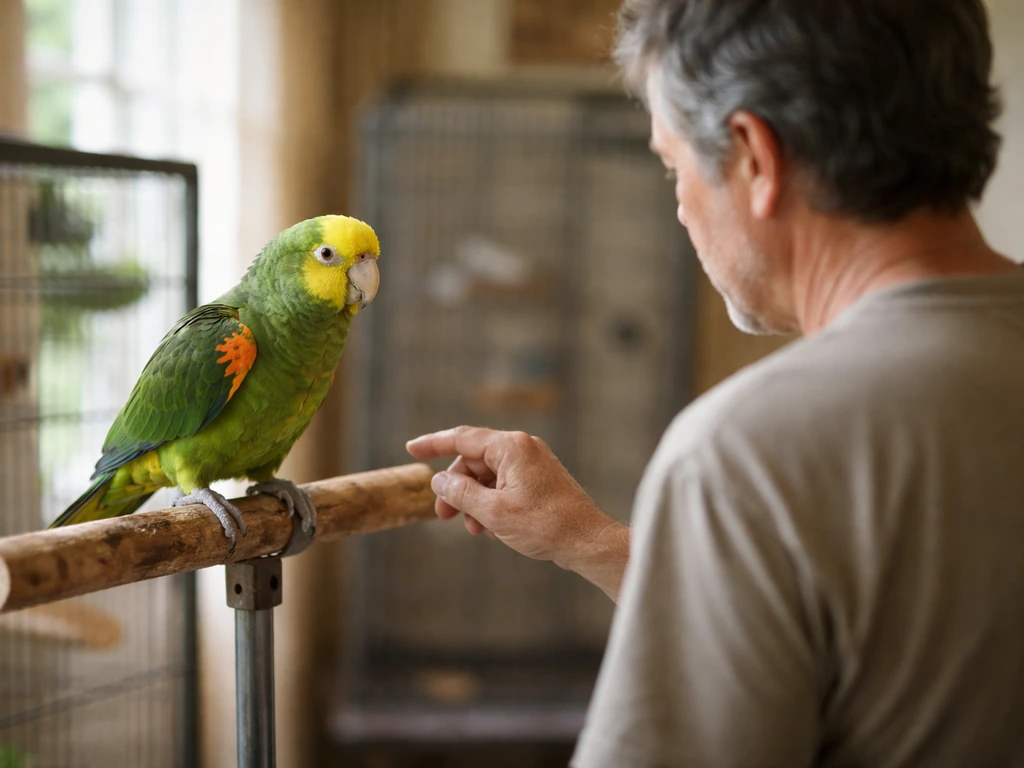
On the literal end, bird whisperers are real practitioners. Ken Globus, who has spent over 25 years working with birds and literally markets himself as 'The Bird Whisperer,' describes his work as breaking through a bird's 'bubble of fear.' His approach is practical coaching: progressive desensitization so that an owner can eventually get a previously terrified or aggressive bird to step onto their hand. That's behavioral science applied patiently, not magic. The Los Angeles Times and PetLifeRadio have both covered his work with difficult, un-handleable pet birds, and the method is grounded in reading avian stress signals and adjusting your body, movement, and proximity accordingly.
On the metaphorical end, the phrase gets used much more loosely. Author Toni Morrison was playfully called a 'bird whisperer' by an Audubon contributor because of her quiet attunement to birds around her home. That's not a professional designation, it's an affectionate observation about someone whose presence and awareness made birds feel comfortable. Between these two poles sits the intuitive interpreter: someone who pays close attention to bird behavior, learns species-specific signals, and draws meaning from patterns they observe. That's neither pure training nor pure metaphor. It's a practiced, learnable skill.
How 'bird whisperer' gets used as a slang nickname
In everyday conversation, 'bird whisperer' is almost always a compliment. It gets attached to people who have a gift for being around birds without disturbing them, who can hand-feed wild birds, who always seem to attract birds at feeders, or who can identify species and behaviors that others miss entirely. The implication is usually a mix of patience, gentleness, and knowledge. It carries warmth and a hint of wonder, like calling someone a 'green thumb' for plants.
In birding communities, you'll hear it applied to people who are exceptional at spotting difficult species, interpreting alarm calls, or predicting bird movement. In pet-bird circles, it describes someone who can handle nervous or bite-prone parrots that no one else can approach. In spiritual communities, it often describes someone who regularly receives what they interpret as signs or messages from birds. All three uses are broadly positive, and none of them require any formal credential. The label is earned by reputation and observation, not certification.
Spiritual interpretations and how to handle them responsibly

The spiritual dimension of 'bird whisperer' is real and worth taking seriously as a cultural phenomenon, even if you personally approach it skeptically. Across many traditions, birds are treated as messengers: ravens in Norse mythology, owls in various Indigenous traditions, doves in Christian symbolism, and cranes in East Asian cultures all carry layered spiritual meaning. Someone described as a bird whisperer in a spiritual context is usually seen as especially receptive to these messages, someone who can read what a bird's appearance or behavior is 'trying to say.'
The responsible way to engage with this, whether you believe in it or not, is to separate functional bird behavior from projected meaning. A crow landing on your fence is doing crow things. Whether you layer a spiritual interpretation onto that is a personal and cultural act, not an objective reading. That distinction matters because overconfident interpretations of bird 'messages' can lead people to make real decisions based on what a bird did, which is a shaky foundation. Treat spiritual interpretations as meaningful reflections of your own emotional state or cultural lens, not as literal predictions or commands.
The same principle applies to bird dreams. On Reddit’s r/birding, birders also trade ideas about what it might mean when birds appear in dreams, including a user describing snow buntings at their feeder and planning a “field guide” to birds in dreams The same principle applies to bird dreams.. Scientists can measure REM-related brain activity in birds, but as the Cornell Lab of Ornithology notes, researchers cannot ask birds about their dream content. By extension, dream dictionaries that assign fixed meanings to birds in your dreams are offering cultural associations, not verified predictions. Freedom, new beginnings, spiritual ascent, these are common symbolic associations, but they reflect human interpretive tradition, not established science.
What birds actually do when they feel safe or attentive around you
If you want to know whether birds genuinely feel comfortable around you, behavioral science gives you a measurable tool: flight initiation distance, or FID. ScienceDirect (Animal Behaviour / Elsevier) defines flight initiation distance (FID) as the distance at which a bird begins to escape when approached by a human under standardized conditions. FID is the distance at which a bird begins to flee when approached by a potential threat. Studies published in Nature Communications and Communications Biology use FID as a reliable, evidence-based proxy for how tolerant a species or individual bird is toward human presence. A shorter FID means the bird has a higher tolerance for your approach.
Real 'bird whisperer' behavior, the kind that results in birds staying close or even approaching you, reduces that flight initiation distance through calm, slow movement, low body posture, no sudden sounds, and consistent, non-threatening presence over time. Birds don't magically trust you. They habituate to you when you stop triggering their threat-detection system.
Beyond proximity, here are specific behavioral signals worth knowing. These are what you're actually observing when a bird seems to 'respond' to you:
- Remaining perched or foraging without moving away as you approach: indicates tolerance, not friendship, but it's a meaningful baseline
- Soft contact calls or low vocalizations: birds use these for flock cohesion and social coordination, not to address humans, but their presence in a calm bird signals low stress
- Preening in your presence: a bird that preens near you is relaxed enough to perform a vulnerable, time-consuming behavior
- Facing toward you with relaxed body posture: an attentive but non-alarmed posture; contrast with a fluffed body or crouched, ready-to-launch stance
- Returning to a feeder or perch after a brief departure: habituation, not invitation, but it shows your presence isn't registering as a major threat
It's equally important to know what alarm calls and distress calls actually mean. If you're curious about bird language meaning, focus on the specific calls and body signals a species uses in context. To understand bird text meaning, it helps to focus on what the vocalization is doing in context rather than treating it as a personal message. If you are trying to understand bird talk meaning, focus on the specific context and vocalizations, since different calls signal different functions. Research in behavioral neurobiology and ecology confirms that bird vocalizations serve specific functions: alarm calls signal danger to conspecifics, hawk alarm calls are distinct from ground-predator calls, and contact calls coordinate flock movement. Birds adjust their call directionality based on context. When a bird calls sharply and takes flight, that's an alarm signal directed at other birds, not a message aimed at you. Reading it as a personal 'warning omen' is projecting human-facing intent onto a functional animal behavior.
Cultural symbolism and folklore that shapes the phrase
The reason 'bird whisperer' lands with such resonance is that birds carry enormous symbolic weight across virtually every human culture. In ancient Roman augury, the flight patterns of birds were used to forecast political and military decisions. Celtic traditions treated the wren as a symbol of prophecy. West African traditions connect specific birds to ancestor communication. In Hinduism, the Garuda is a divine bird vehicle for Vishnu. Indigenous North American traditions across many nations treat eagle feathers as sacred because the eagle is seen as a messenger between the human world and the divine.
This deep symbolic tradition is what makes the 'bird whisperer' label feel significant rather than merely descriptive. When you call someone a bird whisperer, you're tapping into thousands of years of human belief that birds occupy a special position between the terrestrial and the transcendent. That's a lot of cultural freight for what is, at its core, a person who moves slowly and pays attention.
Worth noting: bird language, bird talk, and bird voice are related concepts in this interpretive tradition. Learning bird voice meaning helps you connect those sounds to specific contexts like territorial singing, contact calls, or alarm calls. Understanding what a species typically communicates in a given context, whether that's a territorial song, a contact call, or a mobbing alarm, is foundational to any genuine 'bird whisperer' skill, whether you're approaching it behaviorally or spiritually. Learning bird language basics means focusing on the signals a species uses in each context, like songs, contact calls, and mobbing alarm calls Understanding what a species typically communicates.
Common misconceptions and what to actually do next
A few myths about bird whisperers are worth clearing up directly before you go off and apply any of this.
| Misconception | What's actually true |
|---|---|
| Birds 'talk' to humans in a meaningful linguistic sense | Bird vocalizations are functional communications aimed at other birds. Context, species, and situation determine what a call means, not human-facing intent. |
| A bird landing near you is a personal message or omen | It usually means you're not triggering the bird's threat response. It's a sign of tolerance, which you can cultivate, not a supernatural signal. |
| Bird whisperers have a natural gift you can't learn | The skill is mostly about learning to move slowly, reduce your threat profile, and read species-specific behavioral signals. It's learnable. |
| Interpreting birds in dreams is scientifically grounded | Dream interpretation is a cultural and psychological practice, not an empirically validated predictive system. |
| You need professional training to work with wild birds | You actually need permits. Rehabilitating wild birds requires a federal migratory bird permit and, in many states, a state wildlife rehabilitation permit. |
Practical next steps you can take today
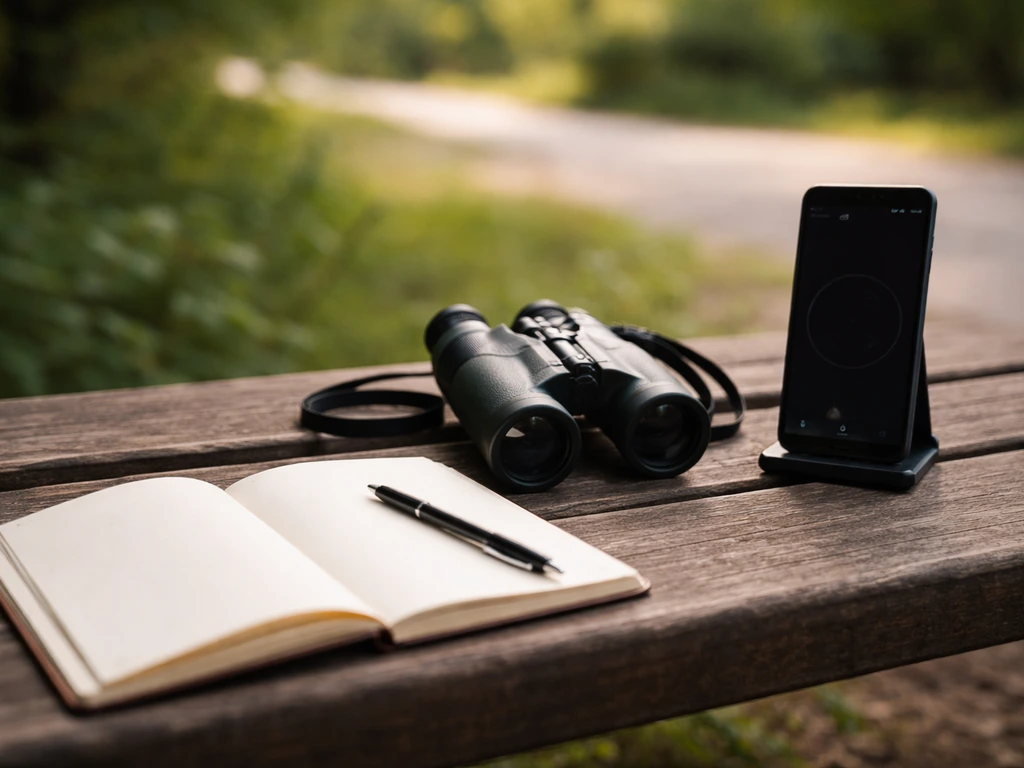
- Start observing birds without trying to interact. Sit still outdoors for 15 to 20 minutes and watch flight initiation distance: notice how close you can be before a bird moves away, and track whether that distance shrinks as you stay calm and quiet.
- Learn your local species' baseline behaviors. A song sparrow's alarm chip is different from its contact call. Knowing what 'normal' sounds and looks like for the birds in your area makes any behavioral deviation much more meaningful.
- Build a calm presence gradually. Move slowly, avoid direct eye contact with wild birds (it reads as predatory), crouch or sit to lower your profile, and stay consistent in timing and location if you want habituation to occur.
- If you want to work with pet birds, look into the progressive desensitization approach used by professional bird handlers: start at a non-threatening distance, reward calm behavior, close distance incrementally over multiple sessions.
- If you're drawn to the spiritual interpretation, treat it as a reflective practice rather than a predictive one. Ask what the encounter means to you and what it prompts you to notice, rather than treating the bird's behavior as a literal instruction.
- If you want to rehabilitate injured wild birds, contact your state wildlife agency first. You'll likely need both a state wildlife rehabilitation permit and a federal migratory bird permit before you can legally handle most species.
The term 'bird whisperer' is genuinely useful precisely because it sits at the intersection of real behavioral skill, cultural symbolism, and human projection. You don't have to choose just one interpretation. The most grounded approach is to start with what birds are actually doing and why, learn the behavioral language of the species you're around, and then decide, with full awareness, how much cultural or spiritual meaning you want to layer on top of that foundation.
FAQ
How can I tell whether someone is using “bird whisperer meaning” literally, metaphorically, or spiritually?
If the speaker means it literally, they will usually connect it to handling or training outcomes (calming a fearful parrot, reducing biting, getting closer at feeders) and mention specific behavioral tools like gradual desensitization or stress signals. If they mean it metaphorically or spiritually, they will talk more about intuition, “signs,” or personal messages, with less focus on measurable behavior.
What’s the best practical way to know if I actually have a “bird whisperer” effect on birds?
You can test it with your own patterns by tracking two things over 1 to 2 weeks: how close birds consistently allow you to get (for example, average distance when they flee) and how often they resume normal behaviors like feeding or singing after you arrive. If birds only “seem friendly” once, it is likely situational, not a stable rapport.
What should I do first if I want to build bird-friendly rapport safely?
Start with low-arousal exposure, not direct hand-feeding or sudden proximity. Move slowly, keep a consistent route, avoid staring, and make your presence predictable. The key behavior is habituation, so aim for gradual reductions in flight distance over time rather than expecting immediate trust.
Does being called a “bird whisperer” mean birds must approach or land on me?
Not necessarily. Many birds tolerate humans at a distance but will not approach, and “bird whisperer” style success can simply mean you avoid triggering alarm and let them keep feeding. In other words, a shorter flight initiation distance is a better goal than getting birds to land on you.
What’s a common mistake people make when they interpret bird calls as messages from birds?
A common mistake is treating alarm calls as “warning me,” which can make you move or react in ways that escalate the birds’ threat response. Instead, interpret the function: sharp calls plus takeoff usually mean danger to other birds, so the most helpful action is often to slow down, back away gradually, or stop interfering until the scene stabilizes.
Why might birds seem to like me at one time but ignore me or flee at another?
Yes. Some species are naturally more wary, and juveniles or birds during nesting season can have very different tolerance. Also, your approach speed and body posture matter as much as species. Using one “magic moment” example to judge yourself can be misleading.
Is it safe to rely on “bird whisperer” methods for handling pet birds?
If you handle pet birds, “bird whisperer” training should still be conservative and safety-focused. Use gradual desensitization and keep sessions short, because stress can teach fear faster than it teaches calm. If a bird is consistently aggressive, work with an avian behavior professional rather than relying on reputation or intuition.
How can I engage with the spiritual “bird whisperer” idea without letting it drive risky decisions?
When you want to use bird meaning without overcommitting, label it as a personal reflection rather than a prediction. For example, treat “a bird seemed meaningful today” as how you felt, not as a directive to make a decision. If an interpretation would change a major plan, wait and verify with other real-world information.
Is “bird whisperer” the same thing as learning bird language?
“Bird whisperer” and “bird language” overlap, but “bird whisperer” is broader and often includes temperament, patience, and context-reading. Learning the species-specific call and posture functions is the closest skill match, but you still need to apply it through your own movement and timing.
Are bird-dream meanings considered reliable or scientific?
No one can confirm fixed “bird dream meanings” the way a dictionary claims, because dream content is not something researchers can verify through direct bird reports. The best use of dream associations is as a prompt for your own reflection, not as a guaranteed symbol system.
How do I avoid confirmation bias when I think birds are giving me “messages”?
You can avoid confirmation bias by recording observations with dates and species, then asking whether your “meaning” changes with your mood. If your spiritual reading always matches what you already wanted to believe, that is a sign to separate emotional interpretation from observed bird behavior.
Next Article
Bird Blindness Meaning: Causes, Signs, and What to Do Now
Bird blindness meaning: spot signs, tell vision loss from other issues, and take safe action or get urgent vet care.