When people search 'bird mask doctor meaning,' they're almost always trying to decode one of three things: the iconic plague doctor costume with its long bird-like beak, a piece of modern art or tattoo featuring a doctor-healer figure with avian traits, or a dream or meditation image that felt unsettling and significant. The meaning shifts dramatically depending on which of those three you're dealing with, and the differences really matter. A plague doctor beak mask carries themes of death, protection, and historical fear. A bird-headed healer in a dream might be about transformation and guidance. A tattoo might be pure aesthetic, or it might be a deeply personal symbol. This guide walks through all of it.
Bird Mask Doctor Meaning: Symbolism, Folklore, Dreams

Marcus Holloway
5 Jul 2026
What people usually mean by 'bird mask doctor'
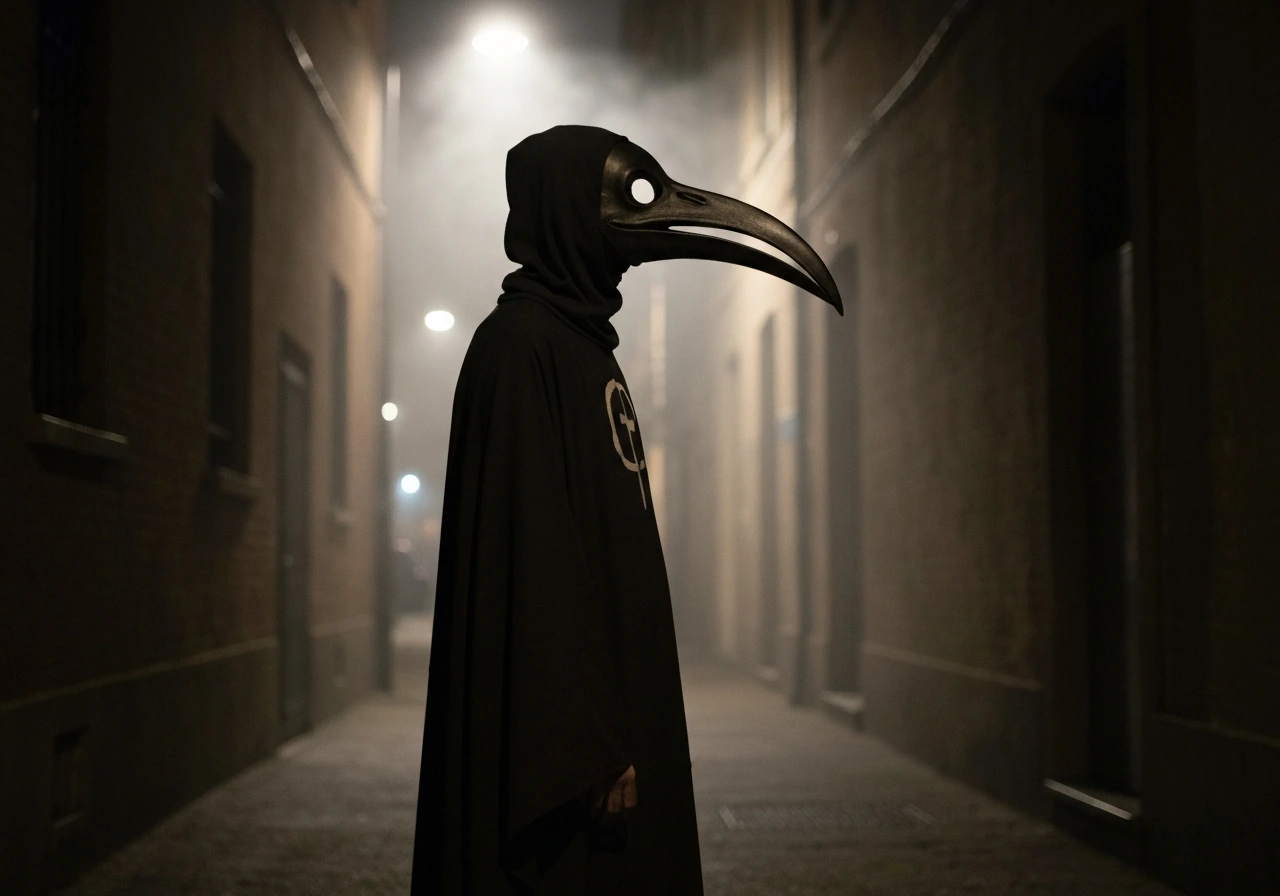
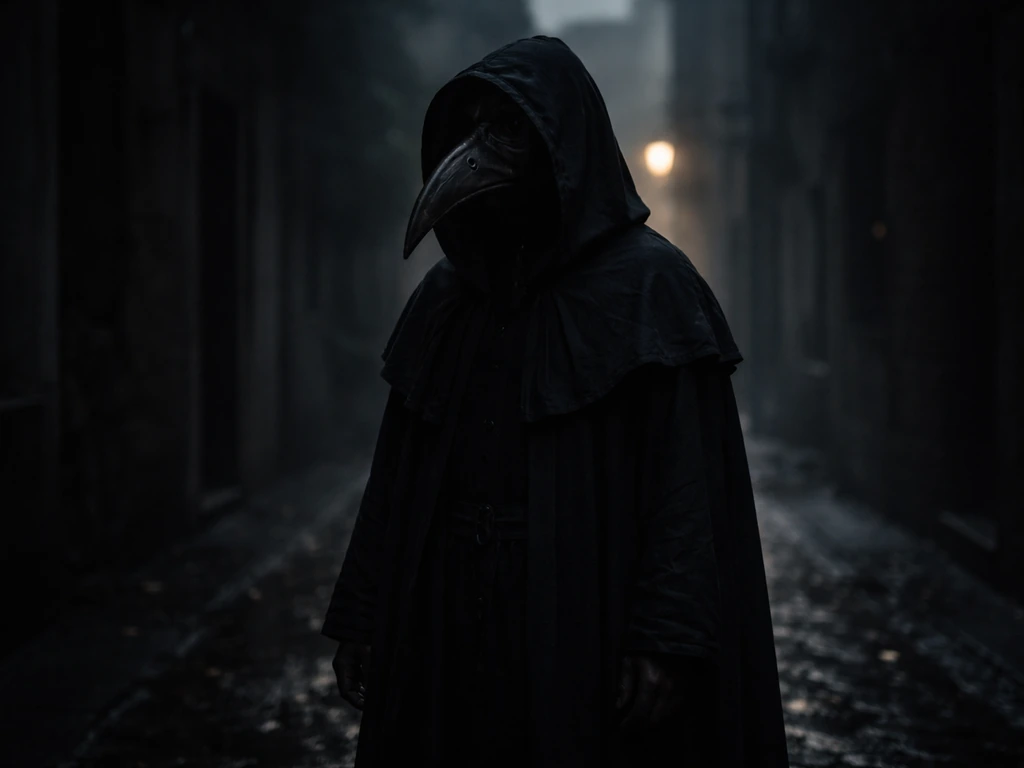
Most of the time, someone searching this phrase has encountered a specific visual archetype: a robed figure wearing a long-beaked mask, often depicted in dark or ominous settings. That image is almost certainly a plague doctor, or a stylized version of one. The costume, featuring a beak-shaped mask, wide-brimmed hat, ankle-length waxed coat, gloves, and boots, became one of the most recognized symbols of death and disease in Western visual culture.
But 'bird mask doctor' can also refer to more abstract imagery, like a healer wearing an actual bird's face as a mask in folk art, shamanic traditions, or personal symbology. And occasionally people use the phrase after dreaming of a figure that simply combined bird and doctor elements in ways that felt symbolic. All three are valid entry points, and this article covers each of them.
It's also worth knowing that this image sits in a broader family of bird-part symbolism. Related imagery like bird face symbolism, the bird head in art, and the bird heart in spiritual traditions all feed into how people interpret a bird-masked figure. The beaked doctor is essentially a fusion of two potent archetypes: the bird (with all its species-specific meaning) and the healer (who crosses the boundary between life and death).
Common visual references and how to identify the exact one
Before you can interpret the meaning, you need to identify what you're actually looking at. These are the most common versions people encounter.
| Visual Type | Key Features | Most Common Context |
|---|---|---|
| Plague doctor costume | Long curved beak, glass eye holes, dark robe, wide hat, gloves | Historical art, Halloween, horror media, tattoos |
| Commedia dell'arte figure | Theatrical, sometimes satirical, exaggerated beak, dramatic pose | Historical theater imagery, Italian art prints |
| Shamanic bird-mask healer | Feathered mask, ritual clothing, often species-specific bird (eagle, raven, crane) | Indigenous art, spiritual traditions, anthropological imagery |
| Modern art/tattoo hybrid | Abstract bird head on a human body in a coat or medical setting | Tattoo flash, dark art, neo-traditional illustration |
| Dream/vision imagery | Personal, often emotionally charged, may not follow historical rules | Personal dreams, meditation experiences, journaling |
The quickest way to identify which one you're dealing with is to look at the beak shape and the body. A plague-doctor-style image almost always has a very specific hollow, elongated beak (like a curved tube, not a realistic bird beak), paired with a humanoid body in a coat. A shamanic or folk-art image tends to show more organic feather detail and a specific identifiable bird species. Modern art versions often deliberately blur these lines for effect. In a dream, the image may feel more fluid and emotionally loaded than visually precise.
Cultural symbolism of birds and how it shifts by species
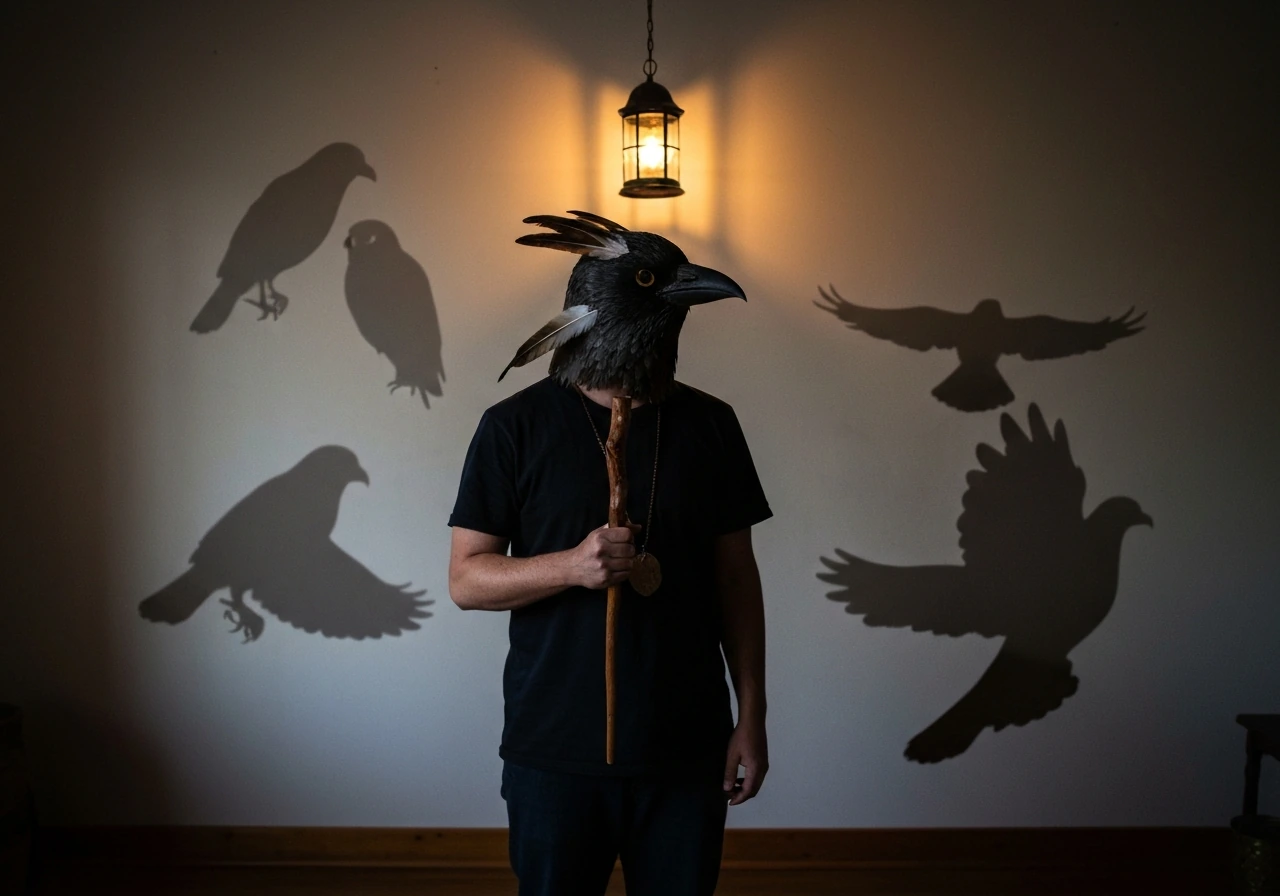
Here's the thing about bird symbolism: it's never generic. The meaning of a bird-masked doctor changes completely depending on which bird is represented. If you’re curious about the bird head emoji meaning, the same idea applies: context determines whether it’s playful, ominous, or symbolic bird-masked doctor changes. A crow-beaked doctor carries entirely different cultural weight than one with an egret's beak or an owl's face. If the image is abstract or the bird species isn't identifiable, you're working with general bird symbolism: freedom, liminality, the soul, messages between worlds. But if you can identify the bird, the meaning gets much richer.
- Crow or raven beak: Death, transformation, intelligence, the trickster, omens. In many traditions, crows are psychopomps (guides of the dead), which aligns powerfully with a doctor who walks between life and death.
- Vulture beak: Decay, cleansing, patience, and rebirth. Vultures are often misread as purely negative; in ancient Egypt, the vulture goddess Nekhbet was a protector and mother figure. On a healer, vulture imagery often means 'one who deals with death but serves life.'
- Heron or crane beak: Longevity, healing, balance, wisdom. In East Asian traditions, the crane is one of the most auspicious birds and is directly associated with longevity and sacred medicine.
- Eagle beak: Power, vision, sovereignty, divine authority. A doctor with eagle imagery often reads as someone with extraordinary perception or a figure of commanding spiritual authority.
- Owl face: Hidden knowledge, night wisdom, the liminal, death in some European traditions. An owl-faced healer is often associated with occult medicine or night-world knowledge.
The plague doctor's beak doesn't correspond to a real bird species, which is part of why it reads as so eerie. It references 'bird' without committing to any bird's specific cultural meaning. That ambiguity is actually part of its power as a symbol: it signals the avian without grounding it in the warmth or familiarity of a specific species.
Spiritual and folklore meaning of masked healers with bird imagery
Across many of the world's traditions, the healer who wears a mask (especially an animal or bird mask) is not disguising themselves. They are becoming something. The mask in spiritual contexts is a transformative tool: the shaman who puts on the crane mask is temporarily embodying crane energy to do healing work.
This is fundamentally different from the plague doctor context, where the mask was originally functional (protecting the wearer from 'bad air' through the miasma theory of disease, even though we now know miasma was wrong). Wikipedia’s account of miasma theory describes these historical “bad air” explanations for disease and notes that modern science rejects miasma as a cause of plague miasma theory of disease.
The spiritual tradition says the mask grants power; the historical tradition says the mask provides protection. Both interpretations survive in modern imagery.
In Siberian and Central Asian shamanism, bird spirits are among the most commonly invoked healing helpers. In some Native American healing traditions, specific birds represent specific medicine. West African and Yoruba traditions include bird-faced masquerade figures associated with ancestral and healing power. Even in European folklore, figures like the 'Strix' (a bird-woman) and the swan maidens of Celtic myth blur the line between bird and healer. What nearly all of these share is this idea: the bird-masked healer occupies a threshold. They are between species, between worlds, between life and death. That liminal position is inseparable from the healing function.
This is also where the bird mask plague meaning connects to deeper symbolism. Bird mask plague meaning can also be influenced by how you encounter the imagery, like whether it feels historical, theatrical, or personal. The plague doctor figure in commedia dell'arte became a theatrical character precisely because the original image (a masked, beaked human in black robes) was already so symbolically loaded. It wasn't just a doctor. It was a figure from the edge of death, which in theatrical and spiritual terms is an enormously powerful position.
Dream and personal interpretation: what it might be telling you
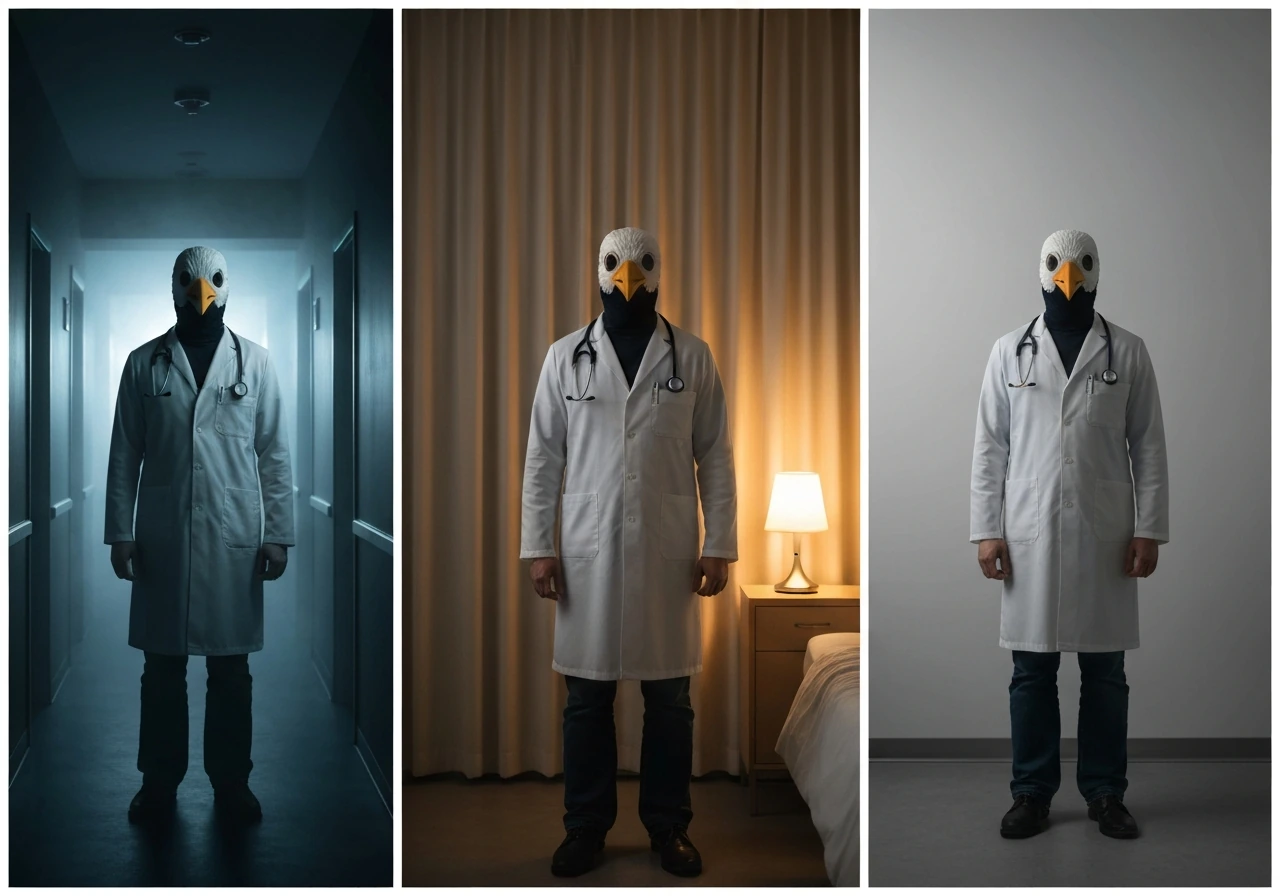
If you dreamed of a bird-masked doctor, the first thing to notice is the emotional texture of the dream, not just the visual content. Was the figure frightening, comforting, neutral, authoritative? That emotional register tells you more than the image alone. A terrifying bird-beaked doctor in a dream often reflects anxiety about illness, mortality, or being 'treated' by forces outside your control. A calm, reassuring bird-masked figure more often represents guidance, wisdom, or healing energy arriving from an unexpected or unfamiliar source.
Some common dream interpretations worth considering, not as rules but as starting points: if the doctor was performing a procedure, look at what they were doing, because that action often mirrors something happening in your waking life emotionally. If the mask was the most vivid detail, ask yourself whether there's a person in your life (or an aspect of yourself) that presents a face you can't quite read. If the bird was identifiable, bring in that bird's symbolism. If the setting was clinical and cold, your unconscious may be processing feelings of depersonalization or emotional distance from a healing process you're going through.
Bird dreams in general (and bird faces and bird head imagery specifically) tend to cluster around themes of perspective, freedom, messages, and the soul. If you’re specifically wondering about bird face meaning, the same context rules apply: focus on the bird type, the healer figure, and what emotion or setting stands out. When combined with a healer archetype, that cluster becomes specifically about transformation through a threshold experience, which might be illness, therapy, grief, or any major life change.
Superstition, myths, and what's actually supported
Let's clear up the biggest myth first: blank" rel="noopener noreferrer">the iconic plague doctor bird mask was not worn during the Black Death in medieval times. There's no good historical evidence for the beak-mask costume being a feature of 14th-century medicine. The image became standardized much later, in the early modern period, and was popularized even further through theatrical and artistic portrayals rather than direct historical documentation. The reason this matters for meaning-making is that most of the 'plague doctor' symbolism people associate with that image is actually a layered cultural construction, not a historical fact.
The miasma theory explanation (the idea that the beak was filled with herbs to filter 'bad air') is the most commonly repeated story about the mask, and while it does appear in some early modern sources, it's been dramatically over-simplified and generalized in popular culture. Modern science rejects miasma as a disease cause entirely, which makes the mask a symbol of a protective belief system that was earnest but wrong, which is actually an interesting layer of meaning in itself: the bird mask as a monument to the limits of human understanding.
A second common myth is that the beak shape was modeled on a specific scavenger bird (usually the vulture or raven) as a deliberate symbol of death. This is a visually compelling read, and it's the interpretation a lot of modern artists lean into, but it doesn't have solid historical grounding. The beak shape was probably functional in concept (a container for fragrant substances), not deliberately avian in meaning. The bird symbolism came later, layered on by cultural association. That doesn't make it invalid as a meaning, but it means the 'vulture doctor of death' reading is a modern mythological overlay, not the original intent.
How to interpret the bird mask doctor in your specific situation
Here's a practical checklist to help you read the symbolism in your particular case. The meaning really does hinge on the details, so work through these one at a time.
- Identify the context first: Is this a historical or pop-culture image you saw, a piece of art or tattoo you're considering, or something from a dream or meditation? The interpretive framework shifts significantly across these three.
- Check the bird species: Can you identify what bird the mask is meant to represent? A specific species unlocks a much richer layer of cultural and spiritual meaning than generic 'bird.'
- Look at the beak/mask shape: Is it the hollow tube-like beak of the plague doctor (pointing to historical/theatrical/horror symbolism), or a more organic, feathered, or realistic bird face (pointing to shamanic or folkloric symbolism)?
- Read the doctor's role in the image: Is this figure healing or threatening? Tending to someone or looming? The doctor posture matters. A figure offering help versus one that feels invasive carry opposite emotional meanings.
- Note the color palette: Black and dark robes read as death, authority, and the unknown. White reads as clinical purity or spiritual light. Earthy tones suggest shamanic or naturalistic traditions. Bright or unnatural colors in modern art are usually communicating something about the artist's personal interpretation.
- Register the emotional response: Whether in a dream, a piece of art, or even a tattoo you're considering, what feeling does the image trigger? Fear, awe, comfort, unease? That response is data, and it often points directly to the meaning most relevant to you.
- Fact-check the historical claims if you're doing research: Don't accept that the plague doctor mask was definitely worn during the Black Death, or that it was definitely modeled on a vulture. These are popular stories with thin historical support. Stick with what's documented: early modern period, miasma theory context, theatrical amplification.
Ultimately, the bird mask doctor is one of those symbols that means different things in different hands. In horror and dark art, it's a memento mori, a reminder that death wears many faces. In spiritual traditions, it's a transformer, a threshold guardian who uses bird power to navigate between worlds. In dreams, it's often a mirror of your relationship to healing, authority, and the unknown. In dreams, it's often a mirror of your relationship to healing, authority, and the unknown bird head bobbing meaning. None of these meanings are wrong. The useful question is always: which one fits where you are right now?
FAQ
Does “bird mask doctor” always mean death or plague, or can it mean something positive?
It can absolutely be positive. The death-plague reading is mainly tied to the stylized plague doctor look (beak, black robes, ominous framing). If the image instead feels protective, comforting, or ceremonial, it often shifts toward guidance and transformation, especially in dream or spiritual contexts where the mask functions as a threshold tool rather than a historical costume.
How do I interpret it if the bird species (crow, owl, egret) is not identifiable?
If you cannot tell the species, you usually fall back to general bird symbolism. That tends to cluster around liminality, messages, perspective, and the soul. In that case, the emotional tone and setting matter more than any “death” guess, for example clinical and cold points toward emotional distance, while warm or reverent framing points toward healing or integration.
Is the beak shape more important than the rest of the costume when decoding meaning?
Yes, it’s often the fastest clue. A hollow, tube-like elongated beak paired with a humanoid coat strongly suggests the plague-doctor archetype. More realistic feather detail or a clearly species-specific bird face is more consistent with a shamanic or folk-art healer image. If the figure is too abstract to classify, treat the dream emotion or artistic intent as your primary data.
What should I look at in a dream to avoid misreading it?
Start with the figure’s role and your body response. If the doctor is performing an intimate procedure or you feel restrained or harmed, it can mirror anxiety about being controlled by health or institutions. If the figure guides you, stands guard, or you feel relieved afterward, it’s more likely reflecting support, wisdom, or readiness for a major change.
How do I interpret “bird mask doctor” in art or tattoos where it’s just aesthetically cool?
Even if it was chosen for style, the placement and accompanying elements usually reveal intent. A skull-like motif, dark color palette, or medical implements push it toward memento-mori or fear-of-death themes. Placement near the chest, throat, or back can shift toward personal healing, self-expression, or protection, because the body location changes the symbol’s “job” for you.
If someone says the mask was used during the Black Death, does that change the meaning?
The meaning can still be used symbolically, but you should separate historical claim from interpretation. The popular beak-mask plague figure is largely a later cultural construction, so people are often reading layered symbolism, not authentic medieval medical practice. That actually makes the symbol more about cultural belief and projection than about strict history.
What if the “doctor” is not human, for example a bird-faced figure without a clear beak mask?
Then the reading often leans away from plague-doctor archetype and toward animist or shamanic “becoming” symbolism. In many such contexts, the mask is not disguising but embodying a power, so the key questions become what the figure does for you (guides, cures, warns) and whether the dream or scene feels like a threshold encounter.
How can I tell whether it’s a “protection” symbol versus an “illness anxiety” symbol?
Protection usually comes with safety cues, boundaries, or relief, for example the figure stands between you and danger or you feel calmer during the encounter. Illness anxiety tends to come with panic cues, forced treatment, or loss of control. Also note your emotional after-feeling in waking life, because it often clarifies which interpretation fits better.
Next Article
Bird Blindness Meaning: Causes, Signs, and What to Do Now
Bird blindness meaning: spot signs, tell vision loss from other issues, and take safe action or get urgent vet care.